
You are here
European Union
Minutes - Thursday, 20 November 2025 - PE781.189v01-00 - Committee on Foreign Affairs
Source : © European Union, 2025 - EP
Categories: Europäische Union, European Union
UN80 is Less a Reform Than a Survival Manual
Credit: UN Photo/Loey Felipe
By Stephanie Hodge
NEW YORK, Dec 5 2025 (IPS)
Let’s just say the quiet part out loud: the UN is not reforming because it suddenly woke up one morning inspired by efficiency. It’s reforming because the Organization is broke. Not metaphorically broke. Not diplomatically broke. Actually broke. The kind of broke where arrears sit at $1.586 billion and everyone pretends that’s just an unfortunate bookkeeping hiccup instead of the fact that the lights are flickering.
So, the Secretary-General stands before the Fifth Committee and announces a slimmed-down 2026 budget, thousands of posts vanished, a payroll moved across continents, and a brave new era of administrative consolidation.
And everyone nods because what else can you do when you’re trying to keep a 1945 institution upright on a 2025 income stream? But the truth is far simpler than the polished speech: this is not bold reform. This is the UN tightening its belt to the last notch and pretending it’s a fashion choice.
The real solution is embarrassingly practical.
First, Member States have to pay what they owe. That’s it. That’s the root. You cannot starve an institution of a billion and a half dollars and then evaluate it for underperformance. You can’t expect the UN to deliver peacekeeping, human rights, climate action, oceans, cyber governance, gender equality, humanitarian assistance, and the rest of the alphabet of global problems when its bank account is emptier than its inbox during August recess.
Second, Member States need to stop adding new mandates while ignoring the ones already sitting unfunded in the corner like neglected houseplants. You cannot keep handing the UN new global responsibilities and then act surprised that the staff who once ran these mandates are now buried in work or—more likely—gone.
Third, the UN needs to do what every other global institution did a decade ago: consolidate the administrative empires. Forty different HR units. Forty different procurement interpretations. Forty flavours of “policy exceptions.”
This is not a sign of diversity; it’s a sign of institutional sleepwalking. One payroll system. One procurement backbone. One HR servicing model. That is what real efficiency looks like, not cutting the travel budget until only three people can attend a conference on another continent.
Fourth, move the repetitive administrative work to lower-cost duty stations. Not because it’s trendy, but because it’s rational. Shift the paperwork, not the expertise.
Relocate the forms, the workflows, the endless approvals—not the chemists, the human rights lawyers, the peacebuilders, the environmental scientists, the country advisers. Protect the people who actually deliver.
And finally, digitize the system so staff aren’t drowning in PDFs like some tragic archive-themed Greek myth. Half the UN’s memory is lost every time someone retires because it lives in Outlook folders from 2011. If the UN is going to survive, it needs modern, automated systems, not heroic acts of manual labour disguised as institutional knowledge.
None of this is glamorous. None of this is the stuff of commemorative plaques. But it is real. It is possible. And it is necessary.
The SG insists these cuts will not affect mandate delivery. But let’s be honest: no institution on earth can do more with less indefinitely. At some point, it simply does less. The only question is whether we choose what gets dropped or whether it drops itself.
UN80 has been sold as a transformation, but it is really a house-keeping operation performed with the water already turned off. If Member States want a functioning UN—one that can actually deliver on the mandates they vote for—they need to pay their dues, stop loading the wagon, and let the Secretariat modernize without political micromanagement.
That is the rice and the beans. Everything else is garnish.
And What About All Those Agencies?”
Whenever the Secretary-General announces a grand reform — especially one involving massive cuts, relocations, and talk of agility — there’s always one unspoken question hanging in the air like incense in a cathedral: And what about all those agencies?
Because let’s be honest, the UN family is not a family so much as a complicated set of second cousins who share a last name but not a bank account. The SG can trim 18% of Secretariat posts, merge payroll, consolidate admin, and talk about efficiency until New York freezes over — but the agencies?
They watch from the balcony like disinterested aristocrats at an estate auction, whispering: “Poor Secretariat… hope they manage.”
In reality, UN80 puts every agency on notice — not officially, not publicly, but structurally.
Here is the quiet truth:
If the Secretariat collapses under arrears, the agencies feel it next.
They pretend they won’t. They talk about voluntary contributions, earmarked funding, trust funds, vertical funds, and country programmes as if that protects them. But the whole UN system is tied together like one of those old wooden chairs: take out the wrong leg and suddenly the “independent” agencies wobble.
UNDP will smile and say its revenue base is safe — but the second the Secretariat starts relocating services to Bangkok and Nairobi, guess who also taps those services? UNDP. And UNICEF. And UN Women. And UNEP.
Everyone wants the cheaper admin backbone, until it becomes overcrowded like a budget airline terminal in August.
UNESCO and FAO will make statements about their distinct governance structures, but they’re already stretched so thin that one more global conference could snap them like linguine. WHO will keep its aura of authority, but even they know that when the Secretariat starts consolidating payroll and procurement, the agencies follow sooner or later, kicking and screaming in their Geneva offices while quietly drafting transition plans.
WFP will insist it is different because it is operational. But operational agencies depend on global rules, global oversight, global HR, global justice systems — all housed in the Secretariat that just had 3,000 posts shaved off like a sheep at shearing season.
The Specialized Agencies always pretend they are immune until someone tries to harmonize systems, and then suddenly every executive head wakes up in a cold sweat muttering “gateway compliance” and “IPSAS alignment.”
What about UNHCR? They run on emergencies and adrenaline. They know exactly what this means: more work, fewer resources, and donor expectations rising faster than sea levels.
And the irony?
Every agency will publicly congratulate the SG on “courageous reform” while privately updating their risk registers with words like systemic, interdependency failure, and catastrophic liquidity contagion.
Because the truth is this:
If the Secretariat downsizes, everyone else eventually tightens their belt.
Not because they want to, but because global funding follows global politics, and global politics right now looks like a group of countries fighting over who forgot to pay the electricity bill.
So, what happens to all those agencies?
They watch the Secretariat shrink and hope the tide doesn’t reach their floor.
But the tide always reaches the next floor. Always.
UN80 is not just an internal reform. It’s the start of a system-wide reckoning.
A warning shot that the era of infinite mandates and shrinking wallets is over.
In the end, even the agencies know the rice-and-beans truth:
If Member States don’t fund the UN, the whole family — not just the Secretariat — goes hungry.
Stephanie Hodge, MPA Harvard (2006), is an international evaluator and former UN advisor who has worked across 140 countries. She is a former staffer of UNDP (1994-1996 & 1999- 2004) and UNICEF (2008-2014). She writes on governance, multilateral reform, and climate equity.
IPS UN Bureau
Follow @IPSNewsUNBureau
!function(d,s,id){var js,fjs=d.getElementsByTagName(s)[0],p=/^http:/.test(d.location)?'http':'https';if(!d.getElementById(id)){js=d.createElement(s);js.id=id;js.src=p+'://platform.twitter.com/widgets.js';fjs.parentNode.insertBefore(js,fjs);}}(document, 'script', 'twitter-wjs');
Categories: Africa, European Union
FIRST AID: Patients, industry split over data protection
In today's edition: DG SANTE on NATO and health, prevention, alcohol
Categories: European Union
HARVEST: Bookshops lobby
In today's edition: Wine, farmers' protests, CMO
Categories: European Union
THE HACK: It’s Telecoms Council time
In today's edition: Germany vs AI Act, WhatsApp probe
Categories: Europäische Union, European Union
Que révèlent les dernières discussions sur l'Ukraine sur l'état d'esprit de Poutine ?
Le président russe semble déterminé à poursuivre sa guerre en Ukraine, alors même que les problèmes économiques du pays s'aggravent.
Categories: Afrique, European Union
FIREPOWER: SAFE’s seven significant beneficiaries
Plus Canada's extra fee, and a military mobility working party
Categories: Europäische Union, European Union
Dinner for three
In Friday’s edition: Ukraine ‘reparations loan,’ College of Europe, Vance attacks, book lobbyists, trade-preferences scheme
Categories: Europäische Union, European Union
In Zimbabwe, School Children Are Turning Waste Into Renewable Energy-Powered Lanterns
When going home after school, Monica Ben not only takes with her a pen and exercise books but also a lantern to light the dark room and completes her daily homework in Mashonaland East province. Known as the Chigubhu lantern, a Shona name for a bottle, this portable light was made using recycled materials by […]
Categories: Africa, European Union
Climate Fear, Industrial Ruin: Antwerp’s Warning Unheeded
Europe faces industrial collapse from high energy costs and inflexible green policies, the author warns. To protect jobs, policymakers must move beyond declarations and embrace pragmatism: reassess net-zero targets and diversify Europe's energy mix for sovereignty.
Categories: Europäische Union, European Union
Lithuanian president warns over pressure on public broadcaster LRT
Any legal changes “must comply with the principles of political neutrality, responsibility and transparency”
Categories: Európai Unió : hírek magyarul, European Union
How your favourite bookshop lobbied against the EU’s deforestation law
Booksellers warn 'millions of books risk destruction'
Categories: Európai Unió : hírek magyarul, European Union
ANALYSIS: Nerves fray as ‘environmental omnibus’ approaches
Fears grow that reopening laws could trigger wider deregulation risks
Categories: Európai Unió : hírek magyarul, European Union
Seoul warns EU carbon tariff could be ‘green barrier’ to trade
Applying too high a carbon tariff on Korean imports could undermine relations, minister says
Categories: Európai Unió : hírek magyarul, European Union
Angry Greek farmers urge Brussels to act over EU subsidy scandal
Agriculture minister tried to appease protesters pledging to accelerate the distribution of EU funds
Categories: European Union, Union européenne
Why Denmark doesn’t walk its tough talk on defence
Experts warn Denmark is years behind its Nordic neighbours on civil preparedness despite its loud calls for stronger European security
Categories: European Union, Union européenne
Europe’s ‘finishing school’ faces its toughest exam yet
The corruption investigation into former College of Europe rector Mogherini has stunned students and alumni alike, triggering both disbelief and gallows humour
Categories: European Union, Union européenne
DG SANTE official denies ‘militarisation’ of healthcare
Gallina says civilian health systems need protection as much as military
Categories: European Union, Union européenne
INTERVIEW: Korea’s trade chief says EU’s changing rules are ‘challenging’
Seoul's trade rep urged the EU to remain a champion of free trade
Categories: European Union, Union européenne
A Union of shame
Trump is dancing rings around the EU, which just looks dazed and confused. When will we finally concede that the US doesn’t love us anymore?
Categories: Europäische Union, European Union
Pages
the old site is here


© 2012-2015 Europa Varietas Foundation © 2015-2020 Europa Varietas Association
www.europavarietas.org | info(@)europavarietas(dot)org | Switzerland
This is a GDPR ready site
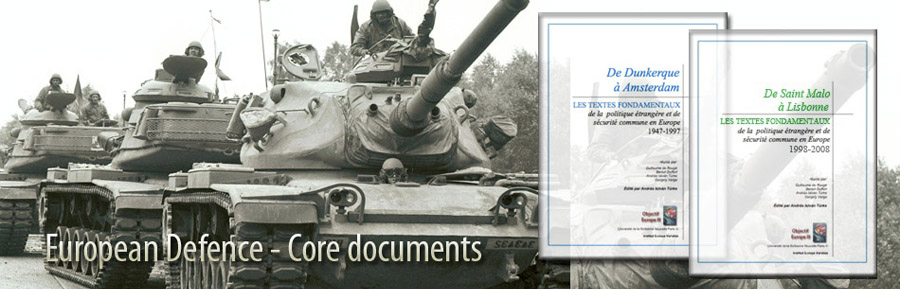
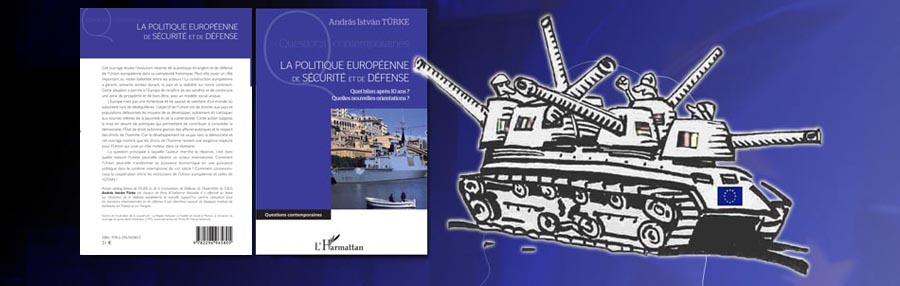
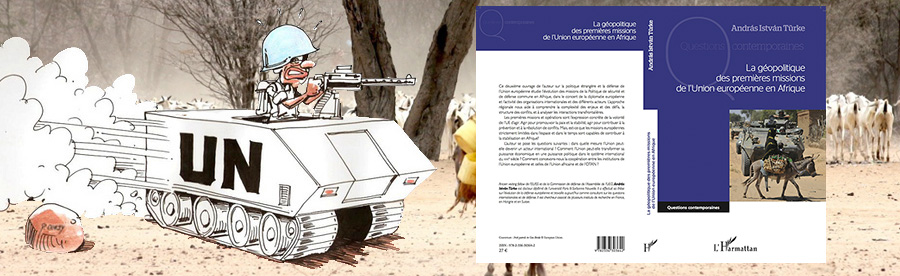
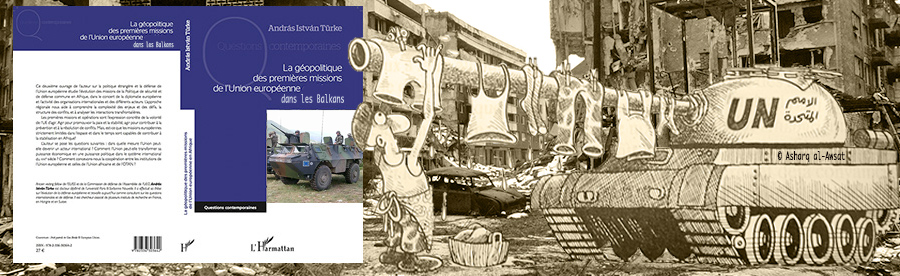
We are looking for sponsors for the English translation of these books, please contact turkeandras(at)gmail(dot)com