
You are here
Africa
Fribourg – SCRJ Lakers 2:3: Strömwall-Hammer flutscht über Galleys Fanghand
In Zusammenarbeit mit MySports präsentiert dir Blick die Highlights der Partie Fribourg – SCRJ Lakers (2:3).
Categories: Africa, Swiss News
Conservative church group condemns choice of female Archbishop of Canterbury
The group, Gafcon, says that its followers believe "the Bible requires a male-only episcopacy".
Categories: Africa, Europäische Union
Conservative church group condemns choice of female Archbishop of Canterbury
The group, Gafcon, says that its followers believe "the Bible requires a male-only episcopacy".
Categories: Africa, European Union
Conservative church group condemns choice of female Archbishop of Canterbury
The group, Gafcon, says that its followers believe "the Bible requires a male-only episcopacy".
Afghanistan: Ban on Girls’ Education Linked to Rise in Forced and Child Marriage
It is estimated that the Taliban have enforced over 5,000 forced marriages over the past four years. Thousands of girls have not only been stripped of their right to education but compelled into marriages over which they had no choice. Credit: Learning Together.
By External Source
KABUL, Oct 3 2025 (IPS)
After the Taliban returned to power in Afghanistan, they banned girls’ education beyond the sixth grade. Human rights groups say the policy is a major driver of the rise in underage and forced marriages involving Afghan girls.
Zarghona, 42, a widowed mother of four, says her three underage daughters were taken from her and forcibly married to former classmates. After schools and universities for girls were closed, all three daughters, who hoped to become nurses and midwives, were deprived of education and confined to their home.
“To prevent my daughters from becoming depressed, I sent them to a madrasa (religious school) near our house, on the advice of neighbors,” Zarghona says. They received religious education for a year, but things soon began to change.
“One day, a woman came to our house under the pretext of renting a room, and after that, the frequency of her visits increased. I gradually realized that she was targeting my daughters.”
One day a Taliban recruiter, a classmate of theirs at the madrassa, followed the girls to her house and demanded the two younger daughters as wives to his brothers.
“When I rejected their proposal, they told me, either I marry off my daughters to the older men or they would harm my son, they threatened”.
Under pressure, Zarghona says she was forced to consent to the marriages without her daughters’ approval.
“For me and my daughters, the wedding was not a celebration, it was a mourning ceremony” Zarghona lamented, adding, “I had no choice but to surrender.”
The wedding was not a formal Afghan ceremony, but rather a simple religious ceremony conducted by the Mullahs. Her oldest daughter was not forcibly married.
Afterwards, Zarghona was barred from seeing her daughters. She said money had to be secretly sent to them through prepaid mobile transfers. Life became even harder for the daughters.
“Each day came with more restrictions on how they dressed and where they could go. I couldn’t defend them, and my heart was never at peace, she said, sad and embittered.
The older of the two daughters is now 19. She already has one child and is expecting another. The younger daughter has not yet become pregnant and because of that she was permitted to see a doctor, which also enabled Zarghona to meet her secretly in the doctor’s reception area. She said both had lost weight and were shadows of their former selves. Both had bruises and looked scared.
After being forced to marriage many young girls in Afghanistan are not allowed to go out. Credit: Learning Together.
Zarghona decided to go to Iran for a while to ease herself from the painful reality of her daughters’ situation. But when she heard their cries over the phone, she returned to Afghanistan. She says, “Less than three days after I came back, they beat me up and my daughters and even locked us inside our home.”
Zarghona adds that she now has no contact with her daughters and believes their situation remains critical. “All doors for seeking help are closed to me. The government is patriarchal, and no organization supports women’s rights,” she says.
It is estimated that the Taliban have enforced over 5,000 forced marriages over the past four years. Thousands of girls have not only been stripped of their right to education but compelled into marriages over which they had no choice.
Human rights organizations and the United Nations have warned that the ban on girls’ education is fueling domestic violence, poverty, suicides, forced marriages, and Afghanistan’s political isolation.
According to recent assessments by UNICEF and the World Bank, more than one million girls have been denied the right to education since the Taliban took control of Afghanistan.
Excerpt:
The author is an Afghanistan-based female journalist, trained with Finnish support before the Taliban take-over. Her identity is withheld for security reasons
Categories: Africa, European Union
«Wurde entführt und verschleppt»: Schweizer von Gaza-Flottille spricht über «Entführung»
An der Hilfsaktion für die Menschen im Gazastreifen haben sich auch 19 Schweizer Aktivisten beteiligt. Sie sitzen inzwischen in einem Gefängnis. Einer von ihnen sprach kurz vor seiner Festnahme in einem selbst aufgenommenen Video.
Categories: Africa, Swiss News
Behind the Gen Z protesters who want to force Madagascar's president from power
President Rajoelina's move fails to quell the protest movement that is now threatening his own position.
Categories: Africa, European Union
Behind the Gen Z protesters who want to force Madagascar's president from power
President Rajoelina's move fails to quell the protest movement that is now threatening his own position.
Kenyans prove paternity case against UK soldiers
Commercially available DNA databases were used to identify unknown fathers, who had served in Kenya.
Categories: Africa, Swiss News
Fathers entitled to equal parental leave, South Africa's top court rules
The ruling grants both parents the right to share a total of four months and 10 days of parental leave.
Categories: Africa, Swiss News
Ruthless England thrash SA in World Cup opener
England start their Women's World Cup campaign with a 10-wicket win in Guwahati after bowling out South Africa for just 69.
Botswana 'on the verge of zero tariff deal with US on diamonds', president tells BBC
Botswana's diamond-reliant economy is under strain - the main diamond company saw a 50% drop in sales last year.
Botswana 'on the verge of zero tariff deal with US on diamonds', president tells BBC
Botswana's diamond-reliant economy is under strain - the main diamond company saw a 50% drop in sales last year.
Botswana 'on the verge of zero tariff deal with US on diamonds', president tells BBC
Botswana's diamond-reliant economy is under strain - the main diamond company saw a 50% drop in sales last year.
Categories: Africa, Swiss News
Katzenbaby statt Parteichef: Le Pen taucht mit besonderer Begleitung beim Premier auf
Die französische Rechtspopulistin Marine Le Pen ist am Freitag mit einer aussergewöhnlichen Begleitung bei Verhandlungen mit dem Premierminister aufgetaucht.
Categories: Africa, Swiss News
Herbstferien-Programm: Was tun bei schlechtem Wetter?
Herbstferien und es regnet in Strömen? Lasst euch nicht die Laune verderben. Für diese Familien-Ausflügen ist schlechtes Wetter das beste Wetter.
Categories: Africa, Swiss News
Sie sprechen auch über US-Zollhammer: Karin Keller-Sutter besucht den Papst im Vatikan
Bundespräsidentin Karin Keller-Sutter traf am Freitag Papst Leo XIV. im Vatikan. Sie diskutierten auch über den US-Zollkonflikt und die mögliche Rolle des Papstes als Friedensvermittler. Das Gespräch war laut Keller-Sutter offen und herzlich.
Categories: Africa, Swiss News
Erstes Singapur-Training: Williams fängt in Box Feuer – «Opa» Alonso überrascht
Willkommen in der Wetterhölle von Singapur. Nieselregen kurz vor dem Trainingsstart in der Abenddämmerung bei 28,8 Grad und fast 80 Prozent Luftfeuchtigkeit. Schnellster nach 60 Minuten: Alonso vor Leclerc und Verstappen.
Categories: Africa, Swiss News
«Mein Mann kam als 17-Jähriger heim»: Sorgte Luca Hännis Filmrolle beinahe für eine Ehekrise?
Luca und Christina Hänni haben in ihrer neuesten Podcast-Folge einen Zwischenstand zu ihrer Ehe gegeben. Die letzten Zeiten seien nicht ganz einfach gewesen für das Paar.
Categories: Africa, Swiss News
Mali’s Blocked Transition: Five Years of Deepening Authoritarianism
Credit: Pavel Bednyakov/Pool via Reuters
By Inés M. Pousadela
MONTEVIDEO, Uruguay, Oct 3 2025 (IPS)
When Mali’s former Prime Minister Moussa Mara stood trial in Bamako’s cybercrime court on 29 September, charged with undermining state authority for expressing solidarity with political prisoners on social media, his prosecution represented far more than one person’s fate. It epitomised how thoroughly the military junta has dismantled Mali’s democratic foundations, five years after seizing power with promises of swift reform.
Just a week before Mara’s trial, Mali joined fellow military-run states Burkina Faso and Niger in announcing immediate withdrawal from the International Criminal Court (ICC). Although the withdrawal won’t take effect for a year and the ICC retains jurisdiction over past crimes, the message was unmistakable: Mali’s military rulers intend to operate beyond international legal constraints.
This follows a pattern of escalating repression, including arrests of senior generals and civilians over alleged conspiracy in August, coming months after sweeping decrees outlawed political parties and dissolved all organised opposition. Rather than preparing for the democratic handover initially promised for 2022 and repeatedly postponed, the junta is methodically shutting down what remains of Mali’s civic space.
A transition derailed
When General Assimi Goïta first seized power in August 2020 following mass protests over corruption and insecurity, he pledged to oversee a quick return to civilian rule. But less than a year later, he staged a second coup to sideline transitional civilian leaders. In 2023, the junta organised a constitutional referendum, claiming it would pave the way to democracy. The new constitution, supposedly approved by 97 per cent of voters, provided for significantly strengthened presidential powers while conveniently granting amnesty to coup participants. Deadlines for elections kept slipping, and they’re now effectively off the table until at least 2030.
A national consultation held in April, boycotted by virtually all major political parties, recommended appointing Goïta as president for a renewable five-year term until 2030, obviously contradicting any pledges to restore multi-party democracy.
An all-out assault on political parties ensued. Presidential decrees in May suspended all parties, revoked the 2005 Charter of Political Parties that provided the legal framework for political competition and dissolved close to 300 parties, forbidding all meetings or activities under threat of prosecution. Courts predictably rejected appeals, having become beholden to the executive under the 2023 constitutional changes that gave Goïta absolute control over Supreme Court appointments. The regime announced a new law on political parties to sharply restrict their number and impose stricter formation requirements, making clear it wants a tightly managed political landscape stripped of genuine pluralism.
Crushing civic freedoms
The assault on civic space extends beyond political parties. The junta has suspended civil society groups receiving foreign funding, imposed stringent regulatory controls and introduced draft legislation aimed at taxing civil society organisations. Independent media face systematic silencing through licence suspensions and revocations, astronomic increases in licence fees and weaponised cybercrime laws targeting journalists with vague charges such as undermining state credibility and spreading false information. Religious figures, opposition leaders and civil society activists have faced arrests, enforced disappearances and show trials.
The crackdown sparked the first major public resistance to military rule since 2020, with thousands protesting in Bamako in early May against the party ban and extension of Goïta’s mandate, only to be dispersed with teargas. Planned follow-up protests were cancelled after organisers received warnings of violent retaliation. The regime has made clear it won’t tolerate peaceful dissent.
What lies ahead
Five years after seizing power, Mali keeps taking the opposite path to democracy. The initial coup enjoyed some popular support, fuelled by anger at corruption and the civilian government’s failure to address jihadist insurgencies. But no improvements have come. Jihadist groups are still killing thousands every year, while the Malian army and its new Russian mercenary allies, following the departure of French and allied forces, routinely commit atrocities against civilians. Meanwhile the freedoms that would allow people to voice grievances and demand accountability have been systematically stripped away.
Mali’s trajectory matters beyond its borders. It was the first in a series of Central and West African countries to fall under military rule in recent years and is now spearheading a regional pushback against global democracy and human rights standards. The international community has responded with condemnations from UN human rights experts and documentation from civil society groups, but these statements carry little weight. Economic Community of West African States sanctions lost their leverage when Burkina Faso, Mali and Niger withdrew to form the rival Alliance of Sahel States, creating a bloc of authoritarian military regimes that coordinate to suppress dissent across borders, backed by stronger ties to Russia.
What began as a supposed corrective to civilian misrule has hardened into outright authoritarianism dressed in the language of national security and public order. The junta has eliminated any domestic institution that might constrain its power and is now casting aside even international accountability mechanisms.
In this bleak context, Malian civil society activists, journalists and opposition figures continue speaking out at tremendous personal risk. Their courage demands more than statements of condemnation. It calls for tangible support in the form of emergency funding, secure communication channels, legal assistance, temporary refuge and sustained diplomatic pressure. The international community’s commitment to human rights and democratic values, in Mali and across Central and West Africa, must translate into meaningful solidarity with those risking everything to defend them.
Inés M. Pousadela is CIVICUS Head of Research and Analysis, co-director and writer for CIVICUS Lens and co-author of the State of Civil Society Report.
For interviews or more information, please contact research@civicus.org
Follow @IPSNewsUNBureau
!function(d,s,id){var js,fjs=d.getElementsByTagName(s)[0],p=/^http:/.test(d.location)?'http':'https';if(!d.getElementById(id)){js=d.createElement(s);js.id=id;js.src=p+'://platform.twitter.com/widgets.js';fjs.parentNode.insertBefore(js,fjs);}}(document, 'script', 'twitter-wjs');
Categories: Africa, European Union
Pages
the old site is here


© 2012-2015 Europa Varietas Foundation © 2015-2020 Europa Varietas Association
www.europavarietas.org | info(@)europavarietas(dot)org | Switzerland
This is a GDPR ready site
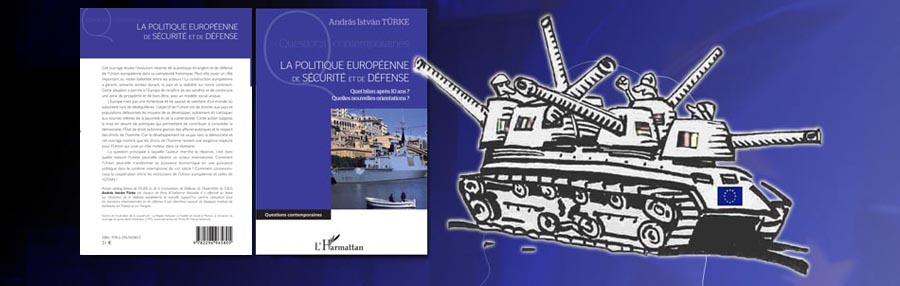
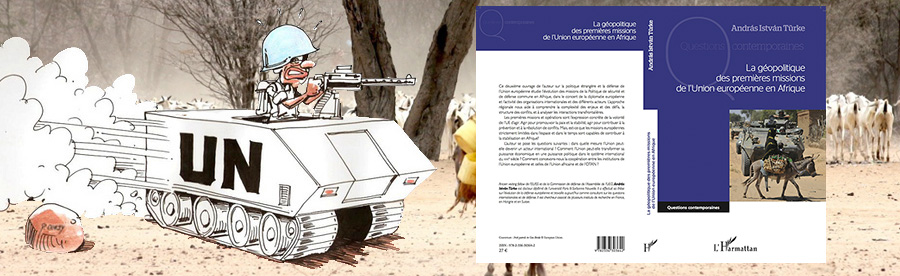
We are looking for sponsors for the English translation of these books, please contact turkeandras(at)gmail(dot)com