
You are here
Africa
Jetzt ist er im Visier der Justiz – und weiterhin als Sicherheitsbeaufragter tätig: Silvan P. war bis 2024 für die Brandschutzkontrollen zuständig
Nach dem verheerenden Brand im «Le Constellation» in Crans-Montana gerät der Ex-Sicherheitschef der Gemeinde ins Visier der Justiz. Silvan P. wird am 9. Februar verhört. Auch eine vierte Person steht offenbar unter Verdacht.
Categories: Africa, Swiss News
Nach Schulter-OP: Lausanne muss lange ohne Ndiaye auskommen
Seit Monaten kämpft Souleymane Ndiaye mit Schulterprobleme, weshalb er sich nun einer Operation unterzogen hat. Damit wird er Lausanne allerdings mehrere Monate lang fehlen.
Categories: Africa, Swiss News
Senegal boss Thiaw banned after Afcon final chaos
Senegal manager Pape Thiaw led his players off the pitch in protest during the 2025 Africa Cup of Nations final win over Morocco.
Categories: Africa, Swiss News
Heavy gunfire and blasts heard near airport in Niger's capital
The airport houses an air force base and is about 10km (six miles) from the presidential place.
Categories: Africa, Swiss News
‘Unfathomable But Avoidable’ Suffering in Gaza Hospitals, Says Volunteer Nurse
On 26 September 2025, children stand outside a tent being used for medical services at Al Aqsa Hospital in Deir al Balah in the Gaza Strip. Credit: UNICEF/James Elder
By Ed Holt
BRATISLAVA, Jan 29 2026 (IPS)
“I’d never encountered anything like it before. I had no idea that there could be a place that needed humanitarian aid and that a government entity wouldn’t allow physicians or health workers into [that place],” says Jane.*
Jane, a nurse from a Western country, was part of a volunteer medical team that went into Gaza in early 2025 during a ceasefire that ran from January 19 to March 18 last year.
Gaza’s healthcare system had been devastated over the course of the Israeli offensive which had followed Hamas’s brutal attacks on Israel on October 7, 2023. According to UNICEF, 94 percent of hospitals have been damaged or destroyed.
Jane tells IPS her team had hoped that during the stop in fighting they would be able to help deliver vital treatment and services which were desperately needed by so many people in the country.
But she says that instead she and her colleagues, who set out for Gaza within weeks of the ceasefire coming into place, ran into seemingly arbitrary obstacles before they even set foot in the country.
Within hours of landing in Jordan, they found out that three physicians and one nurse in the team had been denied entry into Gaza. The following day there were more problems.
“We were at the border with many other NGOs and all of us had been approved to go in [to Gaza]. But then towards the end of the day, they decided that they were going to close the border and not allow anybody through that day. So we had to make our way back to Jordan,” Jane tells IPS.
She says her team lost a week of time when they could have been helping people before they managed to get in. And when they did, she was shocked at what she found.
“It was when we drove into Gaza that it really hit me. You see these kinds of dystopian places in movies or read about them in novels… a van came to pick us up and drove us to our hospital and on this drive I could see nothing but demolished buildings, rubble everywhere. I had to look away a few times because there were skeletons of animals. I’m not sure if there were skeletons of people because I had to look away once I saw the skeletons of animals,” she says.
Things did not improve when she got to the hospital.
“We got to the hospital and at first, although it was different from what I’m used to, it seemed like a functioning hospital… until I started work the next day.”
She describes the hospital, which is one of the largest in Gaza, as lacking even the most basic resources. “They didn’t have paper, they didn’t have gloves, they didn’t have hand sanitiser,” Jane says.
Life-saving equipment such as ventilators for patients struggling to breathe was unavailable, forcing physicians to perform emergency intubations in some cases.
Worst of all though, even when help could have been easily administered to relieve suffering, seemingly arbitrary decisions meant it was not.
“I had a patient – a little girl who had an infection that caused three out of four of her limbs to become gangrenous. All she needed to treat it was a simple medication. But, of course, we weren’t allowed to bring medications in – if [the authorities] found [those medicines on us], they could have either thrown them away or just completely denied us access in.
“This little girl had been in this hospital for at least more than a month – she’d been waiting for a medical evacuation to Jordan, but Israel continued to deny her medical evacuation. At the time I was there, she was supposed to be evacuated, but they denied it – twice while I was there. The first time they did not give a reason and then the second time they said it was because they wouldn’t allow her mother to go with her,” says Jane.
“This little girl was maybe two or three years old and for me, a paediatric and neonatal ICU nurse, this was unfathomable. To expect this toddler to go to another country, likely get her limbs amputated and then have rehabilitation in another country without her mother was ludicrous,” she adds.
Eventually, approval was given for the mother to go with her daughter. But, says Jane, the girl eventually had to have all three limbs amputated.
“It’s a tragedy in and of itself because this could have been remediated with a simple medication or an earlier evacuation. Her limbs became necrotic – they didn’t start out being necrotic. Her limbs being amputated was not something that needed to happen.”
Jane says that of all the patients she treated and all the suffering she saw in the hospital, the case of that girl stands out among her memories today.
Testimony from other doctors and healthcare workers shows that Jane’s experience was not unusual.
Two recent reports which detailed the almost complete destruction of maternal and reproductive healthcare in Gaza as a result of Israeli attacks were based on, or included, testimonies from physicians and healthcare workers, as well as affected women, which highlighted the appalling conditions in healthcare facilities.
Critics of Israel’s offensive in Gaza have variously described Israeli forces’ actions, including attacks on healthcare and other civilian infrastructure, as breaches of international humanitarian law, war crimes, crimes against humanity and even genocide.
Israel has repeatedly denied such charges and claimed that Hamas’s extensive use of the civilian environment for military purposes meant that large parts of urban Gaza had become legitimate military targets and accused the militant group of building a huge tunnel network under Gaza’s hospitals, schools, and other civilian buildings, housing its command centres and weapons stores.
But critics have also pointed to how the suffering caused by such attacks has been compounded by restrictions on aid coming into Gaza.
Jane, who is now back in her home country, says that these restrictions are continuing, despite a ceasefire having been in place since October.
Israeli authorities have banned certain items from being brought into Gaza over concerns they could be used by militants. But humanitarian and rights groups are critical of both the breadth and scope of ‘dual use’ restrictions imposed by Israel, a lack of clarity over what exactly constitutes a ‘dual use’ item, and seemingly ad hoc limitations on what can be brought in.
Jane said she knew of colleagues who were being refused entry to Gaza for carrying the most basic medical equipment.
“One doctor recently got denied entry because he was trying to bring his stethoscope in and when he said he needed it, the authorities said no, and they took his stethoscope from him and denied him entry,” she says.
Some rights groups say that continued restrictions appear to be irrational and could give rise to questions about their intent.
“Israeli officials, like Hamas officials, are being investigated for international crimes. Israel is being questioned as a state about its compliance with the Genocide Convention. There are provisional orders from the International Court of Justice about complying with the Genocide Convention, which demand that aid restrictions be lifted and that aid be provided, in particular medical aid. The refusal to follow those orders is legally significant,” Sam Zarifi, Executive Director of Physicians for Human Rights (PHR), told IPS.
“In analysis of criminal intent, reckless or intentional disregard of foreseeable harm is, and can be, viewed as evidence of intent. The Israeli government has some of the best lawyers in the world, and I hope those lawyers are advising their clients that some of these policies raise very, very important questions about the intent behind them, because they do not seem to be otherwise rational,” he added.
Regardless of any intent, humanitarian groups say restrictions on aid are driving ongoing massive, widescale misery and suffering in Gaza.
This is despite the fact that vital aid is available and ready to be delivered quickly if allowed.
“We have hundreds of truckloads of lifesaving assistance ready outside Gaza. The supplies exist. What we need is more access,” Ricardo Pires, Communication Manager, Division of Global Communications and Advocacy at UNICEF, told IPS.
“We are still hearing about significant restrictions on medical supplies under the notion of being dual use. But we’re [also] looking at things like antibiotics, painkillers, specialised baby food. And these are all available. I mean, what’s very frustrating is that we know from the UN that there are trucks and warehouses full of the necessary supplies, and they can be, and they need to be, and they must be moved in as soon as possible. It is absolutely heartbreaking and mind-blowing and tragic that people in Gaza are still suffering from completely avoidable misery and harm,” added Zarifi.
It remains unclear when, or if, such restrictions will be eased, while a recent announcement by Israel of plans to ban 37 NGOs from operating in Gaza has also been criticised by rights groups who say it will further hinder the delivery of humanitarian aid in the country.
Jane, who would like to return to Gaza for further humanitarian work soon, says she is not hopeful of any improvement for the people there in the near future.
“This has gone on for almost two and a half years and we still don’t have [political] leaders who will stop sending arms to Israel, who will call for a ceasefire when a ceasefire was needed, and then who would actually make sure that the terms of the ceasefire are being are being honoured, because as we’ve seen recently, [Isreal is] continuing to drop bombs. But more than that, you can’t just create a ceasefire, then still not allow aid in. So, it’s hard to have hope for the future for Gaza,” she says.
*Jane’s name and country of origin have been excluded from this feature for her safety.
IPS UN Bureau Report
Follow @IPSNewsUNBureau
!function(d,s,id){var js,fjs=d.getElementsByTagName(s)[0],p=/^http:/.test(d.location)?'http':'https';if(!d.getElementById(id)){js=d.createElement(s);js.id=id;js.src=p+'://platform.twitter.com/widgets.js';fjs.parentNode.insertBefore(js,fjs);}}(document, 'script', 'twitter-wjs'); Related Articles
- Gaza: Physicians Call For Unimpeded Aid To Restore Reproductive Healthcare
- Maternal Deaths Spike in War-Torn Ukraine
Excerpt:
Damages from the war and significant restrictions on medical supplies mean that "people in Gaza are still suffering from completely avoidable misery and harm." - Sam Zarifi, Executive Director of Physicians for Human Rights (PHR)
Categories: Africa, Swiss News
Melting Reserves of Power: Mongolia’s Glaciers and the Future of Energy and Food Security
A lake in of Bayan-Ölgii Province is a water source in western Mongolia. Change in the nature of glaciers and water resources affects agriculture and livelihood of Mongolians. Credit: Pexels/ ArtHouse Studio
By Madhurima Sarkar-Swaisgood, Prangya Paramita Gupta and Parvathy Subha
BANGKOK, Thailand, Jan 29 2026 (IPS)
The International Year of Glaciers’ Preservation in 2025 was a timely reminder that the stability of Mongolia’s economy rests on fragile mountain systems that are melting faster than ever recorded. The loss reverberates across the country’s energy and agricultural systems, two development pillars that draw from the same finite resource: water.
Warming and glacial retreat
Mongolia’s average surface air temperature is already 2.3°C higher than the pre-industrial baseline, about 1.3°C above the global average. The most fossil fuel-intensive climate scenario (SSP5) indicates nearly 8°C of warming by the end of the century with the steepest increases expected in the northern and western provinces; home to the country’s glaciers.
These glaciers contribute more than 70 per cent of Mongolia’s freshwater, sustaining agriculture, hydropower, and domestic use. Since 1940, glacier volume has declined by about 28 per cent, and total glacier area has decreased by 35 per cent between 1990 and 2016, leaving only 627 glaciers covering 334 km².
Between the 1980s and 2010, Mongolia lost 63 lakes larger than 0.1 km² and about 683 rivers, many in the foothills of the Altai ranges with the highest concentration of glaciers. Groundwater storage on the Mongolian Plateau is also decreasing at nearly 3 mm per year, linked partly to reduced glacial input.
Analysis using downscaled IPCC climate projections available on ESCAP’s Risk and Resilience Portal suggests that this trend is likely to continue in the coming decades and by 2,100 many western Altai glaciers may disappear entirely (Figures 1A and 1B).
Figure 1(A and B) Change in glacier area during 1990-2010 and (B) projected change in glacier mass balance (2021-2100) in Mongolia under climate change scenarios (Source: Kemp et al (2022). Mongolia’s cryosphere. Geomorphology)
Figure 2 change in glacial mass balance in the Altai Mountain region under existing and climate change scenarios
Water, energy and agriculture: A tightening nexus
Mongolia’s semi-arid climate has always made water a strategic asset for development.
Agriculture remains the largest water consumer, accounting for roughly two-thirds of total use. Since 2008, more than 1,000 hectares of irrigated land have been added annually, driven by food and livestock-security goals.
With prolonged dry conditions (Figure 3), farmers in western and northern provinces report increasing reliance on shallow wells and groundwater pumping, while pastures dry earlier in the season. These demands coincide with a growing push to expand hydropower for domestic energy security.
Figure 3 Exposure of livestock (sheep and goats) to soil moisture drought under climate change conditions
Hydropower in transition
Hydropower accounts for nearly one-fifth of Mongolia’s electricity generation, but its viability depends on stable water flow. In the western region, hydropower provides 93 per cent of locally produced energy.
The Durgun Hydropower Plant (HPP) in Khovd Province, for example, provides over 28 per cent of regional power but operates in one of the driest parts of the country. With glacier retreat and declining summer precipitation, inflows have become less predictable.
ESCAP drought-exposure modelling shows that the western provinces already face chronic low-to-medium drought intensity, with worsening conditions under future scenarios (Figure 3).
Figure 4 exposure of hydropower plants to drought (Standardized streamflow index) under climate change scenarios in the western region (Source: ESCAP Authors)
When summer river levels fall, reservoir storage drops, hydropower generation declines and diesel generation must fill the gap raising both costs and emissions. Meanwhile, agricultural water withdrawals upstream further constrain available flows for power generation.
The result is a feedback loop: limited water cuts hydropower output, leading to higher reliance on fossil energy, which in turn intensifies warming and glacier melt.
Competing pressures in a semi-arid economy
In the Western Energy Systems, consisting of provinces closest to the glaciers, rising demand compounds these stresses. Between 2018 and 2019, electricity consumption in the region rose 5.6 per cent, driven by population growth and mining expansion.
In summer months, when electricity demand peaks for irrigation pumping and cooling, river discharge often reaches its lowest levels. This mismatch between energy demand and hydrological supply poses a systemic risk. Climate projections show that long-term discharge in key basins will decline, reducing the economic lifespan of existing hydropower assets.
Addressing this challenge requires coordinated planning across water, energy, and agriculture. Three areas stand out:
- 1. Water-efficient agriculture. Expanding drip irrigation, adopting drought-resilient crop varieties, and improving on-farm water storage can reduce demand during low-flow periods. Aligning irrigation schedules with projected runoff cycles would ease pressure on hydropower reservoirs.
2. Diversified renewables. Mongolia’s wind and solar resources can complement hydropower seasonality. Integrating hybrid systems with storage or pumped hydro can maintain grid stability during drought years.
3. Data-driven basin management. Glacier monitoring and real-time hydrological data should inform both irrigation allocation and hydropower operation. This shared evidence-based approach can prevent conflicts between sectors during dry spells.
Mongolia already emphasizes renewable diversification. By embedding glacier and river monitoring within sector planning, the policy can better anticipate seasonal stress rather than react to it.
From vulnerability to transformative adaptation
Glacier retreat, once viewed as an environmental concern, is now an economic one. For Mongolia, without adaptation and foresight, the combined stress of reduced meltwater, erratic rainfall, and rising temperatures could destabilize both food production and energy security.
Protecting these frozen reserves and managing the water they release means securing not only the country’s rivers but its power and food systems as well.
Resilience begins where risk meets foresight.
Madhurima Sarkar-Swaisgood is Economic Affairs Officer, ESCAP; Prangya Paramita Gupta is Disaster Risk Reduction Consultant, ESCAP; Parvathy Subha is Disaster Risk Reduction Consultant, ESCAP
IPS UN Bureau
Follow @IPSNewsUNBureau
!function(d,s,id){var js,fjs=d.getElementsByTagName(s)[0],p=/^http:/.test(d.location)?'http':'https';if(!d.getElementById(id)){js=d.createElement(s);js.id=id;js.src=p+'://platform.twitter.com/widgets.js';fjs.parentNode.insertBefore(js,fjs);}}(document, 'script', 'twitter-wjs');
Categories: Africa, Swiss News
Ex-Nigerian minister in bribery trial went on spending sprees, court hears
Prosecutors allege Diezani Alison-Madueke was given "a life of luxury" in the UK by people interested in Nigerian government contracts.
Categories: Africa, Swiss News
Budgetkontrolle durch die USA: Washington genehmigt ab sofort Venezuelas Haushaltsplan
Die USA verlangen von Venezuelas Übergangsregierung ab sofort monatliche Haushaltspläne, die genehmigt werden müssen. Ein Grossteil der Gelder soll für den Kauf von Medikamenten und Ausrüstung aus den USA verwendet werden.
Categories: Africa, Swiss News
Gambia’s Supreme Court to Decide on FGM Ban
FGM violates the right of women and girls to the highest attainable standard of health, the right to physical integrity, and life. Credit: Shutterstock
By Juliana Nnoko
Jan 28 2026 (IPS)
Gambia’s Supreme Court is considering whether a law protecting women and girls from female genital mutilation (FGM) is constitutional. The practice, common in Gambia, often involves forcibly restraining girls while parts of their genitals are cut, sometimes with the wound sewn shut.
FGM constitutes torture and cruel, inhuman, or degrading treatment under international human rights law. It can result in death or life long health problems such as infections, fetal deaths, obstetric complications, and psychological effects. Now the Supreme Court will decide whether women and girls will continue to be protected from such harmful practices.
Religious leaders and a member of parliament failed to get parliament to overturn Gambia’s 2015 FGM ban in 2024. They have taken their fight all the way to the Supreme Court, contending that the ban violates constitutional rights to cultural and religious freedom. This effort isn’t just a setback for one small West African country—it’s part of a global backlash against women’s rights that threatens to unravel decades of progress protecting women and girls from a widespread form of gender-based violence.
There’s no medical justification for FGM, according to the World Health Organization. Medicalization of FGM, in which the procedure is carried out by health personnel, does not reduce the violation of human rights. Regardless of where and by whom it is performed, FGM is never safe.
There's no medical justification for FGM, according to the World Health Organization. Medicalization of FGM, in which the procedure is carried out by health personnel, does not reduce the violation of human rights. Regardless of where and by whom it is performed, FGM is never safe. Nonetheless, over 230 million girls and women have undergone FGM, with about 63 percent of these survivors (144 million) in Africa
Nonetheless, over 230 million girls and women have undergone FGM, with about 63 percent of these survivors (144 million) in Africa. In Gambia in 2020, nearly three-quarters of women and girls between 15 and 49 reported having the procedure, with almost two-thirds cut before age 5. This isn’t an abstract human rights issue—it’s a public health crisis affecting millions of women and girls and the consequences follow them for life.
FGM violates the right of women and girls to the highest attainable standard of health, the right to physical integrity, and life. Women and girls who have experienced FGM face complications during childbirth, chronic infections, psychological trauma, and in some cases, death. In August 2025, a one-month-old baby girl bled to death after FGM was performed on her.
The government’s 2015 ban was a breakthrough. Gambia joined dozens of countries recognizing that FGM violates fundamental human rights, the rights to health, bodily integrity, and freedom from torture. The government even adopted a national strategy to eliminate the practice entirely by 2030, aligning with global Sustainable Development Goals. The government’s implementation of the ban and the strategy has been slow and now faced with challenges.
The Supreme Court is hearing arguments that should chill anyone who cares about human rights. Media reported that one witness, a prominent Muslim leader, attempted to justify the violence against women and girls, saying that “female circumcision” is part of Islam and isn’t harmful. When asked about two babies who died from the procedure, he replied: “We are Muslims and if someone dies, it’s God’s will.” He went on to say that the practice’s benefit is reducing women’s sexual desire, “which could be a problem for men.”
The plaintiffs’ courtroom arguments don’t hold up to scrutiny. There’s no requirement for FGM in Sharia (Islamic law). It’s not part of the Sunna (Prophetic traditions) or considered an honorable act. The practice predates Islam and isn’t universal among Muslims—it’s a cultural practice that some communities have incorrectly linked to faith.
Moreover, framing FGM as a constitutional right to religious freedom is misleading. The Gambian constitution restricts rights, including religious or cultural, that impinge on other people’s fundamental rights and freedoms, such as to life, from torture or inhuman treatment, and nondiscrimination.
Gambian organizations, including the Network Against Gender Base Violence and Women in Liberation and Leadership (WILL), are fighting this case. Civil society organizations mobilized survivors, community leaders, and women’s groups across the country to defeat efforts to repeal the law in Parliament in 2024. The opposition to the case is coming from women and girls whose lives literally depend on maintaining these protections.
“This is happening despite individuals being harassed, particularly on social media, for speaking out against the case creating an atmosphere where many survivors, including women’s rights defenders, are now choosing to be silent,” said Fatou Baleh, an anti-FGM activist, FGM survivor, and founder of WILL.
Gambia has ratified the African Charter on Human and Peoples’ Rights, its Protocol on the Rights of Women in Africa (Maputo Protocol), and the African Charter on the Rights and Welfare of the Child. Article 5 (b) of the Maputo Protocol explicitly prohibits all forms of FGM and medicalization of the practice.
In July 2025, the government signed the African Union Convention on Ending Violence Against Women, which was adopted earlier that year, reaffirming its commitment to adopt and enforce legal measures to prevent harmful practices and protect survivors, reinforcing the constitutional duty to uphold the FGM ban.
The health and well-being of girls and women in Gambia now rests with the Supreme Court. However the court rules, the government needs to invest in ending FGM through comprehensive education programs, community-led initiatives, strong enforcement of existing laws, and medical and psychological support for survivors to protect hundreds of thousands of women and girls’ lives.
Juliana Nnoko is a senior women’s rights researcher at Human Rights Watch.
Nach tödlichen Schüssen auf Alex Pretti (†37) in Minneapolis: Zwei Grenzschutzbeamte erhalten Aussendienst-Verbot
Zwei US-Grenzschutzbeamte erschossen den Krankenpfleger Alex Pretti in Minneapolis. Die Beamten wurden für mehrere Tage suspendiert und dürfen künftig nicht mehr im Aussendienst arbeiten.
Categories: Africa, Swiss News
Assefa targets repeat of record-breaking London win
Reigning champion Tigst Assefa will target a repeat of her record-breaking London Marathon victory when she takes on rivals Sifan Hassan and Peres Jepchirchir in this year's race.
Categories: Africa, Swiss News
Assefa targets repeat of record-breaking London win
Reigning champion Tigst Assefa will target a repeat of her record-breaking London Marathon victory when she takes on rivals Sifan Hassan and Peres Jepchirchir in this year's race.
Categories: Africa, Swiss News
US YouTube star IShowSpeed to get Ghanaian passport as Africa tour ends
Ghana's foreign minister says the influencer is a "worthy ambassador", but some Ghanaians criticised the move.
Categories: Africa, Swiss News
Talent Wasted: Afghanistan’s Educated Women Adapt Under Taliban Restrictions
Educated Afghan women in Kabul’s informal economy, working in retail as Taliban rules curb professional opportunities. Credit: Learning Together.
By External Source
KABUL, Jan 28 2026 (IPS)
Young women in Afghanistan’s capital, Kabul, are trying their hands at unfamiliar tasks in embroidery, tailoring and designing beads in market stalls. Many should instead have been sitting at desks writing computer software or reporting news, the fields they trained for.
Since the Taliban’s return to power in 2021, highly educated women have been removed from their official positions and shut out of much of the formal workforce, compelling them to take up jobs unrelated to their field of training to cope with economic hardship and to avoid the mental strain of unemployment.
Professional opportunities for women have been drastically limited. Almost all women are barred from working in offices, the media, and other fields related to their education.
Lida, (a pseudonym) a computer science graduate, previously earned a good salary as an IT officer at the Ministry of Economy, a job she held for more than six years. She now lives in southeastern Kabul, working as a tailor and running a small shop. Her late husband, who worked for the Ministry of Rural Development, was killed in a Kabul bombing ten years ago.
Lida now shares a house with the family of her brother along with her five children, and says she is in dire financial straits. To make ends meet, she has sent one of her sons to sell plastic bags on the streets. Her younger son is still at school. Her daughter’s education has been suspended following Taliban’s edicts.
“When the Taliban returned to power I was forced out of my job, says Lida, “and I have not been able to find any within my profession in the last four years and therefore, had no option but to work as a shop assistant”.
The Taliban do not directly grant work permits to women to operate the shops. Instead, either a male family member or another man must first obtain the work permit for the shop
Many women are flocking to Kabul’s informal sector, but it provides limited opportunities, crowding them into shops, which only sell women’s clothing and cosmetics, serving primarily female customers.
The Taliban do not directly grant work permits to women to operate the shops. Instead, either a male family member or another man must first obtain the work permit for the shop. Only then can women work in the shop as salespeople or assistants, receiving a salary or a commission based on an agreed arrangement.
“Working in a tailoring workshop is very difficult and frustrating”, Lida complains adding, “I wish I could at least work in a computer shop, which is related to my field of study”.
Mursal, (a pseudonym) 27, a journalism graduate, has faced a similar fate. She worked as a reporter for eight years in various media outlets and, before the Taliban returned, was employed in an advocacy organization for journalists, where she enjoyed a good income and benefits.
Mursal, like dozens of other educated women, has become a shopkeeper. Private media outlets do not have adequate capacity to absorb many women, so instead of reporting the news, she now sells traditional Afghan clothes and products geared towards women.
Voicing her frustrations Mursal said she initially felt “very undervalued”. “People used to cast strange glances at us and, apart from that, my family wasn’t very happy with the job I was engaged in”. It is uncommon for women to operate shops in Afghanistan,
Mursal sells women’s clothes in southwestern Kabul, where she lives with her parents, both former government employees who are now unemployed.
“I have six sisters and one brother”, says Mursal, adding, “I cannot get married until they are on their feet, because I am responsible for all of them”. Her brother is only ten years old. Mursal makes about ten thousands Afghanis (127 euros) a month selling in the shop, which is hardly sufficient for the family to get by.
Even so, the Taliban’s moral police do not give the women any breathing space under the increasing precarious job situation. According to Mursal, officials from the Ministry for the Promotion of Virtue and Prevention of Vice visit their shops three times a week to enforce an all-day rule requiring them to wear masks, which they find suffocating. They are also forced to conceal or remove pictures on women’s sleepwear.
“If the sleepwear is hidden, how would customers know which ones or what to buy?” she points out.
Defiance in the face of adversity
While the women agonize over the likelihood of years of academic effort going to waste, they have nevertheless turned their situation as shopkeepers into a form of resistance to Taliban’s violations of their rights.
Forced to run shops to support their families, they may be glad to earn a little income, but their deeper pain comes from knowing that their skills and dreams in their chosen professions remain unused.
Still, it is a testament to their resilience in the face of severe restrictions imposed by the Taliban that they have readily taken up often unwanted jobs in the informal sector simply to survive and support their families.
The shift is not just about earning a living; it is a silent resistance. By taking on these roles, Afghan women are sending a clear signal that they will not remain silent and be airbrushed from the society.
Even when doors are closed to them in their professions, they find ways to stay active, contribute, and make a difference. They demonstrate that even a small window of opportunity can be transformed into meaningful participation, proving that Afghan women will continue to fight for their rights in any way they can.
Their resilience is a reminder that Taliban restrictions may limit opportunities, but they cannot erase ambition or their determination to create change.
By taking up these jobs, they make sure their presence is felt in society and stand strong in the face of the Taliban, who are trying to erase them from public life. Afghan women refuse to stay silent. They make it clear Afghan women will not disappear, they insist on being seen, heard, and counted.
Excerpt:
The author is an Afghanistan-based female journalist, trained with Finnish support before the Taliban take-over. Her identity is withheld for security reasonsTempête de vents violents : Sonelgaz déploie ses plans d’urgence à l’échelle nationale
Alors que des rafales dépassant les 120 km/h paralysent une grande partie de l’Algérie — imposant la fermeture des écoles et le confinement des espaces […]
L’article Tempête de vents violents : Sonelgaz déploie ses plans d’urgence à l’échelle nationale est apparu en premier sur .
Défense : l’Algérie parmi les 30 armées les plus puissantes du monde en 2026
L’Algérie confirme sa montée en puissance sur l’échiquier militaire international. Selon le classement mondial annuel 2026 publié par le site spécialisé Global Firepower, le pays […]
L’article Défense : l’Algérie parmi les 30 armées les plus puissantes du monde en 2026 est apparu en premier sur .
Pourquoi investir au cœur de la capitale Alger ? Focus sur la résidence Astéria à El Achour
Alger, cœur économique et administratif du pays, concentre l’activité, les infrastructures et les opportunités. Dans ce contexte, investir dans la capitale dépasse la simple acquisition […]
L’article Pourquoi investir au cœur de la capitale Alger ? Focus sur la résidence Astéria à El Achour est apparu en premier sur .
Scandale des 580 mds dérobés de la CNAS : lourd réquisitoire contre l’ex-minitre Tidjani-Haddam
Le procureur général près la Cour d’Alger a requis, tard dans la nuit de dimanche, les peines maximales à l’encontre des accusés poursuivis dans une […]
L’article Scandale des 580 mds dérobés de la CNAS : lourd réquisitoire contre l’ex-minitre Tidjani-Haddam est apparu en premier sur .
Immigration en France : titres de séjour en hausse en 2025… mais pas pour les Algériens
Les chiffres de l’immigration en France pour 2025, publiés mardi par le ministère de l’Intérieur, révèlent une dynamique paradoxale : une augmentation globale de la […]
L’article Immigration en France : titres de séjour en hausse en 2025… mais pas pour les Algériens est apparu en premier sur .
Press release - Protect copyrighted work used by generative AI, say Legal Affairs MEPs
Access to high quality data to train generative AI in the EU should go hand in hand with fair remuneration for the creative sector.
Committee on Legal Affairs
Source : © European Union, 2026 - EP
Committee on Legal Affairs
Source : © European Union, 2026 - EP
Categories: Africa, European Union
Pages
the old site is here


© 2012-2015 Europa Varietas Foundation © 2015-2020 Europa Varietas Association
www.europavarietas.org | info(@)europavarietas(dot)org | Switzerland
This is a GDPR ready site
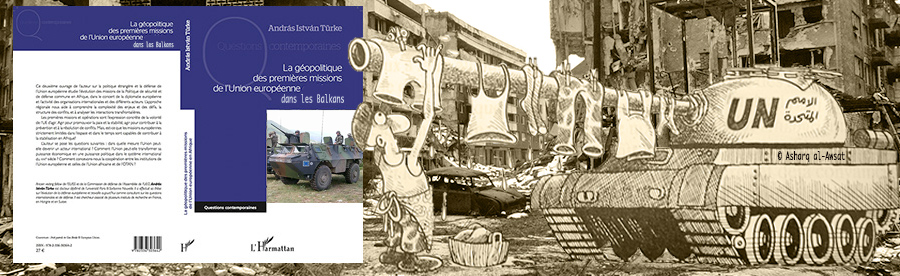
We are looking for sponsors for the English translation of these books, please contact turkeandras(at)gmail(dot)com