
You are here
Afrique
Press release - Electricity grids: MEPs back plans to accelerate energy project permit process
The proposal adopted on Thursday will allow faster permitting for electricity grids and renewables projects, to help cut energy prices through the domestic supply of clean energy.
Committee on Industry, Research and Energy
Source : © European Union, 2026 - EP
Committee on Industry, Research and Energy
Source : © European Union, 2026 - EP
Categories: Afrique, Europäische Union
6900 REPÜLT ÓRA, 5390 LESZÁLLÁS
Az Airbus H145M és H225M helikopterei 2019-től új fejezetet nyitottak a magyar forgószárnyas katonai repülésben, azonban a mélypontról való kilábalás első lépéseit még 2016-ban sikerült megtenni. Ekkor érkezett Szolnokra az a két AS350B Ecureuil (Mókus) helikopter, amely korábban a hazai légimentést szolgálta. Az azóta eltelt évtizedről három olyan embert kérdeztem, akiket beosztásuknál és életkoruknál fogva más-más élmény és tapasztalat köt az Ecureuil helikopterekhez.
Az AS350B helikopterek közvetlenül a rendszerváltás után, a kilencvenes évek elején jelentek meg Magyarországon. Három ilyen gép került a légimentőkhöz, akik nagyon megszerették az üzembiztos, megbízható, egyszerű típust. Amikor 2014 novemberétől egy európai uniós szabályozás megtiltotta, hogy egyhajtóműves mentőhelikopterek lakott terület felett repüljenek, a légimentők búcsút mondtak az AS350-esnek, és teljesen átálltak a 2006 óta használt EC135-ösök üzemeltetésére. Addigra a három Mókusból kettő maradt, a legfiatalabb, 1992-es gyártású gép 2009-ben Balatonfüreden felborult.
Categories: Afrique, Biztonságpolitika
Will Changes to the UN Resident Coordinator System Damage the Development Pillar & Downgrade its Assistance to Middle-Income Nations?
UN Deputy Secretary-General Amina J. Mohammed with Resident Coordinators from the Latin America and Caribbean region. Credit: United Nations
By Mohammed Chiraz Baly
GENEVA, Jul 2 2026 (IPS)
A letter to staff unions from economists working in the resident coordinator system, blows the whistle on a restructuring that could damage the development pillar and downgrade support to middle income countries.
For memory, UN resident coordinators are tasked with aligning the work of different UN agencies in 162 countries with respective government priorities.
Resident coordinators don’t have funds to get agencies to work together. They rely on their powers of persuasion and importantly, their office’s analytical and data handling capacity.
They therefore have a country economist, who provides evidence-based advice to the UN country team on improving development impact and helps mobilise financing from international financial institutions. These economists also represent non-resident agencies such as mine, UNCTAD, in discussions with the government. As agencies shut their country offices, this becomes more important.
The current system has existed since 2019 and the General Assembly has asked the Deputy Secretary-General, who oversees the system, for a review.
According to the letter (there is no other source of information as the process is a tightly-guarded secret), the proposal is a restructuring that, surprisingly, reduces analytical capacity resident coordinator offices in the over 100 middle income developing countries through a blanket downgrading of economist posts, undermining resident coordinators in the process.
There doesn’t seem to be an assessment in the rushed process of different countries’ circumstances nor the situations they’re going through.
It is not clear why middle-income countries, which constitute most UN member states, are being targeted and this appears to run counter to UN policy.
DESA has warned against abandoning support for middle income countries (https://lnkd.in/edKWFJgM) noting they “are a large and heterogenous group. They differ widely in their development needs and challenges, and in their capacity to mobilise domestic and external resources.”
Rebeca Grynspan has called out the middle-income country trap.
Last month the Secretary-General warned not to judge the challenges facing countries by GDP alone (https://lnkd.in/eaB85QFg).
Although, member states have already voiced concerns with the restructuring; it is being imposed regardless, and being rushed through before they can have a further say.
A large number of staff, originating from all regions, some recruited only last year, will therefore be removed from their posts, while UN support to and ability to mobilise financing for middle income countries will be reduced.
As the restructuring is cost-neutral, the savings from cutting staff in the field would appear to then provide more posts to regional offices and at senior level, and upgrade management posts.
The letter alleges an absence of meaningful consultation with unions and resident coordinators. In some countries, the entire cadre of international and national professional staff in a country could be replaced.
There is consensus that the resident coordinator system should be improved and we know resources are limited. It’s not clear though if downgrading substantive and analytical capacity is the right solution. Perhaps a more comprehensive assessment is needed, without the ticking clock of the end of mandate, so that the fragile development pillar isn’t damaged further.
Extracts from the letter are published below :
We write as economists serving in UN Resident Coordinator’s Offices across Standard, Complex, and Multi-Country settings. We come from different regions, work in countries spanning very different development contexts and income categories, and some of us started our careers as national officers. We raise these concerns in good faith and ask for a structured dialogue before the proposals are finalised.
1. The case for economic expertise in the RC system
The RCO economist provides analytical support independent of government preference and agency programming logic — on fiscal space, debt dynamics, structural transformation, SDG financing, and trade shocks. It draws on experience across multiple country contexts and IFI networks. The seniority of the posts matters: it enables credible engagement with finance ministers, private sector counterparts, and development finance institutions — the partnerships needed to mobilise SDG financing. Abolishing those posts removes that standing. At the ECOSOC OAS in June 2026, delegations spanning the G77, the African Group, AOSIS, India, Germany, Indonesia, Pakistan, Canada, the United States, and the Republic of Korea called explicitly for “strengthening capacities in strategic planning, economic analysis, SDG financing, data, digitalization, communications, climate and resilience.” The recalibration moves in the opposite direction, weeks after that mandate was given.
• The current moment is the wrong time to reduce analytical capacity. Countries face compounding pressures: COVID-19 structural aftereffects, Russia-Ukraine trade and energy disruptions, US-Iran escalation, and a fragmenting multilateral trading system. At the ECOSOC OAS, USG Li Junhua (DESA) noted ODA fell a record 23% in 2025 and the SDG financing gap stands above USD 4 trillion. Agency analytical capacity is simultaneously contracting: UNDP has abolished its economist programme for Africa and budgets and staffing have been cut across multiple entities. As agency footprints shrink, the RCO economist is often the only independent macroeconomic analyst the RC and host government can draw on.
• The Standard RCO category is a coordination label, not an economic complexity assessment. Across the 101 Standard RCO countries, analytical complexity does not track income category. DESA, UNCTAD, and the regional commissions have all cautioned against using GDP per capita as a proxy for development support needs. Applying that filter to determine where independent economic analysis is necessary is inconsistent with the UN’s own guidance.
• Adding senior headquarters posts while cutting country capacity contradicts a direct General Assembly mandate. The recalibration creates new D2 posts at headquarters and increases regional staffing. In December 2025, paragraph 16 of GA resolution A/C.5/80/L.4 requested the Secretary-General to include proposals “with the aim to reduce or reclassify the overall number of USG, ASG, D-2 and D-1 posts markedly” under UN80. Adding D2 posts at headquarters while abolishing and nationalising field posts moves in the opposite direction. Norway at the ECOSOC OAS stated this is “not the time to weaken” the RC system. Member States including AOSIS, Pakistan, Nepal, Indonesia, Canada, and Switzerland also questioned “whether expertise-on-demand can substitute for sustained presence.” It cannot. Cross-country policy and financing work requires continuity, institutional memory, and relationships — not episodic inputs from a regional hub.
• The recalibration contradicts UN 2.0 priorities and discards a recent investment in talent. Under UN 2.0, the Secretary-General prioritised data-driven decision-making — a competency assessed in recruiting these positions — and called for international staff mobility across headquarters, regional bodies, and the field. The RCO economist role was one of the few routes enabling that rotation. Converting posts to national roles closes it off. Several colleagues joined within the past 12 to 18 months on the basis of a clear signal that country-level analytical capacity was being strengthened. Reversing course without explanation wastes the investment and will deter future talent.
2. The analytical basis for this decision does not hold
The recalibration of 130 RCOs has been summarised on a single slide with four columns — no within-category differentiation, no country-specific analysis, no assessment of capacity lost in any specific setting. The UN80 Staff Support Policy Framework (OHR/PG/2025/4, June 2025) requires that “decision-makers must provide reasons for any administrative decisions, supported by facts.” No such reasons have been provided. Income-based categories — which the UN’s own analytical bodies warn against using as a proxy for development complexity — are the primary basis for determining where independent economic analysis is needed.
3. Process concerns
• RCs were not meaningfully consulted. Engagement happened shortly before public rollout, not during the design phase. Earlier discussions reportedly included giving RCs discretion over the economist profile in their office. That option was dropped without explanation, in direct tension with the principle that country team configurations should reflect RC judgment.
• No written rationale has been provided. The town hall did not explain why economist positions are being nationalised or downgraded, why income categories are the organising variable, or how any of this improves efficiency or advances UN 2.0. Without a written rationale, staff and Member States are being asked to accept a significant structural change on trust.
• The process does not meet the Organisation’s own standards for staff consultation. Staff Regulation 8.1(a) requires “effective participation of the staff in identifying, examining and resolving issues relating to staff welfare, including conditions of work.” OHR/PG/2025/4 commits management to engage through the Staff Management Committee “on a regular and timely basis regarding proposals that will impact staff.” Staff learned of this recalibration at a town hall after the configuration was designed. Whatever engagement occurred with staff representatives fell short of these requirements — and staff at large had no involvement at all.
• The pace of implementation risks bypassing Member State oversight. ACABQ and the Fifth Committee will consider RC system funding in autumn 2026. DCO’s extrabudgetary discretion means restructuring can proceed before that review. Rushing this through before a new Secretary-General is named makes the situation harder to revisit.
4. What we are asking for
• A written rationale — including the evidence base, efficiency gains claimed, and an honest account of what analytical capacity is lost.
• Genuine RC consultation before any finalisation on the economist profile appropriate for each country context. RC discretion should be the default, not the exception.
• Structured Staff Council engagement before the configuration is operationalised, consistent with Staff Regulation 8.1 and Staff Rule 8.1(h).
• Reconsideration of the blanket approach, with scope for RCs to retain or request an international economist where conditions warrant — an option reportedly still under discussion before this proposal was finalised.
• An assessment of the HR costs — relocations, repatriations, terminations — given the RC system’s current financial constraints.
Mohammed Chiraz Baly is a staff representative and former General Secretary of the CCISUA staff union federation. He is also a data analyst at UNCTAD focusing on investment financing in developing countries.
IPS UN Bureau
Follow @IPSNewsUNBureau
!function(d,s,id){var js,fjs=d.getElementsByTagName(s)[0],p=/^http:/.test(d.location)?'http':'https';if(!d.getElementById(id)){js=d.createElement(s);js.id=id;js.src=p+'://platform.twitter.com/widgets.js';fjs.parentNode.insertBefore(js,fjs);}}(document, 'script', 'twitter-wjs');
Ist die Nati bereit fürs Elfmeterschiessen?: Beim Thema Penalty-Workshop grätscht Embolo rein
Sowohl bei der EM 2021 als auch bei jener 2024 ist die Nati dramatisch im Penaltyschiessen des Viertelfinals ausgeschieden. Damit das nicht nochmals passiert, hat es im Nati-Camp einen Workshop gegeben.
Categories: Afrique, Swiss News
Albewährte Hausmittel: Leinen, Bambus, Seide: Die besten Tricks gegen Schweiss
Sie gehören zum Sommer wie Sonne und Meer: Schweissflecken machen vielen Menschen das Leben schwer. Hier ein paar Tipps, wie wir cool durch die warme Jahreszeit kommen.
Categories: Afrique, Swiss News
US-Bundesstaat kassiert ab: «Taylor-Swift-Steuer» macht Ferienhausbesitzer hässig
Seit diesem Mittwoch ist im US-Bundesstaat Rhode Island eine neue Steuer in Kraft, die im Volksmund «Taylor Swift Tax» genannt wird. Die Staatsabgabe fällt auf Zweitwohnsitze an – und löst bei langjährigen Ferienhauseigentümern Empörung aus.
Categories: Afrique, Swiss News
Lopes will relish Messi duel, says Cape Verde defender's mother
The prospect of facing World Cup record goalscorer Lionel Messi in a knockout game would strike fear into most defenders, but not Roberto Lopes, according to the Cape Verde defender's mother.
Zu Lothar Matthäus aufgeschlossen: Nati-Captain Xhaka tritt in internationalen Rekordkreis
Um 5 Uhr Schweizer Zeit gehts diesen Freitag für die Nati um den Einzug in den Achtelfinal. Gegen Algerien feiert Granit Xhaka sein 150. Länderspiel, wodurch er sich einen Platz in einer exklusiven Auswahl sichert.
Categories: Afrique, Swiss News
Ab ins Grüne: Kennst du die 11 schönsten Parkanlagen der Schweiz?
Ob für einen Spaziergang, eine Pause im Schatten oder ein Picknick im Grünen: Diese elf öffentlichen Parkanlagen gehören zu den schönsten der Schweiz und laden im Sommer zum Entspannen ein.
Categories: Afrique, Swiss News
Reisen & Sommer: Kroatien: Interaktive Karte zeigt, wo das Meer wirklich sauber ist
Vor dem Badeurlaub lohnt sich ein Blick auf die Wasserqualität: Kroatien überwacht seine Strände laufend und stellt die Daten online zur Verfügung. Eine interaktive Karte zeigt in Echtzeit, wie sauber das Meer ist – und welche beliebten Strände schlechter abschneiden.
Categories: Afrique, Swiss News
Schaulustige zücken Handys: Luxus-Yacht strandet auf Mallorca
Panne am Strand von Magaluf auf Mallorca: Eine Luxus-Yacht strandet und muss zwei Stunden später abgeschleppt werden. Verletzt wird zum Glück niemand.
Categories: Afrique, Swiss News
Coach sitzt verdutzt daneben: Plötzlich wird der Tod des Vaters des Kongo-Trainers verkündet
An der Pressekonferenz nach der 1:2-Niederlage gegen England verkündet Kongos Pressesprecher den Tod des Vaters von Trainer Sébastien Desabre. Doch dieser scheint überrascht. Wusste er von nichts?
Categories: Afrique, Swiss News
Nachhaltiger Sommergenuss: So entsteht beim Grillieren viel weniger Abfall
Sommer, Sonne, Grillieren – ein Genuss, der leider oft mit viel Abfall einhergeht. Das muss nicht sein: So wird die Grillparty zum Zero-Waste-Vergnügen.
Categories: Afrique, Swiss News
Grosse Waldbrandgefahr: Kanton St. Gallen ruft Feuerverbot aus
Die Schweiz kämpft mit starker Trockenheit und Feuergefahr. Der Kanton St. Gallen hat nun ein Feuerverbot im Wald ausgerufen. In Frankreich wüten derweil heftige Waldbrände.
Categories: Afrique, Swiss News
«Möchte da nicht mehr mitmachen»: «Bergdoktor»-Star verrät endlich wirkliches Alter
17 Jahre lang waren Fans davon überzeugt, dass «Bergdoktor»-Star Annika Ernst 1982 geboren ist. Doch die deutsche Schauspielerin ist drei Jahre älter.
Categories: Afrique, Swiss News
Startelf-Spieler angeschlagen: Yakin ist gezwungen, auf einer Position zu wechseln
Vier Änderungen hat Murat Yakin in der letzten Startelf vorgenommen. Gegen Algerien ist es wieder mindestens eine: Luca Jaquez ist angeschlagen und verpasste die beiden Trainings vor dem Sechzehntelfinal.
Categories: Afrique, Swiss News
Schweine verstorben: Vollbrand zerstört Bauernhaus in Ruppoldsried BE
In Ruppoldsried BE sind am Mittwochabend ein Bauernhaus und ein angrenzender Schopf in Vollbrand geraten. Das Gebäude brannte komplett nieder. Mehrere Tiere sind verstorben.
Categories: Afrique, Swiss News
Französisches Clafoutisi: Viele kennen dieses einfache Kirsch-Rezept nicht
Clafoutis ist ein traditionelles französisches Dessert, das ursprünglich aus der Region Limousin stammt. Es handelt sich um eine Art Kuchen, der normalerweise mit frischem Obst, oft Kirschen, zubereitet wird. Der Teig ähnelt dem von Pfannkuchen oder Crepes, ist jedoch etwas dicker.Das Besondere an Clafoutis ist, dass die Früchte ganz in den Teig eingelegt werden, was bedeutet, dass sie während des Backens nicht entsteint werden. Der Kern soll dazu beitragen, den Geschmack des Desserts zu intensivieren.Der Teig für Clafoutis besteht aus Eiern, Milch, Zucker, Mehl und manchmal auch Rahm. Wir haben das Rezept verfeinert, in dem wir Mandelmehl und Quark verwenden. Probiert dieses Rezept und überzeugt euch selber.
Categories: Afrique, Swiss News
Wechsel zeichnete sich ab: Bayern verkündet Transfer von WM-Star
Der FC Bayern sichert sich die Dienste des marokkanischen Nationalspielers Ismael Saibari für 50 Millionen Euro. Der 25-Jährige wechselt vom PSV Eindhoven nach München und erhält einen Vertrag bis 2031.
Categories: Afrique, Swiss News
Seit 2021 spurlos verschwunden: Schweizer Cold Case wird Thema bei «Aktenzeichen XY»
Alishia Bucher aus Adligenswil LU ist seit 2021 spurlos verschwunden. Familie und Freunde fragen sich bis heute, was passiert ist. Die Ausstrahlung der Sendung «Aktenzeichen XY» soll neue Hinweise liefern.
Categories: Afrique, Swiss News
Pages
the old site is here


© 2012-2015 Europa Varietas Foundation © 2015-2020 Europa Varietas Association
www.europavarietas.org | info(@)europavarietas(dot)org | Switzerland
This is a GDPR ready site


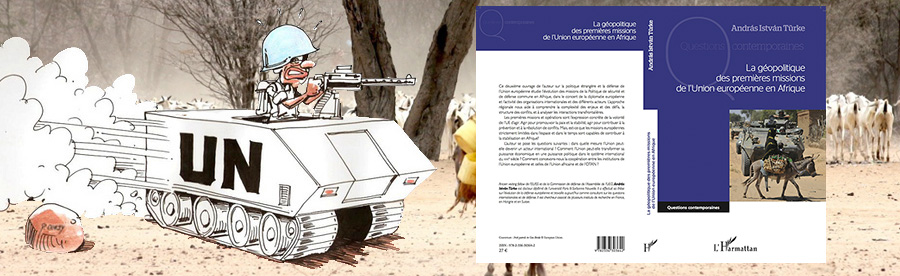
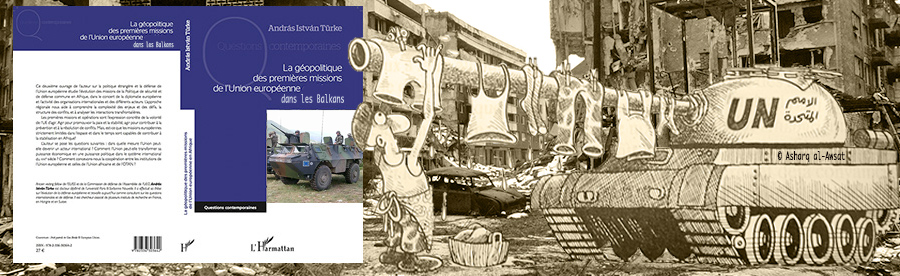
We are looking for sponsors for the English translation of these books, please contact turkeandras(at)gmail(dot)com