
You are here
Határon túli magyar portálok összesített hírei
De l’assemblage à la maîtrise industrielle : le véritable défi de l’électronique en Algérie
Alger le 23 septembre – L’avenir de l’industrie électronique en Algérie ne se résume plus à la capacité de produire localement. Le véritable enjeu réside […]
L’article De l’assemblage à la maîtrise industrielle : le véritable défi de l’électronique en Algérie est apparu en premier sur .
Categories: Afrique, Határon túli magyar portálok összesített hírei
Algérie : le FMI voit les réserves de change passer de 51 à 19,8 milliards de dollars d’ici 2031
Le Fonds monétaire international projette une nouvelle baisse des réserves officielles de change de l’Algérie, de 51 milliards de dollars fin 2025 à 19,8 milliards […]
L’article Algérie : le FMI voit les réserves de change passer de 51 à 19,8 milliards de dollars d’ici 2031 est apparu en premier sur .
Categories: Afrique, Határon túli magyar portálok összesített hírei
Algérie-Turquie : coopération médicale autour de la maladie de Parkinson
Des neurologues et praticiens algériens se sont réunis récemment à l’hôtel Irena de Sétif pour échanger sur les avancées récentes dans le diagnostic et le […]
L’article Algérie-Turquie : coopération médicale autour de la maladie de Parkinson est apparu en premier sur .
Categories: Afrique, Határon túli magyar portálok összesített hírei
Trafic d’or vers Istanbul : 10 lingots dissimulé dans une zone intime d’un passager
Le détecteur de métaux n’a pas cessé de sonner, même une fois toutes ses affaires posées sur le tapis du contrôle. Ce matin-là, à l’aéroport […]
L’article Trafic d’or vers Istanbul : 10 lingots dissimulé dans une zone intime d’un passager est apparu en premier sur .
Categories: Afrique, Határon túli magyar portálok összesített hírei
Passeport algérien en France : Metz sans RDV, retrait à Laval le 27 septembre, Paris en ligne
À quelques semaines de la Toussaint, trois consulats d’Algérie en France ont précisé leurs règles pour le passeport biométrique. Metz accepte les dossiers avec ou […]
L’article Passeport algérien en France : Metz sans RDV, retrait à Laval le 27 septembre, Paris en ligne est apparu en premier sur .
Categories: Afrique, Határon túli magyar portálok összesített hírei
Tebboune signe un large mouvement chez les walis et secrétaires généraux
Tebboune a signé ce mercredi un décret présidentiel qui redessine une partie de la carte administrative locale. Le chef de l’État a procédé à un […]
L’article Tebboune signe un large mouvement chez les walis et secrétaires généraux est apparu en premier sur .
Categories: Afrique, Határon túli magyar portálok összesített hírei
Aufpassen beim Essen!: Fünf Lebensmittel beeinträchtigen den Schlaf
Fettreiches, zuckerhaltiges oder scharfes Essen vor dem Zubettgehen kann für Probleme beim Ein- oder Durchschlafen sorgen. Doch es gibt auch Lebensmittel, die eine schlechte Auswirkung auf unseren Schlaf haben, bei denen wir das wohl weniger vermuten würden.
Categories: Határon túli magyar portálok összesített hírei, Swiss News
Wenn der Papa den Sohn coacht: Kloten-Trainer Liniger gerät wegen Sohn Elia auf Gratwanderung
Eigentlich war Elia Liniger für die U21 vorgesehen. Doch dann schlägt der Youngster beim EHC Kloten überraschend im National-League-Team ein – an der Seite von Vater und Headcoach Michael Liniger. Eine herausfordernde Konstellation.
Categories: Határon túli magyar portálok összesített hírei, Swiss News
Guichet unique de l’investissement : Tebboune finalise le décret présidentiel
Le président de la République, Abdelmadjid Tebboune, a présidé ce mardi une réunion de travail entièrement tournée vers un texte très attendu : le décret […]
L’article Guichet unique de l’investissement : Tebboune finalise le décret présidentiel est apparu en premier sur .
Categories: Afrique, Határon túli magyar portálok összesített hírei
Thaiboxer Rodriguez wurde in Asien zum Star – jetzt kämpft er in Bern: Ist er unser nächster Andy Hug?
Thaiboxer Dani Rodriguez kehrt für einen Titelkampf in die Schweiz zurück. Was ihm seine Heimat bedeutet, worauf er sich besonders freut und wer ihn nach Tickets gefragt hat. Zudem verrät der Zürcher, dass ein Wechsel der Disziplin im Raum steht.
Categories: Határon túli magyar portálok összesített hírei, Swiss News
Knast-Kollegin bekommt alles: Dschungelstar enterbte ihre Tochter
Sie holte 2009 die Dschungelkrone, jetzt sorgt ihr letzter Wille für Gesprächsstoff. Ingrid van Bergen (†94) hat ihre Familie ausgeschlossen und machte ihre engste Vertraute zur Alleinerbin.
Categories: Határon túli magyar portálok összesített hírei, Swiss News
Weil Karte abgelehnt wurde: Mann zerstört Weinflaschen im Wert von 9000 Dollar
Nach abgelehnter Kreditkarte dreht ein Mann Mitte September in einem Supermarkt in Dourado, Brasilien, durch: Er zerstört Weinflaschen im Wert von 9000 Dollar, umgerechnet fast 10'000 Franken, und bedroht Kunden.
Categories: Határon túli magyar portálok összesített hírei, Swiss News
Weil Freiwillige Helfer fehlen: Bündner SAC-Hütte auf 1900 m.ü.M. steht zum Verkauf
Die 1898 erbaute SAC-Hütte Schesaplana hoch ob Seewis GR wird verkauft. Wegen fehlender Freiwilliger gibt die Sektion Pfannenstiel die Hütte ab. Interessenten müssen ein Gastronomiekonzept vorlegen. Der Umbau der Massenunterkunft zu einem Ferienhaus ist nicht erlaubt.
Categories: Határon túli magyar portálok összesített hírei, Swiss News
Andrea L. (54) streitet trotz Xhaka-Geständnis alles ab – Anwalt ordnet ein: Welchen Sinn macht die bizarre Verteidigung der Impf-Ärztin?
Granit Xhaka gesteht, sein Impfzertifikat sei gekauft. Seine Ärztin Andrea L. widerspricht: Sie habe ihn korrekt geimpft. Strafrechtsexperte André Kuhn erklärt, was hinter dem Verwirrspiel stecken könnte. Und was der Ärztin im schlimmsten Fall droht.
Categories: Határon túli magyar portálok összesített hírei, Swiss News
Massive Lohneinbussen bei Kaderpositionen?: SRG reagiert auf Spar-Gerüchte
Nach Berichten über happige Lohneinbussen für Kaderpositionen meldet sich die SRG bei Blick zu Wort und dementiert: Eine generelle Einbusse von 1000 Franken lasse sich «nicht bestätigen». Alles hänge von der jeweiligen Funktion ab.
Categories: Határon túli magyar portálok összesített hírei, Swiss News
Electroménagers fabriqués en Algérie : cinq opérations d’exportation vers six pays
Six marchés extérieurs accueilleront, à partir de ce jeudi 24 septembre, des produits électroniques et électroménagers sortis des usines algériennes. Le Mali figure pour la […]
L’article Electroménagers fabriqués en Algérie : cinq opérations d’exportation vers six pays est apparu en premier sur .
Categories: Afrique, Határon túli magyar portálok összesített hírei
« 10 000 tonnes par an » : L’usine de lait infantile de Boumerdès sera opérationnelle à cette date
En deuxième étape de sa visite de terrain dans la zone industrielle Larbatache, située dans la wilaya de Boumerdès, le directeur Général de l’Agence Algérienne […]
L’article « 10 000 tonnes par an » : L’usine de lait infantile de Boumerdès sera opérationnelle à cette date est apparu en premier sur .
Categories: Afrique, Határon túli magyar portálok összesített hírei
More climate risks, less cooperation: the erosion of international capacity to act
Looking back, 2015 was a true “window of opportunity”: Both the 2030 Agenda with its 17 Sustainable Development Goals (SDG) and the Paris Climate Agreement were adopted. The current situation, however, is the opposite of such a moment. The 2026 communiqué from the G7 development ministers makes no mention of the 2030 Agenda, the SDG, or climate change. The U.S. administration under President Trump has succeeded in making even non binding international guiding principles politically taboo.
Nature and the Environment: How Can the UN Improve Its Work on the Environment?
Treating the polycrisis as one undifferentiated agenda has never worked; treating them as three coherent families might. Credit: Isaiah Esipisu/IPS
By External Source
APEX, North Carolina / SAN FRANCISCO, California / VIENNA, Austria / SHEFFIELD, United Kingdom / GENEVA, Switzerland, Sep 22 2026 (IPS)
In March 2025, United Nations Secretary-General António Guterres launched “UN80”. Recognizing that the world is in a state of dramatic and rapid change at a time when funding for the UN is under threat from budget cuts, Guterres declared that, on the anniversary of the UN’s 80th birthday, a review of its work was long overdue. Now, UN80 is coming to a head with a set of recommendations that cover almost every aspect of the UN’s work.
Some of the recommendations are focused on reducing budgets. With some major governments cutting their funding and heavily in arrears, the UN needs to cut its spending.
The current target is a reduction of roughly 20%. This has already resulted in a decision to shift staff from high-cost duty stations like New York or Geneva, to lower-cost locations such as Bonn and Nairobi.
There has also been more “structural and programmatic alignment”—in other words, finding ways to make different parts of the UN work together more efficiently, or even merge different groups. So far, this has included the UN General Assembly agreeing to merge the UN System Staff College (UNSSC) and the UN Institute for Training and Research (UNITAR) into the UN Institute for Capability and Learning Innovation.
On the research side, the UN Research Institute for Social Development (UNRISD) has been integrated into the UN University. Meanwhile, the UN Interregional Crime and Justice Research Institute (UNICRI) has been absorbed into the UN Office on Drugs and Crime.
Finally, in the development agenda, there have been proposals to merge the UN Environment Programme (UNEP) and UN Office for Project Services (UNOPS), and to join together the UN Population Fund (UNFPA) and UN Women, while also integrating the Joint UN Programme on HIV/AIDS (UNAIDS) into existing programs.
Environmental Protection and Biodiversity Conservation: Improving Multilateral Environment Agreements
But what about all-important environmental issues? Does UN80 address the triple planetary crisis of climate change, biodiversity loss and pollution?
The short answer is, yes. UN80 includes “Work Package 27” dealing with the environment. We are delighted to see the inclusion of several issues we believe would improve how multilateral environmental agreements (MEAs) are organized, including the idea of “clustering.”
The UN80 process of the past 18 months has generated some excellent ideas. The window for acting on them is narrower than it looks: a new Secretary-General takes office in January 2027, and proposals that have not been anchored in a mandate by then will be inherited by someone who did not make them. Now is the time to bring them to fruition
Over the past year, we have advocated taking up an idea first mooted by UNEP’s Executive Director Klaus Töpfer back in the 2000s. He proposed grouping—or clustering—MEAs and making them work more closely and effectively together. These could be grouped along the lines of the triple planetary crisis (or “polycrisis”): (i) chemicals, waste and pollution; (ii) biodiversity loss and (iii) climate change.
The logic of the groupings matters. Chemicals and waste are fundamentally about pollution and health; biodiversity is about conservation and sustainable use, while climate change sits at the nexus of these challenges. This means effectively exploiting all synergies. Treating the polycrisis as one undifferentiated agenda has never worked; treating them as three coherent families might.
Achim Steiner, who took over from Töpfer as Executive Director of UNEP in 2006, made the first attempt at clustering. The chemicals and waste conventions—Basel, Rotterdam and Stockholm—agreed a synergies process that produced joint decisions and, from 2010, back-to-back conferences of the parties, a shared secretariat structure and common administrative services.
It has been largely a success on the terms it set itself: it improved collaboration and cut costs, even if programmatic integration has gone less far than administrative integration.
Steiner also started efforts to cluster MEAs focused on biodiversity. However, this process was never completed. We believe UN80 provides an ideal opportunity for this to be revisited and moved forward.
We are pleased to see that UN80 recommends establishing “a time-limited, independent and regionally representative Consultative Group of Ministers or High-level representatives of UN Member States to evaluate benefits, feasibility and possible options for MEA consolidation.” (Action 5.1)
This group should focus on two areas: clustering the three biodiversity conventions administered by UNEP—the Convention on Biological Diversity, CITES and the Convention on Migratory Species—with the Kunming-Montreal Global Biodiversity Framework as a unifying umbrella; and bringing the Minamata Convention on Mercury closer to the other chemicals and waste MEAs (Basel, Rotterdam, Stockholm).
If achieved, such clustering would strengthen both the treaties seeking to address biodiversity loss and those dealing with chemicals and waste.
Clustering the three UNEP-administered biodiversity conventions is only the start: working relationships will also be needed with the biodiversity-related conventions outside UNEP—Ramsar (wetlands), World Heritage, the Plant Treaty, and Biodiversity Beyond National Jurisdiction (BBNJ) —and with the other Rio conventions.
We already have more than a decade of experience of what the chemicals and waste cluster has achieved and believe there is much to learn from it, and to replicate.
Better Science
Another recommendation that should be implemented is the better coordination of environmental science, and closer links between science and policy.
This matters because so many environmental issues, such as biodiversity loss and climate change, are interlinked. Connecting the scientific work in these areas helps us “join the dots” and also develop and implement better policy.
The UN80’s recommendations include several very good ones on science coordination and science policy. For instance, it proposes that we:
- “Institutionalize a periodic science–policy dialogue anchored in UNEP’s science function that informs UNEA, as well as MEAs and other UN entities governing-bodies, as appropriate.” (Action 2.1)
- “Promote structured coordination and collaboration among chairs of MEA scientific and technical bodies and other science-policy interfaces, using existing mechanisms while respecting mandates.” (Action 3.1)
- “Build a user-driven, modern knowledge ecosystem and repository of environmental science and knowledge as a shared UN asset, linking country-to-global data and existing science platforms through shared standards and interoperable search.” (Action 3.2)
These are also the cheapest recommendations on the list, and the ones with the widest benefit. It is worth making this very clear at a moment when everything is being weighed against a 20% savings target: coordination costs very little and duplication costs a great deal.
With the global community appearing to be so divided and splintered across so many issues, we understand that not all ideas will command universal support.
This is why we applaud the idea of developing “coalitions of the willing” or communities of practice around various MEAs. We believe UNEP can and should play a convening role in this, as well as related discussions about how the Rio treaties dealing with climate change, desertification and biodiversity loss can work more closely and effectively together.
Environmental Interlinkages
When UNEP was set up in 1972, one of its key missions was to help coordinate environmental work by different UN bodies. Much of this has fractured over the years as new MEAs and organizations have emerged to address major environmental issues like climate change. However, we believe it is time to reinvigorate UNEP’s mission.
UN80 addresses this by proposing that the UN’s Environment Management Group (which is chaired by the head of UNEP) should:
- “Develop and roll-out a new EMG strategy and operating model. (Action 4.1)
- “Adopt a common UN system-wide results framework for environmental mainstreaming.” (Action 4.2)
- “Establish effective linkages with the UN Secretary-General and key governing bodies (e.g., UNEA, World Health Assembly, Human Rights Council, World Meteorological Congress, etc.).” (Action 4.3)
It is worth being clear about which of these the UN can simply decide to do, and which it cannot. The science function, the knowledge ecosystem and a reinvigorated Environment Management Group are Secretariat matters: they can be delivered by the UN system itself. Clustering conventions is not.
MEAs are autonomous treaties, and only their Parties can agree to consolidate them. That is precisely why Action 5.1 proposes a group of ministers rather than an administrative decision—and why governments, not officials, will determine whether this part of UN80 goes anywhere.
Strengthening Political Leadership
What else should be done? In 2025, we proposed reintroducing the Global Ministerial Environment Forum—a body that met annually through the 2000s in conjunction with UNEP’s Governing Council, until it was superseded by the creation of the UN Environment Assembly. The Forum’s goal was to elevate discussions on environmental issues to a high political level.
Work Package 27 suggests a slightly different approach, but with similar aims. It suggests a Global Environment Leaders’ Summit, to be held every four years and attended by heads of state and government. We support this (or similar) initiatives intended to bring presidents and prime ministers to the table. In short, we need decision makers at the highest level coming together to address global environmental matters.
But four years is almost too long given the speed and acceleration of global environmental change. A simpler answer is available: a ministerial segment attached to each session of the Environment Assembly, which already meets every two years and already has universal membership, with a leaders’ summit every four. That adds almost no additional costs, and it builds political attention into a cycle that already exists rather than competing with it.
A New Secretary-General — and the Question of Who Carries This Forward
There is one complication none of this can avoid. UN80 is António Guterres’ initiative, and his term ends in December 2026. The recommendations in Work Package 27 have been prepared for a Secretary-General who will not be in office to implement them.
Whoever succeeds him will inherit these proposals rather than own them—and on the evidence of the selection process so far, will arrive with no particular commitment to them. Eight candidates have published vision statements and taken part in interactive dialogues with the General Assembly since April.
So, what can we expect? Continuity on the efficiency agenda, almost certainly. Every candidate has endorsed UN80 in some form, and the Organization’s financial position leaves little choice.
Several have committed to sustained mandate discipline, which the General Assembly’s March 2026 resolution on the creation, implementation and review of mandates now underpins. That is genuinely useful, and over time it should reduce reporting burdens across the system.
But it carries a risk worth naming. Mandate discipline affects Secretariat mandates. It does not reach the treaty bodies, whose mandates are made by their own Parties.
If an incoming Secretary-General treats Work Package 27 primarily as a savings exercise, clustering becomes consolidation by austerity. This means the functions most likely to be cut are precisely those with no treaty constituency to defend them: science coordination, the knowledge ecosystem, the Environment Management Group.
Two practical conclusions follow. The first is that the Consultative Group proposed under Action 5.1 should be established now, with a mandate and a reporting line designed to survive the transition, rather than left to a successor to constitute. The second is that in whatever dialogue remains before the appointment, candidates should be asked a question none has yet been put to them: what do you intend to do with Work Package 27?
Optimism and Action
The suggestions in UN80 and Work Package 27 offer a new approach to environmental issues and show great potential. A more empowered UNEP could provide stronger systemwide coordination across the UN and significantly enhance the integration and coherence of science, policy, and environmental protection.
To succeed, decision makers will need to be bold and to move forward quickly and decisively. The UN80 process of the past 18 months has generated some excellent ideas. The window for acting on them is narrower than it looks: a new Secretary-General takes office in January 2027, and proposals that have not been anchored in a mandate by then will be inherited by someone who did not make them. Now is the time to bring them to fruition.
Prof. Felix Dodds and Chris Spence have participated in United Nations talks on climate change and other environmental negotiations since the 1990s. They co-edited Heroes of Environmental Diplomacy: Profiles in Courage (Routledge, 2022) and wrote Environmental Lobbying at the United Nations: A Guide to Protecting Our Planet (Routledge, 2025). Their next book, Political Heroes of the Environment: Profiles in Courage, is due for release in 2027.
Hugo-Maria Schally is former Head of the Multilateral Environmental Cooperation Unit at the Directorate-General for Environment, European Commission.
Peter Bridgewater is an Associate Researcher at the Advanced Wellbeing Research Centre, Sheffield Hallam University, UK.; Adjunct Professor at the University of Canberra, Australia; a former Director of the Division of Ecological Sciences in UNESCO; and former Secretary General of the Ramsar Convention on Wetlands.
Craig Boljkovac is Executive Director of Green Cross International, a Geneva-based Senior Advisor with a Regional Centre for the Basel and Stockholm Conventions, and an independent international environmental consultant with over 35 years of experience in relevant fields. He has participated in several INCs and related meetings for the global plastics agreement.
The opinions expressed in this article are the personal views of the individuals listed and do not necessarily reflect those of the organizations with which they are affiliated.
Categories: Africa, Határon túli magyar portálok összesített hírei
Declining Marriage and Increasing Cohabitation
For many couples cohabitation has become an alternative to marriage rather than simply a step toward it. Credit: Shutterstock
By Joseph Chamie
PORTLAND, USA, Sep 22 2026 (IPS)
Marriage is declining in many countries, with fewer people marrying and many postponing marriage until later in life. At the same time, increasing numbers of men and women are choosing cohabitation instead of marriage.
Various social, economic, and legal factors have contributed to this shift from marriage to cohabitation. Moreover, cohabitation is increasingly not simply a prelude to marriage but, in many cases, an alternative to it. Although its prevalence varies considerably across regions and countries, cohabitation among unmarried couples has continued to rise in many parts of the world.
Historical demographic trends indicate that marriage has become less common over the past several decades, with particularly pronounced declines among younger adults. Nearly 90% of the world’s population lives in a country where marriage rates are declining. This change in union formation is part of the broader transformation in family and household patterns around the world.
In the mid-20th century, about 65% to 70% of adults worldwide were married. By 2021, however, the global share had declined to approximately 50% to 55%.
The proportion of married adults has declined across major age groups. In the United States, for example, the share of adults who were married decreased across all major age groups between 1960 and 2010 (Figure 1).
Source: U.S Census Bureau.
In addition, declines in marriage rates have been accompanied by substantial delays in marriage. Several decades ago, women in many countries typically married in their early or mid-twenties. Today, the median age at first marriage for women has risen to the late twenties or early thirties in many developed countries.
Historical demographic trends indicate that marriage has become less common over the past several decades, with particularly pronounced declines among younger adults. Nearly 90% of the world’s population lives in a country where marriage rates are declining. This change in union formation is part of the broader transformation in family and household patterns around the world
Marriage is therefore becoming less common in an increasing number of countries. At the same time, cohabitation has become increasingly widespread.
Once more common among people with lower levels of education and socio-economic status, cohabitation has in recent decades spread across educational and socioeconomic groups, making it a more broadly established form of partnership.
Cohabitation is particularly common in Central and South America, where levels are among the highest in the world. Rates of 40% or more of all unions are found in Panama, Nicaragua, Cuba, the Dominican Republic, and Haiti.
Brazil provides another striking example. In 2022, nearly 40% of couples were in consensual or cohabiting unions, compared with about 38% in civil and religious marriages. For the first time, consensual unions surpassed civil and religious marriages as the most common form of union.
The rise of cohabitation in Latin American countries has also been accompanied by increasing proportions of children being born outside of marriage. From roughly 2016 to 2020, approximately 75% of children in Latin America were born outside marriage. The proportions ranged from about 60% in Guatemala and Ecuador to more than 80% in Colombia and Panama.
By contrast, cohabitation remains less common in Asia and the Middle East. These lower rates are generally attributed to the continuing influence of traditional family structures, marriage practices, and cultural and religious norms.
In addition, some countries have cultural restrictions and laws prohibiting sex outside of marriage, effectively making cohabitation illegal. These include Afghanistan, Egypt, Indonesia, Iran, Kuwait, Malaysia, Mauritania, Morocco, Pakistan, Qatar, Saudi Arabia, Sudan, the United Arab Emirates, and Yemen. In most of these countries, a large majority of adults aged 18 to 49 are married.
Various factors have contributed to the shift from marriage toward cohabitation in many countries. Unlike marriage, cohabitation generally involves fewer legal procedures, costs, and formalities and may avoid some of the financial and legal complications that may arise from divorce (Table 1).
Source: Author’s compilation.
Cohabitation also gives men and women opportunities to get to know each other, assess their compatibility, financial circumstances, and make decisions about their future without immediately assuming the legal obligations of marriage. For many couples, therefore, cohabitation has become an alternative to marriage rather than simply a step toward it.
The widespread availability of modern contraceptives has given men and women greater flexibility in forming personal relationships and greater control over the timing and number of their children. Other important factors include urbanization, rising educational attainment, increasing female labor-force participation, financial pressures and unemployment, changing priorities regarding careers, personal growth, and independence, and evolving social and economic roles of men and women.
Additional factors include the rising costs associated with marriage, the potential financial consequences of divorce, changes in laws governing unmarried couples, and growing social acceptance of cohabitation.
Among OECD countries, about 12% of adults aged 20 and older lived in a cohabiting union around 2023. The proportions were considerably higher in some OECD countries, including Iceland (22%), Sweden (20%), and France (19%).
As in many Latin American countries, a large proportion of the births in OECD countries now occur outside marriage. A half century ago, fewer than 10% of children were born outside of marriage in most OECD countries. By 2020, that share had risen to more than 30% in most countries and to more than half in several, including Denmark, Estonia, France, Iceland, Norway, and Sweden.
In sum, although substantial regional variations persist, particularly in more traditional and religious societies, marriage has declined significantly in most countries over the past several decades. Many men and women are also postponing marriage until later in life. At the same time, cohabitation among unmarried couples has become increasingly common, reflecting a broader transformation in partnership patterns.
Joseph Chamie is a consulting demographer and a former director of the United Nations Population Division.
Categories: Africa, Határon túli magyar portálok összesített hírei
Pages
the old site is here


© 2012-2015 Europa Varietas Foundation © 2015-2020 Europa Varietas Association
www.europavarietas.org | info(@)europavarietas(dot)org | Switzerland
This is a GDPR ready site
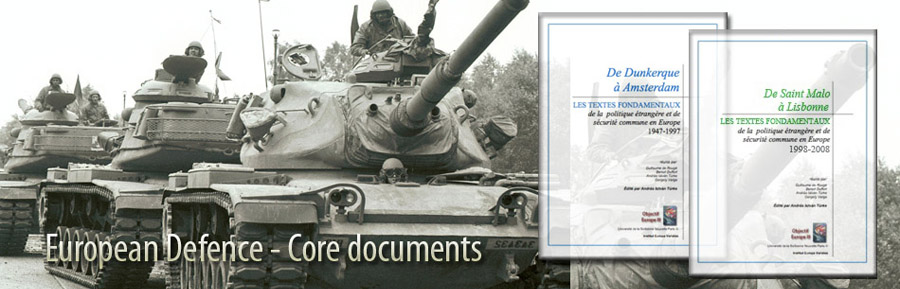
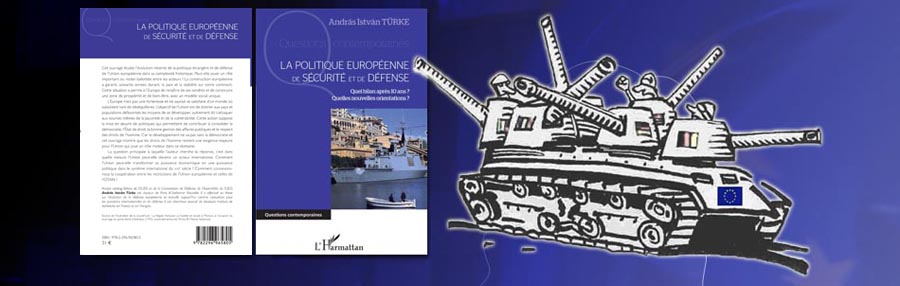
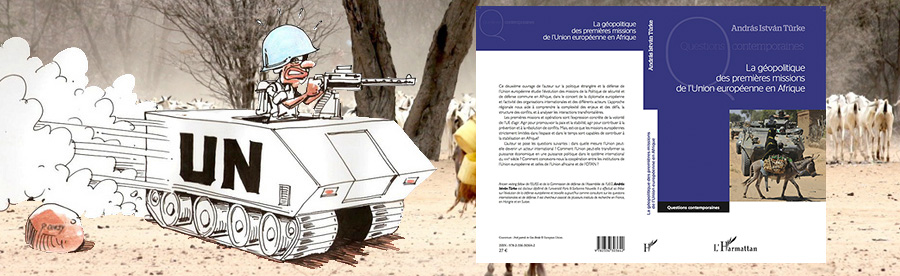
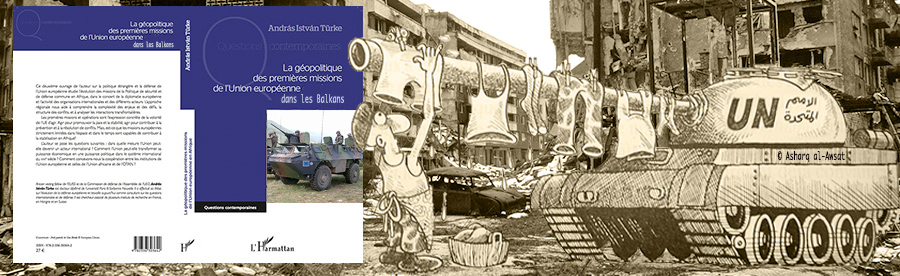
We are looking for sponsors for the English translation of these books, please contact turkeandras(at)gmail(dot)com