
You are here
European Union
No such thing as a dignified execution | Frankfurter Allgemeine Zeitung - Germany
Categories: Afrique, European Union
Press release - Civil protection mechanism: improve preparedness and anticipate crises
Environment committee and public health committee MEPs want the next EU crisis prevention and response tool to do more to anticipate crises and support recovery.
Committee on the Environment, Public Health and Food Safety
Committee on Public Health
Source : © European Union, 2026 - EP
Committee on the Environment, Public Health and Food Safety
Committee on Public Health
Source : © European Union, 2026 - EP
Categories: Afrique, European Union
Press release - Civil protection mechanism: improve preparedness and anticipate crises
Environment committee and public health committee MEPs want the next EU crisis prevention and response tool to do more to anticipate crises and support recovery.
Committee on the Environment, Public Health and Food Safety
Committee on Public Health
Source : © European Union, 2026 - EP
Committee on the Environment, Public Health and Food Safety
Committee on Public Health
Source : © European Union, 2026 - EP
Categories: European Union, Swiss News
Renewables, Farmer Aggregation Offer Solutions to Africa’s Post-Harvest Losses
At the Africa Food Systems Forum in Kigali, Rwanda, experts explored how renewable energy can ease the burden on farmers. Here Shifra Ainomugisha poses beside a solar-powered irrigation system in Uganda. She was named the 2026 Commonwealth Young Person of the Year for the development of AI and solar-powered agricultural technologies. Credit: Solar Farm Uganda
By Farai Shawn Matiashe
KIGALI, Oct 2 2026 (IPS)
Post-harvest losses, particularly in rural areas, threaten the gains Africa is making in agricultural production and export capacity.
In Sub-Saharan Africa, up to 40% of farm produce is lost because of a lack of cold storage, according to industry players.
Highly perishable farm produce, like fruits and vegetables, can go as high as 70%.
With agriculture accounting for one-third of the Gross Domestic Product and employing over 60%, such a loss threatens jobs and the livelihoods of millions of people.
Farmers in Africa grapple with a lack of reliable refrigeration, an underdeveloped cold chain and unreliable power storage, leaving harvests to heat and spoilage.
Poor road networks and limited refrigerated transport options also worsen the situation. Farmers transport fruits long distances to processing centres under non-ideal conditions, resulting in losses.
Renewable Energy Offers an Opportunity
At the Africa Food Systems Forum in Kigali, Rwanda, experts are exploring how renewable energy can ease the burden on farmers who often turn to diesel generators to cool their farms’ fresh produce.
Olamide Niyi-Afuye, Chief Executive Officer at Africa Minigrid Developers Association (AMDA), an industry association working to improve the operating environment for mini-grids, said the biggest gap is not awareness but aggregation and intentional market design.
“We already see individual examples of mini-grids powering agro-processing, cold storage and other productive activities,” he said.
“The challenge is that these are still too often treated as individual projects rather than part of a scalable commercial model.”
Mugwe Manga, a Climate Finance Lead at Financial Sector Deepening Kenya (FSD Kenya), an independent trust supporting micro and small enterprises, said energy presents a tremendous opportunity for smallholder farmers to capture more value from what they produce.
“Solar, increasingly combined with battery energy storage, is particularly important because it is modular, increasingly affordable and can be deployed relatively quickly in rural areas,” he said.
“Solar-powered irrigation, cold storage, drying, milling, cooling and agro-processing can reduce post-harvest losses, increase productivity, improve product quality and allow farmers to sell into higher-value markets.”
Manga said energy can become an important enabler of both climate resilience and higher farmer incomes.
“The productive use of energy for cold storage, solar-pumped irrigation, and agro-processing is critical to value capture, climate resilience, and adaptation that will strengthen smallholder farmers,” he said.
Nigeria, one of Africa’s largest economies, lost between $2.3bn and $3.3bn to post-harvest inefficiencies in 2025, according to industry players.
The food wasted due to poor storage and transport networks amounted to up to 40 million metric tonnes.
South Africa loses an estimated 10.3 million tonnes of food annually, about 19% of its fresh produce, according to a 2021 report titled Waste Research Development and Innovation Roadmap Research.
Funding Cooperatives Is a Better Funding Model
Renewable energy offers reliable and accessible solutions to cold storage and processing problems in Africa, but funding remains a major challenge.
Though prices of solar panels and batteries shipped from China have been declining in recent years, current prices remain high for many farmers, particularly smallholders in rural areas.
With low capital amid limited access to grants and loans, many cannot afford solar-powered agro-processing and cold storage facilities.
Experts said that clean energy is the cheapest technology to deploy when farmers work together.
“Due to the capital expenditure of some of these, it is important for farmers to organise themselves and come together as a collective in order to take advantage of economies of scale and the power of aggregation that can use energy for all, as opposed to rolling out these solutions to individual smallholders that may not be cost-effective,” said Manga.
Niyi-Afuye said there is a need to bring energy developers and agribusinesses together much earlier, aggregate demand across agricultural value chains, and structure projects around credible productive loads from the outset.
“The opportunity is to stop treating energy and food systems as two separate investment cases and start building bankable opportunities at the intersection of both,” he said.
Manga said one of the key lessons from distributed energy is that the economics are often stronger when players move away from financing individual assets for individual farmers and instead aggregate demand.
“Farmers can organise through cooperatives, producer organisations, aggregators or rural enterprises and invest in shared infrastructure that serves many producers,” he said.
“This creates economies of scale, improves asset utilisation and creates a stronger and more predictable revenue base.”
Manga said aggregation also makes these projects more attractive to financiers by reducing transaction costs and perceived risk.
“Rather than lending against hundreds of individual smallholders, investors can finance a productive asset with an identifiable operator, clear cash flows and an aggregated customer base,” he said.
Niyi-Afuye said the better model is to aggregate projects into investable portfolios, combine commercial capital with appropriate credit enhancement and risk-sharing mechanisms, and increase access to patient, local-currency financing.
“Financing infrastructure in dollars while the underlying customers earn in Nigerian Naira or Kenyan shillings creates a structural mismatch,” he said.
Pratik Patel, Bureau Chief for East and Southern Africa at AfriCatalyist, a global development advisory firm headquartered in Senegal, said a public-private-producer partnership is the model that can make renewables affordable.
“Instead of a cold storage facility or cold chain operator trying to stand alone as a single commercial enterprise, it’s embedded in a collective plan that covers the full journey from farm to table, production, aggregation through farmer cooperatives, storage, processing, and market access, with clear roles and coordination at each stage,” he said.
He said the approach matters for financing because it gives investors what a standalone facility cannot, such as a defined use case, identified long-term clients, and a credible route to market.
“When responsibility for each link in the chain is assigned to the actor best suited to manage it, the plan becomes legible and de-risked, which is what ultimately builds investor confidence,” he said.
IPS UN Bureau Report
Categories: Africa, European Union
For Pakistan Rising Fistula Cases Make SDG 3 Goal Elusive
Shehnaz Ali from Rahim Yar Khan, Pakistan, has been living with a fistula for 16 years. Credit: Zofeen T. Ebrahim/IPS
By Zofeen Ebrahim
KARACHI, Pakistan, Oct 2 2026 (IPS)
“You’re living a life drained of joy,” is how Shehnaz Sher Ali describes her “perpetually wet and stinky” existence. “I wouldn’t wish it on my worst enemy,” says the 35-year-old, who travelled by bus for more than 12 hours with her husband from their village in Rahim Yar Khan, Punjab, changing diapers whenever possible to keep the smell from reaching the fellow passengers.
For 16 years, she had lived with urine dribbling, unaware that it was treatable with a relatively simple surgical procedure.
She developed an iatrogenic fistula—caused by a surgical injury during a Caesarean section—and is among the estimated two million women living with untreated obstetric fistula worldwide.
Shehnaz got married at the age of 18 and conceived soon after. At full term, her obstetrician suspected a complication for which she underwent a Caesarean section, but the baby was stillborn. The doctor then told the young couple she would not be able to conceive again.
That was not all. She soon realized she was leaking urine.
The doctor assured her it would stop within weeks. It never did, despite three months in hospital trying to repair the leak.
“After spending so much on my operation, being told I could never have children, and then living with the urine leakage, my husband divorced me. I was damaged goods, a liability, and he didn’t want to spend any more money on me.”
She returned to her parents’ home and, a few years later, married Ali, twice her age and already married with three daughters.
“He knew about my condition but married me because he needed someone to care for his paralyzed wife and their three daughters.”
But now, her life is beginning to change.
Fistula Ward at Kooh Goth Hospital, where cats are allowed to roam free. Credit: Zofeen T. Ebrahim/IPS
Center of Hope
She is being treated at the best facility for treatment of fistula—the Koohi Goth Women’s Hospital (KGWH), run by the Zafar and Atia Foundation Charitable Trust (supported by numerous Pakistanis both abroad and within the country), in Karachi’s Landhi neighborhood.
“A relative found out about it a month back, and my husband brought me to it immediately,” she said.
Dr. Shershah Syed, who founded KGWH, was Pakistan’s first gynaecologist and obstetrician to train in genital tract fistula (both rectovaginal and vesicovaginal fistula) repair. He describes these as among the “worst and most devastating childbirth injuries” a woman can endure.
In 1993, Syed trained at Addis Ababa Fistula Hospital under renowned surgeons Dr. Reginald Hamlin and his wife, Dr. Catherine Hamlin, who provided free obstetric fistula repair in Ethiopia. Two years later, as medical superintendent of the government-run Sobhraj Maternity Hospital, he began actively repairing fistulas.
Since KGWH began operations in 2007, it has treated “more than 3,200 women and trained 30 master trainers,” said Dr. Sajjad Ahmed Siddiqui, its fistula project manager.
In 2025, UNFPA’s Asia-Pacific office designated KGWH a Regional Center of Excellence for fistula care after it trained surgeons from Bangladesh, Nepal, and Afghanistan. It was already the national referral and surgical training hub.
“We want to treat 800 women annually while providing psychosocial support, literacy, and skills training to help them reintegrate and become economically empowered,” says Dr. Jameel Ahmed, sexual and reproductive health specialist at UNFPA Pakistan. “But with global funding constraints and rising iatrogenic fistula cases, we are unsure how much reintegration support we can provide.”
KGWH’s work has also extended beyond its walls.
Syed, who is a medical advisor to the Fistula Foundation, organizes free surgical camps with the help of trained surgeons in remote Sindh government hospitals, bringing treatment to women from nearby villages.
In January, he travelled to Kabul with four female surgeons, where they set up a fistula repair camp and provided refresher training to Afghan female surgeons.
“In five days, the women surgeons repaired 20 fistulas,” said Syed. “There is a great need there, but with relations between the two countries at their lowest, it is difficult for us.”
Before the Taliban takeover, 30 to 35 women from remote provinces of Afghanistan would travel to Pakistan each year for treatment. That has now ended.
Today, there are 11 fistula repair centers across Pakistan equipped with 88 trained surgeons, and in the last decade, these centers have treated over 7,800 women for fistula.
Globally, about 50,000–100,000 new cases of vesicovaginal fistula occur each year, with 80% in developing countries, mainly in Asia and Africa, according to UNFPA. “In Pakistan, we estimate that up to 5,000 cases of fistula occur annually; iatrogenic fistula is one type,” explained Ahmed.
Back in 2007, when UNFPA began addressing obstetric fistula caused by obstructed labor in Pakistan through the Pakistan National Forum on Women’s Health, it believed that improved reproductive healthcare and more facility-based births would help reduce the incidence of this devastating condition.
Some Progress, But Not Enough
“To some extent, there have been significant improvements in maternal mortality and morbidity since then,” said Ahmed.
The progress is reflected in World Health Organization figures: Pakistan’s maternal mortality ratio fell from 276 deaths per 100,000 live births in 2006 to 155 in 2024. Neonatal mortality declined from 52 to 37.6 deaths per 1,000 live births over the same period, while the stillbirth rate fell from 39.8 per 1,000 births in 2000 to 27.5 in 2024.
But Syed remains unimpressed. Despite these gains, the toll is still “not acceptable” to him. Every day, 675 babies die before reaching one month of age, and 27 mothers die from preventable complications, amounting to more than 246,300 newborn and 9,800 maternal deaths a year. Pakistan also records more than 190,000 stillbirths annually, WHO figures show.
All these put Pakistan’s achievement of SDG 3—which deals with sexual and reproductive health—at risk.
And there is another worrying development.
As Pakistan made progress in tackling obstetric fistula, another form was emerging—one caused not by obstructed labor but by medical intervention itself. “We observed women developing fistulas following Caesarean sections or hysterectomies in health facilities—iatrogenic,” said Ahmed.
Syed is particularly concerned about this kind. “In most childbirth cases, I find surgical intervention unnecessary. Too often, the decision to intervene is a ‘personal’ one, driven by greed and ‘ease’ rather than ethics.”
“We have irrefutable proof that most of the injuries happen due to surgical error during C-sections, hysterectomies, or repair of ruptured uterus and bladder,” says Siddiqui.
UNFPA has found that a staggering 70% of fistula cases in Pakistan result from surgical injuries. “We tried to plug one hole two decades back, through improved facility-based births, and realized there was a bigger one at hand that happened in facilities that needed to be plugged now,” said Ahmed.
Dr. Pushpa Srichand, 75, has spent more than five decades as a gynaecologist and has treated some 2,200 fistula patients in hospitals, along with countless more at free surgical camps. “It is a disease of the poor; I promised myself I would never charge these women,” she said. Even after retiring from government service and joining Isra University, she made free fistula treatment a condition of her appointment.
A recent seven-year prospective study by Isra University found a 56% rise in iatrogenic fistula among gynaecological patients between 2017 and 2024. Of the 2,190 women treated for obstetric and other gynaecological complications, some 1,358 had iatrogenic fistula.
“This is a huge and extremely concerning number,” said Srichand, sharing her findings at a UNFPA national consultation that brought together regulators, medical bodies, and provincial health officials to discuss the rise in iatrogenic fistula and ways to prevent it.
Earlier research points to a similar pattern. A two-year study at Lady Willingdon Hospital, Lahore, from January 2007 to December 2008, found that 54% (33 of 61) of referred fistula cases were iatrogenic. A 2004 report from the same hospital, by contrast, found that 79% of fistulas were obstetric. The 2008 study concluded that “gynaecological surgery is being performed by untrained hands in the periphery.”
Another study at the Pakistan Institute of Medical Sciences (PIMS), Islamabad, covering almost 12 years to June 2018, also found a rising trend in iatrogenic urogenital fistula. It concluded that the trend underscored the need for better safety standards in both obstetric and gynecological surgery.
The same was concluded at the UNFPA consultation, where doctors largely blamed inexperienced and unskilled practitioners.
“They make wrong diagnoses, perform faulty surgeries, and leave patients with lifelong complications,” Syed told IPS on the sidelines of the event.
“A C-section, for instance, is a relatively straightforward procedure,” he pointed out, but in incompetent hands, even this can go terribly wrong. “It requires a very special kind of negligent expertise to get this wrong,” he said sarcastically. He also blamed the superiors for the errors of their juniors. “They never taught their juniors properly, and many C-sections and even normal births are carried out by those without adequate training, resulting in these grave mistakes that women suffer lifelong. The worst part is there is no accountability.”
For women like Shehnaz, such medical errors are not simply complications—they can reshape an entire life.
For years, she saw her suffering as punishment for some inexplicable sin. The treatment, she says, is “Allah telling me that I have finally atoned for it.”
“When I go home, the first thing I will do is cook a large pot of biryani and distribute it among the poor, in gratitude to Allah for giving me a second life,” says Shehnaz, her face beaming after her first successful operation.
Dr. Sana Ashfaque, who carried out an “extremely complicated, four-hour-long surgery” to repair Shehnaz’s holes, is hopeful she has plugged the leak for good. “But we will keep her for another two weeks just to be sure everything is in place; she’s come from far and it may not have been easy for her to come back to us.”
After 16 years of waiting, four hours was a small price to pay for a second life.
Note: This article is brought to you by IPS Noram in collaboration with INPS Japan and Soka Gakkai International in consultative status with ECOSOC.
IPS UN Bureau Report
Related Articles
Categories: Africa, European Union
SUDAN: ‘It’s Shocking to Be Forced into Silence Simply Because You Are a Refugee’
By CIVICUS
Oct 2 2026 (IPS)
CIVICUS discusses life as a refugee with an exiled Sudanese civil society activist who has asked to remain anonymous for security reasons.
Over three years into Sudan’s war, millions of people have been displaced, both within the country and beyond its borders, and the numbers keep rising. Fighting continues to force civilians from their homes, while those who reach neighbouring countries struggle to find safety and stability. Civil society warns that, despite the scale of the suffering, Sudan’s crisis isn’t receiving the international attention it deserves. Exiles document violations and advocate for democracy and peace.
What drew you to human rights activism, and how has exile changed it?
The gender-based injustice women face in our societies drew me to human rights work. From childhood, I objected to the unequal treatment of girls and boys and the stereotypes that painted women as less capable. I rebelled against this system, seeking out books, stories and real-life experiences that showed women’s capabilities and potential.
Activism in exile, particularly during wartime, brings unending and unexpected risks and challenges. At times, it feels like you are fighting to survive. You carry the trauma of war and the guilt of being safe while your family and community remain in danger. Many human rights defenders lack the basic resources to survive.
In exile, I have moved from a radical stance to one focused on reform, having learned that dogmatism, hostility and refusal to listen can lead to violence and grave human rights violations. I have become more deliberate in my judgements, with a stronger desire to understand the other side.
How has Sudanese civil society adapted since the war began?
Sudanese civil society has shown remarkable resilience. People mobilised to confront the war and the collapse of state institutions. Within hours, young people and volunteers were helping the wounded, homes became field clinics and communities shared their resources.
As the war continued, many civil society organisations relocated abroad. One of the most remarkable aspects of the Sudanese experience has been the emergence of numerous additional human rights, humanitarian, women’s and youth organisations in host countries. They have maintained links with activists inside Sudan, monitored human rights and documented violations, provided humanitarian assistance, advocated for peace, promoted dialogue and countered hate speech.
Civil society’s work, inside Sudan and abroad, is one of the few sources of hope for peace in the country.
What barriers do Sudanese civil society activists and organisations face in exile?
Refugees face insecurity and a rising wave of xenophobia in host countries, and many feel unwelcome, or even blamed for seeking safety in a country where they are made to feel they don’t belong. Many also face movement restrictions, difficulties renewing residency documents and the constant risk of deportation.
On top of this, activists carry the added burden of propaganda that portrays them as fugitives or foreign agents. We must confront the abuses we document while also countering division, hatred, intolerance and racism.
Civil society organisations abroad also face economic, legal and security restrictions. Many struggle to register legally, open bank accounts, access funding or obtain permits.
Compounding all this are the limited international support and the sense that global decision-makers, and even international human rights organisations, don’t prioritise our concerns. This can leave you feeling that you simply don’t matter.
What needs to change to stop displacement silencing activists and refugees in general?
The global system often seems designed to protect the strong while weakening the vulnerable. In Africa and across the global south, we seek to change this, yet we remain constrained by the structures and assumptions of the system. We need to see difference as a source of diversity rather than division, share responsibility for resources and security, and protect everyone’s rights to life, development, dignity and freedom.
As a Sudanese refugee and human rights defender, I strongly support the Borderless Africa campaign, led by the pan-African civil society movement Africans Rising, which calls for visa-free travel and a single continental passport across Africa. It reflects the need to move beyond borders and put humanity and fundamental rights first.
It’s shocking to be forced into silence about crimes you have witnessed simply because you are a refugee. Governments, civil society and activists must dismantle the legal and logistical barriers that leave refugees unable to access basic rights.
CIVICUS interviews a wide range of civil society activists, experts and leaders to gather diverse perspectives on civil society action and current issues for publication on its CIVICUS Lens platform. The views expressed in interviews are the interviewees’ and do not necessarily reflect those of CIVICUS. Publication does not imply endorsement of interviewees or the organisations they represent.
SEE ALSO
Sudan: ‘Crossing a border doesn’t automatically mean you’re safe’ CIVICUS Lens | Interview with Rawia Saad 09.Sep.2026
Sudan: blood on the hands of foreign powers CIVICUS Lens 04.Sep.2026
Sudan in crisis: mass killings continue while the world looks away CIVICUS Lens 23.Dec.2025
Categories: Africa, European Union
The Ingenuity Trap
Mariam Daher preparing for her Tawjihi examinations in the temporary learning spaces in Gaza. Credit: Education Above All Foundation
By Hani Shehada
DOHA, Qatar, Oct 2 2026 (IPS)
In the 21st century, getting a pencil into Gaza became international news. In January, after more than two years of restrictions, UNICEF finally brought in learning kits with pencils and exercise books. Textbooks stayed out. By then, the UN had recorded damage to 97.5 per cent of Gaza’s schools.
If a pencil makes headlines, consider what a national examination demands: question papers printed for thousands of students, answer sheets scanned, halls furnished and staffed. In Gaza, education officials started by pulling damaged photocopiers from beneath the rubble, stripping their usable parts and rebuilding enough machines to keep the exam alive. It worked. More than 95,000 students have sat the Tawjihi, the national secondary school examination that decides who can compete for a university place.
This week, world leaders gathered at the UN General Assembly under the banner of “a United Nations that delivers for all“. The effort behind Gaza’s examination poses an uncomfortable question to that promise: when does celebrating a solution make it easier to tolerate the problem? Scholars writing from Gaza have warned that praising Palestinian resilience reassures outside observers and releases them from the duty to act.
At a school damaged by the war near Mashrou’ Amer in southwestern Gaza City, Education Above All Foundation and UNDP have established 10 temporary learning spaces. Credit: Education Above All Foundation
Israel classifies thousands of items as “dual-use“, spare parts among them, and bars or limits their entry. Technicians harvested parts from other machines. Repairing the printers and scanners took more than 90 days. The printers ran on old ink stocks, because new ink faced restrictions too. Until recently, paper itself could not enter Gaza.” and drop the fallback plan after it.
Exam halls also needed seats and desks. Little wood reaches Gaza. Carpenters build tables from scrap and shipping pallets, and families burn whatever they find to cook and keep warm. Staff repaired chairs and desks with timber from the pallets that carry aid. Every liter of fuel for an examination center required coordination. All of it happened under strikes that never fully stopped, which have killed more than 1,300 Palestinians in Gaza since the ceasefire took effect.
An examination also needs people. Every center needed invigilators while many education staff receive only a fraction of their salary. Before assigning anyone, the ministry first had to establish who was still alive. The war has killed more than 21,000 students and educational staff since October 2023.
A school teacher leads a lesson inside one of Gaza’s temporary learning spaces established by Education Above All Foundation and UNDP.
Credit: Education Above All Foundation
This year, Gaza’s candidates took the Tawjihi online, many on phones in tents and cafés, while the ministry worked to bring the exam back into halls. With support from the State of Qatar, Education Above All Foundation, UNDP and the ministry have set up 110 learning spaces, partly for that purpose. Planners intended these spaces, a mix of prefabricated units and tents, as a transition. Gaza’s students are using them for years, while sun, heat, humidity and cold wear them down.
Gaza’s people now crowd into less than 40 per cent of the Strip. Crews must clear rubble and check for unexploded ordnance before they can build. When they clear land for a learning space, displaced families can move onto it and stay. Others shelter in partly destroyed buildings. A school site now competes with the most basic need of all: somewhere to live.
Picture one of those 95,000 candidates. She has studied for this exam for years, first at a desk at home, then by phone light in a tent. The war has taken her father, perhaps her mother too, and most of the family who would have waited for her results. She may walk on crutches where a leg used to be. Strikes still fall at night, and she revises anyway. All she wants is the chance to sit the exam. Behind that chance stand a salvaged photocopier, a rebuilt desk and a negotiated liter of fuel, each one liable to fail. The UN reports that shortages once managed through reuse have become unmanageable, and critical systems are failing. Judged against a cancelled examination, against a school able to order a replacement part, it reveals an avoidable burden.
I am from Gaza, and I work for one of the foundations that funds this response. That makes the question personal: have we become so used to celebrating what Palestinians can salvage that we no longer ask why they must salvage it? An examination held amid continuing strikes is an achievement. It is also evidence of a world that has allowed the conditions for education to be dismantled.
As the speeches in New York wind down, leaders can measure their words against practical tests. Let paper, printer parts, school furniture and textbooks into Gaza without months of negotiation. Fund classrooms built to last years, not seasons. Pay the teachers who keep the system running. Gaza’s educators have shown what they will do to keep education alive. The question before the world is what it would take for Gaza’s schools to stop needing miracles.
Hani Shehada, Palestinian from the Gaza Strip, and is Regional Manager at Education Above All Foundation’s Al Fakhoora programme.
IPS UN Bureau
Excerpt:
Gaza's educators rebuilt photocopiers from rubble to keep a national exam alive. As world leaders wrap up their week in New York, they should count what that feat cost.
Categories: Africa, European Union
Council adopts new rules on return for those with no right to stay in the EU
The Council gave its final green light to new EU rules enabling more effective returns for those with no right to stay in the EU.
Categories: European Union, Union européenne
DIGITAL 20 H : le verdict
DIGITAL 20H : Avez-vous tenté votre chance ?
Le tirage DIGITAL 20H N°227 a livré son verdict !
Jeudi 1er Octobre 2026
Avez-vous joué ?
Avez-vous misé sur vos numéros porte-bonheur ? .
RÉSULTAT : 21 • 05 • 28 • 51 • 33
Félicitations aux heureux gagnants !
Pas encore cette fois ? Gardez le sourire.
Rendez-vous à 00H pour le prochain tirage.
Jouez dans les points de vente ou : Tapez *590# ou rendez-vous sur lnbloto.bj
Jouez avec modération et responsabilité. Le jeu doit rester un plaisir.
A TOI DE JOUER #XòGbɔnAlɔkpaVo
#LNBSA #JeuResponsable #LaChanceAvecModération
Categories: Afrique, European Union
2 suspects arrêtés, 5 motos retrouvées
Deux individus, dont un mécanicien, ont été interpellés à Houndjava, dans l'arrondissement de Pahou, après la découverte de cinq motos dissimulées dans une chambre. L'opération fait suite aux investigations engagées après le vol d'une moto à Akpakpa, à Cotonou.
Une enquête ouverte après le vol d'une motocyclette à Akpakpa (Cotonou) a permis de localiser l'engin à Houndjava, un village de l'arrondissement de Pahou, commune de Ouidah.
Au total, cinq motocyclettes d'origine douteuse ont été retrouvées dans la même chambre.
Deux suspects ont été interpellés, selon une publication de la Police républicaine en date du 1er octobre 2026.
Les motos retrouvées ont été placées en fourrière pour les besoins de la procédure.
M. M.
Categories: Afrique, European Union
La combinaison gagnante du tirage N°157/26
LES RÉSULTATS LOTO FORTUNE SONT LÀ !
TIRAGE N°157/26
Jeudi 01 octobre 2026 (18H)
87 • 57 • 08 • 83 • 69
Félicitations aux heureux gagnants !
Pas encore gagné ? Gardez le sourire !
Rendez-vous au prochain tirage de 20h pour une nouvelle chance.
Jouez dans les centres de jeux ou en ligne : Tapez 590# ou lnbloto.bj
Jouez avec modération et responsabilité. Le jeu doit rester un plaisir.
A TOI DE JOUER #a
#LaChanceAvecModération
Categories: Afrique, European Union
La renaissance de l'œuvre d'un ancêtre aux mains de la postérité.
Il vient des moments où vous pénètre intensément la mémoire d'une figure dont l'œuvre a exercé une influence considérable sur la construction de votre perception de rapports spécifiques au monde.
Ainsi en est-il, au commencement de la deuxième quinzaine de ce mois de septembre 2026, du souvenir du travail du penseur camerounais Jean-Marc Ela et cela avec une telle prégnance que nous ne pouvions rester sourd à ce souffle d'ancêtre. En effet, par son œuvre, Jean-Marc Ela s'est élevé au rang d'ancêtre fondamental, un « Dagbo Togbo » comme l'on dirait dans l'aire culturelle Adja du sud du Bénin et du Togo. Jean-Marc Ela fut d'ailleurs sacré « ancêtre » par un collège de dignitaires attitrés au Cameroun.
Attentif à cette résurgence insistante de la mémoire de Jean-Marc Ela je sus qu'il était né un 27 septembre de l'an 1936. Et ce dimanche 27 septembre 2026 allait donc marquer les 90 ans de sa naissance. Dès lors, le souffle nous murmura que c'est un « kossi ou kouassi ou kwesi » comme on le nommerait dans les aires culturelles et spirituelles Adja ou Akan du Ghana et de la Côte d'Ivoire, qui signalait son omniprésence comme une renaissance dans notre conscience. De ce fait, vérifier que le 27 septembre 1936 coïnciderait avec un dimanche fut une synchronicité immédiatement établie.
Qui est Jean-Marc Ela ? Quelle est l'essence de son œuvre ? s'interrogeront sans doute les lecteurs et lectrices des générations montantes. Elles disposent d'innombrables ressources documentaires en ligne pour les édifier à loisir. Nous les invitons à se plonger dans une telle exploration comme une immersion dans une quête initiatique fécondante. Tel est l'un des objectifs de ce modeste devoir de mémoire. Exhorter la postérité à piocher les sillons tracés par un ancêtre laborieux.
Jean-Marc Ela — Wikipédia
Jean-Marc Ela - La Garenne de philosophie
Jean-Marc Éla : une éthique de la transgression | Cairn.info
Jean-Marc Éla : le veilleur s'en est allé | Africultures
Après avoir parcouru quelques notes autour de l'œuvre du Professeur Jean-Marc Ela, le lecteur a tôt fait de réaliser qu'en pensant les réalités des sociétés africaines sous les prismes variés du sociologue, anthropologue, philosophe, théologien, Jean-Marc Ela s'est aussi penché sur les réalités de la société humaine mondiale en général. L'une de ses quêtes majeures fut l'exigence de plus d'attention aux conditions des plus défavorisés, une plaidoirie sans fard pour des sociétés humaines plus justes et davantage solidaires.
Nous voudrions nous référer à l'ouvrage de grande notoriété « L'Afrique des villages » publié aux éditions Karthala en 1982, qui traita avec beaucoup d'acuité des problématiques agraires et de la condition de la paysannerie dans une « Afrique noire mal partie » comme l'écrivait l'agronome français René Dumont. Le regard de Jean-Marc Ela ne fut pas seulement celui d'un intellectuel hors sol mais aussi celui d'un homme de praxis. Il s'est donné à vivre de longues années au milieu des paysans « Kirdis » du nord Cameroun et a partagé leur rude condition au quotidien.
L'ouvrage « La ville en Afrique » paru en 1983 mérite autant d'attention. Les anciennes générations connaissent les problématiques qui prévalaient en Afrique deux décennies après les indépendances et qui hélas validèrent l'avertissement lancé par René Dumont dans son célèbre ouvrage à l'aube des indépendances en 1962 : « L'Afrique noire est mal partie ». Nous étions mal partis. Il s'agit maintenant après près de soixante-dix ans de ne pas se fourvoyer, de ne pas se tromper d'itinéraire.
Au total, hier comme aujourd'hui et encore demain, les chemins vers des villes viables et vivables passent par des villages viables et vivifiants.
Que nous dirait Jean-Marc Ela aujourd'hui ? les orientations et les voies qu'emprunte la civilisation sur le village planétaire ne sauraient nous faire perdre de vue qu'il faut rechercher et maintenir les équilibres. A l'ère de l'automatisation numérique tous azimuts, à l'ère de l'IA, de ladite « intelligence artificielle » triomphante, d'autres intelligences doivent cheminer de concert pour éviter que des failles s'ouvrent sous les pieds de l'humanité.
Des valeurs artificielles construites, établissent, imposent des rapports, des normes, des échelles de valeurs à l'avantage des intérêts des acteurs détenteurs, propriétaires des artefacts afférents. Cet état de fait va instituer comme toujours des rapports construits de sujétion, d'exploitation, de domination, d'accaparement. Les valeurs artificielles ne sauraient seules présider à la direction du monde.
L'intelligence agraire, l'intelligence agricole partagées participent de ces autres IA dont nous devons résolument tenir les rênes et les gouvernails en vue d'un cheminement équilibré sur la terre.
L'œuvre de Jean-Marc Ela a fait et continue de faire l'objet d'innombrables échos. Il appartient aux générations montantes et à la postérité de s'en saisir, de s'en imprégner, d'adapter et étendre cette œuvre pour accompagner les défis de taille qui se posent à l'Afrique, au monde, à la civilisation humaine. Car effectivement, le défi reste titanesque comme souligné dans le roman magistral « l'initié », une œuvre intemporelle du doyen des lettres africaines et universelles, Olympe Bhêly Quenum, dont nous honorons les cent ans d'âge en ce même mois de Septembre 2026.
G. Théophile Nouatin
Categories: Afrique, European Union
AFG ASSURANCE RÉGLE SES SINISTRES : SUIVEZ L'ÉTAPE DE BOHICON
Venez avec votre dossier médical et repartez le jour même avec votre indemnité par Mobile Money. AFG Assurance est la seule à proposer cette solution unique en son genre, vous épargnant toutes les tracasseries administratives.
Découvrez l'engagement d'AFG Assurance envers ses clients, comme en témoigne cette initiative novatrice à Bohicon. Votre satisfaction est notre priorité absolue, et tout devient possible avec AFG.
#AFGAssurance #ReglementSinistre #Bohicon #Assurance">
Categories: Afrique, European Union
Une vendeuse de produits pharmaceutiques contrefaits arrêtée
Une jeune dame a été interpellée mercredi 30 septembre 2026 à Cotonou, dans le cadre d'une opération menée contre la commercialisation de produits pharmaceutiques contrefaits. Une importante quantité de faux médicaments a également été saisie dans sa boutique.
Il sonnait 20 heures, mercredi 30 septembre 2026, lorsque les policiers du commissariat du 13ème arrondissement ont investi un point de vente de produits pharmaceutiques contrefaits à Cotonou.
La vendeuse du point de vente clandestin a été interpellée.
La perquisition effectuée dans la boutique a permis aux agents de saisir une importante quantité de médicaments falsifiés.
Conduite au commissariat pour les besoins de l'enquête, la mise en cause a reconnu les faits au cours de son audition. Elle a toutefois expliqué qu'elle n'est que la gérante de la boutique. Le commerce appartiendrait à sa mère, actuellement en voyage.
La jeune dame a été placée en garde à vue.
M. M.
Categories: Afrique, European Union
L'interchangeabilté des bouteilles de gaz entre en vigueur
Un arrêté interministériel signé le 30 septembre 2026 fixe les règles de mise en œuvre de l'interchangeabilité commerciale des bouteilles de Gaz de pétrole liquéfié (GPL) au Bénin. Désormais, un consommateur peut échanger une bouteille vide contre une autre pleine d'un autre opérateur, sans payer autre chose que le prix de la recharge.
L'interchangeabilité commerciale des bouteilles de Gaz de pétrole liquéfié (GPL) dispose désormais d'un cadre réglementaire précis. Signé à Cotonou le 30 septembre 2026 par les ministres chargés du Commerce intérieur, de l'Énergie et des Finances, l'arrêté interministériel n°2026/049 fixe les conditions d'échange des bouteilles entre opérateurs ainsi que le mécanisme destiné à compenser les bouteilles récupérées.
Le texte définit l'interchangeabilité comme la possibilité, pour un consommateur, « d'échanger une bouteille vide d'un opérateur contre une bouteille pleine d'un autre opérateur », à condition qu'elles soient de même format, contenance et caractéristiques techniques.
Le client ne devra s'acquitter que « du prix de la recharge », sans autre aucun autres frais.
L'échange sans considération de la marque
Selon l'article 5 de l'arrêté, l'échange de bouteilles se fera « sans considération de la marque de la société pétrolière agréée ».
Le dispositif concerne, selon l'article 4, les bouteilles de 3 kg avec camping valve et sans cerceau, de 6 kg avec camping valve et cerceau, et de 12,5 kg avec robinet.
Le texte prévoit par ailleurs que l'importation de bouteilles présentant une même capacité mais des caractéristiques différentes est soumise à l'autorisation préalable du ministre chargé du Commerce.
L'interchangeabilité ne signifie toutefois pas que toutes les bouteilles devront être acceptées sans condition. Un distributeur peut refuser une bouteille lorsqu'elle présente un défaut susceptible de compromettre la sécurité. Le texte cite notamment une déformation importante, une corrosion compromettant son intégrité, une fuite, une détérioration de la robinetterie ou du dispositif de sécurité, mais aussi l'absence ou l'illisibilité de l'identifiant requis ou encore l'expiration de la durée réglementaire de validité.
Un système de compensation entre opérateurs
L'arrêté impose à « tous les opérateurs gaziers et distributeurs agréés » de participer au mécanisme et de respecter les règles relatives notamment à l'échange, à la traçabilité et à la transmission des données.
La gestion du système est confiée à la Société Dépôts Pétroliers du Bénin (DPB), à travers une plateforme de centralisation. Celle-ci devra notamment enregistrer les bouteilles vides d'autres marques collectées par les opérateurs et permettre leur compensation.
Les mouvements de bouteilles seront enregistrés sur la plateforme électronique gérée par la DPB et les compensations devront se dérouler exclusivement dans ses dépôts, au moins une fois par semaine, suivant un calendrier choisi par chaque opérateur.
Chaque bouteille devra en outre disposer d'un identifiant unique permettant de retracer son parcours, « de la mise en circulation, de la compensation, de la maintenance et de la mise hors service ».
L'arrêté interministériel fixe également des obligations pour les opérateurs en matière de renouvellement du parc. Chacun devra acquérir chaque année un quota minimal de nouvelles bouteilles correspondant à au moins 10 % du volume moyen annuel commercialisé au cours des trois dernières années, sans pouvoir être inférieur au besoin annuel de remplacement des bouteilles déclarées hors d'usage, perdues ou détériorées.
Des règles spécifiques sont prévues pour les nouveaux opérateurs ne disposant pas encore de données historiques suffisantes.
Des sanctions en cas de manquement
L'arrêté confie à la Direction du Commerce intérieur et de la Réglementation le suivi de la mise en œuvre des plans d'acquisition, le règlement des litiges liés à l'interchangeabilité et le contrôle de l'application de la réglementation commerciale.
Un Comité de supervision placé sous l'autorité du ministre chargé du Commerce est également institué. Il devra notamment suivre les performances du mécanisme, examiner les états de stocks et de compensation, traiter les difficultés rencontrées par les opérateurs et les consommateurs et formuler des recommandations. Il devra se réunir au moins une fois par trimestre.
Le dispositif comporte enfin un volet financier.
Les opérateurs prennent en charge le transport des bouteilles vides tierces vers les dépôts de la DPB, avec un remboursement prévu à travers les prélèvements de la ligne « péréquation transport » de la structure du prix du gaz. Les prestations de la DPB sont, quant à elles, rémunérées à 10 FCFA par bouteille réceptionnée, quel que soit son format.
Le texte prévoit des sanctions en cas de non-respect des règles.
Le refus injustifié d'échange, la facturation abusive, la rétention injustifiée d'une bouteille, la manipulation des données de compensation ou encore le défaut de traçabilité figurent parmi les manquements identifiés. Selon la nature et la gravité du manquement, les opérateurs et distributeurs concernés s'exposent aux sanctions prévues par les textes en vigueur et, dans certains cas, au retrait de leur agrément.
M. M.
LIRE L'ARRÊTÉ INTERMINISTÉRIEL


Categories: Afrique, European Union
Wadagni reçoit les lettres de créance de 6 nouveaux ambassadeurs
Le président de la République, Romuald Wadagni, a reçu, vendredi 18 septembre 2026, les lettres de créance de six nouveaux ambassadeurs accrédités auprès du Bénin. Parmi les nouveaux diplomates, figure l'ambassadeur d'Autriche, Jürgen Heissel, dont la résidence diplomatique est établie à Accra.
Une nouvelle étape a été franchie dans l'accréditation de six représentants diplomatiques au Bénin. Le 18 septembre 2026, le président de la République, Romuald Wadagni, a reçu leurs lettres de créance au cours d'une cérémonie officielle.
Les six diplomates représentent l'Espagne, l'Italie, les Philippines, le Danemark, l'Indonésie et l'Autriche.
SEM. Félix Costales Artieda représente l'Espagne.
Le nouvel ambassadeur d'Italie au Bénin est SEM. Roberto Mengoni
SEM. Mersole Jala Mellejor représente les Philippines.
SEM. Jens Ole Bach Hansen est le nouvel ambassadeur du Danemark.
SEM. Bambang Suharto représente l'Indonésie et Jürgen Heissel représente l'Autriche.
SEM. Jürgen Heissel est ambassadeur d'Autriche au Bénin, mais également accrédité auprès du Ghana, où il réside. Son processus d'accréditation au Bénin avait débuté plusieurs mois auparavant. Le 6 mars 2026, il avait remis les copies figurées de ses lettres de créance au ministre des Affaires étrangères, première étape de la procédure diplomatique.
Des ambassadeurs non-résidents
Les six représentants sont ambassadeurs non-résidents au Bénin. Cinq d'entre eux sont établis à Abuja, au Nigeria. SEM. Jürgen Heissel exerce ses fonctions depuis Accra, au Ghana.
La remise des lettres de créance, le 18 septembre, vient ainsi achever sur le plan protocolaire leur processus d'accréditation auprès du chef de l'État béninois. Elle intervient après d'autres cérémonies diplomatiques organisées au cours de l'année 2026, notamment celle du 10 juillet.
M. M.
Categories: Afrique, European Union
GenZ Movements and CSOs in Kenya and Madagascar: Friends or Foes?
Amid democratic backsliding, Generation Z (GenZ1) protests have emerged as major regime challengers. Yet, social movements do not mobilize in isolation. They draw from and collaborate with a larger ecosystem of civil society organizations (CSOs). This policy brief looks at the cases of Kenya and Madagascar, where GenZ movements and CSOs initially played complementary roles. Yet, in Madagascar, the movement parted ways with CSOs quickly after the protests ended. In Kenya, collaboration prevailed, even though frictions appeared in GenZ groups. The brief concludes that social movements draw their legitimacy from acting autonomously from CSOs, the state and donors. Donor support should focus on pro-democratic CSOs who work complementarily and can translate demands into concrete reform proposals.
Categories: Diplomacy & Defense Think Tank News, European Union
Pages
the old site is here


© 2012-2015 Europa Varietas Foundation © 2015-2020 Europa Varietas Association
www.europavarietas.org | info(@)europavarietas(dot)org | Switzerland
This is a GDPR ready site
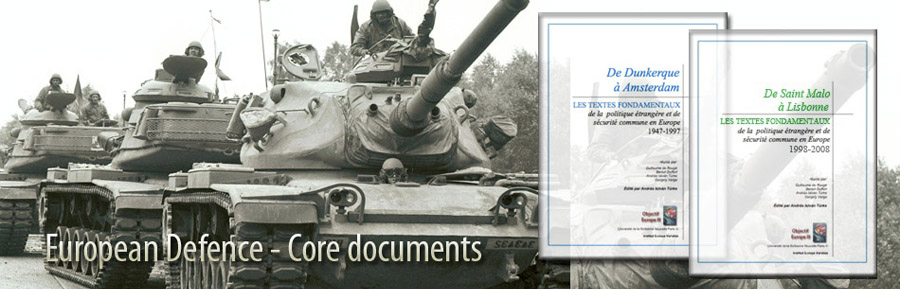

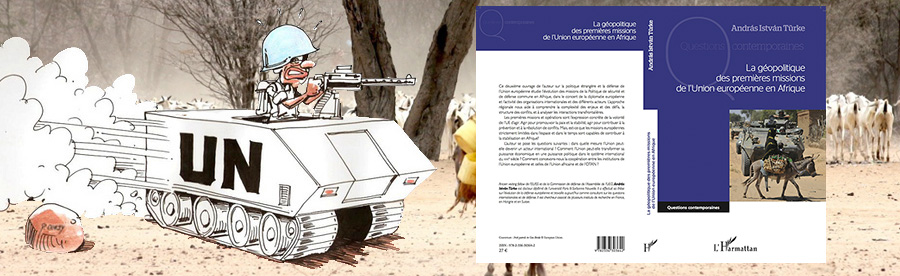
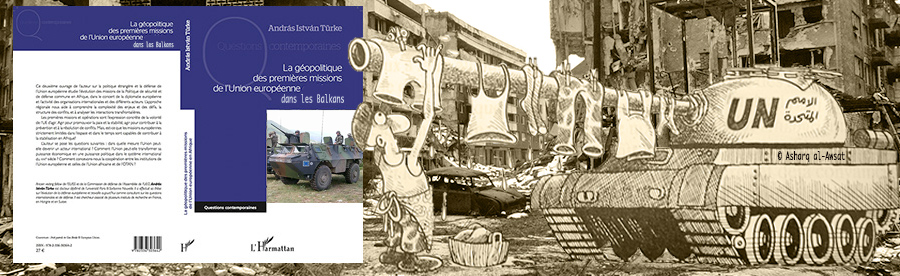
We are looking for sponsors for the English translation of these books, please contact turkeandras(at)gmail(dot)com