
You are here
Swiss News
Population Age Structures of Countries
Despite the overall trend toward older populations, substantial differences in age structures exist among countries. Credit: Shutterstock.
By Joseph Chamie
PORTLAND, USA, Sep 1 2026 (IPS)
The age structures of populations vary considerably across countries. Some countries have relatively young populations, with large proportions consisting of children and adolescents. Other countries have much older age structures, with a substantial proportion of people aged 65 years or older.
The world’s current population of approximately 8.3 billion has a median age of about 31 years. This is substantially higher than during much of the 20th century, when the global median age was generally below 25 years. The world’s median age was 22 years in 1950, declined to 20 years in 1970, and then increased to nearly 25 years by 1999.
Population ageing is expected to continue worldwide in the coming decades, The median age of the world’s population, currently about 31 years, is projected to increase to approximately 36 years by 2050.
Despite the overall trend toward older populations, substantial differences in age structures exist among countries.
In 2026, approximately 50 countries and territories have populations with median ages of 21 years or younger, reflecting highly youthful age structures. At the other end of the age spectrum, a similar number of countries and territories have median ages of 42 years or older, indicating comparatively old populations.
These wide differences in median age illustrate the striking demographic diversity among countries and the contrasting social and economic challenges associated with youthful and older populations.
Most countries with highly youthful populations are located in Africa. For example, the Central African Republic, Chad, the Democratic Republic of the Congo, Mali, Niger, and Somalia have median ages of 16 years or younger.
In contrast, countries with comparatively older populations are concentrated primarily in Europe and East Asia. France, Germany, Italy, Japan, the Republic of Korea, Spain, and Switzerland, for example, have median ages of 42 years or older. The highest median ages – about 50 years – are found in Italy and Japan (Table 1).
Source: United Nations.
In addition, the median age is expected to rise in virtually all countries, in both more developed and less developed regions. By 2050, for example, the median ages of several countries – including China, Italy, Japan, the Republic of Korea, and Spain – are projected to reach 50 years or more.
The substantial variations in age structures of national populations are also evident in the proportions of people under age 18 and those aged 65 and older.
Once again, countries in which approximately half or more of their population is below age 18, while only a few percent are aged 65 years and older, are concentrated primarily in Africa.
In 2026, for example, 56% of the population in the Central African Republic is under age 18, while the corresponding proportions are approximately 53% in Chad, the Democratic Republic of the Congo, Niger, and Somalia. In each of these countries, only about 3% of the population is age 65 years and older.
In contrast, many developed countries – including Greece, Italy, Japan, Portugal, and the Republic of Korea – have much older population age structures. In some of these countries, such as Italy and Japan, approximately 14% of the population is under age 18, while nearly twice that proportion – between 25% and 30% – is aged 65 years and older (Figure 1).
Source: United Nations.
The ongoing changes in countries’ population age structures will have far-reaching implications, particularly for population growth, labor markets, employment, education, healthcare systems, retirement programs, and long-term care.
Many developing countries have relatively young populations and, because of their age structures and population momentum, generally experience relatively high rates of population growth. In contrast, countries with comparatively older populations tend to have slower rates of population growth, with many developed countries already experiencing population decline.
As many developed countries with ageing and declining populations face growing labor shortages, countries with youthful populations continue to have large numbers of young people entering the labor market, often in excess of available employment opportunities
By midcentury, several African countries with particularly young age structures are expected to experience particularly rapid population growth. For example, the populations of Chad, the Central African Republic, the Democratic Republic of the Congo, Niger, and Somalia are projected to increase by more than 80%.
Such rapid population growth can pose major challenges to social and economic development, particularly in providing adequate education, employment, housing, healthcare, and other essential services. Governments will need to expand infrastructure and public services rapidly simply to keep pace with the growing number of people.
Countries with young and rapidly growing populations may also face greater difficulties in reducing hunger and inequality, advancing women’s rights, expanding access to healthcare, creating decent employment opportunities, preventing social unrest, and addressing internal conflicts.
These demographic pressures underscore the importance of government policies that strengthen human capital, create productive employment, expand social services, and improve infrastructure. Such measures will be essential for ensuring that rapidly growing populations can achieve sustainable improvements in their living standards.
The slow pace of socio-economic development, high rates of unemployment, and limited educational and employment opportunities for many young people are contributing to social unrest, discontent, and political upheaval.
As a result, increasing numbers of young men and women seek to emigrate to developed countries in search of employment, greater security, and better prospects for themselves and their families. While many use regular migration channels, others increasingly resort to irregular migration, including unauthorized entry, overstaying visas, or seeking asylum and refugee protection.
In several African countries, including the Democratic Republic of the Congo, Sierra Leone and Liberia, half or more of the population reportedly would like to emigrate to another country, typically in Europe and North America. These migration aspirations reflect not only economic motivations but also broader concerns about employment opportunities, personal security, governance, and prospects for the future.
Nigeria, Africa’s most populous nation, provides a particularly striking example. Approximately half of its population reportedly would like to leave the country and resettle abroad, preferably in an English-speaking country. Economic hardship, unemployment, limited opportunities, and insecurity have contributed to this strong desire to emigrate. Many Nigerians have already moved abroad through regular migration channels, while others have undertaken irregular journeys or sought asylum and refugee protection.
The persistence of such strong migration aspirations in many less developed countries highlights the close relationship between demographic pressures, socioeconomic conditions, and international migration. Where large youthful populations confront limited employment, educational, and economic opportunities, migration can become an increasingly attractive option for seeking a better future.
Unauthorized migration has consequently become a major political issue in many destination countries. Governments in numerous migrant-receiving countries have introduced or strengthened measures to deter unauthorized migration, including increased border enforcement, arrest and detention of unauthorized migrants, deportation, and the return of people who have entered without authorization or overstayed their visas.
At the same time, the demographic circumstances of migrant-sending and migrant-receiving countries differ considerably. Many less developed countries have relatively young populations and high rates of demographic growth, whereas many developed countries have substantially older age structures and are expected to experience population decline over the coming decades. By 2050, for example, the populations of countries such as Italy, Japan, and the Republic of Korea, are projected to decline by approximately 13% (Figure 2).
Source: United Nations.
These contrasting demographic trends are likely to increase the economic and political importance of international migration. As many developed countries with ageing and declining populations face growing labor shortages, countries with youthful populations continue to have large numbers of young people entering the labor market, often in excess of available employment opportunities.
The consequences of population ageing are becoming increasingly significant for a growing number more developed countries and are also emerging as an important concern for some less developed countries as well. These demographic changes are prompting governments to reconsider existing economic and social policies, programs, and benefits in order to adapt to population realities.
Population ageing, combined with increasing longevity, is reducing the number of workers available to support each retiree while increasing the fiscal burden on the working-age populations that finances pensions, healthcare, and other age-related government programs.
Longer lifespans also mean that many older men and women may outlive their personal savings or retirement benefits. As longevity continues to increase, pension systems are paying benefits for substantially longer periods than anticipated when many of these systems were established during the 20thcentury.
Consequently, governments are facing growing pressure to reform retirement systems, healthcare services, and long-term care programs to ensure their financial sustainability while maintaining adequate support for ageing populations.
In addition to placing greater strains on government finances, the rising costs of medical treatment and care for growing numbers of older persons are placing increasing pressures on family budgets, capacities, and expectations.
Financing and providing long-term care for older persons is a major challenge for societies and families. In many countries, public provision for long-term care remains inadequate or largely unavailable to significant proportions of the population. At the same time, the growing number of older men and women is placing increasing stress on traditional safety nets, including families, friends, and local communities.
Powerful and largely irreversible demographic trends are driving population ageing, with growing numbers and proportions of people – especially women, who typically live longer than men – spending more years in old age. These trends will have profound implications for the organization and financing of societies.
The contrasting age structures of populations in developing and developed countries require significant social and economic adjustments. Countries with youthful populations need to expand education, employment, healthcare, and other services to meet the needs of growing numbers of young people. In contrast, countries with substantially older populations must prepare for rising demands on pension systems, healthcare, and long-term care.
In light of these demographic realities, governments need to revamp policies and programs affecting their populations. Unfortunately, many governments appear to be postponing these necessary adjustments. The longer governments delay adapting policies and programs to changing demographic conditions, the more difficult and costly the consequences are likely to become for their populations.
Joseph Chamie is a consulting demographer, a former director of the United Nations Population Division, and author of many publications on population issues.
Categories: Africa, Swiss News
‘I am one who dies for life, not one who lives for death’ – Kurdish Political Prisoner Pakhshan Azizi
Pakhshan Azizi and a child. Photo credit: Women's Committee of the National Council of Resistance of Iran (WNCRI)
By Clare Quirk
JOHANNESBURG, Sep 1 2026 (IPS)
In 2024, Kurdish social worker Pakhshan Azizi was sentenced to death. She remains incarcerated in Evin Prison, Tehran, Iran. This is her story …
Please read her letter from prison here.
For more on Civicus’s Stand as My Witness Campaign.
Additional reporting and research: Cecilia Russell
Picture credits: Kurdistan Human Rights, BBC Persian, Clare Quirk, Wikipedia, CY Boechat (VOA)/Wikimedia Commons, UNICEF, Civicus, Amnesty International, ANF News, Vida Rabbani, Women’s Committee of the National Council of Resistance of Iran (WNCRI)
IPS UN Bureau Report
Follow @IPSNewsUNBureau
!function(d,s,id){var js,fjs=d.getElementsByTagName(s)[0],p=/^http:/.test(d.location)?'http':'https';if(!d.getElementById(id)){js=d.createElement(s);js.id=id;js.src=p+'://platform.twitter.com/widgets.js';fjs.parentNode.insertBefore(js,fjs);}}(document, 'script', 'twitter-wjs');
Categories: Africa, Swiss News
Un ancien chef de gang reconnu coupable d'avoir orchestré le meurtre du rappeur Tupac Shakur en 1996
Duane « Keffe D » Davis a été reconnu coupable du meurtre par balle, il y a 30 ans, de la superstar du rap.
Categories: Afrique, Swiss News
Deadly Flash Floods in Nepal Kill Hundreds and Leave Over 4,200 Missing
Homes and roads are covered in mud in Nuwakot District, Nepal, after devastating flash floods swept through central northern Nepal. Credit: UNICEF/Laxmi-Prasad-Ngakhusi
By Oritro Karim
UNITED NATIONS, Sep 1 2026 (IPS)
On the morning of August 26, an unprecedented series of flash floods struck Nepal and the Tibet Autonomous Region of China, causing immense destruction, killing hundreds of civilians and leaving thousands missing. Entire neighborhoods have been buried underwater and beneath mud as the Nepalese government and humanitarian organizations rush to provide emergency assistance.
“My family members were swept away by the flood in front of my eyes,” Kalpana Malla from Nepal’s Nuwakot district told reporters. “They could not escape the flood; there was no chance at all. This flood took everything, but my son and I climbed the rooftop of a house and survived, but couldn’t explain how.”
Although the direct cause of the floods is currently unknown, figures from the U.S. Geological Survey (USGS) indicate that the floods were caused by a significant glacial collapse, after previously reporting they were caused by a magnitude 4.4 earthquake. Marking a magnitude 5.2 seismic event, the subsequent debris flow and downstream collapse of seismic waves crashed over the Nepal-China border, destroying buildings and roads along the Trishuli River.
“Initial analysis of before-and-after satellite images now suggests that part of a glacier collapsed high in the mountains,” said Professor Liz Stephens, Professor in Climate Risks and Resilience at the Department of Meteorology at the University of Reading in the United Kingdom, noting that the stability of high-mountain environments is increasingly threatened by the global impacts of climate change. She adds that the Intergovernmental Panel on Climate Change (IPCC) has “high confidence” that similar “complex cascading events” could occur in the future if underlying climate factors are not addressed soon.
Entire regions in Nepal have been rendered inaccessible due to heavy flooding and mudslides, which destroyed at least 35 bridges, affected over 40 kilometers of roads, and disrupted telecommunications and electricity services in roughly 10 percent of the total affected areas. The hardest-hit regions are the Rasuwa district near Kathmandu in northern Nepal, the Nuwakot district in central-northern Nepal, and the towns of Timure, Rasuwagadhi, and Syabrubesi. According to figures from the Office for the Coordination of Humanitarian Affairs (OCHA), roughly 10,000 households are in dire need of emergency assistance, with many families stripped of basic services, such as shelter, food, water supply, and access to healthcare.
Last week on August 27, Lila Pieters Yahia, the United Nations (UN) Resident Coordinator in Nepal, informed reporters during a press briefing at the UN Headquarters that at least 359 people had been killed, while 73 additional civilians had been hospitalized, though some have since been released. Yahia also stated that approximately 910 civilians remain missing, though various media outlets report the figure exceeds 1,300. Since then, Nepal officials have confirmed 900 deaths and over 4247 missing.
These numbers are projected to fluctuate in the coming days as aid personnel increasingly access isolated areas. Of those unaccounted for, Yahia noted that roughly 517 are foreign nationals spanning over 30 countries—including hundreds from China and India, alongside approximately 90 from the United States.
“Everyone in a mountain valley faces the same hazards, but tourists are more vulnerable because they may not recognize the danger or understand local warnings,” said Dr. Fatima M. Pillosu, hydrometeorologist and flash floods researcher from the Department of Meteorology at the University of Reading. “Visitors from regions where such events are rare may not appreciate how fast a mountain river can rise, nor that these valleys also face avalanches, landslides and floods from melting glaciers, even in dry weather. Knowing in advance what can happen, and what to do if it does, is one of the most useful protections.”
Children in Nepal are among the hardest-hit populations, with the United Nations Children’s Fund (UNICEF) estimating that at least 17,000 children have been impacted. UNICEF has recorded the destruction of at least 18 schools and damage to 20. Roughly 10,000 school-age children are projected to require urgent support to continue their education, including new learning materials, access to temporary learning centers, and psychosocial support services for both children and teachers.
“Children across Rasuwa and Dhading saw their lives being literally washed away in front of their eyes in a very short span of time, with homes, classrooms, and medical facilities damaged,” said Alice Akunga, the UNICEF representative to Nepal. “Children who have survived the floods now face heightened risks of disease, malnutrition, violence and exploitation,” she said.
Yahia informed reporters that the UN and its partners are currently on the ground, providing direct support to vulnerable communities while simultaneously conducting assessments to determine the exact scale of needs. Currently, the World Food Programme (WFP) is positioned to provide equipment and emergency rations to communities on the frontlines of the crisis. Additionally, two staff members from the World Health Organization (WHO) are distributing tents, logistics support, and medical kits for about 10,000 people for roughly three months.
Although the UN has identified potential risk for additional flooding in areas of Nepal on August 27, it is working closely with the Nepalese government to scale up its life-saving operations across health, nutrition, water, sanitation, protection, and education.
In the wake of the disaster, both countries and UN entities have begun sending emergency supplies and funding for the relief efforts in Nepal. UN Under-Secretary-General for Humanitarian Affairs and Emergency Relief Coordinator Tom Fletcher announced that USD 2 million would be allocated from the UN Central Emergency Response Fund (CERF).
The U.S. State Department has pledged to send a disaster response advisor along with USD 500,000 in aid. Yahia also confirmed that Switzerland has sent more than USD 600,000 for aid, and other countries such as Japan, Australia and the United Kingdom have pledged to send aid funding and supplies in the days to come. Regional neighbors, such as India, Bangladesh and Sri Lanka, have begun sending emergency supplies.
IPS UN Bureau Report
Follow @IPSNewsUNBureau
!function(d,s,id){var js,fjs=d.getElementsByTagName(s)[0],p=/^http:/.test(d.location)?'http':'https';if(!d.getElementById(id)){js=d.createElement(s);js.id=id;js.src=p+'://platform.twitter.com/widgets.js';fjs.parentNode.insertBefore(js,fjs);}}(document, 'script', 'twitter-wjs');
Categories: Africa, Swiss News
Pakhshan Azizi’s Letter from Evin Prison
Pakhshan Azizi. Credit: Photo credit: Women's Committee of the National Council of Resistance of Iran (WNCRI)
By Pakhshan Azizi
TEHRAN, Sep 1 2026 (IPS)
Writing from the women’s ward of Evin Prison on 10 June 2026, Kurdish political prisoner Pakhshan Azizi, who remains under a death sentence, reflects on her legal case, political principles, humanitarian work, and the broader historical and political dynamics shaping the Middle East.
Azizi opens by stating that “politics and ethics are at the height of their historical degradation”.
She explains that she remained silent for a long time because, for someone imprisoned and condemned to death, every word carries the risk of further punishment or even losing one’s life. Yet she says she can no longer remain silent while others define her identity and speak on her behalf.
Azizi accuses individuals both inside and outside prison of exploiting her case for personal or organisational interests. She argues that people claiming to defend her have instead attempted to marginalise or erase her, turning her case into an object of political competition rather than genuine solidarity.
She describes spending three years in prison and two years under what she calls an unjust and oppressive death sentence. According to her, she is the only female political prisoner under a death sentence whose conviction has been upheld four times. She stresses that neither she nor her lawyer has received any official notification that her execution has been suspended, despite public reports suggesting otherwise. Even if such a suspension existed, she emphasises, it would not mean that her death sentence had been overturned.
She recounts the immense suffering experienced by her family, noting that several relatives have also been imprisoned simply because they are Kurdish. She criticises what she sees as unequal public attention, suggesting that recognition often depends on conforming to political narratives rather than on the reality of one’s work or persecution.
Throughout the letter, Azizi argues that her prosecution has been shaped not only by legal irregularities but also by political manoeuvring behind the scenes, involving actors both inside and outside prison. She says that her experiences of interrogation, ideological pressure, and imprisonment echo the long history of discrimination and marginalisation faced by Kurdish people.
She writes that, over time, she has come to rely only on herself, believing that history will ultimately demonstrate the sincerity of her principles and the consistency of her commitment.
Her political positions
Azizi then sets out her views in nine numbered points.
- The Middle East conflict has deep historical roots
She argues that today’s conflicts cannot be understood solely through the actions of contemporary governments. Instead, she traces the region’s instability back to the post–First World War division of the Middle East by colonial powers.
She describes the current wars as a continuation of that historical process, arguing that the region’s resources—including oil and minerals—have long been exploited by global powers while ordinary people bear the consequences through poverty, sanctions, displacement, and violence.
According to her, civilians are repeatedly sacrificed in conflicts they neither initiated nor control, while political elites continue pursuing geopolitical interests.
- Opposition to war
Azizi unequivocally condemns the war involving the United States and Israel and rejects military attacks on Iranian territory and the wider Middle East.
She specifically condemns attacks against schools, hospitals, emergency services, universities, and other civilian infrastructure, describing such attacks as war crimes under international law.
She emphasises that children deserve life, not death.
- Rejection of allegations of organisational membership
Azizi firmly rejects accusations that she belongs to any political or armed organisation.
She explains that she worked as a social worker and acknowledges that, because of the environment in which she worked in northeastern Syria (Rojava), she inevitably cooperated with various local actors. However, she insists that cooperation in humanitarian work should not be interpreted as organisational membership.
- Humanitarian work in Syria
She describes spending years working in refugee camps in Syria under extremely difficult humanitarian conditions, particularly assisting people displaced by the war and affected by ISIS attacks.
She argues that using isolated photographs or superficial evidence to portray this humanitarian work as proof of political or military affiliation is fundamentally misleading.
- Her position on Kurdish rights
Azizi explicitly rejects separatism.
She argues that demands for Kurdish rights should be understood within Iran, advocating federal arrangements and greater recognition of Kurdish communities while preserving the country’s territorial integrity.
Looking beyond Iran, she expresses a longer-term vision of a democratic confederation across the Middle East based on cooperation rather than division.
As a Kurdish woman, she says preserving Kurdish culture and history is both a historical and a human responsibility but insists that separatism has never been the solution.
- Peace through dialogue
She argues that genuine peace can only be achieved through dialogue with ordinary people, especially those who have been marginalised and denied opportunities.
- Skepticism toward international powers
Azizi questions why global powers would suddenly claim to defend her or Kurdish history when those same powers have historically contributed to denying and suppressing Kurdish identity.
She suggests that powerful states often instrumentalise minority communities for their own geopolitical purposes.
- Independence from governments
She emphasises that social work is independent of governments and political authorities.
Her work, she writes, has always been with people rather than with states.
- Commitment to independent civil society
Azizi concludes by reaffirming that she has never belonged to any organisation.
She describes herself as an independent social worker committed to addressing the deep social wounds created by decades of war.
She argues that rebuilding society requires independent civic institutions capable of fostering dignity, culture, and life rather than perpetuating violence.
Azizi ends with a sentence in Kurdish followed by Persian:
“I am one who dies for life, not one who lives for death.”
She closes by expressing gratitude to everyone who has defended her despite political differences, including her family, her lawyer Mohammad Hossein Raisian, and her friends, thanking them for their sincere support.
Source: HRANA News Agency, the news outlet of the Human Rights Activists in Iran.
Translation: Courtesy of Civicus
IPS UN Bureau Report
Follow @IPSNewsUNBureau
!function(d,s,id){var js,fjs=d.getElementsByTagName(s)[0],p=/^http:/.test(d.location)?'http':'https';if(!d.getElementById(id)){js=d.createElement(s);js.id=id;js.src=p+'://platform.twitter.com/widgets.js';fjs.parentNode.insertBefore(js,fjs);}}(document, 'script', 'twitter-wjs');
Categories: Africa, Swiss News
Mutinerie au Niger : un nouveau test pour la junte militaire - Analyse
Les autorités affirment avoir repris le contrôle après une tentative de mutinerie, sans préciser le nombre de victimes ni l’identité des militaires impliqués. Le général Abdourahamane Tiani ne s’est pas exprimé sur ces événements.
Categories: Afrique, Swiss News
Le président algérien requiert la peine de mort pour les incendiaires après les incendies de forêt meurtriers
Le président Abdelmadjid Tebboune a déclaré qu'il n'excluait pas la possibilité d'un acte criminel après le recensement de 100 feux de forêt.
Categories: Afrique, Swiss News
Le directeur d'école qui a sauvé 900 élèves des inondations au Népal
Rajendra Dawadi a immédiatement réagi après avoir reçu des avertissements concernant les eaux qui se dirigeaient vers son école.
Categories: Afrique, Swiss News
Comment le Madd de Casamance se lance à la conquête du monde
De la brousse aux marchés, le Madd de Casamance est une source de revenus pour les communautés locales.
Categories: Afrique, Swiss News
Der Weg für arme Länder aus der Schuldenfalle
Etwa die Hälfte der einkommensschwachen Länder ist derzeit zahlungsunfähig oder hat ein großes Risiko, zahlungsunfähig zu werden. Was die Weltgemeinschaft dagegen tun muss, erläutert eine IDOS-Wissenschaftlerin.
Categories: Diplomacy & Defense Think Tank News, Swiss News
5 aliments africains que la science considère comme excellents pour la santé
Du Moringa au Fonio, en passant par le Baobab, le Sorgho ou le Teff, plusieurs aliments africains sont réputés pour leur richesse nutritionnelle. Certains sont même qualifiés de « superaliments », en raison de leur forte concentration en nutriments et des vertus dont ils regorgent.
Categories: Afrique, Swiss News
Spielte Clown Pennywise: Schauspieler Tim Curry stirbt mit 80 Jahren
Als Clown Pennywise brachte er so manch einen zum Schaudern. Nun ist der Brite Tim Curry verstorben, wie «TMZ» berichtet.
Categories: Afrique, Swiss News
Bencics süsser US-Open-Moment: Töchterchen Bella verzaubert Cobolli und das Publikum
Belinda Bencic und Flavio Cobolli stehen im Mixed-Halbfinal der US Open. Dabei stiehlt ihnen Bencic-Sprössling Bella (2) nach dem Sieg gegen die Tennis-Grössen Serena Williams und Carlos Alcaraz die Show.
Categories: Balkans Occidentaux, Swiss News
Weltklasse Zürich: Moser will im Zürcher HB hoch hinaus
Der Zürcher Hauptbahnhof ist Schauplatz des Stabhochsprung-Events der Frauen bei Weltklasse Zürich. Verfolge den Wettkampf jetzt live im Ticker mit.
Categories: Balkans Occidentaux, Swiss News
Wie eine Gruppe am Zürcher HB die Preise in die Höhe treibt: «40 bis 50 Franken für eine kurze Fahrt»
In Amsterdam und Wien sorgen fragwürdige Taxi-Praktiken für Schlagzeilen. Doch auch in der Schweiz ist das Problem bekannt: In Zürich gibt es seit Jahren Beschwerden über überhöhte Preise und zweifelhafte Methoden.
Categories: Balkans Occidentaux, Swiss News
«Jede Minute zählt» – müssen Patienten länger warten?: Einsatz-Streit zwischen Rega und Air-Glaciers eskaliert weiter
Zwischen den zwei Rettungsflug-Unternehmen Air-Glaciers und der Rega herrscht richtig dicke Luft. Die neuste Eskalation: Die Rega soll dem Walliser Konkurrenten mit dem Entzug von Einsätzen gedroht haben. Der Streit dauert seit einigen Jahren an.
Categories: Balkans Occidentaux, Swiss News
Rega brachte sie ins Spital: Mädchen (11) wird bei Reitunfall mit Pony verletzt
In der Gemeinde Speicher im Kanton Appenzell Ausserrhoden kam es am Mittwoch zu einem Reitunfall. Ein elfjähriges Mädchen wurde dabei unbestimmt verletzt.
Categories: Balkans Occidentaux, Swiss News
Nach Knaller-Urteil in Luzern: Jagt Alpstaeg nun den FCL-Verwaltungsrat zum Teufel?
Mit dem Sieg vor dem Bezirksgericht ist Bernhard Alpstaeg zurück in Amt und Ehren. Doch was will der alte und neue FCL-Mehrheitsaktionär? Und warum ist dieses erstinstanzliche Urteil für den FC Luzern so gefährlich? Die neun brennendsten Fragen und Antworten zum Fall.
Categories: Határon túli magyar portálok összesített hírei, Swiss News
Versicherer reagiert auf akute Wohnungsnot: 200 Millionen Franken für 1000 günstige Wohnungen
Die Mobiliar will in den nächsten Jahren bis zu 1000 bezahlbare Wohnungen in der Schweiz bauen. Mit 200 Millionen Franken will der Versicherer besonders in Regionen mit grossem Bedarf an günstigem Wohnraum aktiv werden und so soziale Verantwortung übernehmen.
Categories: Határon túli magyar portálok összesített hírei, Swiss News
Zappalot noch unsicher: Würdest du mit der Polizei einen Kaffee trinken?
Im Kanton Schaffhausern kann man der Polizei bei «Coffee with a Cop» allerlei Fragen stellen. Zappalot auch mitgehört.
Categories: Határon túli magyar portálok összesített hírei, Swiss News
Pages
the old site is here


© 2012-2015 Europa Varietas Foundation © 2015-2020 Europa Varietas Association
www.europavarietas.org | info(@)europavarietas(dot)org | Switzerland
This is a GDPR ready site


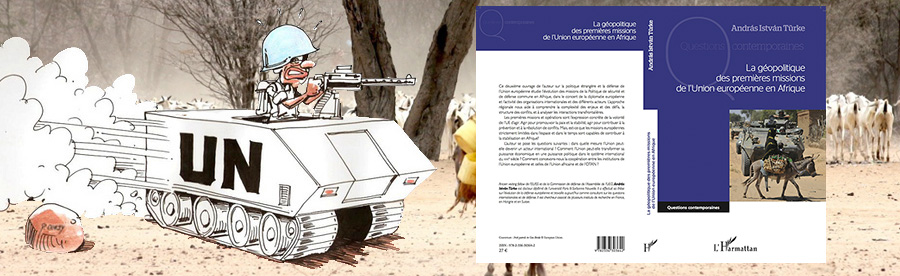
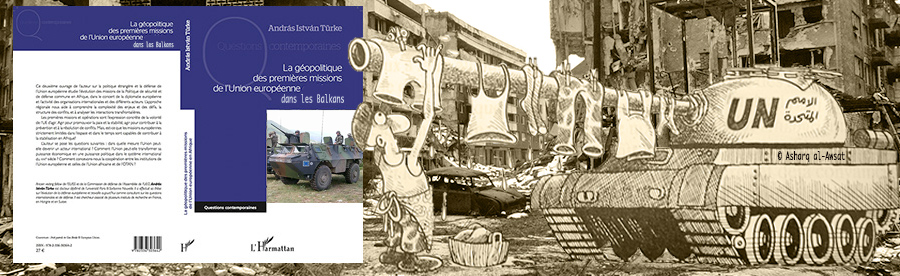
We are looking for sponsors for the English translation of these books, please contact turkeandras(at)gmail(dot)com