
You are here
Swiss News
Für Erstklässler-Eltern: 11 tolle Elterntipps für einen erfolgreichen Schulstart
Die Einschulung ist für unsere Kleinen der Beginn eines neuen Lebensabschnitts. Und ganz schön aufregend, auch für die Eltern. Wir haben die wichtigsten Tipps fürs erste Schuljahr zusammengestellt.
Categories: Afrique, Swiss News
Kaum bekanntes Phänomen: Das ist Gewitterasthma
Gewitter reinigen die Luft und schwemmen Pollen gewöhnlich Richtung Boden. Eigentlich eine Wohltat für Allergiker. Doch kurz vor dem Regen droht ein unterschätztes Phänomen: das Gewitterasthma.
Categories: Afrique, Swiss News
«Identifikation mit dem EHC»: Mega-Vertrag für Klotens Dario Meyer
Der EHC Kloten verlängert den Vertrag mit Leistungsträger Dario Meyer bis Ende der Saison 2031/32. Der Topskorer aus der abgelaufenen Saison bleibt langfristig bei den Flughafenstädtern.
Categories: Afrique, Swiss News
Drama auf Bergstrasse: Riesiger Felsbrocken zermalmt Reisebus
In Nepal wird ein Reisebus von einem riesigen Felsbrocken erfasst und von der Strasse gedrückt. Das Fahrzeug ist komplett demoliert. Der Fahrer hatte die Gefahr zum Glück kommen sehen.
Categories: Afrique, Swiss News
Alerte météo en Algérie : pluies, orages et forte chaleur ce lundi 17 août, les wilayas concernées
Les services de la météorologie nationale annoncent un temps contrasté ce lundi 17 août 2026. Plusieurs wilayas devraient connaître des pluies accompagnées d’orages, tandis qu’une […]
L’article Alerte météo en Algérie : pluies, orages et forte chaleur ce lundi 17 août, les wilayas concernées est apparu en premier sur .
Categories: Afrique, Swiss News
Aus dem FCL-Nachwuchs: Aarau verstärkt sich mit Goalie-Talent
Der FC Aarau verpflichtet Torhüter-Talent Melvin Frei vom FC Luzern. Er wird das Torhüterteam als dritter Goalie hinter Hirzel und Velickovic ergänzen.
Categories: Afrique, Swiss News
Publireportage: Hier lernen CEOs von Spitzensportlern wie Odermatt
UBS-CEO Sergio P. Ermotti, Glencore-Chef Gary Nagle oder die Sport-Stars Wendy Holdener und Nico Hischier. Dank dem Sport & Business Network SBN treffen Persönlichkeiten aus Sport und Wirtschaft aufeinander. Dahinter steckt eine Idee des Ex-Handballers Besfort Biljali.
Categories: Afrique, Swiss News
Wenn Sport auf Business trifft: Dieses Netzwerk bringt die Schweizer Elite aus Sport und Wirtschaft an einen Tisch
UBS-CEO Sergio Ermotti, Glencore-Chef Gary Nagle oder die Sport-Stars Wendy Holdener und Nico Hischier. Dank dem Sport & Business Network (SBN) treffen Persönlichkeiten aus Sport und Wirtschaft aufeinander. Dahinter steckt eine Idee des Ex-Handballers Besfort Biljali.
Categories: Balkans Occidentaux, Swiss News
Erster Saisonsieg im Cup: Drei FCL-Punkte, die den Luzernern Hoffnung machen
Der FC Luzern gibt sich in Buochs keine Blösse. Mit einem 3:0 gegen den Erstligisten qualifiziert sich die Mannschaft von Udo Portmann souverän für die nächste Cup-Runde. Dazu erhalten die Luzerner drei Mutmacher.
Categories: Balkans Occidentaux, Swiss News
Ungewöhnlicher Wahlkampf um Bezirksrichteramt: FDP gegen FDP an der Goldküste
Gleich zwei Freisinnige treten in Meilen gegeneinander an. Der Streit um die Nachfolge der FDP-Richterin spaltet die Partei – dabei hätte die Wahl geräuschlos über die Bühne gehen können.
Categories: Balkans Occidentaux, Swiss News
How Global Aid Cuts are Undermining Women-Led Humanitarian Response in Sudan
Amna Idres Musa Mahamod leads the Al-Wifag Women’s Association in Toker, Sudan. Photographed for the Through Her Lens: Women Rising for Peace Exhibition. Credit: UN Women/Mona Elfateh
By Shuli Wong
UNITED NATIONS, Aug 17 2026 (IPS)
Women-led and women’s rights organizations (WLOs) in humanitarian settings are collapsing amidst a complicated predicament in which needs are surging and international support is dwindling.
These organizations are often the first responders in humanitarian and conflict settings, providing psychosocial and gender-based violence (GBV) support; however, 84 percent of WLOs surveyed report that women and girls in the communities they serve have reduced access to essential services, according to UN Women’s July 2026 Beyond the Breaking Point report.
The report surveyed 855 WLOs operating across 52 crisis- and conflict-affected countries and found that as women and girls face heightened risks and increased need for assistance, services and support have dwindled significantly. Nine in ten organizations say they cannot meet the current levels of need, and two in five expect to shut down either temporarily or permanently within the next year.
Galit Wolfensohn, UN Women’s Humanitarian Research and Knowledge Management Specialist
“The women’s organizations at risk of being shut down are on the frontlines of the world’s most severe humanitarian crises,” said Sofia Calltorp, UN Women Chief of Humanitarian Action. These organizations “operate where international actors cannot and stay long after global attention has moved on.” Despite the vital role of WLOs, support continues to be stripped away as international humanitarian funding declines.Beyond the Breaking Point builds off UN Women’s alarm first raised in their 2025 report, At a Breaking Point. In it, they warned that half of WLOs surveyed in crisis zones risked closure within six months if current funding levels persisted. Fifteen months later, the situation remains the same. When asked what the warning in ‘At a Breaking Point’ generated from donors, Galit Wolfensohn, UN Women’s Humanitarian Research and Knowledge Management Specialist, told Inter Press Service it brought “greater recognition among donor governments and humanitarian partners of the severe consequences that funding reductions were having.” She added that the response has “not matched the scale or urgency of the crisis…the latest findings show that recognition alone is not enough.”
When examining the collapse of WLOs, Sudan offers an illuminating case to understand the on-the-ground impacts of the reduction of services. Over three years of conflict in Sudan have driven GBV needs to unprecedented levels, with the number of girls and women requiring GBV services quadrupling since the conflict began. However, two-thirds of WLOs in Sudan reported having to close or significantly reduce services, and half expect to close entirely within the next year without urgent financial support.
Salvator Nkurunziza, UN Women’s Representative in Sudan
Salvator Nkurunziza, UN Women’s Representative in Sudan, described how the escalation in hostilities and insecurity in El Obeid, Sudan, has significantly affected the ability of WLOs to operate. Many organizations, he explained to Inter Press Service, have “experienced losses of assets, equipment, and supplies, while disruptions to infrastructure and population displacement have constrained their operational capacity.” Furthermore, “the prevailing insecurity has restricted movement, complicated access to communities in need, and increased operational costs.”As WLOs across Sudan have had to either close or scale back operations, Nkurunziza explained that “women and girls lose access not only to critical support but also to safe spaces that provide protection, psychosocial assistance, information, and a sense of security.” WLOs act as trusted entry points for survivors of GBV seeking help, and when these services disappear and become harder to access, survivors “may be less able or willing to seek assistance.” When services disappear, it creates a vicious cycle that “can result in prolonged exposure to violence, increased psychosocial distress, and heightened protection risks,” including greater reliance on “negative coping mechanisms, like child marriage and other harmful practices.”
“What we are observing is likely only the surface, as the absence of quality services is deterring those in need from seeking help,” Fabrizia Falcione, UNFPA’s Representative in Sudan, said on help-seeking behaviors in GBV survivors. In El Obeid, UNFPA estimates that 55,712 women and girls are at an increased risk of GBV as of August.
Fabrizia Falcione, UNFPA’s Representative in Sudan
The situation described across Sudan aligns with broader patterns documented globally. UN-Women’s latest report found that 62 percent of organizations surveyed reported having to close or drastically reduce safe spaces and women’s centers, and 61 percent reported reductions in GBV case management services. The result of which has led to a widening gap between need and resources available, as many organizations “have been forced to prioritize the most urgent life-saving interventions,” Nkurunziza said.Despite the operational and financial challenges, he remarked that many Sudanese WLOs “have demonstrated remarkable resilience and adaptability”. Organizations have “continued to provide services by reprioritizing activities, mobilizing community-based volunteers, utilizing remote modalities where feasible, and strengthening partnerships with other local actors to share resources and referral networks.” However, Nkurunziza was clear that these adaptive approaches “are not a substitute for sustained financial support.”
On a global scale, Wolfensohn outlined the changes that need to happen within the next six months to reverse the course of what was documented in the reports. “Donors must protect and increase funding for WLOs by providing direct, flexible, predictable and multi-year financing,” she said.
At the same time, Wolfensohn emphasized that funding alone is not sufficient: “women’s organizations must be recognized as essential humanitarian partners through meaningful participation and leadership in humanitarian coordination and decision-making.”
Reversing the current trajectory requires a type of accountability that does not yet exist: “measurable commitments, clear funding targets and greater transparency on how much humanitarian financing reaches local women-led organizations directly,” Wolfensohn said. Without decisive action, WLOs will be forced to scale back or close services globally.
“Reversing this trend is not only about sustaining organizations; it is about safeguarding access to protection services, GBV prevention and response, livelihoods support, and other critical assistance relied upon by women and girls in crisis settings,” Wolfensohn remarked.
In the weeks since Beyond the Breaking Point was published, Wolfensohn discussed the impact the report has had in increasing conversations between donors, governments, and humanitarian organizations. “The discussions generated by the report are helping to reinforce broader humanitarian reform agendas focused on localization, equitable partnerships and the meaningful participation of affected communities,” Wolfensohn said. However, she stopped short of claiming progress at the scale required to reverse the trends documented in the course, but “it should serve as a catalyst for action.”
UN organizations are already working in collaboration to close the funding gaps WLOs face in Sudan. According to Falcione, the approach is not only about advocacy, but also about working with WLOs “as genuine partners in the response.” Agencies like UNFPA and UN Women “support local and grassroots organizations in capacity development, institutional strengthening, leadership, and empowerment.” Falcione underscored the importance of strengthening the partnership, as WLOs “are not simply beneficiaries or implementing partners, they are essential actors in the humanitarian response.”
Over the course of fifteen months, UN Women’s reports have painted a picture from warning to confirming what happens when WLOs disappear. In Wolfensohn’s own framing, what comes next depends on measurement and follow-through. This requires donors publicly tracking what funds reach WLOs, and commitment to multi-year flexible financing. Recognition alone will not solve the problem, and supporting WLOs is the difference between a third report that documents reversals of these trends or repeats the same warnings.
IPS UN Bureau
Follow @IPSNewsUNBureau
!function(d,s,id){var js,fjs=d.getElementsByTagName(s)[0],p=/^http:/.test(d.location)?'http':'https';if(!d.getElementById(id)){js=d.createElement(s);js.id=id;js.src=p+'://platform.twitter.com/widgets.js';fjs.parentNode.insertBefore(js,fjs);}}(document, 'script', 'twitter-wjs');
Categories: Africa, Swiss News
Luege, lose, laufe: Was Kinder brauchen, um den Schulweg allein zu meistern
Fachleute sind sich einig: Dass Kinder ihren Schulweg selbständig zurücklegen können, ist wichtig. Doch wann ist der richtige Zeitpunkt dafür? Diese Frage stellen sich viele Eltern zum Beginn des neuen Schuljahres. Eine einfache Antwort darauf gibt es nicht.
Categories: Balkans Occidentaux, Swiss News
Steigende Kosten und Mieten: Travailsuisse fordert 2 Prozent mehr Lohn für Angestellte
Travailsuisse schlägt Alarm: Höhere Inflation und steigende Krankenkassenprämien drücken die Kaufkraft. Der Arbeitnehmenden-Dachverband verlangt deshalb 2 Prozent mehr Lohn für 2027. In belasteten Branchen wie dem Gesundheitswesen sogar bis zu 6 Prozent.
Categories: Swiss News, Union européenne
«Schwerste Tage unseres Lebens»: Eltern von Rad-Talent (†19) verabschieden sich emotional
Nach Finlay Tarlings tödlichem Unfall bei der Volta a Portugal verabschieden sich seine Eltern auf Instagram. Das 19-jährige Rad-Talent kollidierte mit einem Fahrzeug, wie neue Details zum Unfall zeigen.
Categories: Swiss News, Union européenne
Brisanter Sicherheitsfauxpas: Briten-Premier Burnham chattete mit Fake-Trump-Berater
Der britische Premierminister Andy Burnham fiel auf Nachrichten eines Betrügers herein, der sich als US-Präsident Trumps Stabschefin Susie Wiles ausgab. Erst später flog die Täuschung auf. Nun wirft der Vorfall Fragen zur Cybersicherheit auf.
Categories: Swiss News, Union européenne
L'artiste Anna Teko alerte sur la maltraitance d'une fillette
Une fillette d'environ 6 à 7 ans a été accueillie, vendredi 14 août 2026, à l'orphelinat Jean Teko, dirigé par la chanteuse gospel Anna Teko, après un signalement faisant état de graves violences présumées.
Victime de violences physiques répétées, la situation d'une fillette a été révélée par Anna Teko dans une vidéo publiée sur les réseaux sociaux.
D'après les propos recueillis auprès de la fillette, celle-ci aurait subi des violences physiques répétées alors qu'elle vivait sous la responsabilité d'une tutrice.
L'enfant a notamment évoqué des coups, des privations de nourriture et des périodes durant lesquelles elle aurait été enfermée. Elle a aussi fait état de blessures aux doigts, dont certaines auraient été provoquées dans le contexte d'accusations de vol de nourriture.
À son arrivée à l'orphelinat Jean Teko, la fillette se serait montrée très éprouvée. Elle aurait beaucoup pleuré et ne souhaiterait plus retourner auprès de sa tutrice.
Anna Teko précise ne pas avoir assisté aux faits rapportés par l'enfant. Elle en appelle à une intervention des services compétents pour vérifier les déclarations de la fillette, déterminer les circonstances des faits et les mesures à prendre.
L'artiste souhaite surtout que la victime puisse rester en sécurité pendant que les services compétents examinent son cas. « Je demande aux autorités de faire leur travail, d'aider cette enfant à avoir la justice », a-t-elle déclaré.
Voilà un cas qui pourrait intéressser l'Institut national de la femme (INF)
M. M.
Categories: Afrique, Swiss News
Les numéros gagnants du DIGITAL 00 H
DIGITAL 00H : Avez-vous tenté votre chance ?
Le tirage DIGITAL 00H N°229 a livré son verdict !
Lundi 17 août 2026
Avez-vous joué ?
Avez-vous misé sur vos numéros porte-bonheur ?
RÉSULTAT : 35 • 63 • 05 • 50 • 15
Félicitations aux heureux gagnants !
Pas encore cette fois ? Gardez le sourire.
Rendez-vous à 08H pour le prochain tirage.
Jouez dans les points de vente de la LNB ou : Tapez *590# ou rendez-vous sur lnbloto.bj
Jouez avec modération et responsabilité. Le jeu doit rester un plaisir.
Categories: Afrique, Swiss News
«Können es kaum erwarten»: Schweizer Snowboard-Traumpaar verkündet Baby-News
Die Schweizer Snowboard-Familie bekommt Zuwachs. Ladina Caviezel erwartet kurz nach ihrem Rücktritt ein Baby. Das teilen sie und ihr Mann Dario Caviezel mit.
Categories: Swiss News, Union européenne
Polizei sucht Zeugen: Mann (21) von drei Unbekannten in Luzern verprügelt – verletzt
Am frühen Samstagmorgen ist ein 21-jähriger Mann in der Stadt Luzern nach einer Auseinandersetzung von drei unbekannten Personen verprügelt und verletzt worden. Die Polizei sucht nach Zeugen.
Categories: Afrique, Swiss News
Duft von Ferien und Kindheit: Warum Sommerregen so gut riecht
Kaum fallen die ersten Tropfen, liegt er in der Luft: der Duft nach Sommerregen. Für viele weckt er Erinnerungen an Kindheit und Ferien. Doch woher kommt dieser Geruch und warum riechen wir ihn so gerne? Dies erklärt Meteorologin Daniela Schmuki im Podcast «Durchblick».
Categories: Afrique, Swiss News
Pages
the old site is here


© 2012-2015 Europa Varietas Foundation © 2015-2020 Europa Varietas Association
www.europavarietas.org | info(@)europavarietas(dot)org | Switzerland
This is a GDPR ready site

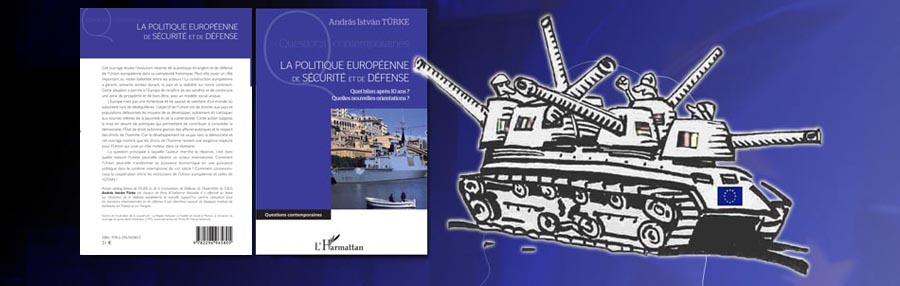
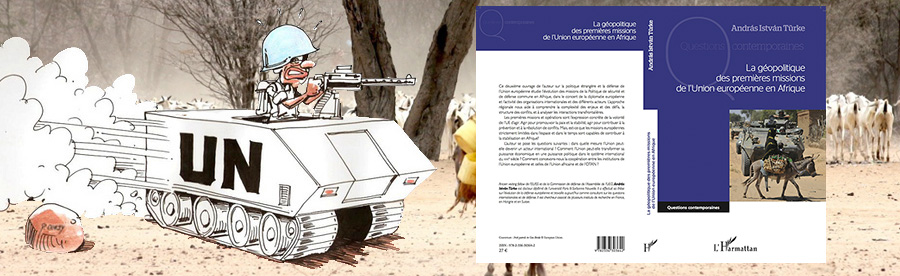
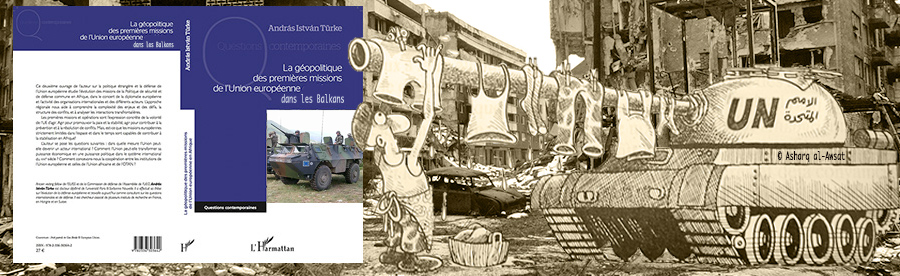
We are looking for sponsors for the English translation of these books, please contact turkeandras(at)gmail(dot)com