
You are here
Africa
US Visas for Ruthless Autocrats to Address UN – but not for Palestinian Leaders
President Mahmoud Abbas of Palestine. Credit: UN Photo
By Thalif Deen
UNITED NATIONS, Sep 21 2026 (IPS)
When Yasser Arafat was denied a US visa for his second visit to New York to address the United Nations back in 1988, the General Assembly defied the United States by temporarily moving the UN’s highest policymaking body to Geneva—perhaps for the first time in UN history—providing a less hostile political environment and a platform for the leader of the Palestine Liberation Organization (PLO).
Arafat, who first addressed the UN in 1974, took a swipe at Washington when he prefaced his statement in Geneva by remarking, “It never occurred to me that my second meeting with this honorable Assembly, since 1974, would take place in the hospitable city of Geneva.”
The US last week denied visas to the Palestinian delegation, led by President Mahmoud Abbas, who was due to address the General Assembly on September 24. The delegates were also denied visas last year.
In the official list of speakers released last week, Abbas has been designated “Head of State” (HS) of the “State of Palestine.”
The U.S. State Department criticized Abbas and the Palestinian Authority (PA) for pursuing the “unilateral recognition of a conjectural Palestinian state” through international bodies rather than negotiated bilateral talks.
As a rebuff to the US, the General Assembly voted overwhelmingly last week to allow President Abbas and other high-level Palestinian officials to participate and address the annual gathering of world leaders via video, outsmarting the US—electronically.
The resolution was adopted with a 152-3 vote (with four countries abstaining). This decision directly addresses the decision by the United States to deny entry visas to the high-level Palestinian delegation—including Abbas—marking the second consecutive year the delegation has been barred from attending the UN high-level meeting of world political leaders.
The resolution was opposed only by the United States, Israel, and Paraguay, with Colombia, Honduras, Panama, and Peru abstaining.
So far, the UN expects about 73 Heads of State, 45 Heads of Government, 49 Ministers, 11 Vice-Presidents, and one Crown Prince to address the General Assembly through September 28.
Alongside the mandated meetings, there are about 168 events that are scheduled during the high-level week, and last week, Member States have submitted about 1,000 requests for bilateral meetings amongst themselves.
The bilateral meetings with the Secretary-General are also in the process of being scheduled.
The UN has also issued 1,935 press passes for visiting journalists and an additional 1,290 press passes for official media.
Dr. Stephen Zunes, a professor of Politics and International Studies at the University of San Francisco, where he serves as coordinator of the program in Middle Eastern Studies, told Inter Press Service (IPS) under the 1947 US-UN Headquarters agreement that the United States is obliged to allow foreign leaders to address the General Assembly.
“That’s why previous administrations allowed even the likes of Muammar Qaddafi, Mahmoud Ahmadinejad, Idi Amin, Suharto, and other nasty characters to visit.”
(According to one definition, “ruthless autocrats” are political leaders who hold absolute power and use severe oppression, violence, and censorship to maintain control. Throughout history, these dictators have suppressed political opposition, eliminated civil liberties, and caused massive human suffering.)
Now, however, the Trump administration is banning representatives of the government of Palestine—a permanent non-member state of the United Nations—from coming to New York despite their recognizing Israel, renouncing terrorism, and calling for peace, said Dr. Zunes.
And there have been no objections, he said, from Democratic leaders in the US Congress. The problem, therefore, is not that the State of Palestine is a brutal dictatorship or violating international legal norms—the United States has no problems with that.
“The problem is that they are Palestinians. This is bigotry, pure and simple,“ he said.
The General Assembly could have relocated to Geneva, as they did in 1988. However, concerns about the costs and the carbon footprint, combined with access to modern communications technologies, have led them to allow the Palestinian leadership to Zoom in, said Dr. Zunes.
While going to Geneva would have been a more powerful statement, the support by such an overwhelming majority of the world’s nations can still be seen as a rebuke of Washington’s continued opposition to Palestine’s right to exist, declared Dr Zunes.
Mouin Rabbani, Managing Editor, Jadaliyya, an independent ezine produced by the Arab Studies Institute, told IPS the United States has once again demonstrated itself to be unfit to play the role of host nation of the United Nations. It considers the Host Country Agreement as something to be honored on a voluntary basis rather than a series of binding obligations.
The US government considers it perfectly normal to behave like a gangster state and openly violate its obligations by refusing entry to foreign delegates on the most specious of pretexts, he pointed out.
This is not a matter of the Trump administration. Nearly four decades ago, its predecessor, the Reagan administration, also refused entry to a Palestinian leader, Yasser Arafat.
What is particularly noteworthy on this occasion, he said, is that the US government is explicitly identifying the Palestinian recourse to the ICJ and ICC as legitimate grounds to refuse the participation of the Palestinian leader in the GA.
“This is the conduct of one gangster state acting on behalf of another (Israel) and demonstrates in the clearest manner possible that the US cannot and should not be entrusted with hosting the UN HQ.”
The Palestinians should of course be demanding that the GA conduct its session outside the US. The problem is that they are led by the exceptionally weak-kneed Mahmoud Abbas, who seems to continue to believe that absorbing these outrageous violations without confronting them forcefully will earn him brownie points with Trump and Netanyahu, which of course they won’t, declared Rabbani.
Meanwhile, responding to questions from journalists, UN Spokesperson Stéphane Dujarric said last week the Secretary-General deeply regrets the announcement by the United States extending sanctions that would deny visas to members of the Palestine Liberation Organization and officials of the Palestinian Authority to participate in meetings of the United Nations.
“The Secretary-General is concerned about the impact of this decision on the ability of the State of Palestine to participate fully in the work of the United Nations. The full participation of all delegations in the work of the organization is essential to its proper functioning”.
The Secretary-General takes note of the arrangements adopted yesterday by the General Assembly for the participation of the State of Palestine in the eighty-first session.
The Secretary-General urges the host country to ensure that visas are issued to all delegations in accordance with its obligations under the Headquarters Agreement and will continue to engage with the United States authorities to this end.
Meanwhile, key details of the General Assembly decision include the following:
• Scope of Virtual Access:
-
- The approved measure not only permits President Abbas to deliver his address virtually but also extends video-participation rights to any senior Palestinian officials for any UN meetings or conferences over the next year if they remain blocked from traveling to the U.S.
• The U.S. Stance:
-
- The Trump administration extended existing visa sanctions, citing security concerns and accusing the Palestinian Authority (PA) and the Palestine Liberation Organization (PLO) of failing to comply with legal commitments and attempting to “internationalize” the conflict through global tribunals.
• On-the-Ground Representation:
- While the high-level traveling delegation was barred, Palestinian diplomats who are already permanently accredited to the UN in New York will continue to represent them.
IPS UN Bureau Report
Categories: Africa, Swiss News
Décès de Sid-Ahmed Agoumi : le message de condoléances de Tebboune
Le président de la République, Abdelmadjid Tebboune, a présenté ses condoléances à la suite du décès de l’artiste Ahmed Meziane, connu sous le nom de […]
L’article Décès de Sid-Ahmed Agoumi : le message de condoléances de Tebboune est apparu en premier sur .
1 000 emplois en vue : Un méga-complexe d’aluminium de 8 hectares s’installe dans cette wilaya
La wilaya de Bordj Bou Arreridj franchit un nouveau jalon dans le renforcement de son tissu industriel et l’attraction d’investissements à forte valeur ajoutée. En […]
L’article 1 000 emplois en vue : Un méga-complexe d’aluminium de 8 hectares s’installe dans cette wilaya est apparu en premier sur .
Visa Schengen : nouveaux frais, restrictions… l’UE prépare de nouvelles règles
Frais supplémentaires, démarches ajustées et nouvelles restrictions en vue : l’Union européenne prépare un virage majeur pour la délivrance des visas Schengen de court séjour. […]
L’article Visa Schengen : nouveaux frais, restrictions… l’UE prépare de nouvelles règles est apparu en premier sur .
Training competencies to navigate tectonic shifts and shape change
When we speak of tectonic shifts, we usually refer either to geology or to the international order. In geology, tectonic plates shift and build up tension until it is released. Likewise, since the end of the Cold War, the international order has experienced mounting pressure, and seemingly entrenched
global structures have begun to shift. At the same time, societies and cooperation systems are under internal pressure from the growing impacts of environmental and climatic change, younger generations’ demands for new opportunities, and technological advances, not least in artificial intelligence. In reaction to both external and internal pressures, reforming complex systems is challenging and requires skilled, dedicated people and well-connected institutions (Reiber & Reiners, 2019). Transnational knowledge cooperation has thus gained substantial relevance (see Lynders, 2024).
Categories: Africa, Diplomacy & Defense Think Tank News
Development finance: Proposals to make blended finance (finally) deliver
As governments increasingly prioritise national interests, security concerns and geopolitical competition over collective global responsibilities, traditional development finance mechanisms are being weakened, repurposed or redirected towards advancing narrow strategic objectives. The Organisation for Economic Co-operation and Development projects a 23 per cent decline in official development assistance (ODA) between 2024 and 2025 (OECD, 2026). This reduction not only has immediate consequences for the lives and livelihood of millions of people in low-income countries (LICs) who depend
on external assistance, but also creates uncertainty for partner countries, disrupts long-term development planning, and undermines the legitimacy and effectiveness of development cooperation. At the same time, development finance needs have risen sharply and continue to rise due to the climate cri-
sis, the impacts of the COVID-19 pandemic, supply chain disruptions and rising food and energy prices. Together, these pressures have contributed to a projected USD 6.4 trillion financing gap for achieving the Sustainable Development Goals (SDGs) by 2030 (OECD, 2025a). Against this backdrop, mobilising greater volumes of private capital aligned with the SDGs has become increasingly important (on the need for the European Union to become
more adept at facilitating private investment, see the contribution by Keijzer & Furness in this volume). In particular, blended finance has frequently been promoted as one key instrument to achieve this objective (on domestic revenue mobilisation as another key approach, see the contribution by Sen & von Haldenwang in this volume). However, despite growing attention from policy-makers and development institutions, the scale of blended finance has remained well below expectations and so far made only a limited contribution to closing the SDG financing gap. Although transaction volumes increased from USD 11.5 billion in 2020 to USD 18.3 billion in 2024, they remain small relative to the estimated USD 4 trillion annual SDG financing gap (Convergence, 2025; OECD, 2025a). As such, the Sevilla Commitment (UNCTAD, 2025) calls for scaling up private capital mobilisation through blended finance and a broader use of risk-sharing instruments. This chapter discusses the benefits and limits of blended finance as well as reforms that are needed at different levels to scale up blended finance and enhance its development impact.
Categories: Africa, Diplomacy & Defense Think Tank News
Environmental multilateralism in 2026: more robust than disruption narratives suggest
Current disruptions to the rules-based international order, widely perceived as a resurgence of geopolitics, have placed multilateral governance under pressure. Environmental multilateralism is no exception, even as an interconnected ecological crisis comprising climate change, biodiversity and
ecosystem loss, and the degradation and pollution of vital land and water resources calls for far-reaching governance responses and structural transformations to safeguard the possibility of sustainable futures. If the yardstick for delivering the necessary transformations is the ability to avert and minimise global heating, mass extinction and plastic pollution (among other ecological risks), the record of multilateral environmental governance is mixed at best, even during less geopolitically charged times. While it has enabled a large and highly heterogeneous group of sovereign states to converge normatively around common environmental objectives, which is no mean feat, it has fallen significantly short of solving the world’s ecological problems. This implementation gap is widely recognised and supported by scientific evidence from intergovernmental scientific bodies such as the Intergovernmental Panel on Climate Change (IPCC) and the Intergovernmental Science-Policy Platform on Biodiversity and Ecosystem Services (IPBES). It is therefore evident that multilateral environmental institutions warrant reform if they are to address global ecological challenges effectively. This was the case before the recent geopolitical disruption. However, that disruption – combined with environmentally harmful geoeconomic competition, territorial conflicts over strategic land, water and mineral resources, and nationalist pushback against scientific evidence and environmental “restrictions” – makes progressive reform even more pressing (Bauer, 2026). We argue that the disruptive dynamics of current geopol-
itics constitute not only an imperative for reform, but also an opportunity to pursue it. This chance should be seized to enhance international cooperation through multilateral environmental institutions and to narrow evident implementation gaps by making those institutions more efficient
and effective. Aligning agendas and policy priorities across levels of governance and across the full range of pertinent multilateral environmental institutions will be an essential first step. Enhancing coordination between the three “Rio Conventions” – the United Nations Framework Convention
on Climate Change (UNFCCC), the Convention on Biological Diversity (CBD) and the United Nations Convention to Combat Desertification (UNCCD) – would provide an obvious starting point.
Categories: Africa, Diplomacy & Defense Think Tank News
The geopolitics of a Global sustainability framework beyond 2030
Why talk about a global sustainability agenda when the world seems to be moving in the opposite direction? As geopolitical tensions rise, multilateral cooperation fragments and economic interdependence becomes a tool of strategic competition, the idea of a shared global framework for sustainable development beyond 2030 may appear increasingly detached from political reality. Yet this chapter argues that such a framework is more necessary than ever, not despite the polycrisis, but because of it. An overarching global sustainability framework beyond 2030 fulfils key functions of enhancing coherence that issue-specific cooperation alone cannot deliver, a statement supported by a large body of literature but contested in current politics. We argue that a global sustainability framework enhances resilience amid the polycrisis, helps to revive a new shared normative language to support sustainability, serves as a reference point for plurilateral partnerships and guides the transformation of economic systems to promote prosperity. These functions explain why the (re)negotiation of a beyond-2030 framework is also rational from a geopolitical perspective. The term “renegotiation” is deliberately defined broadly in this text, as a new sustainability framework beyond 2030 could mean either an actual renegotiation of a new set of goals or rather a continuation of the current goals. However, given the current global power shifts, we acknowledge the possibility that a renegotiation would be difficult to achieve. Both in the case of renegotiation and continuation, the emphasis should also lie on a stronger implementation and accountability architecture.
Categories: Africa, Diplomacy & Defense Think Tank News
Ngetich breaks women-only half-marathon record
Kenya's Agnes Ngetich breaks the world record for a women-only half marathon as she wins gold at the World Road Running Championships in Copenhagen.
Categories: Africa, Swiss News
'I don't even know if my parents are alive' - the war heroes jailed 25 years ago
The children of key politicians jailed 25 years ago without a trace in Eritrea want answers.
Categories: Africa
'I don't even know if my parents are alive' - the war heroes jailed 25 years ago
The children of key politicians jailed 25 years ago without a trace in Eritrea want answers.
Categories: Africa, Swiss News
'Enough is enough': Women protest after string of murders near Johannesburg
The police have since set up a task team to investigate the murders and have urged women in the Kempton Park area to avoid walking or running alone "particularly in isolated areas".
Categories: Africa
'Enough is enough': Women protest after string of murders near Johannesburg
The police have since set up a task team to investigate the murders and have urged women in the Kempton Park area to avoid walking or running alone "particularly in isolated areas".
Categories: Africa, Swiss News
Postponement not an option as Kenya races to be ready for Afcon 2027
African football boss Patrice Motsepe wants a "heightened sense of urgency" from Afcon 2027 co-hosts Kenya, Tanzania and Uganda as they face a race to be ready.
Categories: Africa, Swiss News
Postponement not an option as Kenya races to be ready for Afcon 2027
African football boss Patrice Motsepe wants a "heightened sense of urgency" from Afcon 2027 co-hosts Kenya, Tanzania and Uganda as they face a race to be ready.
Categories: Africa, Swiss News
Grim discoveries of murdered women spark fear in South Africa
Dineo Motapane is one of nine recent victims whose deaths have left a nation traumatised over the level of violence against women.
Categories: Africa, Balkan News
Grim discoveries of murdered women spark fear in South Africa
Dineo Motapane is one of nine recent victims whose deaths have left a nation traumatised over the level of violence against women.
Categories: Africa
Genf-Servette – Ajoie 3:4 n.P.: Frühes Tanus-Doppelpack bringt Ajoie auf Kurs
In Zusammenarbeit mit MySports präsentiert dir Blick die Highlights der Partie Genf-Servette – HC Ajoie (3:4 n.P.).
Categories: Africa, Swiss News
Fribourg – Lausanne HC 4:2: Seiler schickt Lausanne in die Seile
In Zusammenarbeit mit MySports präsentiert dir die Highlights der Partie Fribourg – Lausanne HC (4:2).
Categories: Africa, Swiss News
Deutsch-Fail bei Zappalot: Bei ihr ist «der Funke angezündet»
Kurz vor dem Umstyling liegen die Nerven blank und die Funken beginnen zu brennen... oder so ähnlich. Zappalot freut sich auf das geile Makeover der Nerds.
Categories: Africa, Swiss News
Pages
the old site is here



© 2012-2015 Europa Varietas Foundation © 2015-2020 Europa Varietas Association
www.europavarietas.org | info(@)europavarietas(dot)org | Switzerland
This is a GDPR ready site


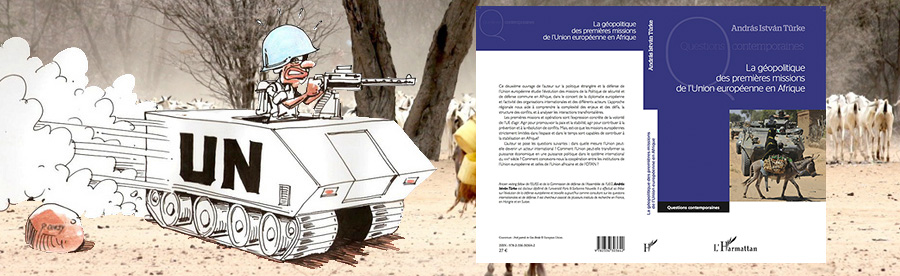
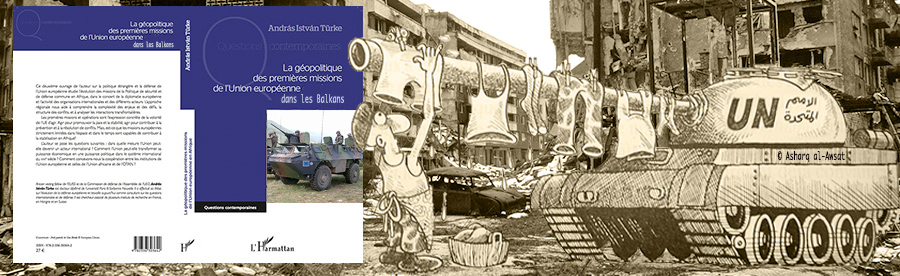
We are looking for sponsors for the English translation of these books, please contact turkeandras(at)gmail(dot)com