
You are here
Afrique
Council greenlights EU deal with Andorra and San Marino
Council greenlights signature and provisional application of EU agreement with Andorra and San Marino.
Categories: Afrique, Europäische Union
Statement by the High Representative on behalf of the EU on the alignment of certain countries concerning restrictive measures against the proliferation and use of chemical weapons
Statement by the High Representative on behalf of the EU on the alignment of certain third countries with Council Decision (CFSP) 2026/1542 of 3 July 2026 concerning restrictive measures against the proliferation and use of chemical weapons.
Categories: Afrique, Europäische Union
Programme for agile and rapid defence innovation: Council and Parliament reach political agreement
The Council and the European Parliament reached a provisional agreement on the proposal to establish the programme for agile and rapid defence innovation (AGILE), a new €115 million instrument designed to provide rapid, agile and targeted financial support to small and medium-sized enterprises.
Categories: Afrique, Europäische Union
Council agrees its position on the draft annual budget for 2027
Today, the Council agreed its position on the 2027 EU draft budget – the last annual budget of the current multiannual financial framework.
Categories: Afrique, Europäische Union
MFR 2028-2034: Rat legt Verhandlungsposition zur Unterstützung der EU in den Bereichen Migration, Grenzmanagement und innere Sicherheit fest
Die Unterstützung der EU wird den Mitgliedstaaten dabei helfen, das Migrations- und Asylpaket umzusetzen, ein effizientes Management der EU-Außengrenzen zu gewährleisten und gegen Kriminalität vorzugehen.
Categories: Afrique, Europäische Union
EU countries agree to extend temporary protection for those fleeing Ukraine until March 2028
The temporary protection status granted to those fleeing Ukraine will be extended until 4 March 2028, delivering on the EU’s commitment to support Ukraine and its people for as long as it takes.
Categories: Afrique, Europäische Union
Erweiterung: Albanien und die EU schließen Verhandlungen über Wissenschaft und Forschung, Bildung und Kultur sowie Außenbeziehungen vorläufig ab
Auf der neunten Tagung der Beitrittskonferenz mit Albanien, die heute stattfand, wurden die Kapitel 25 (Wissenschaft und Forschung), 26 (Bildung und Kultur) und 30 (Außenbeziehungen) vorläufig abgeschlossen.
Categories: Afrique, Europäische Union
Erweiterung: EU und Moldau nehmen Verhandlungen über Außenbeziehungen auf
Auf der dritten Tagung der Beitrittskonferenz haben die EU und Moldau Verhandlungen über den EU-Besitzstand im Bereich der Außenbeziehungen aufgenommen.
Categories: Afrique, Europäische Union
Fini la paperasse dans les hôpitaux algériens : le dossier médical passe au tout-numérique dès cet été
C’est un tournant majeur pour la santé en Algérie : le tout-numérique arrive dans les hôpitaux. Dès cet été, le ministère de la Santé déploiera […]
L’article Fini la paperasse dans les hôpitaux algériens : le dossier médical passe au tout-numérique dès cet été est apparu en premier sur .
Quelques images de la célébration de la fête du 14 juillet à Cotonou
La Résidence de France à Cotonou a accueilli, le 14 juillet 2026, la célébration de la fête nationale française. L'événement a réuni de nombreuses personnalités béninoises, des membres du corps diplomatique, de la communauté française et des amis de la France.
L'ambassadrice de France au Bénin, Nadège Chouat, a accueilli ses invités dans une ambiance conviviale et festive. Cette célébration a été l'occasion de mettre en lumière la solidité des relations entre le Bénin et la France ainsi que le dynamisme du partenariat qui unit les deux pays.
La cérémonie a également été marquée par la présence d'une délégation officielle béninoise conduite par Franck Armel Afoukou, Secrétaire général du ministère des Affaires étrangères, témoignant de l'importance accordée à cette célébration et à la coopération bilatérale.
Dans un message publié à l'issue de l'événement, l'ambassade de France a exprimé sa gratitude envers l'ensemble des invités, tout en adressant des remerciements particuliers aux partenaires et sponsors dont le soutien a contribué à la réussite de cette réception.
Au-delà de son caractère commémoratif, cette célébration du 14 juillet a offert un cadre d'échanges entre autorités, diplomates, partenaires institutionnels et acteurs de la coopération, illustrant une nouvelle fois les liens d'amitié et de collaboration entre le Bénin et la France.


Categories: Afrique
Visa pour l’Espagne en Algérie : BLS annonce un nouveau calendrier de prise de rendez-vous
Du nouveau pour les demandeurs de visa Espagne en Algérie : le prestataire BLS International a annoncé d’importants changements concernant la prise de rendez-vous dans […]
L’article Visa pour l’Espagne en Algérie : BLS annonce un nouveau calendrier de prise de rendez-vous est apparu en premier sur .
Voici le programme du Festival des Masques à Porto-Novo
La ville de Porto-Novo s'apprête à vibrer au rythme des traditions et du patrimoine culturel à l'occasion de l'édition 2026 du Festival des Masques. Prévu les 25 et 26 juillet 2026, l'événement promet deux journées d'immersion au cœur des arts, des cultures et des pratiques ancestrales qui font la richesse du Bénin et de l'Afrique.
La capitale béninoise accueillera une série d'activités destinées au grand public les 25 et 26 juillet 2026. Les festivaliers pourront profiter des animations organisées sur les différentes places de la ville, visiter le Village du Festival, participer à un colloque scientifique consacré aux masques et au patrimoine et assister à des concerts en plein air.
Le moment le plus attendu de cette édition sera la Grande Procession des Masques, véritable point d'orgue du festival. Ce défilé réunira des masques emblématiques du Bénin, aux côtés de délégations venues de plusieurs pays africains, offrant ainsi un spectacle haut en couleurs qui célèbre la diversité des traditions du continent.


Categories: Afrique
Démarrage des travaux de construction de logements de la GDIZ
Le projet de construction de 50.000 logements sociaux destinés à accompagner le développement de la Zone industrielle de Glo-Djigbé (GDIZ) franchit une nouvelle étape. Les travaux de viabilisation primaire du site ont officiellement démarré, avec l'installation de la base de l'entreprise chargée de l'exécution des travaux.
Cette première phase concerne le Lot 1, correspondant à la Zone 1 du projet. Elle comprend la réalisation des infrastructures nécessaires à un ensemble composé de 11 bâtiments de typologie A, 3 bâtiments de typologie B, 11 abris à vélos et une laverie. Ces travaux constituent le socle indispensable avant l'édification des logements.
Le projet est porté par le ministère du Cadre de vie et des Transports, en charge du Développement durable, avec la Société Immobilière et d'Aménagement Urbain (SImAU) comme maître d'ouvrage délégué. La maîtrise d'œuvre est assurée par le groupement ECCO-GC / BAOBAB / GIC-MALI, tandis que l'exécution des travaux a été confiée à FADIL SA. Les travaux, financés sur le budget national, sont prévus pour une durée de 16 mois.
À terme, le programme prévoit la réalisation de 50.000 logements sociaux en immeubles collectifs de type R+3 à R+4, destinés principalement aux employés et ouvriers de la Zone industrielle de Glo-Djigbé. Le projet intégrera également un centre commercial ouvert au grand public afin de répondre aux besoins des futurs résidents.
Positionné sur une gamme de logements sociaux, le programme s'inspire du niveau de prestations des logements militaires développés par la SImAU à Allada et à Ouidah. Il privilégie des surfaces habitables compactes et fonctionnelles afin de maîtriser les coûts de construction tout en garantissant un cadre de vie adapté aux ménages.
Dans sa première phase, le chantier est réparti en 46 bâtiments totalisant 2.920 logements, selon trois typologies.
Le Lot 1 comprend la Zone 1 avec 11 bâtiments de typologie A, 3 bâtiments de typologie B, 11 abris à vélos et une laverie.
Le Lot 2, correspondant à la Zone 2, prévoit 13 bâtiments de typologie A, 2 bâtiments de typologie B, 1 bâtiment de typologie C, 6 abris à vélos et une laverie.
Le Lot 3, qui couvre la Zone 3, comprend 7 bâtiments de typologie A, 4 bâtiments de typologie B, 5 bâtiments de typologie C, 4 abris à vélos, une laverie et un poste de sécurité.
Le lancement des travaux de viabilisation marque ainsi le démarrage concret de ce vaste programme immobilier, appelé à accompagner la montée en puissance de la GDIZ en offrant une solution de logement adaptée aux milliers de travailleurs du pôle industriel.
Categories: Afrique
La BAD injecte 878 millions $ dans l’un des projets les plus ambitieux de l’Algérie
C’est un coup d’accélérateur décisif pour le projet ferroviaire le plus ambitieux d’Algérie. La Banque africaine de développement (BAD) a officiellement approuvé, mardi, une enveloppe […]
L’article La BAD injecte 878 millions $ dans l’un des projets les plus ambitieux de l’Algérie est apparu en premier sur .
« Voilà pourquoi il est le roi » - Messi se qualifie pour sa troisième finale de Coupe du monde
BBC Sport revient sur la prestation magistrale de Lionel Messi sur l'aile droite qui a permis d'éliminer l'Angleterre de la Coupe du monde.
Categories: Afrique, European Union
« Voilà pourquoi il est le roi » - Messi se qualifie pour sa troisième finale de Coupe du monde
BBC Sport revient sur la prestation magistrale de Lionel Messi sur l'aile droite qui a permis d'éliminer l'Angleterre de la Coupe du monde.
Categories: Afrique, European Union
BERICHT über den Vorschlag für eine Verordnung des Europäischen Parlaments und des Rates zur Schaffung eines Rahmens für Maßnahmen zur Erleichterung des Transports von militärischer Ausrüstung, militärischen Gütern und militärischem Personal innerhalb...
BERICHT über den Vorschlag für eine Verordnung des Europäischen Parlaments und des Rates zur Schaffung eines Rahmens für Maßnahmen zur Erleichterung des Transports von militärischer Ausrüstung, militärischen Gütern und militärischem Personal innerhalb der Union
Ausschuss für Sicherheit und Verteidigung
Ausschuss für Verkehr und Tourismus
Michał Szczerba, Roberts Zīle
Quelle : © Europäische Union, 2026 - EP
Ausschuss für Sicherheit und Verteidigung
Ausschuss für Verkehr und Tourismus
Michał Szczerba, Roberts Zīle
Quelle : © Europäische Union, 2026 - EP
Categories: Afrique, Europäische Union
Onze personnes meurent dans l'incendie d'un foyer d'accueil en Algérie
Outre les décès, 19 personnes ont été blessées dans un incendie qui s'est déclaré dans un orphelinat de la municipalité de Mohammadia, à l'est de la capitale algérienne, selon les autorités.
Categories: Afrique, European Union
Onze personnes meurent dans l'incendie d'un foyer d'accueil en Algérie
Outre les décès, 19 personnes ont été blessées dans un incendie qui s'est déclaré dans un orphelinat de la municipalité de Mohammadia, à l'est de la capitale algérienne, selon les autorités.
Categories: Afrique, European Union
Pages
the old site is here


© 2012-2015 Europa Varietas Foundation © 2015-2020 Europa Varietas Association
www.europavarietas.org | info(@)europavarietas(dot)org | Switzerland
This is a GDPR ready site
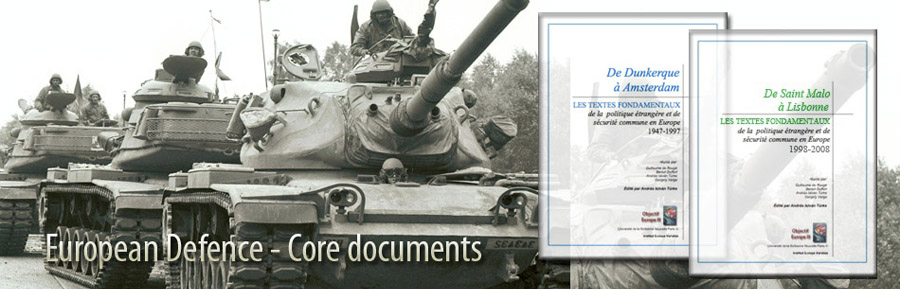
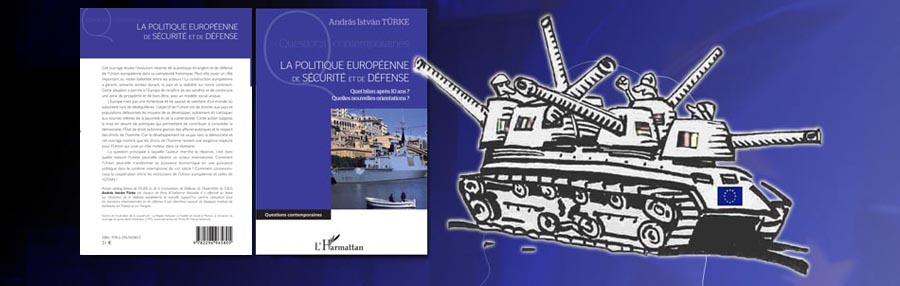
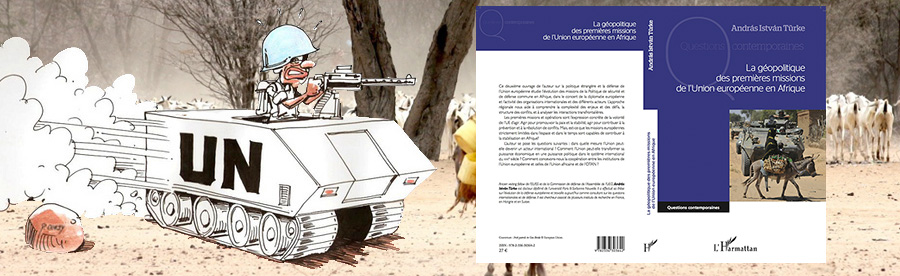
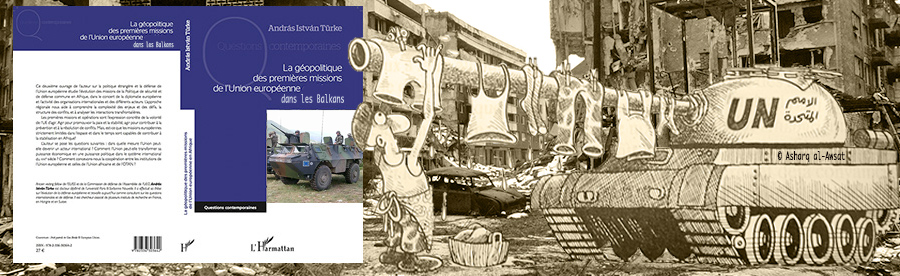
We are looking for sponsors for the English translation of these books, please contact turkeandras(at)gmail(dot)com