
You are here
Défense
One-year badge 2026 - accreditation is open
Information about accreditation requirements for the one-year badge (2026)
Categories: Défense, European Union
EU Integrated Resolve 2026 Exercise: Enhancing EU Crisis Response Coordination
The European Union is carrying out the 2026 edition of its crisis management exercise - EU Integrated Resolve (EU IR26).
Categories: Défense, European Union
A place to call home: Council adopts recommendation on addressing housing exclusion and homelessness
The Council has adopted a recommendation setting out a person-centred, housing-led approach to preventing housing exclusion, including homelessness, in the EU.
OIT : les enjeux d'une élection
L'ordre juridique international édifié au lendemain de la seconde guerre mondiale est-il condamné à disparaitre pour laisser place aux seuls rapports de force entre quelques puissances hégémoniques ?
- Lettres de...Des cargaisons militaires françaises empêchées pour Israël
Plusieurs associations, aidées par des syndicalistes, ont réussi ces derniers jours à faire suspendre ou en tout cas retarder l'expédition à destination du principal fabricant d'armes israélien de composants mécaniques pour véhicules de combat susceptibles d'être engagés sur des théâtres de guerre, en violation des accords internationaux et de la législation française.
- Défense en ligne / France, Israël, Armes (ventes d')Early detection means good chances of recovery | Tygodnik Powszechny - Poland
Categories: Défense, European Union
Debate: Nord Stream attack: Ukrainian in court
The trial over the attack on the Nord Stream gas pipelines in September 2022 has begun in Hamburg. Ukrainian ex-officer Serhii K. has been charged with leading a group of divers who blew up three of the four gas pipelines that run between Russia and Germany. The public prosecutor's office classifies such acts as a war crime against civilian infrastructure.
Categories: Défense, European Union
Für Trainer Croci-Torti geht ein Traum in Erfüllung
Nach mehreren Europacup-Auftritten im Exil darf Lugano endlich zu Hause spielen. Für Trainer Mattia Croci-Torti ist der Abend in der AIL Arena besonders emotional.
Categories: Défense, Swiss News
«Die Opfer werden immer jünger»
In Deutschland warnt die Missbrauchsbeauftragte vor zunehmender sexueller Gewalt im Netz. Besonders gefährdet sind Kinder und Jugendliche. Auch in der Schweiz steigen die Zahlen. Die Kantonspolizei St. Gallen und Kinderschutz Schweiz schlagen Alarm.
Categories: Défense, Swiss News
Palestine: Statement by the High Representative on behalf of the European Union on the postponement of elections
The High Representative issued a statement on behalf of the European Union on the postponement of elections in Palestina.
Categories: Défense, Európai Unió : hírek magyarul
Media advisory - Tripartite Social Summit of 14 October 2026
Main agenda items, approximate timing, public sessions and press opportunities.
Categories: Défense, Európai Unió : hírek magyarul
«Was interessieren höhere Mieten den Polit-Adel?»
Die Mietpreis-Initiative wirft in der Community Fragen auf. Während einige Leser die Zuwanderung begrenzen wollen, kritisieren andere die Forderungen des Mieterverbandes und verteidigen die Interessen der Vermieter.
Categories: Défense, Swiss News
Leao wünscht Barça-Star den Ballon d’Or
Nach Galatasarays 1:4 gegen Barcelona lobt Rafael Leao Barça-Jungstar Lamine Yamal und wünscht ihm den Ballon d’Or. Yamal war mit zwei Vorlagen zum Spieler des Spiels gewählt worden.
Categories: Défense, Swiss News
Der Anstieg der Lebenserwartung in der Schweiz gerät ins Stocken
Menschen in der Schweiz werden zwar durchschnittlich immer älter. Neuste Erhebungen des BFS belegen jedoch, dass der Anstieg der Lebenserwartungen zwischen 2010 und 2020 so schwach war wie noch nie. Kann dieser überhaupt noch beschleunigt werden?
Categories: Défense, Swiss News
Un jeune retrouvé mort dans une cabine électrique avec des câbles sectionnés
Le corps d'un jeune homme de 23 ans a été retrouvé dans une cabine électrique de la SBEE, à Djègbé, dans la commune d'Abomey.
Un jeune de 23 ans a été retrouvé sans vie dans un poste de transformation de la SBEE, mardi 13 octobre 2026, sur le site de l'Ecole normale des instituteurs d'Abomey, à Gbindo, dans l'arrondissement de Djègbé.
L'accès à la cabine a été forcé. Des pinces, des tournevis et une torche ont également été retrouvés sur les lieux.
La présence de câbles de haute tension sectionnés à proximité du corps laisse envisager une tentative de récupération frauduleuse de câbles électriques.
C'est au cours d'une inspection de routine, aux environs de 12 h 40, qu'un agent de la Société Béninoise d'Energie Electrique (SBEE) a fait la macabre découverte.
Une brûlure constatée à la main gauche de la victime a conforté l'hypothèse d'une électrocution.
Le personnel de santé a conclu à un décès consécutif à une décharge électrique, selon les premiers éléments recueillis sur place.
Les circonstances exactes de l'incident restent à déterminer.
Le préfet du Zou, Dhossou Laurent Zomaï, s'est déplacé sur les lieux, en compagnie du directeur départemental de la Police républicaine.

Des policiers du commissariat de Djègbé, un spécialiste de la police technique et scientifique ainsi que des agents de la SBEE ont pris part aux constatations.
Le préfet a ensuite échangé avec les parents du défunt. Il a rappelé le danger extrême que représente toute intrusion dans une installation électrique à haute tension, où une seule manipulation peut être fatale.
Le préfet a également annoncé une prochaine visite dans le village pour sensibiliser davantage les habitants, notamment les jeunes, aux conséquences de tels actes.
Sur instruction du procureur de la République, le corps a été remis à la famille pour les obsèques.
M. M.
Der Zwei-Tage-Trick für perfekte Quittenkonfitüre
Die Quitte duftet intensiv, ist aber nur kurz frisch zu haben. Wer sie haltbar machen will, kocht daraus Konfitüre – mit Apfelpektin, Zucker und Zitronensaft.
Categories: Défense, Swiss News
«Kein Strommangel im Winter, aber ein Schock bei den Preisen»
Stauseen fallen auf Tiefstände, Flusskraftwerke drosseln die Leistung. Im Podcast «Durchblick» analysiert Dr. Jonas Savelsberg von der ETH Zürich die Lage von Wasser- und Solarkraft in der Schweiz.
Categories: Défense, Swiss News
«Ein Geschenk für das amerikanische Volk»
Seco-Chefin Helene Budliger Artieda weist Bestechungsvorwürfe rund um Rolex-Tischuhr und Goldbarren an Donald Trump zurück: Die Geschenke seien «an das amerikanische Volk» gegangen.
Categories: Défense, Swiss News
LOTO STAR : les résultats du tirage de 11 H
LES RÉSULTATS LOTO STAR SONT LÀ !
TIRAGE N°123/26
Mercredi 14 octobre 2026 (11H)
70 • 10 • 69 • 39 • 05
Félicitations aux heureux gagnants !
Pas encore gagné ? Gardez le sourire !
Rendez-vous au prochain tirage de 14H pour une nouvelle chance.
Jouez dans les centres de jeux ou en ligne : Tapez 590# ou lnbloto.bj
Jouez avec modération et responsabilité. Le jeu doit rester un plaisir.
A TOI DE JOUER
#LaChanceAvecModération
Les Amazones tombent devant les Aigles Dames du Mali (6-2)
Les Amazones du Bénin ne participeront pas à la suite des qualifications pour les Jeux olympiques de Los Angeles 2028. Battue 6-2 par le Mali, ce mardi 13 octobre 2026 à Bamako, lors du match retour du deuxième tour des éliminatoires, la sélection béninoise est éliminée malgré sa victoire (3-1) à l'aller.
Fin de parcours pour les Amazones dans le cadre des éliminatoires des Jeux olympiques de Los Angeles 2028. Après avoir remporté la manche aller disputée à Lomé, la sélection dirigée par Abdoulaye Ouzérou abordait cette rencontre avec un avantage de deux buts. Toutefois, les Aigles Dames du Mali ont rapidement inversé la tendance. Efficaces offensivement, les Maliennes ont refait leur retard dès la première période avant de porter le score à 3-0 au début de la seconde mi-temps.
Le Bénin a ensuite réagi grâce à Romaine Gandonou. L'attaquante de Tambours FC a inscrit un doublé, permettant temporairement aux Amazones de reprendre l'avantage sur l'ensemble des deux rencontres. Cette réaction n'a cependant pas suffi à préserver leurs chances de qualification.
En fin de match, les Maliennes ont inscrit trois nouveaux buts pour sceller leur victoire sur le score de 6-2. Malgré leur succès lors de la première confrontation, les coéquipières de Yolande Gnammi et d'Aude Gbedjissi quittent ainsi la compétition. Cette élimination met fin au parcours des Amazones du Bénin pour la qualification aux Jeux olympiques de Los Angeles 2028. Le Mali, victorieux, va poursuivre son aventure dans la course à la qualification.
F. A. A.
Pages
the old site is here


© 2012-2015 Europa Varietas Foundation © 2015-2020 Europa Varietas Association
www.europavarietas.org | info(@)europavarietas(dot)org | Switzerland
This is a GDPR ready site


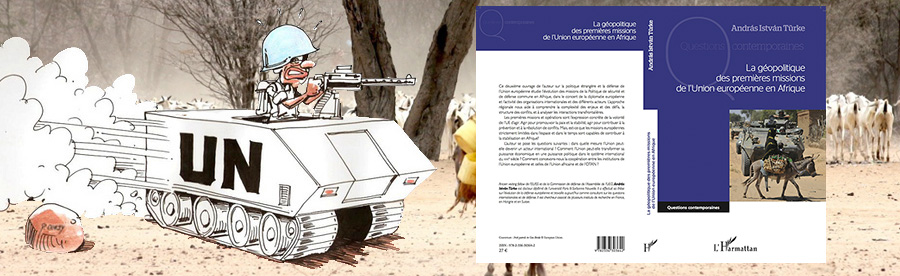
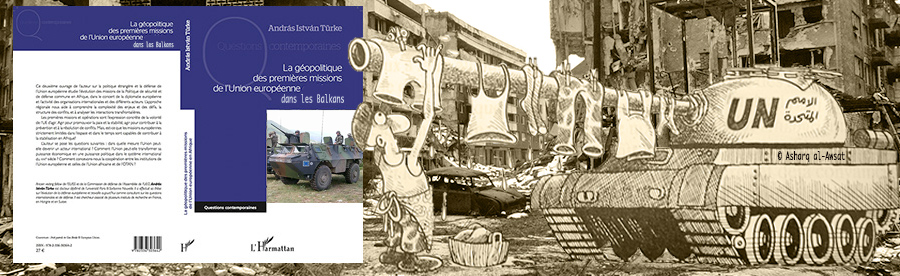
We are looking for sponsors for the English translation of these books, please contact turkeandras(at)gmail(dot)com