
You are here
Défense
Grève en France : plusieurs vols vers l’Algérie annulés ce mardi
En raison d’un mouvement social d’ampleur dans la fonction publique, la Direction Générale de l’Aviation Civile (DGAC) alerte sur d’importantes perturbations dans plusieurs aéroports français. […]
L’article Grève en France : plusieurs vols vers l’Algérie annulés ce mardi est apparu en premier sur .
Prêt immobilier militaire : comment les banques calculent votre solde et vos primes ?
Obtenir un prêt immobilier militaire ne dépend pas uniquement du montant du traitement indiciaire. La difficulté consiste surtout à faire reconnaître correctement les primes et indemnités qui représentent parfois une part significative de la rémunération. Une banque peut intégrer un revenu régulier et documenté, tout en minorant ou en écartant une prime ponctuelle liée, par […]
Categories: Défense, Határon túli magyar portálok összesített hírei
La combinaison gagnante du tirage de 14 H
LES RÉSULTATS DOUBLE CHANCE SONT LÀ !
LOTO FORTUNE Tirage N°154
Vendredi 25 septembre 2026 (14H)
– Zone A (5 premiers numéros) :
60 • 35 • 70 • 13 • 42
– Zone B (5 derniers numéros) :
40 • 62 • 65 • 43 • 25

Félicitations aux heureux gagnants.
Pas encore cette fois ? Gardez le sourire !
Rendez-vous à 18H pour le prochain tirage.
Jouez avec modération et responsabilité. Le jeu doit rester un plaisir.
Terminus du néolibéralisme ou terminus de la démocratie
À ce stade, ça n'est plus une crise — même scélérate. C'est le Grand Alignement : un événement multifactoriel, isotrope (ça vient de tous les côtés), saturant, et surtout coordonné : toutes les dynamiques se potentialisent mutuellement, dans une synchronie de crise hors norme. Un événement d'une magnitude à mettre la perpétuation du capitalisme néolibéral sur la table.
- La pompe à phynance / Démocratie, Économie, Crise financièreStäfa bleibt punktelos: Suhr Aarau erledigt die Pflichtaufgabe souverän
Handball Stäfa kann weiterhin nicht gewinnen: Auch gegen Suhr Aarau setzt es für den Tabellenletzten der Quickline Handball League eine deutliche Niederlage ab.
Categories: Défense, Swiss News
Fühlst du dich alt?: So sieht die Baby-Sonne aus den Teletubbies heute aus
Ihr lachendes Gesicht war in den 90er Jahren in vielen Wohnzimmern weltweit zu sehen. In der Kult-Kinderserie Teletubbies wirkte Jess Smith als lachende Baby-Sonne mit. Mittlerweile hat die 30-Jährige selbst ein fast zweijähriges Kind.
Categories: Défense, Swiss News
Tourismuskrise in Braunwald GL: Jetzt stehen auch Skischule und Klettersteig vor dem Aus
Die geplante Stilllegung der Gumenbahn in Braunwald GL hat weitreichende Folgen. Der Verein Trendsport Braunwald will den Klettersteig schliessen, falls die Bahn 2027 nicht fährt. Auch die Skischule kämpft ums Überleben. Gespräche mit den Sportbahnen sind gescheitert.
Categories: Défense, Swiss News
Pourquoi certaines habitudes de l’armée restent utiles longtemps après le retour à la vie civile ?
Un retour à la vie civile ne coupe pas tout d’un coup. Les horaires changent, l’uniforme disparaît, mais certains automatismes restent dans les gestes les plus simples. Ranger son sac la veille. Arriver dix minutes tôt. Lire une consigne jusqu’au bout. Rien de spectaculaire. Ces habitudes viennent d’années où une erreur de détail pouvait coûter […]
La Voie Entrepreneuriale à Envisager Après le Service Militaire
Quitter les drapeaux marque le début d’une nouvelle aventure personnelle et professionnelle. Beaucoup d’anciens militaires cherchent à bâtir leur propre projet pour canaliser leur rigueur et leur sens du commandement. L’entrepreneuriat offre un terrain idéal pour transformer cette expérience de terrain en valeur économique. C’est une occasion d’établir une activité indépendante sur mesure. Image source: […]
Categories: Défense, Europäische Union
Resilience in knowledge infrastructures: science at a juncture
Academic freedom and independent scientific knowledge production are fragile achievements – first secured during the Enlightenment in Europe in the 17th and 18th centuries – that now face substantial headwinds. In the United States in 2026, the Trump administration has advanced further proposals to reduce science spending (Grimm & Hornidge, 2025). Most notably, the White House foresees a 55 per cent cut in funding for the National Science Foundation in 2027 compared with 2026 levels (Garisto & Nature Magazine, 2026). However, the threats to science systems in the United States and beyond cannot be reduced to – drastic – budget cuts alone. Political interference in scientific quality assurance and decisions about which research receives funding is also reported to have increased substantially, particularly in the United States (e.g. Finucane, 2026). Although the Trump administration’s actions are notably blatant, attacks on science systems, academic freedom and knowledge cooperation, whether overt or subtle, can be observed in countries across income levels and continents. In Germany, the German Research Foundation recently published a position paper on threats to academic freedom and the German science system, explicitly referencing the positioning and influence of the right-wing political party AfD, as set out in its “government programme” for the state election in Saxony-Anhalt (Ad-hoc-Arbeitsgruppe, 2026). At the same time, the Organisation for Economic Cooperation and Development announced in 2026 that China’s research spending had reached parity with that of the United States (OECD, 2026). This is also the year in which the African Union Commission and the African Union Development Agency (AUDA-NEPAD) launched the Science, Technology and Innovation Strategy for Africa 2034 Implementation Plan. According to the AUDA-NEPAD, this marks “Africa’s determination to move beyond overreliance on imported technologies and towards the sovereign production of globally competitive knowledge, stronger industrial capabilities, and socioeconomic value creation” (AUDA-NEPAD, 2026). Moreover, in 2026 the European Commission adopted a recommendation on the first-ever European Union (EU) framework for science diplomacy. Finally, on the multilateral level, 2026 marks two years since the launch of the UNESCO International Decade of Sciences for Sustainable Development, with UNESCO holding a large international conference with the ambition to “spotlight how transdisciplinary research, open science and strengthened science-policy-society interfaces can drive more inclusive and equitable futures for all” (UNESCO, 2026). With these developments shaping science systems in 2026, how is Germany positioning itself through national science policy to further develop its science and innovation systems and invest in transregional science cooperation as an engine for mutual learning, innovation and change? In early 2026, the German Science Council addressed the rise of anti-pluralist and anti-academic forces in a paper envisioning Germany’s science system in 2040 (Wissenschaftsrat, 2026). In it, the Council identifies four possible scenarios. Two scenarios assume substantial investment in science and in the science system as a whole: Scenario one outlines a well-funded German science and innovation system in a geopolitically turbulent world marked by high levels of societal polarisation, security risks and non-alignment with EU partners; scenario four envisages a global research area in which science cooperation is closely coordinated by a supranational organisation, creating cross-regional innovation spaces but also less localisation, and a decoupling of research and education as well as of research and society and policy. The two remaining scenarios give science far lower priority. Scenario two envisions a system in which science is predominantly instrumentalised for economic gain, while scenario three depicts science as marginalised, struggling for funding and political attention, and barely able to realise its potential. In the following, we explore selected developments in science policy in 2026, differentiate between different types of innovation policy and argue for the role of knowledge cooperation in creating shared innovation spaces. Finally, we bring this analysis together with the German Science Council’s scenario perspective and propose an additional, more visionary scenario that policy- and science-system-related decision-makers should strive to realise.
Categories: Défense, Diplomacy & Defense Think Tank News
AI’s potential to facilitate more agile development cooperation
Two features of AI stand out among technological innovations: It is exceptionally powerful, and its (computing) power is increasing faster than any previous technology in human history. AI is not a tool that can simply be added to the existing arsenal just for the sake of task automation and increased efficiency (Sinanoglu, 2025a). Its consequences are so profound that using it to advance broader development objectives requires changes to some of the ways development cooperation works. In this chapter, we go beyond more general assessments (OECD, 2025) of the use of AI by governments (OECD, 2026) and of the global development risks posed by AI (United Nations Independent International Scientific Panel on Artificial Intelligence, 2026). We argue that successful development cooperation for sustainable futures depends on collaboration with others in iterative and adaptive ways to exploit opportunities for positive change more effectively in challenging contexts. To this end, current development-cooperation structures and processes should be reformed to facilitate and encourage organisational learning (Brandi & Büge, 2026) and adopt a more iterative approach to cooperation. To what extent does development cooperation currently deploy AI tools for such organisational learning? By “AI”, we mean generative and agentic artificial intelligence. We also distinguish between “AI in development” and “AI for development”. Whereas the former refers to how AI is used in middle- and low-income countries, the latter refers to how the development sector can use AI. We catalogued how the supply side of development cooperation (donors, ministries, agencies, development banks, United Nations (UN) entities, humanitarian implementers and funders) uses AI in its own operations, programming, advisory work and evaluations. The database comprises 172 AI deployments and, while not exhaustive, provides a comprehensive primary-source snapshot that lets us answer three questions empirically: Who is deploying AI? What for? And how far has it matured? (See Figure 9) Our data suggest that almost 60 per cent of recorded uses fall into just two functions: getting services to people in the field (programme delivery) and speeding up the back office at headquarters (internal operations). Together, the functions most closely tied to organisational learning – monitoring, evaluation, planning and coordination – account for only roughly 19 per cent of deployments. In short, the sector is now using AI to do its existing work faster, but not yet to change how it works and learns.
Categories: Défense, Diplomacy & Defense Think Tank News
Global health beyond 2030: protecting ambition in a fragmented world
The Sustainable Development Goals (SDGs) were agreed in 2015 in a political environment in which broad multilateral agreement still appeared possible. They reflected the belief that universal goals, shared language and collective implementation could organise international cooperation, even if
they were never free from contestation (Biermann, Kanie, & Kim, 2017; Chaturvedi et al., 2020). For global health, this mattered. The 2030 Agenda broadened the health agenda beyond selected infectious diseases and maternal and child health. It included universal health coverage, non-communicable diseases, mental health, sexual and reproductive health and rights, and the wider social, economic and environmental determinants of health (Murray, 2015; WHO, 2015). With only a few years left until 2030, progress remains uneven and many health-related targets are off track. At the same time, the political context for a future global development framework has changed substantially. Global health cooper-
ation is increasingly shaped by donor retrenchment, weaker multilateralism, geopolitical competition and ideological polarisation (Held, Kickbusch, McNally, Piselli, & Told, 2019; Kickbusch & Liu, 2022). Issues such as gender equality, vaccination, climate action and migration have become more contested. These tensions now affect financing, normsetting, institutional stability and the conditions under which cooperation remains possible. Three shifts are particularly important. First, financing has become more uncertain. Aid cuts and donor retrenchment weaken multilateral health institutions and create incentives for selective, interest-driven cooperation (Poddar & Rao, 2025; Witter et al., 2025). Second, ideological polarisation makes established health commitments more contested, especially around sexual and reproductive health and rights, vaccination, and climate and health (Greene, 2026; Khosla & Allotey, 2025). Third, the global health order is becoming more multipolar. Regional organisations, middle powers,
South-South cooperation and issue-based coalitions are gaining influence (Bull & Banik, 2025; Franz et al., 2024; Lal, 2026). Together, these shifts affect who leads, which priorities are defended and how ambition is defined. At stake is not only whether new commitments can be agreed, but whether the core principles of global health cooperation can be preserved. These include rights-based commitments, universality and equity, national ownership in implementation and international solidarity through coordinated collective action. These principles are grounded in the normative framework of the World Health Organization (WHO) and reflected, although unevenly, in the 2030 Agenda and subsequent declarations on universal health coverage (UN, 2015, 2019, 2023; WHO, 1948). The risk is not only stagnation. A more serious risk is selective rollback. Commitments that seemed relatively stable during the SDG period may become vulnerable in post-2030 negotiations. This applies particularly to sexual and reproductive health and rights, vaccination and climate-related health commitments (Haeuser et al., 2025; Khosla & Allotey, 2025; Romanello et al., 2024). If consensus becomes harder to reach, the price of agreement may be dilution. A future framework may preserve the language of multilateralism while narrowing the substance of global health ambition (see also Berger & Leininger in this volume).
Categories: Défense, Diplomacy & Defense Think Tank News
Remise des prix
Depuis quinze jours, l'auteur s'installait chaque matin à la table de l'huissier, seul au fond de la salle du banquet, et récitait ainsi des paroles sans suite.
- Contrebande / Identité culturelle, Langue, Littérature
Categories: Balkans Occidentaux, Défense
Jetzt Aufstellung hinzaubern: Mach den Sion-Coach und zeig deine Startelf gegen den FCZ
Jetzt bist du der Boss an der Seitenlinie! Stell deine Sion-Startelf auf. Einloggen und direkt ab an die Taktiktafel.
Categories: Défense, Swiss News
Pas de panique
Dans son focus sur la défense et la sécurité nationale paru à la mi-septembre, le Haut-Commissariat au plan et à la stratégie conseille de « préparer la nation, en renforçant la capacité de résilience nationale ». Le thème de la résilience sur les « nouvelles lignes de front intérieures » du territoire national, « sous le seuil » de la guerre, a été retenu aussi pour l'ouverture le 7 octobre prochain à Toulon des Rencontres Stratégiques de la Méditerranée. Ambiance panique ?
- Défense en ligne / France, Armée, OTAN
Categories: Biztonságpolitika, Défense
Bloomfield relève la notation souveraine du Bénin de A+ à AA-
L'agence panafricaine de notation Bloomfield Investment Corporation a relevé la note souveraine de long terme du Bénin de A+ à AA-.
La note souveraine du Bénin a été portée de A+ à AA-. Une notation relevée le 15 septembre 2026 à l'issue du processus annuel de réévaluation qui maintient le Bénin dans la catégorie « investissement ».
Après une note A- en 2020, puis A en 2021 et A+ par la suite, cette notation marque une progression. Le Bénin franchit désormais un nouveau palier avec AA-.
Le Bénin intègre ainsi le cercle restreint des signatures souveraines africaines bénéficiant des meilleures notations attribuées par l'agence.
Le Bénin et les USA renforcent leur coopération
Le ministre délégué auprès du président de la République, chargé de la Défense nationale, Gildas Agonkan, a reçu mardi 15 septembre 2026, à son cabinet, une délégation de la Garde nationale du Dakota du Nord (États-Unis) conduite par le général de brigade Mitchell Johnson.
Renforcement du partenariat entre les Forces armées béninoises et la Garde nationale du Dakota du Nord, dans le cadre du Programme de Partenariat d'État qui lie les deux forces depuis plusieurs années. Tel est le sujet des échanges entre le ministre délégué auprès du président de la République, chargé de la Défense nationale, Gildas Agonkan et une délégation de la Garde nationale du Dakota du Nord conduite par le général de brigade Mitchell Johnson.
Les discussions ont porté notamment sur la stratégie de défense, le renforcement des capacités opérationnelles et la préparation aux situations d'urgence.
La coopération a déjà permis des formations, des échanges d'expériences, des exercices conjoints, des appuis en équipements ainsi qu'un accompagnement dans les opérations de maintien de la paix.
Le général Mitchell Johnson a réaffirmé la disponibilité de la Garde nationale du Dakota du Nord à poursuivre son soutien aux efforts du Bénin dans le domaine de la défense et de la sécurité.
Le ministre Gildas Agonkan a réaffirmé l'engagement du Bénin à consolider ce partenariat. Le ministre souhaite notamment le rendre plus actif et l'adapter aux nouveaux défis sécuritaires auxquels le pays et la sous-région sont confrontés. « Les Forces Armées Béninoises demeurent disposées à poursuivre cette coopération militaire en la rendant plus active », a déclaré le ministre, citant notamment la lutte contre le terrorisme, l'extrémisme violent et la piraterie maritime.
Remarks by President António Costa at the press conference following the European Arctic Summit
President of the European Council António Costa presented the outcome of the discussions of the European Arctic Summit held in Rovaniemi on 14 September 2026.
Alger : une panne technique perturbe la distribution d’eau dans ces communes
Une défaillance technique sur une station de pompage stratégique vient de bouleverser l’alimentation en eau potable d’une partie de la capitale. Dans un communiqué diffusé […]
L’article Alger : une panne technique perturbe la distribution d’eau dans ces communes est apparu en premier sur .
Pages
the old site is here


© 2012-2015 Europa Varietas Foundation © 2015-2020 Europa Varietas Association
www.europavarietas.org | info(@)europavarietas(dot)org | Switzerland
This is a GDPR ready site
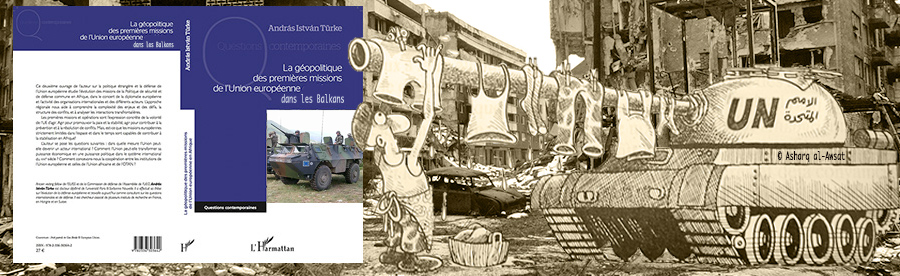
We are looking for sponsors for the English translation of these books, please contact turkeandras(at)gmail(dot)com