
You are here
European Union
Speech by President António Costa at the opening session of the 24th edition of the European Week of Regions and Cities
President of the European Council, António Costa, delivered a speech at the opening session of the 24th edition of the European Week of Regions and Cities in Brussels, on 12 October 2026.
Categories: Afrique, European Union
DPRK: Council adds three individuals and four entities to sanctions lists over nuclear, missile programmes and Russia ties
The Council adopted restrictive measures against three individuals and four entities supporting North Korea’s weapons of mass destruction programmes and violating UN sanctions, including through Russia-DPRK cooperation.
Categories: Afrique, European Union
Lebanon: EU establishes new CSDP support mission to strengthen defence and security institutions
The Council has established the EU Support Mission in Lebanon (EUSM Lebanon) to strengthen the Lebanese Armed Forces and Internal Security Forces and support stability in the country.
Russia’s war of aggression against Ukraine: EU agrees largest-ever package of listings targeting almost 1600 individuals and entities in Russia’s military-industrial complex
The Council has adopted restrictive measures against 826 Russian companies and 743 individuals active in Russia’s military-industrial complex in single largest set of listings since the beginning of Russia’s war of aggression against Ukraine.
Ukraine’s territorial integrity: Council lists 77 individuals over the illegal Russian State Duma 'elections' in the temporarily occupied territories of Ukraine
The Council has adopted restrictive measures against 77 individuals who were involved -as either candidates or members of the Central Election Commission of the Russian Federation- in the illegal so-called 'elections' for the Russian State Duma, held in September 2026 in the territories of Ukraine that Russia has temporarily and illegally occupied.
Chasing the trillions: what MDB lending can - and cannot - mobilise
This paper examines how additional private financial resources can be mobilised through the use of multilateral development bank (MDB) funds. It focuses on identifying the leverage potential of different financing instruments, improving their mobilisation efficiency, and examining how greater leverage can promote development outcomes while safeguarding the financial sustainability of MDBs. Its contribution is a comparative synthesis that brings together mobilisation mechanisms, differences in the public resources and risks underlying leverage ratios, and development impact. The analysis covers six categories: debt instruments, equity instruments, risk-transfer instruments, guarantees, advisory services and policy-based lending. It compares their characteristics, including the level of intervention, mobilisation mechanisms, constraints addressed and time horizons. It also distinguishes transaction-level private direct and indirect mobilisation from broader catalytic effects arising through market development, institutional strengthening and policy reforms.
The comparison shows why instruments cannot be assessed by a single leverage ratio. MDB lending, guarantee exposure and expenditure on advisory services represent different commitments of public resources and risk. Similarly, private finance linked to a transaction cannot be measured in the same way as subsequent investment enabled by policy reform. Available evidence therefore indicates differences in mobilisation potential rather than an established empirical ranking of instruments. The paper argues that leveraging efficiency can be increased by moving to more powerful approaches and by better targeting instruments to binding investment constraints. It examines how this can enhance the development impact and financial viability of MDB/DFI portfolios through two channels: a financial/portfolio efficiency channel and a development/catalytic channel. However, a high leverage ratio does not necessarily indicate superior performance. It may reflect investment in easier markets, weak additionality or an understatement of public risk. Conversely, a lower ratio may be consistent with greater additionality in a fragile market or pioneering sector. These findings highlight the importance of assessing leverage alongside additionality, development impact and financial sustainability. Using concessional funds through blended finance instruments can be costly and can reduce the resources available for other development priorities.
Therefore, the development finance institutions (DFIs) must strictly apply the additionality principle and further operationalise the principle of using minimum concessionality. If interpreted too generously, there is a risk of creating leverage without sufficient development impact. The paper provides specific recommendations for refining the use of financing instruments and integrating transaction-level support into a broader market-shaping approach that draws on the strengths of policy-based lending and technical assistance. Higher leverage should not be pursued as an end in itself; its value depends on its contribution to additional development impact.
Dr Jürgen Karl Zattler is a distinguished non-resident fellow at the Center for Global Development in Washington, DC and a non-resident research fellow at the German Institute of Development and Sustainability (IDOS) in Bonn. Until October 2023, he was Director General at the German Ministry for Economic Cooperation and Development (BMZ). Prior to that, he served as the Executive Director representing Germany at the World Bank.
Categories: Diplomacy & Defense Think Tank News, European Union
5 technologies qui transforment les humains en demi-machines
Voler dans l'espace est depuis longtemps un rêve humain, du mythe grec d'Icare aux voitures volantes des films de science-fiction comme Blade Runner.
Categories: Afrique, European Union
DPRK: Council adds three individuals and four entities to sanctions lists over nuclear, missile programmes and Russia ties
The Council adopted restrictive measures against three individuals and four entities supporting North Korea’s weapons of mass destruction programmes and violating UN sanctions, including through Russia-DPRK cooperation.
Categories: Európai Unió : hírek magyarul, European Union
Lebanon: EU establishes new CSDP support mission to strengthen defence and security institutions
The Council has established the EU Support Mission in Lebanon (EUSM Lebanon) to strengthen the Lebanese Armed Forces and Internal Security Forces and support stability in the country.
Categories: Európai Unió : hírek magyarul, European Union
Russia’s war of aggression against Ukraine: EU agrees largest-ever package of listings targeting almost 1600 individuals and entities in Russia’s military-industrial complex
The Council has adopted restrictive measures against 826 Russian companies and 743 individuals active in Russia’s military-industrial complex in single largest set of listings since the beginning of Russia’s war of aggression against Ukraine.
Categories: Európai Unió : hírek magyarul, European Union
Ukraine’s territorial integrity: Council lists 77 individuals over the illegal Russian State Duma 'elections' in the temporarily occupied territories of Ukraine
The Council has adopted restrictive measures against 77 individuals who were involved -as either candidates or members of the Central Election Commission of the Russian Federation- in the illegal so-called 'elections' for the Russian State Duma, held in September 2026 in the territories of Ukraine that Russia has temporarily and illegally occupied.
Categories: Európai Unió : hírek magyarul, European Union
Péclards Lützelau-Pläne sorgen für Ärger – er wehrt sich
Neue Glamping-Zelte und ein Boots-Shuttle bis Mitternacht: Michel Péclard hat mit der Insel Lützelau Grosses vor. Doch Naturschützer stellen sich seinen Plänen entgegen. Gegenüber Blick nimmt der Gastro-König Stellung – und macht überraschende Zugeständnisse.
Categories: European Union, Swiss News
Le litre d'essence vendu à 2 500 FCFA dans des localités au nord
La hausse du prix de l'essence de contrebande, communément appelée « kpayo », affecte plusieurs communes du Bénin. Dans certaines localités du département de l'Atacora, le litre a été vendu jusqu'à 2 500 FCFA le dimanche 11 octobre 2026, sur fond de pénurie liée à la crue du fleuve Okpara.
Le prix de l'essence kpayo connaît une forte hausse dans plusieurs communes du Bénin. Le Nord du Bénin est le plus touché par cette hausse. À Matéri, Tanguiéta, Kérou, Ouassa-Péhunco et Toucountouna, dans le département de l'Atacora, les populations font face à une pénurie de ce carburant de contrebande.
Dans la journée du dimanche 11 octobre 2026, le litre d'essence kpayo a été vendu à 2 000 FCFA, voire 2 500 FCFA par endroits. Une situation qui contraint les consommateurs à débourser davantage pour s'approvisionner en carburant.
Cette hausse intervient alors que plusieurs stations-services ne disposent pas de stocks suffisants pour satisfaire la demande. Faute de pouvoir s'approvisionner facilement dans ces stations, les consommateurs se tournent vers les vendeurs d'essence de contrebande, malgré les prix élevés pratiqués. Selon les informations, cette situation serait liée à la crue du fleuve Okpara, qui entrave l'acheminement de l'essence vers les localités concernées.
Pendant que le litre d'essence kpayo atteint 2 500 FCFA dans certaines zones, le prix à la pompe dans les stations-services est actuellement de 750 FCFA le litre. Mais l'insuffisance des stocks dans certaines stations limite les possibilités d'approvisionnement des consommateurs.
Categories: Afrique, European Union
Un véhicule fonce dans une boutique, 3 personnes blessées
Un accident de la circulation s'est produit dans l'après-midi du samedi 10 octobre 2026 au carrefour Gankpétin, dans l'arrondissement de Coussi, commune de Toffo, sur l'axe Toffo-Houègbo. Le bilan fait état de trois blessés et de dégâts matériels.
Un véhicule quitte sa trajectoire et fait des dégâts. Selon les informations rapportées par Radio Sèdohoun, le conducteur a terminé sa course contre une boutique en bordure de route. Le boutiquier, le conducteur et une autre victime ont été blessés. Les trois victimes ont été évacués à l'hôpital.
Les forces de sécurité se sont rendues sur les lieux pour le constat.
Categories: Afrique, European Union
Bijoux en or et en argent : une amnistie exceptionnelle se profile en 2027
Le marché des métaux précieux en Algérie pourrait connaître un changement important en 2027. Le projet de loi de finances (PLF) 2027 prévoit une opération […]
L’article Bijoux en or et en argent : une amnistie exceptionnelle se profile en 2027 est apparu en premier sur .
Categories: Afrique, European Union
«Wer so viel Geld für Berater braucht, hat ein Führungsproblem!»
Millionen für externe Berater, Sparmassnahmen beim Programm: Die SRG-Ausgaben sorgen für Zündstoff. In der Community gehen die Meinungen auseinander: Während einige die hohen Honorare als falsche Priorität kritisieren, halten andere externe Expertise für unverzichtbar.
Categories: European Union, Swiss News
Belaribi fixe la date de la 2ᵉ tranche AADL 3 : vers un paiement en deux temps ?
Les souscripteurs du programme de location-vente devront bientôt remettre la main au portefeuille. Le ministre de l’Habitat, de l’Urbanisme et de la Ville, Tarek Belaribi, […]
L’article Belaribi fixe la date de la 2ᵉ tranche AADL 3 : vers un paiement en deux temps ? est apparu en premier sur .
Categories: Afrique, European Union
Loto Fortune : Les résultats du tirage 11 H
LES RÉSULTATS LOTO FORTUNE SONT LÀ !
TIRAGE N°163/26
Lundi 12 Octobre 2026 (11H)
43 • 04 • 35 • 49 • 13
Félicitations aux heureux gagnants !
Pas encore gagné ? Gardez le sourire !
Rendez-vous au prochain tirage de 14H pour une nouvelle chance.
Jouez dans les centres de jeux ou en ligne : Tapez 590# ou lnbloto.bj
Jouez avec modération et responsabilité. Le jeu doit rester un plaisir.
A TOI DE JOUER #XòGbɔnAlɔkpaVo
#LNBSA #JeuResponsable #LaChanceAvecModération
Categories: Afrique, European Union
Un Prix national pour simplifier les procédures administratives
Le gouvernement béninois lance le « Prix national de la simplification administrative » pour recueillir et récompenser les propositions visant à rendre les services publics plus simples, plus rapides, moins coûteux et plus accessibles. Le dépôt des candidatures est prévu du 29 octobre au 12 novembre 2026.
L'initiative est portée par le ministre délégué chargé du Budget et de la Fonction publique, en collaboration avec le ministre de la Transformation digitale et de l'Innovation, chargé de la stratégie nationale d'intelligence artificielle. Elle vise à associer les citoyens et les agents publics à la modernisation de l'administration.
Le concours est ouvert aux agents de l'administration publique, aux citoyens, aux entreprises, aux associations et aux organisations de la société civile. Les participants sont invités à proposer des solutions aux difficultés rencontrées dans les démarches administratives, notamment la réduction des pièces justificatives, des délais de traitement, des déplacements et des coûts. La digitalisation et l'automatisation des procédures figurent également parmi les pistes envisagées.
Les propositions seront évaluées selon leur pertinence, leur caractère simplificateur, leur impact attendu, leur faisabilité et leur potentiel d'application à d'autres administrations. Les lauréats bénéficieront d'une reconnaissance institutionnelle et d'un accompagnement pour la mise en œuvre de leurs solutions. Selon le communiqué en date du 12 octobre 2026, les propositions pourront être déposées sur la plateforme dédiée du 29 octobre au 12 novembre.
Au-delà des récompenses, les propositions jugées pertinentes pourront faire l'objet d'analyses de faisabilité, puis être expérimentées et mises en œuvre avec les administrations compétentes.
Cette initiative s'inscrit dans la dynamique du Partenariat pour un Gouvernement ouvert et contribue à l'objectif de dématérialisation de l'ensemble des démarches administratives à l'horizon 2030.
Categories: Afrique, European Union
Pages
the old site is here


© 2012-2015 Europa Varietas Foundation © 2015-2020 Europa Varietas Association
www.europavarietas.org | info(@)europavarietas(dot)org | Switzerland
This is a GDPR ready site
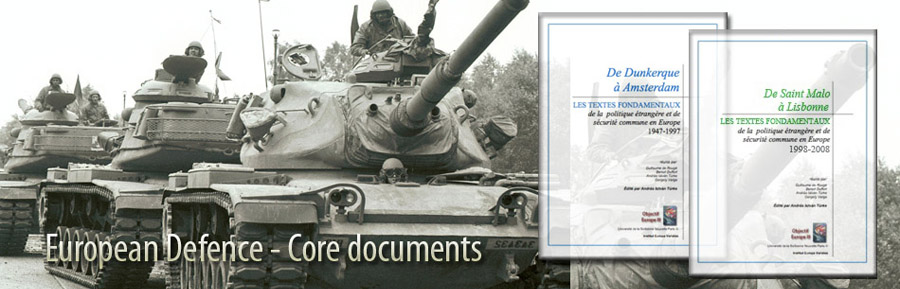
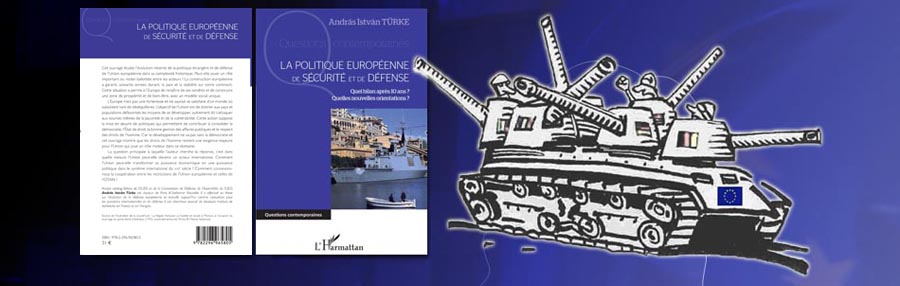
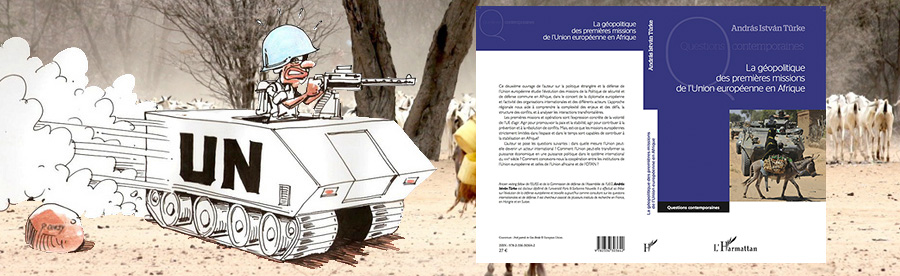
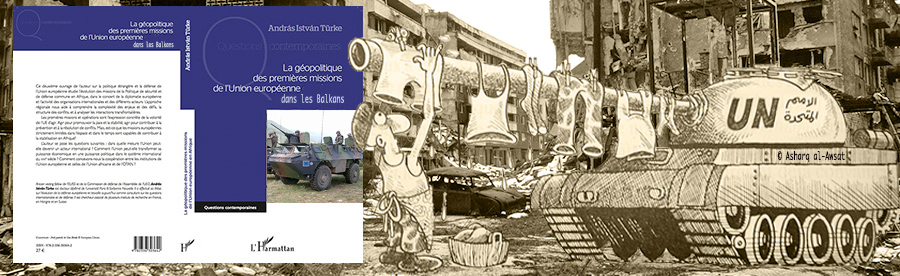
We are looking for sponsors for the English translation of these books, please contact turkeandras(at)gmail(dot)com