
You are here
Swiss News
Dollar détonateur ?
« Carry trade »… C'est obscur. C'est névralgique. On sait déjà, entre « private credit » et krach IA, dans quel état est la finance. On ne sait pas si ce qui est en train de se passer sur les taux d'intérêt souverain, sur le front du change yen / dollar notamment, entre dans la catégorie des explosifs ou dans celle des détonateurs — peut-être bien un peu des deux.
- La pompe à phynance / États-Unis, Monnaie, Crise financière
Categories: Défense, Swiss News
Press release - Press briefing on next week’s plenary session
Spokespersons for Parliament and for the political groups will hold a briefing on the 14 – 17 September plenary session, on Friday at 11.00 in Parliament’s Anna Politkovskaya press room.
Source : © European Union, 2026 - EP
Source : © European Union, 2026 - EP
Categories: Európai Unió : hírek magyarul, Swiss News
Russia to open more cultural centres in Africa as it seeks to broaden influence
These centres will promote the Russian language, education, science and culture.
Categories: Africa, Swiss News
Sovereign trust funds for planned climate relocations
Climate-induced planned relocation is becoming an unavoidable policy issue for some highly exposed communities. Although relocation should remain a last resort after other realistic options for adaptation in place have been assessed, ensuring that the money is available when needed to support relocation is critical. The challenge is that funding is insufficient, drawn from diverse sources and often arrives too late and in fragmented forms: for example, one project for housing, another for infrastructure, and little predictable support for consultation, land negotiations, safeguards, livelihoods, host communities or long-term maintenance. The financing problem is therefore not only the scale of the costs, but the difficulty of organising money over time and across institutions and safeguards. This can leave governments reacting after crises rather than planning before risks become unmanageable.
Sovereign trust funds offer one practical way to address this gap. They do not create finance by themselves, but they can provide a country-owned platform for receiving, sequencing and reporting domestic revenue, bilateral support, multilateral development bank (MDB) finance, climate funds, disaster risk finance, and loss and damage resources. They present an alternative to predominantly loan- and grant-based financing for planned relocation. Fiji’s Climate Relocation of
Communities Trust Fund shows both the promise and limits of this approach: It provides a legal and institutional basis for relocation finance within government and links international funding to procedures, but it still requires capitalisation, administrative capacity and long-term technical support. The model presents an opportunity to support sovereign, rights-based financing systems rather than relying solely on donor-funded, often piecemeal relocation projects. It can also make funding available at the appropriate time and without undue time pressure.
Key policy messages:
• Finance planned relocation before a crisis, especially assessment, consent, land, safeguards and project preparation.
• Treat relocation as a long-term investment in the collective good, rather than solely as a construction or emergency response measure.
• Support sovereign trust funds where they are legally mandated at the national level, budget-linked, transparent and capitalised.
• Use finance to uphold quality and rights, including community-led processes, support for host communities and support for long-term livelihoods.
Categories: Diplomacy & Defense Think Tank News, Swiss News
Agree to disagree: why the AU and the EU should engage in pragmatic partnerships
The AU–EU partnership should embrace the plurality within both unions, make interests transparent, and enable pragmatic cooperation between coalitions of willing countries, helping to bring proclaimed ambitions closer to actual practice, explain Benedikt Erforth and Lena Gutheil.
Categories: Diplomacy & Defense Think Tank News, Swiss News
Press release - MEPs upgrade EU energy infrastructure rules to lower energy prices
The update of the TEN-E regulation aims to boost security of energy supply, help lower prices for households and businesses, and contribute to the EU’s climate neutrality goals.
Committee on Industry, Research and Energy
Source : © European Union, 2026 - EP
Committee on Industry, Research and Energy
Source : © European Union, 2026 - EP
Categories: Európai Unió : hírek magyarul, Swiss News
Video einer Ausschusssitzung - Donnerstag, 10. September 2026 - 09:00 - Ausschuss für auswärtige Angelegenheiten
Dauer des Videos : 30'
Haftungsausschluss : Die Verdolmetschung der Debatten soll die Kommunikation erleichtern, sie stellt jedoch keine authentische Aufzeichnung der Debatten dar. Authentisch sind nur die Originalfassungen der Reden bzw. ihre überprüften schriftlichen Übersetzungen.
Quelle : © Europäische Union, 2026 - EP
Haftungsausschluss : Die Verdolmetschung der Debatten soll die Kommunikation erleichtern, sie stellt jedoch keine authentische Aufzeichnung der Debatten dar. Authentisch sind nur die Originalfassungen der Reden bzw. ihre überprüften schriftlichen Übersetzungen.
Quelle : © Europäische Union, 2026 - EP
Categories: Europäische Union, Swiss News
Video einer Ausschusssitzung - Donnerstag, 10. September 2026 - 07:30 - Ausschuss für auswärtige Angelegenheiten
Dauer des Videos : 90'
Haftungsausschluss : Die Verdolmetschung der Debatten soll die Kommunikation erleichtern, sie stellt jedoch keine authentische Aufzeichnung der Debatten dar. Authentisch sind nur die Originalfassungen der Reden bzw. ihre überprüften schriftlichen Übersetzungen.
Quelle : © Europäische Union, 2026 - EP
Haftungsausschluss : Die Verdolmetschung der Debatten soll die Kommunikation erleichtern, sie stellt jedoch keine authentische Aufzeichnung der Debatten dar. Authentisch sind nur die Originalfassungen der Reden bzw. ihre überprüften schriftlichen Übersetzungen.
Quelle : © Europäische Union, 2026 - EP
Categories: Europäische Union, Swiss News
Video einer Ausschusssitzung - Donnerstag, 10. September 2026 - 07:00 - Ausschuss für auswärtige Angelegenheiten
Dauer des Videos : 30'
Haftungsausschluss : Die Verdolmetschung der Debatten soll die Kommunikation erleichtern, sie stellt jedoch keine authentische Aufzeichnung der Debatten dar. Authentisch sind nur die Originalfassungen der Reden bzw. ihre überprüften schriftlichen Übersetzungen.
Quelle : © Europäische Union, 2026 - EP
Haftungsausschluss : Die Verdolmetschung der Debatten soll die Kommunikation erleichtern, sie stellt jedoch keine authentische Aufzeichnung der Debatten dar. Authentisch sind nur die Originalfassungen der Reden bzw. ihre überprüften schriftlichen Übersetzungen.
Quelle : © Europäische Union, 2026 - EP
Categories: Europäische Union, Swiss News
Briefing - Monthly Highlights: Research digest for committees - September 2026 - PE 789.226 - Committee on Civil Liberties, Justice and Home Affairs - Committee on Employment and Social Affairs - Special Committee on the Housing Crisis in the European...
Source : © European Union, 2026 - EP
Categories: Europäische Union, Swiss News
The Rwandan eyeing Champions League history against Man Utd
Rwanda forward Joy-Lance Mickels has helped Azerbaijan's Sabah reach the Champions League proper on their competition debut, and is now looking to down the team he supports.
Categories: Africa, Swiss News
Digitalization and innovation in Egyptian firms: does female ownership and management matter?
This paper examines how leadership gender configurations shape digitalisation and innovation in Egyptian manufacturing. Using the 2020/21 Egyptian Industrial Firm Behavior Survey (EIFBS) covering 2,338 firms, we construct a four-category gender variable (female owners and male managers (FOMM), male owners and female managers (MOFM), female owners and female managers (FOFM) and all-male baseline) and analyse how these owner–manager gender mixes relate to the adoption of digital technologies (DT) and to innovation outputs, and how these relationships vary by firm size and DT use. Our analysis suggests that firms with male owners and female managers (MOFM) are most likely to adopt DT across specifications. The cross-sectional data suggests that mixed-gender firms are associated with a higher probability of spending on R&D, but not with higher innovation outputs in firms with female owners (i.e. FOMM and FOFM) – pointing toward an innovation conversion gap in those firms. Heterogeneity results show that the MOFM adoption premium of DT and a negative association between FOMM and innovation are strongest in small firms. DT use moderates gender gaps: female-owned firms not using DT are significantly less likely than all-male firms to generate innovation outputs, but this penalty disappears when female-owned firms use DT. A combined size–sector analysis suggests that the divergence between MOFM and FOMM/FOFM is driven mainly by small food manufacturers, with average marginal effects elsewhere broadly comparable. The results highlight leadership composition as a correlate of technology adoption and the role of DT in converting innovation inputs into outputs.
Categories: Diplomacy & Defense Think Tank News, Swiss News
Formal and informal labour demand in Egyptian manufacturing firms
This paper investigates the determinants and dynamics of labour demand and specifically informal labour in Egypt’s manufacturing sector, using nationally representative firm-level data from the 2020/21 Egyptian Industrial Firm Behavior Survey. Applying ordinary least squares and fractional logit models, we analyse total employment, the share of informal labour, and its average annual change over the firm life cycle. Three key findings emerge. First, employment is positively associated with capital, exporting, technology adoption, innovation, industrial zones, worker training, and managerial education, and negatively associated with sole proprietorships, wages, and total factor productivity. Second, informal employment is more common among private sector firms, sole proprietorships, and firms using more part-time workers, and less prevalent among firms adopting technology or led by more educated managers. Third, changes in informality over time are modest: most formal firms exhibit no change in the share of informal workers. Notably, formal firms that did not initially employ informal labour tend to increase their informal share, while firms that formalised continue to rely heavily on informal employment. Together, these findings underscore the persistence of informality and limited transitions towards full formalisation within Egypt’s formal manufacturing sector.
Categories: Diplomacy & Defense Think Tank News, Swiss News
Trade, treaties, and aid: insights into North-South trade in critical raw materials
Categories: Diplomacy & Defense Think Tank News, Swiss News
'You're not alone in the darkness': Gambia president urges calm after violent blackout protests
The country has faced persistent blackouts since June, with some lasting up to 48 hours, residents say.
Categories: Africa, Swiss News
Sheff Utd sign experienced forward Ayew
Sheffield United sign former Crystal Palace and Leicester City forward Jordan Ayew on a deal until the end of the season.
Categories: Africa, Swiss News
When will Africa get its next Ballon d'Or winner?
Sadio Mane and Achraf Hakimi have been nominated for this year's Ballon d'Or - but when will an African claim football's top individual prize for the first time since 1995?
Categories: Africa, Swiss News
YB reagiert auf Wüthrich-Out: Berner holen Verteidiger aus Deutschland
Nach der Verletzung von Gregory Wüthrich reagiert YB am Deadline Day. Die Young Boys verpflichten den 27-jährigen Moritz Jenz.
Categories: Swiss News
Vorzeitige Vertragsverlängerung: FCL bindet Nachwuchstalent langfristig
Der FC Luzern verlängert den Vertrag mit seinem 19-jährigen Eigengewächs Mio Zimmermann bis 2030. Nach einer schweren Hüftverletzung kämpfte sich der Mittelfeldspieler zurück und ist nun fester Bestandteil der Startelf.
Categories: Swiss News
Alles, was die Schweiz bewegt – ab sofort jeden Sonntag: Steig ein beim neuen Mobilitäts-Newsletter «Hupets?»
Blinker setzen und einsteigen! Im neuen Newsletter «Hupets?» liefern wir dir ab sofort jeden Sonntag die aktuellsten News aus der Autobranche, alles Wissenswerte zu den neuesten Modellen und unterhaltsame Inhalte aus der Welt der Mobilität. Jetzt abonnieren!
Categories: Swiss News
Pages
the old site is here


© 2012-2015 Europa Varietas Foundation © 2015-2020 Europa Varietas Association
www.europavarietas.org | info(@)europavarietas(dot)org | Switzerland
This is a GDPR ready site
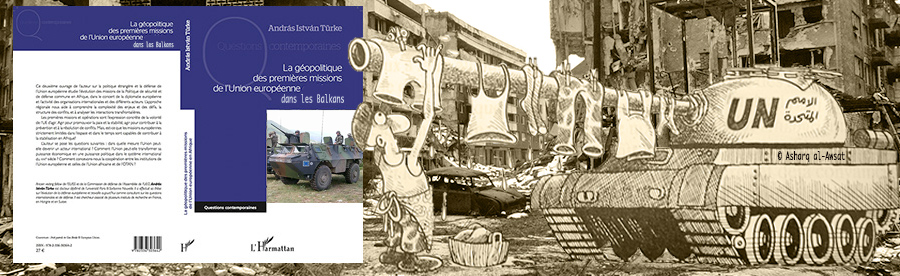
We are looking for sponsors for the English translation of these books, please contact turkeandras(at)gmail(dot)com