
You are here
Africa
Sudan army drones hit mourners and fuel market killing more than 300 people, sources say
A truck carrying people to a funeral and a market alleged to be supplying fuel to the RSF were targeted.
Categories: Africa, Swiss News
Swimmer, 65, killed in shark attack off South Africa's east coast
Janine Lochrenberg, 65, was out on her daily morning swim with her club when she was attacked, her family tell the BBC.
Categories: Africa, Swiss News
Afghan Women Defy Taliban Restrictions Through Online Protests
Members of the Kabul Critical Thinking Movement conceal their identities to minimise the risk of being identified and facing reprisals from the Taliban. Credit: Learning Together.
By External Source
PARWAN, Afghanistan, Oct 20 2026 (IPS)
Afghan women have resorted to online protests as their only available recourse, even though the risks of being caught are high and carry enormous consequences.
Dawn has not yet fully broken over the quiet streets of Parwan. The morning air carries the stillness of the early hours, and the footsteps of a few passersby are the only sounds that break the silence.
In one of the town’s more modest homes lives 28-year-old Gulsuum (name changed), who is effectively living two lives.
To her neighbors, she is a quiet young woman who goes out to buy food, lives with her family, and tries to lead an ordinary life. Yet behind this facade is a person fighting, under a pseudonym, for the education, freedom, and human dignity of Afghan women.
"Sometimes I wonder if we will ever see the results of our efforts, if this path is worth all the fear and uncertainty. But whenever I think of the girls who have been denied the right to go to school, I know I must go on. If we stay silent today, the next generation might lose even the hope of protesting"
She uses the name Gulsuum to protect her identity. Her fears, hopes, and life story, however, are entirely real.
Gulsuum lives with her father, mother, aunt, and two brothers in a residential area of Parwan province. Her unmarried aunt has long been an integral part of the family.
Only her aunt knows Gulsuum’s secret
Her aunt has not only kept Gulsuum’s secret but has also supported her during her most difficult moments. She lets Gulsuum use her mobile phone when needed, keeps an eye on the situation, and warns her immediately if she senses danger.
Gulsuum’s biggest worry is her older brother. The reason lies in his traditional views: he considers women’s protests dangerous. Gulsuum is certain that if her brother found out about her activities, he would take away her phone, restrict her movements, or send her to live with relatives in another province.
Before the Taliban returned to power, Gulsuum studied law and taught at a private school. Back then, her life revolved around books, pens, and the voices of her students.
“My entire life was bound up with books, writing, and the classroom. I believed that Afghanistan’s future would be built by girls who could transform society through knowledge and education, not weapons.”
After the Taliban returned to power, universities and girls’ schools across Afghanistan were shut down one by one. The private school where Gulsuum taught ceased operations, and her own studies came to an end as well.
Gulsuum’s gaze drifts to the corner of the room, where her university books still sit on the shelf.
“My books are still there, but there is no longer a classroom, no students, and no dream I can pursue the way I used to.”
Gulsuum says she remained silent during the first few months, fearing arrest and that her family would be put in danger.
“But whenever I heard about the arrests of female protesters or girls being denied an education, I asked myself: Is silence, too, a form of surrender?”
That question changed the course of her life.
“Two years ago, a university friend introduced me to the Kabul Critical Thinking Movement. At first, I only followed the movement’s statements and writings. Gradually, I began participating in its online meetings under a pseudonym, and later, I became one of its active members.”
Most of the movement’s activities take place on its official Facebook page, where statements, campaigns, and public messages are published.
Even a small mistake could endanger everything
To protect their identities, members never share material on their own social media accounts. Instead, they record images and videos independently and submit them for publication via the movement’s official page. Pseudonyms are used to protect the identities of those involved.
Many images and videos are recorded indoors or in locations with few or no other people present. Members wear face masks, sunglasses, and black chadari robes to minimize the risk of being identified.
Gulsuum explains that every action requires careful planning and an assessment of potential risks, as even a single protest could lead to consequences for both her and her family.
“Every decision I make, every phone call, and every message I send could have serious consequences. My phone is protected by multiple passwords. I carefully manage messages, photos, and anything else that could put me in danger. I never reveal the identities of other members or where we meet to anyone. Even a small mistake could endanger my life and the lives of my family members.”
Gulsuum says she sometimes wonders whether her brothers, who browse through her phone, have found out about her activities.
“A moment later, I realize nothing has happened. They were just scrolling through social media. But those few minutes feel like hours to me. Fear has become a part of my everyday life.”
Once, while walking through the city, she noticed a Taliban pickup truck a few blocks behind her. She told a passing woman she was thirsty and was invited into her home for tea. The vehicle was still nearby when she left, but she was relieved to learn that Taliban members had rented a house in the neighborhood a few days earlier. The truck had nothing to do with her.
“I could breathe again, and I realized that sometimes fear paralyzes us long before any danger is even in sight. Every unknown call, every suspicious glance, and every unexpected question brings a new wave of fear. But I don’t think fear should define the lives of Afghan women.”
Despite fear, activism continuesDespite her fears, Gulsuum has not given up her activism.
“Sometimes I wonder if we will ever see the results of our efforts, if this path is worth all the fear and uncertainty. But whenever I think of the girls who have been denied the right to go to school, I know I must go on. If we stay silent today, the next generation might lose even the hope of protesting.”
The chadari robe she wears at demonstrations is more than just a garment.
“Every evening, I tuck it away in the corner of my room. Whenever I hide it, it feels as though I am concealing a part of my identity, my dreams, and my true life from the eyes of others.”
Gulsuum’s voice is calm, devoid of hesitation.
“I believe that no voice raised for justice goes to waste. Change may not happen today. But if no one speaks, there is no hope for tomorrow.”
“What matters most to me is that the world knows Afghan women, even under the most intense pressure, continue to stand up for freedom, justice, and human dignity. Our voice may be quiet, but it will never be silenced.”
Gulsuum’s story is not that of just one woman. It reflects the lives of thousands of Afghan women and girls, caught between fear and hope, continue the fight for education, freedom of choice, and human dignity.
Beneath the black chadar worn for safety, her voice still rings out. It is quiet, yet unwavering. Despite everything, that voice has not been silenced.
Excerpt:
The author is an Afghanistan-based female journalist, trained with Finnish support before the Taliban take-over. Her identity is withheld for security reasons
Categories: Africa, Swiss News
«Es trifft immer mehr junge Menschen»
Jährlich sterben in der Schweiz rund 2800 Menschen an einem Schlaganfall. Besonders Ältere sind betroffen, doch die Fälle bei Jüngeren nehmen zu. Nils Peters, Chefarzt Neurologie an der Hirslanden Klinik, erklärt Ursachen, Symptome und Prävention im Podcast «Durchblick»
Categories: Africa, Swiss News
So will sich Europa aus Trumps Klammergriff befreien
Jahrzehntelang hat Europa lieber in seine Sozialsysteme als in seine Verteidigung und seine Energie-Unabhängigkeit investiert. Das rächt sich jetzt. Hoffnungsschimmer gibt es – aber auch ein potenziell tödliches Problem.
Categories: Africa, Swiss News
People Who Choose to End Their Lives
Decisions about ending one’s life are often complex, reflecting a combination of medical, psychological, social, and personal considerations. Credit: Shutterstock
By Joseph Chamie
PORTLAND, USA, Oct 20 2026 (IPS)
People who choose to end their lives through voluntary assisted dying typically face terminal, incurable, or debilitating conditions that cause severe physical or psychological suffering.
Research on requests for medical assistance in dying and euthanasia shows that most individuals seeking these options have advanced, irreversible illnesses or incurable, debilitating conditions that cause severe suffering or diminish their autonomy, dignity, or the ability to engage in meaningful activities.
Despite becoming legally permitted in an increasing number of countries, voluntary assisted dying remains controversial. The debate centers on a fundamental tension between respecting personal autonomy and relieving suffering, on the one hand, and protecting human life, on the other
Although physical pain is an important factor, psychological, existential, and quality-of-life concerns also play major roles in decisions to end life. These include losing independence and physical abilities, losing control over bodily functions, depending on others for basic care, and fearing future pain, suffering, and distress during the final stages of an illness.
Eligibility requirements for medical assistance in dying vary by jurisdiction. Where access is restricted to terminally ill patients, individuals generally must have a prognosis of six months or less to live.
Other jurisdictions permit access under different eligibility criteria. Applicants generally must demonstrate decision-making capacity and make a voluntary, informed request. Independent medical assessments are generally required, and many jurisdictions impose waiting periods or other safeguards.
Amyotrophic lateral sclerosis (ALS), cancer, and other serious illnesses are frequently associated with requests for voluntary assisted dying. Other requests involve advanced cardiovascular and lung diseases, as well as neurodegenerative conditions, including Alzheimer’s disease and other forms of dementia.
Cancer, particularly when advanced and no longer responsive to treatment, can also involve severe pain, weakness, loss of function, and other debilitating symptoms. Other requests for voluntary assisted dying include terminal illnesses such as advanced cardiovascular and lung diseases and neurodegenerative conditions, such as Alzheimer’s disease and other forms of dementia.
Severe physical pain or psychological distress that cannot be adequately relieved through standard medical or palliative care may lead some people to consider ending their lives. However, the reasons for requesting voluntary assisted dying generally extend beyond physical pain alone.
Loss of autonomy, including the inability to engage in meaningful activities, care for oneself, or maintain personal dignity, may strongly influence these decisions. Some individuals also fear increasing dependence on family members or caregivers, losing control over basic aspects of daily life, or experiencing further deterioration in their quality of life.
Decisions about ending one’s life are often complex, reflecting a combination of medical, psychological, social, and personal considerations. For some individuals, the prospect of prolonged deterioration or increasing dependence may be as important as the symptoms of the underlying illness.
Consequently, requests for voluntary assisted dying generally require careful assessment of an individual’s medical condition, decision-making capacity, wishes, and available alternatives, including palliative and hospice care.
When people actively choose the timing and manner of their death, their choices generally fall into three primary categories, each governed by different legal frameworks, medical protocols, and procedures.
These categories differ principally in who administers the life-ending medication, whether the person must take the medication themselves, and whether the choice involves voluntarily forgoing food and fluids rather than receiving life-ending medication (Table 1).
Source: Compassion & Choices.
The first category is medical aid in dying (MAID), also known as physician-assisted dying or, in some jurisdictions, death with dignity. MAID allows a mentally capable, terminally ill adult who meets specific legal requirements to request and self-administer prescribed medication intended to end their life. In many U.S. jurisdictions where MAID is legal, eligibility generally requires a terminal illness with a prognosis of six months or less, although specific requirements vary by jurisdiction.
The emphasis on self-administration is an important distinction between MAID and voluntary euthanasia. Under MAID, the individual—not a physician or other health professional—takes the medication, retaining control over the timing of the final act. Depending on the jurisdiction, safeguards may include repeated requests, confirmation of the diagnosis and prognosis, assessment of decision-making capacity, and other measures to ensure the decision is voluntary and informed.
MAID is generally intended for people who meet specific legal eligibility requirements. It is not a general option for anyone experiencing suffering or wishing to die. Each jurisdiction determines who qualifies, what medical assessments are required, how requests must be documented, and what waiting periods and other safeguards apply.
The second category is voluntary euthanasia. Unlike MAID, which involves self-administration, voluntary euthanasia occurs when a healthcare professional administers medication intended to end the patient’s life at the individual’s explicit and competent request, typically to relieve otherwise intolerable suffering. It is legally permitted in several countries and jurisdictions, although eligibility requirements, procedures, and safeguards vary considerably.
The third category is voluntarily stopping eating and drinking (VSED). For people who do not qualify for MAID or live where MAID or voluntary euthanasia is unavailable, VSED may be another end-of-life option. It involves a voluntary decision to stop consuming food and fluids, eventually resulting in death. Medical and palliative care may be provided to relieve discomfort during the process.
Voluntary assisted dying is legally permitted in a growing number of countries. In 2026, some form of the practice is legal in approximately 16 countries. Estimates indicate that more than 30,000 people die each year through voluntary assisted dying in jurisdictions where the practice is permitted.
Nearly 5% of the world’s population, or more than 400 million people, live in countries or areas where some form of voluntary assisted dying is legal. These jurisdictions include Australia, Austria, Belgium, Canada, Colombia, Ecuador, France, Germany, Luxembourg, the Netherlands, New Zealand, Portugal, Spain, Switzerland, and Uruguay.
In the United States, Illinois and New York recently joined 11 other states and the District of Columbia in permitting medical aid in dying (MAID) under specified conditions. Nearly one-third of the U.S. population lives in a state where the practice is permitted.
About 60% of U.S. adults consider MAID acceptable or do not view it as a moral issue. Opinions differ by political party, however. About 75% of Democrats compared with 50% of Republicans consider the practice morally acceptable.
Across many regions, including North America, Europe, and Australia, international opinion polls generally find majority support for voluntary assisted dying. A cross-sectional survey of physicians in 17 countries also found nuanced but generally supportive views of physician-assisted death when strict safeguards are in place.
Methods of administering medication also vary across jurisdictions. In Switzerland, individuals self-administer the medication, usually by swallowing a liquid. In Québec, Canada, physicians or nurse practitioners administer it, usually intravenously. In Australia, both self-administration and practitioner administration are permitted.
The laws governing voluntary assisted dying differ considerably across countries and jurisdictions. Nevertheless, the medical conditions and personal circumstances associated with requests for assisted dying tend to show similar patterns across regions and over time.
People with ALS, for example, have been found to have the highest rate of voluntary assisted dying, often several times those of cancer patients. Cancer patients, in turn, are more likely to access voluntary assisted dying than people with other illnesses, such as lung or heart disease. However, cancer remains the most common diagnosis among assisted dying cases, largely because it affects far more people than these other conditions.
Voluntary assisted dying accounts for a relatively small share of all deaths in countries where it is permitted, generally 1% or less in countries such as Germany, Spain, and Switzerland. In other countries, the proportions are considerably higher. Around 2023, assisted dying accounted for 5.4% of deaths in the Netherlands, 4.7% in Canada, and 3.6% in Belgium.
The number of voluntary assisted deaths has increased substantially in some countries. In the Netherlands, for example, the number has reportedly increased threefold since 2002. In Canada, the number initially increased rapidly before growth slowed; assisted dying now accounts for nearly 5% of all deaths.
Despite becoming legally permitted in an increasing number of countries, voluntary assisted dying remains controversial. The debate centers on a fundamental tension between respecting personal autonomy and relieving suffering, on the one hand, and protecting human life, on the other (Table 2).
Source: British Medical Association (BMA).
Arguments in favor of voluntary assisted dying emphasize patient autonomy, relief from suffering, dignity at the end of life, regulatory safeguards, and reduced burdens on families. Arguments against it stress the sanctity of life, risks to vulnerable people, the potential for a “slippery slope”, concerns about medical ethics, and the importance of palliative care.
In sum, voluntary assisted dying is legally permitted in a growing number of countries and jurisdictions, and its use has increased substantially in many of them. Nevertheless, voluntary assisted dying remains a sensitive, controversial, and deeply personal issue, even where it is legally permitted.
Joseph Chamie is a consulting demographer, a former director of the United Nations Population Division, and author of numerous publications on population issues.
Categories: Africa, Swiss News
Kenya cult leader's children still being starved weeks before trial, son says
Dan Mackenzie initially defended his father but now says he felt he had to report his own grandmother.
Categories: Africa, Swiss News
Residents warned not to drink tap water after hundreds fall sick near South Africa capital
More than 400 people, mostly children, become ill after drinking contaminated water, east of Pretoria.
Categories: Africa, Swiss News
Debate: Protests and violence: what's going on in Europe’s cities?
Mass demonstrations and protests have taken place in countries across Europe in recent days, staged for the most part by young people. In many cases there have been outbreaks of violence and looting, with property being set on fire in France and Albania. Europe's media examines the causes.
Categories: Africa, European Union
Regulating and mobilising the private sector for democracy protection in the European Union’s trade policy
The European Union (EU) conditions access to its market on compliance with human rights, labour standards, and environmental policy and regulation. Its trade-related legislation falls into two categories: measures addressing partner governments and measures targeting the private sector. Within these two groups, only the first includes an instrument that specifically mentions democracy, namely the essential elements clause, which appears frequently in EU trade agreements yet has been invoked only once since 2014.
The EU is under domestic political pressure to deregulate in order to strengthen its competitiveness. The competitiveness agenda is cutting into the instruments the EU already has, especially amid geopolitical competition with China, making suspensionled conditionality against partner governments harder to enact. Our recommendations are as follows:
• Democracy protection stakeholders should shift their attention from suspension-led demo¬cracy support and conditionality aimed at partner governments towards the rules and incentives that run through the private sector. Even after the Omnibus reform’s narrowing scope, firm-facing rules remain in place. They are default-on and run through existing regulatory arrangements, and their potential geopolitical repercussions are smaller in comparison.
• Tender processes are one particular set of firm-facing rules. With the momentum behind the European Commission’s legislative proposal to revise the public procurement directive, corruption-based exclusion rules should be applied against operators linked to state capture in partner countries, as democratic backsliders often use public procurement to consolidate patronage networks.
• Firm-facing regulations also permit a different case to be made: stronger due diligence carries no measurable competitiveness penalty. Companies are not just subjects of regulation. They are also stakeholders with their own interest in transparent procurement and predictable rules. To bolster such a narrative, development cooperation should invest in developing compliance capacity, especially in autocratising states.
Categories: Africa, Diplomacy & Defense Think Tank News
Beyond markets: how to achieve just and transformative biodiversity conservation
Conservation needs reform as current approaches have failed to halt biodiversity loss. Increasingly, environ¬mentalists are questioning whether market-based approaches and conventional policy instruments, particu¬larly protected areas, can make a substantial contribution towards mitigating the bio¬diversity crisis. Moreover, serious concerns about their equity and justice implications have been voiced by indigenous rights organisations, peasant movements and scholars.
In light of these concerns, this policy brief provides a number of suggestions on how to make biodiversity conservation more just, equitable and effective. It builds on discussions held during the sixth Enjust Conference “Offsetting Justice? Environmental justice in the age of market and militarized con¬servation”, which took place in Bonn from 3 to 5 December 2025. The conference brought together environmental justice scholars, political ecologists, activists as well as development and conservation practitioners from around the globe.
Our reflections and proposals support policymakers, members of parliament, conservation practitioners, and Indigenous Peoples and Local Communities (IP&LCs) at the local and regional levels in initiating reforms of the protected area system and other conservation mechanisms for more effective, trans¬parent and fair protection.
Key messages:
• Just conservation: Conservation policies that contribute to environmental justice have the greatest potential to achieve long-term, sustainable and legitimate conservation outcomes for people and the planet.
• Land rights-based conservation: Land rights reconfigure power relations and are a key pre¬requisite for environmental justice. Collective land titles such as Colombia’s Peasant Reserve Zones (ZRCs) are a promising instrument.
• Towards distributive justice by reforming conservation finance: IP&LCs should benefit more directly from forest, climate and biodiversity funding and should have a say in how money is spent in their communities. IP&LC-led funds and designated funding windows for IP&LCs are promising options.
• Basic Income for Nature and Climate (BINC): We suggest BINC as a promising measure to improve the livelihoods of IP&LCs and to overcome the transactional logic of market-based instruments. BINC compensates for past environmental injustices and enables recipients to make land-use decisions that are less influenced by precarity and market forces.
Professor Dr Fernanda Figueroa currently works at the Facultad de Ciencias, Departamento de Ecología y Recursos Naturales, Universidad Nacional Autónoma de México.
Dr Lasse Loft is a senior scientist at the Leibniz Centre for Agricultural Landscape Research (ZALF) in Müncheberg, Germany.
Professor Dr Maano Ramutsindela is Professor of Human Geography at the University of Cape Town and the UP-UCT Future Africa Research Chair in Sustainability Transformations at the University of Pretoria and the University of Cape Town, South Africa.
Georg Buchholz is team leader of the International Forest Policy sectoral project at GIZ, Germany.
Dr Juan Sebastián Vélez Triana is a postdoctoral researcher with the Fonds de la Recherche Scientifique – FNRS / UCLouvain, Belgium, and a research associate at the Centre for Alternatives to Development (CEALDES), Colombia.
Professor Dr Florian Dünckmann heads the Cultural Geography Research Group in the Department of Geography at Kiel University, Germany.
Dr Ina Lehmann is assistant professor of Governance of Global Biodiversity at the Environmental Policy Analysis section at the Institute for Environmental Studies (IVM), Vrije Universiteit Amsterdam, The Netherlands.
Professor Dr Silja Klepp is professor of Human Geography at Kiel University, Germany.
Dennis Schüpf is a PhD student in the Department of Geography, University of Bonn, Germany.
Anne Rose Atkins is a doctoral candidate in the Social Geography of Coastal and Marine Areas working group at the Geography Department of Kiel University, Germany.
Dumisani Chirambo is the founder of Seeds of Opportunity in Malawi.
Felice Diekel is a PhD candidate at the Department of Civil Engineering & Management at the University of Twente, Enschede, The Netherlands.
Salome Gikonyo is part of the coordination team of the EnJust Network for Environmental Justice, Germany.
Dr Rina Mardiana is a lecturer in the Human Geography Study Program, Faculty of Social Sciences and Human Ecology, at IPB University in Bogor, Indonesia.
Dr Adnan Mirhanoğlu is an F.R.S.-FNRS postdoctoral researcher at the Centre d’Études de la Coopération Internationale et du Développement (CECID), Université libre de Bruxelles, Belgium.
Kim Nierobisch is part of the coordination team of the EnJust Network for Environmental Justice, Germany.
Kelly Peña is a PhD student at the Institute of Geography, Friedrich-Alexander-Universität Erlangen-Nürnberg, Germany.
Professor Dr Prakash C. Tiwari works at the Centre for Ecology Development and Research in Dehradun, India.
Categories: Africa, Diplomacy & Defense Think Tank News
As El Niño Returns, East Africa’s Urban Poor Brace for Heavy Rains
Tanzania’s vice-president inspects a drainage channel in Dar es Salaam as authorities step up preparations for heavy El Niño rains expected during the October–December rainy season. Credit: Kizito Makoye/IPS
By Kizito Makoye
DAR ES SALAAM, Tanzania, Oct 20 2026 (IPS)
Nearly three decades have passed, but Japhet Gimbi still remembers the rain.
He was a Form 2 student in Tabora, western Tanzania, when the 1997 El Niño flooded the town. As the rain kept falling, fewer students made it to school. That was a super El Niño, one of the strongest on record. Since then there have been five other events including the 2014-2016 “super El Niño”.
“It just kept raining. Day after day, the rain wouldn’t stop,” Gimbi, who now lives in Dar es Salaam, recalled.
But his strongest memory is of food running short at home.
“We would only eat Ugali without vegetables,” he said.
At Kwihara village, Hatibu Halfan remembers the same season differently. He was a 27-year-old farmer when the rains initially seemed a blessing. His rice crop flourished.
Then the ground became waterlogged. Cassava and sweet potatoes rotted. Homes in low-lying areas flooded.
Twenty-nine years later, East Africa is again preparing for “super” El Niño. The World Meteorological Organization (WMO) expects it to intensify toward the end of 2026, with forecasts showing a nearly 100 percent chance of persisting through February 2027. But WMO cautions that a strong El Niño does not necessarily mean severe impacts in every country.
For East Africa, the concern is heavy rain. The October-to-December season is crucial across much of the region, with forecasts pointing to wetter-than-normal conditions that could bring floods, landslides, infrastructure damage, and disease outbreaks. In parts of Tanzania, Uganda, Rwanda, and Burundi, the season delivers up to 40 percent of annual rainfall.
The East African Community (EAC) Partner States are calling for more predictable, accessible and grant-based climate finance as they prepare to take a common regional position to the United Nations Climate Change Conference (COP31) in Antalya, Türkiye, next month.
They plan to call on developed countries to meet their public climate finance obligations, triple adaptation finance by 2035, improve direct access to climate finance, and provide greater support for adaptation and loss and damage, all without increasing the debt burden on vulnerable countries.
“The common COP31 messages further call for the full capitalisation of the Fund for Responding to Loss and Damage, direct access to its resources by national institutions and support for both economic and non-economic losses. The EAC is also calling for full funding of the Santiago Network, which provides technical assistance to countries vulnerable to loss and damage, as well as stronger cooperation on disaster risk reduction and early warning systems.
The common position calls on developed countries to meet their public climate finance obligations, triple adaptation finance by 2035, improve direct access to climate finance and provide greater support for adaptation and loss and damage without increasing the debt burden of vulnerable countries.
In Dar es Salaam and other fast-growing cities, however, the danger is not simply how much rain falls. It is where it falls—and who lives in its path.
In Southern Africa, the concern is drought, with its impacts on food security, the potential for wild fires, and water shortages. The country will use its participation at the COP31 to ask for increased adaptation finance.
Cities at Risk
“The main impacts we should expect from floods range from possible loss of lives and the number of people displaced, damaged houses, waterborne diseases, loss of employment, and disruption of livelihoods,” Romanus Opiyo, Policy and Engagement Lead for Sustainable Urbanisation at the Stockholm Environment Institute, told IPS.
In Dar es Salaam, neighbourhoods have expanded along rivers, valleys and low-lying land where housing is relatively affordable but drainage and other basic services often lag behind population growth.
Among the places Opiyo identifies as particularly exposed are Tandale, along the Sinza river system, and Jangwani, in the Msimbazi valley.
“The most vulnerable are the urban poor, especially those living near riparian areas such as those settlements in low elevations and near riparian areas,” he said.
Flooding does not affect all city residents equally. Low-income households living on daily earnings often have few savings, little or no insurance and limited options for moving somewhere safer.
A Dar es Salaam resident clears vegetation and debris from a drainage channel as communities prepare for heavy rains associated with El Niño. Credit: Kizito Makoye/IPS
When Drains Become Sewers
In crowded settlements, blocked drains sit alongside pit latrines, rubbish and open sewers. Floodwater can carry all three through homes and streets.
WMO’s regional outlook warns that excessive rainfall could increase water- and vector-borne disease while damaging roads and disrupting access to health and nutrition services.
Lessons From 1997
The 1997 El Niño brought torrential rain and widespread flooding across East Africa.
By February 1998, about 10 million people across the region needed emergency assistance, according to the UN Food and Agriculture Organization.
Tanzania suffered extensive damage to roads and railways. Communities were cut off, crops and food stocks were lost and relief efforts were hampered by damaged infrastructure.
The effects, however, varied from place to place. Rain replenished water supplies and improved pasture in some areas, and national food production rebounded in 1998. But hundreds of villages were isolated, and thousands of people were left homeless. FAO and the World Food Programme estimated that about 300,000 Tanzanians would still need targeted food aid.
Since 1997, East African cities have expanded rapidly into wetlands, river valleys and other flood-prone land. Riverbanks have been settled and open ground replaced by roads, buildings and concrete.
Opiyo says weak development control is worsening the risk.
“The major gap remains the allocation of adequate resources (finance, human, and infrastructure resources) to deal with the problem,” he said.
Tanzania Prepares
Tanzania has begun preparations for the October-to-December rains, with forecasters warning that a very strong El Niño could bring heavier rainfall to much of the northern coast, northeastern highlands, Lake Victoria basin and northern Kigoma.
The government has activated a National Emergency Plan and issued 13 directives, ordering authorities to identify high-risk areas, designate emergency shelters, clear drains, prepare rescue equipment and strengthen measures against disease and damage to infrastructure.
The government estimates that 730 billion Tanzanian shillings could be required to implement activities before, during and after a major El Niño emergency. The figure is an estimate of potential requirements, not money already set aside. The 2026/27 budget provides 10 billion shillings for activities under the plan across sectors.
Community flood mapping, identifying households that may need help evacuating, clearing drains and establishing safe routes can also reduce risks.
Beyond El Niño
Seasonal forecasts describe probabilities, not individual storms, and WMO stresses that even a very strong El Niño does not guarantee catastrophic impacts everywhere.
But the problem will outlast El Niño: each rainy season exposes many of the same neighbourhoods.
Rivers overflow and drains clog. Households move possessions onto beds, raise furniture on bricks and wait for the water to recede.
Opiyo says recurring flooding in informal settlements is also an urban-planning problem.
“The informal urban community’s vulnerability requires a collaborative approach in terms of data, creative and inclusive methodology and honest dialogue to address the recurring problem.”
Nature-based measures include protecting wetlands and river corridors, restoring vegetation and preserving areas where floodwater can spread without reaching homes.
But in cities where safe land is expensive, telling people not to live beside rivers does little for families who cannot afford to live anywhere else. Clearing a drain may reduce flooding this season; it does not resolve insecure housing, weak sanitation or the absence of affordable serviced land.
In 1997, Gimbi watched his classmates disappear from school as the rains continued and food ran short at home. Halfan watched his rice flourish before waterlogged fields began destroying other crops.
Twenty-nine years later, governments have better forecasts, satellite observations, flood maps and early-warning systems.
They can see the rain coming.
The question is whether the people living closest to the water will be safer when it arrives.
IPS UN Bureau Report
Related Articles
Categories: Africa, Swiss News
Au Niger, des pompes à sec et une souveraineté en panne
À Niamey, la souveraineté énergétique se mesure désormais au temps passé devant une station-service. Le 18 octobre, l'AFP rapporte de longues files d'attente dans la capitale, après plusieurs semaines de difficultés dans les villes de l'intérieur. Les témoignages recueillis expriment l'exaspération des automobilistes, contraints de patienter pendant des heures ou de multiplier les déplacements pour trouver de l'essence. Pour le général Abdourahamane Tiani, qui a fait de la souveraineté nationale un axe central de son discours, cette crise dépasse la gestion d'un incident d'approvisionnement. Elle interroge la capacité du pouvoir à transformer les ressources pétrolières du pays en un service essentiel, accessible et régulier.
Un déséquilibre qui s'aggrave
Les données présentées le 5 octobre par le ministre du Pétrole, Hamadou Tini, devant le Conseil consultatif de la refondation permettent de mesurer la dégradation. Le déficit déclaré de supercarburant est passé de 47,25 millions de litres en 2024 à 159,74 millions en 2025, puis à 196,62 millions sur les huit premiers mois de 2026.En huit mois, le déficit dépasse ainsi de 23,1 % celui de toute l'année précédente. Rapporté au mois, son rythme augmente de 84,6 %. Une précision est indispensable : ces chiffres décrivent des écarts entre les livraisons de la SORAZ et les sorties de la SONIDEP. Ils ne représentent pas automatiquement des quantités manquantes aux consommateurs, puisque les importations et les stocks peuvent contribuer à les couvrir. Le constat demeure préoccupant : le dispositif national doit mobiliser des approvisionnements complémentaires d'une ampleur croissante.
L'extraction ne suffit pas à remplir les réservoirs
Le paradoxe pétrolier nigérien repose d'abord sur une distinction industrielle fondamentale. Extraire du brut, le transporter, le raffiner et distribuer les carburants nécessitent des infrastructures et des financements différents. Selon le bilan officiel relayé par l'ANP en juillet 2025, le développement d'Agadem a porté la production annoncée à 110 000 barils par jour, dont 90 000 destinés à l'exportation par l'oléoduc Niger–Bénin et 20 000 à la raffinerie nationale. Près de 82 % de ce schéma de production est donc orienté vers l'exportation. Ce ratio décrit une répartition annoncée, et non les flux effectivement réalisés chaque jour. À Zinder, la SORAZ dispose d'une capacité installée de 20 000 barils par jour. Or cette capacité n'est pas disponible en permanence. La production est, en outre, répartie entre plusieurs produits. Le rendement annoncé atteint 55 % pour le gasoil, mais seulement 26 % pour l'essence. Les capacités de traitement du brut ne peuvent donc être assimilées à un volume équivalent d'essence disponible à la pompe.
Une souveraineté contrainte par le poids de la Chine
La maîtrise des ressources se heurte également à la structure du secteur. Selon Reuters, en octobre 2025, la CNPC détenait 65 % du champ d'Agadem, contre 20 % pour la société publique taïwanaise CPC et 15 % pour l'État nigérien. L'agence rapportait alors 32 millions de barils cumulativement exportés via le Bénin, vers des clients européens et asiatiques. Ce total ne constitue ni un bilan annuel ni une donnée actualisée pour 2026.
Le Bénin constitue ainsi un corridor de transit et un débouché maritime, plutôt que la destination finale de l'ensemble du pétrole évacué. La prépondérance chinoise concerne aussi le raffinage. La CNPC possède 60 % de la SORAZ, contre 40 % pour l'État nigérien. Le groupe occupe donc une position déterminante dans l'extraction et la transformation du pétrole national. Cette configuration ne suffit pas à expliquer les ruptures d'approvisionnement. Elle limite néanmoins l'autonomie industrielle immédiate du pouvoir : accroître la production, modifier les conditions de fourniture ou développer le raffinage suppose de négocier avec un partenaire incontournable. La souveraineté revendiquée engage dès lors une question précise. Quelle capacité l'État possède-t-il pour orienter les investissements, les flux et les revenus vers la satisfaction durable des besoins intérieurs ?
Des dettes en cascade qui entravent la chaîne
Aux contraintes industrielles s'ajoutent des blocages financiers. Les créances et dettes croisées entre l'État, la SONIDEP, la NIGELEC, la SORAZ et la CNPCNP figurent explicitement parmi les problèmes que doit traiter le comité technique installé le 12 octobre.Le plan d'apurement prévu sur trois mois doit donner priorité aux sommes dues par l'État à la SONIDEP, puis par cette dernière à la SORAZ. Le comité doit également prévenir la constitution de nouveaux arriérés et préserver la continuité des livraisons de brut et de produits pétroliers. L'existence de ce dispositif révèle l'imbrication de la crise : lorsque les paiements se bloquent à un maillon de la chaîne, la capacité des autres acteurs à financer leurs opérations se dégrade. L'enjeu dépasse donc le seul volume de pétrole disponible. Il concerne aussi la circulation des liquidités nécessaires pour transformer et acheminer les carburants.
La souveraineté à l'épreuve du quotidien
Le gouvernement a annoncé des mesures structurelles. En juin, le ministre du Pétrole évoquait la modernisation des infrastructures, de nouveaux dépôts et l'objectif de porter progressivement les réserves stratégiques à deux ou trois mois de consommation. Ces annonces doivent désormais être appréciées à travers leur financement, leur calendrier et leur réalisation effective.Dans l'immédiat, les témoignages recueillis à Niamey traduisent une incompréhension persistante devant la coexistence des ressources pétrolières et des difficultés à se ravitailler. Ils documentent une exaspération, sans permettre de mesurer statistiquement son ampleur dans l'ensemble de la population.Pour Tiani, la difficulté est désormais politique autant qu'industrielle. La souveraineté énergétique exige des capacités de transformation, des stocks mobilisables, des opérateurs solvables et une distribution régulière. Sa crédibilité se jouera dans ces résultats.Les Nigériens attendent que la richesse du sous-sol se traduise jusque dans leurs réservoirs.
Morocco's first female prime minister caught between the king, clerics, and feminists
Will Fatima El Mansouri advance women’s rights amid religious and political barriers?
Morocco's first female prime minister caught between the king, clerics, and feminists
Will Fatima El Mansouri advance women’s rights amid religious and political barriers?
Categories: Africa, Swiss News
Alger : un parking à étages de plus de 600 places en chantier à Bir Mourad Raïs
Le wali d’Alger, Mohamed Abdenour Rabehi, a inspecté dimanche le chantier d’un parking à étages à Bir Mourad Raïs. L’ouvrage pourra accueillir plus de 600 […]
L’article Alger : un parking à étages de plus de 600 places en chantier à Bir Mourad Raïs est apparu en premier sur .
Les attributaires de parcelles commerciales sommés de construire
Les bénéficiaires des parcelles commerciales situées entre Marie Stella et Adounko doivent engager les travaux de construction au plus tard le 31 décembre 2026. À défaut, ils risquent de perdre leur attribution, sans mise en demeure préalable.
Les attributaires des parcelles commerciales aménagées le long de la Route des Pêches, sur le tronçon Marie Stella–Adounko, sont prévenus.
Dans un communiqué publié le lundi 19 octobre 2026, la Commission d'attribution rappelle que les travaux doivent commencer au plus tard le 31 décembre prochain. « Tout attributaire n'ayant pas effectivement démarré les travaux sera déchu de plein droit de son attribution », précise la Commission.
Le contrat de bail à construction sera alors frappé de caducité, ouvrant la voie à une réattribution de la parcelle concernée.
La Commission rappelle que la signature des contrats de bail à construction auprès de l'Agence nationale du domaine et du foncier (ANDF) était fixée au 31 janvier 2026.
Le dépôt des dossiers de permis de construire devait intervenir dans les trois mois suivant la signature du bail, avec une échéance arrêtée au 30 juin 2026.
Pour l'achèvement des constructions, la date limite est fixée au 31 décembre 2028. La durée des travaux ne doit pas excéder 24 mois. « Ces délais sont impératifs. Aucune prorogation ne sera accordée », selon la Commission.
La caution en jeu
Les promoteurs doivent également veiller au respect du cahier des charges. La caution versée ne sera restituée qu'après l'achèvement des travaux, à condition que ceux-ci soient réalisés dans les délais impartis et conformément aux exigences prévues.
En cas de non-conformité, de dépassement des délais ou d'abandon du projet, cette caution sera définitivement acquise, avertit la Commission.
Pour toute information complémentaire, les attributaires peuvent écrire à l'adresse promo.rdp@simaubenin.com.
M. M.

Édouard Loko et Claudy Siar échangent sur la visibilité du Bénin les médias
Le président de la Haute Autorité de l'audiovisuel et de la communication (HAAC), Édouard C. Loko, a reçu en audience, ce lundi 19 octobre 2026, Claudy Siar, directeur de l'agence « Bénin Influence » et chargé de mission du président de la République pour les questions relatives à la Culture, aux Médias et à la Visibilité du Bénin.
Audience à la HAAC. Le président Édouard C. Loko a reçu à son cabinet, ce lundi 19 octobre, Claudy Siar, directeur de l'agence « Bénin Influence » et chargé de mission du président de la République pour les questions relatives à la Culture, aux Médias et à la Visibilité du Bénin.
Cette rencontre a été l'occasion pour les deux personnalités, d'échanger sur les perspectives de collaboration en faveur de la promotion de l'image du Bénin, de la valorisation du patrimoine culturel national et de la visibilité des talents béninois sur les scènes africaine et internationale.
À sa sortie d'audience, Claudy Siar a souligné l'importance de cette démarche, qui vise à identifier avec le président de la HAAC des actions concrètes à mener en commun. Il a notamment insisté sur la nécessité de renforcer la présence du Bénin dans un environnement médiatique marqué par une circulation croissante de l'information et une forte concurrence entre les contenus.
S'appuyant sur les orientations présentées lors de la conférence de rentrée de la Société de radio et de télévision du Bénin (SRTB S.A.), tenue le samedi précédent, le directeur de « Bénin Influence » a salué les efforts de modernisation et de montée en gamme des médias de service public. Il estime que cette dynamique doit également concerner les médias privés, appelés à contribuer davantage à la promotion du Bénin et à la diffusion de son image à l'extérieur. « Nous avons une montée en gamme avec le service public, il faut aussi s'interroger sur le rôle des médias privés », a-t-il déclaré, soulignant l'importance de contenus capables de refléter le renouveau du pays, son dynamisme et ses ambitions, tant auprès des populations béninoises qu'auprès des publics africains et internationaux.
Pour Claudy Siar, les professionnels des médias béninois doivent davantage maîtriser le récit autour de leur pays et faire connaître eux-mêmes leurs réalisations, leurs ambitions et leurs perspectives de développement.
Des assises des médias béninois
L'un des principaux points annoncés à l'issue de cette audience est la tenue prochaine des assises de la presse et des médias béninois. Cette initiative devrait permettre aux acteurs du secteur de mener une réflexion collective autour de deux questions essentielles : « Qui sommes-nous et où voulons-nous aller ? »
Ces assises auront notamment pour objectif d'identifier des solutions visant à améliorer les conditions de fonctionnement des organes de presse, à renforcer leur viabilité économique et à consolider leur rôle dans l'information des populations. Elles devraient également favoriser une réflexion sur la contribution des médias à la promotion de l'image du Bénin, dans un contexte où la visibilité internationale constitue un enjeu croissant.
À travers cette initiative, Claudy Siar appelle ainsi à une mobilisation des professionnels du secteur pour faire des médias béninois des acteurs plus influents dans la production et la diffusion de l'information sur le pays.
F. A. A.
Pages
the old site is here


© 2012-2015 Europa Varietas Foundation © 2015-2020 Europa Varietas Association
www.europavarietas.org | info(@)europavarietas(dot)org | Switzerland
This is a GDPR ready site
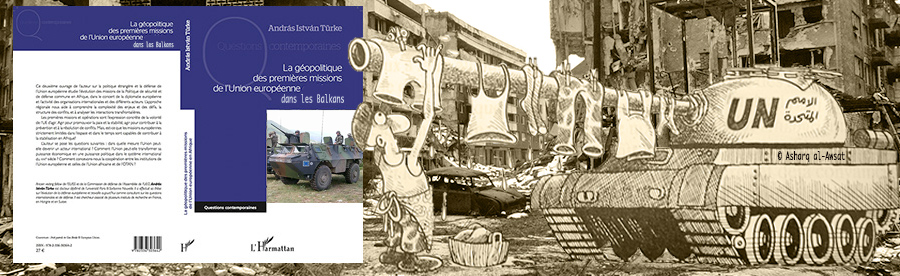
We are looking for sponsors for the English translation of these books, please contact turkeandras(at)gmail(dot)com