
You are here
Africa
First female prime minister named in Morocco after winning elections
Her appointment by the king makes her only the second woman to lead a government in the Arab world.
Strategic Blindness at UNGA 81: “Super Intelligence” and “Killer Robots” Take Center Stage as Women’s Rights Take a Back Seat
Credit: United Nations
By Shihana Mohamed
NEW YORK, Sep 29 2026 (IPS)
“Artificial intelligence (AI) must be shaped by humanity, with humanity, and for all humanity… Life-and-death decisions must never be surrendered to machines. Killer robots must have no place in our future.”
With those words, United Nations Secretary-General António Guterres opened the high-level debate of the 81st session of the General Assembly (UNGA 81). He also warned: “Women and girls continue to face discrimination, violence, exclusion and abuse… Their rights are being rolled back. Their voices silenced. Their bodies turned into battlegrounds.”
Both technological transformation and the erosion of women’s rights were placed before the world, yet the political response to each was markedly different.
Opening speeches focused heavily on technology. French President Emmanuel Macron warned that a few powers could decide the planet’s future through AI and urged states to build independent, open-source models; UK Prime Minister Andy Burnham called for global cooperation on transparency and ethics; China’s Vice President Han Zheng stressed a people-centered approach to narrowing the digital divide; and Russia’s Foreign Minister Sergey Lavrov called for the UN to lead AI rule-setting through equal participation.
U.S. President Donald Trump focused on U.S. technological leadership. He declared that the United States was outcompeting the world and called for a change in terminology: “From this point forward, all U.S. documents—and hopefully the world—will use the more accurate term super rather than artificial. So, it’s super intelligence.”
Shihana Mohamed
Disparity is also reflected in the numbers. By Saturday, September 26, 2026, 86 of the 174 speakers had raised technology and AI, compared with 46 who raised human rights and gender.The question is unavoidable: why has the international system shown such urgency in governing emerging technologies while allowing the erosion of women’s rights to remain a secondary concern?
Twin Transformations
The 81st session convened under the theme, “Restoring trust, managing transformation: a United Nations that delivers for all.” That theme highlights two defining transformations: the rapid expansion of generative AI and the growing political backlash against the rights of women and girls.
The United Nations treats both as critical to achieving the 2030 Sustainable Development Goals, yet world leaders are not giving them equal political weight. AI is being elevated as an urgent global governance challenge, while gender equality is increasingly treated as a goal that can wait.
That is a dangerous disconnect.
AI is already reshaping economies, labour markets and public life. It will influence who gets opportunities, whose work is automated, and whose voices are represented in the systems that increasingly influence daily life.
Declining Gender Momentum
AI has ascended to the top tier of global political concerns. Leaders are focused on governance, innovation, digital sovereignty, security, and technological competition.
Meanwhile, the momentum on gender equality is moving in the opposite direction. UN Women and UN DESA report that one in three institutional mechanisms for gender equality has lost institutional power over the past two years. Around one in four have seen their operating budgets cut, while nearly one in ten have lost control of their budgets altogether.
Globally, progress on women’s political and executive participation is reversing. At the current rate of progress, the report projects that global gender equality could be achieved only by 2197, far beyond the UN’s 2030 target.
There is a basic leadership question that Member States have yet to answer: Why has no woman ever been selected as Secretary-General of the United Nations?
The problem is not a shortage of promises but the widening gap between rhetoric and political action.
The Funding Disparity
The resource gap makes that contrast tangible.
Global venture-capital investment in AI firms reached $258.7 billion in 2025, accounting for 61% of total global VC investment, according to the OECD. Philanthropic investment is also growing, including the Gates Foundation’s September 2026 commitment to spend at least $1 billion over two years on equitable access to AI and AI-enabled solutions.
Funding for women’s rights is contracting.
Funding for gender equality fell 13% between 2023 and 2024, while funding for women’s rights organizations declined by 28% over the same period.
This is not merely a funding problem; it reflects what the international community considers urgent.
The world is mobilizing enormous capital to build the technologies that will define the future while reducing resources for the organizations working to ensure that women have an equal place in it.
Women Left Behind in the AI Economy
The gender gap is already visible inside the AI economy.
UN Women’s 2026 Gender Snapshot reports that women account for around 22% of AI professionals globally and fewer than 14% of senior leadership positions, based on an analysis of nearly 1.6 million AI professionals.
Women are around 20% less likely than men to use generative AI tools. The result is a persistent gap in both the development and adoption of AI—and a fundamental question about whose perspectives are shaping the future of work.
The International Labour Organization finds that female-dominated occupations are almost twice as likely to be exposed to generative AI as male-dominated occupations—29% compared with 16%. Women’s concentration in clerical, administrative, and business-support roles, where many tasks are routine and codifiable, contributes significantly to this disparity.
AI is intensifying digital violence against women in public life. UN Women reports increasing use of AI-generated deepfakes, manipulated images and coordinated online harassment against women in public-facing roles. Such abuse can intimidate women and undermine their participation in public life.
UN Women estimates that 90–95% of online deepfakes are non-consensual pornographic images, with around 90% depicting women.
This is where the two crises converge. The same technology being celebrated as transformative is also being used to threaten women’s economic security, public participation, and personal safety.
Immediate Mandates for AI and Gender Equality
More than three decades after the 1995 Beijing Declaration and Platform for Action set a global framework for gender equality, the world remains far from its commitments.
The General Assembly must move beyond another cycle of declarations and voluntary targets and act where technology, funding and gender rights now intersect.
- • Enforce Financial Reciprocity via a Global Tech Solidarity Fund: The General Assembly should establish a mechanism requiring a fixed share of global digital-transformation investment to support grassroots women’s organizations, and strengthen their technical capacity, infrastructure and advocacy.
• Establish an International Enforcement Mechanism with the Urgency Applied to AI: The UN should address the erosion of women’s rights with the same urgency applied to emerging technological threats. The General Assembly should establish a global monitoring mechanism empowered to impose diplomatic and financial consequences on states that roll back women’s legal protections.
• Criminalize Technology-Facilitated Abuse and Mandate Safety-by-Design: The General Assembly should advance a binding international treaty classifying AI-generated deepfakes weaponized against women in public life as violations of international human rights law. Technology companies should be required to address algorithmic bias and security failures that endanger women’s participation in public life.
If world leaders truly intend to “manage transformation” and “restore trust,” they cannot continue treating women’s empowerment as a secondary issue.
The willingness to govern the digital frontier must extend to protecting the women who live and work within it.
Otherwise, the “super intelligence” that leaders celebrate will not simply become an engine of economic growth. It could also become a powerful tool for reinforcing the structural exclusion of half the human race.
Shihana Mohamed is the President of Asia Global Forum (www.AsiaGlobalForum.org) and a US Public Voices Fellow on advancing the rights of women and girls. She is the founder of the UN Asia Network for Diversity & Inclusion (www.UN-ANDI.org) and a dedicated human rights activist and a strong advocate for gender equality and the advancement of women.
IPS UN Bureau
Son of Zambian bishop detained in post-election raid fears for his father's safety
Trevor Mwamba was detained last month with other opposition figures and charged with treason, his son says.
Son of Zambian bishop detained in post-election raid fears for his father's safety
Trevor Mwamba was detained last month with other opposition figures and charged with treason, his son says.
Fragmented Policies Hold Back Agroecology Adoption in Africa’s Congo Basin
Mohamed Abakar, Head of Agriculture, Food and Nutrition at the Economic Community of Central African States (ECCAS) during the convening in Yaounde. Credit: Isaiah Esipisu/IPS
By Isaiah Esipisu
YAOUNDE, Cameroon, Sep 29 2026 (IPS)
Agricultural, land, forestry, environmental and trade policies in the Congo Basin remain compartmentalised at country levels, leaving proven agroecological models trapped at pilot stages due to a lack of advisory services, organic inputs, market outlets and sustainable financing.
In a declaration made following the Second Congo Basin Convening on Agroecology held in Yaounde, Cameroon, in August 2026, experts and activists, as well as government representatives, observed that the Congo Basin does not end at the borders of its six countries.
“The trade corridors, timber and charcoal markets, mining, energy and infrastructure investment, transhumance and pastoral movement, displacement and refugee flows, and shared river systems mean that the decisions of neighbouring states and regional bodies can protect the basin or degrade it, and that coherence between them is a condition of success,” reads part of the Yaounde Declaration 2026.
“In several countries as well, agricultural, land, trade, environmental, and fiscal policies are not sufficiently aligned,” noted Mohamed Abakar, Head of Agriculture, Food and Nutrition at the Economic Community of Central African States (ECCAS).
“Some policies for example, continue to favour use and sometimes offer subsidies on conventional inputs without offering comparable support for bio-fertilisers, bio-pesticides, indigenous seeds, or ecosystem services,” he observed.
He called on countries within the basin to adopt a regional framework for agroecology and organic farming and integrate it into the Common Agricultural Policy (CAP) and the Regional Agricultural Investment Plan (RAIP).
“Our ambition is not merely to change the way we produce; it is to build sustainable agrifood systems in the Central Africa region, capable of sustainably feeding populations, boosting rural incomes, creating decent jobs, and preserving the Congo Basin,” said Abakar.
The region, in particular the Congo Basin, hosts the largest continuous tract of forest in Africa that regulates the global climate. But according to the UN Food and Agriculture Organisation (FAO), industrial agriculture in different states has been cited as one of major threats to these forests, apart from extractive industries and infrastructure development.
According to the recent World Bank report titled the Congo Basin Forest Ecosystem Accounts report and Policy Recommendations, forests in the region store over 90.9 billion tonnes of carbon, ten times the annual global carbon dioxide emissions from the energy sector, making the basin one of the planet’s most critical natural carbon sinks.
Yet, the entire ecosystem is under direct threat. Forest loss nearly doubled between 2010 and 2020 compared to the previous decade, driven by shifting agriculture, infrastructure, and mounting land pressures.
During the convening in Yaounde, the delegates affirmed that adopting ecological farming models can sustain farmer incomes, protect biodiversity, and lead to food sovereignty while conserving the forests and the entire ecosystem.
Through the Yaounde Declaration, the delegates called upon Member States and the African Union Commission to write ‘agroecology’ by name in the domestication of CAADP so that National and Regional Agriculture and Food Systems Investment Plans carry explicit agroecology objectives, indicators and budget lines, with at least 30 per cent of allocations across the sectors that shape food systems dedicated to agroecology.
The Kampala Declaration of the Comprehensive African Agricultural Development Programme (CAADP) speaks to achieving sustainable agrifood systems transformation but fails to explicitly recognise agroecology.
“We urge technical and funding partners, including the Green Climate Fund, the Global Environment Facility, Central African Forest Initiative, the Blue Fund for the Congo Basin and the African Development Bank, to open simplified direct-access windows so that at least 20 per cent of climate, biodiversity and conservation finance flowing into the basin reaches farmer organisations, women, youth, Indigenous Peoples and local communities, and to fund multi-year core support rather than short projects,” said Dr Million Belay, General Coordinator at the Alliance for Food Sovereignty in Africa (AFSA).
“We are also asking Regional Economic Communities to adopt a regional agroecology framework within the Common Agricultural Policy of Central Africa and the COMIFAC Convergence Plan, and to establish a standing channel with the EAC, SADC and COMESA on the trans-boundary drivers of deforestation, including timber and charcoal trade, mining and infrastructure corridors, transhumance and displacement,” he said.
Abakar told IPS that ECCAS is progressively integrating agroecology into a broader vision for the sustainable, resilient, and competitive transformation of agrifood systems, both across Central Africa in general and within the Congo Basin in particular.
“This approach is grounded, first and foremost, in the revised ECCAS Treaty,” he said. “Article 63 of the revised Treaty commits member states to harmonising their agricultural policies, improving food production in terms of both quantity and quality, sharing research findings, developing joint training programs, and enhancing the ability of rural populations to master the technical and economic environment.”
At country levels, Ghada Kames Kill, a a Member of Parliament from South Sudan, told IPS that the country is in the process of enacting a law that will safeguard indigenous seeds, among other agroecological practices.
“Most of the seeds grown in South Sudan are imported, and in many times the quality is compromised.
With the right policies, our communities should be able to produce their own seeds that are adopted to their environment,” she said. In Cameroon, Law No. 2025/013, promulgated by President Paul Biya on December 17, 2025, establishes a national legal framework to regulate, promote, and develop sustainable agriculture that respects the environment, human health, and biodiversity.
The Central African Republic has developed the National Multi-Stakeholder Food Systems Platform that promotes local production of biofertilisers and soil restoration models, while the Democratic Republic of Congo has a dedicated agroecology service and national strategy.
For the Congo Basin, the solution lies in harmonised regional policies rather than in isolated, short-lived national projects.
IPS UN Bureau Report
Protokoll - Dienstag, 14. Juli 2026 - PE791.927v01-00 - Ausschuss für auswärtige Angelegenheiten
Quelle : © Europäische Union, 2026 - EP
Categories: Africa, Europäische Union
Sans-papiers en France : les Algériens dans le haut du classement des interpellations
Quelles sont les nationalités les plus représentées parmi les étrangers en situation irrégulière en France ? Un document officiel déposé à l’Assemblée nationale pointe une […]
L’article Sans-papiers en France : les Algériens dans le haut du classement des interpellations est apparu en premier sur .
Press release - Erasmus+: MEPs push to make 2028-2034 programme more accessible
Culture and education committee MEPs want the next Erasmus+ programme to be simpler, more predictable, and more accessible.
Committee on Culture and Education
Source : © European Union, 2026 - EP
Committee on Culture and Education
Source : © European Union, 2026 - EP
Categories: Africa, European Union
Burkina Faso's junta leader opens major gold refinery to keep mining profits at home
Junta leader Ibrahim Traoré wants the country to profit more from its mineral wealth.
Categories: Africa, Határon túli magyar portálok összesített hírei
Overshoot of Paris Agreement and the Looming Super El Niño Drive Urgent Calls for Global Climate Action at UNGA 81
Rob Jetten, Prime Minister of the Kingdom of the Netherlands, addresses the High-level Meeting on Climate Action and the Just Transition on September 23. Credit: UN Photo/Laura Jarriel
By Oritro Karim
UNITED NATIONS, Sep 29 2026 (IPS)
On September 23, the United Nations held its 2026 Climate Summit as part of the High-Level Week of the 81st session of the General Assembly (UNGA 81). Convening civil society actors, climate scientists, major energy producers and consumers, development experts, and world leaders, the summit addressed critical strategies to mitigate the compounding impacts of the climate crisis and accelerate progress toward the Sustainable Development Goals (SDGs).
“The world is crying out for climate justice in mitigation, adaptation, and finance. We must answer that call with action, and we don’t have a moment to lose,” said UN Secretary-General António Guterres in his opening remarks. “But emissions are still rising when they must plummet, and fossil fuel expansion continues, defying science, economics, and common sense.”
“We have seen our fossil fuel dependence wreak havoc, driving up costs, draining budgets, squeezing households, and leaving countries at the mercy of conflicts and decisions far beyond their borders. Meanwhile, fossil fuel companies are banking windfall profits while everyday people foot the bill. Doubling down on oil and gas will only lock in vulnerability for decades,” Guterres added.
Nearly a decade after the adoption of the Paris Agreement, the summit comes as climate experts warn of a dangerous new phase in the global climate crisis. New findings project it is virtually “inevitable” that global temperatures will exceed 1.5°C above pre-industrial levels within the next ten years.
This overshoot presents widespread, multifaceted risks—from extreme weather patterns to escalating public health emergencies. Intensifying heatwaves, droughts, wildfires, storms, and floods continue to cause millions of deaths annually, drive mass displacement, and destroy critical infrastructure, particularly in low-lying coastal regions.
Prime Minister Tarique Rahman of Bangladesh—one of the world’s most climate-vulnerable regions—warned the General Assembly that up to 18 percent of the country’s coastal land could be entirely submerged by rising seas, endangering the security and livelihoods of tens of millions. President Naiqama Lalabalavu of Fiji also emphasized that over half of his country’s population lives within a kilometer of the shore, leaving communities at a significant risk of being exposed to natural disasters. He further noted that the stock of fish available to each Fijian is estimated to decline by nearly 25 percent by 2050, threatening widespread food insecurity across the region.
The compounding impact of these disasters is also linked to depressed crop yields—which significantly impact food insecurity, accelerate biodiversity loss, and cause widespread disease outbreaks. Higher temperatures directly drive the spread of vector-borne illnesses, while rising sea levels and flooding exacerbate waterborne diseases. As a result, countries worldwide continue to sustain massive economic and human costs while aid organizations and health sectors struggle to keep up with the influx of needs.
Tarique Rahman, Prime Minister of Bangladesh, addresses the High-level Meeting on Climate Action and the Just Transition. Credit: UN Photo/Laura Jarriel
“We just lived through the hottest July and August on record. Global sea surface temperatures are at a record high, and the worst is yet to come,” said Celeste Saulo, Secretary-General of the World Meteorological Organization (WMO). “We enter a dangerous terrain where we’re likely to cross a number of tipping point systems that not only regulate the stability of the climate system, but also fundamentally determine life support for human development.”
Numerous speakers also underscored the severity of an immensely powerful “Super El Niño” rapidly forming in the Pacific Ocean, which WMO has described as potentially the strongest in at least a millennium. Data from the National Oceanic and Atmospheric Administration’s (NOAA) Climate Prediction Center indicate a 90 percent chance that this El Niño will mark one of the most extreme weather events of the 2026-2027 winter season.
Saulo warned that the global impacts of the impending El Niño will be massive and long-lasting, and will cause 2026 to become the hottest year on record. Yvonne Aki-Sawyerr, Mayor of Freetown, Sierra Leone, told the General Assembly that damages in Africa alone could exceed USD 20 billion, with comparable losses projected across other highly climate-vulnerable regions.
The summit sets new goals for the international community: to return global temperatures to below 1.5°C as quickly as possible, limit the severity and duration of ongoing impacts from the overshoot, and facilitate the global transition to renewable energy. Guterres warned that the current generation sits at a critical turning point—it is the first to possess the tools to end the climate crisis, and the last with the opportunity to avert a “climate catastrophe.”
The main pathways for climate action highlighted during the summit included increased intergovernmental cooperation, sustained investment in climate adaptation and resilience monitoring systems, and wider-scale deployment of renewable energy. In recent years, renewables have become significantly cheaper than traditional fossil fuels—such as coal, oil, and natural gas—while generating far lower emissions, facilitating sustainable development, and potentially averting hundreds of billions of dollars in climate-related losses worldwide.
While countries representing roughly 90 percent of all global emissions have submitted updated Nationally Determined Contributions (NDCs)—signaling widespread political commitment to the Paris Agreement in the midst of heightened geopolitical tensions—current NDCs are projected to continue to fall short of the emission reductions required to prevent an overshoot of the 1.5°C target.
Michael R. Bloomberg, the UN Secretary-General’s Special Envoy on Climate Ambition and Solutions, and also founder of Bloomberg and Bloomberg Philanthropies, told the General Assembly that current financial contributions from the international community are insufficient, warning that these gaps in funding “can mean the difference between life and death.”
“More countries recognize that clean energy is essential to their security and economic stability. At the same time, while there’s still not enough climate funding going to developing countries, the amount has more than doubled since the Paris Agreement took effect,” said Bloomberg. “Now, we all know that’s not enough. Every day brings new evidence of the worsening harms of climate change.”
“No place on Earth is safe from climate change. Countries need more investment in resilient measures that protect people and in modern connected grids that will support the waves of clean energy installation. Both will require more of the kind of collaboration that has enabled progress over the past decade across government and business, philanthropy, nonprofits, and community leaders.”
IPS UN Bureau Report
Categories: Africa, Határon túli magyar portálok összesített hírei
49 Tote nach Luftangriff auf Markt in Myanmar
Bei einem Luftangriff des myanmarischen Militärs auf einen Markt und eine Brücke im westlichen Bundesstaat Rakhine am Montagmittag sind mindestens 49 Menschen getötet worden. Fast 60 weitere wurden teils schwer verletzt.
Categories: Africa, Swiss News
Journalist to be crowned king in Uganda after bitter succession dispute
Kijanangoma is being crowned amid a dispute over a young heir whom the royal clan does not recognise.
Three Egyptian security officials convicted of kidnapping Italian student
Giulio Regeni's tortured body was found days after he went missing on a research trip to Egypt in 2016, while studying at Cambridge University.
Categories: Africa, Határon túli magyar portálok összesített hírei
Twelve women have been killed in one part of South Africa since July. Here's what we know so far
South African President Cyril Ramaphosa says the murders are a "stain on our national conscience".
Twelve women have been killed in one part of South Africa since July. Here's what we know so far
South African President Cyril Ramaphosa says the murders are a "stain on our national conscience".
Remains of dozens of suspected kidnap victims found in Nigerian forests
Investigations are ongoing to establish the identities of at least 28 people whose remains were recovered by police.
Categories: Africa
Nigerian attempts to break world record by dancing non-stop for seven days
Crowds have gathered in Lagos to watch Ben Dancer, who says he will carry on dancing until Tuesday morning.
Categories: Africa
India Still Needs to Address Harmful Dark Skin Stereotypes
Sarada Murlidharan, Photo: Supplied
By Kumkum Chadha
NEW DEHLI, Sep 28 2026 (IPS)
As a young girl, Sarada Murlidharan cringed at the thought of going to school. It was not the studies but the taunts of ‘being black’ or having dark skin, where fair skin was considered preferential, that made her unhappy.
It was not a one-off: it was there as a constant, often unsaid but equally piercing. She was not one of them but one apart, and that too in the negative sense.
Back home in the silence of the night, she would often cry, something she refused to admit in her adult years: “I don’t remember if I actually cried, but yes, I used to be anxious; in fact, torn apart … my insides eaten away … Yes, I went through all that,” Murlidharan told IPS in an exclusive interview.
Those were the days, and in later years of life too, Murlidharan often questioned her destiny and the curse of her darkness; she often wished she could go back to her mother’s womb and come out “all fair and pretty.” To this day, she shudders at the painful memory of having actually asked her aunts and cousins about the soap they used “to look fair and lovely.”
Etched deep in memory are also her teenage years when her father served as a warden in an engineering college down south. A disciplinarian, he took a strong stand against a group of senior students ragging freshers.
In the Indian context, ragging is a serious issue in higher educational institutions. Even with laws in place, colleges still see numerous cases of “violent fun.” When a first-year university student was brought home in a body bag in a city in eastern India, his parents were initially unaware that a 120-minute ragging session had ended his life.
But back to Murlidharan and her father, who had rusticated students on charges of ragging. Sarada recalls how every time that she and her sister stepped out, there were catcalls referring to her dark skin: “We heard it every single day. Words like ‘irrutu murali’ and ‘kurutte budhi’ … continue to haunt me.”
In Malayalam, which is spoken in the southern part of India, ‘irrutu’ means ‘pitch dark’. Roughly translated, ‘irrutu murali’ and ‘kurutte budhi’ mean someone who is pitch dark and has a devious mind.
Memories run deep: the bitter ones are often buried not to surface again. But this memory did surface, thanks to a social media post that created havoc in India. It brought alive an issue that was kind of buried within deep recesses.
The stigma of being dark stung yet again. It also brought an issue out in the open: one that had until now been private to those battling the curse of being dark-skinned.
When Muraleedharan woke up that morning when she was still serving in the state government in a senior position, it was like any other day, unaware that a storm awaited.
A Facebook post had allegedly commented on her skin colour. Worse still, it was a peg to compare her work with that of her husband, Venu Vasudevan.
“Heard an interesting comment yesterday on my stewardship as Chief Secretary — that (someone wrote that she) is as ‘black’ as my husband’s was ‘white’,” she wrote. “I need to own my blackness … I was hurt, yes … it was about being labelled ‘black’, as if it was something to be ashamed of … I need to own my ‘blackness’.”
Both Murlidharan and her husband were senior administrative officers. Like her husband, Sarada served as administrative head of the state of Kerala in South India: a coveted post.
Murlidharan also made history, given that she succeeded her husband. It was the first time that a husband-wife duo had held the top bureaucratic post in the state in succession.
But back to being dark-skinned and to Murlidharan’s story.
“Incidentally, my husband is fair-skinned,” she said, adding that she was calling out those who harboured a colour bias. “I felt it was time to own my blackness … to understand that there is beauty, except it is of a different kind, and it is not always that being fair means being beautiful. Even we who are dark can be beautiful.”
Ostensibly, Murlidharan may have worked around all these issues, but within, she was torn apart.
“The realisation of not being good enough; not being the right colour and the constant feeling that there was something wrong in the way I was born and that ‘black’ is not a good colour to be. I wanted to change it all,” she said.
It is a battle that she has fought all by herself, confronting “our demons”, as she calls her internal strife, her private hell.
“Sometimes we win, sometimes we lose,” she said.
Murlidharan is not alone. There are others who have faced and continue to face colour bias, but unlike Murlidharan, they did not fight it out.
“Better to keep it hidden than call it out,” said Pratibha, a second-year university student in southern India.
The sentiment, rather than rejection, resonates with what Murlidharan’s husband, Vasudevan, has said.
“My sister is not ‘fair’, and she has had to endure snide remarks from the family.”
Whether or not he stood up for his sister, Vasudevan has clearly supported his wife, Murlidharan.
Defending her outburst, he said, “It was a pensive reflection of a personal experience on a matter she felt deeply about and had endured for many years. The obsession with fair complexion is deep-rooted, fed by the general discourse in a society that worships it. There is only one word for this: ridiculous.”
Ridiculous it surely is, yet this reality is deep-rooted, unspoken, and abhorred.
Colourism, now popularly known as colour discrimination, is gender-specific. The intersection of colour and gender is a double whammy. It hits women hard and is tougher on them than it is on men.
“I cannot not be a woman, and I cannot not be dark. The problems that I have had for having to prove myself for being both woman and dark do not go” Murlidharan said, underlining that men being dark is acceptable, but when it comes to women, it is frowned upon, particularly in India, where there is widespread discrimination in terms of caste, gender and, of course, colour.
Even as women are coming into their own professionally and personally, men still get the better of them on the issue of colour.
Weekends are particularly dreadful given that large matrimonial advertisements stare one in the face. The catchline: Wanted a fair-skinned bride…
Occasionally they may say ‘caste no bar’, but they never say ‘colour no bar’. The prerequisite, decidedly, is fair skin, which in India is synonymous with being pretty.
However, this statement suggests that awareness has indeed dawned upon working women. They have not only opposed the fair skin demand, which until some years ago was kind of non-negotiable, but have also protested and, in many cases, changed the status quo.
In this context, what stands out is the campaign by well-known Indian film star and producer Nandita Das, who says she is “tired of being called dark and dusky.”
UNESCO handpicked her and launched a campaign called “India’s Got Colour.”
The campaign was a take-off from an initiative launched some years ago by the founder of Women and Worth, popular as WOW in India, Kavitha Emmanuel, titled Dark is Beautiful. The India’s Got Colour campaign was a significant advance in the fight against colourism.
Once Das got actively involved, other film personalities also got involved, including Bhumi Pednekar, another well-known name in the Indian film industry. To make this clear, Pednekar had intentionally appeared in a trailer of one of her films with make-up that showed her up as darker than she actually is.
For her part, Das has faced several situations during her film career when her skin tone has been lightened simply because she is playing the role of an educated upper-class woman, quite the opposite of when she is playing the role of a slum dweller.
Das has also faced situations when her makeup man reportedly told her, “Don’t worry. I am an expert in making people look fair.” She could then have torn her hair apart.
In addition to individuals, some top brands in the corporate sector were also facing backlash on this issue.
A well-known brand, Hindustan UniLever, had to rework its campaign after a furore over its Fair and Lovely ad. And advertisements wooing women to use fairness cream were nothing new. It had been in the market for over two decades until reality struck. And once it did, there was a backlash against the company for promoting colourism and racism.
The advertisement in question relied on a narrative that portrayed dark skin as ugly and fair skin as acceptable. Over the years several complaints were filed and penalties imposed. The government too stepped in and proposed a ban on such products till companies like Hindustan Unilever rebranded and dropped Fair from its brand name. Amid clamour for the cream’s withdrawal from the market, the company renamed it Glow and Lovely.
But is that enough? Does the rebranding and name change end the bias? Or does it also apply to colourism as well? Do pro-dark-skinned campaigns make life easier for dark-skinned women in India? Or is it mere eyewash, clearly just to grab eyeballs?
Sadly, little has changed in practice. Murlidharan may have taken up cudgels against the bias, and film stars may have backed the Black is Beautiful campaigns, but the truth is that when it comes to Indian society judging women, dark-skinned is considered unattractive, and light-skinned continue to rule.
IPS UN Bureau Report
Categories: Africa, Határon túli magyar portálok összesített hírei
Pension Peril Among Populations
Smaller generations are entering the workforce as larger generations retire and begin receiving pension benefits. Credit: Shutterstock
By Joseph Chamie
PORTLAND, USA, Sep 28 2026 (IPS)
Dozens of government-funded pension programs providing benefits to hundreds of millions of men and women face growing fiscal strain and long-term sustainability challenges. These pressures are largely driven by rapid demographic transitions, including ageing populations, declining fertility, rising life expectancy, and shrinking workforces.
Many state pension systems rely on current workers to finance benefits for current retirees. In countries such as France, Germany, Italy, Spain, and the United States, these systems face increasing financial pressure as the number of workers supporting each retiree declines, while retirees live longer and collect benefits for more years.
Smaller generations are entering the workforce as larger generations retire and begin receiving pension benefits. This demographic shift is placing growing pressure on pension systems and raising concerns about their ability to meet future obligations.
As a result of these significant demographic changes, relatively fewer workers are paying into pension systems to support growing numbers of retirees who are living longer and collecting benefits for more years.
At the same time, extended families, local communities, and other traditional forms of support for retirees are weakening. Moreover, formal pension systems, including government-backed programs, have proven to be difficult to reform and, in some cases, financially unsustainable. In a growing number of countries, government pension programs are also facing insolvency.
Global life expectancy at age 65, for example, has reached 18 years, a 50% increase from 12 years in 1960. At the same time, the share of the world’s population aged 65 and older has more than doubled, from 5% in 1960 to 11% today. Global fertility has also fallen sharply, from 4.7 births per woman in 1960 to 2.2 today. Moreover, these demographic trends are expected to continue well into the 21st century (Table 1).
Source: United Nations.
Population ageing is particularly evident in some more developed countries. For example, a quarter or more of the populations of Germany, Italy, and Japan are aged 65 and older.
Moreover, the proportion of older persons is expected to increase significantly in many countries in the coming decades. By mid-century, for example, about a third or more of the populations of China, Italy, Japan, the Republic of Korea, and Spain are projected to be aged 65 and older (Figure 1).
Source: United Nations.
As a result of significant demographic changes in age structure, longevity, fertility, and the workforce, the number of pension beneficiaries is growing relative to the number of workers whose payroll taxes often finance these programs.
By 2050, the ratios of workers to retirees are expected to decline significantly in many of the world’s largest economies. In 2020, these ratios ranged from about 2 workers per retiree in Japan to about 5 in China. By 2050, the ratios are projected to fall to between 1 to 2 workers per retiree in these countries.
Furthermore, despite population ageing, increased longevity among older persons, and fewer workers per retiree, official retirement ages for receiving government pension benefits have remained largely unchanged.
Countries are moving closer to the point when their pension programs may be unable to pay full scheduled benefits. Unless governments take action, pension revenues will become insufficient in many countries to cover scheduled benefits, with financial shortfalls expected to grow substantially over the coming years
Consequently, pension costs are projected to rise as more workers reach retirement age, while slower population and economic growth constrain the tax bases that support many of the pension programs.
As the ratio of workers to retirees worsens, government officials face difficult choices about raising retirement ages, adjusting benefits, and increasing taxes.
Countries are moving closer to the point when their pension programs may be unable to pay full scheduled benefits. Unless governments take action, pension revenues will become insufficient in many countries to cover scheduled benefits, with financial shortfalls expected to grow substantially over the coming years.
The longer governments delay necessary reforms, the larger the adjustments are likely to be to close these financing gaps. Such adjustments could involve changes to revenue, benefits, retirement ages, or other program provisions.
Despite repeated warnings from pension officials and approaching financial shortfalls, pension reform has received relatively little government attention. Policymakers have generally avoided proposing comprehensive legislation to ensure the long-term financial solvency of their pension programs.
The growing pension peril underscores the urgency of addressing these financial challenges well before programs reach their projected insolvency dates. Acting sooner would give policymakers more time to make gradual changes and restore long-term financial balance.
As some countries have done in the past, governments could establish national commissions to examine the long-term finances of their pension programs. These commissions could develop recommendations and present them to government officials well before projected insolvency dates, giving policymakers adequate time to consider and implement reforms.
Governments have several options for addressing expected pension shortfalls. Policymakers could eliminate or raise the ceiling on earnings subject to payroll taxes, increase payroll tax rates paid by employers and employees, reduce cost-of-living adjustments for high-income beneficiaries, and gradually raise the retirement age as life expectancy increases.
Many of these measures, however, are politically difficult and unpopular with much of the public. Some countries, for example, are considering raising their official retirement ages, but such proposals are opposed by large proportions of the public.
Opinion surveys also indicate a preference for lower retirement ages. For example, respondents in 18 mostly middle-income countries say, on average, that the best age to retire is around 58 (Figure 2).
Source: Pew Research Center.
In sum, many national pension systems are in peril. Significant demographic changes – especially population ageing, increased longevity, declining fertility, and shrinking workforces – are placing growing financial pressure on many government pension programs and threatening their long-term sustainability.
Despite these well-known challenges and the prospect of growing financial shortfalls, government leaders have shown limited willingness to make the difficult policy choices needed to address them. Unless policymakers act, many national pension programs could face serious funding gaps, potentially leading to significant reductions in scheduled benefits for retirees and other beneficiaries.
Joseph Chamie is a consulting demographer, a former director of the United Nations Population Division, and author of many publications on population issues.
Categories: Africa, Határon túli magyar portálok összesített hírei
Why are Ethiopia's rebels joining forces?
Seven rebel groups from across Ethiopia have announced a new alliance against Prime Minister Abiy Ahmed's government.
Categories: Africa, Határon túli magyar portálok összesített hírei
Pages
the old site is here


© 2012-2015 Europa Varietas Foundation © 2015-2020 Europa Varietas Association
www.europavarietas.org | info(@)europavarietas(dot)org | Switzerland
This is a GDPR ready site


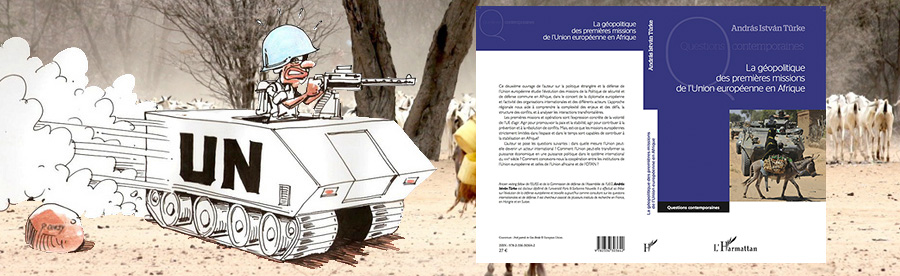
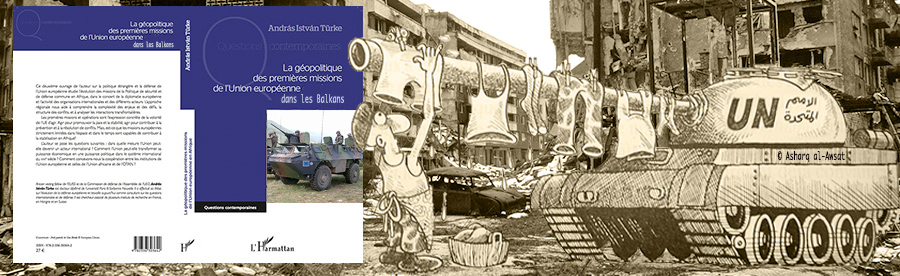
We are looking for sponsors for the English translation of these books, please contact turkeandras(at)gmail(dot)com