
You are here
Africa
When African Smallholders Access Finance, They’ll Show You What’s Possible
Dr. Agnes Kalibata, speaking at the opening ceremony of the Africa Food Systems Forum in 2019. Credit: Wikimedia Commons
By Agnes Kalibata
NAIROBI, Kenya, Sep 24 2026 (IPS)
I was born in Rwanda, but my family soon became refugees in Uganda during the conflict and unrest on the cusp of independence. My father was a teacher and went to great lengths to make sure I was well educated. My parents were also smallholder farmers, and I saw firsthand the challenges my parents and other refugee families faced.
After I received my doctoral degree from the University of Massachusetts at Amherst, I returned to a new Rwanda in 2005, managing a World Bank agriculture project with the government. In 2008, I became Minister of Agriculture and Animal Resources, and over the next six years, I oversaw the country’s transition from food deficit to food security, as Rwanda cut its global hunger index by more than 50 percent. We implemented what we understood to be true: effective deliberate agricultural investment drives poverty down.
Agricultural growth is up to four times more effective at reducing poverty than growth in other sectors, and it underpins food security besides. Yet despite that evidence, Africa’s agriculture sector faces an estimated $200 billion annual financing gap.
Less than a year ago, I joined the Global Agriculture and Food Security Program (GAFSP) as Co-Chair of the Steering Committee because I have seen firsthand how GAFSP is a collaborative platform that connects governments, farmers, civil society and leverages the private sector and multiple partners to tackle food insecurity. Among its inaugural investments was a 60 million dollar investment in Rwanda’s Land Husbandry and terracing program which allowed farmers to reclaim degraded land by mobilizing more than 10 times this initial capital, reached hundreds of farmers and contributed to land restoration, food security and poverty reduction all at the same time.
GAFSP’s Business Investment Financing Track (BIFT) has made its second allocation (its first allocation was to the African Development Bank). Announced at the Africa Food Systems Forum “Investing in Africa’s Agri-Food Systems: Nourishing Nations, Growing Jobs, Building Resilience,” Rwanda’s BIFT allocation is a concrete step toward the GAFSP vision that sharing risk deliberately, and cooperatively, rather than leaving it with farmers alone, moves capital that reduces food insecurity. This $6 million allocation has already unlocked $15 million more from IFAD, the Bank of Kigali and Aceli Africa – 2.5 times GAFSP’s own contribution – reaching an expected 215 farmers’ organizations and 35,000 smallholders.
What is most encouraging about this funding is the paradigm shift it represents against the challenging context of reduced Overseas Development Assistance. Capital structured to absorb risk can shift lender considerations to bring private finance into a domain the private sector has avoided, catalyzing transformational change for smallholder borrowers.
The central obstacle isn’t capital or conviction – it’s risk. Agricultural lending is constrained by the risk of accelerating climate shocks and by the practical cost of financing smaller loans. Roughly 90 percent of staple food production in Sub-Saharan Africa depends on rain-fed agriculture, leaving households with no buffer when a season fails. Farmers in low-income countries bear the highest burden of worsening weather conditions, while African countries lose the most GDP to escalating natural disasters, from drought to surging storms. Finally, the loans these farmers need are relatively small, and small loans cost lenders more to appraise and administer.
As Rwanda’s Agriculture Minister, coordinating across ministries to run programs like the Land husbandry program mentioned above alongside the One Cow per Poor Family – a critical source of nutrition for poor families taught me that risk-sharing across government agencies, communities and financiers is what makes ambitious programs work.
It is now a question of scale. What worked for smallholders in Rwanda can work for millions more, if development finance institutions and private lenders treat risk-sharing as standard practice. I have spent my career watching farmers do more with less. Give them the finance they’ve earned, and there is no question they will transform the food system to be more efficient, resilient and a stronger driver of prosperity at scale.
IPS UN Bureau
Categories: Africa, Swiss News
The Overlooked Fast Track for Cutting Planetary Warming
Credit: Matt Palmer / Unsplash
This guest post is authored by V. Ram Ramanathan, Durwood Zaelke, and Marcelo Suárez-Orozco and is informed by a presentation that Ramanathan is set to give at the Vatican on September 26.
By V. Ram Ramanathan, Durwood Zaelke and Marcelo Suárez-Orozco
NEW YORK, Sep 24 2026 (IPS)
Among the three of us, we have 15 decades of high-level experience in climate science, policies and actions, and we have never been more alarmed than we are at this moment. The United Nations has just officially declared that the world has failed in limiting global warming to a safe level. During the last decade, heat-trapping pollutants nearly doubled the rate that heat is being added to the planet—a rate that will push temperatures across the 1.5°Celsius threshold in five years or less and breach the first barrier of the Paris Agreement. This will further destabilize natural climate systems and amplify weather extremes, which are already costing the world economy more than $ 2 trillion annually. At the current rate of warming, the global temperature is likely to cross 2° Celsius in about 15 years, the outer limit of the Paris Agreement, taking us into a climate not witnessed by homo sapiens, ever.
High altitudes in the Tibetan-Himalayan region and the Alps are already warming at two to three times the global average (which may be implicated in the recent Nepal / Tibet floods that left 1400 confirmed dead and 5,000 missing). Other disastrous impacts of reaching 2°Celsius include the the transition of the Amazon from a forest into a savanna. The health impacts could be the worst of all. At 2°Celsius, heat deaths in 2050 could reach a staggering two billion in a worst-case analysis by actuarial experts at Exeter University.
If that weren’t bad enough, a new scientific study raises the possibility that the current rate of warming, if continued, could eventually shut down the ocean current called the Atlantic Meridional Overturning Circulation—AMOC. The Gulf Stream is a major part of this vital ocean current, which plays a dominant role in winter weather over north America and Europe. Worryingly, AMOC is already slowing down.
At today’s rate of warming AMOC could begin to collapse at warming as low as 2° Celsius, which could be crossed by the time today’s infants are in college. Impacts would be punishing, stranding heat in the already too hot tropics, while robbing northern countries of heat now transported north to keep temperatures temperate, leading to bitter winters. If AMOC collapses, currently a low-probability event, it could trigger massive forced internal and international displacements, ushering in the world’s largest crisis of forced migration ever.
Crossing 2°Celsius will trigger other irreversible impacts too, further amplifying warming through the loss of sea ice and glaciers. The depletion of ice and snow will make the planet darker, resulting in more absorption of incoming solar radiation, amplifying warming by 25% or more.
The good news is that we can avoid this fate if we cut the rate of warming quickly—by 50% within 15 years, which is feasible in two parts.
First, we need to cut the super-pollutants of climate. These include hydrofluorocarbons (HFCs), methane, lower-atmosphere ozone, and black carbon soot from diesel and cooking smoke. These short-lived climate pollutants are called super pollutants because they are tens to thousands of times more potent than carbon dioxide in heating the planet and are currently contributing more than half of the warming the planet has witnessed. However, and this is crucial–they dissipate from the atmosphere within two decades, whereas carbon dioxide, the best-known climate pollutant, takes multiple decades to a century to significantly decline.
Technologies exist to quickly and affordably reduce the super pollutants. In many cases we have the policies and laws as well. HFCs are being cut through the 2016 Kigali amendment to the successful Montreal Protocol—the treaty that has slowed warming by several decades while restoring the protective stratospheric ozone layer.
Methane pollution is getting more attention recently, including from Prime Minister Mia Mottley of Barbados, who is recommending a binding international agreement —inspired by the Montreal Protocol—to prevent the oil and gas industry from wasting natural gas, which is 90% methane. Other local solutions can reduce or even eliminate methane from landfills, starting by reducing food waste. There are many other such practical, off-the-shelf solutions.
The immediate task at hand is to thin the invisible heat trapping blanket. If we implement super pollutant solutions before 2030 and scale to full potential in less than10 years, the rate of warming can be reduced by 30% by 2040s. But we need to cut the rate of warming by half, i.e. 50%. The super pollutants should be our first target, because the technologies and policies are there and once we put them into action, the blanket-thinning will start immediately.
Second, as the recent IPCC report affirms, we need to focus on removing CO2. The human-made CO2 blanket up there weighs about 1,200 billion tons and we have to thin it by 5%, or 60 billion tons. Nature-based solutions are currently removing about 2 billion tons per year. Chemical/biological/technological solutions are actively pursued. Scaling to 4 billion tons per year would remove the needed tons in 15 years.
Together, these two measures would halve the rate of warming from today’s nearly 0.4° Celsius per decade to less than 0.2° Celsius per decade. We know of no other measures of thinning the heat-trapping blanket to provide the rapid cooling needed to allow us to survive and thrive. Even with rapid actions, climate disruption will continue for decades. We must make people and ecosystems resilient. Since we are all interconnected, we require global cooperation to make people and ecosystem climate resilient. Towards this global cooperation, we propose creating: One Million Climate Advocates to empower the public to support local and national actions; and One Million Climate Champions to connect civil society, governments, and industries to turn climate mitigation policies into actions at the local to the global level.
It’s time to move forward, always forward. Adelante, Siempre Adelante. Those were among the last words Pope Francis offered one of us (Suárez-Orozco). Not forward when the politics are perfect or opposition relents. Forward now, with the urgency of a species that has finally seen the iceberg but still has time to turn the tiller toward safety.
V. Ram Ramanathan is a distinguished research professor at the University of California at San Diego and the winner of the 2026 Crafoord Prize from the Royal Swedish Academy.
Durwood Zaelke is president of the Institute for Governance & Sustainable Development and adjunct professor at the University of California, Santa Barbara.
Marcelo Suárez-Orozco is chancellor of the University of Massachusetts Boston & the UCLA Wasserman Dean Emeritus.
IPS UN Bureau
Excerpt:
Guest contributors V. Ram Ramanathan, Durwood Zaelke, and Marcelo Suárez-Orozco write that we can cut the rate of warming by 30% to 50% within 15 years. “And we must.”
Categories: Africa, Swiss News
A New Arms Race is Threatening to Take-off—this time in Outer Space
Credit: United Nations
By Thalif Deen
UNITED NATIONS, Sep 24 2026 (IPS)
The world’s ongoing arms race is threatening to extend beyond planet earth—and spillover into outer space.
The US has deployed weapons in space and will use them to defend American forces, Air Force Secretary Troy Meink said last week, according to Cable News Network (CNN). His comments marked the first public acknowledgment of such capabilities, though he offered no details about the weapons or when they were put into orbit.
“Today we continue to ensure we remain ready to meet the challenges of evolving threats wherever they exist,” Meink told the Air, Space and Cyber Conference, an annual gathering hosted by the Air & Space Forces Association in National Harbor, Maryland.
The disclosure comes as the US faces an advancing space arms race with China and Russia, which are testing sophisticated offensive capabilities.
Specifically, American officials have said they are monitoring China’s development of a nuclear-capable partial-orbit hypersonic missile. US intelligence has also suggested Russia is developing a space-based nuclear weapon that could knock out satellites critical to weather forecasting, navigation, banking, shipping and emergency services — a claim Moscow denies, according to CNN.
The New York Times quoted Guo Jiakun, a spokesman for China’s Foreign Ministry as saying: ‘We urge the US side to stop expanding its military force and preparing for war in outer space”.
There have also been reports that “Russia could be planning to put a nuclear weapon in space, a threat that could disrupt satellite networks that are vital to everything – from communications to military operations.”
The multiple UN Conferences on the Exploration and Peaceful Uses of Outer Space (UNISPACE), have served as landmark global summits to shape international cooperation and policy for space exploration.
Convened at the Hofburg Palace in Vienna from 14 to 27 August 1968, UNISPACE 1 focused on the practical benefits of space technology and scientific exchange
Tariq Rauf, former Head of Verification and Security Policy, at the Vienna-based International Atomic Energy Agency (IAEA), told Inter Press Service (IPS) , while appreciating the transparency shown by the US, this disclosure is the most consequential open acknowledgement by any spacefaring State of weaponised on-orbit capability since the erosion of the informal post-Cold War taboo on space weapons.
The testing began with the 2007 Chinese ASAT test and the 2008 and 2021 Russian ASAT tests., the 2008 US and 2021 Russian ASAT tests, and India’s 2019 Mission Shakti ASAT test — building on earlier direct-ascent ASAT programs pursued by the United States and the Soviet Union from the 1960s through the 1980s.
The US deployment converts a long-suspected capability gap into a declared fact, and it will be read by other delegations as confirmation that at least one major power has moved decisively from space “control” doctrine to operational deployment, he said.
For the UN Committee on the Peaceful Uses of Outer Space (COPUOS) and the Ad Hoc Committee of the Conference on Disarmament on Prevention of an Arms Race in Outer Space (PAROS), the announcement raises four immediate questions:
(1) whether the deployment is compatible with the existing Outer Space Treaty regime; (2) what it means for the stalled draft Treaty on the Prevention of the Placement of Weapons in Outer Space, the Threat or Use of Force against Outer Space Objects (PPWT) and the EU Code of Conduct (EU International Code of Conduct for Outer Space Activities); (3) how the expert and policy community is interpreting the move; and (4) what practical steps the Committees can recommend to prevent a cascading arms race in space.
Rauf proposed five recommendations:
1. Convene an urgent joint briefing between COPUOS’s Scientific and Technical and Legal Subcommittees and the CD’s PAROS Ad Hoc Committee to develop a shared factual record of the announcement and its technical implications, avoiding duplicated or contradictory assessments across the two bodies.
2. Both PAROS Ad Hoc Committee and COPUOS should issue an urgent call for a moratorium on placing weapons in Space, urge the US to take down space weapons it has deployed and urge all spacefaring States to preserve Space as the common heritage of humankind and weapons-free.
3. Request, through the Conference on Disarmament Secretariat, that all spacefaring States with counterspace capability — not only the United States — provide voluntary technical briefings on the general character (though not classified specifics) of any on-orbit weapons systems, to reduce the information asymmetry currently driving worst-case assumptions.
4. Task the Legal Subcommittee with producing a technical working paper clarifying the scope of Article IV of the Outer Space Treaty as applied to conventional (non-WMD) on-orbit weapons, and the interaction of Articles III and IX with counterspace operations, to give delegations a common legal baseline rather than competing unilateral interpretations.
5. Encourage major space powers to reaffirm, at head-of-delegation level, existing voluntary moratoria on destructive kinetic ASAT testing, and invite additional States to associate themselves with such moratoria pending progress on a binding instrument.”
Jonathan Granoff, President Global Security Institute, told IPS placing offensive weapons in space is a very risky proposition.
The Outer Space Treaty has been instrumental in ensuring numerous benefits of outer space, including satellites and exploration. All major nations are parties including United States, Russia, China, India, Japan, and all member states of the European Space Agency. The Treaty in its first article establishes that space exploration and use shall only be for the benefit and in the interests of all countries and shall be the province of all mankind, ensuring free and non-discriminatory access for all states.
The deployment of weapons in space by the United States could easily be interpreted as violating that peaceful uses principle, he pointed out.
“However, there is an argument that putting weapons in space for defensive purposes only helps protect against abuses of the peace which is in the interest of all nations. This is not frivolous. The problem with that argument is that weapons used for defensive purposes can also be used offensively and the deployment of such weapons would indeed violate the the Treaty. Moreover, such a deployment by one nation will surely stimulate an arms race.”
There are several important questions, he said.
Should the entire world trust that the weapons the US places in space would only be used defensively to preserve the peace? If the US places weapons in space would this new interpretation of the Treaty stimulate other nations to do the same? Would it be wise to trust they would only use their weapons defensively?
Recall that President Reagan, addressing such questions, offered to share his Star Wars deployments of space based missile defenses with the Soviet Union. Would it be a good idea for the US to share space weapons technologies with other nations?
“The entire world benefits very much from the current military uses of outer space which allows the observation of the military activities of all nations thus helping stability. Such uses should affirmatively be protected and encouraged. Other uses that will lead to a new arms race should be prohibited. A protocol to the OST to prohibit offensive weapons in space as well as any anti-satellite weapons should be obtained”, declared Granoff..
IPS UN Bureau Report
Categories: Africa, Swiss News
Schaffhausen – Pfadi 35:28: Sackstarke Kadetten fegen Winterthur aus der Halle
In Zusammenarbeit mit RED+ präsentiert Blick die Highlights der Partie Kadetten Schaffhausen – Pfadi Winterthur (35:28).
Categories: Africa, Swiss News
GC – Kriens-Luzern 35:43: Krienser bleiben auch gegen Amicitia unbesiegt
In Zusammenarbeit mit RED+ präsentiert Blick die Highlights der Partie GC Amicitia Zürich – HC Kriens-Luzern (35:43).
Categories: Africa, Swiss News
Reallocating fossil subsidies via social assistance reduces poverty and preserves emissions cuts
Fossil fuel subsidies are widespread, regressive, and environmentally costly, yet abrupt removal can raise poverty. To identify a practical reform pathway, we evaluate the effectiveness of compensatory policies grounded in existing national social protection systems. We develop a high-resolution global social accounting matrix to quantify how reallocating subsidies through actual social assistance impacts poverty, inequality, and CO2 emissions. Without compensation, reform lowers emissions but increases poverty, especially for low-income households in emerging economies. Redirecting funds via social assistance disproportionately benefits the bottom half and reduces national poverty, particularly under targeted cash transfers or expanded programs where savings are large. However, full revenue recycling is not always desirable: Once vulnerable households are adequately protected, additional recycling can weaken both fiscal and climate gains. We therefore treat full recycling through social assistance as an analytical benchmark rather than a policy prescription and show that partial, targeted recycling, as illustrated by retaining roughly 20% of savings while channeling the remainder through social protection, can still reduce poverty while preserving emissions cuts. Overall, fossil fuel subsidy reform is most effective when social assistance is used to compensate low-income households, not to absorb all fiscal savings, leaving residual revenues available for other public priorities.
Categories: Africa, Diplomacy & Defense Think Tank News
Ethiopia and Tigray accuse each of launching offensives, fuelling fears of new war
The local authorities reportedly seize Tigray's airports following reports of recent drone strikes.
Categories: Africa, Swiss News
«Qualität nicht auf WM-Niveau»: Nicht nur Reusser schimpft über Montréals Katastrophen-Strassen
Trotz Gold und Bronze bei der Rad-WM in Montréal übt Marlen Reusser Kritik. Die schlechten Strassenverhältnisse sorgen für Erschütterungen und Verletzungen. Auch andere Fahrer sprechen von gefährlichen Bedingungen.
Categories: Africa, Swiss News
Travel Guide: Alles, was du für eine Reise nach Südafrika wissen musst
Vibrierende Städte, Weinregionen, die ans Mittelmeer erinnern, und unvergessliche Safari-Abenteuer: Südafrika zählt zu den beliebtesten und aufregendsten Destinationen Afrikas. Wir verraten, was man für eine Reise in den Süden Afrikas beachten muss.
Categories: Africa, Swiss News
Spotlight on new coaches as road to Afcon 2027 begins
Patrick Vieira and Herve Renard are among the high-profile managerial arrivals as the qualification campaign for the 2027 Africa Cup of Nations gets under way.
Spotlight on new coaches as road to Afcon 2027 begins
Patrick Vieira and Herve Renard are among the high-profile managerial arrivals as the qualification campaign for the 2027 Africa Cup of Nations gets under way.
Categories: Africa, Balkan News
Eleven killed in mass shooting at house in South Africa
One of those killed is believed to be a pregnant woman, police said.
Categories: Africa, Swiss News
Watch: Why is the UK reviewing its Chagos Islands deal?
The UK is reviewing its deal to hand over the Chagos Islands to Mauritius, the defence secretary has said.
Categories: Africa
UK to review Chagos Islands deal over lack of US support, Streeting tells BBC
Defence Secretary Wes Streeting has confirmed the review after Donald Trump told Andy Burnham the deal was "terrible".
Categories: Africa, Biztonságpolitika
Wissenschaftler*in (w/m/d) in der FG Gender Economics
Die Forschungsgruppe Gender Economics ging aus dem Forschungsbereich Gender Studies hervor und untersucht Gender Gaps am Arbeitsmarkt sowie die gleichstellungspolitischen Auswirkungen von Steuer-, Sozial- und Familienpolitik. Die Forschung im Bereich Gender Gaps am Arbeitsmarkt konzentriert sich auf die Unterschiede in den Verdiensten von Frauen und Männern sowie auf die geringe Repräsentation von Frauen in Führungspositionen in der Wirtschaft. Zudem forscht die Gruppe in mehreren Projekten zu den Auswirkungen familienpolitischer Maßnahmen wie z.B. Elterngeld, Kita-Ausbau und Ehegattensplitting in Bezug auf die Erwerbsbeteiligung und Lohnentwicklung von Frauen. Die Forschungsgruppe ist Teil der Abteilung Staat.
Zum nächstmöglichen Zeitpunkt suchen wir für Projektarbeiten einen Wissenschaftlerin (w/m/d) (Für den Zeitraum 1. November 2026 bis 31. Januar 2028, Teilzeit mit 75 % der regulären Arbeitszeit).
Categories: Africa, Diplomacy & Defense Think Tank News
South Sudan's president dissolves government ahead of country's first elections
South Sudan has not held elections since independence in 2011 - polls have twice been postponed.
Categories: Africa, Biztonságpolitika
Onze morts dans une fusillade de masse dans une maison en Afrique du Sud
L'une des victimes serait une femme enceinte, a indiqué la police.
Nigerian football enduring 'worst time in history' - Odegbami
Former Afcon winner Segun Odegbami has slammed those running Nigerian football after the country missed out on the men's and women's World Cups.
Categories: Africa, Biztonságpolitika
Nigerian football enduring 'worst time in history' - Odegbami
Former Afcon winner Segun Odegbami has slammed those running Nigerian football after the country missed out on the men's and women's World Cups.
Categories: Africa, Biztonságpolitika
IRAQ: ‘Art Is the Only Weapon That Doesn’t Hurt or Kill’
By CIVICUS
Sep 23 2026 (IPS)
CIVICUS discusses public art, gender-based violence and censorship in Iraqi Kurdistan with Tara Abdullah, a multidisciplinary visual artist from Sulaymaniyah who is currently based in Oslo, Norway as part of the Safemuse – Safe Havens for Artists residency.
Tara Abdullah
In Iraqi Kurdistan, where conservative religious and social norms prevent open discussion of gender-based violence, femicide remains a persistent, under-reported crisis. Artists who take these issues into public space, instead of confining them to galleries or private institutions, risk backlash from religious authorities, legal action and the withdrawal of state permits and funding.How did you become an artivist?
I’m from Sulaymaniyah in the Kurdistan Region of Iraq, and I’ve been using art to express myself since I was a child. I fought hard to get into art school. After ninth grade, I joined the Institute of Art and studied there for five years, then studied for four more years at the College of Fine Arts at the University of Sulaymaniyah and graduated in 2020. All in all, I spent almost a decade studying art and learning new materials and methods I could bring into my work.
Since I graduated in 2020, I’ve used art in many different forms, and over the past six years I’ve tried to bring art and activism together, mainly around environmental conservation and women’s rights.
Doing art as a woman here isn’t easy. Dogmas around culture, religion and tradition mean most forms of art are considered haram, or forbidden. Even inside the art community, I’ve found a kind of disgust towards certain forms of art, with people saying some things are too provocative or politically wrong. But reading monthly data on femicide and violence against women has pushed me further to try to use elements of the culture and society I grew up in to try to break the red lines set for women.
What was the Feminine Project?
It was a project I started in 2020, in which I collected clothes from women who had faced violence. I went door to door across thousands of homes in the city and surrounding towns to interview the women and collect a piece of clothing along with their story. I stitched the pieces together and hung them along a five-kilometre stretch of the city’s main street, leading from the main court to the public park.
This was my idea of a peaceful protest. Women here can’t speak openly about the violence they face. If they did, they’d face immediate backlash. Their clothes themselves carry shame. When women hang their washing out, they cover their underwear so it isn’t seen by anyone. I wanted to show that not even women’s clothes have the freedom to be touched by the sun, let alone the women themselves.
I put up a public installation rather than a gallery, because I wanted the public exposed to it, not just the small art community that already agrees with these ideas. By the end of the first day, people started tearing the piece down and burning parts of it, and it triggered a huge backlash online and offline.
What project did you work on then?
After the Feminine Project, I had thousands of stories from the women I’d interviewed. So in late 2022 I started my Voice Project. I turned the stories into a two-minute speech carrying the weight of all of it: honour killing, suicide, violence. Women here are expected to keep a low voice and never give their opinion. Decisions are made for them by men. So I created a voice for them.
I played the message through 66 synchronised speakers across four cities and three surrounding towns in Sulaymaniyah province, all at the same time. I used megaphones deliberately. They’re symbolically loaded because they are used in mosques by mullahs for the call to prayer. In most countries, anyone can speak, but here it’s always a man’s voice, whether it’s calling people to prayer or selling groceries. I wanted to show women also had a voice.
This caused an even bigger backlash than the first project. People started shutting down the speakers, and the mullahs pushed to bring me to court, accusing me of an immoral act against our culture, religion and tradition. They accused me of promoting homosexuality, which genuinely surprised me, because the piece was straightforwardly about violence against women. When the judge called me in for a statement, he asked whether I was promoting ‘queer ideology’. I replied that my work promotes individual freedom. The case was eventually dismissed, but I had to get out of the country and stay away for a few weeks until things settled down.
I think the backlash comes from the visibility. The art community is tiny, and art typically stays inside galleries where very few people see it. But when you bring it out into the public space, it exposes feelings the public didn’t know were there.
How do you manage the risks that this work brings?
For the Feminine Project, building trust with the women was very difficult. I had to reassure them I wasn’t taking photos or recording their voices, and let them check this was true. Even then, some rejected the idea outright, saying things like, ‘So what are you going to do, are you superwoman? Things won’t change’, or accusing me of trying to destroy their families.
None of the clothes in the final installation were tied to a name, so the women’s safety was protected. That meant all the pressure landed on me. I come from a very traditional, religious family who never approved of me going into art. When I was preparing the Feminine Project, I told them I was doing charity work. When the truth came out, there was a huge conflict at home, including violence. But this didn’t make me back down. Instead, it made me more determined.
I know that by undertaking these projects I risk being taken to court, being denied permission to work or receiving online smears and threats. But if I don’t do this, who will? I’m proud of what I’ve done and I’ll keep doing it.
What support have you received?
There are always going to be people for and against, but honestly, most public reaction leans against this kind of work. But I’ve also received some encouragement. Following the Feminine and Voice projects, many women contacted me anonymously to tell me how much relief the work gave them, as someone was finally saying what they’d wanted to say themselves.
However, most of the support I receive comes from outside Iraq. After the Voice Project, I was blacklisted and I couldn’t get any funding or permission for public installations, so I started applying for international prizes instead.
In 2023 I was shortlisted for the Future Generation Art Prize in Ukraine, out of 12,000 applications, for an installation building a bridge between Kurdish women’s experience of violence and war and Ukrainian women living through the current conflict, and I won the special prize in 2024. I also received the Alpine Fellowship Visual Art Prize in 2023 and the Prince Claus Seed Award in 2025. Researchers have written papers about my work, and in 2025, I showed a rough-cut documentary about the Voice Project in Warsaw and an indoor installation about Kurdish women’s experience in Kraków, Poland. That international attention keeps me going, and I use the exposure and funding to keep building pressure back home.
How do you collaborate with others?
I work as an individual artist. I bring in craftspeople and freelancers to help make each piece, but most of them ask me not to use their names. They want the money, not the association. I always explain the risk honestly to people, and many back out.
When I can, I bring in local women to do the work and pay them. For the Feminine Project I had dozens of women doing the sewing. For my environmental work, I try to involve as many women and young people as possible. For a water festival in 2025, I made giant puppets out of reed and recycled biodegradable material alongside 20 people, running workshops over 10 days so they could learn to use art to deliver their own messages.
Collaboration carries risk. When I ran a seminar on art and peace, security forces raided it on the second day and took me in for questioning. But my message to anyone facing suppression or violence is not to be afraid. Talk about it; bring it out into the open. You don’t have to be accepted by a corrupted environment around you to accept yourself.
For me, art is a whole universe you can fit everything into: your ideas, your beautiful things and the problems around you. You can use art to try to fix things. It’s the only weapon that doesn’t hurt or kill.
CIVICUS interviews a wide range of civil society activists, experts and leaders to gather diverse perspectives on civil society action and current issues for publication on its CIVICUS Lens platform. The views expressed in interviews are the interviewees’ and do not necessarily reflect those of CIVICUS. Publication does not imply endorsement of interviewees or the organisations they represent.
GET IN TOUCH
Website
Instagram
SEE ALSO
Iraq: ‘The proposed amendments to the Personal Status Law are an attack on women’s rights’ CIVICUS Lens | Interview with Mohammed Juma 07.Dec.2024
Iraq: ‘Tolerance for abuses against LGBTQI+ people has now been made explicit through legislation’ CIVICUS Lens | Interview with Sarah Sanbar 26.Jun.2024
Iraq: ‘We’ve submitted many bills, but parliament refuses to adopt a law against GBV’ CIVICUS Lens | Interview with Alyaa Al Ansari 07.Mar.2022
Categories: Africa, European Union
Pages
the old site is here


© 2012-2015 Europa Varietas Foundation © 2015-2020 Europa Varietas Association
www.europavarietas.org | info(@)europavarietas(dot)org | Switzerland
This is a GDPR ready site
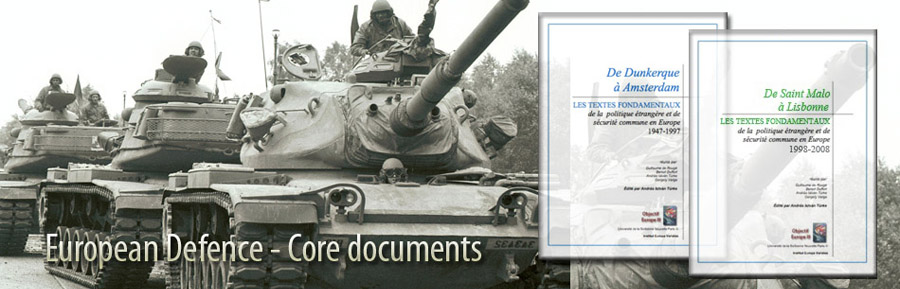
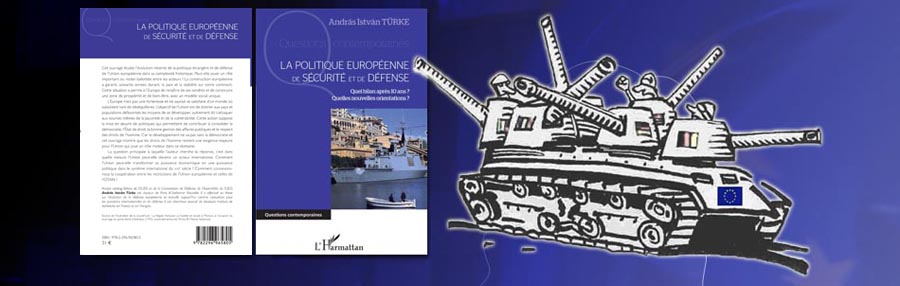
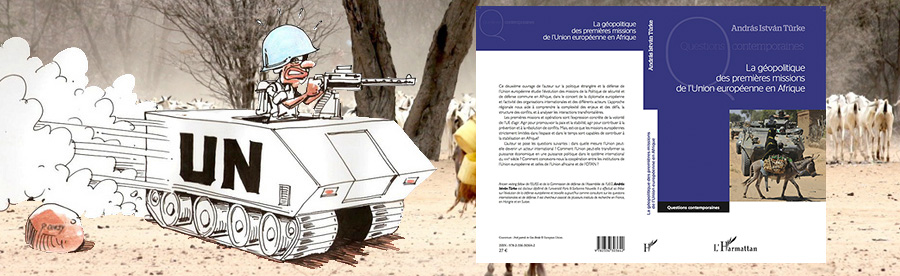
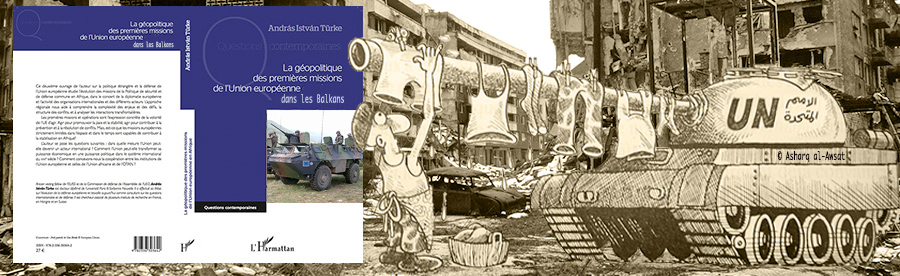
We are looking for sponsors for the English translation of these books, please contact turkeandras(at)gmail(dot)com