
You are here
Feed aggregator
Les métamorphoses de la liberté au Printemps des poètes
25 mars 2026 | 19h00
Salon doré, Hôtel de Béhague, Résidence de la Roumanie en France | 22 Avenue Bosquet, 75007 Paris
Entrée gratuite, réservation obligatoire : institut.roumain@gmail.com
L'Institut culturel roumain de Paris soutient, dans le cadre du Mois de la Francophonie, l'événement pluridisciplinaire Les métamorphoses de la liberté, réunissant projections vidéo, lectures de poésie, présentation de livre, danse et performance. Les autrices Simona Popescu et Maria Mailat, ainsi que (…)
Soutien énergétique : un expert jordanien accuse l’Algérie de favoritisme envers l’Égypte
Les déclarations du docteur Amer Al Shobaki ont suscité une vive controverse ces derniers jours dans le monde arabe. Se présentant comme un spécialiste des […]
L’article Soutien énergétique : un expert jordanien accuse l’Algérie de favoritisme envers l’Égypte est apparu en premier sur .
Categories: Afrique
Nepal’s Gen Z Electoral Revolution
Credit: Sanjit Pariyar/NurPhoto via AFP
By Andrew Firmin
LONDON, Mar 25 2026 (IPS)
Less than six months after Nepal’s Generation Z rose up in protest, the country has a new prime minister. A 35-year-old former rapper who soundtracked the protests swept to power in a landslide in the 5 March election.
Balendra Shah defeated former prime minister KP Sharma Oli, whose third stint as prime minister was cut short by the protests, beating him in his own turf. After years of fragile coalition governments, in which Sharma Oli and two other men of advancing age repeatedly swapped the role of prime minister, Nepal has chosen to change direction.
Gen Z-led protests
The September 2025 protests were triggered by the government’s banning of 26 social media platforms in an evident response to the ‘nepokids’ trend, in which people used social media to satirise the ostentatiously wealthy lifestyles of politicians’ family members, while most young people experienced daily economic struggles amid high inflation and youth unemployment. In a country where the median age is just 25, the ban was the final straw, activating long-simmering anger about corruption, poor public services and a political system that refused to listen to young people.
When young people took to the streets, the state unleashed violence. The deadliest day was 8 September, when some protesters broke into the parliamentary complex and police fired live military-grade ammunition, shooting many victims in the head. Nineteen people died that day, and overall at least 76 people died in the protests.
Rather than silence the protests, the state’s lethal crackdown swelled them, making clear this was about more than the social media ban; it was a struggle for Nepal’s future. Even more people took to the streets. On 9 September, Sharma Oli resigned. Some protesters turned to violence, while the army took over security and imposed a nationwide curfew. But events soon took a decisive turn. Chief Justice Sushila Karki was sworn in as interim prime minister on 12 September, kickstarting a process that led to the election. The interim government agreed to establish a Gen Z Council, a formal body designed to bridge the gap between the government and young people and enable them to hold it accountable and monitor implementation of reforms.
As the latest State of Civil Society Report sets out, Nepal’s movement inspired many of the year’s other Gen Z-led mobilisations. Nepali activists used the gaming platform Discord, including for a radical exercise in democracy that saw 10,000 people take part in online discussions that put forward Karki as interim prime minister. Morocco’s protesters also used Discord to coordinate their actions, while the Gen Z movement in Madagascar, where the army ultimately forced the government to quit, connected with Nepal’s Discord communities to learn from their organising. Movements in several countries adopted Nepal’s protest symbol, the skull-and-straw-hat flag from the One Piece manga, identifying themselves as part of the same global movement.
Around the world, Gen Z-led protests have commonly faced violent state repression but have forced real concessions: Bulgaria’s government quit, while politicians dropped unpopular policies in Indonesia and Timor-Leste. In Bangladesh, where a Gen Z-led protest movement ousted an authoritarian government in 2024, the country recently held its first credible election in almost two decades.
Time for change
The new energy unleashed by Nepal’s Gen Z-led protests was reflected in the registration of over 800,000 new voters, more parties standing than ever before, a profusion of younger candidates and an election campaign focused on corruption and good governance.
The result was a shock. Coalition governments are the norm in Nepal, but the centrist Rastriya Swatantra Party (RSP) won an outright majority, taking 182 of 275 House of Representatives seats after a campaign that made intensive use of social media. The three established parties all sustained heavy losses.
Shah used his music to attack corruption and inequality, resonating with the Gen Z movement during the protests, when one of his songs was viewed over 10 million times on YouTube. But he isn’t a completely new political figure, having become mayor of the capital, Kathmandu, in a surprise result when he ran as an independent in 2022. His track record there suggests grounds for concern. He’s rarely made himself available for media questioning, preferring to communicate directly via social media, where he’s known for making controversial outbursts. He also received criticism for deploying police against street vendors and launching ‘demolition drives’ to clear illegally built structures with minimal notice, leading to clashes between police and locals.
Shah now has a mandate to deliver change, and expectations are high. But he faces the challenge of reforming a typically resistant bureaucracy while delivering on his economic promises amid difficult global conditions worsened by the Israeli-US war on Iran, which threatens the remittances sent by the many Nepali workers based in Gulf countries, which constitute one quarter of the country’s GDP. He’ll need to navigate the difficult foreign policy balance between Nepal’s two powerful and often antagonistic neighbours, China and India. The new government must also ensure accountability for human rights violations during the 2025 protests, starting with releasing the report of a commission set up to investigate protest deaths, which hasn’t yet been made public.
The obvious danger, given these challenges and an outsized mandate, is that the government will adopt a heavy-handed approach, pushing through change while failing to listen. This is precisely when civil society is needed, to step in to hold the new government to account and ensure it respects human rights, including the right to keep expressing dissent.
Nepal’s Gen Z movement must guard against co-option by the new administration. The new government must acknowledge the vital role of Nepal’s outspoken young generation by moving quickly to form and resource the Gen Z Council and fully respecting its autonomy. The movement that helped bring Shah to power must stay engaged.
Andrew Firmin is CIVICUS Editor-in-Chief, co-director and writer for CIVICUS Lens and co-author of the State of Civil Society Report.
For interviews or more information, please contact research@civicus.org
Follow @IPSNewsUNBureau
!function(d,s,id){var js,fjs=d.getElementsByTagName(s)[0],p=/^http:/.test(d.location)?'http':'https';if(!d.getElementById(id)){js=d.createElement(s);js.id=id;js.src=p+'://platform.twitter.com/widgets.js';fjs.parentNode.insertBefore(js,fjs);}}(document, 'script', 'twitter-wjs');
Categories: Africa, European Union
Liaisons maritimes Algérie – France : plusieurs traversées perturbées par le mauvais temps
La Entreprise Nationale de Transport Maritime de Voyageurs (ENTMV) a annoncé, ce mercredi, le report de plusieurs traversées maritimes en raison des mauvaises conditions météorologiques. […]
L’article Liaisons maritimes Algérie – France : plusieurs traversées perturbées par le mauvais temps est apparu en premier sur .
Categories: Afrique
Press release - MEPs assess the results of the 19 March European Council
On Wednesday, plenary debated the outcome of the 19 March EU summit with European Council President António Costa and Commissioner Valdis Dombrovskis.
Source : © European Union, 2026 - EP
Source : © European Union, 2026 - EP
Categories: Africa, European Union
Press release - MEPs assess the results of the 19 March European Council
On Wednesday, plenary debated the outcome of the 19 March EU summit with European Council President António Costa and Commissioner Valdis Dombrovskis.
Source : © European Union, 2026 - EP
Source : © European Union, 2026 - EP
Categories: Afrique, Europäische Union
Press release - MEPs assess the results of the 19 March European Council
On Wednesday, plenary debated the outcome of the 19 March EU summit with European Council President António Costa and Commissioner Valdis Dombrovskis.
Source : © European Union, 2026 - EP
Source : © European Union, 2026 - EP
Categories: Afrique, European Union
Press release - MEPs assess the results of the 19 March European Council
On Wednesday, plenary debated the outcome of the 19 March EU summit with European Council President António Costa and Commissioner Valdis Dombrovskis.
Source : © European Union, 2026 - EP
Source : © European Union, 2026 - EP
Categories: Európai Unió : hírek magyarul, European Union
Affaire Maroc – Sénégal : 1ère réaction du TAS de Lausanne
L’affaire controversée qui a opposé le Maroc au Sénégal lors de la finale de la CAN-2025 est loin d’avoir livré tous ses secrets. Une semaine […]
L’article Affaire Maroc – Sénégal : 1ère réaction du TAS de Lausanne est apparu en premier sur .
Categories: Afrique
Désengorger la capitale : Un nouveau tronçon routier reliant ces 02 communes enfin ouvert à la circulation
Un nouveau jalon a été franchi mercredi dans le cadre de l’amélioration de la mobilité urbaine à Alger. Le premier tronçon de l’axe reliant le […]
L’article Désengorger la capitale : Un nouveau tronçon routier reliant ces 02 communes enfin ouvert à la circulation est apparu en premier sur .
Categories: Afrique
Senegal appeal to be heard 'as swiftly as possible'
The Court of Arbitration for Sport (Cas) says it will rule on Senegal's appeal against being stripped of the Africa Cup of Nations title "as swiftly as possible".
Categories: Africa, Swiss News
Latest news - Next SEDE meeting - Committee on Security and Defence
The next meeting of the Committee on Security and Defence (SEDE) is scheduled to take place on Tuesday, 14 April 2026 from 9.00 - 12.30 and 14.30 - 18.30 in Brussels (room ANTALL 4Q1).
Further information about the SEDE meetings can be found here.
_______________________
SEDE missions 2026:
- Poland and Czechia - 16-18 February 2026
- Ukraine - 5-6 February 2026
- Djibouti - 27-29 October 2025
- Greenland - 15-19 September 2025
- Norway - 27-30 May 2025
- Moldova and Ukraine - 14-17 April 2025
- Bosnia and Herzegovina - 24-27 February 2025
- Israel and Palestine - 5-8 February 2025
- United Kingdom - 28-30 October 2024
- Ukraine - 25-26 October 2024
SEDE Committee meetings' calendar 2026
SEDE Committee meetings' calendar 2025
EP calendar 2026
Source : © European Union, 2026 - EP
Transport : Naftal scelle une alliance stratégique avec les chauffeurs de taxi
Dans une démarche visant à consolider le dialogue avec ses partenaires professionnels, la compagnie nationale Naftal a tenu, ce mercredi, une réunion de concertation avec […]
L’article Transport : Naftal scelle une alliance stratégique avec les chauffeurs de taxi est apparu en premier sur .
Categories: Afrique
Press release - Opening: 25-26 March plenary session
Roberta Metsola opened the plenary session in Brussels with a moment of silence to remember victims of terrorism, and recommit to combating radicalism, hatred and extremism.
Source : © European Union, 2026 - EP
Source : © European Union, 2026 - EP
Categories: European Union
Press release - Opening: 25-26 March plenary session
Roberta Metsola opened the plenary session in Brussels with a moment of silence to remember victims of terrorism, and recommit to combating radicalism, hatred and extremism.
Source : © European Union, 2026 - EP
Source : © European Union, 2026 - EP
Categories: Afrique, Europäische Union
Press release - Opening: 25-26 March plenary session
Roberta Metsola opened the plenary session in Brussels with a moment of silence to remember victims of terrorism, and recommit to combating radicalism, hatred and extremism.
Source : © European Union, 2026 - EP
Source : © European Union, 2026 - EP
Categories: Afrique, European Union
Press release - Opening: 25-26 March plenary session
Roberta Metsola opened the plenary session in Brussels with a moment of silence to remember victims of terrorism, and recommit to combating radicalism, hatred and extremism.
Source : © European Union, 2026 - EP
Source : © European Union, 2026 - EP
Categories: Európai Unió : hírek magyarul, European Union
Algérie – Italie : les annonces clés de Tebboune après sa rencontre avec Giorgia Meloni
Le président de la République, Abdelmadjid Tebboune, a reçu ce mercredi à Alger la présidente du Conseil des ministres italien, Giorgia Meloni, dans le cadre […]
L’article Algérie – Italie : les annonces clés de Tebboune après sa rencontre avec Giorgia Meloni est apparu en premier sur .
Categories: Afrique
Aux États-Unis, les bénéficiaires du statut de protection temporaire originaires d'Afrique font face à la peur et à l'incertitude malgré le sursis légal
Des juges fédéraux américains ont bloqué le projet du gouvernement de mettre fin aux protections juridiques qui permettent à des milliers d'Africains de vivre et de travailler aux États-Unis. Des ressortissants de Somalie, d'Éthiopie, du Soudan du Sud et du Cameroun contestent le projet de l'administration Trump de supprimer le statut de protection temporaire (TPS). Comme le rapporte Bushra Mohamed de la BBC à Minneapolis, la crainte demeure largement répandue malgré ce sursis judiciaire.
Categories: Afrique, Europäische Union
Ooredoo Algérie prend part au Global Africa Tech 2026 en sa qualité de sponsor officiel
Fidèle à son engagement en faveur de l’innovation et du développement du numérique, Ooredoo Algérie participe en tant que sponsor officiel, à la première édition […]
L’article Ooredoo Algérie prend part au Global Africa Tech 2026 en sa qualité de sponsor officiel est apparu en premier sur .
Categories: Afrique
Pages
the old site is here


© 2012-2015 Europa Varietas Foundation © 2015-2020 Europa Varietas Association
www.europavarietas.org | info(@)europavarietas(dot)org | Switzerland
This is a GDPR ready site
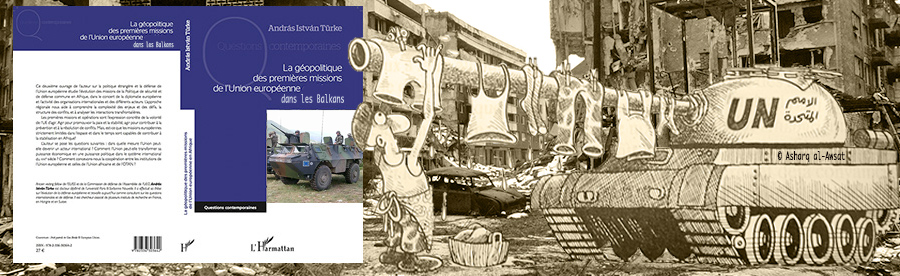
We are looking for sponsors for the English translation of these books, please contact turkeandras(at)gmail(dot)com