
You are here
Feed aggregator
Aid for trade, political ties, and global value chains: a regime-dependent effect?
This paper investigates the impact of aid for trade (AfT) targeted at trade policies on the participation of recipient countries in global value chains (GVCs), and how this impact varies with their prevailing political regimes. In democratic countries, the need for the authorities to account for the interests of various stakeholders (e.g., lobbies, trade unions) can compromise the allocation, use, and effectiveness of AfT. In contrast, less democratic regimes are typically more insulated from political pressures, which may lead to more effective outcomes of aid. At the same time, integration into some complex GVCs requires efficient and democratic institutions, to which these products are sensitive. Employing a sample of 110 countries and data covering 2002-2018, we control for standard determinants of GVC participation, while examining the effect of AfT and the moderating role of the political regime in place. Our estimation addresses the endogeneity of aid through an appropriate instrumentation strategy. Our results suggest that the effect of AfT is mostly positive in autocratic regimes, indicating more effective trade policy reforms. When we account for regional disparities, we find evidence that AfT for trade policy is also impactful in some democratic regimes. This might suggest that the efficacy of AfT is not strictly regime-dependent, but hinges on the government’s commitment to carry out significant reforms leading to greater participation in the global economy.
Categories: Diplomacy & Defense Think Tank News, Swiss News
Aid for trade, political ties, and global value chains: a regime-dependent effect?
This paper investigates the impact of aid for trade (AfT) targeted at trade policies on the participation of recipient countries in global value chains (GVCs), and how this impact varies with their prevailing political regimes. In democratic countries, the need for the authorities to account for the interests of various stakeholders (e.g., lobbies, trade unions) can compromise the allocation, use, and effectiveness of AfT. In contrast, less democratic regimes are typically more insulated from political pressures, which may lead to more effective outcomes of aid. At the same time, integration into some complex GVCs requires efficient and democratic institutions, to which these products are sensitive. Employing a sample of 110 countries and data covering 2002-2018, we control for standard determinants of GVC participation, while examining the effect of AfT and the moderating role of the political regime in place. Our estimation addresses the endogeneity of aid through an appropriate instrumentation strategy. Our results suggest that the effect of AfT is mostly positive in autocratic regimes, indicating more effective trade policy reforms. When we account for regional disparities, we find evidence that AfT for trade policy is also impactful in some democratic regimes. This might suggest that the efficacy of AfT is not strictly regime-dependent, but hinges on the government’s commitment to carry out significant reforms leading to greater participation in the global economy.
Categories: Diplomacy & Defense Think Tank News, Swiss News
Aid for trade, political ties, and global value chains: a regime-dependent effect?
This paper investigates the impact of aid for trade (AfT) targeted at trade policies on the participation of recipient countries in global value chains (GVCs), and how this impact varies with their prevailing political regimes. In democratic countries, the need for the authorities to account for the interests of various stakeholders (e.g., lobbies, trade unions) can compromise the allocation, use, and effectiveness of AfT. In contrast, less democratic regimes are typically more insulated from political pressures, which may lead to more effective outcomes of aid. At the same time, integration into some complex GVCs requires efficient and democratic institutions, to which these products are sensitive. Employing a sample of 110 countries and data covering 2002-2018, we control for standard determinants of GVC participation, while examining the effect of AfT and the moderating role of the political regime in place. Our estimation addresses the endogeneity of aid through an appropriate instrumentation strategy. Our results suggest that the effect of AfT is mostly positive in autocratic regimes, indicating more effective trade policy reforms. When we account for regional disparities, we find evidence that AfT for trade policy is also impactful in some democratic regimes. This might suggest that the efficacy of AfT is not strictly regime-dependent, but hinges on the government’s commitment to carry out significant reforms leading to greater participation in the global economy.
Categories: Diplomacy & Defense Think Tank News, Swiss News
From anticolonial heroes to post-independence liabilities: morphing refugee categorizations in African geopolitics
Many colonies in Africa attained independence through negotiated settlements. However, several others engaged in armed liberation struggles, for example, Kenya, Namibia, South Africa, Southern Rhodesia (Zimbabwe), and the Portuguese colonies of Angola, Cape Verde, Guinea Bissau, Mozambique, and São Tomé and Príncipe. Newly independent states provided liberation movements with bases on their territories and political, military, intellectual, ideological, material, and moral support. In West Africa, Ghana’s first president, Kwame Nkrumah, a notable pan-Africanist, declared in his Independence Day speech in 1957, “Our independence is meaningless unless it is linked up with the total liberation of the African continent.” In East Africa, Julius Nyerere and Jomo Kenyatta, the first presidents of independent Tanzania and Kenya respectively, showed similar commitment to Pan-Africanism and anticolonialism by hosting refugees fleeing armed struggles in Southern Africa. Tanzania hosted the Organization of African Unity Liberation Committee supported anticolonial resistance and liberation movements. President Nyerere supported them for “challenging injustices of empire and apartheid” and declared, “I train freedom fighters”. He encouraged Tanzanians living around liberation movement camps to welcome these movements and their freedom fighters and also protect them from agents of colonial governments. Support also came from many other countries on the continent including Nigeria, Ethiopia, and Algeria. The latter provided sanctuary to representatives of liberation movements such as Nelson Mandela of the African National Congress (ANC) in South Africa.
From anticolonial heroes to post-independence liabilities: morphing refugee categorizations in African geopolitics
Many colonies in Africa attained independence through negotiated settlements. However, several others engaged in armed liberation struggles, for example, Kenya, Namibia, South Africa, Southern Rhodesia (Zimbabwe), and the Portuguese colonies of Angola, Cape Verde, Guinea Bissau, Mozambique, and São Tomé and Príncipe. Newly independent states provided liberation movements with bases on their territories and political, military, intellectual, ideological, material, and moral support. In West Africa, Ghana’s first president, Kwame Nkrumah, a notable pan-Africanist, declared in his Independence Day speech in 1957, “Our independence is meaningless unless it is linked up with the total liberation of the African continent.” In East Africa, Julius Nyerere and Jomo Kenyatta, the first presidents of independent Tanzania and Kenya respectively, showed similar commitment to Pan-Africanism and anticolonialism by hosting refugees fleeing armed struggles in Southern Africa. Tanzania hosted the Organization of African Unity Liberation Committee supported anticolonial resistance and liberation movements. President Nyerere supported them for “challenging injustices of empire and apartheid” and declared, “I train freedom fighters”. He encouraged Tanzanians living around liberation movement camps to welcome these movements and their freedom fighters and also protect them from agents of colonial governments. Support also came from many other countries on the continent including Nigeria, Ethiopia, and Algeria. The latter provided sanctuary to representatives of liberation movements such as Nelson Mandela of the African National Congress (ANC) in South Africa.
From anticolonial heroes to post-independence liabilities: morphing refugee categorizations in African geopolitics
Many colonies in Africa attained independence through negotiated settlements. However, several others engaged in armed liberation struggles, for example, Kenya, Namibia, South Africa, Southern Rhodesia (Zimbabwe), and the Portuguese colonies of Angola, Cape Verde, Guinea Bissau, Mozambique, and São Tomé and Príncipe. Newly independent states provided liberation movements with bases on their territories and political, military, intellectual, ideological, material, and moral support. In West Africa, Ghana’s first president, Kwame Nkrumah, a notable pan-Africanist, declared in his Independence Day speech in 1957, “Our independence is meaningless unless it is linked up with the total liberation of the African continent.” In East Africa, Julius Nyerere and Jomo Kenyatta, the first presidents of independent Tanzania and Kenya respectively, showed similar commitment to Pan-Africanism and anticolonialism by hosting refugees fleeing armed struggles in Southern Africa. Tanzania hosted the Organization of African Unity Liberation Committee supported anticolonial resistance and liberation movements. President Nyerere supported them for “challenging injustices of empire and apartheid” and declared, “I train freedom fighters”. He encouraged Tanzanians living around liberation movement camps to welcome these movements and their freedom fighters and also protect them from agents of colonial governments. Support also came from many other countries on the continent including Nigeria, Ethiopia, and Algeria. The latter provided sanctuary to representatives of liberation movements such as Nelson Mandela of the African National Congress (ANC) in South Africa.
Categories: Afrique, Diplomacy & Defense Think Tank News
Brâncuși Monumental Târgu Jiu
Categories: Afrique, Balkans Occidentaux
Icônes d'Albanie, trésors du Musée national d'art médiéval de Korça
Categories: Afrique, Balkans Occidentaux
Exposition : France, Suède et Empire ottoman : alliances artistiques
Au début du 18e siècle, la France, la Suède et l'Empire ottoman nouent un réseau d'alliances où la diplomatie ouvre la voie à l'imaginaire. À travers peintures, dessins, estampes et aquarelles, l'exposition explore ces circulations artistiques et culturelles.
Au 18ᵉ siècle, les relations entre Occident et Orient s'apaisent après de longs siècles marqués par les conflits armés. La France, la Suède et l'Empire ottoman s'allient contre les ennemis communs que sont la Russie et l'Autriche. Les (…)
Categories: Afrique, Balkans Occidentaux
Un homme très âgé résidant en France tente d’introduire un pistolet, ses empreintes le trahissent
La police des frontières algérienne a déjoué une tentative d’introduction illégale d’une arme à feu sur le territoire national. L’affaire concerne un homme âgé, résidant […]
L’article Un homme très âgé résidant en France tente d’introduire un pistolet, ses empreintes le trahissent est apparu en premier sur .
Categories: Afrique, Határon túli magyar portálok összesített hírei
Hausse des retraites CNR : l’effet de seuil qui pénalise les pensions juste au-dessus de 20 000 DA
Depuis le 1er mai 2026, les pensions CNR augmentent de 10 % jusqu’à 20 000 DA, et de 5 % au-delà. Ce barème à deux […]
L’article Hausse des retraites CNR : l’effet de seuil qui pénalise les pensions juste au-dessus de 20 000 DA est apparu en premier sur .
Categories: Afrique
Mouvement dans le corps des walis : Tebboune opère plusieurs changements
Un nouveau mouvement de walis vient d’être annoncé par la présidence de la République. Ce mouvement partiel, daté du 20 octobre, touche quatre wilayas et […]
L’article Mouvement dans le corps des walis : Tebboune opère plusieurs changements est apparu en premier sur .
Categories: Afrique
Nigeria confirms Ebola case linked to East Africa
A female patient is in isolation and receiving medical care after being admitted to a hospital in Abuja.
REPORT on the proposal for a regulation of the European Parliament and of the Council establishing Global Europe - A10-0277/2026
REPORT on the proposal for a regulation of the European Parliament and of the Council establishing Global Europe
Committee on Foreign Affairs
Committee on Development
Robert Biedroń, Michael Gahler
Source : © European Union, 2026 - EP
Committee on Foreign Affairs
Committee on Development
Robert Biedroń, Michael Gahler
Source : © European Union, 2026 - EP
Categories: Europäische Union, Pályázatok
Le mégaprojet BALADNA prend forme : Khaldi salue une « avancée majeure » pour la souveraineté alimentaire
Ce lundi 19 octobre 2026, le ministre de l’Agriculture, Sid Ali Khaldi, et le wali d’Adrar, Fodil Douifi, ont effectué une visite d’inspection sur le […]
L’article Le mégaprojet BALADNA prend forme : Khaldi salue une « avancée majeure » pour la souveraineté alimentaire est apparu en premier sur .
Categories: Afrique
BVB zittert sich gegen Underdog Sabah zum Sieg
Borussia Dortmund holt gegen Sabah FK einen 2:1-Minisieg. Für den BVB kommt das Erfolgserlebnis nach zuletzt zwei Rückschlägen.
Categories: Afrique, Swiss News
Erreurs médicales en Tunisie : Maître Nouni Brahim explique les recours des patients algériens
Par Maître Nouni Brahim — Avocat en Algérie Une intervention chirurgicale en Tunisie, un retour en Algérie, puis des complications qui apparaissent quelques semaines plus […]
L’article Erreurs médicales en Tunisie : Maître Nouni Brahim explique les recours des patients algériens est apparu en premier sur .
Categories: Afrique
Frankreich wütet, die Juso macht mit – so reagiert die Politik
Nach Krawallbildern aus Paris wirbt die Juso für Jugendproteste in der Schweiz am 20. November. Bürgerliche fordern Distanz zur Gewalt, die SP stellt sich hinter friedliche Anliegen.
Categories: Afrique, Swiss News
Plötzlich schiesst ein Weisser Hai aus dem Wasser
Beim Filmen an einem Strand nahe San Francisco erlebt eine Freundesgruppe eine Schrecksekunde: Ein riesiger Weisser Hai schiesst pfeilgerade aus dem Ozean. Die Aufnahmen des spektakulären Sprungs gehen im Netz viral.
Categories: Afrique, Swiss News
Pages
the old site is here


© 2012-2015 Europa Varietas Foundation © 2015-2020 Europa Varietas Association
www.europavarietas.org | info(@)europavarietas(dot)org | Switzerland
This is a GDPR ready site
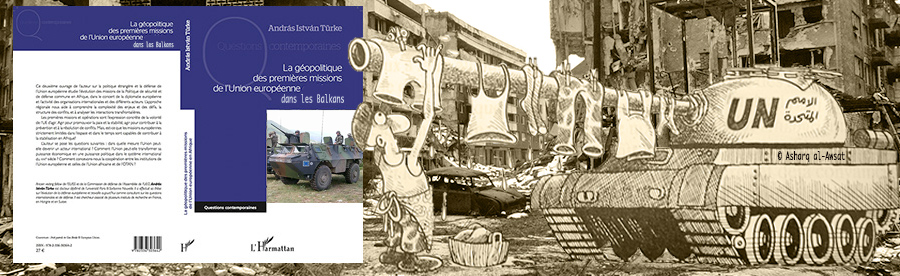
We are looking for sponsors for the English translation of these books, please contact turkeandras(at)gmail(dot)com