
You are here
Feed aggregator
Recognition of femicide in the EU
Written by Ionel Zamfir
Over a thousand women are killed in the EU each year in circumstances that often point to a gender-related motive, and the perpetrators are most commonly intimate partners or family members. Data collected by a number of EU Member States on female homicides show no consistent downward trend, despite a range of measures aimed at combating gender-based violence.
Widely publicised cases of femicide have highlighted systemic failures in prevention and victim protection, and have driven legislative reforms in several Member States. These include the introduction of femicide as an aggravating circumstance alongside measures on prevention, victim support and data collection.
Experts recommend avoiding an exclusive focus on harsher criminal penalties and instead implementing a comprehensive approach that addresses the root causes of femicide, strengthening prevention efforts, improving victim protection, enhancing data collection and raising public awareness.
At the EU level, existing legislative and non-legislative measures address gender-based violence more broadly but do not specifically recognise femicide as a distinct crime. The European Parliament has therefore urged for its formal recognition at EU level, arguing that this would improve legal clarity, data comparability and the effectiveness of prevention and protection measures.
Read the complete briefing on ‘Recognition of femicide in the EU‘ in the Think Tank pages of the European Parliament.
Categories: European Union, Swiss News
CSALNAPGYAK Szolnokon
Családi napra készül a szolnoki helikopterbázis. Más irányú elfoglaltság miatt a LégierőBlogger sajnos nem lehet jelen, de jöjjön itt néhány impresszió a "sima hétköznapba oltott" gyakorlásról.
Zlín felszállás 20-as szerint
Indul is az első forduló.
Megy a munka Szolnokon, a flotta fele egyszerre a levegőben.
A javarészt oldalszeles időben ez éppen egy irányváltást követő bejövetel a 02-esre.
A 21-es messze járt...
...és szintén észak-északkeletre száll le...
...a feladata minden bizonnyal lérak célrepülés lehetett. (Találat az internetről "Shahed drone track last horizontal turn offset" keresésre: "...the onboard inertial navigation system (INS) is pre-programmed to execute this final correction at a distance of roughly 1,5 to 3 km before impact, adjusting to the final heading").
A természet bezzeg tökéletesen teszi a dolgát: ez a nyúl sem fog sokáig ezen a hedingen ugrabugrálni.
Mindeközben a szomszédban.
Egy járatgép és az évszakra jellemző növényi pihék társaságában a térképező Zrínyi Gyémánt.
A közelben úgy kétszer olyan magasról egy igazi civil is dolgozott ugyanakkor.
Zlín-trükk Családi Napra 1.: rózsa oldalról
Zlín-trükk Családi Napra 2.: oszolj szemből.
Persze mindannyian tudjuk, hogy az igazi aktualitást az MH utolsó szovjet repülőeszközeinek közelgő leállása jelenti. Itt Rubik kötelékvezér indul 20-as irányba
A 702-es utolsó mohikán kedden még 'Szoboszlón ugratott, valszeg utoljára.
Elöl a legvaskosabb szappantartó.
Már az alak elárulja, hogy ebbe férnek.
A karcsúsági versenyt - meg nagyjából minden mást is - nyerhetik a sivatagi macskától származtatott kísérők.
Haslövés csillogó fegyvertartókkal, melyeknek poszt 2017-es védett korban már nem jutott babér, csak a balnak ejerács.
Előttem az elődöm, Mi-17-H225M földközeli visszatérés a bázisra.
Az aszimmetrikus hasi felségjel-felfestés elárulja, hogy a 17-es SAR gép.
Eje ugrik szabadot egy másik okostojásból...
...a bázis lobogójával.
X-aktáinkból 1. (szuszpektid roteri ving parafojl vid báket end fleggd etlentisziszt ettecsd)
X-aktáinkból 2. (disztinkt kéziz of eronótikl szling lód kerridzs: fleggd hjuman báj parafojl glájd víikl ebáv end báket báj roteri ving páerd víikl belo.
Dolgozik a Bambi.
Üresen hasít a szer.
A fától is látszik, hogy a tűzoltás a közepes helikopterprogram eddigi legfontosabb megtérülése, a kőevőkről nem beszélve.
Bezzeg a SOF-os egyéni bemutató!
Természetes transzparencia: kócsag a röntgenben.
Zord
Categories: Biztonságpolitika, Európai Unió : hírek magyarul
United Nations Mission in South Sudan in the Context of Changing Security and Regional Dynamics
Photos


jQuery(document).ready(function($){$("#isloaderfor-njqugo").fadeOut(300, function () { $(".pagwrap-njqugo").fadeIn(300);});});
IPI and the Stimson Center, in partnership with the Permanent Mission of the Kingdom of the Netherlands to the UN and the Permanent Mission of Denmark to the UN, co-organized a workshop on “UNMISS in the Context of Changing Security and Regional Dynamics” on May 26th. This event is part of a series of workshops, “Missions and Mandates: Toward Adaptable, Nimble, and Effective Responses,” that aim to support the sustained engagement of UN member states on how to make peace operations mandates more adaptable.
The workshop reflected on the mandate of UNMISS, which is set for renewal on April 30, in the context of heightened political and security tensions in South Sudan, while also assessing how broader regional insecurities are shaping dynamics within the country, including the ramifications of the war in Sudan. The situation in South Sudan requires urgent action: escalating violence across multiple states, political detentions in breach of the peace agreement, and a humanitarian crisis worsened by the war in Sudan. More than 1.3 million people have crossed into South Sudan from Sudan since 2023. Over half the country’s population faces food insecurity.
Under the Chatham House Rule, today’s conversation brought together UN and AU representatives as well as, Member States, and independent experts to address critical questions concerning the practical implications of the renewed mandate and the ways in which regional dynamics shape the prospects for stability in South Sudan.
The post United Nations Mission in South Sudan in the Context of Changing Security and Regional Dynamics appeared first on International Peace Institute.
Categories: Diplomacy & Defense Think Tank News, Swiss News
DR Congo seek World Cup ticket refunds after Ebola outbreak
DR Congo fans hoping to watch their side's return to the World Cup face a major hurdle as the US imposes travel restrictions following the latest Ebola outbreak.
Categories: Africa
Rethinking Arctic governance: a case for the EU’s revised Arctic policy
This policy brief analyses how the EU may strengthen its role and advance its legitimacy in the Arctic when redesigning its priorities and partnerships, and how, in the process, it may contribute to the redesigning of established institutions and policies to fill the vacuum left by the Arctic Council. We will first provide a brief overview of the tensions inherent in different
types of cooperation approaches, the role that the EU wishes to play in the Arctic and external expectations that concern the EU’s priorities in the Arctic. Second, we discuss how these tensions affect the EU’s legitimacy as a cooperation partner and assess factors that strengthen and weaken the EU’s perception as an actor that needs to engage in the Arctic to avoid being excluded from policy negotiations of great relevance for the EU’s short-term, mid-term and long-term priorities. Third, we conclude with how EU ambitions have
changed and how it can strengthen its legitimacy as a cooperation partner by emphasizing the human dimension of security in the Arctic.
Categories: Afrique, Diplomacy & Defense Think Tank News
Rethinking Arctic governance: a case for the EU’s revised Arctic policy
This policy brief analyses how the EU may strengthen its role and advance its legitimacy in the Arctic when redesigning its priorities and partnerships, and how, in the process, it may contribute to the redesigning of established institutions and policies to fill the vacuum left by the Arctic Council. We will first provide a brief overview of the tensions inherent in different
types of cooperation approaches, the role that the EU wishes to play in the Arctic and external expectations that concern the EU’s priorities in the Arctic. Second, we discuss how these tensions affect the EU’s legitimacy as a cooperation partner and assess factors that strengthen and weaken the EU’s perception as an actor that needs to engage in the Arctic to avoid being excluded from policy negotiations of great relevance for the EU’s short-term, mid-term and long-term priorities. Third, we conclude with how EU ambitions have
changed and how it can strengthen its legitimacy as a cooperation partner by emphasizing the human dimension of security in the Arctic.
Categories: Diplomacy & Defense Think Tank News, European Union
Rethinking Arctic governance: a case for the EU’s revised Arctic policy
This policy brief analyses how the EU may strengthen its role and advance its legitimacy in the Arctic when redesigning its priorities and partnerships, and how, in the process, it may contribute to the redesigning of established institutions and policies to fill the vacuum left by the Arctic Council. We will first provide a brief overview of the tensions inherent in different
types of cooperation approaches, the role that the EU wishes to play in the Arctic and external expectations that concern the EU’s priorities in the Arctic. Second, we discuss how these tensions affect the EU’s legitimacy as a cooperation partner and assess factors that strengthen and weaken the EU’s perception as an actor that needs to engage in the Arctic to avoid being excluded from policy negotiations of great relevance for the EU’s short-term, mid-term and long-term priorities. Third, we conclude with how EU ambitions have
changed and how it can strengthen its legitimacy as a cooperation partner by emphasizing the human dimension of security in the Arctic.
Categories: Diplomacy & Defense Think Tank News, European Union
DIW-Konjunkturbarometer Mai: Fast zurück auf Los
Das Konjunkturbarometer des Deutschen Instituts für Wirtschaftsforschung (DIW Berlin) fällt im Mai deutlich: Mit 94,8 Punkten liegt es nach zwischenzeitlich deutlich höheren Werten nun wieder auf dem Stand von Januar. Die neutrale 100-Punkte-Marke, die ein durchschnittliches Wachstum der deutschen ...
Categories: Africa, Diplomacy & Defense Think Tank News
La RD Congo demande le remboursement de ses billets achetés pour la Coupe du monde
Les supporters de la RD Congo qui souhaitent assister au retour de leur équipe à la Coupe du monde sont confrontés à un obstacle majeur alors que les États-Unis imposent des restrictions de voyage suite à la dernière épidémie d'Ebola.
Categories: Afrique, Swiss News
How Europe’s Waste Could Supply Over Half of Critical Material Demand – Report
Vast amounts of valuable materials buried inside old batteries, electronic waste, and end-of-life vehicles should be collected for critical materials. Credit: FutuRaM
By Umar Manzoor Shah
SRINAGAR, India, May 27 2026 (IPS)
Europe’s growing mountain of waste could become one of its most important sources of critical raw materials, according to a major new report that warns of rising geopolitical risks and growing global competition for minerals needed in the green and digital economy.
The report, released by the Horizon Europe-funded FutuRaM project, says Europe’s “urban mine” now contains vast amounts of valuable materials buried inside old batteries, electronic waste, end-of-life vehicles, construction debris and dismantled wind turbines.
Researchers behind the project say Europe must urgently improve recycling, recovery and tracking systems if it wants to reduce dependence on imported critical raw materials, many of which are dominated by a handful of countries.
“The FutuRaM project represents a substantial step forward in strengthening the knowledge base on secondary raw materials and CRMs within Europe’s urban mine,” the report states.
Kees Baldé, Senior Scientific Specialist, Sustainable Cycles at the United Nations Institute for Training and Research (UNITAR), told Inter Press Service (IPS) in an exclusive interview that the research mapped 42 Carbon-based Conductive Materials [CMS] in seven waste streams. It shows that the current substitution potential for primary materials in the final consumption of CRMs is a maximum of 27% overall.
“By 2050, the substitution potential could increase to over 50%. At the same time, 10 more than now (so, up to 24 different CRMs) could be sourced from the analysed waste streams. The new ones include rare earth elements found for instance in permanent magnets, such as Nd, Dy, Tb, Sm and Pr, but also Li, Co and Ce in batteries,” Baldé said.
The study comes at a time when European governments are racing to secure supplies of lithium, cobalt, nickel and rare earth elements used in electric vehicle batteries, wind turbines, solar panels and digital technologies.
Researchers said the project was developed amid “increasing geopolitical uncertainty, accelerating energy and digital transitions, and growing concerns regarding the security of supply of critical raw materials.”
When asked how vulnerable Europe is today when it comes to materials like lithium, cobalt and rare earth elements, Baldé said that most of them are sourced outside of the EU and supplied from single or only a few countries.
“Yet, they are critical for digitisation, renewable energy technology, and the military. Hence, they are on the critical raw material lists from the EU, and make the EU vulnerable.”
The report covers seven major waste streams, including waste batteries, construction and demolition waste, end-of-life vehicles, mining waste, slags and ashes, waste electrical and electronic equipment, and dismantled wind turbines.
One of the project’s key findings is that Europe still loses significant amounts of valuable materials because of weak collection systems, fragmented reporting rules and illegal waste flows.
“Persistent fragmentation of waste classifications, reporting systems and end-of-waste criteria across EU Member States undermines the functioning of the single market for secondary raw materials,” the report warns.
According to Baldé, the best sectors in terms of highest recovery rates and lowest tonnages of losses in tonnages are end-of-life vehicles and construction and demolition waste.
“Both have high collection rates and separate collection for some CRM rich components, such as Al and Cu. Despite this, there are still losses for several CRMs, such as rare earth metals, as indicated above. Biggest weaknesses in terms of tonnages of losses are industrial residues, such as slags and ashes,” Baldé said.
Using long-term modelling up to 2050, the project examined how different policies and recycling systems could affect future material recovery. Researchers developed three scenarios called business as usual, recovery, and circularity.
The report says improved recovery systems could significantly increase the amount of usable materials extracted from waste streams. Researchers also created a new recovery model that distinguishes between raw materials hidden inside waste and the materials that can actually be recovered after treatment.
Waste electrical and electronic equipment, commonly known as ‘e-waste’, has emerged as one of the most important future sources of valuable minerals. The study examined critical materials, including silver, gold, cobalt, gallium, neodymium, palladium and tungsten, found in electronic products.
Construction and demolition waste has one of the highest rates of waste recovery. Credit: FutuRaM
The project also studied batteries in detail, focusing on materials such as lithium, cobalt, nickel, graphite and copper. Researchers looked at both current recycling technologies and future recovery systems.
At the same time, the report acknowledged major data gaps and uncertainty surrounding Europe’s waste streams.
“A comprehensive assessment of data quality is essential for ensuring that the conclusions and recommendations developed in FutuRaM are scientifically sound and fit for policymaking,” the report said.
Researchers noted that many datasets remain incomplete, commercially sensitive or inconsistent between countries. In some cases, industry data could only be used after anonymisation due to confidentiality concerns.
To improve transparency, the project developed a data quality framework based on six factors, including validity, accuracy, consistency, timeliness and completeness.
The project’s influence has already reached European policymakers. According to the report, FutuRaM worked closely with the European Commission and the Joint Research Centre to support implementation of the EU Critical Raw Materials Act.
“FutuRaM has provided data and intelligence to assist Member States in complying with this Article by identifying products, components and waste streams containing relevant CRMs,” the report states.
Researchers also carried out 20 case studies using a United Nations-based classification framework known as UNFC to assess the viability of recovery projects.
The project has drawn global attention beyond Europe. According to the report, FutuRaM findings were presented at 132 external events and conferences in countries including Singapore, Brazil, Thailand, Canada, Japan, Kenya and Panama.
A related report published for International E-Waste Day 2025 was picked up by almost 900 online news outlets across 55 countries and published in 27 languages.
“All actors that have access to and handle e-waste should report their activities for tracing purposes, while enforcement mechanisms and the role of authorities should be enhanced,” Pascal Leroy, Director General of the WEEE Forum, an international association representing global electronic waste producer responsibility organisations, told IPS News in an exclusive interview.
He said that we should also improve the infrastructure for e-waste management, along with making greater investments in relevant technologies.
“Additionally, awareness campaigns and proper funding are essential, and the Urban Mine Platform should be institutionalised. Finally, adherence to treatment standards must be made legally binding,” he said.
The researchers argue that Europe now needs stronger laws, standardised reporting systems and better recycling infrastructure to turn waste into a reliable strategic resource.
Among its recommendations, the report has pitched for a “harmonised European framework for classification, reporting, and life cycle tracking of secondary raw materials”.
It also urges European governments to strengthen enforcement against illegal waste exports, improve market surveillance and invest in recycling capacity and digital reporting systems.
“Supply from EU-recycling and demand from the EU-manufacturing industry need to be matched together,” Baldé said.
IPS UN Bureau Report
Follow @IPSNewsUNBureau
!function(d,s,id){var js,fjs=d.getElementsByTagName(s)[0],p=/^http:/.test(d.location)?'http':'https';if(!d.getElementById(id)){js=d.createElement(s);js.id=id;js.src=p+'://platform.twitter.com/widgets.js';fjs.parentNode.insertBefore(js,fjs);}}(document, 'script', 'twitter-wjs');
Multimodal digital mobility services
Written by Monika Kiss
Multimodal digital mobility services (MDMS) are digital platforms that integrate transport modes such as rail, buses, bikes, taxis and car-sharing into a single interface for planning, booking and payment. MDMS aim to improve convenience, journey choice and cost efficiency, while supporting more sustainable and integrated mobility across Europe.
The EU considers MDMS to be a strategic component of the Green Deal and the sustainable and smart mobility strategy to reduce emissions and strengthen the transport Single Market. Key policy tools include the Directive on Intelligent Transport Systems (ITS), the European mobility data space, and initiatives promoting interoperable data and seamless multimodal travel. Major policy debates focus on data sharing, interoperability, integrated ticketing, passenger rights, liability for disruptions, and platform governance. The Multimodal Passenger Mobility Forum highlighted challenges around FRAND (fair, reasonable and non-discriminatory) principles, self-preferencing, enforcement, data protection and data quality requirements. A Eurobarometer survey shows that many users still find multimodal booking difficult due to fragmented systems, poor connections, higher costs and uncertainty about transfers.
Stakeholders are divided, with transport operators resisting mandatory data and ticketing access, while digital platforms support stronger interoperability and openness. Consumer and environmental groups generally support MDMS for improving transparency, competition, and shifting demand towards low-emission transport. Researchers consider MDMS promising but not fully mature, pointing to persistent issues in interoperability, technical standards, cybersecurity, and governance. Overall, effective MDMS deployment requires balanced regulation, harmonised standards, investment in infrastructure, and strong public-private coordination.
Read the complete briefing on ‘Multimodal digital mobility services‘ in the Think Tank pages of the European Parliament.
Categories: European Union, Swiss News
Kosovo : les partis serbes d'opposition s'unissent et veulent peser aux élections
C'est une première. Les partis serbes d'opposition du Kosovo se sont unis pour les élections législatives anticipées du 7 juin, espérant ainsi faire entendre une « voix différente », indépendante de la politique officielle de Pristina et de Belgrade.
- Articles / Kosovo, Radio Slobodna Evropa, Populations, minorités et migrations, Politique, Tensions Nord Kosovo, Kosovo Vetëvendosje
Categories: Balkans Occidentaux, Biztonságpolitika
Journée Molière/ Molijerovi dani
Chaque printemps, Les Journées Molière offrent des espaces privilégiés de rencontres avec des auteurs francophones contemporains, des traducteurs, des éditeurs et bien sûr… les lecteurs.
Cette année, la 18ème édition sera placée sous le signe des biographies des grandes figures du XXème siècle. À cette occasion, nous évoquerons Jacques Derrida, Sándor, Ferenczi, ou encore Hergé, nous parlerons des aventures de Tintin, tout cela grâce à la participation du prolifique Benoît Peeters, (…)
Categories: Balkans Occidentaux, Swiss News
Journée Molière/ Molijerovi dani
Chaque printemps, Les Journées Molière offrent des espaces privilégiés de rencontres avec des auteurs francophones contemporains, des traducteurs, des éditeurs et bien sûr… les lecteurs.
Cette année, la 18ème édition sera placée sous le signe des biographies des grandes figures du XXème siècle. À cette occasion, nous évoquerons Jacques Derrida, Sándor, Ferenczi, ou encore Hergé, nous parlerons des aventures de Tintin, tout cela grâce à la participation du prolifique Benoît Peeters, (…)
Categories: Balkans Occidentaux, European Union
PSG's Hakimi in Morocco squad despite injury
Morocco captain Achraf Hakimi is named in the Atlas Lions' World Cup squad despite the injury he sustained in the Champions League semi-finals against Bayern Munich.
Categories: Africa
Nigerian winger Udoh dies aged 21
Southampton FC and Royal Antwerp announce the death of former academy player Victor Udoh at the age of 21.
Categories: Africa, Swiss News
Minutes - Wednesday, 28 January 2026 - Thursday, 29 January 2026 - PE784.183v01-00 - Committee on Foreign Affairs
Source : © European Union, 2026 - EP
Categories: Europäische Union
Défoncer la finance néolibérale : principes et méthodes
Utiliser la crise financière pour faire de la politique a pour sens d'abattre la finance néolibérale. Le degré auquel cette dernière a solidifié ses arguments justificateurs est impressionnant. Il faudra ne se laisser impressionner par aucun. Il va falloir lui rouler dessus, et sans le moindre égard.
- La pompe à phynance / Économie, Finance
Categories: Défense, European Union
ENTWURF EINES BERICHTS über hybride Kriegsführung und den Schutz der territorialen Unversehrtheit und der kritischen Sicherheits- und Verteidigungsinfrastruktur der EU - PE788.818v01-00
ENTWURF EINES BERICHTS über hybride Kriegsführung und den Schutz der territorialen Unversehrtheit und der kritischen Sicherheits- und Verteidigungsinfrastruktur der EU
Ausschuss für Sicherheit und Verteidigung
Rasa Juknevičienė
Quelle : © Europäische Union, 2026 - EP
Ausschuss für Sicherheit und Verteidigung
Rasa Juknevičienė
Quelle : © Europäische Union, 2026 - EP
Categories: Europäische Union, Swiss News
DRAFT REPORT Towards an EU strategy to protect and strengthen the international justice system and its institutions, mechanisms and partners - PE787.829v01-00
DRAFT REPORT Towards an EU strategy to protect and strengthen the international justice system and its institutions, mechanisms and partners
Committee on Foreign Affairs
Mounir Satouri
Source : © European Union, 2026 - EP
Committee on Foreign Affairs
Mounir Satouri
Source : © European Union, 2026 - EP
Categories: Europäische Union
Pages
the old site is here

© 2012-2015 Europa Varietas Foundation © 2015-2020 Europa Varietas Association
www.europavarietas.org | info(@)europavarietas(dot)org | Switzerland
This is a GDPR ready site
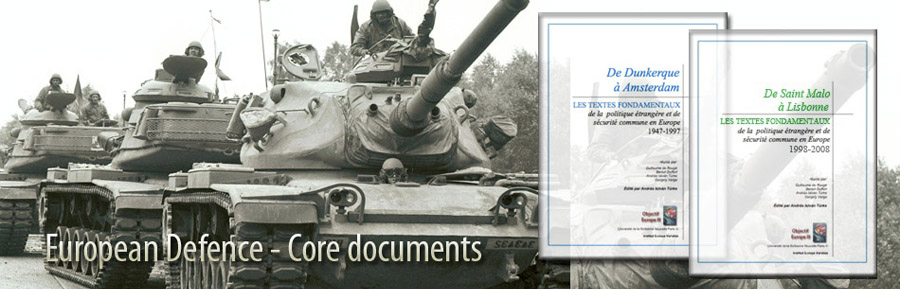
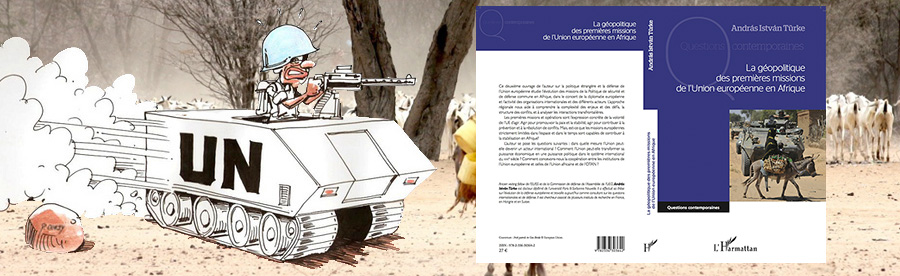
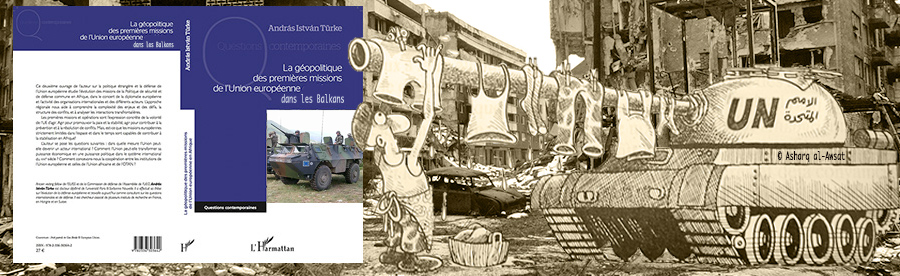
We are looking for sponsors for the English translation of these books, please contact turkeandras(at)gmail(dot)com