
You are here
Feed aggregator
From Seed to Canopy: How a GEF-Funded Smallholder Project is Restoring the Environment, Building Livelihoods
Alice Onyango walks through the trees on her farm. She has been an active participant of My Farm Trees, a farmer- and community-led tree-based project aimed at the restoration of degraded landscapes. Credit: Wilson Odhiambo/IPS
By Wilson Odhiambo
NAIROBI, May 26 2026 (IPS)
As 52-year-old Alice Onyango walks through her farm in Siaya county, Kenya, you can tell she is proud of her trees, as some tower over her, providing her with shade, while others seem ready to provide her with fruit for the market.
Onyango has been planting trees on her farm for over a decade, and thanks to a project dubbed ‘My Farm Trees’, she realised just how important her work is to the environment while also managing to earn a couple of shillings to help supplement her livelihood.
“I plant different types of trees on my farm, most of which are fruit trees such as avocados, oranges, mangoes, and papaya, which I can harvest and sell in the market. I also have some trees that I plant for timber and even firewood,” Onyango told Inter Press Service (IPS).
“I have been doing this for many years as my source of livelihood and it was not until recently that my neighbour told me about My Farm Trees and how it can help me better improve on my farm while also earning some token,” said Onyango.
As the world works to find lasting solutions to safeguarding the ever-dwindling forest ecosystems and fighting climate change, smallholder farmers across the globe and especially in Africa can now participate and be recognised in the effort, thanks to an environmental restoration project, My Farm Trees.
My Farm Trees is a digital platform developed by the Alliance of Biodiversity International and CIAT with the aim of restoring the environment by encouraging smallholder farmers to take up tree planting alongside their daily activities. By doing this, local communities are able to promote climate change mitigation while also improving their lives through the initiative.
Piloted in Kenya and Cameroon, the project has already supported the restoration of thousands of hectares of once degraded land and trained community members and is now scaling globally, giving smallholder farmers essential tools and knowledge for effective, science-based landscape restoration.
The platform works by combining capacity building, monitoring, verification and providing incentives to empower smallholder farmers to take up tree-based restoration projects. In return, the farmers are rewarded with both short-term benefits (direct digital payments enabled by the platform) and, eventually, the long-term benefits of restored landscapes for improved agricultural productivity, water regulation and climate resilience.
“My Farm Trees was designed to help with environmental restoration by encouraging smallholder farmers to plant trees and in return they get to access financial benefits and even get recognised for their contribution to climate change mitigation,” said Fidel Chiriboga, project scaling lead for usage, partnerships, collaborations, impact, and development.
“Apart from the financial incentives, the farmers also get to learn the importance of having these trees (especially the native tree species) in their environment and how they can help with their agricultural activities,’’ Chiriboga said.
In Kenya, the project is currently being implemented in Siaya, Laikipia and Turkana counties, which are regarded as areas with limited tree cover.
This grassroots initiative aligns closely with Kenya’s policy direction, where the country has in place a national ecosystem restoration strategy (2023–2032) that provides a clear framework for restoring degraded landscapes while strengthening community resilience and livelihoods. The strategy prioritises tree growing alongside improved governance and inclusive economic models that place communities at the centre of restoration efforts.
Siaya for instance, currently ranks 44 out of 47 counties, with an estimated 5.26% tree cover, compared to the national average of 12.13%.
Under national targets, Siaya is expected to plant at least 14 million trees per year over the next decade, according to the Siaya county commissioner.
Cameroonian participants of the My Farm Trees project received saplings for planting on their farms. The digital project aims to improve both the environment and the livelihoods of smallholder farmers. Credit: Marius Ekeu/My Farm Trees
In Cameroon, My Farm Trees has been able to attract thousands of farmers from as young as 18 to as old as 75. These include farmers from the West, Central and extreme North regions of Cameroon.
According to Maruius Ekeu, the project manager, in Cameroon, more than 145,000 seedlings from 60 tree species (45 native to Cameroon) were planted to restore 1,806 hectares of degraded lands, and the areas restored belong to 2,527 individual farmers (21% women), 315 sacred forests and 111 primary schools.
A total of $145,000 was paid through the mobile money account linked to MFT to purchase seeds and seedlings. In addition, over $150,000 was transferred as economic incentives to individual farmers as a reward for the survival of seedlings planted on their farms.
“The farmers were paid for tree maintenance between $22 and $200 per monitoring, but we have yet to carry out a survey to know what they did with the money paid to them, though most seem to prefer using it to expand their tree farms,” said Ekeu.
“On average seed collectors earned between $100 and $3,000 depending on collection efforts (e.g. tree species, seed quantity, and seed quality). Tree nursery managers earned between $200 and $22,000 depending on the number of seedlings produced and their price (varies per species),” Ekeu said.
Alice Onyango shows off a sewing machine she bought with the proceeds of the My Farm Trees project. Credit: Wilson Odhiambo/IPS
As for Onyango, she used part of the Ksh 37000 ($285.94) she received from My Farm Trees to offset her children’s school fees and the rest to buy a sewing machine.
“As my family’s breadwinner, I bought the sewing machine to help me make extra money mending clothes while I am not selling fruits or timber,” Onyango said.
Given that most of the farmers involved in this project come from rural areas which are characterised by poor internet connectivity and limited access to smartphones, the project’s app has been designed in such a way that it can be used offline.
“Farmers do not need to be connected to the internet when using the app, as it allows them to collect data while offline, which they can then share with us later on when they get access to the internet,” said Francis Oduor, project manager, Kenya.
“We also train and provide select locals (village-based assistants) with smartphones fitted with the app, and they can go around using them to help us monitor and keep track of the farmers who have registered with us but lack smartphones. A farmer only really needs to have an identification number and a registered phone number where they can receive their payments,” Oduor said.
Oduor added that the money the farmers received has been used for different purposes that range from expanding farms, buying farm inputs, paying school fees, building houses and even starting other income-generating ventures.
While planting trees is the main objective of the project, My Farm Trees emphasises planting native trees, especially those that are almost extinct in certain areas. Farmers who plant native trees receive more money compared to those who plant exotic trees. Fruit trees also fetch more earnings for the farmers compared to those planted for timber purposes.
And farmers who grow trees in drought-prone areas such as Turkana and Laikipia also receive more compensation as compared to those who grow trees in areas that receive adequate rainfall such as Siaya.
The 2-million-dollar project was funded by the Global Environment Facility (GEF) and implemented by the International Union for Conservation of Nature (IUCN).
“The My Farm Trees project is a great example of GEF’s high-risk–high-reward strategy, whereby a seed funding of $2 million catalyses investments and contributions by many other partners. Eventually, the goal is to upscale the new technology and approach to other countries and to achieve sustainable funding through crowdfunding approaches,” said Ulrich Apel, Senior Environmental Specialist at the GEF.
The My Farm Trees project is a great example of GEF’s high-risk–high-reward strategy, whereby a seed funding of $2 million catalyses investments and contributions by many other partners.‘’The GEF role as a financial mechanism for the global environment is to provide catalytic funding for innovative projects that test cutting-edge technologies and solutions to achieve positive environmental outcomes,” Apel said.
The International Union for Conservation of Nature (IUCN) serves as the GEF implementing agency for My Farm Trees. It designs the overall project and oversees delivery and coordination, working with the lead executing partner, the Alliance of Biodiversity International and CIAT, governments, farmers, and other partners.
“The project has been a resounding success, and IUCN and partners are presently working to develop new projects based on this approach to support global and national goals on biodiversity conservation, climate, food security and more,” said Joshua Schneck, Global Initiatives Portfolio Manager, IUCN.
According to Dr Shem Kuyah, a Senior Lecturer from the department of Botany, Jomo Kenyatta University of Agriculture and Technology and one of Kenya’s leading researchers in agroforestry, agroforestry has received much attention globally and especially in Africa because of its multiple benefits that help address the current challenges of climate change, land use and livelihoods.
Kuyah said that agroforestry has both protective and productive benefits, which allow land users/practitioners to fight environmental challenges without sacrificing or forfeiting livelihoods. Currently, the challenges of climate change, land use change and changing livelihoods require multifunctional strategies, which makes agroforestry important.
Kuyah praised My Farm Trees, stating that both incentives and training help to mitigate the long waiting period that it takes to realise the benefits of agroforestry and also maximise the benefits of agroforestry and reduce trade-offs by planting and managing the right tree in the right place for the right purpose.
“The best way to implement agroforestry is to contextualise the practice to local conditions, provide support (e.g., incentives) and training for farmers, and develop the agroforestry value chain,” Kuyah said.
“In terms of contextualising agroforestry, I would work with farmers to identify their needs and co-create options that are locally relevant. The support may help absorb some of the cost while the training may focus on helping farmers integrate agroforestry with other farm enterprises that provide short-term benefits.”
Note: The Eighth Global Environment Facility Assembly will be held from May 30 to June 6, 2026, in Samarkand, Uzbekistan.
This feature is published with the support of the GEF. IPS is solely responsible for the editorial content, and it does not necessarily reflect the views of the GEF.
IPS UN Bureau Report
Follow @IPSNewsUNBureau
!function(d,s,id){var js,fjs=d.getElementsByTagName(s)[0],p=/^http:/.test(d.location)?'http':'https';if(!d.getElementById(id)){js=d.createElement(s);js.id=id;js.src=p+'://platform.twitter.com/widgets.js';fjs.parentNode.insertBefore(js,fjs);}}(document, 'script', 'twitter-wjs');
Related Articles
- Brazil’s Indigenous Communities Receive $9M in GEF Funding to Protect Lands, Traditions Under Threat
- Ambitious Great Green Wall Shows Slow, Steady Progress in Strengthening Landscapes, Improving Livelihoods
- Cleaning Up the Fields: Across Africa and Asia GEF is Helping Farmers Rewrite Their Pesticide Story
Categories: Africa, Europäische Union
Protokoll - Dienstag, 14. April 2026 - PE787.643v01-00 - Ausschuss für Sicherheit und Verteidigung
Quelle : © Europäische Union, 2026 - EP
Categories: Europäische Union, Swiss News
ÄNDERUNGSANTRÄGE - Proposal for a Regulation of the European Parliament and of the Council establishing the European Fund for economic, social and territorial cohesion, agriculture and rural, fisheries and maritime, prosperity and security for the...
ÄNDERUNGSANTRÄGE - Proposal for a Regulation of the European Parliament and of the Council establishing the European Fund for economic, social and territorial cohesion, agriculture and rural, fisheries and maritime, prosperity and security for the period 2028-2034 and amending Regulation (EU) 2023/955 and Regulation (EU, Euratom) 2024/2509
Ausschuss für Sicherheit und Verteidigung
Ana Catarina Mendes
Quelle : © Europäische Union, 2026 - EP
Ausschuss für Sicherheit und Verteidigung
Ana Catarina Mendes
Quelle : © Europäische Union, 2026 - EP
Categories: Europäische Union, Swiss News
Developing Countries Feel Squeeze from Lower Natural Resource Revenue & Falling Foreign Aid
Credit: Derek Hudson/Getty Images. Source: International Monetary Fund (IMF)
By Mario Mansour and Fayçal Sawadogo
WASHINGTON DC, May 26 2026 (IPS)
Developing countries face major difficulties as income from natural resource extraction industries decreases and wealthier nations reduce their aid.
Nontax revenue from natural resources extraction and foreign aid grants for general spending have fallen by a combined 3.8 percent of gross domestic product since 2000, according to the latest annual update of the IMF’s World Revenue Longitudinal Database.
Gains from tax collection since then amounted to just 2.6 percent, offsetting only two-thirds of the decline, our unique tally of detailed public revenue data shows.
The Chart of the Week shows that the decrease in proceeds from nontax extractive revenue was the biggest driver of the drop for both low-income developing countries and emerging market economies.
These revenues are generally what governments earn from industries like oil, gas, and mining—such as royalties, profit sharing, and dividends from state-owned enterprises. Declining foreign aid grants for general spending also contributed to lower revenues.
Closing the gap often requires collecting more tax revenue, and affected countries won’t be able to deliver on their economic development goals without doing so. To succeed, they need sustained investment in domestic tax policy and tax administration, supported by effective institutions to underpin them.
The IMF supports member countries through its capacity development efforts—customized technical assistance and training services, often delivered through collaboration with donor countries and other international organizations.
Capacity development helps developing countries build expertise and policy frameworks to improve tax systems and institutions. It also reduces dependence on volatile and declining revenues, such as from extractive industries and foreign support.
Helping developing countries with this work, known as domestic revenue mobilization, contributes to fiscal resilience, which ultimately benefits global economic growth.
Evaluating how governments raise more reliable, sustainable revenue from within the economy requires high-quality granular data. Our database tracks decades of tax and nontax revenue consistently across 195 economies using data provided by our members.
The database is also a unique resource for researchers, policymakers, and development practitioners seeking to analyze revenue trends, benchmark performance, and identify reform priorities.
Mario Mansour & Fayçal Sawadogo, International Monetary Fund
IPS UN Bureau
Follow @IPSNewsUNBureau
!function(d,s,id){var js,fjs=d.getElementsByTagName(s)[0],p=/^http:/.test(d.location)?'http':'https';if(!d.getElementById(id)){js=d.createElement(s);js.id=id;js.src=p+'://platform.twitter.com/widgets.js';fjs.parentNode.insertBefore(js,fjs);}}(document, 'script', 'twitter-wjs');
Categories: Africa, Europäische Union
Des avions et des drones militaires américains localisés près de Cuba
Les données de suivi montrent plusieurs vols effectués par des avions de reconnaissance et des drones de l'US Navy au cours de la semaine dernière.
Categories: Afrique, Swiss News
MAGYAROK A BOEING 747-ESEN, 3/1 RÉSZ
A kétezres évek közepén, elsősorban a nemzeti légitársaságnál tapasztalt hangulat miatt már a fiatalabb, kisebb tapasztalattal rendelkező pilótageneráció is szétnézett a nagyvilágban, előrelépési lehetőség után kutatva. Hasonlóképpen gondolkodott Szentgyörgyi Dezső is, aki 2001 óta repült a Malév Boeing 737-es első tisztjeként. A lehetőségek között felbukkant a magyar pilóták által akkor már jól ismert Tajvan és a Boeing 747-es. Az ikonikus négyhajtóművesen repült magyarok sorát Szentgyörgyi Dezső történetével folytatom.
Az immár ötvenes évei elején járó, tapasztalt Airbus és Boeing pilótával 2022 tavaszán abból az alkalomból beszélgettem, hogy akkoriban csatlakozott a honvédség kecskeméti szállítórepülő századához, ahol A319-esen folytatta pályafutását. Akkor felidéztük a nemzeti légitársaságnál, két diszkont légitársaságnál, és egy közel-keleti cégnél eltöltött éveket illetve érintettük a Boeing 747-es első tisztként átélt élményeket is. Sorozatomba illesztve, most ez utóbbi időszakot tekintjük át részletesebben.
The spread of AI companions and the challenges they generate
Written by Mar Negreiro with Öykü Dilara Anaç
AI companions are chatbots powered by large language models (LLMs) designed for personalised, emotionally engaging interactions. The popularity of AI companion platforms, such as Character.AI and Replika, has grown rapidly in recent years. These systems interact in ways that closely resemble human relationships, allowing users to customise their companions and develop strong emotional attachments. While some of the challenges they pose overlap with those associated with generic AI chatbots, AI companions raise additional concerns.
Children are particularly vulnerable, with reports of exposure to sexualised conversations and prompts to engage in self-harm or suicide, highlighting the need for stronger safeguards. However, to date, few countries have put forward specific legislation for this.
The EU has no specific laws for AI companions, although existing legislative frameworks like the AI Act, the Digital Services Act and the General Data Protection Regulation may apply.
Read the complete briefing on ‘The spread of AI companions and the challenges they generate‘ in the Think Tank pages of the European Parliament.
Categories: European Union, Swiss News
ENTWURF EINER STELLUNGNAHME zu dem Bericht über den Vorschlag für eine Richtlinie des Rates zur Änderung der Richtlinie (EU) 2015/637 über Koordinierungs- und Kooperationsmaßnahmen zur Erleichterung des konsularischen Schutzes von nicht vertretenen...
ENTWURF EINER STELLUNGNAHME zu dem Bericht über den Vorschlag für eine Richtlinie des Rates zur Änderung der Richtlinie (EU) 2015/637 über Koordinierungs- und Kooperationsmaßnahmen zur Erleichterung des konsularischen Schutzes von nicht vertretenen Unionsbürgern in Drittländern und der Richtlinie (EU) 2019/997 zur Festlegung eines EU-Rückkehrausweises
Ausschuss für auswärtige Angelegenheiten
Nacho Sánchez Amor
Quelle : © Europäische Union, 2026 - EP
Ausschuss für auswärtige Angelegenheiten
Nacho Sánchez Amor
Quelle : © Europäische Union, 2026 - EP
Categories: Europäische Union
Entre les États-Unis et l'Europe, la guerre de l'énergie passe par la Bosnie-Herzégovine
C'est à cause de pressions américains que le Haut représentant Christian Schmidt aurait démissionné. En cause, le gazoduc Southern Interconnection. Ce projet à 1,5 milliard de dollars est porté par une société appartenant à des proches de Donald Trump.
- Articles / Bosnie-Herzégovine, Economie, Questions européennes, Relations internationales, Énergie Balkans, USA Balkans, Courrier des BalkansNew US Fed Policy Deepens World Stagflation
By Jomo Kwame Sundaram and Nurina Malek
KUALA LUMPUR, Malaysia, May 26 2026 (IPS)
The Federal Reserve Bank’s turn to ‘reserve management’ exposes the limited policy options still available as the US seeks to protect itself against international stagflation stemming from President Trump’s policies.
Jomo Kwame Sundaram
Ex-Duquesne Capital chairman Stanley Druckenmiller, former George Soros ‘clone’ and right-hand man, has suggested that Fed adoption of reserve management implies it is running out of policy options.Reserve management
Successive US administrations have long refused to address the roots of the worsening fiscal and debt problems.
As the US Treasury borrows ever more to continue funding federal government spending with less tax revenue, the accumulated public debt of $39 trillion now costs over a trillion dollars a year to service, even more than 2025 defence spending!
Total Fed losses since 2022 exceed $245 billion! But how does a central bank, that literally creates its own money, lose money?
The losses are blamed on the Fed paying banks over 4% interest on reserves after 2008. However, most Treasury bonds the Fed bought to fund the COVID crisis response yield only 1–2%!
This massive ‘negative carry trade’ is booked as a ‘deferred asset’. Such creative accounting implies the US is technically insolvent. But this is not a problem as long as Wall Street shapes its own narrative.
Nurina Malek
In December 2025, Fed chair Jerome Powell announced that the Fed would purchase $40 billion in Treasury bills each month. This new mode of money creation finances government debt.After over a decade of ‘quantitative easing’ (QE), which created money on a large scale, the Fed claimed it was reducing its balance sheet from 2022 to 2025 to curb inflation.
Risk diversification
Finance ministries and central banks worldwide increasingly worry about their vulnerability.
The US decision to freeze about $300 billion of Russian assets held in Western financial institutions is supported by its Western allies. Such actions have triggered broader concerns.
Threatened by the prospect of a softening bond market, the Fed turn to reserve management, which implies it has exhausted other options, including printing money.
Increasingly weaponised in recent years, the dollar is no longer trusted as a neutral reserve asset. Hence, central banks have been diversifying their heavily dollar-denominated reserve assets to reduce vulnerability.
Physical gold has been quietly acquired to change reserve portfolios. Over the past three years, non-US central banks have bought over 1,000 tons of gold annually.
Horns of dilemma
New Fed Chair Kevin Warsh has announced that reducing interest rates and shrinking the Fed’s balance sheet are his policy priorities. Both seem responsible and sensible.
Lowering rates benefits borrowers. But a smaller balance sheet implies less market intervention, requiring greater fiscal discipline and monetary credibility, both of which are desired by markets.
But Warsh’s two goals cannot be realised together in today’s US economy. Over $10 trillion in bonds are maturing and need refinancing over the coming year, as the Treasury borrows ever more to finance its faster-growing fiscal deficit.
The Fed balance sheet cannot be reduced while keeping rates low. The new Fed Chair will also have to choose between printing money and letting the bond market collapse. All his predecessors have chosen to print money.
In 2012, Jerome Powell was sceptical of QE, arguing it would never be enough. But by 2020, Fed chair Powell printed more dollars than ever before.
The Fed has long been expected to buy up Treasury bonds that private interests did not purchase. Increasing the money supply has kept the banking system liquid and depreciated the dollar, as desired by Trump 2.0.
As private investors and foreign central banks lose interest in US Treasury bonds, demand is at its weakest in decades.
Who will buy new US debt if the Fed does not buy Treasury bonds while rates remain low? Outgoing Fed chair Powell came to the rescue.
As ‘reserve management’ requires less market demand, he has given the dollar system an unexpected new lease of life without lowering interest rates, as Trump demanded.
However, the policy change will do little to reverse contractionary and inflationary pressures on the world economy, worsened by Trump’s various policies.
Oil accelerant
The Hormuz oil shock could accelerate this otherwise gradual transition. The slow energy transition away from fossil fuels has increased vulnerability.
In the last half-century, oil price hikes have raised energy costs, exacerbating inflation worldwide. In 1973, the OPEC embargo quadrupled petroleum prices overnight.
Over the following year, the gold price almost doubled. The 1979 Iranian revolution more than doubled crude oil prices, which in turn pushed gold prices even higher.
The conventional central bank response of raising rates to fight inflation could worsen stagflation, as inflation rises while economic growth slows.
Raising interest rates may check some sources of inflation, while increasing borrowing costs, squeezing investment and consumption, and hiking the costs of Treasury debt.
Interest payments on accumulated federal debt will exceed a trillion in 2026. As old debt issued during QE is refinanced at higher rates, fiscal and debt problems will accelerate.
Therefore, the Fed’s turn to reserve management is not merely a minor technical change in balance-sheet bookkeeping. It is trying to address worsening public finances as policy options run out.
IPS UN Bureau
Follow @IPSNewsUNBureau
!function(d,s,id){var js,fjs=d.getElementsByTagName(s)[0],p=/^http:/.test(d.location)?'http':'https';if(!d.getElementById(id)){js=d.createElement(s);js.id=id;js.src=p+'://platform.twitter.com/widgets.js';fjs.parentNode.insertBefore(js,fjs);}}(document, 'script', 'twitter-wjs');
Related Articles
- Central Bank Hedging Triggered Gold Fever
- World Must Pay to Make America Great Again
- Trump Wants World to Subsidise US Empire
- America First Deepens World Stagnation
- Western Finance Ruining Economies of the Rest
- US Fed- Induced World Stagnation Deepens Debt Distress
- IMF Urges Non-alignment in Second Cold War
- Weaponizing Free Trade Agreements
- SWIFT Dollar Decline
- Trade, Currency War Weapons Double-Edged
- Economic Crisis Can Trigger World War
Categories: Africa, Európai Unió : hírek magyarul
Névralgie : symptômes, causes et traitements expliqués
La douleur surgit sans prévenir — semblable à une décharge électrique qui traverse le visage ou la tête en quelques secondes. Un tel tableau clinique […]
L’article Névralgie : symptômes, causes et traitements expliqués est apparu en premier sur .
Categories: Afrique, Határon túli magyar portálok összesített hírei
Tränen, Party und Überraschung: Paris verneigt sich noch einmal vor Wawrinka
Adieu, Stan Wawrinka! Der von den Franzosen adoptierte Romand elektrisiert Roland Garros ein letztes Mal – und erhält im Gegenzug viel Liebe und eine hochemotionale Abschiedsfeier.
Categories: Afrique, Swiss News
Jazz-Gigant Miles Davis würde am 26. Mai 100 Jahre alt: Warum die Schweiz für ihn prägend war
Am 26. Mai wäre Miles Davis 100 Jahre alt geworden. Der US-Jazzgigant hielt sich regelmässig und gerne in der Schweiz auf. Vor allem Montreux mit dem weltweit bekannten Jazz Festival bot ihm dank Direktor Claude Nobs einen sicheren Hafen.
Categories: Afrique, Swiss News
Ölpreis auf Talfahrt: Jetzt müssen die Benzinpreise sinken
Trotz fallender Ölpreise bleiben die Benzinkosten in der Schweiz hoch. Ein Fass Rohöl der Sorte Brent kostet weniger als 96 Dollar, doch die Preise an den teuersten Zapfsäulen verharren bei 1.99 Franken pro Liter Bleifrei 95.
Categories: Afrique, Swiss News
Jetzt wartet der Schwitzkasten auf unsere Nati: Gebt uns noch viermal die W. Nuss, bitte!
Patent Ochsner, Jubelstürme und grandiose Leistungen. Die Nati hat die Heimweltmeisterschaft zum Volksfest gemacht. Ab Dienstag muss sie den Elchtest für Titelaspiranten bestehen.
Categories: Swiss News
Thomas Meier aus Bachs ZH steckt seit 10 Jahren in irrem Streit mit Behörden und Gerichten: «Ich werde Haus und Ehefrau verlieren, aber dieser Kampf ist nötig»
Der Kampf des Zürchers Thomas Meier startet, als sein Sohn Primarschüler ist. Es eskaliert, sogar der Regierungsrat wird involviert. Mittlerweile ist der Sohn fast volljährig und in der Lehre. Der Familienvater hat fast alles verloren. Doch der Kampf dauert an.
Categories: Swiss News
Die Zahlen zur Zuwanderung: Wie viele Menschen in die Schweiz kommen – und wo sie arbeiten
Im Abstimmungskampf um die 10-Millionen-Initiative fliegen die Fetzen – und Befürworter und Gegner werfen mit Zahlen um sich. Blick macht den grossen Check und zeigt die genauen Daten zur Zuwanderung.
Categories: Swiss News
Ein Unfall, tausend Experten: Von Cessna gerammte Paragliderin (44) rechnet mit «Lästerern und Ahnungslosen» ab
Nach der Kollision mit einer Cessna stürzt Paragleiterin Sabrina T. aus grosser Höhe ab – und überlebt wie durch ein Wunder. Ihr Video geht viral, es gab Kritik. Nun wehrt sich die 44-Jährige: Schuld treffe sie keine.
Categories: Swiss News
Ein Walliser Surfparadies für alle: Hier gibts Ibiza-Feeling mitten in den Alpen
Ibiza: Das ist nicht einfach ein Punkt auf der Landkarte, sondern ein Lebensgefühl. Mit dem neuen SEAT Ibiza suchen wir dieses Gefühl in der Schweiz. Orte mit Freiheit, Sound, Sommer und Community – wie in der Alaïa Bay im Wallis. Teil zwei der Serie «Find your Ibiza».
Categories: Swiss News
Unterwegs gratis den Durst löschen: Warum die Brunnen in der Schweiz Gold wert sind
Wer Durst hat, kann seine Trinkflasche schweizweit an Brunnen füllen. Kostenlos. Alleine in Zürich sprudelt aus 1289 Brunnen erfrischendes Nass – Weltrekord! Aber kann Brunnen- mit Mineralwasser mithalten? Und wie lässt es sich aufpeppen?
Categories: Swiss News
Pages
the old site is here


© 2012-2015 Europa Varietas Foundation © 2015-2020 Europa Varietas Association
www.europavarietas.org | info(@)europavarietas(dot)org | Switzerland
This is a GDPR ready site

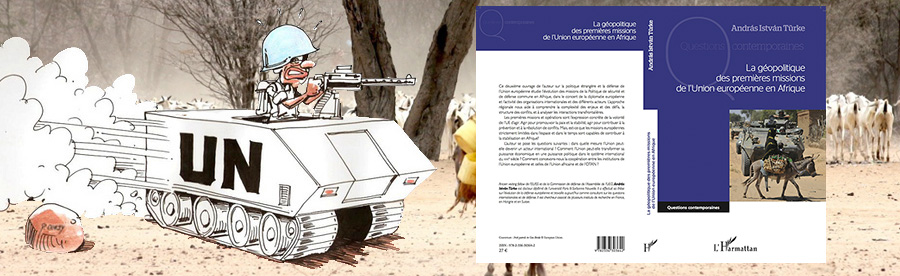
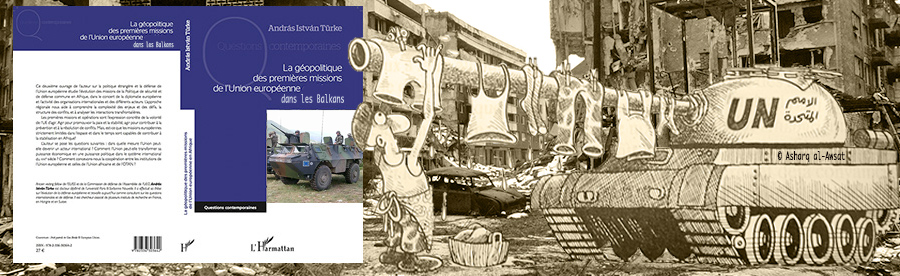
We are looking for sponsors for the English translation of these books, please contact turkeandras(at)gmail(dot)com