
You are here
Feed aggregator
Preparing the EU for Enlargement Means Investing in Strategic Autonomy. And integrating the Western Balkans is key
Following the publication of the long-awaited pre-enlargement policy reviews by the European Commission and just in time for the October Council Summit, Dr. Frauke Seebass (Research Fellow, Wider Europe Programme – ELIAMEP & think nea – New Narratives of EU Integration) and Ioannis Alexandris (Research Fellow, Wider Europe Programme – ELIAMEP & think nea – New Narratives of EU Integration) co-authored the policy brief “Preparing the EU for Enlargement Means Investing in Strategic Autonomy. And integrating the Western Balkans is key” in the framework of ELIAMEP’s initiative think nea – New Narratives of EU Integration which is supported by OSF-WB.
Originally hailed as a possible “Helsinki Moment” for enlargement, this week’s Council Summit is unlikely to focus much on the issue. Work will continue in the Council and capitals in the coming months based on the long-awaited pre-enlargement policy reviews presented by the EU Commission on 6 October 2026 acknowledge the inherent connection between a bigger and a stronger Union. It will not be up to the Council to translate into practice suggestions for closer integration before accession and to prepare the EU itself.
European strategic autonomy risks remaining a buzzword if European leaders fail to understand it as a continent-wide strategic vision and not merely another EU-level policy and the Western Balkans as a key asset to include in their deliberations beyond the accession process. Locking the region into the EU is neither luxury nor charity – it is essential to the Union’s geopolitical actorness.
As can be seen in the current practice, candidates – with the possible exception of Ukraine in EU deliberations on common defence – are included in new initiatives most often as an afterthought rather than seeing their inclusion as a (geo-)strategic imperative. This is true for the Critical Raw Materials Act (CRMA), the Security Action for Europe (SAFE) instrument, as well as for the Democracy Shield. In the meantime, geopolitical competitors and adversaries are securing mining and defence contracts in countries like Serbia, Bosnia- Herzegovina, and North Macedonia while deepening strategic dependencies contrary to EU interests. This is a geopolitical lose-lose situation for the EU as it continues to miss opportunities to strengthen its strategic autonomy while its competitors increase their footprint on the continent. The more these trends persist and the longer Western Balkan countries remain outside the EU’s vision and policy debates, the more entrenched strategic dependencies will become and more difficult to reverse course. Evidently, anticipating enlargement strategically requires consultations beyond the EU to accomplish its purpose of European strategic autonomy.
You can read the policy brief here.
Categories: Afrique, Diplomacy & Defense Think Tank News
Popular Nigerian gospel singer Toluwanisings dies aged 41
His family has appealed to fans to remember his wife, children and family in prayer during this period of mourning.
Categories: Africa, European Union
Debate: Midterms 2026: what comes next for the US and Europe?
The US will elect a new House of Representatives and a third of the members of the Senate in its midterm elections on 3 November. For President Donald Trump a lot is at stake: if the Republicans lose their majority in Congress it will be far more difficult for him to pursue his policies. Europe's press discusses the ramifications of the midterms for the US, Ukraine and Europe.
Categories: European Union
Debate: Pope Leo XIV: surgery for lung cancer
The Vatican has announced that Pope Leo XIV underwent surgery on Tuesday to remove the lower lobe of his right lung after an adenocarcinoma was discovered during a routine check-up. The operation is reported to have been successful and without complications. The media look at what the 71-year-old pope's illness could mean for the Catholic Church.
Early detection means good chances of recovery | Tygodnik Powszechny - Poland
Categories: Défense, European Union
Debate: Nord Stream attack: Ukrainian in court
The trial over the attack on the Nord Stream gas pipelines in September 2022 has begun in Hamburg. Ukrainian ex-officer Serhii K. has been charged with leading a group of divers who blew up three of the four gas pipelines that run between Russia and Germany. The public prosecutor's office classifies such acts as a war crime against civilian infrastructure.
Categories: Défense, European Union
Law must apply no matter how inconvenient | Handelsblatt - Germany
Categories: Balkan News, European Union
Debate: Czech Republic: new hurdles for children with disabilities?
Parts of the Czech government want to scale back the inclusion of children with disabilities in the country's mainstream schools. Headteachers are to have the right to refuse pupils with health impairments. Commentators in the national press view this is the wrong approach.
Categories: Afrique, European Union
Debate: Finland: Google stops work on data centres
Google plans to build several data centres in Finland and invest around 13 billion euros in digital infrastructure. At one location, 300 hectares of woodlands were cleared before the environmental impact assessment had been completed. The Finnish supervisory authority ordered all environmentally detrimental construction work to be suspended. After a long silence, Google has apologised and work on the sites has been suspended.
Pages
the old site is here


© 2012-2015 Europa Varietas Foundation © 2015-2020 Europa Varietas Association
www.europavarietas.org | info(@)europavarietas(dot)org | Switzerland
This is a GDPR ready site
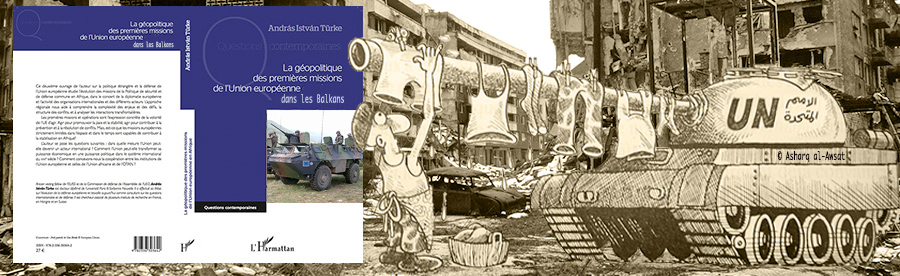
We are looking for sponsors for the English translation of these books, please contact turkeandras(at)gmail(dot)com