
You are here
Feed aggregator
Geburi-Kind Manzambi beschenkt sich mit Debüt-Tor in Königsklasse
Johan Manzambi feiert an seinem 21. Geburtstag sein Champions-League-Debüt – und sein erstes Tor und seinen ersten Sieg. Aston Villa überfährt Fenerbahce gleich mit 6:0.
Categories: Határon túli magyar portálok összesített hírei, Swiss News
Nati-Star Kurashev sieht, wie Lausanne Ajoie ausspielt
In Zusammenarbeit mit Mysports präsentiert dir Blick die Highlights der Partie Lausanne – Ajoie (6:3).
Categories: Swiss News
Erst Mitleid von PSG-Coach, dann Watsche für ManCity
PSG überfährt Manchester City in der Startphase und kommt danach nicht mehr wirklich in Gefahr. Zuvor hat Trainer Luis Enrique noch für viel Wirbel gesorgt.
Categories: Swiss News
Nächster Norwegen-Klub schockt deutsches Top-Team
Einen Tag nach dem sensationellen Remis von Viking Stavanger gegen die Bayern siegt Bodö/Glimt gegen Borussia Dortmund. Der BVB lässt im hohen Norden die Torgefahr vermissen.
Categories: Swiss News
HCD erreicht mit einem blauen Auge die K.-o.-Phase der CHL
Am letzten Vorrundenspieltag der Champions Hockey League gelingt auch Davos der Sprung in die Achtelfinals – trotz Niederlage. Fribourg-Gottéron und Genf-Servette treffen in der ersten Runde der K.-o.-Phase aufeinander.
Categories: Swiss News
La première voiture 100 % algérienne verra le jour avant fin 2028, annonce Tebboune
Produire un véhicule entièrement conçu et assemblé sur le sol national : l’objectif a désormais une date. Devant les chefs d’entreprise réunis au Centre international […]
L’article La première voiture 100 % algérienne verra le jour avant fin 2028, annonce Tebboune est apparu en premier sur .
Categories: Afrique, Central Europe
Schlusslicht feiert viel umjubelten ersten Saisonsieg
In Zusammenarbeit mit RED+ präsentiert Blick die Highlights der Partie Handball Stäfa – Wacker Thun (33:30).
Categories: Swiss News
Effizientes Lausanne wehrt Ajoies Aufholjagd ab
Lausanne gewinnt das zweite Saisonduell mit Ajoie mit 6:3 und kann dabei vor allem auf seine Effizienz zählen. Unter den Zuschauern in der Vaudoise-Arena befindet sich auch Nati-Star Philipp Kurashev.
Categories: Swiss News
Crisis and Opportunity at the UN
UN Secretary-General António Guterres opens the general debate of the General Assembly’s 81st session on 22 September 2026. Credit: UN Photo/Loey Felipe
By Andrew Firmin
LONDON, Oct 14 2026 (IPS)
At this year’s highest-profile UN event, Donald Trump publicly mused over his ‘big decision’ about whether to ‘annihilate’ Iran. Israeli Prime Minister Benjamin Netanyahu, as dozens of delegates walked out, branded those who condemn genocide in Gaza ‘moral cowards’.
The UN was established in the devastating aftermath of the Second World War with the explicit aim to ‘save succeeding generations from the scourge of war’. Its charter commits all UN members to settling disputes peacefully. Yet at the UN General Assembly’s annual high-level session, held in September, several national leaders used a podium meant for peace and international cooperation to justify and threaten violence.
The bellicose tone of many speeches signalled a broader crisis of multilateralism. Autocrats are throwing their weight around, determined to prove that might makes right, or, as Trump put it when boasting of US control of Venezuelan oil, ‘to the victor belong the spoils’. Such leaders care little for international laws, norms, institutions and processes.
Powerful states are withdrawing from institutions, defunding them, refusing to cooperate and forming rival, more selective and less formal groupings. Nakedly transactional deal-making is replacing collective action, fragmenting the multilateral system. As a rules-based order gives way to something more chaotic, civil society’s opportunities to engage are withering. All this is happening as huge transnational problems mount up, including the climate crisis, economic inequality, impunity for conflict atrocities and the repression of civic space.
The race to succeed Guterres
Against this backdrop, someone new will take the helm. Secretary-General Antonio Guterres’s second term expires at the end of the year, and states are now choosing his successor.
Civil society is calling for a feminist woman leader who puts human rights first. Yet human rights feature little in the debate. A former UN human rights chief, Michelle Bachelet, has pulled out because straw polls among the 15 Security Council members, a key stage of the process, showed she lacked support.
In each poll, states can ‘encourage’ or ‘discourage’ a candidacy, or express ‘no opinion’. So far, five rounds have proved inconclusive. Former Costa Rican Vice President Rebeca Grynspan has emerged as frontrunner, but the latest poll saw her receive six ‘discourage’ votes compared to three in the round before. No candidate commands overwhelming backing and it’s possible other candidates will come forward.
Civil society is trying to engage, but ultimately states don’t have to publicly justify their decisions. Because the Security Council is central to the process, the final say rests with its five permanent members, China, France, Russia, the UK and the USA, any of which can veto a candidate they dislike. Opaque negotiations are therefore likely to produce a compromise candidate that China, Russia and the USA find sufficiently inoffensive.
As the race heats up, there are signs candidates are avoiding speaking about issues that may be seen as contentious for fear of losing support. States that back particular candidates may decide not to ask difficult questions that could cost them votes. As a result, important matters such as Israel’s genocide in Gaza and the rights of excluded groups are being sidelined. Anyone who sees themselves as a world leader should be taking these issues on, but candidates’ refusal to do so shows how firmly powerful states are calling the shots.
One candidate, Carolyn Rodrigues-Birkett, has been the target of a Wall Street Journal hit piece over comments condemning Israel’s actions in Gaza as genocide, made in her role as Guyana’s ambassador to the UN. The intent is clearly to encourage the USA to block her.
Civil society expects a global voice of conscience, someone prepared to go further than serving states and willing to speak up on the issues candidates are now avoiding. History shows that, even in difficult times, the personality and leadership style of the secretary-general can make a difference. Whoever prevails will have to steer the UN through crisis and rebuild respect for the institution and the broader promise of multilateralism, and that means putting human rights first.
Access needed
When they next meet, national leaders will have the opportunity to shape the future of development. The Sustainable Development Goals (SDGs), the set of 17 interconnected goals agreed by every UN member state in 2015, expire in 2030. Next year’s SDG Summit will consider what should come next.
In these difficult times, civil society faces the challenge of asserting a progressive vision and pushing for goals that make a real difference. But civil society remains excluded. It was once again forced to the sidelines for this high-level session. The passes of organisations that have cleared accreditation hurdles and normally have access to UN headquarters are suspended at these annual meetings. This speaks of a broader exclusion. The UN has failed to advance even modest proposals to recognise civil society’s role, such as instituting a UN civil society day or appointing an envoy to coordinate civil society engagement.
Meanwhile, the UN’s funding crisis is further impacting on civil society’s participation. The USA is the chief culprit, owing around US$4.2 billion in contributions. The USA and other powerful states are defunding and sidelining the UN’s human rights functions, which civil society most engages with. The result is job cuts, curtailed mandates and fewer opportunities for civil society participation.
The arrival of a new secretary-general and the debate on new development goals bring not just challenges but also opportunities. To seize them, civil society will need to build stronger coalitions and collaborate more closely than ever. It must engage constructively with the next secretary-general while raising expectations, putting stronger access and partnerships on the table.
A state-centric UN will fail. A UN that hopes to make a difference on big problems, rebuild respect for human rights and win an increasingly contested argument for the value of multilateralism can’t keep excluding civil society. The next secretary-general must champion an open and accountable UN that recognises civil society as an essential partner.
Andrew Firmin is CIVICUS Editor-in-Chief, co-director and writer for CIVICUS Lens and co-author of the State of Civil Society Report.
For interviews or more information, please contact research@civicus.org
Categories: Africa, Swiss News
Cuencas verrenkt sich für Tor in der Luft
In Zusammenarbeit mit RED+ präsentiert Blick die Highlights der Partie Kadetten Winterthur – BSV Bern (27:25).
Categories: Swiss News
85 Mängel am Reflecting Pool nach Sanierung
Trumps Herzensprojekt bröckelt: Am frisch sanierten Reflecting Pool in Washington wurden laut Inspektionsbericht 85 Risse, Blasen und weitere Mängel entdeckt. Ursache seien ungeeignete Materialien und Zeitdruck.
Categories: Swiss News
Kriens-Luzern wahrt Hoffnungen auf ein Weiterkommen
Kriens-Luzern hat weiterhin intakte Chancen auf ein Weiterkommen in die Hauptrunde der Handball-Champions-League: Gegen die Norweger von Handball Kolstad gibts auch im zweiten Spiel einen Sieg.
Categories: Swiss News
Media advisory - European Council meeting of 15-16 October 2026
Approximate timing, public sessions and press opportunities.
Categories: European Union, Swiss News
Media advisory - European Council meeting of 15-16 October 2026
Approximate timing, public sessions and press opportunities.
Categories: Europäische Union, Swiss News
Media advisory - European Council meeting of 15-16 October 2026
Approximate timing, public sessions and press opportunities.
Categories: Afrique, Európai Unió : hírek magyarul
Überschwemmungen sorgen für Chaos in Istanbul
Heftige Unwetter haben in Istanbul Strassen überflutet und teils einstürzen lassen; Autos wurden weggeschwemmt. Auch griechische Ägäis-Inseln wie Rhodos und Skiathos sind betroffen, Flüge wurden umgeleitet und Schulen geschlossen.
Categories: Afrique, Swiss News
Hier werden Autos vom Wasser mitgerissen
Sintflutartige Regenfälle verwandeln die Strassen in der Türkei in Flüsse.
Categories: Afrique, Swiss News
100-Mio-Mann trifft bei Tor-Premiere für Liverpool dreifach
Liverpool setzt sich beim Torfestival von Linz mit 6:3 durch. Die Reds holen den zweiten Sieg im zweiten Champions-League-Spiel, die Österreicher bleiben punktlos.
Categories: Afrique, Swiss News
FMI : l’Algérie première économie du Maghreb avec un PIB de 331 milliards de dollars
Les nouvelles projections du Fonds monétaire international redessinent la hiérarchie économique régionale, et l’Algérie y occupe une place de choix. Avec un PIB de l’Algérie […]
L’article FMI : l’Algérie première économie du Maghreb avec un PIB de 331 milliards de dollars est apparu en premier sur .
Categories: Afrique, European Union
Fifa will mit Regeländerung weiteren Fall Balogun verhindern
US-Medienberichten zufolge hat die Fifa eine Regeländerung vorbereitet, um einen zweiten Fall Balogun wie an der WM im Sommer zu verhindern. Der Zeitpunkt kurz vor dem Treffen des Fifa-Rats am Donnerstag überrascht.
Categories: Swiss News
Pages
the old site is here


© 2012-2015 Europa Varietas Foundation © 2015-2020 Europa Varietas Association
www.europavarietas.org | info(@)europavarietas(dot)org | Switzerland
This is a GDPR ready site

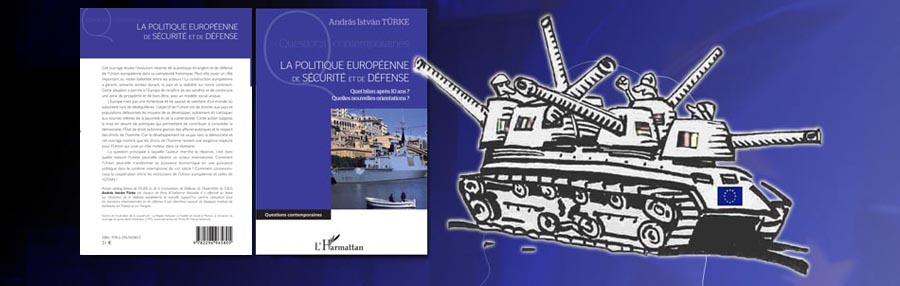
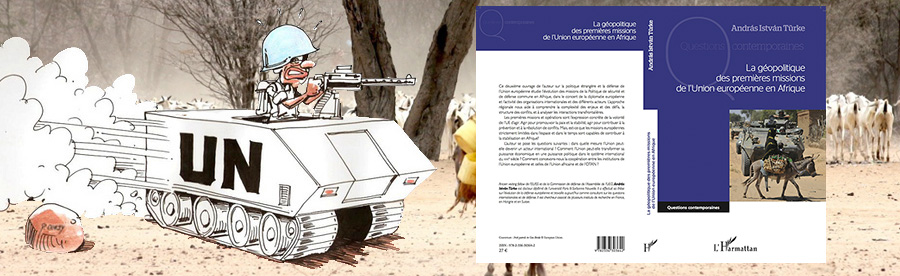
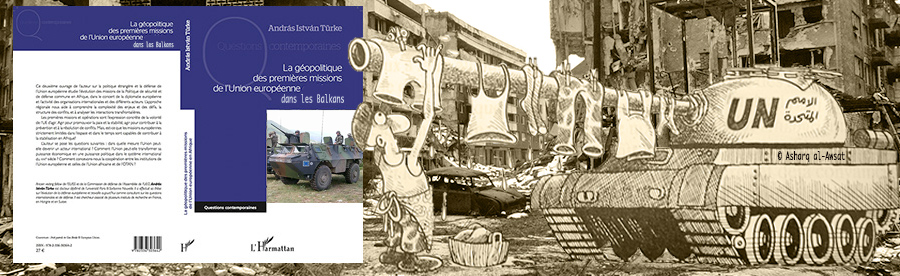
We are looking for sponsors for the English translation of these books, please contact turkeandras(at)gmail(dot)com