
You are here
Feed aggregator
Kia PV5 im Blick-Test: Elektro-Raumriese zum Budgetpreis
Mit dem Kia PV5 rollt ein preiswerter Elektro-Van auf die Schweizer Strassen. Auf der einen Seite gibts viel Platz und auffälliges Design zum Budgetpreis, auf der anderen trüben der eingeschränkte Fahrkomfort und die begrenzte Batteriekapazität das Gesamtbild.
Categories: Swiss News
Haustiere & Psychologie: Warum sich dein Hund im Schlaf an dich kuschelt
Viele mit Hunden kennen es: Der Vierbeiner legt sich im Schlaf eng an den Körper oder lehnt sich direkt an seinen Menschen. Was wie eine süsse Gewohnheit wirkt, ist in Wahrheit ein starkes Zeichen von Vertrauen, Sicherheit – und tiefer Bindung.
Categories: Swiss News
Nach Drohnenabsturz: Grosser Waldbrand in Tschernobyl-Sperrzone ausgebrochen
Nach einem Drohnenabsturz steht in der Sperrzone von Tschernobyl der Wald auf 1100 Hektar in Flammen. Die Feuerwehr bekämpft das Feuer unter schweren Bedingungen.
Categories: Swiss News
Grossaufgebot im Einsatz: Geiselnahme in Bank in Sinzig (D)
In einer beschaulichen deutschen Kleinstadt läuft am Freitag ein Grosseinsatz der Polizei. Hintergrund ist eine Geiselnahme in einer Bank.
Categories: Swiss News
Trump fixe à l’UE la date limite du 4 juillet pour conclure un accord commercial
Les négociateurs européens ne sont pas parvenus à s'entendre mercredi soir
The post Trump fixe à l’UE la date limite du 4 juillet pour conclure un accord commercial appeared first on Euractiv FR.
Categories: Afrique, Union européenne
Schon nächsten Monat ist Schluss!: Paukenschlag im noblen Bankenviertel – Gourmetrestaurant in Zürcher Luxushotel schliesst
Das Restaurant Parkhuus im Zürcher Fünf-Sterne-Haus Park Hyatt schliesst Mitte Juni. Damit verabschiedet sich das Hotel von seinem Fine-Dining-Konzept. Künftig will es auf eine währschaftere Küche setzen.
Categories: Europäische Union, Swiss News
Komáromi üdvözlet: Május 8-án a fagylaltot ünnepli a világ
Ez a hűsítő finomság nem a modern kor sztárja, már több ezer éve is népszerű volt, bár akkor kizárólag csak a gazdagok ehették. Ugyan ma már elképesztő változatosságban hódít, de még mindig a vanília a legnépszerűbb fagylaltíz a világon. Gyertek velünk Kemalhoz fagyizni!
Categories: Afrique, Határon túli magyar portálok összesített hírei
Biasca mit zwei NHL-Stars in der Linie: «Ich traute meinen Augen nicht, als ich sah, mit wem ich spiele»
In seinem ersten WM-Vorbereitungsspiel wurde Attilio Biasca sogleich mit Nico Hischier und Timo Meier aufgestellt. Linienkollegen, die den Fribourg-Stürmer zunächst etwas einschüchterten.
Categories: Africa, Swiss News
Es braucht weder Gift noch Falle: Dieses Gewürz vertreibt Mäuse und Ratten
Nagetiere will man auf keinen Fall im Haushalt antreffen, aber statt Gift oder eine Falle, kann man auch mit einer Pflanze gegen sie vorgehen. Ihr Duft wirkt unangenehm auf die Tiere, ohne sie zu verletzen – ideal für eine tierfreundliche Abwehr.
Categories: Africa, Swiss News
Exklusives Wirtschaftstreffen in Zürich: Sohn von Donald Trump kommt im Juni in die Schweiz
Der älteste Nachkomme von US-Präsident Donald Trump wird nach Zürich reisen. Anfang Juni soll Trump Jr. an einem exklusiven Wirtschaftstreffen teilnehmen.
Categories: Africa, Swiss News
Sperre nach Beleidigungen: Für Thuns Meistertrainer Lustrinelli ist die Saison vorbei
Nach seinen beleidigenden Äusserungen gegen den Schiedsrichter im Duell mit dem FC Basel vom letzten Wochenende wird Mauro Lustrinelli für drei Spiele gesperrt. An der Pokalübergabe darf der Meistertrainer dennoch teilnehmen.
Categories: Africa, Swiss News
Drei Festnahmen in Brugg AG: Diensthund «Malouk» stellt rumänische Kupferdiebe
Drei Männer aus Rumänien wurden am Donnerstagabend in Brugg AG festgenommen, als sie auf einem Firmengelände mutmasslich Kupferkabel stehlen wollten. Ein Spürhund machte zwei Verdächtige in einem Gebüsch ausfindig.
Categories: Africa, Swiss News
Musste von gespendeten Teigwaren leben: Influencer-Star Steve Merson hungerte sich zum Erfolg
Steve Merson gehört zu den erfolgreichsten Influencern der Schweiz. Im Podcast «Spaghetti mit Ketchup und Chäs» spricht er über die Anfänge seiner Karriere, seinen drogensüchtigen Vater und die Angst, beim Dating auf seine öffentliche Persona reduziert zu werden.
Categories: Africa, Swiss News
Nuclear ‘Close-Calls’ Prove Deterrence No Guarantee for Peace
Attendees at the NPT Review Conference side event titled 'Preventing Nuclear Use and Escalation: Lessons from Nuclear Close Calls. ' Credit: Naureen Hossain/IPS
By Naureen Hossain
UNITED NATIONS, May 8 2026 (IPS)
The consequences of nuclear warfare would transcend borders and the impact would be felt across generations. Yet knowing this, member states, including nuclear-armed states, are increasingly flouting the nuclear taboo, while also relying heavily on deterrence to prevent fallout.
Throughout the Cold War period, there were stories of nuclear “close calls”—moments where the world could have been plunged into nuclear warfare were it not for human intervention or sheer luck. The Cuban Missile Crisis of 1962 and the Petrov incident of 1983 may be more well-known examples from history, but others may also reveal what lessons should be taken from these ‘close calls.’
At the sidelines of the 2026 NPT Review Conference, academics, government and civil society convened to discuss just that. On May 1, at an event convened by Soka Gakkai International (SGI) and the James Martin Center for Nonproliferation Studies (CNS), people came together to deliberate over past and present efforts to prevent nuclear escalation. The panelists argued that these stories demonstrate how nuclear deterrence may not be an effective security strategy towards disarmament or even nonproliferation.
Chie Sunada, Director of Disarmament and Human Rights, SGI Peace Center, speaks in a panel on nuclear escalation risks. Credit: Naureen Hossain/IPS
“The history of close calls—Cuba, Petrov, Black Brant—and many other less well-known events does not tell us that deterrence works. It tells us that deterrence has, on a number of documented occasions, almost failed,” said George-Wilhelm Gallhofer, Director for Disarmament, Arms Control and Non-Proliferation in Austria’s Federal Ministry for European and International Affairs. “Luck is not a security strategy. And yet, the global security order, 60 years on, still rests on it.”
Gallhoffer went on to suggest that the nuclear taboo needs to be reinforced once more by promoting honest dialogue between nuclear powers and non-nuclear states, where the non-nuclear states remind all parties of the stakes at play. Doctrines like the NPT and the Treaty for the Prohibition of Nuclear Weapons (TPNW) should be regarded as security treaties, not only moral or ethical frameworks.
Elayne Whyte, a professor at Johns Hopkins and former UN Ambassador of Costa Rica, also echoed this sentiment, adding that the issue of nuclear danger is just as rooted at the societal level as it is through legal frameworks. The shared understanding of nuclear danger is not only produced through weapons systems or treaties but also through decision-makers and the values of society.
“It is [the] 21st century; we also have to acknowledge that the erosion of the nuclear taboo cannot be separated from the wider nationalist trends that rank human lives unequally and make it easier to imagine that mass destruction inflicted on others is […] tolerated,” said Whyte.
Emerging technologies such as artificial intelligence threaten to further complicate nuclear escalation, wherein nuclear states, in an effort to stay ahead of the curve, adopt these technologies for their perceived potential to reduce the human margin of error. The automation of decision-making in nuclear weapons use is not entirely new, as was seen in 1979 and 1980, when the North American Aerospace Defense Command (NORAD) received several false alarms through errors in their missile warning system.
Yanliang Pan, a research associate at CNS, remarked that these cases proved that automated systems would still be susceptible to automation bias and compressed decision-making time, thus increasing the likelihood of accidents. Although humans should still have ‘meaningful’ control over decisions of nuclear use, Pan noted that these close calls occurred while humans were in control. “We should be talking about the effect of automation on the reliability of human control, rather than simply human control as an antidote to automation,” said Pan.
At present, academic research can uncover recurring patterns in how nuclear close calls were handled and what that can tell decision-makers about risk reduction in this space. According to Sarah Bidgood, a postdoctoral fellow at the UC Institute on Global Conflict and Cooperation, recent studies have looked into how there might not be a singular framework for crisis management that could apply across nuclear close calls. When it comes to crisis management and risk reduction, the dynamics of previous nuclear close calls do not exist in a monolith, but there are variations in the outcomes instead. The lessons that leaders take from such situations may not lead to a shift away from nuclear weapons. Instead, these events may reinforce what leaders already think about the risks and benefits of nuclear weapons. If a leader regards nuclear weapons for a perceived strategic value, then after a close call, they may be just as likely to embrace new capabilities that would allow them to threaten the use of weapons across multiple levels of conflict. Bidgood raised the question of what this scenario would mean for the future of risk reduction in the present geopolitical environment.
“We need to be quite skeptical of this conventional wisdom that we often hear in our community… which is that to get arms control and risk reduction back on track, maybe we need another event like the Cuban Missile Crisis. Because if my theory is right, what this tells us is that the next crisis could just as easily lead us farther down a very, very different path. And that’s something that I don’t think we as scholars or practitioners have really accounted for,” said Bidgood.
Such near-misses may often be thanks to individual human judgement calls rather than the positions of nuclear states. Chie Sunada, Director of Disarmament and Human Rights at the SGI Peace Center, recalled the example of an incident during the height of the Cuban Missile Crisis in 1962, where a near-miss also brewed in the Pacific, which would have targeted an uninvolved third party. During this time, U.S. military bases hosted nuclear missiles in Japan that were powerful enough to level cities. The base in Okinawa received what seemed like authenticated launch orders. However, the most senior field officer on site, Captain William Bassett, found discrepancies with the launch orders and the missiles’ readiness level, including that the missiles at this base were primarily targeted at China. So he ordered subordinates to stand down.
Sunada warned that the sense of urgency that informed decisions on nuclear de-escalation was missing from the current discourse and that the reality of nuclear fallout and the aftermath of Hiroshima and Nagasaki would be “fading into abstract history.” She urged that nuclear disarmament education would be a “vital mechanism” for maintaining “strategic restraint” by recognizing that a key element for its success is empathy for the pain of others, which is itself a form of deterrence.
“We cannot continue to outsource our survival to luck,” said Sunada. “We urge all state parties to recognize that risk reduction requires more than just adjusting military doctrines. It requires a fundamental shift in how we understand these weapons, driven by education. By cutting the chain of hatred and nurturing the heart that cherishes and is respectful to others, we achieve the ultimate disarmament and pure, proper peace education.”
Note: This article is brought to you by IPS Noram in collaboration with INPS Japan and Soka Gakkai International in consultative status with ECOSOC.
IPS UN Bureau Report
Follow @IPSNewsUNBureau
!function(d,s,id){var js,fjs=d.getElementsByTagName(s)[0],p=/^http:/.test(d.location)?'http':'https';if(!d.getElementById(id)){js=d.createElement(s);js.id=id;js.src=p+'://platform.twitter.com/widgets.js';fjs.parentNode.insertBefore(js,fjs);}}(document, 'script', 'twitter-wjs');
Categories: Africa, Balkan News
L’UE adopte une attitude « hostile » face à la violence des colons en Cisjordanie
Les ministres de l'UE vont examiner l'éventualité de sanctions à l'encontre des colons et du commerce lié aux colonies
The post L’UE adopte une attitude « hostile » face à la violence des colons en Cisjordanie appeared first on Euractiv FR.
Categories: Afrique, Union européenne
L'Ukraine est une plaque tournante mondiale de la maternité de substitution, mais cela pourrait bien toucher à sa fin
L'Ukraine envisage d'adopter une loi qui interdirait de fait aux étrangers de recourir à la maternité de substitution dans le pays.
Categories: Afrique, European Union
Bernhard H. und die «Feder-Affäre»: «Ich bin kein Mörder»
Bernhard H. soll 2016 versucht haben, seine Ehefrau Brigitte zu töten. Anlässlich seiner Berufung vor dem Bundesgericht äussert er sich zum ersten Mal.
Categories: European Union, Swiss News
«Ich fahre immer schwarz»: Schweizer Linkspolitiker brüstet sich mit Bus-Bschiss
Die Irritation im Lausanner Stadtparlament war gross: Ein Linkspolitiker gab zu, im öffentlichen Nahverkehr jeden Tag zu betrügen. Seit Jahren fahre er schwarz. Es ist nicht das erste Mal, dass Loris Socchi unangenehm auffällt.
Categories: European Union, Swiss News
XIV. Leó pápa fogadta az amerikai külügyminisztert
Euronews: XIV. Leó pápa és Marco Rubio "megvitatták a közel-keleti helyzetet és a nyugati félteke közös érdekű kérdéseit" a Vatikánban tartott találkozójukon, ahová az amerikai külügyminiszter csütörtökön (5. 7.) késő délelőtt érkezett, alig néhány órával a Donald Trump elnök és a pápa közötti újabb szóváltás után.
Categories: Afrique, Határon túli magyar portálok összesített hírei
Neue Details zu Raubüberfall auf Coop in Oftringen AG: Der vermummte Täter scheiterte an der Kasse
Ein bewaffneter Mann überfiel am Donnerstagnachmittag das Coop-Geschäft im Perry Center Oftringen AG. Er bedrohte Mitarbeitende, forderte Geld und flüchtete zu Fuss. Die Polizei fahndet nach dem schwarz gekleideten, maskierten Täter mit weissen Turnschuhen.
Categories: European Union, Swiss News
Pages
the old site is here


© 2012-2015 Europa Varietas Foundation © 2015-2020 Europa Varietas Association
www.europavarietas.org | info(@)europavarietas(dot)org | Switzerland
This is a GDPR ready site
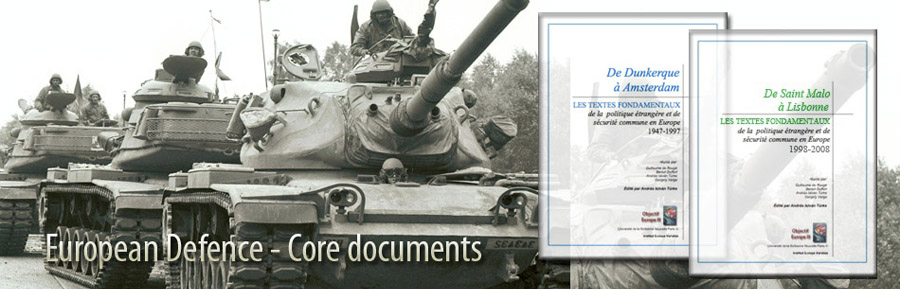
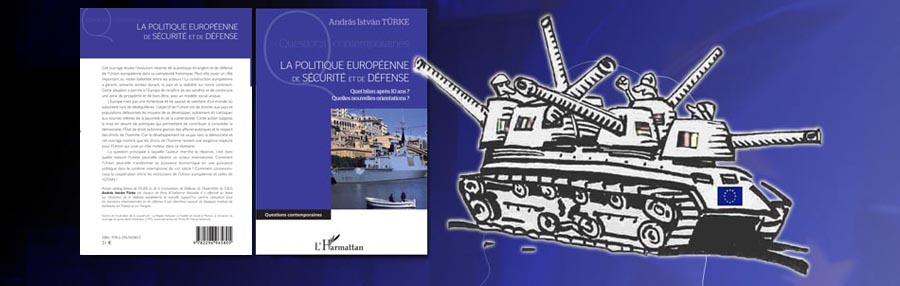
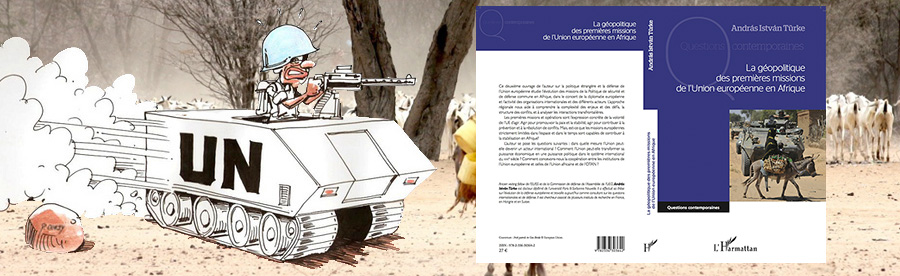
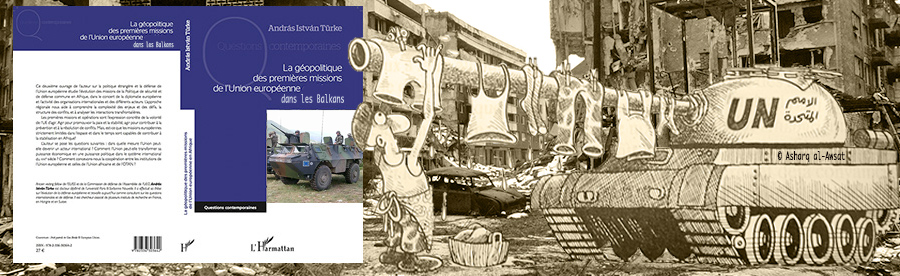
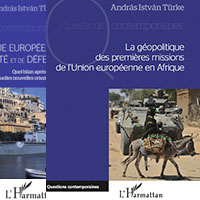
We are looking for sponsors for the English translation of these books, please contact turkeandras(at)gmail(dot)com