
You are here
Afrique
Global value chains in Egypt: overview, challenges, and opportunities chapter
Categories: Afrique, Diplomacy & Defense Think Tank News
Décès d’une médecin anesthésiste au CHU Bab El Oued : le ministère de la Santé réagit
Le ministère de la Santé a publié un communiqué officiel pour contredire les informations qui inondaient les réseaux sociaux depuis plusieurs heures. Au cœur de […]
L’article Décès d’une médecin anesthésiste au CHU Bab El Oued : le ministère de la Santé réagit est apparu en premier sur .
Categories: Afrique, Határon túli magyar portálok összesített hírei
The Nigerian Nightmare est de retour : Kamaru Usman disputera l'un des combats phares de cet été
Le 18 juillet, tous les regards des fans de MMA seront rivés sur l'un des combats les plus attendus de l'année. Lors de l'événement principal de l'UFC Fight Night 281, qui se déroulera à Oklahoma City, l'ancien champion dominant de l'UFC, Kamaru Usman, affrontera l'ancien champion des poids moyens, Dricus du Plessis. Pour les deux combattants, ce combat pourrait constituer une étape décisive sur la voie du retour dans la course au titre.
Le retour de Kamaru Usman
Le nom de Kamaru Usman est depuis longtemps inscrit dans l'histoire de l'UFC. L'ancien champion des poids welters a réalisé l'une des séries les plus impressionnantes de l'histoire récente de l'organisation : une série de 19 victoires au cours de sa carrière professionnelle, dont 15 victoires consécutives à l'UFC, ainsi que 5 défenses de titre réussies.
Après une période difficile dans sa carrière, The Nigerian Nightmare a de nouveau l'occasion de rappeler pourquoi il a longtemps été considéré comme l'un des meilleurs combattants au monde, toutes catégories de poids confondues. Une victoire face à un adversaire redoutable issu d'une catégorie de poids supérieure pourrait bien propulser à nouveau Usman parmi les prétendants au titre de champion, mais cette fois-ci dans une nouvelle catégorie de poids.
Dricus du Plessis est prêt à relever un nouveau défi
Pour Dricus du Plessis, ce combat revêt une importance tout aussi grande. Le Sud-Africain aspire à faire un retour en force après avoir perdu sa ceinture de champion et à prouver que ses succès passés n'étaient pas un feu de paille, mais bien le fruit d'une progression régulière.
Un style de combat agressif, un rythme soutenu, une pression constante et une excellente endurance cardiovasculaire : voilà ce avec quoi Stillknocks compte bien surprendre tout le monde lors de son prochain combat contre Usman.
Pourquoi ce combat est à ne pas manquer
Le duel entre ces deux anciens champions s'annonce comme un véritable affrontement.
Usman mise traditionnellement sur un combat exceptionnel, le contrôle de son adversaire, un excellent jeu à distance et des solutions originales. De son côté, du Plessis privilégie un pressing constant, de puissantes séries de coups originaux et un rythme soutenu, obligeant ses adversaires à se donner à fond tout au long du combat.
Pour Usman, ambassadeur mondial de MelBet, cette victoire marquera un retour en force dans la course au titre, dès sa nouvelle catégorie de poids. Quant à du Plessis, ce succès confirmera qu'il est prêt à se battre à nouveau pour la ceinture des poids moyens.
Rends l'UFC Fight Night encore plus passionnant avec MelBet
Difficile de passer à côté d'un tel combat, et MelBet te propose de rendre le spectacle encore plus passionnant. À partir du 10 juillet, les utilisateurs peuvent placer un pari simple à partir de 5 $ sur le combat Usman vs du Plessis. Si le pronostic s'avère erroné, un code promo pour un freebet sera crédité dans les 24 heures.
Pour participer à cette promotion, il suffit de :
– s'inscrire ou se connecter à son compte MelBet ;
– placer un premier pari simple d'au moins 5 $ sur le combat Usman vs du Plessis ;
– recevoir un freebet d'une valeur maximale de 50 $ si le pari n'est pas gagnant.
Les conditions détaillées de la promotion sont disponibles sur le site officiel de MelBet.
Il y a toujours une chance !
Pour des millions de fans de MMA, cette soirée sera l'occasion d'assister au retour de l'un des champions les plus dominants de l'ère moderne. Quant aux utilisateurs de MelBet, ce sera pour eux l'occasion de rendre ce spectacle encore plus passionnant. En effet, chaque grand combat est un nouveau défi, et chaque round perdu peut marquer le début d'un retour spectaculaire.
Categories: Afrique
Les autorités béninoises appelés au secours des jeunes piégés à Accra
Des dizaines de jeunes Béninois se retrouvent dans une situation de détresse au Ghana après avoir quitté le pays à la suite de promesses d'emploi qui se sont révélées trompeuses. Face à cette situation, l'Association des étudiants et stagiaires béninois au Ghana appelle les autorités béninoises à s'impliquer davantage pour secourir les victimes et prévenir de nouveaux cas.
33 ressortissants béninois ont été piégés à Accra, selon un reportage de TVC Bénin. Étudiants, stagiaires ou jeunes en quête d'une meilleure situation professionnelle auraient été convaincus de se rendre au Ghana par des proches ou des connaissances leur promettant un emploi ou une activité génératrice de revenus.
Pour Faouziath Adéboukola, secrétaire générale de l'Association des étudiants et stagiaires béninois au Ghana, les victimes sont attirées par de fausses promesses avant d'être confrontées à une tout autre réalité. « Le réseau fait des propositions un peu mensongères, pas seulement aux étudiants, mais aussi à d'autres Béninois. Ils montrent aux gens qu'ils ont un boulot au Ghana et qu'ils devaient payer une telle somme. Arrivés sur place, ils se rendent compte que c'est un mensonge », explique-t-elle.
Selon elle, les personnes qui souhaitent quitter ce réseau rencontrent de nombreux obstacles. « Ils ne veulent pas que les gens repartent. Si tu dois repartir, tu dois emmener quelqu'un pour prendre ta place ou alors tes parents doivent payer », affirme la responsable de l'association.
Les conditions de vie des victimes suscitent également des inquiétudes. Faouziath Adéboukola décrit une situation particulièrement difficile. « Ils dormaient à même le sol. L'odeur était insupportable. Hommes et femmes vivaient dans les mêmes conditions. Ils mangeaient très peu et étaient amaigris », témoigne-t-elle.
L'association révèle également que plusieurs victimes refusent d'être rapatriées. « Lorsque les services de l'immigration ont demandé qui voulait retourner au pays, personne ne voulait partir. Même celui qui a finalement été rapatrié refusait au départ. Il y avait eu un travail psychologique, un véritable lavage de cerveau », confie Faouziath Adéboukola. Selon elle, cette emprise complique considérablement les opérations de secours et l'identification des responsables.
Face à cette situation, la secrétaire générale de l'Association des étudiants et stagiaires béninois au Ghana appelle à une intervention des autorités béninoises. « Les autorités peuvent collaborer avec le ministère ghanéen de l'Intérieur. On peut leur donner, les informations dont nous disposons afin d'identifier les Béninois retenus en otage et faciliter leur retour au pays », plaide-t-elle.
Au-delà du rapatriement des victimes, cette affaire met en lumière la nécessité pour les autorités béninoises de renforcer la sensibilisation des jeunes face aux offres d'emploi douteuses à l'étranger et de développer une coopération plus étroite avec le Ghana pour lutter contre les réseaux de recrutement frauduleux.
Categories: Afrique
Le Bénin accélère son écosystème d'innovation avec l'UniPod de l'UAC
La ministre de l'Enseignement supérieur et de la Recherche scientifique, Dr Sèdami Medegan Fagla, a visité lundi 13 juillet 2026 l'University Innovation Pod (UniPod Bénin), en compagnie des ministres de la Transformation digitale et de l'Innovation, Mahuna Akplogan, et de l'Enseignement secondaire, Clément Kouchadé.
Des membres du gouvernement ont exploré, lundi 13 juillet 2026, les équipements et les mécanismes d'accompagnement proposés l'University Innovation Pod (UniPod Bénin), installé sur le campus de l'Université d'Abomey-Calavi.
Créée par le Programme des Nations unies pour le développement (PNUD) dans le cadre de l'initiative régionale Timbuktoo, l'UniPod Bénin offre aux étudiants et aux jeunes porteurs de projets un environnement dédié à la conception et à la réalisation d'innovations. Le dispositif repose notamment sur un espace de travail collaboratif, un laboratoire de conception numérique, un atelier de fabrication et de prototypage ainsi qu'un bureau chargé d'accompagner la protection et la valorisation des inventions.
Au cours de la visite, les responsables de la structure ont présenté plusieurs projets développés par de jeunes innovateurs béninois, illustrant le potentiel de cette plateforme pour transformer des idées en applications concrètes.

L'UniPod ambitionne de rapprocher le monde académique des entreprises en facilitant le transfert de technologies et en renforçant les compétences des jeunes diplômés.
La visite a été effectuée par le ministre de l'Enseignement Supérieur et de la Recherche Scientifique, Dr Sèdami Medegan Fagla et les ministres de la Transformation digitale et de l'Innovation, Mahuna Akplogan, et de l'Enseignement secondaire, Clément Kouchadé
M. M.
Categories: Afrique
Un homme en prison pour une affaire de faux billets
Un homme soupçonné de détention et de mise en circulation de faux billets de banque a été interpellé par les éléments du Commissariat frontalier de police de Tchikandou, commune de Nikki. Présenté à la justice, il a été placé sous mandat de dépôt le mardi 14 juillet 2026.
L'affaire a débuté dans la soirée du vendredi 10 juillet 2026, après la découverte de plusieurs coupures contrefaites. Un individu suspecté de détenir de la fausse monnaie a pris la fuite, abandonnant derrière lui 81 faux billets de 10 000 francs CFA, soit une valeur nominale de 810 000 francs CFA.
Les coupures ont été remises au chef d'arrondissement de Ouénou, qui les a ensuite transmises aux services du Commissariat frontalier de police de Tchikandou. Une enquête a immédiatement été ouverte afin d'identifier les personnes impliquées dans cette affaire.
Avec l'appui du détachement militaire de Nikki, les forces de sécurité ont poursuivi les investigations qui ont permis l'interpellation du principal suspect. Au moment de son arrestation, trois nouveaux faux billets de 10 000 francs CFA ont été retrouvés en sa possession. Le montant total des coupures contrefaites saisies s'élève ainsi à 840 000 francs CFA.
Au cours de son audition, le mis en cause a reconnu les faits qui lui sont reprochés. Il a également déclaré appartenir à un réseau spécialisé dans la fabrication et la circulation de faux billets, évoquant l'implication présumée d'une dame résidant à Bembèrèkè. Les vérifications effectuées par les enquêteurs sur la base de ces informations n'ont toutefois pas permis de confirmer ses déclarations, considérées comme une possible tentative de détourner les investigations.
Déféré devant le procureur de la République près le Tribunal de première instance de première classe de Parakou, le suspect a été placé sous mandat de dépôt en attendant la suite de la procédure judiciaire.
Categories: Afrique
Une importante quantité de faux médicaments saisie
Une équipe de la direction départementale de l'industrie et du commerce (Borgou-Alibori), a procédé ce mardi 14 juillet 2026, à la saisie d'une importante quantité de faux médicaments au marché de Petit Paris, un village situé entre les villes de Bembèrèkè et de Gogounou.
Des réseaux de trafiquants de faux médicaments opèrent toujours sur le territoire national malgré l'interdiction des autorités. Une cargaison de médicaments contrefaits a été saisie ce mardi 14 juillet 2026, au marché Petit Paris, situé entre les villes de Bembèrèkè et de Gogounu.
Selon nos sources, 33 cartons et un sac ont été remplis de faux médicaments après le conditionnement réalisé par les équipes sur place. Au terme de l'opération, le propriétaire de la marchandise prohibée a été interpellé par la police républicaine, et devra répondre de ses actes devant la justice.

F. A. A.
Categories: Afrique
Un agriculteur sur deux estime ne pas être payé à sa juste valeur
Une vaste enquête internationale menée par la plateforme agricole Wikifarmer auprès de 10 234 agriculteurs répartis dans 158 pays met en lumière les difficultés auxquelles fait face le monde agricole. Revenus en baisse, effets du changement climatique, manque de soutien des pouvoirs publics et niveau élevé de stress figurent parmi les principaux constats de cette étude réalisée entre novembre 2025 et mars 2026.
Selon les résultats, 51,1 % des agriculteurs interrogés estiment ne pas recevoir un prix équitable pour leurs productions. Près de la moitié (45,1 %) déclarent que leur revenu net a diminué par rapport à l'année précédente et 24,1 % parlent d'une situation « bien pire ». L'Europe est la région où le recul des revenus est le plus marqué, devant l'Asie du Sud et l'Afrique.
Au Bénin, 42 % des agriculteurs gagnent moins qu'il y a un an et 37 % estiment ne pas être payés équitablement, sur un échantillon jeune où le stress élevé reste faible (22 %).
L'enquête révèle également que les pertes de récoltes liées au climat et aux ravageurs sont devenues quasi généralisées. 83 % des agriculteurs disent avoir subi des pertes de production au cours de l'année, tandis qu'un quart affirme avoir perdu plus de 25 % de sa récolte ou de son cheptel. La sécheresse est identifiée comme le phénomène climatique le plus destructeur, devant les vagues de chaleur, les inondations, les tempêtes et le gel.
Les participants expriment par ailleurs une forte insatisfaction vis-à-vis du soutien des gouvernements. Plus de 63 % attribuent une mauvaise note aux politiques publiques en faveur de l'agriculture, estimant que les aides restent insuffisantes face aux défis économiques et climatiques.

Au-delà des difficultés financières, l'étude met en évidence un impact important sur la santé mentale des producteurs. Plus d'un tiers des répondants déclarent un niveau élevé de stress, avec un pic observé chez les agriculteurs âgés de 41 à 50 ans. Contrairement aux idées reçues, les exploitants de grandes fermes se disent davantage stressés que ceux des petites exploitations.
L'enquête souligne toutefois un facteur encourageant : la vente directe en ligne. Les agriculteurs qui commercialisent leurs produits directement auprès des consommateurs via Internet sont 35 % moins susceptibles de déclarer une baisse de revenus, faisant de ce mode de commercialisation le plus favorable à une meilleure stabilité financière.
Les auteurs de l'étude précisent que l'enquête repose sur un échantillon auto-sélectionné et ne prétend pas représenter l'ensemble des agriculteurs du monde. Elle offre néanmoins un aperçu des préoccupations exprimées par des producteurs issus de toutes les régions du globe et relance le débat sur la rémunération des agriculteurs, l'adaptation au changement climatique et l'avenir des systèmes alimentaires.
Categories: Afrique
Chlef : arrestation éclair du suspect qui a brisé la vitre d’une femme à l’arme blanche (vidéo)
Une femme agressée à l’arme blanche en pleine rue, une vidéo qui enflamme les réseaux sociaux, et un suspect derrière les barreaux en moins de […]
L’article Chlef : arrestation éclair du suspect qui a brisé la vitre d’une femme à l’arme blanche (vidéo) est apparu en premier sur .
Categories: Afrique, Határon túli magyar portálok összesített hírei
Le Bénin et le Burkina Faso lancent des patrouilles militaires conjointes à Koualou
Une unité de l'armée burkinabè s'installe à Koualou, une zone frontalière située entre le Burkina Faso et le Bénin en vue du lancement de patrouilles mixtes avec les Forces armées béninoises (FAB).
Des opérations conjointes afin de lutte contre le terrorisme. Les autorités du Bénin et du Burkina-Faso ont décidé de lancer des patrouilles mixtes afin de renforcer la surveillance, améliorer le partage de renseignements et coordonner les interventions des deux armées face à la menace des groupes armés terroristes qui opèrent au niveau de leurs zones frontalières.
L'armée burkinabè est désormais présente à Koualou, localité rurale traversée par la route nationale reliant le Burkina Faso au Bénin. Cette localité est considérée comme une zone sensible en raison des défis sécuritaires.
Cette nouvelle phase de coopération militaire traduit la volonté des autorités béninoises et burkinabè de mutualiser leurs efforts pour sécuriser leur frontière commune et mieux protéger les populations vivant dans cette zone.
Le déploiement intervient quelques semaines après les engagements pris par le président béninois, Romuald Wadagni, lors de son investiture. Le chef de l'État avait alors réaffirmé la disponibilité du Bénin à travailler avec les pays voisins afin de faire face au péril terroriste qui menace la sous-région. Il avait notamment insisté sur la nécessité d'une action concertée pour venir à bout de ce fléau.
Dans cette dynamique, Romuald Wadagni a effectué une tournée diplomatique dans plusieurs pays de la sous-région, dont le Burkina Faso, où il s'est entretenu avec le capitaine Ibrahim Traoré.
Le lancement des patrouilles mixtes à Koualou apparaît ainsi comme une illustration concrète du rapprochement sécuritaire engagé entre Cotonou et Ouagadougou.
Categories: Afrique
À Addis-Abeba, Wadagni fait de la GDIZ une vitrine
Invité d'honneur de la retraite stratégique d'Afreximbank consacrée aux défis de l'industrialisation en Afrique, le président Romuald Wadagni a partagé, ce lundi 13 juillet 2026 à Addis-Abeba (Éthiopie), l'expérience béninoise en matière de transformation économique, avec la Zone industrielle de Glo-Djigbé (GDIZ) comme vitrine de cette dynamique.
Le modèle béninois d'industrialisation une fois encore au-devant de la scène internationale. Un panel sur le thème « Pourquoi les gouvernements échouent-ils à s'industrialiser ? », a réuni des responsables publics, des dirigeants du secteur privé et des partenaires financiers ce lundi 13 juillet 2026 à Addis-Abeba en Ethiopie. Organisé dans le cadre de la retraite stratégique d'Afreximbank, cette rencontre internationale de haut niveau a été rehaussée par la participation de Romuald Wadagni, président de la République du Bénin.
Dans son intervention, le chef de l'État béninois a identifié les obstacles qui freinent les réformes économiques en Afrique. S'appuyant sur son expérience à la tête du Bénin et son parcours en finances publiques, il a insisté sur le rôle central d'une gouvernance efficace et d'une coordination forte au plus haut niveau de l'État. Selon lui, les réformes ambitieuses ne peuvent produire des résultats sans une vision claire, une mise en œuvre cohérente et un engagement politique constant.
Romuald Wadagni a également attiré l'attention sur les limites de nombreux projets de développement, souvent lancés sans modèle économique viable capable d'assurer leur pérennité. Il a par ailleurs évoqué les contraintes liées à l'économie politique, qu'il considère comme l'un des principaux freins à la conduite des réformes structurelles sur le continent. Pour illustrer ses propos, le président béninois a présenté le parcours de la Zone industrielle de Glo-Djigbé (GDIZ), développée en partenariat avec ARISE Integrated Industrial Platforms (ARISE IIP). En quelques années, cette plateforme est devenue l'un des symboles de la transformation industrielle du Bénin, en favorisant la transformation locale des matières premières, l'attraction d'investissements, la création d'emplois et la montée en puissance des produits « Made in Benin ».

Les participants ont également assisté à une présentation détaillée de la GDIZ par Gagan Gupta, fondateur et directeur général d'ARISE IIP. Il a rappelé que cette zone industrielle est née de la volonté du gouvernement béninois de rompre avec l'exportation des matières premières brutes au profit de leur transformation sur place. Une stratégie qui vise à renforcer la compétitivité de l'économie nationale, à développer les chaînes de valeur locales et à accélérer l'industrialisation du pays.
Par son intervention, Romuald Wadagni a démontré qu'un modèle de transformation industrielle réussie repose sur trois piliers essentiels : une gouvernance forte, des projets économiquement viables et une vision stratégique inscrite dans le long terme.
Implantée à Tangbo, dans la commune de Zè, département de l'Atlantique, la GDIZ, après une première phase d'exploitation de 400 ha, compte environ 36 investisseurs dont une vingtaine déjà opérationnels, et intervenant dans les secteurs tels que le textile, la transformation du soja, le cajou, le karité, l'industrie pharmaceutique, l'assemblage des ordinateurs et téléphones portables, la transformation du bois, la production de carreaux, etc. Les unités déjà opérationnelles selon la SIPI-Bénin, structure en charge de l'exploitation et du développement de la zone économique spéciale, emploient environ 25 000 jeunes béninois.

F. A. A.
Categories: Afrique, Balkans Occidentaux
Allocation touristique de 750 € : Voici comment obtenir une carte de paiement internationale
Dès lundi matin, les agences bancaires ont enregistré une affluence record de citoyens. Ce rush fait suite aux directives du président de la République, Abdelmadjid […]
L’article Allocation touristique de 750 € : Voici comment obtenir une carte de paiement internationale est apparu en premier sur .
Categories: Afrique, Határon túli magyar portálok összesített hírei
Shakira attendu sur scène avec les Ghetto Kids à la mi-temps
La star colombienne Shakira marquera la finale de la Coupe du monde 2026, prévue le 19 juillet, à travers un spectacle à la mi-temps, aux côtés des Ghetto Kids.
Révélés pour leur énergie débordante et leurs chorégraphies virales, les Ghetto Kids rejoindront l'artiste Shakira sur scène lors de la finale de la Coupe du monde.
Composée d'enfants et de jeunes issus de milieux défavorisés, la troupe de danse ougandaise des Ghetto Kids a été personnellement choisie par Shakira pour participer à cette prestation exceptionnelle organisée aux États-Unis.
Cette collaboration est le fruit d'une relation qui remonte à plusieurs années. Selon Dauda Kavuma, fondateur et entraîneur des Ghetto Kids, tout est parti d'une vidéo réalisée par la troupe sur une chanson de Shakira figurant dans le film d'animation Zootopia. Séduite par leur talent, l'équipe de la chanteuse avait alors pris contact avec eux.
Plus récemment, les jeunes danseurs ont publié une chorégraphie sur le nouvel hymne de la Coupe du monde. Impressionnée par leur prestation, Shakira leur a lancé une invitation publique sur les réseaux sociaux pour la rejoindre lors du spectacle de la mi-temps de la finale. Une proposition que les Ghetto Kids ont acceptée avec enthousiasme.
Fondés en 2014 par Dauda Kavuma dans le quartier défavorisé de Katwe, à Kampala, les Ghetto Kids (également connus sous le nom de Triplets Ghetto Kids) rassemblent une trentaine d'enfants des rues et d'orphelins.
Au fil des années, ils se sont imposés comme l'un des groupes de danse africains les plus populaires, transformant leur talent en véritable symbole d'espoir et de résilience.
Le 19 juillet, leur parcours prendra une nouvelle dimension devant des millions de téléspectateurs à travers le monde, lors d'une finale qui s'annonce aussi spectaculaire sur le terrain que sur scène.
Categories: Afrique, Balkans Occidentaux
La principale erreur qui a conduit à la Première Guerre mondiale et aux conflits au Moyen-Orient
Avant la Première Guerre mondiale, la région du Moyen-Orient et de l'Afrique du Nord était un théâtre de rivalité coloniale entre la Grande-Bretagne et la France.
Categories: Afrique, Swiss News
Influence without Power: Rethinking Greek-African relations
This policy brief argues that Greece should rethink its engagement with Sub-Saharan Africa through selective partnerships, education, religion, diaspora networks and civil society. Instead of competing financially with larger powers, Greece can generate long-term influence by concentrating resources where it has comparative advantages. A policy aligned with EU priorities that will focus on practical, low-cost initiatives can produce significant diplomatic dividends.
Read here in pdf the Policy brief by Asterios Huliaras, Professor in the Department of Political Science and International Relations, University of the Peloponnese and member of ELIAMEP’s Advisory Committee.
IntroductionAfrica[1] is emerging as one of the most strategically important regions of the twenty-first century. Despite armed conflicts, democratic backsliding, debt crises, and persistent poverty, the continent is characterized by rapid demographic growth, increasing urbanization, expanding markets, and rising geopolitical significance. Global actors such as China, Russia, Turkey, India, the United Arab Emirates, and Brazil have significantly expanded their political and economic engagement with African countries. Greece, by contrast, has traditionally maintained weak and fragmented relations with Sub-Saharan Africa. However, recent European developments, particularly the European Union’s Global Gateway strategy and the African Continental Free Trade Area agreement (AfCFTA), create an opportunity for a strategic rethinking of Greek policy.
The challenge for Greece is not whether it should engage with Africa, but how it can do so with limited diplomatic, financial, and administrative resources. Rather than attempting to imitate larger powers, Greece should adopt a selective strategy emphasizing concentrated partnerships, network diplomacy, educational links, and societal actors.
The Policy ChallengeThe starting point of Greek engagement with Africa is structurally weak. Although geographically close to the continent, Greece maintains only eight embassies across forty-nine countries of Sub-Saharan Africa serving a population of approximately 1.2 billion people (in comparison, Turkey maintains thirty-two embassies in the region). Furthermore, only the Greek embassy in South Africa has a commercial attaché, while official high-level political visits have been extremely rare (an exception was Foreign Minister Nikos Dendias official visits to several Sub-Saharan African countries, looking mainly for support for Greece’s candidature for the UN Security Council). No Greek Prime Minister has visited a Sub-Saharan African country during the last three decades. Greek exports to Africa represent only approximately 0.3 percent of total exports, while investment remains minimal.
The weakness of institutional engagement contrasts sharply with the continent’s growing significance. Africa currently hosts some of the fastest-growing economies in the world and the African Continental Free Trade Area aims to create a market of approximately 1.5 billion consumers. In addition, under the European Union’s Global Gateway initiative, €150 billion out of the overall €300 billion package are directed toward Africa.
At the same time, Greece possesses assets that remain largely underutilized.
Existing Greek Assets and Untapped OpportunitiesThe Orthodox Church represents one of Greece’s most important but often neglected channels of influence in Africa. The Patriarchate of Alexandria maintains bishoprics in twelve African countries with an estimated flock of approximately 1.2 million faithful. Historically, religious diplomacy has often operated as an informal channel for strengthening relations and promoting social initiatives in education, health, and community development.
The Church could therefore function as an instrument of soft power by supporting educational programmes, scholarships, local partnerships, and social services. For example, cooperation between Greek universities and schools connected to the Patriarchate of Alexandria could create educational networks extending from Egypt and Kenya to countries of Central and Southern Africa. Such initiatives would be relatively inexpensive while generating long-term influence. However, the Russian Orthodox Church has increasingly attempted to expand its presence in Africa, potentially weakening the historical position of the Patriarchate of Alexandria (numerous African Greek Orthodox priests have joined the Russian Church in recent years). Consequently, supporting the activities of the Patriarchate also acquires broader geopolitical significance, especially in the current context.
Diaspora communities constitute another important but largely underexploited resource. Although the Greek diaspora in Africa has declined dramatically—from approximately 150,000 individuals in 1960s to only a few tens of thousands today—it still provides networks and contacts across various sectors. At the same time, the African diaspora in Greece, including entrepreneurs, artists, athletes, and community organizations, has become more influential and can function as an important bridge.
Civil society organizations have already demonstrated the potential of such engagement. Organizations including the Greek-African Chamber of Commerce, several consultancies, but also NGOs like Doctors Without Borders–Greece, Lalibella, YouthmakersHub, and ELIX already undertake projects across African countries, often financed through European and private resources. University initiatives such as the AfriquEurope programme of the University of the Peloponnese illustrate that society has often moved ahead of the state and ELIAMEP’s agreement with Pretoria University.
Policy RecommendationsGiven its limited resources, Greece should avoid a continent-wide strategy and instead focus on one or two strategic partner countries that can function as anchor states. Kenya, for example, combines strong economic growth, regional influence, and importance in logistics and maritime activities. Ethiopia represents another possible case because of historical links and religious connections. Concentrating resources would allow Greece to build expertise and create visibility at manageable cost.
Second, Greece should strengthen educational and digital partnerships. Universities could expand English-language and French-language programmes specifically targeting African students. Visa procedures should also be simplified. It is inefficient for prospective African students to wait five or six months for visa appointments.
Third, Greece should establish a national volunteer programme inspired by international examples such as the Peace Corps in the US or similar programmes in Europe. Young Greeks could participate in educational, environmental, or healthcare projects in African countries. Such a programme could seek financial support from the Greek Public Employment Service (DYPA) and the EU, create networks and simultaneously improve Greece’s currently limited development profile.
Moreover, Greece should create a digital platform on Greek–African relations that could serve as an innovative mechanism for strengthening coordination, visibility, and interaction among the multiple actors involved in the relationship. The platform could function as a shared digital ecosystem bringing together public institutions, private enterprises, civil society organizations, academic institutions, diaspora networks, and cultural actors from Greece and African countries. It could include databases of ongoing initiatives and partnerships, funding opportunities, business and educational collaborations, cultural exchanges, and development projects, while also providing interactive tools such as discussion forums, thematic working groups, and networking spaces. Beyond its informational role, such a platform could facilitate dialogue and the co-production of ideas, reduce fragmentation among existing initiatives, and create synergies between actors who currently operate in isolation. In this way, it could strengthen relational ties and transform dispersed activities into a more coherent framework of engagement, enhancing Greece’s visibility and influence through networking, participation, and sustained interaction rather than through traditional forms of state power.
Finally, Greece should adopt a broader understanding of migration and mobility by creating more legal pathways for seasonal workers in agriculture, construction, and care services. Bilateral agreements with countries such as Ethiopia could address labour shortages while strengthening long-term partnerships.
ConclusionGreece cannot compete with larger powers in Africa through financial resources or extensive diplomatic infrastructures. However, it can develop influence through networks, education, religion, and societal links. Rather than perceiving Africa as a distant periphery, Greece should view the continent as an emerging strategic space where modest but carefully designed interventions can generate substantial diplomatic dividends.
[1] In this paper, the term “Africa” refers specifically to Sub-Saharan Africa, unless otherwise indicated. North Africa is treated separately due to its distinct historical, political, economic, and socio-cultural dynamics.
Categories: Afrique, Diplomacy & Defense Think Tank News
Workshop Call: Firms, Workers, and Households in Times of Crisis and Digital Transformation
Als Teil des SOEP-LEE2-Projekts veranstaltet AKempor (Arbeitskreis Empirische Personal- und Organisationsforschung) am 26. und 27. November einen Workshop im DIW Berlin, der Forschungsarbeiten zu den Themen Resilienz, Krisenreaktionen, digitaler Wandel und Cybersicherheit verbinden soll. Der Fokus ...
Categories: Afrique, Diplomacy & Defense Think Tank News
Les membres du Comité scientifique national installés
Le ministre de la Culture, des Arts et du Patrimoine, Yassine Latoundji, a procédé, mardi 14 juillet 2026, à l'installation officielle des membres du Comité scientifique national de restitution des biens culturels.
Nommés par décret n ˚2026-114 du 11 mars 2026, les membres du Comité scientifique national de restitution des biens culturels sont désormais installés. Composé de six membres, le Comité scientifique est appelé à accompagner le gouvernement dans les démarches scientifiques et juridiques visant à obtenir le retour de nouveaux biens culturels béninois conservés à l'étranger. « En installant officiellement le Comité scientifique national de restitution des biens culturels, le Gouvernement de la République du Bénin pose un acte de souveraineté, de responsabilité et de confiance dans l'intelligence nationale », a déclaré le ministre Yassine Latoundji. Selon lui, la restitution des biens culturels « ne relève ni de l'émotion, ni de la revendication », mais d'une démarche rigoureuse fondée sur « la science, le droit, le dialogue et la coopération internationale ».

Le ministre a rappelé les importantes réformes engagées depuis une dizaine d'années dans le secteur du patrimoine. Il a notamment évoqué la modernisation du cadre juridique, la construction de musées répondant aux standards internationaux, la restauration de sites historiques, le renforcement des institutions patrimoniales ainsi que le développement d'une diplomatie culturelle qui fait aujourd'hui référence sur le continent africain.
Ces efforts, a-t-il souligné, ont déjà permis des avancées majeures, notamment le retour des vingt-six trésors royaux en novembre 2021 et la restitution du Kataklè par la Finlande en mai 2025. Pour le ministre, ces succès démontrent qu'une coopération fondée sur la confiance, le respect mutuel et l'excellence scientifique peut contribuer à réparer les blessures de l'histoire.
Restitution de 35 nouveaux biens culturels et archives
Loin de constituer une finalité, ces restitutions ouvrent une nouvelle phase. Le Bénin poursuit désormais les démarches en vue de la restitution de trente-cinq nouveaux biens culturels ainsi que d'archives conservées dans les collections publiques françaises. Selon Yassine Latoundji, cette demande, étayée sur les plans historique, scientifique, patrimonial et juridique, a reçu un accueil favorable des autorités françaises qui ont accepté le principe de la création d'une commission scientifique conjointe franco-béninoise.

S'adressant aux membres du Comité, Yassine Latoundji les a invités à mettre leurs compétences au service de la Nation. « Ce n'est pas seulement la restitution d'œuvres qui est en jeu. C'est la capacité de notre pays à écrire son histoire avec ses propres sources. A enrichir durablement ses collections nationales. A nourrir sa recherche. A renforcer ses musées. Et à transmettre aux générations futures un patrimoine pleinement réapproprié », a-t-il affirmé.
Le président du Comité Alain Godonou a pour mission de conduire les travaux de cette équipe pluridisciplinaire, d'élaborer sa feuille de route, d'accompagner la mise en place de la commission scientifique conjointe franco-béninoise, de consolider le dossier national relatif aux trente-cinq biens culturels sollicités et de formuler des avis destinés à éclairer les futures décisions de restitution. Pour le ministre, la restitution des biens culturels dépasse largement la question patrimoniale. « C'est une œuvre de justice. C'est une œuvre de mémoire. C'est une œuvre de souveraineté », a-t-il déclaré.


Categories: Afrique, Határon túli magyar portálok összesített hírei
Press release - Organic products: MEPs back measures to support EU production
The new measures seek to protect EU organic food production from unfair external competition and increase consumer trust.
Committee on Agriculture and Rural Development
Source : © European Union, 2026 - EP
Committee on Agriculture and Rural Development
Source : © European Union, 2026 - EP
Categories: Afrique, Europäische Union
Share Your Ideas: SOEP Feature Requests – neues Angebot im Forum4Mica
Das Forum4Mica ist eine Plattform, bei der Datennutzende Fragen zu Daten und Generierung stellen können und zeitnah Antworten der entsprechenden Expert*innen erhalten.
Haben Sie Ideen, wie das SOEP noch besser werden kann? Ab sofort steht Ihnen das Forum4MICA auch für Feedback, Anregungen oder ...
Categories: Afrique, Diplomacy & Defense Think Tank News
Share Your Ideas: SOEP Feature Requests – neues Angebot im Forum4Mica
Das Forum4Mica ist eine Plattform, bei der Datennutzende Fragen zu Daten und Generierung stellen können und zeitnah Antworten der entsprechenden Expert*innen erhalten.
Haben Sie Ideen, wie das SOEP noch besser werden kann? Ab sofort steht Ihnen das Forum4MICA auch für Feedback, Anregungen oder ...
Categories: Afrique, Diplomacy & Defense Think Tank News
Pages
the old site is here


© 2012-2015 Europa Varietas Foundation © 2015-2020 Europa Varietas Association
www.europavarietas.org | info(@)europavarietas(dot)org | Switzerland
This is a GDPR ready site
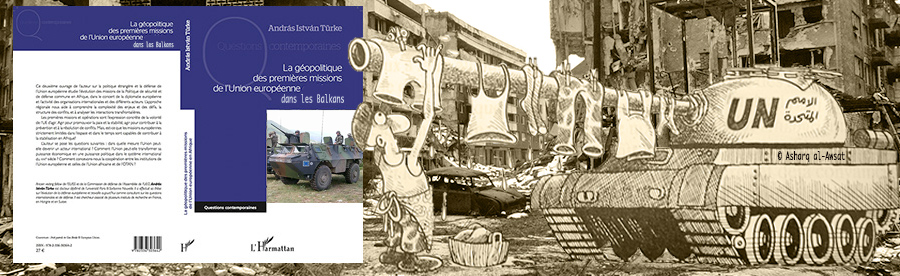
We are looking for sponsors for the English translation of these books, please contact turkeandras(at)gmail(dot)com