
You are here
Africa
Un camion de sable renversé dans un caniveau
Un camion chargé de sable a fini sa course dans un caniveau dans la soirée de mercredi 17 septembre 2025, à Lissezoun Dakpa, dans la commune de Bohicon,
Plus de peur que de mal après l'accident d'un camion chargé de sable à Bohicon ce mercredi 17 septembre 2025. Le véhicule en provenance de Djidja s'est renversé dans un caniveau à Lissezoun Dakpa. Le chauffeur selon les témoins, tentait de négocier un virage quand l'un des pneus avant s'est éclaté. Il perd alors le contrôle et percute une balise qui le fait basculer dans le caniveau. Outre les dégâts matériels, aucune perte en vie humaine ni de blessé n'ont été enregistrés.
F. A. A.
Draft agenda - Wednesday, 24 September 2025 - PE777.046v01-00 - Committee on Foreign Affairs , Committee on Development
Source : © European Union, 2025 - EP
Categories: Africa, Europäische Union
La demande de levée de l’immunité de l’eurodéputée de gauche Ilaria Salis divise le Parlement européen
Une commission du Parlement européen devrait recommander la levée de l’immunité de l’eurodéputée Ilaria Salis la semaine prochaine avant de renvoyer l’affaire devant la plénière pour décider si l’ancienne militante antifasciste de gauche doit être jugée en Hongrie.
The post La demande de levée de l’immunité de l’eurodéputée de gauche Ilaria Salis divise le Parlement européen appeared first on Euractiv FR.
Categories: Africa, Union européenne
Loss and Damage at COP30: Indigenous Leaders Challenge Top-Down Finance Models
Activists demand loss and damage reparations outside the hall where the COP29 negotiators were concluding their negotiations. Credit: UN Climate Change/Kiara Worth
By Jennifer Xin-Tsu Lin Levine
UNITED NATIONS, Sep 17 2025 (IPS)
As climate-induced disasters continue to devastate the Global South, nations are steadily mounting pressure at the United Nations for wealthier countries to deliver on long-promised climate reparations through the Loss and Damage Fund. For Indigenous peoples, whose territories are often the most ecologically intact yet most damaged by climate change, these negotiations define survival, sovereignty and recognition as rights-holders in global climate governance.
After the fund’s operationalization at the 29th Conference of the Parties to the United Nations Framework Convention on Climate Change (COP29) in Baku last fall, developing countries say that the pledges so far—approximately USD 741 million—fall drastically short of the trillions needed to recover from climate devastation.
This low number is acutely felt in Indigenous communities, whose local economies rely on thriving ecosystems.
“A lot of rich biodiversity, carbon sinks and the most preserved parts of the world are within indigenous territories,” said Paul Belisario, Global Coordinator for the Secretariat of the International Indigenous Peoples Movement for Self-Determination and Liberation (IPMSDL), in an interview with IPS. “Without recognizing Indigenous people’s right to take care of it, to govern it and to live in it so that their traditional knowledge will flourish, we cannot fully address the climate crisis.”
UN Secretary-General António Guterres echoed this sentiment in Baku, saying, “The creation of the Loss and Damage Fund is a victory for developing countries, for multilateralism and for justice. But its initial capitalization of USD 700 million doesn’t come close to righting the wrong inflicted on the vulnerable.”
These “wrongs,” Indigenous leaders argue, must include the exclusion of traditional and tribal knowledge in decision-making. In light of pushback to make climate action a legal responsibility rather than a political agreement, many are hopeful that COP30 will yield a more successful negotiation for adequate compensation.
The call for action is led by coalition blocs including the Alliance of Small Island States (AOSIS) and G77, an alliance of developing countries with China as its primary political and financial supporter. Both alliances represent the countries most vulnerable to climate-related natural disasters. G77 was particularly vocal during COP29, where their rejection of the deal was backed by a number of climate and civil society organizations who criticized the negotiating text for giving developed countries too much leeway to shirk their climate finance obligations.
For Indigenous groups, this criticism stems from concerns that funding will not successfully reach their communities due to bureaucracy or geographical and political isolation.
Secretary-General António Guterres meets with André Aranha Corrêa do Lago, President-designate of COP 30, the 2025 UN Climate Change Conference, which will be held in Belém, Brazil. Credit: UN Photo
Janene Yazzie, director of policy and advocacy at the NDN Collective, spoke about the importance of Indigenous involvement in funding distributions, saying, “What we’re advocating for is to ensure that these mechanisms… are accessible to Indigenous Peoples, uphold the rights of Indigenous Peoples, and can be utilized towards solutions and responses that are designed and prioritized by Indigenous Peoples.”
Last year, countries eventually settled on mobilizing USD 300 billion annually by 2035 to developing countries for climate finance—far below the USD 1 trillion experts say is the minimum for effective mitigation and adaptation. The financial commitment is voluntary, meaning that countries can withdraw without consequence and no protections exist to ensure the money is distributed with regard for Indigenous governance systems.
The Forest Stewardship Council (FSC) Indigenous Foundation noted that groups without formal land titles could be excluded entirely, despite their role in stewarding biodiverse landscapes.
However, a recent International Court of Justice (ICJ) report has created new legal pathways. The court placed stringent obligations on states to prevent significant climate harm and tackle climate change, stating that failure to do so triggers legal responsibility. Scientific evidence can link emissions to specific countries, allowing those affected by climate change to seek legal action, which could include getting money back, restoring land, improving infrastructure, or receiving compensation for financial losses.
Indigenous activists at COP29. Credit: UN Climate Change/Kiara Worth
This legal opinion opens new pathways for seeking restitution—not only in money but also in land recovery, infrastructure for adaptation, and guarantees of political participation.
This legal shift comes at a crucial time. In April 2025, thousands of Indigenous Brazilians marched in the capital ahead of COP30 in Belém, demanding land rights and decision-making influence. Meanwhile, the National Organization of the Indigenous Peoples of the Colombian Amazon (OPIAC) also issued a statement about the summit for Deforestation of the Amazon. They outline an action plan to end deforestation, strengthen land rights and phase out oil and gas exploration.
After indigenous groups were denied a co-presidency for COP30, Conference President André Corrêa do Lago pledged to establish a “Circle of Indigenous Leadership” within the conference. Many leaders found the arrangement insufficient—the FSC Indigenous Foundation called instead for “co-governance models where Indigenous Peoples are not just consulted but are leading and shaping climate action.”
Indigenous people make their message clear during COP29. Credit: UN Climate Change/Lara Murillo
Other groups were more explicitly critical. The Indigenous Climate Action co-authored a statement at the end of COP29 saying, “There is nothing to celebrate here today… While we urgently need direct and equitable access to climate finance for adaptation, mitigation and loss and damage across all seven socio-cultural regions… we reject the financial colonization that comes from loans and any other financial mechanisms that perpetuate indebtedness of nations that have contributed the least to climate change yet bear the brunt of its tragedies.”
Belisario frames the funding question as a matter of justice rather than charity.
“This funding is not just corporate social responsibility or compensation,” he told IPS. “This is historical justice.”
However, without Indigenous influence in the distribution of money from the Loss and Damage Fund, it remains unclear how effective this aid will be in combating climate change based on Indigenous knowledge and science. Many activists advocate for more localized approaches to climate action.
Belisario acknowledges the limitations of international negotiations.
“It’s been a running joke that we will negotiate until COP100, and we might not have that long. What we would really like to get out of COP30 is to meet many communities to discuss the common problems and make them realize that this COP is just a part of how we would like to solve our climate crisis,” he said. “We really believe that more radical ways to enact accountability and responsibility will start with movements in people’s own countries, in their own localities.”
As the FSC Indigenous Foundation concluded, “Indigenous Peoples must lead the design, management, and oversight of financial mechanisms that affect their lands, lives, and futures. Climate justice will only be possible when Indigenous Peoples are recognized as rights-holders and partners in decision-making.”
IPS UN Bureau Report
Follow @IPSNewsUNBureau
!function(d,s,id){var js,fjs=d.getElementsByTagName(s)[0],p=/^http:/.test(d.location)?'http':'https';if(!d.getElementById(id)){js=d.createElement(s);js.id=id;js.src=p+'://platform.twitter.com/widgets.js';fjs.parentNode.insertBefore(js,fjs);}}(document, 'script', 'twitter-wjs'); Related Articles
- UN Mobilizes Amid Cascading Earthquakes in Eastern Afghanistan, Aiming to ‘Build Back Better’
- ‘Israeli Offensive in Gaza City an Existential Threat to the Two-State Solution’
Excerpt:
Indigenous activists continue to fight for a seat at the table in solving climate change, asking for self-determination and financial agency.
Categories: Africa, Swiss News
Search for ancient Egyptian gold bracelet missing from Cairo museum
A photo of the 3,000-year-old bracelet has been sent to airports, seaports and border crossings to stop it being smuggled out of the country.
Categories: Africa, Határon túli magyar portálok összesített hírei
L’UE cherche à renforcer son partenariat avec l’Inde pour contrer les tensions mondiales
La Commission européenne s’est engagée mercredi 17 septembre à renforcer ses liens économiques et sécuritaires avec l’Inde, dans le cadre des efforts déployés par Bruxelles pour contrer le protectionnisme américain et les tensions croissantes avec la Chine et la Russie.
The post L’UE cherche à renforcer son partenariat avec l’Inde pour contrer les tensions mondiales appeared first on Euractiv FR.
Categories: Africa, Union européenne
Le PAPC met la ville de Cotonou à l'abri des inondations
t. 2025
La gestion durable des eaux pluviales est l'un des défis majeurs auxquels Cotonou fait face, en particulier dans un contexte marqué par des épisodes d'inondations récurrents et les effets aggravants du changement climatique. C'est dans cette optique que s'inscrit le Programme d'Assainissement Pluvial de Cotonou (PAPC), avec une priorité donnée à la réhabilitation des bassins versants, ces écosystèmes naturels essentiels à l'équilibre hydrologique de la ville.
Véritables éponges naturelles, les bassins versants jouent un rôle crucial dans la régulation des eaux pluviales, la réduction des risques d'inondation, la filtration naturelle de l'eau et la préservation de la biodiversité. Leur réhabilitation contribue non seulement à améliorer la résilience urbaine, mais aussi à renforcer la qualité de vie des populations.
Conscient de ces enjeux, le gouvernement béninois, avec l'appui de partenaires techniques et financiers, a lancé des travaux d'envergure sur 34 des 50 bassins versants que compte la ville. Ces interventions incluent le curage, le renforcement des berges, l'asphaltage, le pavage, ainsi que des aménagements paysagers. Elles ont déjà permis de réduire significativement les inondations dans plusieurs quartiers de Cotonou.
En chiffres, ces travaux représentent un progrès concret : 146 km d'ouvrages d'assainissement ont été réalisés, venant s'ajouter aux 305 km d'infrastructures existantes depuis les années 1960.
Voici quelques réalisations marquantes du programme :
– 1,132 km de collecteurs primaires réalisés grâce au financement de la Banque européenne d'investissement (BEI), au profit des quartiers Aïdjedo, Ahouansori, Ladji, Djidjè et Towéta.
– 1,650 km de collecteurs et un bassin de rétention (105.000 m³ de capacité) réalisés avec le soutien de la Banque mondiale, pour les quartiers Sètovi, Vêdoko et Zogbo.
10 km de bassins de rétention, totalisant une capacité de 231.566 m³, financés par l'Agence française de développement (AFD) et couvrant Agla, Kouhounou, Agla-Akplomey, Godomey et Ménontin.
Mais le chantier est loin d'être terminé. Le PAPC entend poursuivre l'effort en réhabilitant les 16 bassins restants, tout en mettant en place un dispositif de suivi, d'entretien et de sensibilisation citoyenne afin de garantir la durabilité des ouvrages réalisés.
Grâce à ces actions structurantes, Cotonou est en voie de devenir une ville modèle en matière de gestion intégrée des eaux pluviales, démontrant qu'il est possible d'allier urbanisation, sécurité hydrique et protection de l'environnement.
11 nouveaux hôpitaux pour des pôles de soins spécialisés dans 9 villes
Le gouvernement a autorisé, mercredi 17 septembre 2025, en Conseil des ministres, la contractualisation pour la maîtrise d'œuvre complète de plusieurs projets de santé.
Un vaste programme de construction, d'équipement et de réhabilitation de formations sanitaires a été annoncé par le gouvernement du président Talon. L'objectif est de renforcer l'offre de soins, améliorer la qualité des services et moderniser les infrastructures hospitalières.
« La finalité de ce projet est d'améliorer la qualité des soins offerts aux populations », indique le compte rendu du Conseil des ministres de ce 17 septembre 2025.
7 nouvelles formations sanitaires prévues
Cinq hôpitaux de 65 lits seront construits à Lokossa, Ouidah, Cotonou 2 & 3, Dassa-Zoumè et Savalou, selon le projet.
Un hôpital de 120 lits verra également le jour à Kétou.
À Pobè, un nouveau centre de santé est annoncé.
Des réhabilitations d'hôpitaux dans trois villes
Le centre de santé de Kétou bénéficiera d'une réhabilitation complète, tout comme certaines structures de l'hôpital de zone de Sakété.
Le projet prévoit aussi la rénovation du Centre hospitalier universitaire départemental du Borgou et de l'Hôpital d'instruction des Armées de Parakou.
« Les travaux une fois achevés favoriseront le développement de pôles de spécialités », précise le gouvernement.
Les études d'impact environnemental, de conception architecturale, de surveillance et de contrôle devront être menées avec rigueur, souligne le gouvernement qui a autorisé la contractualisation avec les cabinets sélectionnés.
Les ministres concernés sont instruits d'engager les diligences nécessaires.
M. M.
Les fraudes aux subventions agricoles dans le viseur du Parquet européen
Le Parquet européen a découvert plusieurs cas de fraude aux subventions de la Politique agricole commune (PAC) révélant de « graves lacunes » dans la détection et le signalement des détournements de fonds, alors que la Commission européenne s’apprête à annoncer la répartition de l’enveloppe agricole pour 2028-2034.
The post Les fraudes aux subventions agricoles dans le viseur du Parquet européen appeared first on Euractiv FR.
Categories: Africa, Union européenne
Trucks set ablaze as militants block key Senegal-Mali trade route
Islamists fighters are trying to prevent deliveries of fuel and other essential supplies to landlocked Mali.
Categories: Africa, Európai Unió : hírek magyarul
Trucks set ablaze as militants block key Senegal-Mali trade route
Islamists fighters are trying to prevent deliveries of fuel and other essential supplies to landlocked Mali.
Trucks set ablaze as militants block key Senegal-Mali trade route
Islamists fighters are trying to prevent deliveries of fuel and other essential supplies to landlocked Mali.
EU will Wirtschafts- und Sicherheitsbeziehungen zu Indien ausbauen
Der Schritt erfolgt einen Monat, nachdem US-Präsident Donald Trump Indien mit einem 25-prozentigen „Sekundärzoll“ für den Import russischen Öls belegt und damit in Neu-Delhi für Verärgerung gesorgt hatte. Kurz darauf reiste Premierminister Narendra Modi erstmals seit sieben Jahren nach China.
Categories: Africa, Europäische Union
Chebet focused on 'crazy dream' of historic double in Tokyo
Kenya's Beatrice Chebet is aiming to become just the third woman to clinch a 5,000m-10,000m double at the World Athletics Championships.
Chebet focused on 'crazy dream' of historic double in Tokyo
Kenya's Beatrice Chebet is aiming to become just the third woman to clinch a 5,000m-10,000m double at the World Athletics Championships.
Die Zucman-Steuer: Abgabe entscheidet über Frankreichs Haushaltsstreit
Mit 38 Jahren gilt Zucman als Shootingstar der französischen Wirtschaftswissenschaft und Mann der Stunde. Der Professor an der Universität Berkeley in den USA und Direktor des European Tax Observatory in Paris will die Staatskassen mit einem Plan auffüllen: einer Steuer von zwei Prozent auf Haushalte, deren Vermögen die Marke von 100 Millionen Euro übersteigt.
Categories: Africa, Europäische Union
UN Independent Commission Finds That Israeli Forces Have Committed Genocide in Gaza
Gazan children standing in the rubble of their demolished home in Rafah. Credit: UNICEF/Eyad El Baba
By Oritro Karim
UNITED NATIONS, Sep 17 2025 (IPS)
On September 16, the Israeli military began its ground offensive in Gaza City, accompanied by intensified bombardment of residential areas and a surge in civilian displacement. Concurrently, the United Nations Independent International Commission of Inquiry on the Occupied Palestinian Territory, including East Jerusalem and Israel, issued a report in which it found that Israel is responsible for committing genocide in Gaza, citing deliberate efforts to destroy Palestinian life, carried out with near-total impunity.
“The responsibility for these atrocity crimes lies with Israeli authorities at the highest echelons who have orchestrated a genocidal campaign for almost two years now with the specific intent to destroy the Palestinian group in Gaza,” said Navi Pillay, Chair of the Commission. “The Commission also finds that Israel has failed to prevent and punish the commission of genocide, through failure to investigate genocidal acts and to prosecute alleged perpetrators.”
The Commission found that Israeli forces have repeatedly disregarded orders from the International Court of Justice (ICJ) as well as warnings from UN Member States, human rights groups and civil society organizations. Israeli officials have dismissed the Commission’s findings, accusing it of bias and refusing to cooperate with its investigations.
In response to the Commission, Israeli President Isaac Herzog told journalists, “While Israel defends its people and seeks the return of hostages, this morally bankrupt Commission obsesses over blaming the Jewish state, whitewashing Hamas’s atrocities, and turning victims of one of the worst massacres of modern times into the accused.”
The Commission described its report as the “strongest and most authoritative UN finding to date”, while noting that it operates independently from the UN and does not speak on its behalf. Currently, the UN does not categorize Israel’s actions in Gaza as a genocide, but has been under increasing pressure from its agencies to do so. Back in August, over 500 staff from the Office of the High Commissioner for Human Rights (OHCHR) have urged UN Human Rights Chief Volker Türk to explicitly recognize the situation as a genocide. “OHCHR has a strong legal and moral responsibility to denounce acts of genocide,” said the letter signed by the UNHCR Staff Committee in Geneva. “Failing to denounce an unfolding genocide undermines the credibility of the U.N. and the human rights system itself.”
Humanitarian experts project that ongoing bombardments will result in an immense loss of human life and eliminate the remaining prospects of survival for those still in the enclave. The UN Human Rights Council (HCR) noted that controlled detonations in Gaza City have leveled entire neighborhoods and are in the process of wiping out “the last viable element of civilian infrastructure’ essential for survival.
The Commission reports that since October 7, 2023, Israel has repeatedly bombarded densely populated residential areas, often relying on explosive weapons with wide-area impacts. One spokesperson for the Israeli security forces told the Commission that they were “focused on what causes maximum damage”. The Commission has documented numerous instances of Israeli forces targeting high-rise buildings and residential apartment blocks, leading to the destruction of entire neighborhoods and the deaths of almost all civilians involved.
Additionally, the Commission observed that the number of bombs used by Israel in the past two years is unprecedented in comparison to other world conflicts, noting that Israel drops in less than a week the number of bombs the United States used in Afghanistan over an entire year —concentrated in a much smaller and more densely populated area.
Airstrikes and shellings on critical civilian infrastructures have disrupted nearly all aspects of life for Palestinians in Gaza. According to the report, damage to agricultural lands across the entire enclave poses significant long-term risks to food production and accelerated food insecurity, leading to famine.
As of February 2025, 403 school buildings in Gaza have been damaged by Israeli bombardment, including eighty-five that have been completely destroyed and seventy-three left only partly functional. The Commission warns that the strikes have effectively collapsed Gaza’s education system, disrupting schooling for over 658,000 children. Without urgent intervention, thousands are expected to suffer long-term psychological harm and stunted cognitive development due to the loss of education and psychosocial support services.
Furthermore, the widespread destruction of hospitals and the immense number of traumatic injuries from Israeli attacks have overwhelmed hospitals and healthcare centers across Gaza, leading to the collapse of the healthcare system. The siege has led to severe shortages in fuel and electricity, while also causing the looting and damaging of life-saving medical supplies and medications. As a result, patients with chronic illnesses and infections from diseases have been deprioritized, leading to a sharp increase in the number of preventable deaths and complications. Medical experts told the Commission that the targeting of healthcare facilities has severely restricted access to care for thousands of Palestinians, with children being among the most affected.
According to the report, between October 2023 and July 2025, approximately 53,000 Palestinians in Gaza were killed as a direct result of Israeli military operations. The Commission reports that Palestinians in Gaza were also attacked in their homes, in hospitals, as well as shelters, such as schools and religious sites. Israeli forces also repeatedly targeted journalists, healthcare personnel, humanitarian workers, and other protected individuals, sometimes even during ceasefire periods and without warning.
The report also documents Israeli forces targeting Palestinians in evacuation routes and designated safe zones, finding that women and children were most often directly targeted and killed, often while alone and in areas not experiencing active hostilities. In every case reviewed, the Commission found that Israeli forces were aware of civilians’ presence but opened fire regardless. Many of the victims were children carrying makeshift white flags , including toddlers who were reportedly shot in the head by snipers.
Furthermore, the report underscores that the Gaza Humanitarian Foundation (GHF) was largely ineffective in providing direct relief to struggling Palestinians and has been linked to a surge in civilian deaths. As of July 31, at least 1,373 Palestinians had been killed while trying to access food, with 859 killed near GHF sites and 514 along convoy routes—with most fatalities attributed to the Israeli military.
Furthermore, Israeli forces have effectively hindered humanitarian operations through routine bombardments and shellings. From October 2023 to July 2025, the Commission recorded at least 48 staff and volunteers from the Palestine Red Crescent Society (PRCS) that were killed. Additionally, medical personnel also informed the Commission that Israeli forces deliberately shelled ambulances, with many workers stating that they believed that they had been intentionally targeted.
The Commission also found that Israel weaponised the withholding of life-sustaining necessities, such as food, water, fuel, and humanitarian aid, leading to a sharp increase in preventable civilian deaths. According to the report, families in Gaza have less than one liter of water per person per day for drinking, cooking, and hygiene, which is far below international minimum standards for daily water consumption.
Moreover, water shortages have led to a deterioration of the sanitation system, which is particularly pronounced in displacement camps, where nearly 400,000 kilograms of waste piles up each day. This has led to the rampant spread of infectious diseases such as Hepatitis A.
Additionally, more than ninety percent of the population in Gaza has faced acute food insecurity since October 2023, with the most severe cases being concentrated in northern Gaza. According to figures from the Integrated Food Security Phase Classification (IPC), as of July 2025, food consumption has fallen far below the famine threshold in most areas of the enclave and malnutrition has reached the famine threshold in Gaza City.
The report found that Israeli forces were responsible for deliberately starving and depriving civilians in Gaza of resources that are paramount for human survival, with PRCS stating that Gaza is “unable to sustain life in its current state as civilians find their basic needs unmet”.
The Commission warns that the near-total impunity that Israeli forces and officials have emboldened the continuation of atrocities in Gaza, with global pressure mounting from the international community which urgently calls for an immediate de-escalation of hostilities, unimpeded humanitarian access, and credible mechanisms to hold perpetrators accountable.
“The international community cannot stay silent on the genocidal campaign launched by Israel against the Palestinian people in Gaza. When clear signs and evidence of genocide emerge, the absence of action to stop it amounts to complicity,” said Pillay. “Every day of inaction costs lives and erodes the credibility of the international community. All States are under a legal obligation to use all means that are reasonably available to them to stop the genocide in Gaza,” she added.
Following the report’s release, the leaders of twenty aid agencies working in Gaza, including Oxfam International, CARE and Médecins Sans Frontières (MSF), issued a joint statement also urging member states to take action to “prevent the evisceration of life in the Gaza Strip”.
“All parties must disavow violence against civilians, adhere to international humanitarian law and pursue peace. States must use every available political, economic, and legal tool at their disposal to intervene. Rhetoric and half measures are not enough. This moment demands decisive action,” the statement reads.
“The UN enshrined international law as the cornerstone of global peace and security. If Member States continue to treat these legal obligations as optional, they are not only complicit but are setting a dangerous precedent for the future. History will undoubtedly judge this moment as a test of humanity. And we are failing. Failing the people of Gaza, failing the hostages, and failing our own collective moral imperative.”
IPS UN Bureau Report
Follow @IPSNewsUNBureau
!function(d,s,id){var js,fjs=d.getElementsByTagName(s)[0],p=/^http:/.test(d.location)?'http':'https';if(!d.getElementById(id)){js=d.createElement(s);js.id=id;js.src=p+'://platform.twitter.com/widgets.js';fjs.parentNode.insertBefore(js,fjs);}}(document, 'script', 'twitter-wjs');
Ghana's Thomas Partey denies rape charges in UK
The 32-year-old footballer was in court accused of raping two women and sexually assaulting another.
Gunmen kill 22 after shooting at baptism ceremony in Niger - reports
Niger's army has failed to contain the jihadist insurgency, with dozens killed in recent attacks.
Categories: Africa, Europäische Union
Pages
the old site is here


© 2012-2015 Europa Varietas Foundation © 2015-2020 Europa Varietas Association
www.europavarietas.org | info(@)europavarietas(dot)org | Switzerland
This is a GDPR ready site
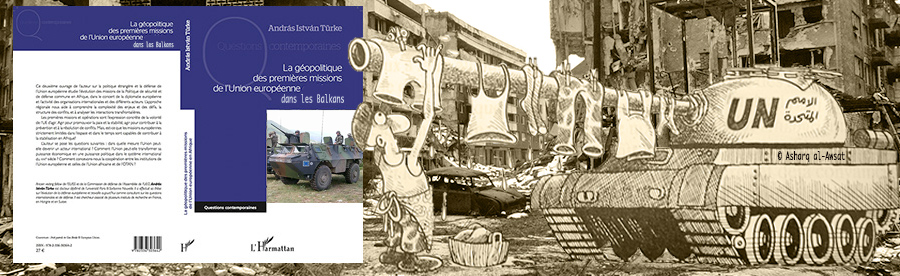
We are looking for sponsors for the English translation of these books, please contact turkeandras(at)gmail(dot)com