
You are here
Biztonságpolitika
AI-Driven Climate Change Pushes Frontline Communities Further Into Environmental Degradation and Poverty
Moderator Arif Ullah of Anthropocene Alliance joins LaTricea Adams of Young, Gifted, and Green; Dionne Delli-Gatti of Continuum Strategies; and Dr. Katlyn Turner of CU Boulder Information Science and KTLN Consulting to discuss AI’s environmental justice impacts and how frontline communities can maintain agency as data center development expands. Credit: Pillar Projects / Grayson Wise
By Oritro Karim
UNITED NATIONS, Sep 25 2026 (IPS)
On September 21, Frontline Resource Institute (FRI) hosted its Climate Justice Hub at Fordham University at Lincoln Center in New York City under the theme “Building a Stronger Climate Coalition.”
As part of Climate Week, and coinciding with the 81st session of the UN General Assembly, the event united advocates, researchers, policymakers, and frontline leaders to address the intensifying threat of climate change to global public health, while highlighting the need for stricter guardrails on artificial intelligence (AI) data centers, particularly in their impacts on frontline communities.
Arif Ullah, Executive Director of Anthropocene Alliance (A2) and a moderator at the event, referenced Empire of AI: Dreams and Nightmares in Sam Altman’s OpenAI by journalist Karen Hao, noting her warning that AI functions as a “new form of colonialism.” Ullah emphasized that AI’s impacts on frontline communities and their environments is multifaceted and far-reaching, requiring far more robust physical infrastructure to be sustainable.
“In July, nearly 1,400 tech company employees signed an open letter urging the [U.S.] government to regulate AI. Recently, an Anthropic researcher quit his job warning that the people building AI believe it could kill us all by the end of the decade,” said Ullah. “When you consider the many ways in which [resources are] extracted, it’s hard to disagree. Hyperscale data centers are among the ways it’s most extracted, not to mention destructive. We are seeing them proliferate, unchecked and unregulated across the country.”
Numerous speakers at the event underscored that natural resources are routinely extracted from frontline communities with little regard for public health or the stability of local ecosystems. To meet the rapidly growing demands for continuous power, data centers around the world have increasingly implemented methane gas turbines. These measures have led to a surge in toxic chemical emissions—such as formaldehyde and benzene—driving widespread air and water pollution while consuming vast amounts of water.
Sarah Vogel, Senior Vice President of the Environmental Defense Fund (EDF) and another moderator of the event, warned that extreme weather patterns—including intense heatwaves, prolonged flooding, destructive wildfires, degraded air and water quality, and the spread of infectious diseases—are among the most alarming and common consequences of AI-exacerbated climate change.
She emphasized that these impacts present heightened risks of lung cancer, heart disease, and strokes, particularly for frontline communities. Young people are uniquely vulnerable, as their developing bodies face continuous strain from pollutants without the opportunity to grow up in healthy environments. Those with pre-existing conditions also face a heightened risk of exacerbated health outcomes.
“For communities in this country and around the world who have experienced the legacy and ongoing impacts of environmental injustices, climate change and the related pollution is a threat magnifier,” said Vogel. “We know that when our health is impaired, it’s like a domino effect. Everything is impacted. Our ability to work, our ability to take care of children, the costs associated with it. The ability to just enjoy our lives. That is what we mean when we say that the climate crisis is a health crisis”
It is these frontline communities, oftentimes primarily composed of people of color, that are entrenched in severe environmental degradation and pushed further into poverty while others reap the financial benefits. Bearing the brunt of extreme pollution, these communities often lack the healthcare infrastructure required to withstand such environmental shocks.
LaTricea Adams, Founder, CEO, and President of Young, Gifted, and Green, noted that frontline communities are often left ill-equipped to adapt to AI-driven climate shocks, describing it as a “point of reckoning.” She emphasized that many residents are often unaware that they are on the frontlines of environmental degradation, going a “significant amount of time” without understanding the full extent of how these developments directly impact their lives.
“We as a collective are still not taking public health seriously. That also has an economic implication,” said Adams. “While you may bring in millions of dollars, if people are consistently sick, does that not have an impact on healthcare, which we know is lacking in our country and in our society?”
“What you’re not gonna do is come into our community and give us nothing but pollution while we remain in poverty. But at the same time, we do have to make sure that we protect the people that have been neglected for centuries in disinvestment.”
Several panelists underscored the importance of centering frontline communities in AI reform, with cooperation between governments, community leaders, corporations, and the health sector imperative in preventing harm and establishing sustainable practices that can uplift these communities. Vogel noted that in order to build healthy and resilient communities, approaches in AI regulation must prioritize health and equity to effectively minimize risks.
Panelist Ali Abazeed, Chief Public Health Officer and Director for the city of Detroit warned that the international community must not become “sophisticated witnesses” to preventable harm, noting that progress hinges on empowering communities and providing them with the data that affects their lives.
“Public health doesn’t happen inside an office. Comfort is comfortable. The ivory tower—the research generated there is hugely important but it has to roll out to the communities,” said Abazeed, emphasizing that action is critically important amidst widespread cuts to funding for research and potential hostile takeovers of national institutes for health.
“Speaking as a government official, we need to recognize that the work that we do and the powers that we have can help uplift and elevate communities. The charge is to be outside, to be in the clinic lobby for public health, in the church basement, for us to be meeting the fence-line communities.”
IPS UN Bureau Report
Categories: Africa, Biztonságpolitika
Wegen Sexualverbrechen: Harvey Weinstein zu 15 Jahren Haft verurteilt
Der frühere US-Filmproduzent Harvey Weinstein ist in New York wegen eines Sexualverbrechens aus dem Jahr 2006 zu 15 Jahren Haft verurteilt worden. Der 74-Jährige sitzt bereits wegen anderer Verurteilungen im Gefängnis.
Categories: Biztonságpolitika, Swiss News
UK to review Chagos Islands deal over lack of US support, Streeting tells BBC
Defence Secretary Wes Streeting has confirmed the review after Donald Trump told Andy Burnham the deal was "terrible".
Categories: Africa, Biztonságpolitika
South Sudan's president dissolves government ahead of country's first elections
South Sudan has not held elections since independence in 2011 - polls have twice been postponed.
Categories: Africa, Biztonságpolitika
Nigerian football enduring 'worst time in history' - Odegbami
Former Afcon winner Segun Odegbami has slammed those running Nigerian football after the country missed out on the men's and women's World Cups.
Categories: Africa, Biztonságpolitika
Nigerian football enduring 'worst time in history' - Odegbami
Former Afcon winner Segun Odegbami has slammed those running Nigerian football after the country missed out on the men's and women's World Cups.
Categories: Africa, Biztonságpolitika
How Ceuta, football and Israel are shaping Morocco's election
Young voters are being courted with football slogans, promises of jobs and anti-Israel rallying calls.
Categories: Africa, Biztonságpolitika
Veteran BBC Africa correspondent Mark Doyle dies aged 67
Doyle was best known for reporting on African conflicts in the 1990s and 2000s, notably in Rwanda and Sierra Leone.
Categories: Africa, Biztonságpolitika
KATONÁK ÉS LÉGIMENTŐK A PIPISHEGYEN
Ahogy az már megszokott, a szeptember idén is az Air Wolf Hunting kutató-mentő gyakorlattal kezdődött a Mátrában. Az MH 86. Szolnok Helikopterdandár H145M, H225M és AS350-es helikopterei mellett a légimentők EC135 P2+ gépe is a Gyöngyös melletti pipishegyi repülőtérre települt, hogy a pilóták, illetve a légimentő és kutató-mentő szakszemélyzetek közösen gyakorolják a különböző eljárásokat.
A fotókért ezúttai is a környéken élő Colin Pennynek tartozom köszönettel.
Categories: Biztonságpolitika, Europäische Union
Ostravai víg napok
Kissé visszafogottabb részvétellel, de nem csituló népi érdeklődés közepette rendezte meg idén is a NATO-napokat az euroatlanti Jagello-szövetség.
Szlovák Block 70-es háton Ostrava különleges, betonra merőleges sótengelyén.
A tíz év után újra különleges vendég Németország VIP A319-ese a vendéglátó tango riasztásának Gripen-géppárjával.
Spanyol Tájfun forszázzsal .
Látványfokozó fuel dump az EF függőleges vezérsíkjából.
A BW Tiger UHT-je függesztménnyel demózott...
...ami megegyezett a statikusra kihelyezett gép 2xFZ225, 4xTrigat, 1xHMG konténer konfigurációjával.
Egy magyányos török füstölgő csörgőkígyókkal és nagy állásszögű vortexbajusszal.
Dowty örvények a Reparto Sperimentale di Volo C-27-esének légcsavarvégeit se kìmélik
Zord
Categories: Afrique, Biztonságpolitika
Domestic revenue mobilisation, the financing gap and why tax expenditures matter
As governments increasingly prioritise national interests, security concerns and geopolitical competition over collective global responsibilities, traditional development finance mechanisms are being weakened, repurposed or redirected towards advancing narrow strategic objectives. The Organisation for Economic Co-operation and Development projects a 23 per cent decline in official development assistance (ODA) between 2024 and 2025 (OECD, 2026). This reduction not only has immediate consequences for the lives and livelihood of millions of people in low-income countries (LICs) who depend on external assistance, but also creates uncertainty for partner countries, disrupts long-term development planning, and undermines the legitimacy and effectiveness of development cooperation. At the same time, development finance needs have risen sharply and continue to rise due to the climate crisis, the impacts of the COVID-19 pandemic, supply chain disruptions and rising food and energy prices. Together, these pressures have contributed to a projected USD 6.4 trillion financing gap for achieving the Sustainable Development Goals (SDGs) by 2030 (OECD, 2025a). Against this backdrop, mobilising greater volumes of private capital aligned with the SDGs has become increasingly important (on the need for the European Union to become more adept at facilitating private investment, see the contribution by Keijzer & Furness in this volume). In particular, blended finance has frequently been promoted as one key instrument to achieve this objective (on domestic revenue mobilisation as another key approach, see the contribution by Sen & von Haldenwang in this volume). However, despite growing attention from policy-makers and development institutions, the scale of blended finance has remained well below expectations and so far made only a limited contribution to closing the SDG financing gap. Although transaction volumes increased from USD 11.5 billion in 2020 to USD 18.3 billion in 2024, they remain small relative to the estimated USD 4 trillion annual SDG financing gap (Convergence, 2025; OECD, 2025a). As such, the Sevilla Commitment (UNCTAD, 2025) calls for scaling up private capital mobilisation through blended finance and a broader use of risk-sharing instruments. This chapter discusses the benefits and limits of blended finance as well as reforms that are needed at different levels to scale up blended finance and enhance its development impact.
Categories: Biztonságpolitika, Diplomacy & Defense Think Tank News
Dänemark willigt in Deal ein: Trump schnappt sich Grönland jetzt doch
Donald Trump (80) sichert den USA mit einem neuen Abkommen permanente Kontrolle über Grönlands Sicherheit. Der Deal mit Dänemark und Grönland soll geopolitische Rivalen wie China und Russland in der Arktis ausschalten. Er will umgehend Truppen losschicken.
Categories: Biztonságpolitika, Swiss News
Spieldauer für Ex-Zürcher: Baltisberger schlägt Knak den Stock zwischen die Beine
Tigers-Spieler Baltisberger schlägt Knak vom ZSC bei einem Zweikampf beim Bully den Stock zwischen die Beine und muss dafür erst in die Kühlbox und anschliessend nach dem Video-Review der Schiris unter die Dusche.
Categories: Biztonságpolitika, Swiss News
SCL Tigers – ZSC Lions 3:4: Teamkollegen fahren sich über Haufen – Lehmann trifft
In Zusammenarbeit mit MySports präsentiert dir Blick die Highlights der Partie SCL Tigers – ZSC Lions (3:4).
Categories: Biztonságpolitika, Swiss News
Ambri-Piotta – SCRJ Lakers 6:3: Ambri-Goalie Wüthrich kassiert Slapstick-Tor
In Zusammenarbeit mit MySports präsentiert dir Blick die Highlights der Partie HC Ambri-Piotta – SCRJ Lakers (6:3).
Categories: Biztonságpolitika, Swiss News
SOTEU 2026 – What Did Ursula von der Leyen say and what did she leave out? – ELIAMEP experts’ views
In a changing Europe, ELIAMEP analysts assess the priorities highlighted by European Commission President Ursula von der Leyen and what was missing from her agenda. (in Greek)
Categories: Biztonságpolitika, Diplomacy & Defense Think Tank News
Building a coherent and efficient European Security Strategy (ESS)
- The ESS should provide a common strategic direction across defence, resilience, economic security, critical infrastructure and external partnerships, with greater emphasis on faster decision-making and implementation.
- A 360-degree approach should be combined with a differentiated assessment of threats, reflecting their immediacy, severity and systemic effects.
- The ESS should strengthen coordination across existing security instruments through faster response mechanisms, stronger preparedness and improved intelligence coordination.
- The paper proposes a Security and Defence Union with a ministerial Security and Defence Council to strengthen political coordination and shorten decision cycles.
- Maritime security should become a more explicit part of the ESS, with particular attention to the Eastern Mediterranean, maritime domain awareness and the protection of critical maritime and seabed infrastructure.
- Further priorities include Western Balkan defence integration, climate preparedness, external resilience to hybrid threats and sustained support for Ukraine.
The Policy paper was edited by: Elena Lazarou, Director General, ELIAMEP; Panayotis Tsakonas, Senior Research Fellow, Head, Foreign Policy & Security Programme, ELIAMEP; Professor, University of Athens; Αpostolos Samaras, Research Fellow at the European Programme ‘Ariane Condellis’, ELIAMEP; Athina Fatsea, Research Assistant to the Director General; European Programme Manager, ELIAMEP and Panos Politis Lamprou, Research Fellow, Defence Hub, ELIAMEP.
Contributions were made by (in alphabetical order): Ino Afentouli, Ioannis Armakolas, Spyros Blavoukos, Constantine Capsaskis, Athina Fatsea, Dimitris Gavalas, Ioannis N. Grigoriadis, Triantafyllos Karatrantos, Mihalis Kritikos, Elena Lazarou, Michalis Mathioulakis, Panos Politis Lamprou, Apostolos Samaras and Dimitris Tsarouhas.
Categories: Biztonságpolitika, Diplomacy & Defense Think Tank News
LÉGIERŐ GYAKORLAT - SZÁRAZFÖLDI SZEMMEL (NTM 2026, 1. RÉSZ)
Egy nemzetközi légierő-gyakorlatot többféle szemszögből lehet bemutatni: más élményt, tapasztalatot jelent a pilótáknak, a repülőműszakiaknak, a logisztikusoknak vagy az esemény dokumentálásával megbízott fotósnak, videósnak. Négyrészes sorozatomat az utóbbival kezdem, aki szokatlan módon nem a légierő berkeiből, hanem szárazföldi alakulattól került a csapatba.
A görögországi Araxoszban megrendezett idei NATO Tiger Meet gyakorlaton Vasadi Zoltán István „félig” civil szakemberként – honvédelmi alkalmazottként – dokumentálta a kecskeméti állomány munkáját és a Gripenek repülését. Zoltán egy szárazföldi alakulat, a Magyar Honvédség Klapka György 1. Páncélosdandár (jelenleg MH 25. Klapka György Páncélosdandár) Harci Forgató Csoport (NATO-terminológiával Combat Camera Team) tagja. Arról, hogy szárazföldiként hogyan került a légierő közelébe és hogyan élte meg a kecskemétiekkel közös munkát, a páncélosdandár tatai laktanyájában beszélgettünk.
Categories: Afrique, Biztonságpolitika
Pas de panique
Dans son focus sur la défense et la sécurité nationale paru à la mi-septembre, le Haut-Commissariat au plan et à la stratégie conseille de « préparer la nation, en renforçant la capacité de résilience nationale ». Le thème de la résilience sur les « nouvelles lignes de front intérieures » du territoire national, « sous le seuil » de la guerre, a été retenu aussi pour l'ouverture le 7 octobre prochain à Toulon des Rencontres Stratégiques de la Méditerranée. Ambiance panique ?
- Défense en ligne / France, Armée, OTAN
Categories: Biztonságpolitika, Défense
Kontakt mit Bichsel und Update zu Fiala: Nati-Coach Cadieux arbeitet WM-Enttäuschung in Einzelgesprächen auf
Nati-Trainer Jan Cadieux hat die Enttäuschung des verlorenen WM-Finals im Mai mit den Nati-Spielern in Einzelgesprächen noch einmal Revue passieren lassen. Auch der lange intern gesperrte Lian Bichsel ist wieder Teil der Pläne.
Categories: Biztonságpolitika, Swiss News
Pages
the old site is here


© 2012-2015 Europa Varietas Foundation © 2015-2020 Europa Varietas Association
www.europavarietas.org | info(@)europavarietas(dot)org | Switzerland
This is a GDPR ready site
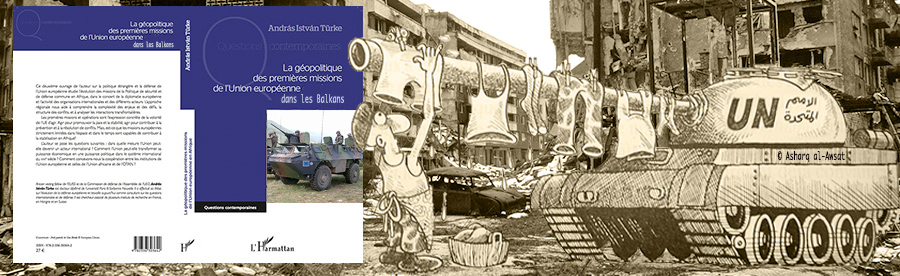
We are looking for sponsors for the English translation of these books, please contact turkeandras(at)gmail(dot)com