
You are here
Feed aggregator
116 migrants béninois dont 22 femmes rapatriés du Niger
L'Organisation Internationale pour les Migrations (OIM), avec le soutien du gouvernement béninois, a facilité le retour au Bénin de 116 migrants béninois par vol charter dans le cadre de son programme d'assistance au retour volontaire et à la réintégration.
116 ressortissants béninois, dont 22 femmes, sont rentrés au Bénin en provenance du Niger grâce à l'appui du gouvernement béninois et de l'Organisation Internationale pour les Migrations (OIM).
Selon l'OIM Bénin, cette opération, menée le mois dernier, s'inscrit dans le cadre du Programme d'Assistance au retour volontaire et à la réintégration (AVRR).
Le transfert a été effectué par vol charter.
L'initiative bénéficie du soutien des Partenariats internationaux de l'Union européenne et de l'OIM. Le dispositif vise à accompagner les bénéficiaires dans leur réinstallation au sein de leurs communautés d'origine.
M. M.
Categories: Afrique
New-York-Flug muss wegen schweren Turbulenzen landen
Ein Avianca-Flug von Medellín nach New York ist nach starken Turbulenzen nach Miami umgeleitet worden. Mindestens neun Personen wurden am frühen Freitagmorgen ins Spital gebracht.
Categories: Afrique, Swiss News
Un cultivateur arrêté pour braquage
Un motocycliste a échappé à une agression nocturne à Kassakou, dans la commune de Kandi. Le suspect, un cultivateur de la localité, a été interpellé, jeudi 8 octobre 2026, au lendemain des faits.
Alors qu'il circulait sur la route de Pégon, mercredi 7 octobre 2026, vers 22 heures, le conducteur d'une moto Haojue KA 150 a été invité à s'arrêter par un individu qui lui faisait signe à l'aide d'une lampe torche.
En activant son phare, le motocycliste découvre un homme muni d'un bâton et portant un coupe-coupe en bandoulière. L'individu lui assène alors un coup de gourdin sur le phare de sa moto. Mais la victime parvient à accélérer et à échapper à son agresseur.
Le motocycliste dépose une plainte au commissariat de l'arrondissement de Kassakou.
Une enquête est ouverte et aboutit à l'interpellation d'un cultivateur jeudi 8 octobre 2026.
Interrogé par les officiers de police judiciaire, le suspect nie les faits qui lui sont reprochés.
L'individu est déjà connu des services judiciaires pour des faits de vol à main armée dans la localité. Il avait été incarcéré pour des faits similaires.
Le suspect est placé en garde à vue.
M. M.
Categories: Afrique
Das ist der neue ID. Tiguan
VW ID.4 und ID.5 sind Geschichte. Volkswagen ersetzt das elektrische Zwillingspaar mit dem ID. Tiguan und bringt damit nicht nur einen bekannten Namen in die Elektropalette, sondern auch ein gefälligeres Design und mehr Wertigkeit im Innenraum.
Categories: Határon túli magyar portálok összesített hírei, Swiss News
«Das war für mich die letzte Chance»
Dario Rohrbach spricht im Podacst «SCHLIIFTS?» über seine Zeit bei Ajoie und wie er sich beinahe dazu entschieden hat, den Hockey-Traum aufzugeben.
Categories: Határon túli magyar portálok összesített hírei, Swiss News
Un enfant meurt par noyade en tentant de sauver des moutons
Un petit garçon est décédé par noyade, le 6 octobre 2026, à Bininsi, dans l'arrondissement de Gbégourou, commune de N'Dali. Il tentait d'empêcher des moutons qu'il accompagnait de traverser un cours d'eau.
Drame à N'Dali. Un garçon de 13 ans est mort par noyade mardi 6 octobre 2026. Selon les informations rapportées par Su Tii Sua FM, le jeune garçon avait conduit des moutons vers un cours d'eau pour s'abreuver. Mais la situation a basculé lorsque les moutons ont commencé à se jeter à l'eau pour rejoindre l'autre rive.
En tentant de les empêcher de poursuivre leur traversée, l'adolescent est entré dans l'eau mais n'a pas réussi à regagner la berge.
Les recherches engagées pour le retrouver se sont poursuivies jusqu'au mercredi 7 octobre 2026. Son corps a finalement été repêché dans la matinée par des plongeurs mobilisés pour les opérations.
Après le constat des agents de santé et de la Police, le corps a été remis à la famille pour inhumation.
F. A. A.
Categories: Afrique
Les résultats du tirage Loto Fortune de 11H
LES RÉSULTATS LOTO FORTUNE SONT LÀ !
TIRAGE N°162/26
Vendredi 09 Octobre 2026 (11H)
53 • 74 • 04 • 22 • 85
Félicitations aux heureux gagnants !
Pas encore gagné ? Gardez le sourire !
Rendez-vous au prochain tirage de 14H pour une nouvelle chance.
Jouez dans les centres de jeux ou en ligne : Tapez 590# ou lnbloto.bj
Jouez avec modération et responsabilité. Le jeu doit rester un plaisir.
A TOI DE JOUER
#LaChanceAvecModération
Categories: Afrique
Doctor accused of 1994 Rwanda genocide offences to face trial in UK
Dr Vincent Brown was allegedly a "leader" or "supervisor" of violent acts carried out by others in the early days of the genocide.
Alger réagit après la mort d’une Algérienne dans l’attaque de l’aéroport d’Abha
Le décès d’une ressortissante algérienne dans l’attaque qui a visé l’aéroport international d’Abha, en Arabiesaoudite, a suscité une réaction officielle d’Alger. Le ministère des Affaires […]
L’article Alger réagit après la mort d’une Algérienne dans l’attaque de l’aéroport d’Abha est apparu en premier sur .
Categories: Afrique
The OECD Development Assistance Committee at 70: who defines ‘Mutual Interest’?
The OECD’s aid committee turns 70 in 2031, as record aid cuts and a shift from solidarity to self-interest reshape why countries give. Where this leads is still open. Aid could become a genuine partnership, a deal between elites, a tool of geopolitical bargaining or a purely commercial transaction. Each path would change the committee’s role, and with it the future of the 0.7% aid target.
Categories: Diplomacy & Defense Think Tank News, Europäische Union
The OECD Development Assistance Committee at 70: who defines ‘Mutual Interest’?
The OECD’s aid committee turns 70 in 2031, as record aid cuts and a shift from solidarity to self-interest reshape why countries give. Where this leads is still open. Aid could become a genuine partnership, a deal between elites, a tool of geopolitical bargaining or a purely commercial transaction. Each path would change the committee’s role, and with it the future of the 0.7% aid target.
Categories: Diplomacy & Defense Think Tank News, European Union
Minutes - Wednesday, 2 September 2026 - PE796.369v01-00 - Committee on Industry, Research and Energy , Committee on Security and Defence
Source : © European Union, 2026 - EP
Categories: Europäische Union, European Union
The next generation of national development banks: early lessons from Ghana and Nigeria
The discussion paper assesses whether and how newly established national development banks (NDBs), specifically the Development Bank Ghana (DBG) and the Development Bank of Nigeria (DBN), are growing into independent and impactful institutions capable of fostering sustainable development. It focuses on five analytical dimensions: (1) institutional independence, (2) the diversification of funding sources and the scaling up of operations, (3) the relationship between NDBs and participating financial institutions (PFIs), (4) collaboration between NDBs and development partners (DPs), namely multilateral development banks (MDBs) and bilateral development finance institutions and (5) sustainability and green finance. The research adopts a qualitative comparative case study methodology, drawing on 55 semi-structured interviews conducted across Ghana and Nigeria with representatives from NDBs, PFIs, DPs, civil society organisations and other relevant stakeholders such as finance ministries, central banks and providers of technical assistance. The data are analysed using qualitative content analysis and triangulation. The discussion paper aims to provide insights for policymakers, central banks and DPs, and inform the design of future NDBs regarding how they can become strong institutions that support long-term development objectives.
Our results show that DBG and DBN have emerged as relevant actors within the Ghanaian and Nigerian development finance landscapes, particularly through their role in facilitating access to long-term and often concessional funding, which helps PFIs expanding lending to MSMEs and underserved sectors. Furthermore, the study finds that both institutions have established governance and accountability structures that, together with their wholesale lending models, provide substantial protection against political interference. In particular, strong support from DPs proved central to the establishment, growth and operationalisation of both NDBs. Beyond financial resources, DPs provided technical assistance, institutional capacity building, governance support and sustainability expertise. Another notable finding of the study is that DBG and DBN foster sustainability by embedding environmental and social principles into their strategies and operations, and making sustainability a core institutional priority, especially through wholesale lending, technical assistance and the integration of sustainability. At the same time, the study identifies several constraints related to limited funding volumes, high pricing, limited risk-sharing mechanisms, administrative burdens associated with DP engagement and challenges in adapting international sustainability standards to local contexts. Overall, the findings suggest that although DBG and DBN have generated substantial development value, established strong governance structures and demonstrated institutional independence, increasing their impact will require the mobilisation of additional funding to scale up their operations and activities.
Categories: Afrique, Diplomacy & Defense Think Tank News
Developing competences for Sustainable Futures: a competence model and design recommendations for learning environments
Preparing individuals to contribute to sustainability transformations has become an increasingly important challenge for higher education, professional training and leadership development. While research has identified a wide range of sustainability competences, comparatively less attention has been paid to how these competences can be fostered through purposefully designed learning environments. Drawing on nearly 20 years of experience with the Managing Global Governance (MGG) Academy of the German Institute of Development and Sustainability (IDOS), this paper offers a practice-informed perspective on competence development for future changemakers.
The paper addresses two questions: what competences are particularly relevant for individuals seeking to contribute to sustainability transformations and global cooperation, and how can learning environments be designed to strengthen these competences? Building on experience from the MGG Academy and relating it to literature on sustainability competences, transformative learning and adult education, the paper develops a competence model organised around three complementary dimensions – sense-making, cooperation and transformation – and operationalises 11 competences by distinguishing the knowledge, skills and attitudinal components associated with them. The paper further derives six recommendations for learning design: intentionally curating diversity, fostering trust and psychological safety, enabling mutual learning, aligning learning activities with the intended competence development, creating structured opportunities for reflection, and designing learning for transfer to professional practice.
Rather than proposing a universal blueprint, the paper demonstrates how competence models can provide orientation for coherent programme design and how learning theory can be translated into practical educational approaches. It concludes that competence development constitutes an important contribution to sustainability transformations, while recognising that impact also depends on supportive organisational environments, professional networks and broader institutional conditions. By connecting theoretical insights with nearly two decades of practical experience, the paper contributes to the growing discussion on how learning and dialogue programmes can strengthen the people and relationships through which transformative change becomes possible.
Categories: Afrique, Diplomacy & Defense Think Tank News
135 faux cachets officiels saisis : la police démantèle un réseau de faussaires repéré en ligne
Sept personnes viennent d’être interpellées à Relizane dans une affaire de faux documents officiels d’une ampleur inhabituelle. La brigade de lutte contre la criminalité cybernétique […]
L’article 135 faux cachets officiels saisis : la police démantèle un réseau de faussaires repéré en ligne est apparu en premier sur .
Categories: Afrique
Pages
the old site is here


© 2012-2015 Europa Varietas Foundation © 2015-2020 Europa Varietas Association
www.europavarietas.org | info(@)europavarietas(dot)org | Switzerland
This is a GDPR ready site
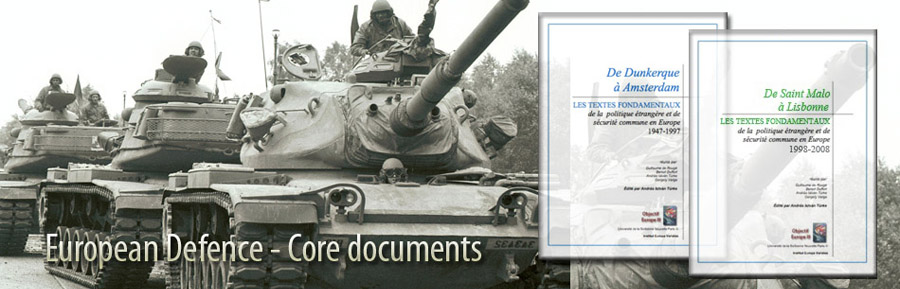
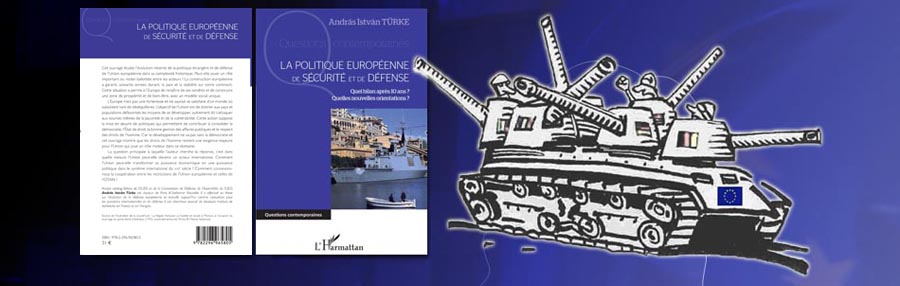
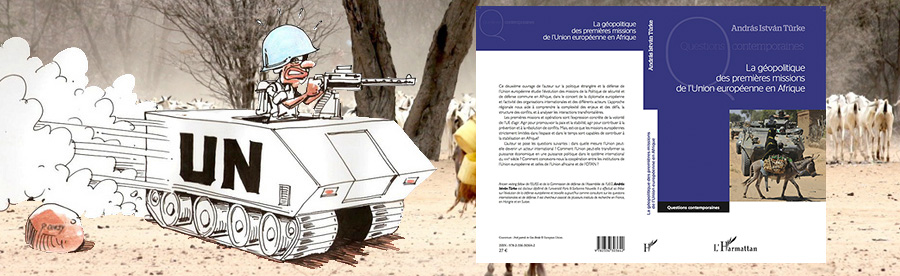
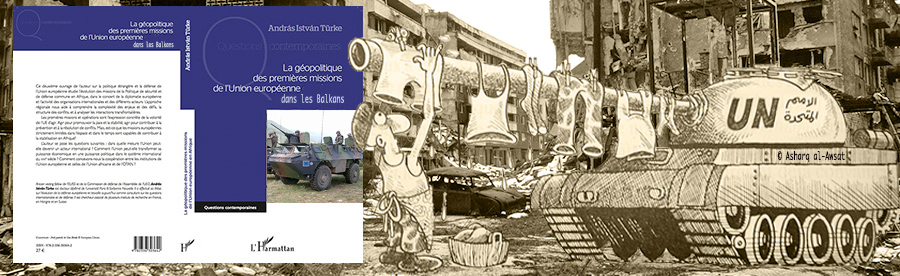
We are looking for sponsors for the English translation of these books, please contact turkeandras(at)gmail(dot)com