
You are here
Feed aggregator
South Africa: Activists Call for Greater Access to Newly-Launched HIV Prevention Drug
South African President Cyril Ramaphosa and Health Minister Aaron Motsoaledi at the official launch of the new injectable drug for HIV prevention, Lenacapavir. Credit: GCIS
By Ed Holt
BRATISLAVA, Jun 9 2026 (IPS)
As South Africa officially launches the rollout of a groundbreaking HIV prevention drug, civic groups in the country have slammed the plan, saying it will not reach anywhere near enough people.
President Cyril Ramaphosa on June 5 launched the roll-out in South Africa of lenacapavir, a twice-yearly injectable HIV pre-exposure prophylaxis (PrEP) drug that has been shown to offer almost complete protection against the disease, billing it as a ‘historic event’.
But activists say there is nothing to celebrate, warning the targets set in the rollout are too low, and the volumes of the drug provided by the pharma firm behind its development, Gilead, are tiny.
“In an ideal world, South Africa would not be rolling out lenacapavir as a small pilot. We would be treating it as an epidemic-ending intervention. The objective should be to get millions of people onto lenacapavir as quickly as possible, not a few hundred thousand over several years,” Tian Johnson, founder and strategist of the Pan-African health justice advocacy group, African Alliance, told IPS.
“South Africa has the world’s largest HIV epidemic. We also helped generate the scientific evidence that made lenacapavir possible. An appropriate response would therefore be a national scale-up plan linked to epidemiological need, not constrained by artificial scarcity created by patent monopolies, donor allocations, and supply decisions made outside the country,” he added.
South Africa has the world’s highest burden of HIV, with around 8 million people living with HIV. In 2024 it recorded 170,000 new infections, accounting for roughly 13% of the 1.3 million new cases globally that year.
Lenacapavir has been shown in trials to provide almost complete protection against HIV acquisition. It has been praised not just for its effectiveness but also for its potential for very high adherence, as it is an injection given only every six months.
Civic groups say that if rolled out in a timely manner and with greater volumes, it could avert up to 52,200 new infections per year in South Africa alone.
They also point to modelling which has shown that around 2 million people in South Africa need to be taking lenacapavir annually for it to have a real impact on the number of new HIV infections.
But the government’s rollout is expected to reach only around 450,000 people over the next two years. Moreover, only just under 38,000 doses have so far arrived in the country.
Activists blame adversarial US policy and effective monopolies on the drug’s supply for this and say it has highlighted concerns over who has real control over efforts to end the epidemic in the country.
The Global Fund to Fight Aids, TB and Malaria (GF) and the United States President’s Emergency Plan for Aids Relief (PEPFAR) have historically been central to funding South Africa’s HIV response.
But days after Donald Trump entered the White House early last year, PEPFAR slashed around half of its funding for HIV in South Africa – what is left of it is due to run out this month.
So far, the Trump administration is refusing to fund lenacapavir for South Africa as the two countries lock horns politically and ideologically.
This means that the doses to be used in South Africa over the next 18 months to two years will be funded by the Global Fund and are expected to be only sufficient for 456,000 people.
Meanwhile, since Gilead is currently the only manufacturer of lenacapavir and generics are not available on the market yet, there is no alternative path available to secure more doses for the rollout.
Currently the cost of Lenacapavir is about USD 28,000 per person a year in the U.S., but Gilead has issued six licences to companies to manufacture generics, which will be available to 120 low- and middle-income countries. These are expected to become available in 2027, potentially for as little as USD 40 per person per year.
Earlier this year, it was announced the South African government was working to identify a local company to manufacture lenacapavir. Once identified, that company would then be recommended to Gilead for a voluntary licence to produce the drug.
In 2024, Gilead granted such licences to six generic manufacturers across India, Egypt and Pakistan to produce and supply the drug to 120 low- and middle-income countries. At the time, critics pointed out that no South African drugmakers were included.
Gilead has said it is open to adding another licence for local manufacturing in Sub-Saharan Africa. But activists warn that any final decision on a licence will rest with the company.
The groups also highlighted previous delays in the rollout of the programme, which had initially been scheduled to begin in April. When the first doses arrived in South Africa in March and April, they were subject to obligatory regulatory tests. Gilead could have asked for an exemption to the tests but did not, activists claim.
They say all this means properly protecting people against HIV in South Africa is effectively dependent on a pharmaceutical firm and US political policy.
“Gilead currently exercises extraordinary influence over who receives lenacapavir, in what quantities, and on what timeline. When a country with the world’s largest HIV epidemic cannot independently determine access to a medicine that was partly researched within its own borders, something is fundamentally wrong with the balance of power. The uncomfortable reality is that key decisions affecting South Africa’s HIV response are still being made in corporate boardrooms and donor negotiations rather than in South Africa. That should concern everyone, regardless of where they stand on this rollout,” said Johnson.
“Many countries are receiving doses funded by the US, and then also being funded as a result of re-allocation of already committed Global Fund funding repurposed for lenacapavir. The US is refusing to fund South Africa ‘s lenacapavir program, even though there is no better example of a country that needs lenacapavir, and [the programme] would immediately show impact,” Asia Russell, Executive Director of HIV advocacy group Health Gap, told IPS.
“The US government has stated its goal is to bend the curve of new HIV infections, but it is blocking access to the doses urgently needed in South Africa, which means it will fail to reach its goal. It should immediately reverse this decision, stop bullying South Africa, and provide doses – South Africa’s minuscule allocation of lenacapavir only from the Global Fund means the pandemic will continue raging in South Africa,” she added.
It will also have a detrimental effect on wider efforts to tackle HIV outside South Africa, others say.
“South Africa accounts for more than 13 percent of new HIV infections globally each year, and is a home for millions of other public health care recipients from other countries who benefit from the South African health care system. The US government’s refusal to support South Africa with lenacapavir and cut off other funding is not only cruel but also contributes to delays in ending the HIV pandemic,” Bellinda Thibela, Coordinator for Health Justice and Human Rights at Health GAP, told IPS
Meanwhile, activists point out what they see as another huge injustice in the situation.
South Africa was key to the development of the drug – it hosted testing sites, its clinics were used in research, and subjects came from its communities – yet it is now struggling to secure sufficient supplies of that same drug.
“South Africa played a pivotal role in the clinical development of lenacapavir, hosting 25 of the 28 trial sites that participated in the PURPOSE 1 Phase III study of this groundbreaking long-acting HIV prevention tool. Yet, despite this substantial contribution, my country has found itself in the difficult position that, following approval by the US FDA and rollout in several high-income countries, access to lenacapavir at scale for PrEP remains abysmally low and challenging. And not just for South Africa,” Fatima Hassan of the Health Justice Initiative (HJI), told IPS.
“This underscores persistent inequities within the global innovation ecosystem, where countries that bear a disproportionate burden of disease and contribute significantly to research and development often face delays in accessing the very health technologies they helped bring to fruition. It also raises important questions about local manufacturing, technology transfer, regulatory capacity, affordability, and equitable access in markets that are frequently perceived as less commercially attractive, despite their central role in generating the evidence that drives global health innovation and the development of new health technologies,” she added.
In a statement, Gilead said the launch of the rollout was an important step toward expanding access to lenacapavir for communities most affected by HIV.
“South Africa is at the heart of global efforts to end HIV. With the country’s launch of lenacapavir, there is now an opportunity to rapidly accelerate progress,” said Daniel O’Day, Chairman and Chief Executive Officer of Gilead Sciences. “Through partnerships with country leadership, the Global Fund, and the U.S. State Department via PEPFAR, Gilead is working to bring lenacapavir to the communities most in need, ahead of the broad rollout of generic versions of the medicine.”
The company also highlighted what it said was its commitment to supporting broad, equitable and sustainable access to lenacapavir for HIV prevention globally, pointing to its royalty-free voluntary licence agreements with six manufacturers enabling generic supply across 120 low- and lower-middle-income countries to support long-term, lower-cost medication supply.
“As highlighted by today’s announcement and the strong, coordinated leadership demonstrated in South Africa, the continued collaboration between countries, global health partners and industry will be critical to reaching people with new innovations at scale, reducing new HIV infections and advancing our shared goal of ending HIV as a public health threat,” the company said in the statement.
Civic groups have called on South Africa’s government to scale up the volumes for the rollout and expand it to make sure it can be accessed by more people – they have criticised the fact that out of more than 3,000 public clinics, just 300 in 23 districts have been chosen for the rollout, and mobile clinics, which would be more likely accessed by some communities, are not being used.
They also want to see more pressure put on Gilead to drastically expand its current licence territories to help manufacture lenacapavir.
“At the moment, we have a Gilead-driven launch event, but we do not have a credible epidemic-ending plan. The bigger issue is that South Africa appears to have accepted the limits imposed by Gilead rather than challenging them,” said Johnson.
He added that under the current roll-out plan a crucial opportunity to end the HIV epidemic sooner in South Africa was being missed.
“The tragedy is that South Africa is not dealing with a scientific failure – the science worked. Lenacapavir is one of the most promising HIV prevention tools ever developed. What we are facing is a political and access failure. If we know that roughly two million people need access annually to achieve maximum public health impact, then a faux roll out reaching a fraction of that number inevitably means preventable infections will continue occurring.
“Every year we delay large-scale access is another year in which tens of thousands of South Africans will acquire HIV despite the existence of a prevention tool capable of dramatically reducing transmission. This is why the debate is not really about a rollout. It is about whether South Africa intends to end the epidemic or manage it. The current approach manages the epidemic dismally. An epidemic-ending strategy would look very different,” Johnson said.
IPS UN Bureau Report
Follow @IPSNewsUNBureau
!function(d,s,id){var js,fjs=d.getElementsByTagName(s)[0],p=/^http:/.test(d.location)?'http':'https';if(!d.getElementById(id)){js=d.createElement(s);js.id=id;js.src=p+'://platform.twitter.com/widgets.js';fjs.parentNode.insertBefore(js,fjs);}}(document, 'script', 'twitter-wjs');
Inter Press Service (IPS), IPS News,
Related Articles
Categories: Africa, Határon túli magyar portálok összesített hírei
Pourquoi l'arbitre somalien Omar Artan s'est vu refuser l'entrée sur le territoire américain
La FIFA a déclaré dans un communiqué qu'elle n'avait aucun rôle à jouer dans les décisions de voyage des pays hôtes du tournoi.
Categories: Afrique, Határon túli magyar portálok összesített hírei
We Knew About the Bundibugyo Ebola Virus for 20 Years. Why was There no Vaccine When the Outbreak Began?
The world often asks whether we can afford to invest in preparedness before a crisis occurs. The more relevant question is whether we can afford not to. Credit: UNICEF/Carmel Ndomba Mbikayi
By Mario Jimenez and Ifeanyi Nsofor
WASHINGTON DC, Jun 9 2026 (IPS)
When the world learned that Ebola was spreading across parts of the Democratic Republic of the Congo and Uganda, one fact stood out above all others: there was no approved vaccine for the virus responsible.
Not because scientists only recently discovered it.
Not because the technology does not exist.
But because the world never made the investment.
No Vaccine Exists Because the World Failed to Invest
The current outbreak is caused by the Bundibugyo ebolavirus, one of several species that cause Ebola disease. The virus was first identified in Uganda in 2007. Nearly two decades later, as hundreds of suspected infections and dozens of deaths are reported across Central and East Africa, health workers are confronting the same deadly disease without a licensed vaccine or treatment approved to prevent or treat it respectively.
This is not simply a scientific failure. It is a health equity failure.
The outbreak is unlikely to become another COVID-19. Ebola spreads through direct contact with bodily fluids, making it far less transmissible than airborne viruses. Yet the lesson it offers is no less important. It reveals whose health risks attract sustained investment and whose are allowed to remain neglected.
For years, global health leaders have warned that epidemic preparedness cannot focus only on threats that endanger wealthy countries. Pathogens do not become priorities because of their biological risks alone. They become priorities because of political attention, financial incentives and public visibility.
The result is a troubling pattern: communities facing the greatest risks often have access to the fewest tools.
Bundibugyo virus has caused only a handful of outbreaks since its discovery. Unlike the more common Zaire strain of Ebola, which drove major epidemics in West Africa and eastern Congo, Bundibugyo attracted relatively little research funding and commercial attention. While effective vaccines and treatments were developed for the Zaire strain, investment in countermeasures for Bundibugyo remained limited.
Now the consequences are visible.
The Outbreak Exposes a Global Health Equity Gap
Doctors and nurses in eastern Congo and Uganda are relying primarily on supportive care, isolation measures, contact tracing and community engagement to stop transmission. Scientists are racing to develop vaccines and treatments, but those efforts are occurring during an outbreak rather than before one.
The contrast is striking. We are witnessing extraordinary scientific mobilization precisely because the crisis has already begun.
The Cycle of Panic and Neglect ContinuesLast week, Gavi, the Vaccine Alliance, announced up to US$50 million through its First Response Fund to accelerate vaccine development and support outbreak response. CEPI has committed tens of millions more to advance vaccine candidates being developed by Moderna, the University of Oxford and IAVI. The European Union has mobilized humanitarian funding and emergency supplies. The World Health Organization has activated its highest emergency response mechanisms and is coordinating clinical trials of potential treatments.
Uganda and the Democratic Republic of the Congo have some of the world's most experienced Ebola responders. Their scientists, surveillance officers, laboratory teams, community leaders and frontline health workers have repeatedly demonstrated remarkable expertise and courage under difficult circumstances
These investments are essential and deserve recognition.
But they also raise a difficult question: why did it take an outbreak to generate this level of urgency?
Scientists have understood the threat posed by Bundibugyo virus since 2007. Promising vaccine approaches have existed for years. Researchers have identified monoclonal antibodies that demonstrated protection in animal studies. Yet many of these efforts struggled to secure sustained funding once the immediate threat faded.
This is a recurring problem in global health. Funding surges during emergencies and recedes once headlines disappear. Research programs are launched and then abandoned. Preparedness becomes a priority only after vulnerabilities have already been exposed.
The result is a cycle of panic and neglect.
This is where the health equity dimension becomes impossible to ignore.
Health equity is often discussed as a moral imperative. It is that. But it is also a practical necessity.
Countries that rapidly detect outbreaks, share biological samples and alert the world to emerging threats are providing a global public good. The benefits extend far beyond national borders. Those countries should be able to expect that the products of scientific innovation—vaccines, diagnostics and treatments—will also be available to them in a timely and equitable manner.
Instead, we too often ask vulnerable countries to contribute to global security while denying them equal access to its benefits.
Preparedness Requires More Than VaccinesThe outbreak also highlights another reality that deserves greater attention: strong health systems remain the world’s best defense against emerging epidemics.
As Norway’s International Development Minister Åsmund Aukrust recently observed, “No country can face these challenges alone.” Experience from decades of global health cooperation shows that rapid detection, trained health workers, effective laboratories, community trust and resilient primary healthcare systems remain our most powerful tools against infectious disease threats.
Vaccines matter enormously. But vaccines alone are not preparedness.
The countries currently confronting Ebola understand this better than most. Uganda and the Democratic Republic of the Congo have some of the world’s most experienced Ebola responders. Their scientists, surveillance officers, laboratory teams, community leaders and frontline health workers have repeatedly demonstrated remarkable expertise and courage under difficult circumstances.
The international response succeeds when it strengthens local leadership rather than substitutes for it.
The broader lesson extends far beyond Ebola.
The next global health security emergency will begin where health systems are weakest, where surveillance gaps are largest and where scientific neglect has been allowed to persist.
The world often asks whether we can afford to invest in preparedness before a crisis occurs.
The more relevant question is whether we can afford not to.
On that test, the Bundibugyo Ebola outbreak should make all of us uncomfortable.
Mario Jimenez is a health economist working to increase access to immunization in low-income countries. He is a Senior Atlantic Fellow for Health Equity.
Ifeanyi Nsofor is a public health physician and co-founder of the Africa Behavioral Science Network. He is a Senior Atlantic Fellow for Health Equity. In 2015, Ifeanyi co-led the African Union’s Intervention to End Ebola and Strengthen Health Systems in Guinea, Liberia and Sierra Leone (ASEOWA).
Categories: Africa, Határon túli magyar portálok összesített hírei
ENTWURF EINES BERICHTS über das Thema „Auf dem Weg zu einer EU-Strategie zum Schutz und zur Stärkung des internationalen Justizsystems und seiner Institutionen, Verfahren und Partner“ - PE787.829v01-00
ENTWURF EINES BERICHTS über das Thema „Auf dem Weg zu einer EU-Strategie zum Schutz und zur Stärkung des internationalen Justizsystems und seiner Institutionen, Verfahren und Partner“
Ausschuss für auswärtige Angelegenheiten
Mounir Satouri
Quelle : © Europäische Union, 2026 - EP
Ausschuss für auswärtige Angelegenheiten
Mounir Satouri
Quelle : © Europäische Union, 2026 - EP
Categories: Europäische Union, Swiss News
DRAFT REPORT From prototypes to capabilities – enabling new defence actors to scale up - PE785.352v01-00
DRAFT REPORT From prototypes to capabilities – enabling new defence actors to scale up
Committee on Security and Defence
Mārtiņš Staķis
Source : © European Union, 2026 - EP
Committee on Security and Defence
Mārtiņš Staķis
Source : © European Union, 2026 - EP
Categories: Europäische Union, European Union
What happened and why?
The first Somali set to referee at a World Cup finals has been dropped from the list of officials after he was denied entry to the United States.
Categories: Africa, Swiss News
« La Coupe du monde n'est pas pour nous, c'est pour eux », disent les fans qui ont du mal à obtenir un visa américain
Les supporters du monde entier affirment que les interdictions de voyager et les réglementations en matière de visas aux États-Unis leur donnent le sentiment d'être exclus de la Coupe du monde.
Categories: Afrique
« La Coupe du monde n'est pas pour nous, c'est pour eux », disent les fans qui ont du mal à obtenir un visa américain
Les supporters du monde entier affirment que les interdictions de voyager et les réglementations en matière de visas aux États-Unis leur donnent le sentiment d'être exclus de la Coupe du monde.
Categories: Afrique, Határon túli magyar portálok összesített hírei
Tour d'Italie, concours Eurovision : la Bulgarie brille sur la scène internationale
La Bulgarie sait faire parler d'elle cette année, et en positif : de la première étape du Tour d'Italie début mai à la victoire de la chanteuse Dara à l'Eurovision. En 2026, Sofia fait tourner les têtes !
- Articles / Eurovision, Société, Sports, Culture et éducation, Bulgarie, Courrier des Balkans
Categories: Balkans Occidentaux, Europäische Union
Les États-Unis à l'offensive pour changer la carte énergétique des Balkans
Les États-Unis cherchent à redéfinir l'approvisionnement énergétique des Balkans occidentaux. L'objectif est de réduire la dépendance de la région à la Russie tout en renforçant le corridor énergétique reliant le sud à l'Europe centrale. Tour d'horizon pays par pays.
- Articles / Radio Slobodna Evropa, Énergie Balkans, USA Balkans, Relations internationales, Economie
Categories: Balkans Occidentaux, European Union
He told us we were slaves - The fight for justice on a Scottish fishing trawler
The migrant fishermen who waited nine years to give evidence about the company that exploited them.
Categories: Africa, Balkan News
He told us we were slaves - The fight for justice on a Scottish fishing trawler
The migrant fishermen who waited nine years to give evidence about the company that exploited them.
Categories: Africa, Határon túli magyar portálok összesített hírei
World Bank Enables Corruption in Bangladesh
By Anis Chowdhury
SYDNEY, Jun 9 2026 (IPS)
The World Bank considers corruption a major obstacle to eradicating global poverty. The Bank officially has a zero-tolerance policy against fraud and corruption in its projects. Concerned with widespread corruption in Bangladesh, the Bank and the Government agreed on the Governance-oriented Country Assistance Strategy (GCAS) in 2006 and the Bank’s subsequent Country Partnership Strategy (CPS) ostensibly has been more selective on governance and anti-corruption (GAC) issues. Ironically, however, the Bank’s funding enables corruption. The Bank’s recent decision to advance a US$350 million loan allegedly for enhancing energy security is a glaring example.
Anis Chowdhury
Corruption-riddled energy sectorThe Interim Government’s White Paper on the state of the economy documented the extent of collusion and corruption in the energy sector. It noted the authoritarian kleptocratic government’s inflated demand forecast, disregarding professional projections. Thus, the installed capacity hugely exceeds actual demand. Against the peak summer demand of approximately 17,000 MW, the installed capacity is nearly 32,000 MW (or 30,000 MW considering aging infrastructure). According to the White paper, this artificially “increased capacity was driven by unscrupulous motivations” to benefit the regime’s cronies who formed a monopoly cartel in the power sector.
A series of dodgy moves facilitated unprecedented misappropriation of public money in the sector. The first was the awarding of contracts to 17 private rental plants through ‘negotiation’ in 2010, circumventing the Public Procurement Rules. The second was the Quick Enhancement of Electricity and Energy Supply (Special Provision) Act 2010, which protected energy contracts from competitive bidding and legal challenges. Such indemnity is a license for corruption, facilitating unchecked project approvals and non-transparent often dollar-denominated Power Purchase Agreements.
These agreements enabled the purchase of electricity from furnace-oil-based plants at prices 40-50% above market rates and from gas-fired plants at prices 45% above market rates, according to the Interim Government’s review committee. Initially established for a four-year period to address an emergency supply situation, the arrangement has been extended multiple times, allowing the cronies to be paid an exorbitant excess capacity charge.
The estimated total excess capacity/rental payment to the private sector from 2010-11 to 2023-24 was approximately US$2.93 billion. In the 2024-25 fiscal year alone the capacity charge was approximately US$3.42 billion, while nearly 63% of installed electricity generation capacity remained idle. According to the review committee, an estimated excess generation capacity of roughly 7,700 to 9,500 MW is causing an additional annual expenditure of US$900 million to US$1.5 billion in capacity payments.
The White Paper estimated that the rental power plants made as high as 35% profit against a standard 15%! The private sector power companies received payments from the government as rent for power plants under the guise of power purchase agreements, where corruption, rather than electricity supply, was the main objective.
Most of the operational private power plants in Bangladesh are owned/controlled by a group of five cronies. They control country’s power sector to loot vast amounts of money. While the kleptocratic regime beat the drum of “self-sufficiency” in electricity, its cronies were pillaging the state coffer.
While the cronies enjoyed excess profits through extraordinary corrupt practices, consumers paid the price. Electricity prices were increased 12 times at the wholesale level and 14 times at the retail level over 15 years during the kleptocratic regime, ostensibly to reduce losses and subsidy requirements. But neither losses nor subsidies declined.
The review committee recommended that contracts containing evidence of corruption should be cancelled immediately. It also recommended renegotiation of high-cost and unequal power purchase agreements to revise and convert them to a “take-and-pay” model following Pakistan’s example.
Instead of taking these recommended measures, the current government has chosen the path of the kleptocratic regime’s looting model. The decision to hike the electricity price will protect the fatty pockets of cronies at the expense of the common people.
The World Bank’s role
The Bank has been a prime advocate of privatisation of Bangladesh’s energy sector, citing widespread corruption and inefficiency of the publicly-owned power sector. It pushed for “unbundling” vertically integrated state monopolies, facilitating Independent Power Producers (IPPs), and mobilising private capital through financial guarantees – a strategy that supposedly should improve energy security and at the same time ease public fiscal burden.
The Bank has been providing loans ostensibly to help Bangladesh improve its energy security. But that has made the country heavily reliant on imported Liquefied Natural Gas (LNG) and fossil fuels and has locked Bangladesh into steep capacity payments, draining foreign exchange reserves. Thus, the Bank’s loans allegedly for ensuring energy sector security have created a vicious circle of debt burden and plunder of public coffer through hefty capacity payments.
Instead of further advancing loans of US$350 million, the Bank should have told the government to implement the recommendations of the Interim Government’s review committee; i.e., cancel the unscrupulous agreements with IPPs and stop fiscal bleeding through unfair capacity payments. The savings from the capacity charges would have been more than enough to pay for the imports of LNG without incurring additional debt burden.
The Bank’s anti-corruption record
Why does the Bank advance loans to the sector riddled with widespread corruption? The Bank’s anti-corruption record is at best disappointing globally. The Bank once took a firm anti-corruption stance in Bangladesh when it pulled out of the Padma Bridge project alleging corruption. But it scrambled to recover its lost ground when other lenders with strategic interests came forward to fill the gap.
Evaluating the Bank’s engagement in Bangladesh during 2011-2020, the World Bank’s own Independent Evaluation Group concluded, “Despite a trend of deterioration in the country’s institutional quality and economic management, the Bank Group significantly increased financing to Bangladesh over the review period, making Bangladesh one of the largest borrowers”.
As a lending agency, the Bank’s existence depends on debtor countries’ borrowings, regardless of its lofty ideals, such as poverty reduction. A fundamental flaw in the international aid system: “the donors are more desperate to give than the recipients are to receive”. Therefore, the Bank takes a “pragmatic” approach, and tolerates corruption.
Then why did the Bank declare zero-tolerance policy against corruption? Perhaps this is because it has to satisfy the public anti-corruption sentiment in creditor nations; their citizens do not want to see their tax dollars being misappropriated.
Renowned political economist, Robert Wade conceptualises this as gesturing to appease creditor governments while acting to the contrary to appease borrower governments. Thus, the Bank’s “organised hypocrisy” enables corruption in poor borrower countries.
Anis Chowdhury, Emeritus Professor, Western Sydney University (Australia). He held senior UN positions in Bangkok and New York and served as Special Assistant to the Chief Advisor for Finance (with the status and rank of State Minister) in the Professor Yunus-led Interim Government. Anis has written extensively on macroeconomic issues, sustainable development, international financial architecture and political economy. E-mail: anis.z.chowdhury@gmail.com; a.chowdhury@westernsydney.edu.au
IPS UN Bureau
Follow @IPSNewsUNBureau
!function(d,s,id){var js,fjs=d.getElementsByTagName(s)[0],p=/^http:/.test(d.location)?'http':'https';if(!d.getElementById(id)){js=d.createElement(s);js.id=id;js.src=p+'://platform.twitter.com/widgets.js';fjs.parentNode.insertBefore(js,fjs);}}(document, 'script', 'twitter-wjs');
Related Articles
Categories: Africa
New Geopolitics Threatens More Food Crises
By Jomo Kwame Sundaram and Felice Noelle Rodriguez
KUALA LUMPUR, Malaysia, Jun 9 2026 (IPS)
Recent geopolitical trends threaten more food crises, especially in developing countries. A new IPES-Food report urges a strategy of ‘resilient self-reliance’, proposing available opportunities to improve equity, sustainability and solidarity.
Jomo Kwame Sundaram
Enhancing vulnerabilityThe New Geopolitics of Food. Navigating policies for resilient self-reliance argues that international food systems have been profoundly transformed by the geopolitical changes of the last four decades.
Geopolitics – referring to political sanctions, trade disputes, military conflicts, multilateral challenges, aid cuts, planetary heating, and corporate interests – is affecting food availability worldwide.
Corporate interests have increasingly reshaped food systems over the last half-century – promoting selective trade liberalisation, deregulation, privatisation, financialization and cost reductions, ostensibly to improve food security efficiently.
Prioritising cost and fiscal savings led to the neglect and closure of buffer stocks. Food systems became more vulnerable as price volatility worsened.
Just-in-time supply chains have also been more susceptible to geopolitical shocks, planetary heating, and market manipulation.
World Bank structural adjustment programmes made developing countries more reliant on food and input imports. Tariffs and sanctions have disrupted food supplies worldwide.
Felice Noelle Rodriguez
Supplies have become more vulnerable to disruption, whether due to poor harvests or political sanctions. Price volatility has also worsened food insecurity, even in large countries.Wars in Ukraine, Iran and elsewhere have disrupted supplies, spiking prices, and have most hit poor food-importing countries. Powerful governments have also weaponised food supplies for political reasons, as against Cuba.
Major donor countries have cut aid, with lethal consequences for the most vulnerable, as in Sudan, Palestine, Afghanistan, and the Democratic Republic of Congo.
The legitimacy and capacity of multilateral institutions – such as the UN, World Trade Organization (WTO) and World Health Organization (WHO) – have been deliberately undermined by superpowers abusing international arrangements for their own advantage.
Food prices have been much higher since 2020, following the COVID-19 pandemic, the Ukraine and Iran wars, and other major disruptions. For instance, the Hormuz fertiliser disruptions will hurt food supply for some time to come.
Import bills have risen sharply, worsening debt burdens in poor food-importing countries. Food inflation has hurt low-income communities most, especially when governments juggle imports with debt servicing.
Corporate concentration has also worsened fertiliser and food supply and price volatility, especially hurting smaller producers. Powerful interests have also abused food crises for profit.
Geopolitics has also worsened environmental crises, as planetary heating intensifies extreme weather events, hurting crop yields and food availability.
Managing markets
To enhance food security, governments must effectively influence markets with appropriate policy instruments.
The report proposes adapting policy tools once widely used before corporate-inspired neoliberal reforms, to improve contemporary market management, supply resilience and price stability.
Public stockholdings (PSHs) involve government procurement, storage, and timely release of stocks to enhance food security, including by stabilising prices. PSHs can thus help smallholdings while improving emergency preparations.
Using minimum support prices with its Targeted Public Distribution System, India subsidises grain for two-thirds of its people, while insulating national food prices from international volatility.
Meanwhile, the Economic Community of West African States (ECOWAS) has established a Regional Food Security Reserve to pool members’ stocks and collectively respond to crises.
Supply management
Other supply management mechanisms include production quotas, marketing boards, and import controls.
Market management has also supported other policy goals aimed at improving rural vitality, equity, food sovereignty, environmental sustainability, and democratic participation.
Thus, unlike in the US, Canada’s dairy, poultry, and egg production is subject to quotas and negotiated minimum prices to limit price volatility and stabilise farm incomes.
But policy implementation remains challenging. PSH programmes are often complex and costly, and risk leakage, corruption, and inefficiency.
Government commitments, such as trade agreements, limit policy options. Supply management measures may also raise consumer prices and favour wealthier farmers, as neoliberal critics have been quick to exaggerate.
But these policy tools can also support small-scale producers, reduce waste, strengthen national supply chains, and mitigate risks posed by highly centralised industrial agriculture.
Resilient Self-Reliance
The report promotes resilient self-reliance, requiring appropriate market management to stabilise food supplies and improve equity, sustainability, and food sovereignty.
Resilient self-reliance combines resilience (the ability to withstand and recover from shocks) with food self-reliance (the capacity to meet food needs with domestic production and cooperative trade).
The report recommends innovative trade partnerships, including international buffer stocks and cooperative regionalism, citing CARICOM’s regional food strategy.
Resilient self-reliance upholds food sovereignty norms, emphasising farmer rights, agroecology, territorial markets, and democratic governance, stressing equity, diversity, ecological balance, and flexibility.
Managing markets can also support agroecological transitions, culturally appropriate food diversity, territorial markets, and strategic reserves to cushion shocks.
Vulnerable countries, often due to earlier neoliberal reforms, typically try to reduce their susceptibility to international market volatility, but are usually less able to do so.
Market management mechanisms, agroecological practices, territorial markets, and cooperative trade arrangements can help ensure more stable and equitable food systems.
Stressing the urgent need for policy reform, the authors argue that recent geopolitics not only threatens crises but also offers new opportunities to reform food systems for greater equity, solidarity and sustainability.
For instance, the Hormuz crisis may spur developing economies to accelerate transitions to more renewable energy, thereby reducing their vulnerability to fossil fuel and other energy imports.
IPS UN Bureau
Follow @IPSNewsUNBureau
!function(d,s,id){var js,fjs=d.getElementsByTagName(s)[0],p=/^http:/.test(d.location)?'http':'https';if(!d.getElementById(id)){js=d.createElement(s);js.id=id;js.src=p+'://platform.twitter.com/widgets.js';fjs.parentNode.insertBefore(js,fjs);}}(document, 'script', 'twitter-wjs');
Related Articles
- Food Systems and Policies Undermining Food Security
- Weaponizing Food Worsens Starvation
- Food Systems Worsen Diets, Health
- New Geopolitics Worse for Global South
- Sanctions Now Weapons of Mass Starvation
- Beware UN Food Systems Summit Trojan Horse
- Struggle for the Future of Food
- Agribusiness Is the Problem, Not the Solution
- Agricultural Trade Liberalization Undermined Food Security
Categories: Africa
Blog • Dans les montagnes de Zlatibor
Par Manuel Cortella
A peine sommes-nous arrivés à Zlatibor qu'une idée a germé dans nos esprits de marcheurs : étant donné que nous avons perdu cinq à six degrés en arrivant dans cette zone montagneuse – qui culmine à mille quatre cents quatre vingt seize mètres d'altitude en haut du mont Tornik –, y a-t-il moyen d'aller randonner quelque part, y a-t-il des chemins, sont-ils balisés ?
Notre première journée de visite nous apporte peu de réponses sur le sujet mais finit de nous convaincre (…)
Categories: Balkans Occidentaux, European Union
Blog • Dans les montagnes de Zlatibor
Par Manuel Cortella
A peine sommes-nous arrivés à Zlatibor qu'une idée a germé dans nos esprits de marcheurs : étant donné que nous avons perdu cinq à six degrés en arrivant dans cette zone montagneuse – qui culmine à mille quatre cents quatre vingt seize mètres d'altitude en haut du mont Tornik –, y a-t-il moyen d'aller randonner quelque part, y a-t-il des chemins, sont-ils balisés ?
Notre première journée de visite nous apporte peu de réponses sur le sujet mais finit de nous convaincre (…)
Categories: Balkans Occidentaux, European Union
Latest news - Next SEDE meetings - Committee on Security and Defence
The next meeting of the Committee on Security and Defence (SEDE) is scheduled to take place on Monday, 22 June 2026, 15.00 - 18.30 and Tuesday, 23 June 2026, 9.00 - 12.30 and 14.30 - 18.30 in Brussels (room SPINELLI 1G3).
Further information about the SEDE meetings can be found here.
_______________________
SEDE missions 2026:
- Taiwan - 30 March - 2 April 2026
- Poland and Czechia - 16-18 February 2026
- Ukraine - 5-6 February 2026
- Djibouti - 27-29 October 2025
- Greenland - 15-19 September 2025
- Norway - 27-30 May 2025
- Moldova and Ukraine - 14-17 April 2025
- Bosnia and Herzegovina - 24-27 February 2025
- Israel and Palestine - 5-8 February 2025
- United Kingdom - 28-30 October 2024
- Ukraine - 25-26 October 2024
SEDE Committee meetings' calendar 2026
SEDE Committee meetings' calendar 2025
EP calendar 2026
Source : © European Union, 2026 - EP
Categories: Europäische Union, European Union
Visas de dernière minute et camp d'entraînement émouvant : le parcours insolite de l'Iran vers la Coupe du monde
La participation de l'Iran est devenue l'une des histoires les plus complexes du tournoi de football.
Categories: Afrique, Biztonságpolitika
Pages
the old site is here


© 2012-2015 Europa Varietas Foundation © 2015-2020 Europa Varietas Association
www.europavarietas.org | info(@)europavarietas(dot)org | Switzerland
This is a GDPR ready site
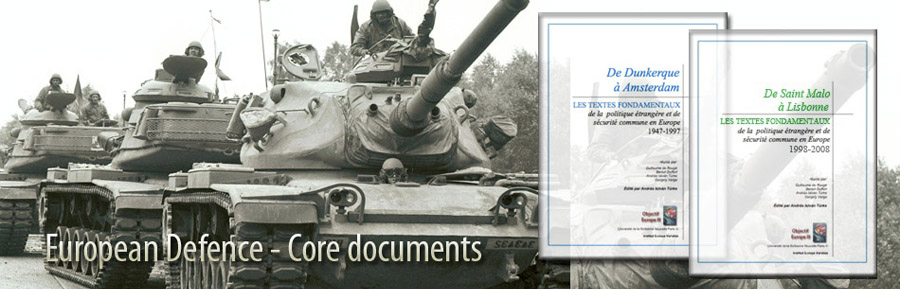
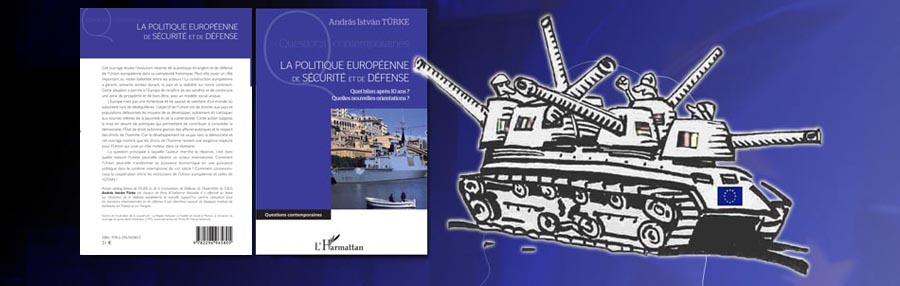
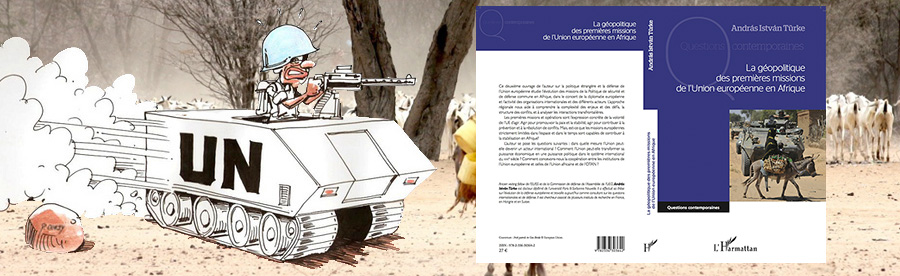
We are looking for sponsors for the English translation of these books, please contact turkeandras(at)gmail(dot)com