
You are here
Feed aggregator
Nach Schweizer Diesel-Schock: Warum Benzin jetzt noch teurer werden könnte
Jetzt geht das Spiel bei den Raffineriebetreibern los. Weil mit Diesel grad gross der Rubel rollt, könnten Kapazitäten beim Benzin verknappt werden – mit Folgen für die Preise an den Zapfsäulen.
Categories: Swiss News, Union européenne
Romuald Wadagni expose les grandes lignes de la réforme de pôles territoriaux
La réforme portant sur le développement des six pôles territoriaux a été présentée ce mercredi 23 septembre 2026, au Palais de la Marina.
Le Bénin engage une nouvelle dynamique en matière de développement à la base à travers une réforme majeure. Il s'agit de le réforme de création de six pôles de développement territorial. Elle a été présentée au Palais de la Marina en présence des maires des 77 communes, des préfets, des membres du Conseil économique et social, du président de l'Assemblée nationale ainsi que des membres du Gouvernement.
À travers cette réforme, le Gouvernement entend donner une nouvelle orientation à l'action publique en mettant l'accent sur le développement à la base, la réduction de l'extrême pauvreté, la valorisation du capital humain et la création de richesse.
Le Président de la République, Romuald Wadagni, a présenté les grandes orientations de cette nouvelle approche devant les différents acteurs réunis. La proximité avec les populations, le suivi des résultats et la transformation des territoires figurent au cœur de cette réforme.
Categories: Afrique, Defense`s Feeds
La combinaison gagnante du tirage de 18 H
LES RÉSULTATS LOTO STAR SONT LÀ !
TIRAGE N°114/26
Mercredi 23 septembre 2026 (18H)
67 • 06 • 15 • 09 • 51
Félicitations aux heureux gagnants !
Pas encore gagné ? Gardez le sourire !
Rendez-vous au prochain tirage de 20h pour une nouvelle chance.
Jouez dans les centres de jeux ou en ligne : Tapez 590# ou lnbloto.bj
Jouez avec modération et responsabilité. Le jeu doit rester un plaisir.
Categories: Afrique, Defense`s Feeds
La session budgétaire démarre le 19 octobre
La deuxième session ordinaire de l'année 2026 de l'Assemblée nationale s'ouvre le lundi 19 octobre prochain.
Les députés sont attendus à l'hémicycle pour une nouvelle session le 19 octobre. Elle sera consacrée à l'examen du budget de l'État pour l'exercice 2027. Selon les informations, la date a été retenue mardi 22 septembre 2026, à l'issue de la Conférence des présidents de l'Assemblée nationale. Les travaux débuteront donc dans moins d'un mois, conformément au calendrier retenu.
Categories: Afrique
Les numéros gagnants du DIGITAL 20H
DIGITAL 20H : Avez-vous tenté votre chance ?
Le tirage DIGITAL 20H N°203 a livré son verdict !
Mercredi 23 Septembre 2026
Avez-vous joué ?
Avez-vous misé sur vos numéros porte-bonheur ?
RÉSULTAT : 38 • 20 • 90 • 03 • 16
Félicitations aux heureux gagnants !
Pas encore cette fois ? Gardez le sourire.
Rendez-vous à 00H pour le prochain tirage.
Jouez dans les points de vente ou : Tapez *590# ou rendez-vous sur lnbloto.bj
Jouez avec modération et responsabilité. Le jeu doit rester un plaisir.
Categories: Afrique
Reallocating fossil subsidies via social assistance reduces poverty and preserves emissions cuts
Fossil fuel subsidies are widespread, regressive, and environmentally costly, yet abrupt removal can raise poverty. To identify a practical reform pathway, we evaluate the effectiveness of compensatory policies grounded in existing national social protection systems. We develop a high-resolution global social accounting matrix to quantify how reallocating subsidies through actual social assistance impacts poverty, inequality, and CO2 emissions. Without compensation, reform lowers emissions but increases poverty, especially for low-income households in emerging economies. Redirecting funds via social assistance disproportionately benefits the bottom half and reduces national poverty, particularly under targeted cash transfers or expanded programs where savings are large. However, full revenue recycling is not always desirable: Once vulnerable households are adequately protected, additional recycling can weaken both fiscal and climate gains. We therefore treat full recycling through social assistance as an analytical benchmark rather than a policy prescription and show that partial, targeted recycling, as illustrated by retaining roughly 20% of savings while channeling the remainder through social protection, can still reduce poverty while preserving emissions cuts. Overall, fossil fuel subsidy reform is most effective when social assistance is used to compensate low-income households, not to absorb all fiscal savings, leaving residual revenues available for other public priorities.
Categories: Africa, Diplomacy & Defense Think Tank News
Reallocating fossil subsidies via social assistance reduces poverty and preserves emissions cuts
Fossil fuel subsidies are widespread, regressive, and environmentally costly, yet abrupt removal can raise poverty. To identify a practical reform pathway, we evaluate the effectiveness of compensatory policies grounded in existing national social protection systems. We develop a high-resolution global social accounting matrix to quantify how reallocating subsidies through actual social assistance impacts poverty, inequality, and CO2 emissions. Without compensation, reform lowers emissions but increases poverty, especially for low-income households in emerging economies. Redirecting funds via social assistance disproportionately benefits the bottom half and reduces national poverty, particularly under targeted cash transfers or expanded programs where savings are large. However, full revenue recycling is not always desirable: Once vulnerable households are adequately protected, additional recycling can weaken both fiscal and climate gains. We therefore treat full recycling through social assistance as an analytical benchmark rather than a policy prescription and show that partial, targeted recycling, as illustrated by retaining roughly 20% of savings while channeling the remainder through social protection, can still reduce poverty while preserving emissions cuts. Overall, fossil fuel subsidy reform is most effective when social assistance is used to compensate low-income households, not to absorb all fiscal savings, leaving residual revenues available for other public priorities.
Categories: Diplomacy & Defense Think Tank News, Swiss News
«Artificial klingt fake»: Trump benennt AI in «Super Intelligence» um
Nach Berg, Golf und See hat der US-Präsident wieder mal einen neuen Namen für etwas gefunden: Dieses Mal gehts um die künstliche Intelligenz, die auf Englisch «Artificial Intelligence» heisst. Jedenfalls bis jetzt.
Categories: Swiss News, Union européenne
9th Annual Women, Peace and Leadership Symposium
During UN General Assembly High-Level Week, IPI convened the 9th Annual Women, Peace and Leadership Symposium, co-hosted by the Permanent Mission of Spain to the United Nations, the Permanent Mission, of Portugal to the United Nations, the Federal Republic of Somalia, the Republic of Mozambique, the Permanent Mission of Ireland to the United Nations, the Permanent Mission of Denmark to the United Nations, and Global Affairs Canada, and in partnership with Our Secure Future, the Nobel Women’s Initiative, and The Elders. The WPL Symposium brought together policymakers, practitioners, and advocates to examine how the WPS agenda can continue to move forward in an increasingly challenging geopolitical environment.
H.E. José Manuel Albares, Minister for Foreign Affairs, European Union and Cooperation, Kingdom of Spain and H.E. Lucrecia Peinado, First Lady of the Republic of Guatemala, provided opening remarks. The panel was moderated by IPI’s President and CEO, Zeid Ra’ad Al Hussein. Panelists included H.E. Mary Robinson, Former President of Ireland and Representative from The Elders; Ana Isabel Xavier, Secretary of State for Foreign Affairs and Cooperation of Portugal; Sahana Dharmapuri, Vice President of Our Secure Future and Vice President of the PAX sapiens Foundation; Negina Yari, Founder and Executive Director of Window for Hope (Afghanistan) and Representative from the Nobel Women’s Initiative; and Sarah Hendriks, Director of the Policy, Programme and Intergovernmental Division, UN Women. Following the panel, H.E. Katsuhiko Takahashi, Ambassador for Women, Peace and Security for Japan; Karen Grønlund Rogne, Director for Multilateral Cooperation and Policy, Denmark; Kaavya Asoka, Executive Director of the NGO Working Group on WPS; and Irene Fellin, NATO Secretary General’s Special Representative for WPS, provided interventions from the floor. To conclude the event, H.E. Michael Gort, Deputy Permanent Representative of Canada to the United Nations and Phoebe Donnelly, Senior Fellow and Head of WPS, IPI provided closing remarks.
Zeid Al Hussein described the current moment as an “upside-down world” in which conflicts are multiplying, women’s participation in peace processes is shrinking, and funding for women’s organizations is dire. While the data is sobering, speakers highlighted that it is more important than ever to continue pushing forward by increasing coordination and supporting local ownership.
Key themes which emerged from the discussion:
- The pushback against women’s rights and gender equality is organized and well financed – The backlash is coordinated and increasingly cross-border, and therefore, the response from WPS advocates should be equally coordinated.
- Local ownership is non-negotiable – peace cannot only be driven from the top down. It is essential to prioritize, support, and fund grassroots women and civil society actors who are the key drivers of peace.
- Women’s participation in peace negotiations is falling – Across 55 peace negotiations tracked in the latest UN data, only 5% of participants were women, down from 7% the year before. None of the 13 ceasefires agreed last year named sexual violence as a prohibited act, and none had a substantive reference to women.
- The international community should stand together with the women and girls of Afghanistan – Negina Yari described the systematic exclusion of Afghan women and girls to be gender apartheid and called for it to be established as a crime under international law. Many speakers emphasized the grave situation in Afghanistan and called for solidarity within the international community to stand with Afghan women and girls so that the Taliban’s actions do not become normalized.
- The next Secretary General of the UN should be a woman – Many speakers declared that after 80 years, it is past time for the UN to have a woman in the highest position of leadership. Furthermore, it is crucial that the next SG be a champion of human rights and gender equality.
Sarah Hendriks reminded us that though the most recent data paints a picture which is sobering, it is not one without hope. Similarly, H.E. Robinson described herself as a “prisoner of hope,” reaffirming the central message of the conversation: now is not the time to retreat. Sustaining the WPS agenda will require not only defending past achievements but also building new alliances and approaches capable of responding to today’s political realities.
The post 9th Annual Women, Peace and Leadership Symposium appeared first on International Peace Institute.
Categories: Afrique, Diplomacy & Defense Think Tank News
Adidas zeigt letztes Shirt: Mit diesem DFB-Trikot endet eine legendäre Ära
Adidas hat das letzte Nationaltrikot Deutschlands präsentiert. Ab dem nächsten Jahr wird Nike der Ausrüster des DFB-Teams.
Categories: Swiss News, Union européenne
Mehr Klimarisiken, weniger Kooperation: die Erosion internationaler Handlungsfähigkeit
Categories: Afrique, Diplomacy & Defense Think Tank News
Mehr Klimarisiken, weniger Kooperation: die Erosion internationaler Handlungsfähigkeit
Categories: Diplomacy & Defense Think Tank News, Swiss News
Mehr Klimarisiken, weniger Kooperation: die Erosion internationaler Handlungsfähigkeit
Categories: Diplomacy & Defense Think Tank News, Swiss News
Beleidigte Hacker üben Rache: Cyberbande klaut FBI-Daten – und erpresst Behörde
Nach eigenen Angaben hat die Hackergruppe ShinyHunters bei einem Cyberangriff zwei bis drei Terabyte Daten beim FBI erbeutet. Geld wollen sie keines. Die Hacker wollen, dass der Geheimdienst einen Bericht aus dem Frühling zurücknimmt.
Categories: Swiss News, Union européenne
Larissa B. (†25) soll von Ex-Partner in Nizza (F) erstochen worden sein: «Was ist mit meiner Tochter passiert?»
Eine Brasilianerin wurde am Montag an einer Raststätte tot im Auto ihres Ex-Freundes gefunden. Die Polizei ermittelt gegen den 29-Jährigen wegen Mordes. Die verstümmelte Leiche war unter Plastiktüten versteckt.
Categories: Swiss News, Union européenne
Algérie : le FMI voit les réserves de change passer de 51 à 19,8 milliards de dollars d’ici 2031
Le Fonds monétaire international projette une nouvelle baisse des réserves officielles de change de l’Algérie, de 51 milliards de dollars fin 2025 à 19,8 milliards […]
L’article Algérie : le FMI voit les réserves de change passer de 51 à 19,8 milliards de dollars d’ici 2031 est apparu en premier sur .
Categories: Afrique, Határon túli magyar portálok összesített hírei
Algérie-Turquie : coopération médicale autour de la maladie de Parkinson
Des neurologues et praticiens algériens se sont réunis récemment à l’hôtel Irena de Sétif pour échanger sur les avancées récentes dans le diagnostic et le […]
L’article Algérie-Turquie : coopération médicale autour de la maladie de Parkinson est apparu en premier sur .
Categories: Afrique, Határon túli magyar portálok összesített hírei
Trafic d’or vers Istanbul : 10 lingots dissimulé dans une zone intime d’un passager
Le détecteur de métaux n’a pas cessé de sonner, même une fois toutes ses affaires posées sur le tapis du contrôle. Ce matin-là, à l’aéroport […]
L’article Trafic d’or vers Istanbul : 10 lingots dissimulé dans une zone intime d’un passager est apparu en premier sur .
Categories: Afrique, Határon túli magyar portálok összesített hírei
La Jamaïque considère l'autonomie sous souveraineté marocaine comme “ une solution des plus réalisables”
La République de Jamaïque considère que l'autonomie sous souveraineté marocaine "pourrait être une solution des plus réalisables".
La ministre des Affaires étrangères et du Commerce extérieur de la Jamaïque s'est félicitée, mercredi à New York, de l'adoption de la résolution 2797 du Conseil de sécurité qui exprime le "plein soutien au Secrétaire général de l'ONU et à son envoyé personnel pour faciliter et mener les négociations, prenant pour base le plan marocain d'autonomie. Kamina Johnson Smith a affirmé qu'une véritable autonomie sous souveraineté marocaine pourrait être une solution des plus réalisables".
Cette position a été exprimée dans un communiqué conjoint signé par Mme Johnson Smith et le ministre des Affaires étrangères, de la Coopération africaine et des Marocains résidant à l'étranger, Nasser Bourita, à l'issue d'entretiens tenus mercredi en marge des travaux de la 81e session de l'Assemblée Générale des Nations Unies.
Le communiqué félicite le Royaume du Maroc pour ses "efforts diplomatiques visant à obtenir un consensus international et à créer une dynamique en faveur du plan d'autonomie, sous l'impulsion de Sa Majesté le Roi Mohammed VI".
M. Bourita et Mme Johnson Smith ont convenu de poursuivre les consultations politiques entre le Royaume du Maroc et la Jamaïque et de coordonner leurs positions sur les questions d'intérêt commun.
Categories: Afrique
Pages
the old site is here


© 2012-2015 Europa Varietas Foundation © 2015-2020 Europa Varietas Association
www.europavarietas.org | info(@)europavarietas(dot)org | Switzerland
This is a GDPR ready site

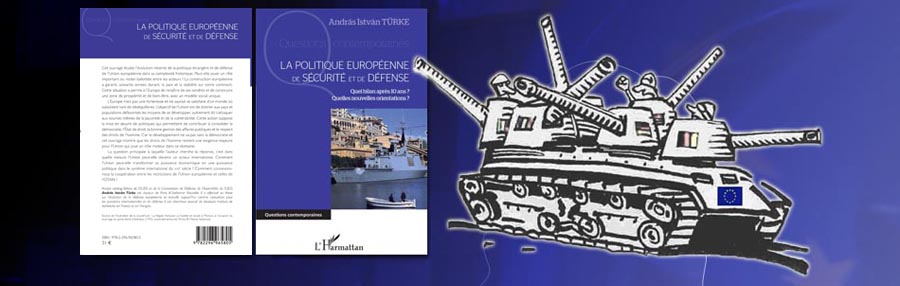
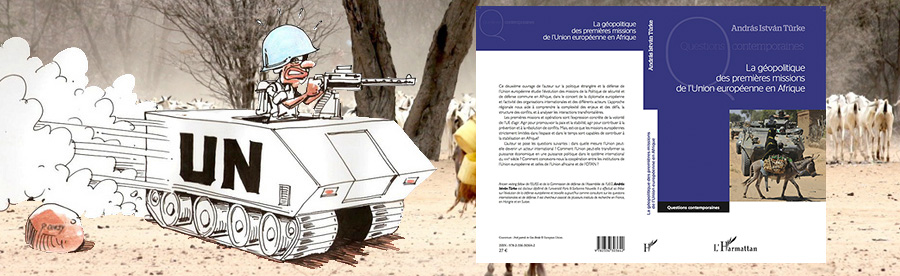
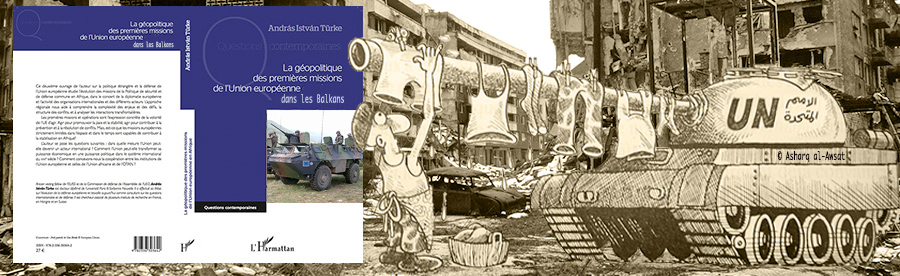
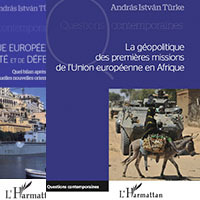
We are looking for sponsors for the English translation of these books, please contact turkeandras(at)gmail(dot)com