
You are here
Feed aggregator
Lawmakers Need to Grapple With the ‘Human Story’ of the Aged, Youth, Women and Girls when Making Policy
Kamikawa Yoko, MP for Japan and Chair of AFPPD at the opening of the Asian Forum of Parliamentarians on Population and Development (AFPPD) annual conference held in Kuala Lumpur, Malaysia. Credit: APDA
By Cecilia Russell
KUALA LUMPUR & JOHANNESBURG, South Africa, Sep 10 2026 (IPS)
“As parliamentarians, we should understand that behind every demographic indicator is a human story,” Kamikawa Yoko, MP Japan and Chair of AFPPD, reminded lawmakers in her opening address to the Asian Forum of Parliamentarians on Population and Development (AFPPD) annual conference held in Kuala Lumpur, Malaysia.
The conference, with the theme of ‘Parliamentary Leadership for the Future: An All-of-Society Approach to the Care Economy and Demographic Resilience,’ took place in the shadow of the devastating floods in Nepal, which Dr. Toshima Karki, MP Nepal, described as an “alarm from the roof of the world.” The impact of climate change on women, the elderly, and youth underpinned the concerns of many of the parliamentarians over the two-day conference.
Alexander Nanta Linggi, Minister of Works, Malaysia, opened with a strong statement about what parliamentary leadership means for the future.
“An all-of-society approach to the care economy and demographic resilience is ultimately about people,” he said.
“Parliamentarians have a unique role. We are not merely lawmakers. We are voices for our communities. We see the struggles of families caring for aging parents. We hear the concerns of young people uncertain about their future. We witness the inequalities that still affect women and vulnerable groups. This is why parliamentary leadership matters. We have the responsibility to translate lived realities into meaningful policy,” Linggi elaborated, adding that “a caring society is not a cost to be borne; it is an investment in social stability, economic resilience, and national well-being.”
Pio Smith, Deputy Executive Director of UNFPA and UN Assistant Secretary-General, noted the stark reality of fewer resources and the growing global polarization that parliamentarians were caught in.
“Doing more with less cannot mean doing less for those who need us most. It means making smarter choices, strengthening systems, improving efficiency, and ensuring that limited resources are directed toward investments that deliver lasting impact,” Smith said.
Dr. Toshima Karki, a member of Nepal’s House of Representatives, speaking at the AFPPD annual conference held in Kuala Lumpur, Malaysia. Credit: APDA
Officially opening the conference, the President of the Senate of Malaysia, Dato Awang Bemee Awang Ali Basah, argued that “Demographic resilience requires an all-of-society approach. No single ministry or government can solve these challenges—we need government, parliament, the private sector, civil society, academia, communities, families, and individuals working together.”
During the two-day conference, there were many powerful presentations, intertwining social challenges of youth, women, and the elderly and climate change.
Howard Lee Chuan How, MP Malaysia and Secretary-General of AFPPD Global, said the organization’s move to Kuala Lumpur should mark a new phase of globalization. AFPPD’s 30 national committees represent countries with a combined population of more than 4.3 billion people, over half of humanity.
“The stories of our people are therefore not peripheral to the global debate. They are a major part of the human story. The solutions we develop across our region, from aging and fertility to youth, gender, care, and climate resilience, have the potential to help shape solutions for the world,” Lee said.
For Syerleena Abdul Rashid, MP Malaysia, this is deeply personal. She started her speech by telling the conference that her mother, aged 81, grew up without air conditioners and weather apps.
“She now also lives with dementia, so when the temperature rises, I cannot simply just send her a text message saying, ‘Mom, please drink more water.’ She may not read it, she may not remember it, and she may not recognize that she’s becoming dehydrated or unwell.”
Syerleena listed the issues.
By 2030, 15% of Malaysians will be 60 or older.
In Malaysia, floods in November and December 2024 affected over 137,000 people, including 40,000 displaced families.
Older persons face specific risks such as loss of medication, mobility challenges during evacuation, and the inability to access digital warnings.
Then she reminded parliamentarians of the policy gaps, including age-unfriendly disaster relief centers, which lack ramps, quiet spaces for dementia, or proper medical storage, and lack of data around age groups and specialized welfare checks for the elderly during heatwaves, and challenged them to fix these.
But it is not only the elderly that are affected.
Dolores Devesi, Director of the International Planned Parenthood Federation (IPPF) Sub-Regional Office for the Pacific, reminded the audience that the impact of a loss of time in school could have lifelong impacts.
“Schools become more than a place of learning. They connect girls to peers, and they also become a center of information sharing amongst peers… When these connections are interrupted, risks rise, and we already know… that gender-based violence, sexual exploitation and abuse, unintended pregnancy, STIs, early marriage, and so forth, also come into play.”
Counting the cost of young girls and adolescents is crucial, she says.
“When a cyclone destroys a school, when flooding cuts off a community, when families are displaced, we naturally count the infrastructure and the economic cost, but the questions we need to be asking ourselves are how many young girls stop going to school, how many adolescent-age children have stopped going to school, why, how come they haven’t returned to school, and why are they still not in school? What happened to them and to their safety while they are away?”
Sahibzada Sibghatullah, MP Pakistan, said it was crucial to count the youth in the impacts of climate change; making up 64% of the country’s population, they bear the brunt of lost education and economic stability.
“A flood closes a school, and a child loses a year of learning that she or he may never recover back. A flood destroys a small shop, and a young man loses the only job he had. A flood cuts a road, and a young mother cannot reach a health center. And when a family loses everything, it is very often the daughter who is taken out of school first and married early. These are climate impacts. We must call them by that name.”
And he noted—it was the youth that rebuilt after the floods too.
“Let me end with this: In Pakistan, when a flood takes a village, it is the young who rebuilt it. They do not ask whose factory caused the warming. They do not ask who failed to cut emissions. They only ask to be counted. Let us count them. Let us fund them. Let us legislate with them, and not merely about them.”
A group photo of parliamentarians and delegates at the recent Asian Forum of Parliamentarians on Population and Development (AFPPD) annual conference held in Kuala Lumpur, Malaysia. Credit: APDA
It was during question time that Karki said she could barely conceal the anger she felt about the floods that left at least 1,300 people and more than 5,500 missing.
“Today I come with a warning from the Himalayas. I’m here to tell you the snow is disappearing. The snow is disappearing, and with it, the safety of my people.”
She listed the impact on roads, bridges, homes, schools, health posts, businesses, and hydropower projects that took decades to build and were destroyed in minutes.
“However, this is not simply a disaster. This is an alarm from the roof of the world.”
She continued, “Nepal contributes only around 0.03 percent of the global greenhouse emissions. Yet it is among one of the highly vulnerable countries to the impacts of climate change.”
“We did not build the smokestacks. We did not burn the coal. Yet our children are compelled to bury their parents and parents to their children under the debris of a crisis authored elsewhere.”
“Climate crisis for Nepal for us is not only an environmental crisis; it’s a developmental crisis. It’s an economic crisis, a food crisis, a public health crisis, and ultimately, it’s a crisis of justice.”
The meeting was organized by the Asian Forum of Parliamentarians on Population and Development (AFPPD) and the Asian Population and Development Association (APDA). It was supported by the Japan Trust Fund (JTF), the United Nations Population Fund (UNFPA), AFPPD Malaysia, and the International Planned Parenthood Federation (IPPF).
IPS UN Bureau Report
Related Articles
Categories: Africa, European Union
Briefing - Monthly Highlights: Research digest for committees - September 2026 - PE 789.226 - Committee on Civil Liberties, Justice and Home Affairs - Committee on Employment and Social Affairs - Special Committee on the Housing Crisis in the European...
Source : © European Union, 2026 - EP
Categories: Europäische Union, Swiss News
UN and Partners Work to Stabilize Health and WASH Systems in Venezuela Following Deadly Earthquakes
Following the June earthquakes in Venezuela, UNICEF has provided on-the-ground support, scaling up supplies and services to reach vulnerable children and their families. Credit: UNICEF/Francisco Segovia
By Oritro Karim
UNITED NATIONS, Sep 9 2026 (IPS)
Two months after devastating twin earthquakes struck northern and central Venezuela on June 24, the humanitarian community has been on the frontlines, delivering lifesaving aid and focusing efforts on sustainable paths for rehabilitation.
With health and water, sanitation, and hygiene (WASH) systems pushed to the brink of collapse, the United Nations (UN) and its partners are currently working to restore critical services by distributing essential supplies while closely monitoring recovery conditions.
As of August 28, the Office for the Coordination of Humanitarian Affairs (OCHA) estimated that roughly 1.3 million people have been affected by the earthquakes and will require humanitarian support for the next six months. Approximately 6,509 deaths have been reported as a direct result of the earthquakes, and 60,785 homes were evacuated due to damage or destruction.
The damage to essential civilian infrastructure has been immense and widespread, with the UN reporting damage not only to residential buildings but also to schools, health facilities, and infrastructure related to food production, clean water, and safe spaces for children.
A preliminary assessment by the United Nations Office for Disaster Risk Reduction (UNDRR) places the total losses from direct damage to housing and infrastructure at around US$37 billion, while estimates from the United Nations Development Programme (UNDP) place the losses at US$6.7 billion— roughly 6 percent of the nation’s total gross domestic product.
Immediately following the earthquakes, UNDP activated RAPIDA—a rapid assessment system that combines satellite imagery, AI-facilitated damage monitoring, exposure databases, and seismic intensity and engineering models—to provide the national government with critical data on the scale of destruction to guide effective recovery efforts.
According to the assessment, the earthquakes generated approximately 2.1 million tonnes of rubble as of mid-July, which has since been integrated into national debris-management planning. By late August, national authorities estimated that roughly 21.61 percent of the total rubble had been cleared.
Despite this progress, living conditions remain highly precarious for millions of Venezuelans. Tens of thousands of people remain displaced across 80 temporary shelters. Rampant overcrowding, unsanitary conditions, and lack of access to basic services have made these facilities breeding grounds for disease outbreaks.
“In the coming weeks, the greatest health risks may stem not only from injuries caused by the earthquakes, but also from disruptions to health services, overcrowded conditions, deficiencies in water and sanitation, and reduced access to vaccination and routine healthcare,” said Jarbas Barbosa, director of the Pan American Health Organization (PAHO), adding that vaccine coverage was significantly sparse even before the earthquakes.
The UN and its partners have prioritized restoring WASH systems, underscoring the need for access to clean and safe water to prevent disease outbreaks. The United Nations Children’s Fund (UNICEF) noted that despite substantial gains in access to safe water recorded over the past two months, heavy rains, limited availability of water trucking, and rising operational costs continue to jeopardize lifesaving operations.
“After the catastrophic damage the earthquakes created, the priority has been to ensure that children have access to safe and clean water. But recovery also means ensuring that families can rely on safe water both now and in the future,” said Manuel Rodríguez Pumarol, UNICEF Representative in Venezuela.
“Recovery requires sustaining what works and strengthening the services that families need over the long term. UNICEF will continue providing technical assistance, supplies and operational support so that every child can grow up in a healthy and protective environment,” Rodríguez Pumarol added.
Currently, UNICEF and Venezuela’s Ministry of People’s Power for Water Services are mobilizing efforts to rehabilitate critical water infrastructure in La Guaira—one of the hardest-hit regions. Aiming to reach up to 250,000 people, operations will commence in October and will include reinforcing the Mamo pumping station and the Naiguatá water treatment plant.
As of September 8, UNICEF’s operations have reached at least 16,661 people, including 5,079 children. Several communities so far have been provided with access to safe water, marking a critical turning point in stabilizing health, nutrition, and protection.
In recent weeks, PAHO’s response has transitioned toward immediate emergency interventions and early recovery. Key areas of focus include mental health, maternal and perinatal care, restoring interrupted services, and ongoing support for transitional shelters.
On September 4, PAHO released a situation report detailing its current operations in Venezuela, confirming that it had shipped 41.3 metric tons of medical supplies and medicines to Venezuela, reaching approximately 70,697 people. PAHO and its partners are working to support early detection and response measures while monitoring environmental risks in transitional shelters.
The organization has highlighted the Caracas, La Guaira, Miranda, and Aragua regions as the most vulnerable, noting that these regions require urgent support in prenatal care and family planning, gender-based violence prevention, and rehabilitation services. In response, PAHO has launched a US$23 million appeal to fund lifesaving health interventions for the next six months.
IPS UN Bureau
Categories: Africa, European Union
Entwurf der Tagesordnung - Mittwoch, 2. September 2026 - PE791.935v01-00 - Ausschuss für Industrie, Forschung und Energie , Ausschuss für Sicherheit und Verteidigung
Quelle : © Europäische Union, 2026 - EP
Categories: Afrique, Europäische Union
Development Goals Falter as Civil Society Is Shut Out
UN staff members at the SDG Action Zone outside UN Headquarters in New York, 2019. Credit: UN Photo/Laura Jarriel
By Samuel King and Inés M. Pousadela
BRUSSELS, Belgium / MONTEVIDEO, Uruguay, Sep 9 2026 (IPS)
When the UN High-level Political Forum on Sustainable Development (HLPF) ended in New York in July, it took two recorded votes for states to pass a ministerial declaration that, until recently, would have been adopted without controversy. Uruguay, speaking for the Group of 77 developing countries plus China, pushed through the deletion of a reference to the agreement reached at the COP28 climate summit. Israel forced a vote on a paragraph about self-determination for people under occupation. Russia dissociated itself from the passage on peace and security. The wrangling revealed the extent to which the consensus that in 2015 saw all 193 UN states agree the Sustainable Development Goals (SDGs) – a common blueprint to end poverty, tackle climate change and build accountable institutions by 2030 – has been eroded.
The problem goes beyond this latest session. Progress is tracked through Voluntary National Reviews, the self-assessments states present at the Forum. Thirty-six countries did so this year. But the process asks nothing of states beyond showing up. There’s no independent verification of data, and governments aren’t required to consult civil society. States that restrict civic space at home face no consequences. Seventeen of the 36 states that presented reviews this year are rated by the CIVICUS Monitor as having repressed or closed civic space.
A forum built to hold states accountable has become a stage on which the least accountable governments may perform compliance, while the civil society groups meant to keep them honest are locked out of the room.
In the room but not at the table
Where civil society can act, it supports delivery of the SDGs. Sustained advocacy delivered Colombia’s ban on child marriage in 2025 and continues to drive the campaign against female genital mutilation in The Gambia. In Nepal, local organisations have made monitoring the goals more inclusive by supplying data on excluded communities that official statistics miss.
Yet the HLPF gives civil society little formal standing. Civil society was in the building all week — CIVICUS co-organised sessions on civic space and the SDGs, supported a global forum on the future of multilateralism and ran a workshop on the post-2030 agenda — but it didn’t get a seat at the table where decisions are made.
Showing up can also be dangerous. In 2025, most civil society representatives from El Salvador withdrew over fears of reprisals. Activists elsewhere describe reprisals for exposing gaps between official reporting and reality on the ground, often with little practical support from the UN despite guidelines that are supposed to protect them.
SDG 16 on peace, justice and strong institutions is meant to be the foundation for the other 16 goals, and its Target 16.10 commits states to protecting fundamental freedoms. But it’s routinely ignored. The CIVICUS Monitor has tracked year-on-year regression in civic space conditions since the SDGs came into effect. Where civil society can’t operate freely, it’s no surprise if the goals it should help implement and monitor aren’t being met.
Falling short
The UN Secretary-General’s 2026 report on the SDGs made clear how delivery is falling short. It found that out of 139 targets with reliable trend data, only 15 per cent are on track, while a further 15 per cent have regressed below their 2015 baselines.
But rather than take responsibility for their failures, powerful states are using the lack of progress as a pretext to demand less ambition. The USA has dismissed the SDGs as an infringement on national sovereignty. Speaking at an event during the Forum, Russia’s representative said that the goals’ ambitions had proven ‘quite far away from reality’, blaming the design of the goals rather than states’ failure to deliver. For many states, an ambitious rights-based agenda is no longer a promise to keep, but a commitment to be backed away from.
Yet evidence suggests that when political will exists, change can come. The UN’s Asia-Pacific review presented at the HLPF showed that the number of children in child labour fell from 49 to 28 million between 2020 and 2025. What holds back achievement of the SDGs is not flawed design, but political choices.
As negotiations begin on what comes after the goals’ 2030 deadline, some states and UN officials favour extending the current goals, on the reasonable logic that reopening them in today’s political climate risks producing something weaker. But the framework agreed in 2015 wasn’t built for a world of growing authoritarianism, accelerating climate breakdown, coordinated backlash against gender equality, increasing militarisation, collapsing multilateral cooperation and rapid technological development. A post-2030 agenda will have to take account of all this, along with the financial strain on the multilateral system.
Forus, a network of national civil society platforms, has mapped three scenarios for the post-2030 process – continuity, reset or fragmentation – and insists that whichever prevails, accountability, civic space and financing reform must sit at the centre. Several upcoming moments will reveal the direction of travel. Next year’s Commission on the Status of Women and Economic and Social Council’s Youth Forum, along with the SDG Summit and the 2028 Pact for the Future review, all offer opportunities that must be seized to bring civil society into the process, identify where implementation is failing and match ambition with achievement.
Samuel King is a researcher with the Horizon Europe-funded research project ENSURED: Shaping Cooperation for a World in Transition at CIVICUS: World Alliance for Citizen Participation.
Inés M. Pousadela is CIVICUS Head of Research and Analysis, co-director and writer for CIVICUS Lens and co-author of the State of Civil Society Report. She is also a Professor of Comparative Politics at Universidad ORT Uruguay.
For interviews or more information, please contact research@civicus.org
Categories: Africa, European Union
The Rwandan eyeing Champions League history against Man Utd
Rwanda forward Joy-Lance Mickels has helped Azerbaijan's Sabah reach the Champions League proper on their competition debut, and is now looking to down the team he supports.
Categories: Africa, Swiss News
Digitalization and innovation in Egyptian firms: does female ownership and management matter?
This paper examines how leadership gender configurations shape digitalisation and innovation in Egyptian manufacturing. Using the 2020/21 Egyptian Industrial Firm Behavior Survey (EIFBS) covering 2,338 firms, we construct a four-category gender variable (female owners and male managers (FOMM), male owners and female managers (MOFM), female owners and female managers (FOFM) and all-male baseline) and analyse how these owner–manager gender mixes relate to the adoption of digital technologies (DT) and to innovation outputs, and how these relationships vary by firm size and DT use. Our analysis suggests that firms with male owners and female managers (MOFM) are most likely to adopt DT across specifications. The cross-sectional data suggests that mixed-gender firms are associated with a higher probability of spending on R&D, but not with higher innovation outputs in firms with female owners (i.e. FOMM and FOFM) – pointing toward an innovation conversion gap in those firms. Heterogeneity results show that the MOFM adoption premium of DT and a negative association between FOMM and innovation are strongest in small firms. DT use moderates gender gaps: female-owned firms not using DT are significantly less likely than all-male firms to generate innovation outputs, but this penalty disappears when female-owned firms use DT. A combined size–sector analysis suggests that the divergence between MOFM and FOMM/FOFM is driven mainly by small food manufacturers, with average marginal effects elsewhere broadly comparable. The results highlight leadership composition as a correlate of technology adoption and the role of DT in converting innovation inputs into outputs.
Categories: Afrique, Diplomacy & Defense Think Tank News
Digitalization and innovation in Egyptian firms: does female ownership and management matter?
This paper examines how leadership gender configurations shape digitalisation and innovation in Egyptian manufacturing. Using the 2020/21 Egyptian Industrial Firm Behavior Survey (EIFBS) covering 2,338 firms, we construct a four-category gender variable (female owners and male managers (FOMM), male owners and female managers (MOFM), female owners and female managers (FOFM) and all-male baseline) and analyse how these owner–manager gender mixes relate to the adoption of digital technologies (DT) and to innovation outputs, and how these relationships vary by firm size and DT use. Our analysis suggests that firms with male owners and female managers (MOFM) are most likely to adopt DT across specifications. The cross-sectional data suggests that mixed-gender firms are associated with a higher probability of spending on R&D, but not with higher innovation outputs in firms with female owners (i.e. FOMM and FOFM) – pointing toward an innovation conversion gap in those firms. Heterogeneity results show that the MOFM adoption premium of DT and a negative association between FOMM and innovation are strongest in small firms. DT use moderates gender gaps: female-owned firms not using DT are significantly less likely than all-male firms to generate innovation outputs, but this penalty disappears when female-owned firms use DT. A combined size–sector analysis suggests that the divergence between MOFM and FOMM/FOFM is driven mainly by small food manufacturers, with average marginal effects elsewhere broadly comparable. The results highlight leadership composition as a correlate of technology adoption and the role of DT in converting innovation inputs into outputs.
Categories: Défense, Diplomacy & Defense Think Tank News
Digitalization and innovation in Egyptian firms: does female ownership and management matter?
This paper examines how leadership gender configurations shape digitalisation and innovation in Egyptian manufacturing. Using the 2020/21 Egyptian Industrial Firm Behavior Survey (EIFBS) covering 2,338 firms, we construct a four-category gender variable (female owners and male managers (FOMM), male owners and female managers (MOFM), female owners and female managers (FOFM) and all-male baseline) and analyse how these owner–manager gender mixes relate to the adoption of digital technologies (DT) and to innovation outputs, and how these relationships vary by firm size and DT use. Our analysis suggests that firms with male owners and female managers (MOFM) are most likely to adopt DT across specifications. The cross-sectional data suggests that mixed-gender firms are associated with a higher probability of spending on R&D, but not with higher innovation outputs in firms with female owners (i.e. FOMM and FOFM) – pointing toward an innovation conversion gap in those firms. Heterogeneity results show that the MOFM adoption premium of DT and a negative association between FOMM and innovation are strongest in small firms. DT use moderates gender gaps: female-owned firms not using DT are significantly less likely than all-male firms to generate innovation outputs, but this penalty disappears when female-owned firms use DT. A combined size–sector analysis suggests that the divergence between MOFM and FOMM/FOFM is driven mainly by small food manufacturers, with average marginal effects elsewhere broadly comparable. The results highlight leadership composition as a correlate of technology adoption and the role of DT in converting innovation inputs into outputs.
Categories: Diplomacy & Defense Think Tank News, Swiss News
Les ressortissants étrangers au Kenya disposent de 90 jours pour obtenir un permis de travail.
Le Kenya a accordé aux ressortissants étrangers gérant de petites entreprises un délai de 90 jours pour faire traiter leur statut d'immigration, leurs permis de travail et leurs licences commerciales.
Categories: Afrique
How Saving Cattle in Zimbabwe is Saving Its Lions
Female Students learning wildlife tracking at a conservation leadership camp. Credit: Moreangels Mbizah
By Busani Bafana
BULAWAYO, Sep 9 2026 (IPS)
A 12-year-old male lion slipped out of Zimbabwe’s Hwange National Park one winter morning and killed a 7-year-old boy in a village it wandered into.
The boy, Elton, should have been safe within his village outside Zimbabwe’s largest national park, but a winter morning ended that safety. The lion cut short his life, pushing a grieving community into the centre of a contested frontline: conflict for space between humans and wildlife. The lion was put down.
“That day forever remains etched in my mind, and it’s one of the reasons that led me to form the Wildlife Conservation Action,” says zoologist Moreangels Mbizah, recalling how the morning of April 2014 when she found the lion had killed Elton changed her perspective about wildlife coexisting with people.
“I realised that protecting lions inside the park meant very little if we were not also protecting people living alongside them,” Mbizah said.
Charity Patron, HRH Princess Anne, presented Dr Moreangels Mbizah with a 2026 Whitley Award in April 2026 to expand a coexistence model of conservation in northern Zimbabwe. Credit: Whitley Fund for Nature
Conservation From Tragedy
Wildlife and communities living near or within conservation areas across Zimbabwe fight over habitat and resources.
In 2024, 49 people were killed by wild animals across the country; this number increased to 53 in 2025, according to the Ministry of Environment, Wildlife and Climate. Zimbabwe is currently developing a National Human-Wildlife Coexistence Strategy aimed at curbing human-wildlife conflict.
The country’s parks authority, ZimParks, recently released figures indicating that over the last decade over 12,000 incidents of human-wildlife conflict have been recorded. At that time 486 people were killed with 554 others injured, while more than 4,000 livestock were lost to wildlife attacks.
Human wildlife conflict hotspots in the country include Binga, Hwange, Chiredzi, Hurungwe, Mbire, Muzarabani, Nyaminyami, Chipinge, Gokwe North, Gokwe South, Tsholotsho, Bulilima and Kusile districts. Habitat encroachment, climate change, population growth and inadequate barriers between communities and wildlife have been blamed for the increase in human-wildlife conflict.
Wildlife Conservation Action works in the Nyaminyami and Binga districts, which are part of the Kavango Zambezi Transfrontier Conservation Area (KAZA TFCA). They also work in Mbire district along the border with Mozambique and Mana Pools National Park, a UNESCO World Heritage site with the only floodplain ecosystem left in the Middle Zambezi. The area which also forms part of the Zimbabwe-Mozambique-Zambia (ZIMOZA) TFCA is a human-wildlife conflict hotspot, especially for elephants and lions.
Over the years, villagers in Mbire District who have lost livestock to lions have fought back. Lions have been killed as communities defended themselves and their livestock.
Securing livestock, saving lions
A lion and lioness in the wild. Credit: Moreangels Mbizah
Losing a single cow to a lion is a loss of family income of an average three months in Mbire District. In general people earn an average monthly wage of $108, and a cow sells for an average of $300, said Mbizah, who is among the few Black African women to have founded a conservation organisation.
Many families keep livestock for income and food. For a farmer with just five cows, protecting the animals is also protecting lions – a paradox that got Mbizah thinking.
Mbizah – who, as part of her PhD studies, famously tracked “Cecil the Lion” before it was killed in 2015, sparking global criticism – has used community leadership and low-tech innovation of solar-powered “lion lights” and mobile cattle kraals to protect $2.3 million worth of local livestock.
She said the interventions promoted in the community to reduce human-wildlife conflict are non-lethal and climate smart, such as holistic livestock management, use of mobile bomas, beekeeping and chilli farming, and sustainable agriculture.
“Our programme has been successful because of our relationship with the community and engaging them as guardians for the environment. We looked at the traditional way of kraaling that people have been using for generations and how they can strengthen that so the livestock is protected overnight from lion attacks,” Mbizah said.
Her organisation has helped farmers build lion-proof bomas for their cattle and raised kraals for their goats. These kraaling methods have reduced lion attacks on livestock.
In addition, Community Guardians, whom Mbizah calls the bedrock of her organisation, have been recruited and trained on detecting lions before they attack. Young women and men use specialised equipment which alerts them to lion movements near the community and are able to move the predators away safely.
Ruth Kamuchato, from Mapini Village in Mbire District, says growing up seeing lions attacking livestock motivated her to train as a community guardian. She wanted to understand how it was possible to protect lions and livestock at the same time.
“I feel good about working as a community guardian, but it was difficult in the beginning to appreciate people and wildlife thriving together because of the fear of lions, which are dangerous animals,” said Kamuchato. “When lions kill livestock or threaten people, the first feeling is that animals are our enemy, but after training and working in conservation, I started seeing the bigger picture that lions are not bad – they are just trying to survive too.”
A community guardian installing a lion light monitoring unit. Credit: Moreangels Mbizah
Another Community Guardian, Knowledge Chiriga (31) from Nebiri Village Ward 7, in Nyaminyami District, says protecting lions was a solution to the human-wildlife conflict experienced in his village.
“I grew up in the Nebiri village, which is about 7 km from Matusadonha National Park, and have experienced a lot of human-wildlife conflict since my early childhood, and then I had no hope of finding a programme that would relieve the community from the challenge we had with lions,” Chiriga said, admitting he jumped at the opportunity to train as a community guardian under the Wildlife Conservation Action.
“Lions are part of our ecosystem and our heritage, so protecting them doesn’t mean ignoring danger, but finding ways to keep both people and lions safe,” Chiriga said. “Now I feel proud because I am helping my community to stay safe. With better safety measures we can live alongside lions.”
Lweetelelo Mugande (29) from Chitongo village, Ward 17 in Binga District, said it was difficult in the beginning for the community to accept her role in conserving lions, as some people asked why protect animals that hurt them.
“But over time, as we showed up during conflicts, we helped set up mobile bomas and explained how conservation can bring jobs and support; attitudes started to change,” she said.
“Now many community members call us when there’s a problem. They see that we are from the same village and that we have livestock and families here and that we are trying to find solutions together. Trust is growing, but we still have a lot of awareness work to do.”
Cattle inside a predator-proof mobile boma in Zimbabwe. Credit: Moreangels mbizah
Mbizah received the 2026 Whitley Award for her work in saving lions through a community-led model. The award, recognising conservation leaders across the world, will enable Mbizah to expand the coexistence model of conservation to other districts in the country.
“Local communities have a cultural connection to and respect for the wildlife, but that comes with risks, and this is where the challenge is,” Mbizah tells IPS. “If we can reduce these risks, people can tolerate the presence of wildlife in their communal land. Where there is conflict, people do not want lions because they impact their lives, livelihood and livestock.”
Lion populations in Africa are under threat. Over 90% of their historic range has been lost in recent years. The African lion (Panthera leo) is classified as a threatened species and listed as vulnerable on the IUCN Red List of Threatened Species.
There has been a significant lion population decline of approximately 43% over the past 21 years with an estimated 25,000 individuals remaining in the wild in Africa. The loss of habitat, the decline of prey and human-wildlife conflict, where the lions have been killed in retaliation for livestock losses, are key drivers to the reduction in lion population.
Mbizah highlights the misconception that conservation is separate from development. Her work is at the intersection of conservation and community development.
“We help communities to protect wildlife by improving their livelihoods,” she explained. “If communities are doing well, they are more likely to be involved in conservation and to protect the wildlife around them. We cannot just protect the species without protecting the people that are also protecting these species.”
At a time when Africa’s lion population is threatened, Zimbabwe has maintained healthy populations thanks to its strong conservation programmes. Mbizah’s conservation approach is a model for protecting predators without impoverishing the people who live in its environment.
“Protecting lives and livelihoods ultimately protects lions too,” Mbizah said.
IPS UN Bureau Report
Categories: Africa, European Union
Formal and informal labour demand in Egyptian manufacturing firms
This paper investigates the determinants and dynamics of labour demand and specifically informal labour in Egypt’s manufacturing sector, using nationally representative firm-level data from the 2020/21 Egyptian Industrial Firm Behavior Survey. Applying ordinary least squares and fractional logit models, we analyse total employment, the share of informal labour, and its average annual change over the firm life cycle. Three key findings emerge. First, employment is positively associated with capital, exporting, technology adoption, innovation, industrial zones, worker training, and managerial education, and negatively associated with sole proprietorships, wages, and total factor productivity. Second, informal employment is more common among private sector firms, sole proprietorships, and firms using more part-time workers, and less prevalent among firms adopting technology or led by more educated managers. Third, changes in informality over time are modest: most formal firms exhibit no change in the share of informal workers. Notably, formal firms that did not initially employ informal labour tend to increase their informal share, while firms that formalised continue to rely heavily on informal employment. Together, these findings underscore the persistence of informality and limited transitions towards full formalisation within Egypt’s formal manufacturing sector.
Categories: Afrique, Diplomacy & Defense Think Tank News
Formal and informal labour demand in Egyptian manufacturing firms
This paper investigates the determinants and dynamics of labour demand and specifically informal labour in Egypt’s manufacturing sector, using nationally representative firm-level data from the 2020/21 Egyptian Industrial Firm Behavior Survey. Applying ordinary least squares and fractional logit models, we analyse total employment, the share of informal labour, and its average annual change over the firm life cycle. Three key findings emerge. First, employment is positively associated with capital, exporting, technology adoption, innovation, industrial zones, worker training, and managerial education, and negatively associated with sole proprietorships, wages, and total factor productivity. Second, informal employment is more common among private sector firms, sole proprietorships, and firms using more part-time workers, and less prevalent among firms adopting technology or led by more educated managers. Third, changes in informality over time are modest: most formal firms exhibit no change in the share of informal workers. Notably, formal firms that did not initially employ informal labour tend to increase their informal share, while firms that formalised continue to rely heavily on informal employment. Together, these findings underscore the persistence of informality and limited transitions towards full formalisation within Egypt’s formal manufacturing sector.
Categories: Défense, Diplomacy & Defense Think Tank News
Formal and informal labour demand in Egyptian manufacturing firms
This paper investigates the determinants and dynamics of labour demand and specifically informal labour in Egypt’s manufacturing sector, using nationally representative firm-level data from the 2020/21 Egyptian Industrial Firm Behavior Survey. Applying ordinary least squares and fractional logit models, we analyse total employment, the share of informal labour, and its average annual change over the firm life cycle. Three key findings emerge. First, employment is positively associated with capital, exporting, technology adoption, innovation, industrial zones, worker training, and managerial education, and negatively associated with sole proprietorships, wages, and total factor productivity. Second, informal employment is more common among private sector firms, sole proprietorships, and firms using more part-time workers, and less prevalent among firms adopting technology or led by more educated managers. Third, changes in informality over time are modest: most formal firms exhibit no change in the share of informal workers. Notably, formal firms that did not initially employ informal labour tend to increase their informal share, while firms that formalised continue to rely heavily on informal employment. Together, these findings underscore the persistence of informality and limited transitions towards full formalisation within Egypt’s formal manufacturing sector.
Categories: Diplomacy & Defense Think Tank News, Swiss News
Le Canada se prépare à une guerre commerciale prolongée suite à l'entrée en vigueur des contre-tarifs américains
Ces droits de douane s'appliqueront à 20 milliards de dollars de produits américains, mettant en péril la stabilité de la plus importante relation commerciale bilatérale au monde.
Categories: Afrique
Förderung regionaler Innovationsnetzwerke stärkt vor allem kleine und mittlere Unternehmen
DIW-Studie beleuchtet Effekte von Clusterförderung in Deutschland – Besonders kleine und mittlere Unternehmen werden unterstützt, betriebliche Kapazitäten und Innovationsaktivitäten auszuweiten – Forschende empfehlen stärkeren Fokus auf diese Unternehmen bei künftigen Clusterprogrammen
Kleine und ...
Categories: Afrique, Diplomacy & Defense Think Tank News
Trade, treaties, and aid: insights into North-South trade in critical raw materials
Categories: Afrique, Diplomacy & Defense Think Tank News
Trade, treaties, and aid: insights into North-South trade in critical raw materials
Categories: Défense, Diplomacy & Defense Think Tank News
Trade, treaties, and aid: insights into North-South trade in critical raw materials
Categories: Diplomacy & Defense Think Tank News, Swiss News
'You're not alone in the darkness': Gambia president urges calm after violent blackout protests
The country has faced persistent blackouts since June, with some lasting up to 48 hours, residents say.
Categories: Africa, Swiss News
Pages
the old site is here


© 2012-2015 Europa Varietas Foundation © 2015-2020 Europa Varietas Association
www.europavarietas.org | info(@)europavarietas(dot)org | Switzerland
This is a GDPR ready site

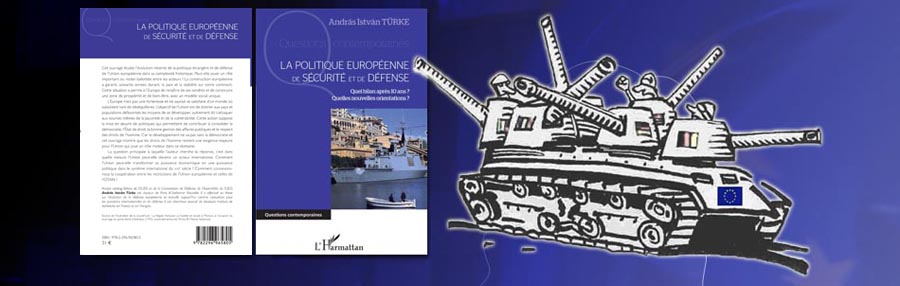
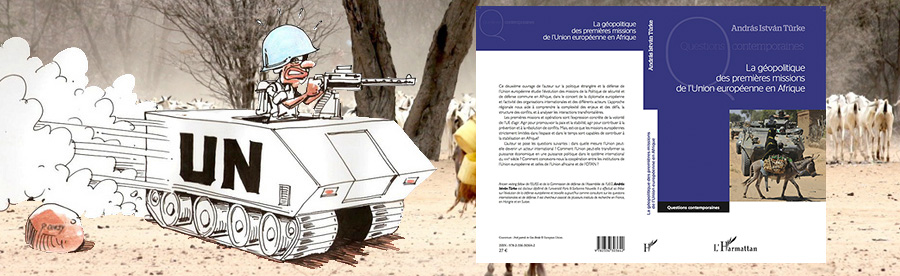
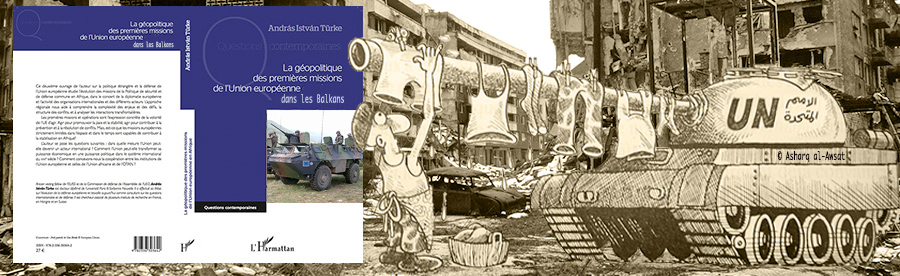
We are looking for sponsors for the English translation of these books, please contact turkeandras(at)gmail(dot)com