
You are here
Feed aggregator
US companies need Ukraine as testing ground | Neatkarīgā - Latvia
Categories: European Union, Swiss News
Feuer zerstört das Elternhaus von Eidgenosse Odermatt
Während Adrian Odermatt in Kanada Ferien macht, zerstört ein Feuer das Haus seiner Familie. Der Schwinger spricht über den schmerzhaften Verlust und eine Bauverzögerung, die wohl noch Schlimmeres verhinderte.
Categories: Határon túli magyar portálok összesített hírei, Swiss News
PSG-Juwel verzaubert Paris
Grosses Lob vom Star-Trainer für Akliouche. Auch in der Nationalmannschaft kommt der 24-Jährige zum Zug. Er könnte der nächste grosse Star im PSG-Ensemble werden.
Categories: Határon túli magyar portálok összesített hírei, Swiss News
Teure Fitness-App der Armee – SP-Wyss will Geldhahn zudrehen
Mit Trainingsplänen und Videos soll eine Armee-App angehende Rekruten für den Sporttest fit machen. Für den Unterhalt und die Weiterentwicklung will der Bund bis 2034 über drei Millionen Franken ausgeben. SP-Finanzpolitikerin Sarah Wyss will dem einen Riegel schieben.
Categories: Határon túli magyar portálok összesített hírei, Swiss News
Salifou Mouhawya décroche l'argent aux World Skate Games 2026
L'athlète béninois Salifou Mouhawya a remporté la médaille d'argent en Free Jump aux World Skate Games 2026, disputés à Asunción, au Paraguay. Il a réalisé un saut de 1,65 mètre, terminant deuxième de l'épreuve le 8 octobre 2026.
Le Bénin compte désormais un vice-champion du monde en roller sports. Salifou Mouhawya a décroché la médaille d'argent en Free Jump lors des World Skate Games 2026, organisés à Asunción, au Paraguay. Selon les informations publiées par la Fédération béninoise de Roller Sports, l'athlète a franchi une hauteur de 1,65 mètre.
La médaille d'or est revenue à l'Italien Gianmarco Savi, qui a réalisé la même performance. Le Sénégalais Ousseynou Diene a terminé troisième, tandis que le tenant du titre, Dame Fall, s'est classé quatrième.
Une progression sur la scène internationale
Cette deuxième place marque une nouvelle étape dans le parcours de Salifou Mouhawya. En 2025, il avait terminé quatrième au championnat du monde d'Inline Freestyle à Singapour, avec un saut de 1,60 mètre.
En avril 2026, le sportif béninois a remporté la première édition de l'International Challenge Cotonou Skating (I2CS), avec une performance annoncée de 1,68 mètre. En juillet de la même année, il a décroché le bronze à la Hero Battle Cup de Milan, une étape de la Coupe du monde d'Inline Freestyle, avec un saut de 1,65 mètre.
Avec cette médaille d'argent obtenue au Paraguay, Salifou Mouhawya confirme sa présence parmi les compétiteurs de haut niveau de sa discipline.
Voici les tarifs de passage au poste de péage de Kétou
Le poste de péage de Kétou, situé sur la Route nationale n°26 (RN26), axe Kétou-Idigny, sera mis en service le 19 octobre 2026. Les tarifs varient de 1 000 à 18 000 FCFA selon le type de véhicule et le nombre d'essieux.
Dans un communiqué en date du 7 octobre 2026, la Direction générale de la SIRAT SA a annoncé la mise en exploitation du poste de péage de Kétou. Les droits de passage sont fixés conformément à l'arrêté du 2 juillet 2026 portant sur les modalités de perception au poste de péage de Kétou.
Pour les véhicules légers d'une hauteur inférieure à 2,55 mètres, le tarif est fixé à 1 000 FCFA par passage. Pour les poids lourds et les véhicules d'une hauteur supérieure ou égale à 2,55 mètres, les tarifs varient selon le nombre d'essieux.
Voici les tarifs applicables
– Véhicule poids lourd à deux essieux, vide ou chargé : 2 000 FCFA par passage ;
– Véhicule poids lourd à trois essieux, vide ou chargé : 4 000 FCFA par passage ;
– Véhicule poids lourd à quatre essieux, vide ou chargé : 6 000 FCFA par passage ;
– Véhicule poids lourd à cinq essieux, vide ou chargé : 8 000 FCFA par passage ;
– Véhicule poids lourd à six essieux, vide ou chargé : 10 000 FCFA par passage ;
– Véhicule poids lourd à sept essieux et plus, vide ou chargé : 18 000 FCFA par passage.
La SIRAT SA invite les usagers à respecter les consignes des agents du poste de péage afin de faciliter la circulation et le bon déroulement des opérations.
Warum Kinnhaare wachsen – und wann es kritisch wird
Plötzlich dunkle, harte Haare am Kinn? Das ist meist harmlos – doch manchmal steckt mehr dahinter. Welche Rolle Hormone spielen, wann es ein Warnsignal sein kann und in welchen Fällen du es besser abklären lässt.
Categories: Défense, Swiss News
L'ancien président nommé chef de la nouvelle coalition rebelle de la RDC
Joseph Kabila avait auparavant nié tout lien avec les rebelles du M23, qui contrôlent une grande partie de l'est de la RDC.
Categories: Afrique, Swiss News
Rwanda to host F1's first race in Africa since 1993
Rwanda signs a 10-year deal with Formula 1 to host races in the African country, starting "in the early 2030s".
Categories: Africa, Határon túli magyar portálok összesített hírei
Press release - EU Parliament hosts conference with Speakers from the Gulf Cooperation Council
On Friday, Parliament will host Gulf Cooperation Council Speakers and representatives to discuss strengthening strategic ties and parliamentary cooperation.
Source : © European Union, 2026 - EP
Source : © European Union, 2026 - EP
Categories: Afrique, European Union
Press release - EU Parliament hosts conference with Speakers from the Gulf Cooperation Council
On Friday, Parliament will host Gulf Cooperation Council Speakers and representatives to discuss strengthening strategic ties and parliamentary cooperation.
Source : © European Union, 2026 - EP
Source : © European Union, 2026 - EP
Categories: Europäische Union, European Union
Press release - EU Parliament hosts conference with Speakers from the Gulf Cooperation Council
On Friday, Parliament will host Gulf Cooperation Council Speakers and representatives to discuss strengthening strategic ties and parliamentary cooperation.
Source : © European Union, 2026 - EP
Source : © European Union, 2026 - EP
Categories: Europäische Union, European Union
Press release - EU Parliament hosts conference with Speakers from the Gulf Cooperation Council
On Friday, Parliament will host Gulf Cooperation Council Speakers and representatives to discuss strengthening strategic ties and parliamentary cooperation.
Source : © European Union, 2026 - EP
Source : © European Union, 2026 - EP
Categories: Európai Unió : hírek magyarul, European Union
AMENDMENTS 1 - 754 - Draft report Implementation of the common security and defence policy – annual report 2026 - PE796.331v01-00
AMENDMENTS 1 - 754 - Draft report Implementation of the common security and defence policy – annual report 2026
Committee on Security and Defence
Nathalie Loiseau
Source : © European Union, 2026 - EP
Committee on Security and Defence
Nathalie Loiseau
Source : © European Union, 2026 - EP
Visa Russie en Algérie : l’ambassade change la procédure de dépôt des demandes
Avis important aux voyageurs ! Si vous prévoyez un déplacement en Russie, les démarches administratives viennent d’évoluer en Algérie. Les services consulaires n’acceptent plus les […]
L’article Visa Russie en Algérie : l’ambassade change la procédure de dépôt des demandes est apparu en premier sur .
Categories: Afrique, Határon túli magyar portálok összesített hírei
40 mm de pluie attendus : vigilance météo orange dans plusieurs wilayas ce 13 octobre
L’Office national de la météorologie (ONM) a émis plusieurs nouveaux bulletins météorologiques spéciaux (BMS) de niveau 2 pour des pluies touchant plusieurs wilayas du Sud […]
L’article 40 mm de pluie attendus : vigilance météo orange dans plusieurs wilayas ce 13 octobre est apparu en premier sur .
Categories: Afrique, Határon túli magyar portálok összesített hírei
DIGITAL 08 H : le verdict
DIGITAL 08H : Avez-vous tenté votre chance ?
Le tirage DIGITAL 08H N°262 a livré son verdict !
Mardi 13 Octobre 2026
Avez-vous joué ?
Avez-vous misé sur vos numéros porte-bonheur ?
RÉSULTAT : 82 • 54 • 47 • 57 • 26
Félicitations aux heureux gagnants !
Pas encore cette fois ? Gardez le sourire.
Rendez-vous à 11H pour le prochain tirage.
Jouez dans les points de vente ou : Tapez *590# ou rendez-vous sur lnbloto.bj
Jouez avec modération et responsabilité. Le jeu doit rester un plaisir.
A TOI DE JOUER #XòGbɔnAlɔkpaVo
#LNBSA #JeuResponsable #LaChanceAvecModération
LA CROIX DU JOUR

Social cohesion and climate-driven planned relocation in urban settlements: evidence from Suva, Fiji
Planned relocation, the process of moving a community from one area of residence to a new one in response to an environmental risk or threat, is an important option for climate change adaptation. Given the acute climate and environmental risks facing them, small island developing states (SIDS) have taken a leading role in developing policies and processes for planned relocation in response to these risks. This policy brief will look at how planned relocation works as an adaptation strategy in informal urban settlements and will examine the role of social cohesion in planned relocation processes. Fiji has become a regional leader in planned relocation policy, with the Human Mobility in Climate Change Contexts (HMCCC) project serving as a magnifier of Fiji’s existing expertise in planned relocation. Since 2017, the Fijian government and civil society in cooperation with the German and New Zealand governments have developed planned relocation standard operating procedures (SOPs) for helping villages in high-risk areas navigate the physical, cultural, social and economic costs of relocating to higher ground or a safer location. These SOPs have become a “gold standard” for other countries to learn from and emulate in their own planned relocation policies.
The next step that the government is starting to undertake involves adapting the SOPs to informal urban settlements that are facing climate and environmental risks. Fiji’s informal urban settlements have faced a number of social, political and economic challenges over the years. These include serious issues with crime, land insecurity and historical political exclusion. Thus, along with the threats that come with climate change, particularly sea-level rise and flooding, any planned relocation policy for informal urban settlements has to simultaneously address trust in institutions, cooperation for the common good, and inclusive identity. The historical case of the Bainiose being relocated from central Suva to a suburb of Suva in the late 1990s offers guidance on how this can be done.
Key policy messages
- Planned relocation for communities in urban settings requires long-term planning for services such as new public transportation connections, schools, secure land tenure and health facilities.
- Measures should be taken to build institutional trust with urban communities, who may lack the traditional mechanisms of chiefly or customary representation that is present in rural settings.
- Community identity is often strong and can be a starting point for policy-makers and communities to identify sustainable options for relocation.
Dr Anawaite Matadradra is a Lecturer at the University of the South Pacific.
Dr Sevanaia Sakai is a Senior Lecturer at the University of the South Pacific.
Unaisi Raileqe is a Project Officer at the Pacific Centre for Peacebuilding.
Dr Timothy Fadgen is a Senior Lecturer at the University of Auckland.
Categories: Diplomacy & Defense Think Tank News, Union européenne
Social cohesion and climate-driven planned relocation in urban settlements: evidence from Suva, Fiji
Planned relocation, the process of moving a community from one area of residence to a new one in response to an environmental risk or threat, is an important option for climate change adaptation. Given the acute climate and environmental risks facing them, small island developing states (SIDS) have taken a leading role in developing policies and processes for planned relocation in response to these risks. This policy brief will look at how planned relocation works as an adaptation strategy in informal urban settlements and will examine the role of social cohesion in planned relocation processes. Fiji has become a regional leader in planned relocation policy, with the Human Mobility in Climate Change Contexts (HMCCC) project serving as a magnifier of Fiji’s existing expertise in planned relocation. Since 2017, the Fijian government and civil society in cooperation with the German and New Zealand governments have developed planned relocation standard operating procedures (SOPs) for helping villages in high-risk areas navigate the physical, cultural, social and economic costs of relocating to higher ground or a safer location. These SOPs have become a “gold standard” for other countries to learn from and emulate in their own planned relocation policies.
The next step that the government is starting to undertake involves adapting the SOPs to informal urban settlements that are facing climate and environmental risks. Fiji’s informal urban settlements have faced a number of social, political and economic challenges over the years. These include serious issues with crime, land insecurity and historical political exclusion. Thus, along with the threats that come with climate change, particularly sea-level rise and flooding, any planned relocation policy for informal urban settlements has to simultaneously address trust in institutions, cooperation for the common good, and inclusive identity. The historical case of the Bainiose being relocated from central Suva to a suburb of Suva in the late 1990s offers guidance on how this can be done.
Key policy messages
- Planned relocation for communities in urban settings requires long-term planning for services such as new public transportation connections, schools, secure land tenure and health facilities.
- Measures should be taken to build institutional trust with urban communities, who may lack the traditional mechanisms of chiefly or customary representation that is present in rural settings.
- Community identity is often strong and can be a starting point for policy-makers and communities to identify sustainable options for relocation.
Dr Anawaite Matadradra is a Lecturer at the University of the South Pacific.
Dr Sevanaia Sakai is a Senior Lecturer at the University of the South Pacific.
Unaisi Raileqe is a Project Officer at the Pacific Centre for Peacebuilding.
Dr Timothy Fadgen is a Senior Lecturer at the University of Auckland.
Categories: Diplomacy & Defense Think Tank News, European Union
Pages
the old site is here


© 2012-2015 Europa Varietas Foundation © 2015-2020 Europa Varietas Association
www.europavarietas.org | info(@)europavarietas(dot)org | Switzerland
This is a GDPR ready site
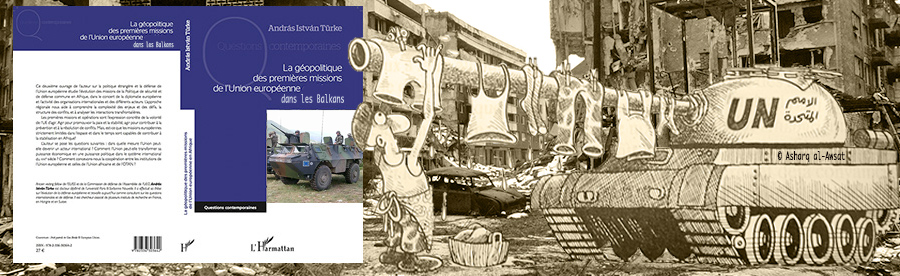
We are looking for sponsors for the English translation of these books, please contact turkeandras(at)gmail(dot)com