
You are here
Afrique
Debate: Drone attacks on cargo ships in the Black Sea
At least seven merchant ships have reportedly been attacked by drones in the Black Sea off the coasts of Romania and Bulgaria in recent days. It is not yet clear who is behind the strikes, which are fuelling concerns about a further escalation of the war in Ukraine and jeopardising key trade routes. Europe's press discusses who is to blame and the consequences for security and global trade.
Categories: Afrique, European Union
Ceasefire to protect grain exports in everyone's interest | Süddeutsche Zeitung - Germany
Categories: Afrique, European Union
Black Sea as a new battlefield? | El Periódico de Catalunya - Spain
Categories: Afrique, European Union
Debate: Trump ups the pressure on Zelensky
US President Donald Trump has levelled new accusations against Ukrainian President Volodymyr Zelensky, saying that the US has "given Ukraine a lot – they've given us nothing" and that Zelensky was "no real help" in the peace efforts. The Ukrainian President had complained about a lack of support from the US. The press wonders whose interests are being served with these comments.
Categories: Afrique, European Union
Ukrainians facing even tougher times | Frankfurter Allgemeine Zeitung - Germany
Categories: Afrique, European Union
Inner circle focused solely on own interests | De Volkskrant - Netherlands
Categories: Afrique, European Union
Les opposants à Poutine expulsés par l'Occident et que la Russie envoie désormais au front
Au cours de l'année écoulée, le nombre de militants antigouvernementaux expulsés vers la Russie depuis l'Union européenne et les États-Unis, où ils avaient trouvé refuge, a considérablement augmenté.
Categories: Afrique
AVIS DE RECRUTEMENT – ATTACHÉE COMMERCIALE (H/F)
Dans le cadre du développement de ses activités, un cabinet de recrutement et de mise à disposition de personnel basé à Cotonou, recrute une (01) Attachée Commerciale.
1. IDENTIFICATION DU POSTE
– Intitulé : Attachée Commerciale
– Rattachement hiérarchique : Direction Générale
– Relations fonctionnelles :
– Lieu de travail : Cotonou (avec déplacements terrain)
2. MISSION PRINCIPALE
L'Attachée Commerciale pilote, anime et développe l'activité commerciale du cabinet. Elle est chargée de vendre l'ensemble de nos prestations (Recrutement, Intérim, Formation, Externalisation RH) et de garantir la réalisation des objectifs de chiffre d'affaires tout en assurant l'excellence de la relation client.
3. RESPONSABILITÉS ET MISSIONS
A. Développement Commercial & Chiffre d'Affaires
– Prospecter activement les entreprises, institutions et ONG (phoning, terrain, LinkedIn, réseau).
– Détecter et qualifier les besoins en recrutement et RH des prospects.
– Présenter nos services, réaliser les RDV commerciaux et rédiger les propositions commerciales.
– Négocier et closer les contrats jusqu'à la signature.
– Décliner les objectifs annuels et mensuels de CA et assurer leur atteinte.
B. Gestion et Fidélisation Portefeuille
– Gérer un portefeuille de clients existants et assurer leur fidélisation.
– Assurer le suivi des missions en cours avec les chargés de recrutement.
– Être garante de la satisfaction client et du renouvellement des contrats.
C. Pilotage et Reporting
– Analyser les KPIs : nombre de RDV, taux de conversion, CA généré, marge, portefeuille actif.
– Tenir à jour le CRM et le tableau de suivi commercial.
– Assurer une veille concurrentielle sur le marché du recrutement au Bénin.
– Élaborer les reportings hebdomadaires pour la Direction.
4. PROFIL RECHERCHÉ
– Femme, Bac+3 minimum en Commerce, Marketing, Action Commerciale ou Gestion.
– Expérience de 1 à 3 ans minimum en tant que Commerciale Terrain / B2B, idéalement dans les services aux entreprises (intérim, assurance, banque, immobilier, formation).
– Excellente présentation, aisance relationnelle et très bonne élocution.
– Goût prononcé pour la prospection terrain et le challenge.
– Permis de conduire serait un plus.
5. COMPÉTENCES ASSOCIÉES
– Techniques de prospection, de négociation et de closing
– Maîtrise du pack Office et des outils CRM
– Très bonne aptitude rédactionnelle (propositions, mails)
– Sens de l'écoute, organisation, rigueur, résilience
– Dynamique, autonome, honnête et orientée résultats
6. CONDITIONS
– Contrat : CDD avec objectif CDI
– Rémunération : Fixe + commissions très attractives et non plafonnées sur chaque contrat signé et encaissé
– Prise de poste : Immédiate
7. COMMENT CANDIDATER
Envoyez votre CV + photo à l'adresse mail : recrutement@eliteinterim.bj avec en objet : "Attachée Commerciale – Cabinet"
Categories: Afrique, Swiss News
El Hadji Fall, nouveau Représentant résident PNUD-Bénin
Le Programme des Nations unies pour le développement (PNUD) a un nouveau Représentant résident au Bénin. L'économiste sénégalais El Hadji Fall a officiellement pris ses fonctions à Cotonou le 1er octobre 2026. Fort de plus de vingt ans d'expérience en politiques publiques et en stratégies de développement en Afrique, il retrouve un pays où il a déjà servi entre 2012 et 2016 en qualité de conseiller économique au sein du bureau national de l'institution.
El Hadji Fall succède au Nigérian Titus Osundina, au poste de Représentant résident du PNUD au Bénin. Il a été reçu en audience jeudi 15 octobre 2026, par la ministre des Affaires étrangères, Corinne Amori Brunet.
Titulaire d'un doctorat en économie obtenu en 2005 à l'Université Paris 1 Panthéon-Sorbonne, El Hadji Fall a commencé sa carrière dans l'enseignement supérieur. De 2001 à 2008, il a enseigné plusieurs disciplines, notamment la macroéconomie, les mathématiques, l'économie internationale, ainsi que l'économie de l'environnement et du développement, dans différentes universités en France et aux Pays-Bas.
Entre 2006 et 2008, il a également conduit des activités de recherche à l'Université de Wageningen, aux Pays-Bas. Il rejoint ensuite le Pnud en 2008 en tant que conseiller technique régional spécialisé dans le cadre macro-budgétaire. À ce poste, il intervient au sein du Pôle Stratégie de développement et finances publiques du Centre de services régionaux de Dakar jusqu'en 2012.
En 2012, il est affecté au Bénin comme conseiller économique du Pnud, fonction qu'il occupe jusqu'en 2016. Il poursuit ensuite son parcours sur le continent africain en devenant conseiller économique de l'institution pour Madagascar et les Comores.
La coopération au cœur des échanges
Le jeudi 15 octobre 2026, le nouveau représentant résident du PNUD a présenté ses lettres de cabinet à Corinne Amori Brunet, ministre des Affaires étrangères chargée de l'Intégration des Afrodescendants. Cette démarche officielle a été l'occasion de faire le point sur les orientations de la coopération entre le Bénin et l'agence onusienne.
Les discussions ont porté sur les principaux domaines de partenariat, en cohérence avec les priorités nationales. La gouvernance, le renforcement de la résilience, la croissance inclusive et la réalisation des Objectifs de développement durable (ODD) figurent parmi les axes de coopération évoqués.
À cette occasion, El Hadji Fall a réaffirmé la volonté du PNUD de poursuivre et de renforcer son partenariat stratégique avec le gouvernement béninois. L'objectif est de soutenir les initiatives de développement du pays et de contribuer à l'amélioration des conditions de vie des populations.
F. A. A.
Categories: Afrique, Swiss News
« Horde de barbares » : Éric Zemmour visé par une plainte après ses propos sur les Maghrébins
Le député La France Insoumise (LFI) de l’Essonne, Antoine Léaument, a officiellement saisi la procureure de la République après les déclarations polémiques d’Éric Zemmour sur […]
L’article « Horde de barbares » : Éric Zemmour visé par une plainte après ses propos sur les Maghrébins est apparu en premier sur .
Categories: Afrique, Swiss News
Un Comité national du numérique créé à la Présidence
Au Bénin, le chef de l'Etat à travers le Décret N°2026-579 du 2 septembre 2026, a procédé à la création Comité national du numérique.
Le Comité national du Numérique est chargé de l'orientation stratégique, du pilotage et du suivi de la transformation numérique de l'État ainsi que de la veille, de l'intelligence et de la sécurité numériques.
A ce titre, la pour attributions de :
– identifier les évolutions technologiques, notamment en matière d'intelligence artificielle, susceptibles d'avoir un impact sur le Bénin, et appeler l'attention du Président de la République et autres autorités sur les menaces et les opportunités qui en résultent pour le pays ;
– éclairer les choix stratégiques de l'État en matière de transformation digitale, d'intelligence artificielle, de souveraineté et de sécurité numériques ;
– veiller à la cohérence d'ensemble de la stratégie nationale, en valider les grandes orientations et les jalons, et s'assurer de son articulation avec les politiques sectorielles ;
– assurer le suivi des décisions et des recommandations en matière de protection des infrastructures d'information critiques et des données de souveraineté ;
– suivre l'exécution des projets et réformes en lien avec la transformation digitale et la sécurité numérique, et en apprécier l'avancement au regard des cibles et des échéances arrêtées ;
– apprécier les performances et les résultats obtenus par les structures de l'État impliquées dans la transformation digitale, la sécurité numérique, y compris la lutte contre les cyberattaques ;
– identifier les contraintes liées à la mise en œuvre des projets et réformes et proposer toutes mesures de nature à accélérer leur exécution et, le cas échéant, la réorientation ou l'arrêt des projets qui ne produisent pas les résultats attendus ;
– émettre un avis préalable sur les projets numériques structurants de l'État ainsi que sur les partenariats stratégiques et les accords-cadres technologiques engageant la souveraineté numérique nationale.
Composition du Comité national du numérique
– Président : le Président de la République ou son représentant ;
– Rapporteur : le Secrétaire permanent du Comité ;
Membres :
– le Ministre de la Transformation Digitale et de l'Innovation, chargé de la Stratégie nationale d'Intelligence artificielle ;
– le Directeur général de l'Agence des Systèmes d'Informations et du Numérique ;
– le Directeur général du Centre national d'Investigations Numériques ;
– le Directeur général de l'Agence nationale de Cybersécurité et de Résilience ;
– trois (03) personnalités de nationalité béninoise ou étrangère, choisies par le Président de la République, reconnues pour leurs compétences et expertises dans les domaines de la transformation digitale et de la sécurité numérique.
Les personnalités choisies par le Président de la République sont désignées pour un mandat de trois (03) ans, renouvelable une fois.
Le Décret portant création Comité national du numérique
Categories: Afrique, Swiss News
Des recherches en cours pour retrouver un jeune homme emporté par les eaux du Mono
Un jeune homme est porté disparu depuis le dimanche 18 octobre 2026 après une baignade dans le fleuve Mono, à Agniwedji, dans la commune d'Athiémé. Les recherches engagées par des plongeurs locaux et des volontaires n'ont toujours pas permis de le retrouver.
Un jeune couturier serait mort par noyade sur la berge d'Agniwedji dimanche 18 octobre 2026. Selon le chef quartier de Gbédji, Yaovi Benoît Hounnou, rapporté par Le Matinal, la victime, identifiée par les initiales F. H., réside dans le quartier Gbédji Tohoungah.
Après un passage au champ, le jeune homme serait rentré chez lui avant de se rendre au bord du fleuve pour se baigner.
Sur place, sa sœur et d'autres femmes faisaient la lessive. Malgré leurs avertissements, il aurait plongé dans les eaux du Mono.
D'après le récit du chef quartier, le jeune homme serait parvenu à regagner la berge à deux reprises, avec des crevettes. Mais lors de sa troisième incursion, il se serait aventuré plus profondément dans le fleuve avant d'être emporté par de puissants tourbillons.
Les recherches se poursuivent
La disparition du couturier a mobilisé des plongeurs locaux et des volontaires, qui ont entrepris des recherches dans la zone. Mais ces opérations sont restées infructueuses. Le chef quartier a indiqué que les services de police sont informés de la situation.
Les recherches se poursuivent.
F. A. A.
Categories: Afrique, Swiss News
Regulating and mobilising the private sector for democracy protection in the European Union’s trade policy
The European Union (EU) conditions access to its market on compliance with human rights, labour standards, and environmental policy and regulation. Its trade-related legislation falls into two categories: measures addressing partner governments and measures targeting the private sector. Within these two groups, only the first includes an instrument that specifically mentions democracy, namely the essential elements clause, which appears frequently in EU trade agreements yet has been invoked only once since 2014.
The EU is under domestic political pressure to deregulate in order to strengthen its competitiveness. The competitiveness agenda is cutting into the instruments the EU already has, especially amid geopolitical competition with China, making suspensionled conditionality against partner governments harder to enact. Our recommendations are as follows:
• Democracy protection stakeholders should shift their attention from suspension-led demo¬cracy support and conditionality aimed at partner governments towards the rules and incentives that run through the private sector. Even after the Omnibus reform’s narrowing scope, firm-facing rules remain in place. They are default-on and run through existing regulatory arrangements, and their potential geopolitical repercussions are smaller in comparison.
• Tender processes are one particular set of firm-facing rules. With the momentum behind the European Commission’s legislative proposal to revise the public procurement directive, corruption-based exclusion rules should be applied against operators linked to state capture in partner countries, as democratic backsliders often use public procurement to consolidate patronage networks.
• Firm-facing regulations also permit a different case to be made: stronger due diligence carries no measurable competitiveness penalty. Companies are not just subjects of regulation. They are also stakeholders with their own interest in transparent procurement and predictable rules. To bolster such a narrative, development cooperation should invest in developing compliance capacity, especially in autocratising states.
Categories: Afrique, Diplomacy & Defense Think Tank News
Le Bénin écrase l'Inde 27-0
Après leur victoire 7-0 contre le Qatar, les jeunes Béninois signent un deuxième succès consécutif à la Coupe du monde scolaire de football, à Suzhou, en Chine.
Les Guépards scolaires U18 du Bénin poursuivent leur parcours avec autorité à la Coupe du monde scolaire de football Chine 2026.

Opposés à l'Inde ce mardi 20 octobre à Suzhou, en Chine, les jeunes Béninois se sont imposés sur le score spectaculaire de 27 buts à 0.
Pour leur entrée en lice, lundi 19 octobre, les poulains du sélectionneur Séverin Danha avaient déjà dominé le Qatar sur le score de 7-0. Ils avaient alors inscrit six buts au cours de la première demi-heure de jeu, avant de parachever leur succès en seconde période.

Avec cette deuxième victoire, le Bénin porte son total à 34 buts marqués en deux rencontres, sans le moindre but encaissé. La sélection béninoise doit désormais se tourner vers son prochain rendez-vous face à la Chine, pays hôte.

Cette confrontation constitue une nouvelle étape importante dans la course aux premières places du groupe B et à la qualification pour les huitièmes de finale.
M. M.
Categories: Afrique, Swiss News
Le péage de Kétou entre en service
Le poste de péage de Kétou est opérationnel depuis ce lundi 19 octobre 2026. Les tarifs vont de 1 000 à 18 000 FCFA, selon la catégorie du véhicule et le nombre d'essieux pour les poids lourds.
Le péage de Kétou est désormais opérationnel. Annoncée par la Société des infrastructures routières et de l'aménagement du territoire (SIRAT SA), la mise en exploitation de cet ouvrage est effective depuis ce lundi 19 octobre 2026 sur la Route nationale n°26 (RN26), reliant Kétou à Idigny.
La collecte des droits de passage a démarré dans la matinée, marquant une nouvelle étape dans l'exploitation de cet axe routier. La mise en service officielle a été effectuée par la maire de Kétou, Titilola Angélique Adégnika Azondékon, aux côtés des responsables de la SIRAT SA. À cette occasion, la mairesse a salué les efforts engagés par le gouvernement dans le domaine des infrastructures routières. Elle a également invité les populations à faire preuve de civisme, à respecter les consignes et à contribuer à la préservation de cet ouvrage public.

Titilola Angélique Adégnika Azondékon, a exprimé le souhait que l'exploitation du poste contribue à renforcer la sécurité routière et à soutenir le développement économique de la commune.
Des tarifs compris entre 1 000 et 18 000 FCFA
Conformément à l'arrêté interministériel du 2 juillet 2026 encadrant la perception des droits de passage, les véhicules légers d'une hauteur inférieure à 2,55 mètres sont soumis à un tarif de 1 000 FCFA par passage.

Pour les poids lourds et les véhicules d'une hauteur égale ou supérieure à 2,55 mètres, les montants varient selon le nombre d'essieux. Le barème prévoit 2 000 FCFA pour deux essieux, 4 000 FCFA pour trois essieux, 6 000 FCFA pour quatre essieux, 8 000 FCFA pour cinq essieux et 10 000 FCFA pour six essieux. Les véhicules comptant sept essieux ou plus devront débourser 18 000 FCFA par passage, qu'ils soient à vide ou chargés.
M. M.
Categories: Afrique, Swiss News
Pages
the old site is here



© 2012-2015 Europa Varietas Foundation © 2015-2020 Europa Varietas Association
www.europavarietas.org | info(@)europavarietas(dot)org | Switzerland
This is a GDPR ready site
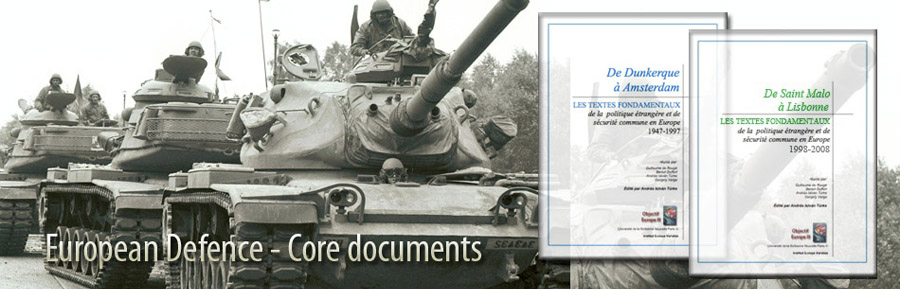

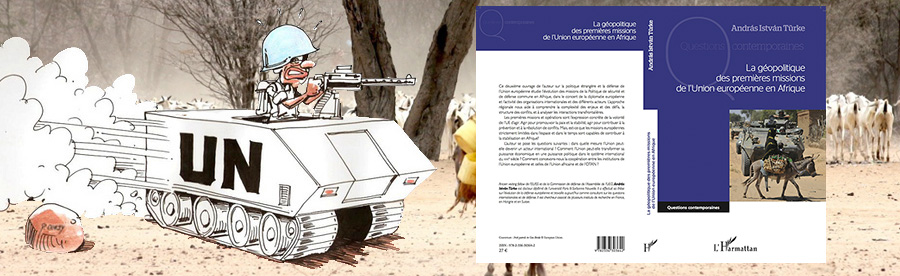

We are looking for sponsors for the English translation of these books, please contact turkeandras(at)gmail(dot)com