
You are here
Afrique
Eine globale Agenda braucht eine überzeugende Zukunftsvision
Bonn, 13. Juni 2026. Weniger als fünf Jahre vor Ablauf der Agenda 2030 sieht die Welt deutlich anders aus als bei ihrer Verabschiedung. Ein positives Narrativ wird entscheidend sein, um öffentliche und politische Unterstützung zu gewinnen.
Die Diskussion darüber, wie es nach 2030 weitergehen soll, hat gerade erst begonnen. Gut vier Jahre vor Ablauf der Frist gibt es bislang kaum offizielle Positionen zu einer möglichen Neuauflage der Agenda 2030. Auch beim High-Level Political Forum, dem zentralen UN-Format zur Umsetzung der Nachhaltigkeitsziele, das in diesen Tagen in New York stattfindet, wird diese Diskussion eher am Rande geführt. Selbst der Prozess hin zu einer neuen Agenda ist noch unklar, da der richtungsweisende UN-Gipfel zu den Nachhaltigkeitszielen erst für September 2027 unter der Schirmherrschaft eines neuen UN-Generalsekretärs oder einer neuen UN-Generalsekretärin geplant ist. Dennoch bleibt nur wenig Zeit für die Verhandlung einer neuen oder überarbeiteten Agenda. Was ist realistisch – und was ist für die Zeit nach 2030 wünschenswert?
Die IDOS-Konferenz „Sustainability Cooperation Beyond 2030 – Ways forward in a messy world“ am 25. und 26. Juni in Bonn und eine Diskussionsrunde bei der Hamburg Sustainability Conference am 30. Juni haben die Debatte einen Schritt vorangebracht. Beide Veranstaltungen brachten Wissenschaftler*innen, Think-Tanks sowie aktuelle und ehemalige Verhandlungsführer*innen aus allen Kontinenten zusammen, um Lehren aus der internationalen Nachhaltigkeitskooperation zu ziehen und Perspektiven für eine wünschenswerte Zukunft zu erörtern.
Wo wir heute stehenRückblickend zeigt sich, dass die Agenda 2030 mehr Dynamik entfaltet hat, als zu Beginn erwartet wurde. In zahlreichen Bereichen und Ländern sind Fortschritte zu verzeichnen, die beim alleinigen Blick auf die globalen Umsetzungsindikatoren nicht ausreichend gewürdigt werden. Zudem verfügen viele Länder, Vorreiterunternehmen sowie subnationale und lokale Akteure über Nachhaltigkeitsstrategien – unabhängig von der politischen Ausrichtung der jeweiligen nationalen Regierung. Positiv ist auch die Einbindung von Entscheidungsträger*innen auf subnationaler und kommunaler Ebene, wo konkrete Maßnahmen etwa zu Verkehr, Energie oder Raumplanung umgesetzt werden.
Derzeit beobachten wir Rückschritte bei den erklärten Nachhaltigkeitszielen, aber auch neue Herausforderungen. Das gibt Anlass zur Sorge und erfordert entschlossenes Handeln. Nationale Pläne reichen für die vollständige Umsetzung der Agenda 2030 nicht aus, wie verschiedene Tracker, etwa im Klimabereich, zeigen. Während die zunehmende Zahl von Kriegen weitere Fortschritte erschwert, wird die Entwicklungsfinanzierung knapper, da viele Länder ihre Ressourcen zunehmend in Militärausgaben statt in einen umfassenderen Sicherheitsansatz investieren, der auch menschliche, soziale und wirtschaftliche Aspekte einbezieht. Hinzu kommt, dass der demografische Wandel in vielen Industrieländern den Druck auf die Sozialversicherungssysteme erhöht. Die Klimakrise bringt zudem immer häufiger extreme Wetterereignisse mit sich. Kurz gesagt: Trotz einer globalen Nachhaltigkeitsagenda erleben wir eine Polykrise.
Und doch hat eine globale Agenda ihren Wert. Eine Teilnehmerin der Bonner Konferenz zog den eher ungewöhnlichen Vergleich mit dem preußischen Militärtheoretiker Clausewitz: Keine Strategie lässt sich genauso umsetzen, wie sie entworfen wurde; sie muss sich stets an veränderte Realitäten anpassen. Dennoch helfen Strategien, vorausschauend zu denken, Ambitionen in konkrete Maßnahmen zu übersetzen und Lücken zu identifizieren.
Die Debatte über eine Agenda nach 2030Es ist unwahrscheinlich, dass großes Interesse an einer vollständigen Neugestaltung der Agenda und ihrer Ziele besteht. Sie ist bereits sehr umfassend, und eine Neuverhandlung wäre angesichts geopolitischer Verschiebungen und der damit verbundenen Risiken äußerst herausfordernd. Europa unterstützt globale Ziele weiterhin, China betont seine Ausrichtung auf die „Stabilität“ des Systems (und dürfte zugleich seinen Einfluss weiter ausbauen), während sich die USA gegenwärtig aktiv gegen die bestehende und wahrscheinlich auch gegen jede künftige Agenda aussprechen – auch wenn subnationale Akteure dort die Notwendigkeit globaler Maßstäbe erkennen.
Die Teilnehmer*innen unserer jüngsten Veranstaltungen diskutierten mögliche Weiterentwicklungen der Agenda, etwa die Rolle von KI und Kreislaufwirtschaft sowie die erneut aufgekommene Frage, wie Wohlstand jenseits des BIPs besser gemessen werden kann. Zudem bestand weitgehende Einigkeit, dass nicht nur das „Was“ – Ziele und Indikatoren –, sondern auch das „Wie“ – also die Umsetzungsmittel – stärker in den Blick genommen werden sollte. Zugleich zeichnete sich ein breiter Konsens über den Wunsch nach einer gemeinsamen Vision ab: einer Agenda für die Zukunft.
Wie geht es weiter?Die Debatte über eine neue Agenda wird in den kommenden Monaten in zahlreichen Diskussionsrunden über die Perspektiven weitergeführt werden – sowohl inhaltlich als auch mit Blick auf das weitere Vorgehen. Wie so oft in multilateralen Kontexten wird der Prozess voraussichtlich die Ergebnisse mitprägen. Entscheidend wird zudem sein, welche Akteure neben den Staaten einbezogen werden und wie dies geschieht.
Denn die mit der Agenda 2030 verbundenen Aufgaben sind am 31. Dezember 2030 nicht hinfällig. Es handelt sich ausdrücklich um eine langfristige Vision „für diese und künftige Generationen“. Doch die Agenda steht unter Legitimitätsdruck, und ein neues Enddatum allein wird nicht ausreichen. Ebenso wichtig wie der Inhalt ist ein überzeugendes Narrativ über globale Gemeingüter und das globale Gemeinwohl – und darüber, was internationale Zusammenarbeit bewirken kann. Der Entwurf und die Gestaltung einer nachhaltigen Zukunft sind ein zutiefst menschliches Unterfangen.
Categories: Afrique, Diplomacy & Defense Think Tank News
Eine globale Agenda braucht eine überzeugende Zukunftsvision
Bonn, 13. Juni 2026. Weniger als fünf Jahre vor Ablauf der Agenda 2030 sieht die Welt deutlich anders aus als bei ihrer Verabschiedung. Ein positives Narrativ wird entscheidend sein, um öffentliche und politische Unterstützung zu gewinnen.
Die Diskussion darüber, wie es nach 2030 weitergehen soll, hat gerade erst begonnen. Gut vier Jahre vor Ablauf der Frist gibt es bislang kaum offizielle Positionen zu einer möglichen Neuauflage der Agenda 2030. Auch beim High-Level Political Forum, dem zentralen UN-Format zur Umsetzung der Nachhaltigkeitsziele, das in diesen Tagen in New York stattfindet, wird diese Diskussion eher am Rande geführt. Selbst der Prozess hin zu einer neuen Agenda ist noch unklar, da der richtungsweisende UN-Gipfel zu den Nachhaltigkeitszielen erst für September 2027 unter der Schirmherrschaft eines neuen UN-Generalsekretärs oder einer neuen UN-Generalsekretärin geplant ist. Dennoch bleibt nur wenig Zeit für die Verhandlung einer neuen oder überarbeiteten Agenda. Was ist realistisch – und was ist für die Zeit nach 2030 wünschenswert?
Die IDOS-Konferenz „Sustainability Cooperation Beyond 2030 – Ways forward in a messy world“ am 25. und 26. Juni in Bonn und eine Diskussionsrunde bei der Hamburg Sustainability Conference am 30. Juni haben die Debatte einen Schritt vorangebracht. Beide Veranstaltungen brachten Wissenschaftler*innen, Think-Tanks sowie aktuelle und ehemalige Verhandlungsführer*innen aus allen Kontinenten zusammen, um Lehren aus der internationalen Nachhaltigkeitskooperation zu ziehen und Perspektiven für eine wünschenswerte Zukunft zu erörtern.
Wo wir heute stehenRückblickend zeigt sich, dass die Agenda 2030 mehr Dynamik entfaltet hat, als zu Beginn erwartet wurde. In zahlreichen Bereichen und Ländern sind Fortschritte zu verzeichnen, die beim alleinigen Blick auf die globalen Umsetzungsindikatoren nicht ausreichend gewürdigt werden. Zudem verfügen viele Länder, Vorreiterunternehmen sowie subnationale und lokale Akteure über Nachhaltigkeitsstrategien – unabhängig von der politischen Ausrichtung der jeweiligen nationalen Regierung. Positiv ist auch die Einbindung von Entscheidungsträger*innen auf subnationaler und kommunaler Ebene, wo konkrete Maßnahmen etwa zu Verkehr, Energie oder Raumplanung umgesetzt werden.
Derzeit beobachten wir Rückschritte bei den erklärten Nachhaltigkeitszielen, aber auch neue Herausforderungen. Das gibt Anlass zur Sorge und erfordert entschlossenes Handeln. Nationale Pläne reichen für die vollständige Umsetzung der Agenda 2030 nicht aus, wie verschiedene Tracker, etwa im Klimabereich, zeigen. Während die zunehmende Zahl von Kriegen weitere Fortschritte erschwert, wird die Entwicklungsfinanzierung knapper, da viele Länder ihre Ressourcen zunehmend in Militärausgaben statt in einen umfassenderen Sicherheitsansatz investieren, der auch menschliche, soziale und wirtschaftliche Aspekte einbezieht. Hinzu kommt, dass der demografische Wandel in vielen Industrieländern den Druck auf die Sozialversicherungssysteme erhöht. Die Klimakrise bringt zudem immer häufiger extreme Wetterereignisse mit sich. Kurz gesagt: Trotz einer globalen Nachhaltigkeitsagenda erleben wir eine Polykrise.
Und doch hat eine globale Agenda ihren Wert. Eine Teilnehmerin der Bonner Konferenz zog den eher ungewöhnlichen Vergleich mit dem preußischen Militärtheoretiker Clausewitz: Keine Strategie lässt sich genauso umsetzen, wie sie entworfen wurde; sie muss sich stets an veränderte Realitäten anpassen. Dennoch helfen Strategien, vorausschauend zu denken, Ambitionen in konkrete Maßnahmen zu übersetzen und Lücken zu identifizieren.
Die Debatte über eine Agenda nach 2030Es ist unwahrscheinlich, dass großes Interesse an einer vollständigen Neugestaltung der Agenda und ihrer Ziele besteht. Sie ist bereits sehr umfassend, und eine Neuverhandlung wäre angesichts geopolitischer Verschiebungen und der damit verbundenen Risiken äußerst herausfordernd. Europa unterstützt globale Ziele weiterhin, China betont seine Ausrichtung auf die „Stabilität“ des Systems (und dürfte zugleich seinen Einfluss weiter ausbauen), während sich die USA gegenwärtig aktiv gegen die bestehende und wahrscheinlich auch gegen jede künftige Agenda aussprechen – auch wenn subnationale Akteure dort die Notwendigkeit globaler Maßstäbe erkennen.
Die Teilnehmer*innen unserer jüngsten Veranstaltungen diskutierten mögliche Weiterentwicklungen der Agenda, etwa die Rolle von KI und Kreislaufwirtschaft sowie die erneut aufgekommene Frage, wie Wohlstand jenseits des BIPs besser gemessen werden kann. Zudem bestand weitgehende Einigkeit, dass nicht nur das „Was“ – Ziele und Indikatoren –, sondern auch das „Wie“ – also die Umsetzungsmittel – stärker in den Blick genommen werden sollte. Zugleich zeichnete sich ein breiter Konsens über den Wunsch nach einer gemeinsamen Vision ab: einer Agenda für die Zukunft.
Wie geht es weiter?Die Debatte über eine neue Agenda wird in den kommenden Monaten in zahlreichen Diskussionsrunden über die Perspektiven weitergeführt werden – sowohl inhaltlich als auch mit Blick auf das weitere Vorgehen. Wie so oft in multilateralen Kontexten wird der Prozess voraussichtlich die Ergebnisse mitprägen. Entscheidend wird zudem sein, welche Akteure neben den Staaten einbezogen werden und wie dies geschieht.
Denn die mit der Agenda 2030 verbundenen Aufgaben sind am 31. Dezember 2030 nicht hinfällig. Es handelt sich ausdrücklich um eine langfristige Vision „für diese und künftige Generationen“. Doch die Agenda steht unter Legitimitätsdruck, und ein neues Enddatum allein wird nicht ausreichen. Ebenso wichtig wie der Inhalt ist ein überzeugendes Narrativ über globale Gemeingüter und das globale Gemeinwohl – und darüber, was internationale Zusammenarbeit bewirken kann. Der Entwurf und die Gestaltung einer nachhaltigen Zukunft sind ein zutiefst menschliches Unterfangen.
Categories: Afrique, Diplomacy & Defense Think Tank News
Europe’s Funding Question Puts Tanzania’s Fragile Democracy on Trial
Every evening just before sunset, Salima Kitwana hobbles into her backyard holding a photograph. In the picture, her son Hemedi, wearing a green football jersey, smiles awkwardly into the camera, unaware that his fate would soon be engulfed in one of Tanzania’s darkest political chapters. At 57, Kitwana has lived with diabetes for nine years, […]
Cotonou accueille la 7e réunion ministérielle du PEAA
Cotonou abrite du 12 au 13 juillet 2026, la 7ᵉ Réunion ministérielle du Processus des États africains atlantiques (PEAA). La rencontre est coorganisée par la République du Bénin et le Royaume du Maroc.
« Consolider un espace atlantique africain intégré : sécurité maritime, corridors logistiques verts et transition énergétique durable », c'est le thème de la 7e réunion ministérielle du Processus des États africains atlantiques (PEAA). Durant deux jours, les points focaux et les ministres des Affaires étrangères des États membres de l'organisation discuteront des voies et moyens de renforcer l'intégration de l'espace atlantique africain, notamment à travers une coopération accrue en matière de sécurité maritime, de logistique durable et de transition énergétique.

Lancé en 2022 à l'initiative de Sa Majesté le Roi Mohammed VI du Maroc, le Processus des États africains atlantiques (PEAA) vise à faire de la façade atlantique africaine un espace de paix, de stabilité, de coopération et de prospérité économique.
Categories: Afrique, Swiss News
SONIMEX obtient le paiement judiciaire de 14,4 millions FCFA
SONIMEX S.A. a eu gain de cause dans un différend qui l'oppose à un commerçant.
Créancière d'une somme de 14.476.068 FCFA, à la suite de plusieurs ventes réglées par chèque, SONIMEX S.A. déclare qu'à sa présentation en banque, le chèque est revenu impayé.
Face à cette situation, un acte officiel dressé par un commissaire de justice et constatant le chèque sans provision a été établi les 30 septembre et 6 octobre 2025.
Malgré cette formalité, SONIMEX S. A. affirme n'avoir reçu aucun règlement. Elle a alors fait pratiquer, le 22 décembre 2025, une saisie conservatoire sur les biens meubles du débiteur.
Le 20 janvier 2026, SONIMEX a saisi le Tribunal de commerce de Cotonou pour obtenir une condamnation au paiement du débiteur, un commerçant dont les initiales sont R. C. H.
Assigné à comparaître, le commerçant ne s'est pas présenté devant le Tribunal.
Pour le Tribunal, les pièces versées au dossier, notamment le chèque et le protêt, « établissent suffisamment l'existence d'une créance certaine, liquide et exigible au profit de SONIMEX S.A. ».
Les juges ont rappelé que, conformément au règlement de l'UEMOA sur les systèmes de paiement, « le porteur du chèque peut réclamer au tireur (...) le montant du chèque non payé ».
Dans son jugement N°070/2026/CJ2/S3/TCC, rendu le 3 juin 2026, le Tribunal de commerce de Cotonou a condamné, R. C. H., promoteur des Établissements CFAP Louis Pasteur, à verser à SONIMEX S.A. la somme de 14.476.068 FCFA, correspondant au montant principal de la créance réclamée par l'entreprise.
Le jugement prévoit également le paiement des intérêts de droit ainsi que des frais de procédure.
Il ressort de ce jugement, rendu en premier ressort, qu'une entreprise qui reçoit un chèque sans jamais parvenir à encaisser son montant peut saisir la justice pour obtenir le paiement de sa créance.
M. M.
Categories: Afrique, Swiss News
Does India’s Women’s Reservation Bill Shortchange Women Yet Again?
Ranjana Kumari, activist.
By Kumkum Chadha
NEW DELHI, Jul 13 2026 (IPS)
To say that the men scored over women yet again would be an understatement. To say that the women lost and men have won would be an oversimplification and to say that political manoeuvring, intrigue and deceit outdid half of India’s population would be stating the obvious.
So, what is the story? Or the plot with its twists and turns? Or the game that women lost even before they started playing?
Rewind to three decades when the women of India woke up to what today is branded as political empowerment.
In this context the one name that stands out is that of Parliamentarian Geeta Mukherjee, who chaired the Joint Parliamentary Committee to examine a Bill seeking reservation of seats for women in Parliament and state legislatures: 33 percent to be precise.
It was in 1996 that a legislation for this was tabled in the Lower House of the Indian Parliament
We are into 2026, and the women of India are still fighting for legitimacy in political power, relentlessly demanding what is their due.
The Women’s Reservation Bill has been tabled in Parliament several times – five times, to be precise.
Its history and the twists and turns that come with it are telling. Add to the mix the interesting questions that its tumultuous journey has thrown up. But more importantly, what has this unfulfilled dream done to the dignity of women of the world’s largest democracy? Simply put, it has left them hanging, staring in the dark with a ‘will it? will it not?’ question. As things have panned out, the future holds little hope.
Rewind to the Constituent Assembly that adopted the Constitution of India in 1949. Of its 389 members, only 15 were women. There were questions even then, but they were different.
If a woman member feared that reservation would mean restriction and, hence, exclusion of women from general seats, another member asked quite pointedly: “Were women not led by the heart, and was politics not a matter of the mind? Even as the heart versus the head debate dogged minds, the issue remained unresolved.
Some fifty years later, in 1996 to be exact, it was Sushma Swaraj, then a Parliament Member and later India’s foreign minister, who resurrected the issue. She told Parliament that only 6.5 of the 543 members in the Lower House of Parliament were women. Without saying it in so many words, she indicated that the situation was dismal and the future bleak.
Swaraj’s words were prophetic. The future was indeed bleak because three decades on, the women continue to fight for what should rightfully be theirs.
When the Bill was introduced in Parliament in 1996 and later in 1998 and 1999, the men kind of ganged up to ensure that a smooth passage was thwarted. On all three occasions, the Bill lapsed upon the dissolution of the Lower House in Parliament.
However, in 2008 another route was adopted and this time around it was introduced in the Upper House of Parliament.
This obviated the possibility of a lapse given that the Indian Parliament is structured in such a way that the Lower House has a fixed five-year term while the Upper House is a permanent chamber which is not subject to dissolution. Unlike the Lower House of Parliament, Bills tabled in the Upper House do not lapse.
That notwithstanding, the smooth passage of the Bill in the Lower House still remains a question mark, and that too a big one, staring at women in the face.
All through this rigmarole what stood out and continues to is the contempt and disregard men have for women in this part of the world. And these are no ordinary men but those who have been elected to work for the welfare of the people, men and women alike. Therefore, when they speak of women in disparaging terms, one stops to ask: have we actually progressed or do we continue to be a regressive and male-dominated society – one where men outside and fathers, brothers and husbands at home continue to call the shots?
Even as the answer is obvious, one’s soul may cringe at the manner in which lawmakers inside Parliament have targeted women during the several debates on reserving 33 percent of seats in Parliament and state legislatures.
Sample this: During a 1997 parliamentary debate, two leaders, both from the backward castes, opposed reservation even as they demanded what was termed a “quota within quota” for women. Decode this and it means that within the 33 percent reservation ensure a certain representation for the other backward castes, Dalits and Muslim women.
In the Indian context, the untouchables are called Dalits, while the Other Backward Castes, or OBCs as they are popularly known, represent the marginalised. The Muslims comprise the minorities in India.
But back to the debate in Parliament when these two leaders spearheaded the anti-reservation campaign under the garb of protection for women from the marginalised and backward castes.
They use “choicest phrases”, if one can use the term, to denigrate women segregating the elite and educated from the rural and the unversed.
Calling them par-kati mahilayen, roughly translated as ‘short-haired and elite’, a former Union Minister, Sharad Yadav, from the state of Bihar, threatened to consume poison if a Bill was passed without proper caste representation. His take: women who are privileged, urban and elite do not understand the struggle of their counterparts living in far-flung rural areas.
To quote him: “Like Socrates, who died consuming poison fighting for principles, I am also willing to die fighting for principles.” Given the male mind-set, such a statement may well be interpreted as if it is women’s reservation, and it will be “over my dead body”.
A former Chief Minister, Mulayam Singh Yadav, from the state of Uttar Pradesh, had another fear. Way back in 2010 he had told his constituents: “The kind of women who will enter Parliament… The wives and daughters of officers and businessmen, who invite whistles from boys…” He also said that rural women would be left out because they are “not that attractive”.
Another leader, a former Union Minister and Chief Minister, Lalu Prasad Yadav from the state of Bihar, said that India being a “male-dominated society”, to use his exact words, women vote according to the political diktat of the family. In other words, they are incapable of thinking and choosing independently and are a rubber stamp of their husbands: “My own wife votes according to my diktat,” the former Chief Minister had then said.
In later years, Yadav anointed his wife to succeed him when he was jailed in a fodder scam.
For the record, Lalu Prasad Yadav, who has served as Chief Minister of India’s populous state of Bihar and also as Union Minister, was convicted in a fodder scam and charged with syphoning off huge amounts from the animal husbandry department. This followed his resignation. Not the one to cede political space to anyone outside the family, Yadav named his wife, Rabri Devi, as his successor. That Devi was uneducated and could not even sign her name did not matter considering she was her husband’s proxy.
The first woman to head the state of Bihar, Devi ruled the state not once but three times over.
That notwithstanding, it is true that in India men dictate where and how their wives, mothers and sisters, or rather all the women in the family, should vote. This is one of the reasons why En bloc voting is a rule rather than an exception among women in rural areas.
However, by 2023 the power of the women’s vote dawned on political parties, particularly under Prime Minister Narendra Modi, who has launched several welfare schemes for women while heading the Government in India.
Unwilling to lose the momentum of emerging as a votary for women’s rights, the Modi Government brought in the Reservation Bill, which was passed in the Lower House of the Indian Parliament, both grudgingly and willingly.
With this, history took a half-turn: a half-turn because even while the Bill mandated a 33 per cent reservation, it was tied to a distant future, namely the upcoming census and subsequent redrawing of electoral constituencies or delimitation as it is better known and understood.
Ostensibly, it was a step forward, but in reality, it was an idea stuck in time. Linking reservation to the Census and delimitation that would follow was talking of a distant future because there is neither clarity on when the Census will take place nor a clear date, rather year, when the delimitation will take effect. Hence, the passing of the Bill remains a cosmetic measure and one on paper.
The truth of the matter is that men are reluctant to cede political space to women. Yet for any political party to oppose a reform like political empowerment for women is clearly counter-productive. No party can be seen as being a roadblock to women’s progress and risk being perceived as anti-women.
Therefore, while each party professes support for the issue and the cause, the real story is that they do not want to see reservation being a reality. The answer is simple: if 33 percent reservation for women becomes a law, then it is the men who will have to give up their seats to make way for women. In a patriarchal society like India, this seems like a pipe dream.
Having said that, it is ironic that every political party has committed to providing reservation in their political manifestos but no party has budged an inch to work towards this welfare measure. If anything, they have consistently worked against the Bill becoming a reality.
Fast forward to 2026 when the Government brought in the Women Reservation Bill in Parliament yet again through a special session of Parliament. But, this time around, the motive was suspect. The move was sudden and came at a time when the state elections were underway. Therefore, there was more politics than good intent that was attributed to what the Government wanted to showcase as women’s welfare.
What made it worse was that the Government tagged another bill with the women’s reservation bill: delimitation.
For the uninitiated, delimitation is the process of redrawing the boundaries of electoral constituencies. By this principle, seats for Parliament and states would be reallocated on the basis of the latest census, which is yet incomplete.
The Government’s bid to club delimitation with the reservation bill was decried. Opposition parties slammed the Government for making women a scapegoat and “using women” for a political end.
To quote an Opposition MP, Mahua Moitra, the Government’s move was “delimitation wrapped in a saree”. What she meant was that the Government is firing from the shoulders of women to push through legislation which otherwise would be opposed tooth and nail.
It is pertinent to mention that the opposition-ruled states are against delimitation, as it erodes the political power of those states that have fewer numbers in terms of population. With the voting numbers stacked against the Government, the Delimitation Bill would have hit a roadblock in Parliament. Hence, the Government linked the two Bills. The logic: delimitation would ride piggyback on the Women’s Reservation Bill. The women’s vote being very important in elections, no party would like to be seen as opposing women’s reservation.
However, the Government’s calculations went haywire and the Opposition unitedly voted against the Bill. The result: What seemed achievable fell through.
As an opposition member of Parliament, Sushmita Dev explained, “We are not against women’s reservation. But what is a betrayal is the Government riding on the shoulders of women to push delimitation. Why link delimitation with women’s reservation? Why bring in politics? Why push an agenda? Why not given women the dignity they deserve?” is what she asks.
Politics apart, women who have been fighting for women’s empowerment for decades see this slugfest between the Government and the Opposition as “a lost opportunity”. To quote activist Ranjana Kumari, Founder of the Centre for Social Research: “The defeat of the Women Bill in Parliament compels deeper reflection on the state of India’s democracy. There is a gap between intent and action. The political parties must take responsibility and move beyond tokenism. Globally, gender quotas have demonstrated that change is possible when backed by political commitment and clear design. India stands at a similar crossroads.”
Kumari has been in the forefront of the women’s reservation movement in India.
It is at this juncture that one needs to stop and ask: For how long will the women of India keep knocking doors? For how long will political parties and politicians continue making them scapegoats to achieve their political goals? Why is their due being denied to them time and again? Why do they continue to be victims at the hands of men who are politically powerful?
Why does politics get the better of women? Why is their future being linked to complicated legislative processes? Why are they being subjected to political juggernauts?
Too many questions but one straight and simple answer: The men of India, as in many other parts of the world, want women to continue being subservient and remain second class in a world where half the sky is theirs.
IPS UN Bureau Report
Follow @IPSNewsUNBureau
!function(d,s,id){var js,fjs=d.getElementsByTagName(s)[0],p=/^http:/.test(d.location)?'http':'https';if(!d.getElementById(id)){js=d.createElement(s);js.id=id;js.src=p+'://platform.twitter.com/widgets.js';fjs.parentNode.insertBefore(js,fjs);}}(document, 'script', 'twitter-wjs');
Die Kapitalrente braucht strenge Anlageregeln
Die Rentenkommission will einen zusätzlichen Beitragssatz von zwei Prozent auf den internationalen Kapitalmärkten investieren. Doch der Bericht schließt klimaschädliche Investitionen nicht grundsätzlich aus. Sollte er aber, denn das erklärte Ziel ist doch, die Lebensgrundlage künftiger Rentnerinnen und Rentner zu verbessern. Ein Gastbeitrag von Sören Hilbrich.
Categories: Afrique, Diplomacy & Defense Think Tank News
Die Kapitalrente braucht strenge Anlageregeln
Die Rentenkommission will einen zusätzlichen Beitragssatz von zwei Prozent auf den internationalen Kapitalmärkten investieren. Doch der Bericht schließt klimaschädliche Investitionen nicht grundsätzlich aus. Sollte er aber, denn das erklärte Ziel ist doch, die Lebensgrundlage künftiger Rentnerinnen und Rentner zu verbessern. Ein Gastbeitrag von Sören Hilbrich.
Categories: Afrique, Diplomacy & Defense Think Tank News
Wer bezahlt die Reformen – und wer profitiert von ihnen?
Die Reformen der Bundesregierung zementieren den Status quo und schwächen das Vertrauen in die Demokratie. Denn sie behandeln verletzliche Gruppen als Sündenböcke., Das jüngst vorgestellte Reformpaket der Bundesregierung enthält manche richtige Elemente. Der Gesamteindruck ist aber schief: Denn die Reformen machen im Großen und Ganzen verletzliche Gruppen zu den Sündenböcken.
Die große Schwäche dieser Reformen liegt darin, dass sie den Status quo weitgehend ...
Categories: Afrique, Diplomacy & Defense Think Tank News
La ministre Awaou Baco mise sur la dynamique de la GDIZ
La ministre des Petites et Moyennes Entreprises et de la Promotion de l'emploi, Awaou Baco, a rencontré lors d'une visite à la Zone industrielle de Glo-Djigbé (GDIZ), les responsables de la Société d'investissement et de promotion de l'industrie (SIPI-Bénin), structure en charge de l'exploitation et du développement de la zone économique spéciale. Cette rencontre vise à évaluer les mécanismes mis en place pour faciliter l'insertion professionnelle des jeunes Béninois sur la plateforme industrielle.
Afin de préparer une main-d'œuvre qualifiée, capable de répondre aux exigences des investisseurs opérant à la GDIZ, et d'offrir de réelles perspectives d'emploi aux jeunes Béninois, Awaou Baco, ministre des Petites et Moyennes Entreprises et de la Promotion de l'emploi y a effectué une visite.
Au cours des échanges, la ministre et les responsables de la SIPI-Bénin ont examiné les pistes de renforcement de la coopération entre les structures de formation professionnelle, les services publics de l'emploi et les entreprises implantées sur le site. Une synergie jugée essentielle pour améliorer l'adéquation entre les compétences disponibles et les besoins du marché.
Sur le terrain, la délégation ministérielle a pu constater le fonctionnement concret de ce dispositif. Les jeunes bénéficient d'une formation directe au sein des unités de production. Ce qui leur permet d'acquérir les compétences requises pour les métiers industriels avant leur déploiement progressif dans les unités de transformation.
La GDIZ, un écosystème au service des compétences
Au-delà de son ambition industrielle, la GDIZ mise sur le développement du capital humain. La plateforme a mis en place un écosystème qui favorise la montée en compétences de la main-d'œuvre locale en rapprochant les besoins des investisseurs des profils disponibles sur le marché de l'emploi.

Cette approche permet aux entreprises de disposer d'un vivier de travailleurs qualifiés, tandis que les jeunes accèdent à des formations professionnalisantes, acquièrent une expérience pratique et renforcent durablement leur employabilité.
Créée pour accélérer la transformation locale des matières premières et renforcer le tissu industriel national, la GDIZ accueille aujourd'hui plusieurs unités spécialisées dans le textile, l'habillement, l'agro-industrie, la transformation du bois, et la fabrication de produits manufacturés.
L'industrialisation, levier de création d'emplois
La visite de la ministre intervient dans un contexte marqué par la montée en puissance de la politique industrielle du gouvernement béninois. Véritable pilier de cette stratégie, la GDIZ contribue à la transformation locale des ressources, à l'attractivité des investissements et à la création de milliers d'emplois.
Le cadre juridique des zones économiques spéciales favorise l'installation d'entreprises grâce à un environnement compétitif et attractif. Parallèlement, les autorités renforcent les passerelles entre la formation professionnelle et le secteur productif afin d'améliorer durablement l'employabilité des jeunes.
À l'issue de cette visite, le ministère des Petites et Moyennes Entreprises et de la Promotion de l'emploi et les responsables de la GDIZ ont réaffirmé leur volonté de poursuivre leur collaboration afin de consolider les mécanismes reliant emploi, formation et industrie pour offrir davantage d'opportunités aux jeunes et soutenir le développement du secteur industriel béninois.

F. A. A.
Categories: Afrique, Swiss News
MEXICO: ‘Our Call for Justice for Our Missing Loved Ones Must Reach the World Just as World Cup Goals Do’
By CIVICUS
Jul 13 2026 (IPS)
CIVICUS speaks about efforts to use the 2026 FIFA World Cup to highlight Mexico’s enforced disappearance crisis with Ana Enamorado, a Honduran national who continues to search for her missing son in Mexico, and founder of the Regional Network of Migrant Families.
Ana Enamorado
Enforced disappearances in Mexico hit migrant families particularly hard, as their precarious immigration status compounds the lack of state support. Families and search groups are taking advantage of the fact that international attention is currently focused on the World Cup being played in Mexico to raise awareness of this crisis and demand that the Mexican government search for and find the disappeared.How did your son Óscar go missing, and what’s known about his case?
My son Óscar was 19 when he went missing. He left Honduras in 2008, fleeing the violence, and was in the USA when some young men invited him to Mexico with the promise of a job, a good wage, an education and the chance to see me again. It was all a deception.
Those were the years of the war on drugs that President Felipe Calderón declared in 2006, when the cartels began forcibly recruiting young people to join their ranks. Óscar was taken to El Carrizo, in the municipality of San Sebastián del Oeste, Jalisco state. It’s an isolated place with no public transport and severe deprivation, which makes it very difficult to escape. I last spoke to him on 19 January 2010, and I haven’t heard his voice since.
Little is known about his case, and the little that’s known is marred by negligence. In December 2009, weeks before his last call, charred bodies were found in the same place, but the investigation led nowhere. In 2013, forensic authorities in Jalisco attempted to hand over some ashes to me without any DNA evidence to confirm they were my son’s. The forensic institute went so far as to cremate around 1,560 unidentified bodies in less than a decade, a practice that has left so many families with no way of knowing the truth.
The Mexican state only began searching for Óscar in 2020, 10 years after I reported him missing. To this day, I am still searching for him and demanding justice.
What obstacles do migrant families face when searching for missing loved ones?
A major obstacle is the indifference of the authorities in the country of origin, which in my case is Honduras. We families are left on our own, with no one to guide us. The consulate should be the first authority to assist us, and it should do so quickly, because the first few hours are crucial for finding a person alive. But it rarely does so. As a result, filing a missing person report and a formal complaint becomes almost impossible. And without that, it’s not possible to open an investigation file or access our rights.
Added to this is my immigration status. Although I have been living in Mexico for 14 years, I am still considered a ‘visitor on humanitarian grounds’ and, to retain this status, I have to prove every year that my son is still missing. Having to prove my tragedy time and time again just to be able to stay revictimises me. That’s why I initiated legal proceedings against the National Institute of Migration to change my status to that of a permanent resident. However, it continues to reject my application, leaving me in a precarious situation when it comes to accessing my basic rights.
Why did you decide to protest during the World Cup?
We took to the streets of the host cities to show the other side of Mexico: the corruption, violence, impunity and the state’s indifference towards the thousands of missing people. Although the Mexican state may wish to project an image of celebration and modernity through the World Cup, there can be no World Cup celebrations against the backdrop of the humanitarian crisis caused by disappearances.
In Mexico, there are over 135,000 missing people. To put this into perspective, that number is one and a half times the capacity of the Azteca Stadium, where several matches in this World Cup have been played, including the opening match. Added to this is a forensic crisis. There are over 75,000 unidentified bodies. That is 75,000 people who did not return home and whose families continue inquiring about their whereabouts.
And the number keeps rising. We estimate that, since the World Cup began on 11 June, over 1,200 further people have gone missing. On 30 June, three teenagers aged 14 and 15 disappeared in Guadalajara, one of the host cities, in broad daylight amid streets full of celebrating crowds. The authorities believe it may have been a case of recruitment by organised crime. This practice continues unabated, and the government shows no sign of wanting to stop it or of searching for the missing people, particularly when they are migrants.
How has the Mexican government responded to the protests?
The state is uncomfortable with us taking to the streets to protest because every time we do, we expose the harsh and painful reality it wants to hide. That’s why, instead of listening to us and searching for our loved ones, it has responded with criminalisation, mockery and repression.
At her morning press conference on the day of the World Cup opening ceremony, President Claudia Sheinbaum played down our demonstration, and the Secretary of the Interior insinuated that someone was paying us to take to the streets, announcing an investigation into how we are funded. It’s an accusation that’s as painful as it’s outrageous. We have always searched for our loved ones using our own resources.
Then came the repression. Riot police cordoned us off and encircled us to prevent us from reaching the stadiums. On 30 June, on Calzada de Tlalpan, one of Mexico City’s main avenues, they assaulted and detained members of the ‘Hasta Encontrarte’ (Until we find you) collective simply for carrying images bearing the faces of their loved ones. Physical violence adds to the emotional and psychological trauma we already bear. Meanwhile, federal and state forces were deployed to ensure the safety of tourists, an effort they have never made to search for our loved ones.
What are you demanding of the government and international bodies?
We demand, first and foremost, that the Mexican state make the search for missing people a real priority. We call on President Sheinbaum to meet with the families and collectives in person to reach genuine agreements on search, location and prevention. We want to know how many people have been found alive, to have proper investigations carried out and to have trained and empathetic staff who can provide us with real answers.
But this crisis extends beyond Mexico’s borders, and the response must do the same. The United Nations Committee on Enforced Disappearances and the Inter-American Commission on Human Rights have offered their assistance. We call on the government to accept it. Such cooperation is urgent, because there are tens of thousands of people of other nationalities who have gone missing in Mexico, and searching for them requires the activation of international mechanisms. Many are women who have been trafficked, and most are taken out of the country, so finding them depends on governments working together.
Finally, we call on the international community to not turn a blind eye to what’s happening, and on the media to help us amplify our demands, so our voices reach the world just as World Cup goals do.
We won’t rest until we find them. They were taken alive, and we want them back alive.
CIVICUS interviews a wide range of civil society activists, experts and leaders to gather diverse perspectives on civil society action and current issues for publication on its CIVICUS Lens platform. The views expressed in interviews are the interviewees’ and do not necessarily reflect those of CIVICUS. Publication does not imply endorsement of interviewees or the organisations they represent.
GET IN TOUCH
Facebook
SEE ALSO
Solidarity World Cup CIVICUS
Mexico: ‘The World Cup is an opportunity to raise global awareness of the crisis of enforced disappearances’ CIVICUS Lens | Interview with Angélica Orozco 28.Jun.2026
The disappeared: Mexico’s industrial-scale human rights crisis CIVICUS Lens 22.Apr.2025
Follow @IPSNewsUNBureau
!function(d,s,id){var js,fjs=d.getElementsByTagName(s)[0],p=/^http:/.test(d.location)?'http':'https';if(!d.getElementById(id)){js=d.createElement(s);js.id=id;js.src=p+'://platform.twitter.com/widgets.js';fjs.parentNode.insertBefore(js,fjs);}}(document, 'script', 'twitter-wjs');
The Next UN Secretary-General Must Break Not Only the Glass Ceiling, but Also the Culture of Patronage
Security Council. Credit: UN Photo/Manuel Elías
By Shihana Mohamed
NEW YORK, Jul 13 2026 (IPS)
As the United Nations (UN) Security Council prepares for its first round of closed-door straw polls this month to select the tenth Secretary-General, the organization stands at a critical crossroads. Multilateralism is fracturing under geopolitical gridlock, and the UN is battling a severe budgetary deficit driven by funding cuts.
Yet the gravest threat to the institution is not financial; it is cultural. To regain the trust of the global public, the UN urgently needs a radical transformation of its organizational culture, beginning with the selection of candidates for its highest office—the post of UN Secretary-General. This requires dismantling entrenched nepotism, cronyism, patronage, and quid pro quo practices in recruitment, promotion and appointment, and replacing them with a culture grounded in merit, integrity, transparency, and gender equity.
Patronage Becomes Institutional Norm
The history of the Secretary-Generalship and senior leadership is marked by allegations and documented cases of favouritism that have undermined the UN’s professed values of merit and equity. During the tenure of former Secretary-General Ban Ki-moon, concerns were raised about the employment of his son-in-law within the UN system, prompting debate over perceived favouritism, though the appointment was defended on merit grounds. Under Kofi Annan, the Oil-for-Food Programme scandal exposed widespread corruption, bribery, and serious administrative failures.
Such controversies are not confined to the highest levels of leadership. Allegations of politicized staffing and patronage have periodically surfaced across the UN system, highlighting a persistent gap between the organization’s principles and internal realities.
What begins as an exception at the executive level can become embedded practice throughout UN agencies and departments. Mid-level managers often replicate these patterns by shaping job descriptions, tailoring interview panels, sharing interview materials, and influencing or “fixing” vacancies for preferred candidates. In such an environment, backdoor recruitment risks becoming normalized rather than exceptional.
The result is a damaging paradox: while the UN publicly champions fairness, equal opportunity, and transparency, its internal systems often operate through favoritism, personal connections, and exclusion. Talented staff without access to influential networks face limited advancement, while better-connected but less qualified individuals may benefit from patronage, eroding institutional credibility, staff morale, and public trust.
The 2026 Secretary-General Race Under Scrutiny
Even in the current selection process for the next Secretary-General, concerns about institutional fairness persist. Accountability investigations by independent watchdog groups have raised questions about the presence of family members of candidate Rafael Grossi, Director General of the IAEA, across Vienna- and Rome-based UN agencies. By contrast, candidates such as Michelle Bachelet, Rebeca Grynspan, and María Fernanda Espinosa bring extensive records in multilateral governance and international leadership, with no publicly substantiated findings of comparable family-based appointments during their UN service.
Concerns have also emerged regarding unequal institutional advantages during the selection process. Rebeca Grynspan stepped aside from her role as Secretary-General of UNCTAD in line with General Assembly Resolution 79/327, which encourages candidates holding UN positions to suspend their duties during campaigns to avoid conflicts of interest and undue advantage. Rafael Grossi has remained in office as Director General of the IAEA while pursuing his candidacy.
Critics argue that continued access to institutional visibility and resources may create an incumbency advantage. Whether or not this violates formal rules, it raises broader concerns about fairness and structural imbalance in leadership selection.
The UN’s Persistent Gender Gap
Beyond nepotism and back-door recruitment, the most glaring failure of this selection cycle is the UN’s inability to break its own highest glass ceiling. In over 80 years and nine Secretary-Generals, the organization has never been led by a woman. This persists despite years of relentless, highly coordinated global campaigns by civil society groups, advocates, and the 1 for 8 Billion coalition calling for gender-balanced leadership.
Despite decades of calls for historical justice and General Assembly Resolution 79/327—which notes with regret that no woman has ever held the position of Secretary-General and urges Member States to strongly consider nominating women, two men—Rafael Grossi and Macky Sall—were still nominated to such a narrow and exclusive candidate pool. At a time when women are leading nations and global institutions through major crises, this outcome highlights a gap between the commitments of Member States and their practice. It risks reinforcing the very inequalities the United Nations has pledged to address.
Reform in the UN Cannot Wait
The next Secretary-General must treat institutional integrity as a priority long before taking office—indeed, even before announcing a candidacy. Member States must translate long-standing reform commitments into enforceable mandates. These reforms can no longer remain aspirational; they must become immediate requirements shaping how the UN governs, recruits, and leads.
- • Prioritizing a Female Leader to Break the Status Quo: Member States—and especially the five permanent Security Council members with veto power—must recognize that meaningful reform requires breaking entrenched networks of power and patronage. Electing the first female Secretary General in 2026 would signal a decisive shift toward aligning leadership with the principles of equality the UN promotes globally.
• Mandatory Campaign Step-Aside Rules: Any active UN official seeking the post of Secretary General should be required to suspend all institutional duties upon declaring candidacy. This would eliminate even the perception of using institutional platforms, influence, or resources for campaigning.
• Ban on Family Appointments: The UN system should adopt a strict policy prohibiting the hiring, consulting, or internship of immediate family members of any Assistant Secretary-General, Under-Secretary-General, agency chief, and Secretary-General candidate. The international civil service must never be treated as a family business.
• Preventing Post-Fixing and Backdoor Recruitment: The Secretary-General’s Office should be empowered to independently review recruitment and selection decisions across the UN system and investigate credible evidence of favoritism, cronyism, or reciprocal patronage. All appointments must follow transparent, merit-based procedures that withstand internal and public scrutiny.
Restoring Institutional Credibility
The world does not need a Secretary-General who merely manages bureaucracy; it needs one who restores moral authority to a fractured international order.
If the next Secretary-General is selected through informal bargaining, backroom deals, entrenched patronage, or continued exclusion of women, the UN risks deepening its legitimacy crisis and accelerating its decline in global relevance.
The UN must first reform itself: break the highest glass ceiling in its history, dismantle entrenched systems of patronage, open its selection process to genuine transparency and scrutiny, and ensure that its leadership reflects the principles and values enshrined in the UN Charter.
The transformation must begin now, starting with this month’s straw polls in the UN Security Council for the Secretary-General selection.
Shihana Mohamed, a Sri Lankan national, is the President of Asia Global Network (www.AsiaGlobalForum.org) and a US Public Voices Fellow on advancing the rights of women and girls. She is the founder of the UN Asia Network for Diversity & Inclusion (www.UN-ANDI.org) and is a strong advocate for gender equality and the advancement of women. She served at the UN for over 25 years.
IPS UN Bureau
Follow @IPSNewsUNBureau
!function(d,s,id){var js,fjs=d.getElementsByTagName(s)[0],p=/^http:/.test(d.location)?'http':'https';if(!d.getElementById(id)){js=d.createElement(s);js.id=id;js.src=p+'://platform.twitter.com/widgets.js';fjs.parentNode.insertBefore(js,fjs);}}(document, 'script', 'twitter-wjs');
Lorsque Mablé Agbodan fait parler les fibres, les mémoires et les patrimoines
Présentée du 3 au 14 juillet 2026 à L'Orangerie du Sénat, dans le cadre prestigieux du Jardin du Luxembourg à Paris, l'exposition La Matière en Dialogue de Mablé Agbodan dépasse largement les codes d'une exposition de design textile ou d'art contemporain. Elle propose une réflexion sensible et profondément engagée sur la manière dont les matériaux deviennent les dépositaires de la mémoire, de l'identité et de la transmission. À travers une scénographie où les fibres naturelles, les textiles anciens et les matières revalorisées dialoguent entre eux, l'artiste construit un véritable manifeste en faveur des patrimoines vivants africains.
« La matière n'est jamais silencieuse. » Cette affirmation de Mablé Agbodan résume à elle seule la philosophie de La Matière en Dialogue. À travers cette exposition, la designer, directrice artistique et fondatrice de la Maison Mablé Agbodan propose une lecture inédite de la création contemporaine, où les matériaux cessent d'être de simples supports pour devenir des porteurs de mémoire, d'identité et de transmission. Le titre de l'exposition n'a rien d'anodin. Pour l'artiste, chaque fibre, chaque texture et chaque trace « porte une mémoire, un territoire, un savoir-faire et une histoire humaine ». Dès lors, la matière devient un langage à part entière, capable d'établir des passerelles entre les cultures, les générations et les disciplines artistiques. Cette approche confère à l'exposition une profondeur qui dépasse largement la dimension esthétique.

Faire dialoguer les matières, les cultures et les regards
Pour Mablé Agbodan, le dialogue est multiple. Il s'établit d'abord entre les matériaux eux-mêmes. « Le coton, le raphia, la toile de jute, le cuir recyclé ou les fibres végétales possèdent chacun une identité propre qui se révèle lorsqu'ils sont associés », explique-t-elle.
Loin de rechercher un simple effet décoratif, l'artiste orchestre une véritable conversation entre ces matières. Chaque matériau conserve son identité tout en enrichissant celle des autres. Les œuvres deviennent ainsi des espaces où se rencontrent différentes histoires, différents territoires et différentes temporalités. Mais ce dialogue est aussi celui qui relie les savoir-faire anciens à la création contemporaine. « Je ne cherche pas à reproduire le passé, mais à lui offrir un langage actuel », affirme-t-elle. Cette volonté distingue profondément son travail. Il ne s'agit ni de folkloriser les traditions africaines ni de les figer dans une vision patrimoniale immobile. Les héritages deviennent ici des ressources vivantes qui nourrissent une création tournée vers l'avenir.

Des matériaux porteurs d'une mémoire vivante
Dans l'univers de Mablé Agbodan, les matières ne sont jamais choisies au hasard. Elles sont sélectionnées autant avec les mains qu'avec la mémoire. « Le raphia, la toile de jute, le coton ou le cuir recyclé racontent des territoires, des gestes, le travail des artisans, mais aussi la résilience et la transformation », souligne-t-elle. Cette approche confère une dimension presque documentaire à ses œuvres, à ses créations. Chaque fibre transporte avec elle une histoire déjà écrite avant même d'intégrer le processus créatif. L'artiste ne cherche pas à masquer cette histoire ; elle s'attache au contraire à la révéler. « Chaque matière conserve la mémoire de ce qu'elle a été. Mon travail consiste à révéler cette mémoire plutôt qu'à l'effacer », insiste-t-elle. Cette assertion éclaire toute la démarche de l'exposition. Les créations deviennent de véritables archives vivantes où les patrimoines textiles africains continuent de raconter les sociétés qui les ont vus naître.
Quand la matière devient le récit
L'une des idées les plus fortes développées par Mablé Agbodan est que la matière ne sert pas simplement à raconter une histoire : elle est l'histoire elle-même. « Ils sont le récit », répond-elle lorsqu'on l'interroge sur le rôle des matériaux. En utilisant des fibres tissées selon des techniques anciennes retrouvées au Niger ou des textiles issus de pratiques artisanales africaines, elle fait voyager bien plus que des objets. Ce sont des savoir-faire, des gestes, des mémoires collectives et des générations d'artisans qui traversent chacune de ses créations. Chaque création apparaît alors comme un espace où le patrimoine cesse d'être un objet de musée pour devenir une expérience sensible, actuelle et profondément humaine.
Une invitation à penser autrement le patrimoine
L'exposition ne se contente pas d'offrir une expérience visuelle. Elle interpelle. À travers ses créations, Mablé Agbodan invite le visiteur à s'interroger : Que devient une mémoire lorsqu'on cesse de la transmettre ? Comment préserver les savoir-faire sans les figer ? Comment créer aujourd'hui en respectant les ressources de demain ? Ces questionnements traversent discrètement l'ensemble du parcours. Ils donnent à l'exposition une portée culturelle, écologique et philosophique qui dépasse largement le champ du design textile. « Mon travail parle de mémoire, d'identité, de transmission, mais aussi de réparation et d'avenir », résume-t-elle. Cette réflexion rejoint les grands débats contemporains sur la sauvegarde des patrimoines vivants, l'économie circulaire et la création durable.

Une œuvre nourrie par la recherche
Si les créations de Mablé Agbodan possèdent une telle densité, c'est aussi parce qu'elles s'appuient sur plus de vingt années de recherches consacrées aux patrimoines textiles africains. Née au Togo, l'artiste a parcouru plusieurs pays du continent pour rencontrer des artisans, documenter leurs techniques et parfois retrouver des savoir-faire en voie de disparition. « Cette exposition réunit la créatrice, la chercheuse, la femme engagée et l'entrepreneure que je suis », explique-t-elle. Cette pluralité d'expériences confère à son travail une dimension singulière où la recherche nourrit la création, et où la création devient à son tour un outil de transmission.
Une autre manière de créer
Au-delà de la qualité esthétique des œuvres présentées, La Matière en Dialogue défend une véritable éthique de la création. L'artiste revendique une pratique plus lente, plus attentive aux ressources naturelles, aux territoires et aux femmes et aux hommes qui perpétuent ces savoir-faire. Son travail démontre qu'il est possible de produire une création contemporaine ambitieuse sans rompre avec les héritages culturels ni avec les exigences du développement durable. Cette démarche confère à son œuvre une portée qui dépasse le seul univers artistique pour rejoindre les préoccupations sociales et environnementales actuelles.

Une expérience qui transforme le regard
En quittant l'Orangerie du Sénat, le visiteur ne regarde plus un textile, une fibre végétale ou un morceau de cuir de la même manière. C'est précisément l'expérience que souhaite provoquer Mablé Agbodan. « J'aimerais que le visiteur reparte avec un regard renouvelé sur les patrimoines africains. Qu'il ne voie plus un textile, une fibre ou une matière comme un simple matériau, mais comme un patrimoine vivant. », dit-elle. Si cette transformation du regard s'opère, alors, selon ses propres mots, « le dialogue aura eu lieu ».
Une exposition nécessaire
À une époque où les questions de mémoire, de durabilité et de réappropriation des patrimoines occupent une place centrale dans les débats culturels, La Matière en Dialogue apparaît comme une proposition particulièrement pertinente. Sans discours démonstratif, Mablé Agbodan rappelle que les matières portent des histoires, que les savoir-faire sont des patrimoines vivants et que la création contemporaine peut devenir un puissant outil de transmission. Son exposition ne célèbre pas seulement la beauté des fibres ; elle invite à repenser notre rapport aux objets, aux héritages et au temps. Plus qu'un parcours artistique, La Matière en Dialogue est une invitation à écouter ce que les matières ont encore à nous apprendre sur nous-mêmes et sur le monde.
Cokou Romain AHLINVI
Categories: Afrique, Swiss News
L'éruption volcanique qui a produit le son le plus fort de l'histoire enregistrée
Un volcan indonésien est entré en éruption cette semaine, mais une autre éruption au même endroit en 1883 avait été bien plus destructrice.
Categories: Afrique, Swiss News
Orbán és Le Pen jövője: magyar-francia gyorselemzés
Pénteken Fekete Rita vendége voltam. Tisza-Fidesz narratív csata. Orbán Viktor jövője, Marine Le Pen esélyei – a legfontosabb kérdéseket végigbeszéltük. ----> tovább olvasok!
The post Orbán és Le Pen jövője: magyar-francia gyorselemzés appeared first on FRANCIA POLITIKA.
Categories: Afrique
Where did the Billion Dollar Funding for Rohingya Refugees Go?
A Rohingya family is relocated by boat from a flooded refugee camp in Cox's Bazar on July 6 while men fish nearby. Credit: Mohammed Zonaid
By Mohammed Zonaid
COX’S BAZAR, Bangladesh, Jul 10 2026 (IPS)
Landslides and flooding triggered by heavy monsoon rains swept through the world’s most densely populated concentration of refugee camps this week, killing at least 14 Rohingya refugees, most of them women and girls.
Three girls and their teacher were killed in an Islamic learning center hit by a landslide on July 8. At least 10 more refugees were killed in separate landslides in six camps.
Thousands of families in the camps in Cox’s Bazar, southeast Bangladesh, have been relocated to safer places, mostly at learning centers. Hundreds of ‘homes’ – tarpaulin and bamboo shelters – have been destroyed and flooded.
Tragically such disasters are commonplace, especially in the cyclone and monsoon season. The deaths have also prompted the predictable response by aid agencies to call for more funding.
But beyond the immediate effort of rescuing survivors, what is now really needed is an urgent focus on how the money available is actually spent – as revealed in the alarming findings of an audit by the UN Office of Internal Oversight Services (OIOS).
OIOS Report 2025/084 raises serious concerns over UNHCR’s Rohingya response in Bangladesh in project planning, procurement, monitoring and effective use of humanitarian resources.
Mohammed Ahsom, 22, points to the site of a landslide where he rescued a child and helped to recover bodies in a Cox’s Bazar camp for Rohingya refugees on July 6. Credit: Mohammed Zonaid
As reported recently by the Bangladeshi newspaper New Age, millions of dollars were spent on infrastructure that remained unused; projects overlapped; procurement processes lacked sufficient oversight, and several programs failed to achieve intended objectives.
All this at a time when humanitarian aid is shrinking even while thousands more stateless Moslem Rohingya displaced by ongoing conflict in neighbouring Myanmar continue to arrive, joining a mass exodus of some 700,000 Rohingya who fled a brutal crackdown by the Myanmar military in Rakhine State in 2017.
Among the findings of the audit, a specialized hospital in Ukhiya costing US$1.5 million was built but remained unused. A 20-bed inpatient facility in Bhasan Char, with $140,000 of solar equipment and a $74,301 X-ray machine was also unused. In addition $18,000 was spent on honour boards, $23,000 on staff uniforms, and $27,000 on producing a documentary. The audit highlighted these expenditures as unnecessary while humanitarian needs remained urgent.
Perhaps most shocking, UNHCR spent $182,028 on cutlery (spoons, forks, knives etc) that refugees largely do not use because we traditionally eat with our hands. I have lived in one of the Cox’s Bazar refugee camps since 2017 and never found such things distributed to us.
In contrast, food assistance for most Rohingya refugees has been reduced from $12 to $7 per person per month— the cost of a couple of cups of coffee in many countries where those humanitarian staff are based and making decisions on cuts in food rations.
Informal learning centers that once provided at least a bit of education have in many cases become empty playgrounds. Hospitals built with millions of dollars often provide only basic, low-cost medicines such as paracetamol and omeprazole. A personal example — last year I had to buy Antozal nasal medication for my daughter from a local pharmacy after we waited hours in line to see two highly paid doctors. Later when we went with the prescription, we were told the drugs were not available because of funding cuts.
The audit also found that UN partners spent $4.2 million on shelter materials that UNHCR had already procured. Solar and energy projects costing $194,000, and medicines and medical equipment amounting to $800,000, were also duplicated because of faulty procurement.
The audit noted that eight years into the Rohingya crisis, 67 percent of funding had been spent on immediate humanitarian relief, while only 17 percent was allocated to empowerment and long-term solutions.
As yet UNHCR has not responded to questions by the media over the audit – not for the first time. UNHCR has often been criticized for responding only during major emergencies, such as large fires in the camps that attract international attention and are seen as moments to justify appeals for more funding spent on sustaining UN staff, their salaries and organizational costs.
Major international human rights organizations and international news outlets also show little interest.
Since the Myanmar military and allied Buddhist militia launched the killings and mass displacement of the mostly stateless Rohingya minority in August 2017, the international community has provided more than $5 billion in aid funding. The latest appeal by the Joint Response Plan (JPR) for 2026 is for $710 million.
Yet if you visit the refugee camps today you will find that there is still no formal education system, medical services remain inadequate, and durable shelters have not been built.
Refugees exist in shelters in hilly areas mostly denuded of trees and prone to catastrophic floods and landslides. Around 200,000 newly arrived refugees since 2024 have not been provided with shelter and live in extremely vulnerable conditions.
So my question is simple: Where did the billions of dollars go?
This is not just about the Rohingya in Cox’s Bazar. The JRP for the Rohingya Humanitarian Crisis is led by the government of Bangladesh, the UNHCR and IOM and includes scores of UN agencies and international and national NGOs.
Each year the JRP is supposed to allocate some 20 to 30 percent of its funding to benefit Bangladeshi host communities.
However, many local residents living even within the camp perimeter have never received a bag of rice or an LPG cylinder. Their children have not benefited from livelihood or skills training programs. Many are not even aware that funding has been allocated for host communities.
The time has come to establish independent Quality Assurance and Financial Audit Committees for Rohingya camp operations. These committees should include representatives from relevant UN bodies, the government of Bangladesh, donor countries, independent human rights organizations, and the Rohingya diaspora. Their role would be to ensure that every project is genuinely needed by Rohingya refugees and Bangladeshi host communities, and that they are properly implemented.
Humanitarian assistance should go to the people it is meant to serve—not become a system that primarily sustains thousands of jobs and does not provide for proper independent oversight.
Aid organizations should not be able to evade responsibility, as in these recent disasters, by blaming deaths on lack of funding.
Transparency, accountability, independent oversight and measurable impact must become the foundation of the Rohingya humanitarian response for as long as we Rohingya are not able to return to Myanmar with our rights, safety and dignity.
Mohammed Zonaid is an award-winning Rohingya journalist and photographer, in Cox’s Bazar, Bangladesh.
IPS UN Bureau
Follow @IPSNewsUNBureau
!function(d,s,id){var js,fjs=d.getElementsByTagName(s)[0],p=/^http:/.test(d.location)?'http':'https';if(!d.getElementById(id)){js=d.createElement(s);js.id=id;js.src=p+'://platform.twitter.com/widgets.js';fjs.parentNode.insertBefore(js,fjs);}}(document, 'script', 'twitter-wjs');
Renewed Attacks on Strait of Hormuz Deepen Global Supply Chain Concerns
Satellite image of the Strait of Hormuz. Credit WikiMedia
By Maximilian Malawista
UNITED NATIONS, Jul 10 2026 (IPS)
Renewed attacks on commercial vessels in the Strait of Hormuz have intensified concerns over global energy markets along with supply chain disruptions, as the United Nations calls for an end to escalating hostilities within the Persian Gulf.
According to the International Maritime Organization (IMO), three merchant vessels were reportedly struck amid new attacks, prompting IMO Secretary-General Arsenio Dominguez to condemn the violence and urge “maximum restraint and de-escalation”.
“No seafarer should have to risk their life simply for doing their job,” Dominguez said, warning flag states, ship owners and operators against exposing their crews to unnecessary danger by transiting through the Strait.”
Approximately 6,000 seafarers still remain stranded aboard hundreds of vessels. The Strait used to handle around 130 transits daily, now seeing around 30 transits as of July 10th daily, according to the Strait of Hormuz Tracker.
The disruptions have lasted more than 100 days, placing continuous pressure on global energy markets and countries dependent on imports from the Gulf. The UN Economic Commission for Europe (UNECE) warned that market volatility, elevated prices, and localized supply disruptions could continue for months.
“We can expect prices and price volatility to remain high and supply disruptions – especially in local markets – to continue for the months ahead,” said UNECE’s Dario Liguti, Director of Energy, Housing & Land Management Division (UNECE).
Liguti mentioned that although a global shortage of fuel and fertilizers have been avoided, the effects of this year’s disruption will still be felt “even if the situation normalizes rapidly”. Liguti also stressed that strategic oil reserves are at their lowest levels in decades.
For global supply chains, continued instability could increase transportation and insurance costs, along with complicating shipping schedules and further extending shipping delays. The Strait of Hormuz Tracker records a war-risk premium increase of 53.3 times normal rates, jumping from 0.15 percent to 8 percent. Currently 120 tankers, 90 bulk carriers, and 90 other ships are waiting to transit, raising production and transportation costs across industries, extending its damage far beyond countries directly dependent on Gulf energy exports.
The latest attacks come as diplomatic efforts to end the conflict have struggled to gain traction. Responding to renewed hostilities in the Strait, during a UN press briefing the Secretary-General’s Spokesperson Stéphane Dujarric called for an immediate return to negotiations.
“This tit-for-tat needs to stop,” Dujarric said. “A return to diplomacy is urgently needed for the sake of stability in the region, for the sake of global stability.”
The renewed violence has also raised questions over the future of the Memorandum of Understanding (MOU) intended to put a cease on the conflict for at least sixty days. Accord Referring to the agreement, U.S. President Donald Trump said “As far as I’m concerned, it’s over.”
UN Secretary-General António Guterres has reiterated the UN’s readiness to aid diplomatic efforts. His personal envoy to the conflict in the Middle East, Jean Arnault, remains in contact with relevant parties, while the IMO continues to address maritime security within the Strait.
As the attacks continue, and diplomatic efforts remain uncertain, prolonged disruptions to one of the world’s most strategic waterways risks further destabilizing energy markets and global supply chains, which have faced months of disruptions. Continued instability will only worsen the effect, as Liguti reiterates
“If the instability does continue, we should get ready for another rise in prices and a larger-scale raw material shortage”.
IPS UN Bureau Report
Follow @IPSNewsUNBureau
!function(d,s,id){var js,fjs=d.getElementsByTagName(s)[0],p=/^http:/.test(d.location)?'http':'https';if(!d.getElementById(id)){js=d.createElement(s);js.id=id;js.src=p+'://platform.twitter.com/widgets.js';fjs.parentNode.insertBefore(js,fjs);}}(document, 'script', 'twitter-wjs');
The Solo woman researcher in the field
The sharing of solo women researchers’ experiences is making inroads into social research and challenging male-biased methodologies. In this blog post, we draw from our respective experiences while conducting ethnographic research with refugees (Sudha in India and Rose in Kenya). We observe that solo women researchers’ experience the field in gendered ways that have contradictory manifestations. On the one hand, they are not always taken seriously as researchers and, in some instances, experience sexual harassment or worse. On the other hand, their self-identification as researchers is sometimes regarded as a pretext for nefarious activities, which can endanger their lives.
Based on these challenges, we highlight three main points. First, women researchers’ self-positioning in the field does not necessarily influence how their interlocutors position and relate with them. Second, gender has fluid and sometimes contradictory meanings that women researchers constantly navigate. Third, gender is mediated by other social categories that alternately create mutual identification and difference between women researchers and interlocutors of various genders.
Categories: Afrique, Diplomacy & Defense Think Tank News
Why Pastoral Production Requires Regional Coordination, Harmonised Policy
At the 64th sessions of the Subsidiary Bodies (SB64) under the UNFCCC in Bonn, Germany, the Local Communities and Indigenous Peoples Platform (LCIPP) underscored the importance of ethically and equitably incorporating indigenous values and knowledge and local knowledge systems such as pastoralism into climate policies and actions ahead of the 31st Conference of Parties on […]
Die Nord-Süd-Kommission soll Deutschlands Rolle suchen
Das Tempo, mit dem internationale Entwicklungsdebatten und entwicklungspolitische Leitbilder wegbrechen, ist hoch. Die AfD will das Entwicklungshilfeministerium abschaffen. Die Gesellschaft für Internationale Zusammenarbeit soll schrumpfen, die Nord-Süd-Kommission eine neue Rolle für Deutschland definieren.
Categories: Afrique, Diplomacy & Defense Think Tank News
Pages
the old site is here


© 2012-2015 Europa Varietas Foundation © 2015-2020 Europa Varietas Association
www.europavarietas.org | info(@)europavarietas(dot)org | Switzerland
This is a GDPR ready site


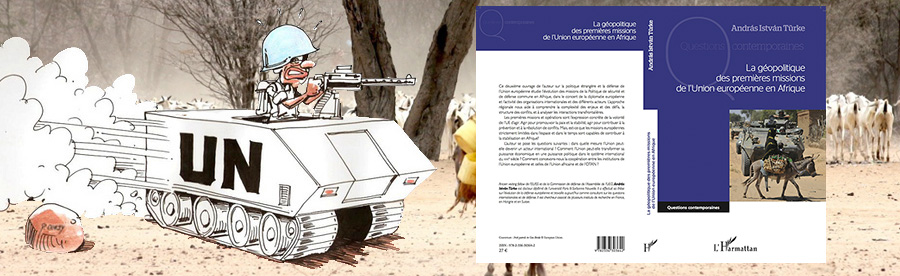
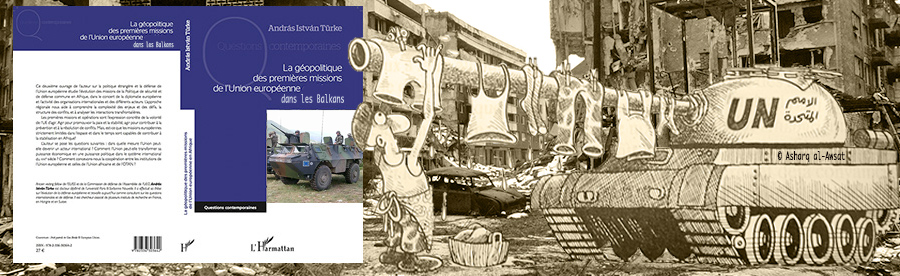
We are looking for sponsors for the English translation of these books, please contact turkeandras(at)gmail(dot)com