
You are here
Feed aggregator
Kosovo : de nouvelles élections qui ne garantissent pas une sortie de crise
Les électeurs du Kosovo retournent aux urnes le 7 juin, pour les troisièmes législatives en 18 mois. Aucune sortie de crise n'est assurée, car il faudra une majorité des deux-tiers au sein du Parlement pour élire le nouveau chef de l'État. Vetëvendosje espère un plébiscite mais, à défaut, évoque déjà la possibilité d'un nouveau scrutin à l'automne...
- Articles / Kosovo, Politique, Kosovo Vetëvendosje, Radio Slobodna EvropaAfrica’s Water is its Future. Who will Govern it?
Credit: Adobe stock. Source Africa Renewal, United Nations
By Cristina Duarte
UNITED NATIONS, Jun 1 2026 (IPS)
Africa holds 9 per cent of global renewable freshwater, over 600 gigawatts of untapped hydropower potential, and between 60 and 65 per cent of the world’s uncultivated arable land.
Its workforce is the youngest on the planet. Its consumer market will reach 2.5 billion people by 2050. Together, these constitute every production factor that global water, energy and food systems will need in the coming decades.
This is not a continent of scarcity. It is a continent of strategic abundance, and the African Union’s decision to anchor its 2026 theme in water and sanitation signals that the continent’s leadership is ready to govern it as such.
Consider what governed abundance looks like. The Grand Inga Dam alone could generate twice the output of the Three Gorges and electrify industries across Central, Southern and West Africa. The Lesotho Highlands Water Project already proves that African-engineered, transboundary water infrastructure can operate at scale and supply major urban economies.
Expanding managed irrigation from 3.7 per cent of sub-Saharan Africa’s arable land (the lowest figure in the developing world) to even 10 per cent within a decade would transform food security, generate millions of jobs across agricultural value chains, and cut the continent’s exposure to rainfall variability.
Every one of these investments is within Africa’s technical reach. The engineering is known. The water is there. The land is there. The workforce is there.
The question is governance. On this, Africa must be frank with itself: the prevailing approach does not match the scale of the opportunity. Governments and donors have treated water as a social service delivery challenge, a matter of boreholes and latrines managed project by project, rather than as productive infrastructure on the same footing as roads, ports and energy grids.
A hand pump installed without a maintenance budget is not development. A pit latrine built without connection to a sanitation system is not development. These interventions may register as progress on a results framework, but they do not transform economies. They are consumables, not assets.
The evidence of this mismatch is plain. Less than half of Africa’s population, or 41 per cent, has access to safely managed drinking water. Twenty-three million primary school-age children attend class hungry. Some 429 million Africans live in extreme poverty, a number projected to remain above 400 million in 2030.
These figures do not describe a resource-poor continent. They describe a governance model that treats water as charity rather than strategy, and a “build, neglect, rebuild” cycle that consumes scarce capital without producing lasting systems.
Africa can break this cycle, and I propose three shifts that would change the trajectory.
First, adopt Strategic Asset Management as a continental doctrine.
Dams, irrigation networks, urban treatment plants and transboundary systems are assets with 50- to 100-year lifespans. They demand sustained institutional stewardship, not five-year project horizons. Govern them across the full lifecycle, from planning through maintenance and renewal, with climate adaptation at every stage.
The build, neglect, rebuild pattern ends when African governments treat water systems as national infrastructure: as permanent assets to maintain, not temporary projects to hand over.
Credit: Adobe Stock
Second, launch a continental irrigation expansion.
South Asia irrigates 41 per cent of its arable land. Sub-Saharan Africa irrigates 3.7 per cent. Closing even a fraction of that gap within a decade would generate employment, build agricultural value chains, strengthen food sovereignty and reduce dependence on imported food. Water without irrigation grows nothing. Land without water feeds no one. Managed irrigation is the fastest route from endowment to economic value.
Third, build enforceable cooperative governance for shared basins.
Ninety per cent of Africa’s surface water crosses at least one national boundary. The Nile, the Niger, the Congo, the Zambezi: these are regional systems that demand regional governance. Africa already has models that work. The Senegal River Basin Development Organisation, has managed a four-country transboundary system for half a century. The task is to make cooperative governance the norm, not as diplomatic courtesy but as a strategic requirement for regional stability and integration.
Financing these shifts requires Africa to lead with its own resources. Closing the water security gap demands between $50 billion and $64 billion annually, according to the AU High-Level Panel and the African Development Bank respectively. The primary financing base must be domestic: reform tariffs progressively, protect maintenance budgets, stop the leakages, and treat water investment with the seriousness that roads and energy grids receive.
Africa must also mobilise international climate finance, which the continent has chronically underutilized, for integrated water investments. And African Governments should not consider the approval of foreign land deals without mandatory water-impact assessments. African Governments need to address land management and governance in an integrated fashion with water governance. Every crop grown on a foreign-leased African field and exported is a transfer of virtual water off the continent, water that was never priced, never accounted for, never governed. Land and water are inseparable. To alienate one is to alienate the other.
The world will develop Africa’s water and land in the coming decades. That process is already under way. Wealthier nations, facing their own water and food constraints, understand the arithmetic of African abundance and are positioning accordingly. The only question is whether this development happens on African terms or someone else’s.
Let me end on a somber note. The Sustainable Development Goals (SDGs) will not be achieved in Africa by 2030. Honesty demands we say so. But the generation after 2030 can inherit something different, if Africa’s leadership chooses now to govern water as what it already is: a driver of economic transformation, a foundation of peace, and the most important asset the continent holds in trust for its children.
Africa’s water is its future. The question is, will Africa govern it, or will it be governed by others?
Cristina Duarte is the Under Secretary-General for the Office of the Special Advisor on Africa.
Source: Africa Renewal, United Nations
IPS UN Bureau
Follow @IPSNewsUNBureau
!function(d,s,id){var js,fjs=d.getElementsByTagName(s)[0],p=/^http:/.test(d.location)?'http':'https';if(!d.getElementById(id)){js=d.createElement(s);js.id=id;js.src=p+'://platform.twitter.com/widgets.js';fjs.parentNode.insertBefore(js,fjs);}}(document, 'script', 'twitter-wjs');
Grammy-winning director explores his Nigerian grandfather's role in the Biafran war
Filmmaker Meji Alabi directs a landmark BBC Africa Eye documentary about Nigeria's civil war.
Press release - Highlights of this week's international trade committee
Extraordinary meeting of the International Trade Committee and joint meeting with the Internal Market Committee and the Industry Committee. Both on Tuesday 2 June
Committee on International Trade
Source : © European Union, 2026 - EP
Committee on International Trade
Source : © European Union, 2026 - EP
Press release - Highlights of this week's international trade committee
Extraordinary meeting of the International Trade Committee and joint meeting with the Internal Market Committee and the Industry Committee. Both on Tuesday 2 June
Committee on International Trade
Source : © European Union, 2026 - EP
Committee on International Trade
Source : © European Union, 2026 - EP
Press release - Highlights of this week's international trade committee
Extraordinary meeting of the International Trade Committee and joint meeting with the Internal Market Committee and the Industry Committee. Both on Tuesday 2 June
Committee on International Trade
Source : © European Union, 2026 - EP
Committee on International Trade
Source : © European Union, 2026 - EP
Press release - Highlights of this week's international trade committee
Extraordinary meeting of the International Trade Committee and joint meeting with the Internal Market Committee and the Industry Committee. Both on Tuesday 2 June
Committee on International Trade
Source : © European Union, 2026 - EP
Committee on International Trade
Source : © European Union, 2026 - EP
Categories: Afrique, Európai Unió : hírek magyarul
Zidane and Mahrez in Algeria World Cup squad
Luca Zidane - son of France legend Zinedine Zidane - is named in Algeria's squad for the upcoming World Cup.
Categories: Africa
GEF Council Welcomes New Green Pledges, Highlights Old Access Barriers
The Eighth Assembly of the Global Environment Facility (GEF) is currently taking place at the Congress Center of Samarkand, Uzbekistan. Nearly 150 country representatives are participating in the week-long assembly and associated meetings. Credit: IISD/ENB/Danny Skilton
By Stella Paul
SAMARKAND, Uzbekistan, May 31 2026 (IPS)
The 71st Council meeting of the Global Environment Facility (GEF) opened today amid a sharp divide, with donor nations urging broader and increased funding commitments, while developing countries called for more equitable and accessible pathways to environmental finance.
In April, donor countries pledged an initial USD 3.9 billion to the GEF Trust Fund’s ninth replenishment cycle (GEF-9), which will support environmental projects worldwide from 2026 to 2030.
Today, government officials, development banks, philanthropies, and civil society groups welcomed the pledges and highlighted GEF’s “whole of the societies” approach, which aims to involve governments, communities, businesses, and civil society. However, discussions at the meeting preceding the Assembly also reflected a growing challenge: environmental problems are becoming more urgent just as international aid budgets are shrinking.
Developing countries repeatedly raised concerns about whether funding is reaching those who need it most and whether access to it is fair.
Aziz Abdukhakimov, Advisor to the President of Uzbekistan on Environment and Chairman of the National Committee on Ecology and Climate Change, addresses the opening day of the 71st GEF Council meeting. Credit: IISD/ENB/Danny Skilton
Opening the Assembly, GEF Interim Chief Executive Officer Claude Gascon said GEF-9 is designed to “unlock great investments” through stronger cooperation across government agencies while continuing support for least developed countries (LDCs) and small island developing states (SIDS).
“The resources must reach countries more efficiently, where the impacts are greatest,” Gascon said. He pointed to reforms agreed during replenishment talks that aim to simplify procedures and improve accountability.
According to the GEF Secretariat, its current projects are already delivering large-scale environmental benefits. GEF’s blended finance operations have achieved an average co-financing ratio of 18 to 1, meaning every dollar invested by GEF has helped attract many more dollars from public and private sources for biodiversity, climate, land restoration, and pollution projects.
Aziz Abdukhakimov, Advisor to the President of the Republic of Uzbekistan on the Environment and Chairman of the National Committee on Ecology and Climate Change, highlighted the importance of this forum.
“We meet in Samarkand at a moment when the triple planetary crisis is becoming increasingly visible across all regions of the world. At the same time, the window for achieving our global environmental commitments is rapidly decreasing. This is why the role of the GEF is important more than ever,” Abdukhakimov said.
The Opening Council of the Eighth Assembly of the Global Environment Facility (GEF) is in Progress at the Congress Center of Samarkand, Uzbekistan. Credit: Stella Paul/IPS
A More Inclusive GEF
A key feature of GEF-9 will be integrated programming, based on the idea that environmental problems such as climate change, biodiversity loss, and land degradation are interconnected and should be tackled together.
Ninety-eight countries, including 31 least developed countries and 26 small island states, are expected to participate in these programs from 2026 to 2030.
More than 100 country-level workshops and consultations have already been held to help countries strengthen their capacity, align GEF funding with national priorities, and increase participation by women, Indigenous Peoples, local communities, and the private sector.
Donor countries highlighted what they see as progress. Norway welcomed larger allocations for LDCs and SIDS, as well as funding targets aimed at directing more resources to countries with the greatest needs. Norwegian representatives said they have high expectations for the results GEF-9 will achieve.
Representatives of Indigenous Peoples also described the replenishment process as a major step forward.
Speaking on behalf of the GEF Indigenous Peoples Advisory Group (IPAG), Giovanni B. Reyes said Indigenous communities had a stronger voice in shaping the new funding cycle.
“For the first time, we were at the table of the replenishment. For the first time, our work will be visible in the way it deserves,” Reyes told the Assembly.
“The inclusion of Indigenous Peoples and our territories in the corporate scorecard means our contributions will be counted, our lands recognised, and our results disaggregated alongside women and youth. We have always been there — this is our way of life. Now the data will tell our story and amplify our voices.”
The representative said that commitments to create a dedicated GEF Indigenous Peoples policy, establish procedures for Indigenous-led projects, and allow Indigenous organisations to become accredited implementing agencies represent lasting institutional changes – rather than one-time promises. The representative also warned that failing to protect Indigenous and traditional territories would lead to biodiversity loss and ecosystem collapse.
New Partnerships Announced
Several new partnerships were announced during the opening ceremony.
Gascon revealed a partnership with a U.S.-based philanthropy to support biodiversity conservation in Africa through the Africa Protected Areas Initiative.
A video presentation highlighted protected areas such as Kafue National Park and North Luangwa in Zambia, showing how relatively small protected areas can help secure water supplies, support local livelihoods, and conserve globally important wildlife.
Rob Walton of the Blue Nature Alliance described GEF as a key institution in global environmental finance. He highlighted its support for international environmental agreements, including preparations for the Biodiversity Beyond National Jurisdiction (BBNJ) treaty, which he called an important milestone for ocean protection.
The World Bank, which serves as trustee of the GEF Trust Fund, announced that USD 3.3 billion has already been confirmed for GEF-9.
Speaking at the Assembly, Maitreyi Das, World Bank Vice Director of Trust Funds and Partner Relations, said additional contributions are expected as donor approval processes continue. For the first time, countries can make pledges throughout the replenishment period rather than only at the beginning.
“This replenishment reflects a shared resolve to advance an ambitious environmental agenda at a very difficult moment for overseas development assistance,” she said. She credited cooperation among donors, recipient countries, civil society, businesses, and international environmental conventions.
Developing Countries Seek Fairer Access
Despite the positive announcements, delegates from developing countries said access to finance remains a major problem.
African representatives described GEF-9 as an important opportunity to address drought, food insecurity, land degradation, and biodiversity loss. However, they warned that available funding remains far below what Africa needs to meet global climate and biodiversity goals by 2030.
While they welcomed increased attention to least developed countries, drylands, and integrated programmes, several African countries cautioned that blended finance and private-sector investment require financial systems and risk-sharing mechanisms that many countries still lack.
“The region therefore calls for stronger grant-based financing, simplified access procedures, and capacity support to ensure equitable participation,” said Baixo Eduardo of Mozambique, who is representing southern African countries at the assembly.
Small island states voiced similar concerns.
Speaking for Caribbean countries, one representative said predictable, adequate, and accessible funding remains essential if SIDS are to achieve environmental and sustainable development goals.
“The ambition of GEF 9 is encouraging,” she said, particularly in biodiversity conservation, climate resilience, and pollution reduction. “But implementation mechanisms must reflect the unique vulnerabilities and capacities of small island developing states.”
Brazilian delegate Simone Carolina Bauch, speaking on behalf of its constituency, welcomed commitments to dedicate 35 percent of GEF-9 funding to biodiversity and 20 percent to Indigenous Peoples and local communities. However, she said that countries should remain in control of how projects are designed and implemented.
Bauch also called for greater clarity on the rules for participating in integrated programmes and warned that co-financing requirements should not become barriers to accessing funds.
Yicheng Yao, representative of China and Hrisheekesh Arvind Modak, representative of India, strongly supported these concerns raised by Bauch and called for simpler and fairer access to green finance.
Responding to these issues, Gascon said resources have been set aside for a country engagement strategy that will help national focal points better understand funding opportunities and make informed decisions.
He added that further guidance on participation in integrated programmes will be presented to the GEF Council later this year, with formal expressions of interest expected in early 2027.
As discussions continue in Samarkand, the GEF said the window for new contributions to the GEF-9 replenishment will remain open throughout the Assembly, allowing countries to make additional pledges for the 2026–2030 funding cycle. Delegates also thanked the government of Uzbekistan for hosting the assembly.
Notes: The Eighth Global Environment Facility Assembly is underway in Samarkand, Uzbekistan.
This feature is published with the support of the GEF. IPS is solely responsible for the editorial content, and it does not necessarily reflect the views of the GEF.
IPS UN Bureau Report
Follow @IPSNewsUNBureau
!function(d,s,id){var js,fjs=d.getElementsByTagName(s)[0],p=/^http:/.test(d.location)?'http':'https';if(!d.getElementById(id)){js=d.createElement(s);js.id=id;js.src=p+'://platform.twitter.com/widgets.js';fjs.parentNode.insertBefore(js,fjs);}}(document, 'script', 'twitter-wjs');
Related Articles
I moved from Ethiopia to Shetland - and I've brought the coffee with me
Netsanet Sori is bringing a flavour of the farm where she grew up to her new home 4,000 miles away.
Categories: Africa, Swiss News
14e édition de la Nuit de la littérature
Samedi 30 mai 2026 à partir de 14h15, au Centre culturel irlandais de Paris
(5, rue des Irlandais 75005 Paris)
Categories: Balkans Occidentaux, Swiss News
Bulls overpower Munster to reach URC semi-finals
Munster's United Rugby Championship title hopes are ended in ruthless fashion by the Bulls, who score six tries to overpower the Irish province in their quarter-final in Pretoria.
Categories: Africa
Quelle est la prédiction de l'économiste allemand qui a correctement prédit le vainqueur de la Coupe du monde lors des trois dernières éditions ?
Joachim Klement, l'économiste allemand qui a prédit avec justesse les vainqueurs des trois dernières Coupes du monde, a publié ses pronostics pour la Coupe du monde de cette année.
Categories: Afrique, Swiss News
Exposition : La broderie de Zmijanje – patrimoine culturel immatériel mondial
L'exposition, issue des collections du Musée de la République Serbe et du Musée ethnographique de Belgrade, est le fruit du travail de Danijela Đukanović, conseillère de musée et ethnologue au Musée de la République Serbe, et de Mirjana Kraguljac Ilić, conservatrice principale et ethnologue au Musée ethnographique de Belgrade. Ce projet représente une initiative commune de deux institutions centrales de la République de Serbie et de la République Serbe, engagées dans la préservation du (…)
- Agenda / Serbie, Région parisienneExposition : La broderie de Zmijanje – patrimoine culturel immatériel mondial
L'exposition, issue des collections du Musée de la République Serbe et du Musée ethnographique de Belgrade, est le fruit du travail de Danijela Đukanović, conseillère de musée et ethnologue au Musée de la République Serbe, et de Mirjana Kraguljac Ilić, conservatrice principale et ethnologue au Musée ethnographique de Belgrade. Ce projet représente une initiative commune de deux institutions centrales de la République de Serbie et de la République Serbe, engagées dans la préservation du (…)
- Agenda / Serbie, Région parisienne
Categories: Balkans Occidentaux, Défense
Serbie : la ceinture de la Vierge au secours de l'Église orthodoxe et du régime ?
Des milliers de fidèles patientent sous un soleil de plomb pour vénérer la Sainte-Ceinture de la Vierge Marie, une précieuse relique conservée au Mont-Athos, exposée à Belgrade du 20 mai au 5 juin, sans que cet événement n'ait été annoncé préalablement.
- Articles / Serbie, Religions, orthodoxie, Courrier des Balkans
Categories: Africa, Balkans Occidentaux
'Gifts' from a lover and 'botched' cocaine raids: Police inquiry grips South Africa
South Africa's Madlanga Commission hears about Brazilian butt lift bribe denials and alleged drug heists.
Pages
the old site is here


© 2012-2015 Europa Varietas Foundation © 2015-2020 Europa Varietas Association
www.europavarietas.org | info(@)europavarietas(dot)org | Switzerland
This is a GDPR ready site
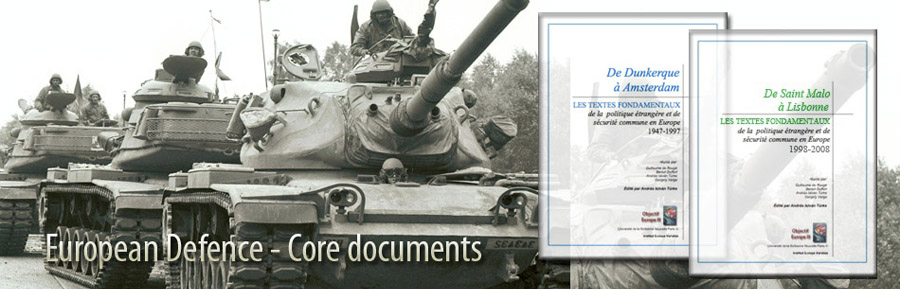
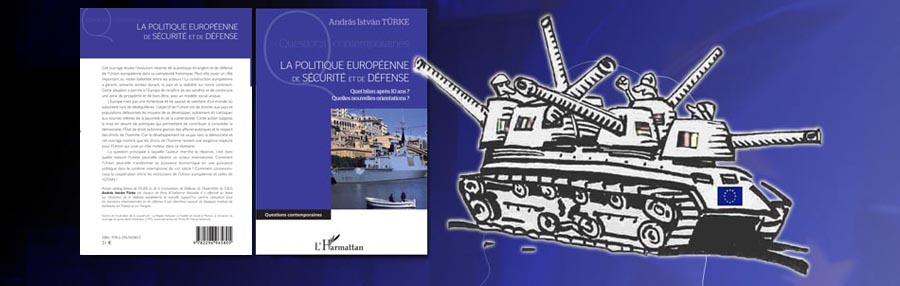
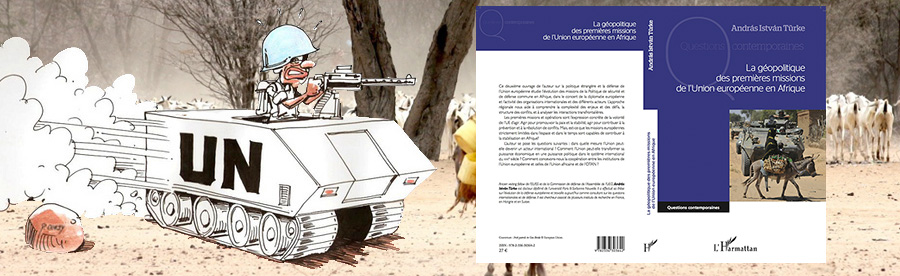
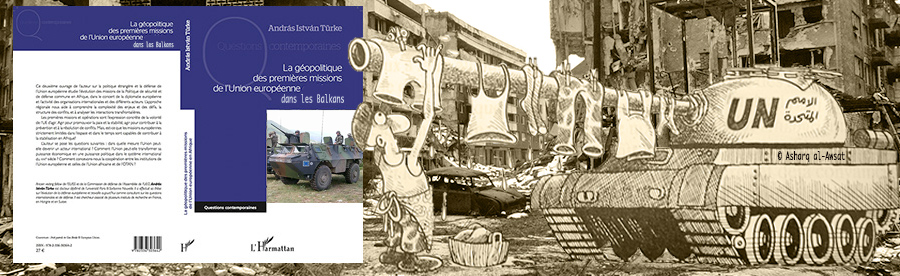
We are looking for sponsors for the English translation of these books, please contact turkeandras(at)gmail(dot)com