
You are here
Feed aggregator
Press release - Deal on new EU rules on migrant returns
On Monday, Parliament and Council negotiators agreed provisionally on changes to EU policy on the return of non-EU nationals staying illegally in the EU.
Committee on Civil Liberties, Justice and Home Affairs
Source : © European Union, 2026 - EP
Committee on Civil Liberties, Justice and Home Affairs
Source : © European Union, 2026 - EP
Press release - Deal on new EU rules on migrant returns
On Monday, Parliament and Council negotiators agreed provisionally on changes to EU policy on the return of non-EU nationals staying illegally in the EU.
Committee on Civil Liberties, Justice and Home Affairs
Source : © European Union, 2026 - EP
Committee on Civil Liberties, Justice and Home Affairs
Source : © European Union, 2026 - EP
Press release - Deal on new EU rules on migrant returns
On Monday, Parliament and Council negotiators agreed provisionally on changes to EU policy on the return of non-EU nationals staying illegally in the EU.
Committee on Civil Liberties, Justice and Home Affairs
Source : © European Union, 2026 - EP
Committee on Civil Liberties, Justice and Home Affairs
Source : © European Union, 2026 - EP
Categories: Afrique, Európai Unió : hírek magyarul
Ghana boss Queiroz no qualms over Partey selection
Ghana coach Carlos Queiroz says he has no concerns selecting ex-Arsenal midfielder Thomas Partey for the World Cup.
Categories: Africa
Jahresbericht 2025 erschienen: Weichenstellungen für das SOEP der Zukunft
Das 42. Jahr seines Bestehens war für das Sozio-oekonomische Panel richtungsweisend, wie der jüngst erschienene Jahresbericht zeigt. Die Vision des SOEP für eine strategische Erweiterung wurde von Leibniz-Gemeinschaft und Wissenschaftsrat evaluiert (als „großer Sondertatbestand“). Das breit ...
Categories: Afrique, Diplomacy & Defense Think Tank News
Three Ebola vaccines in development amid growing outbreak fears
IAVI, Moderna and the University of Oxford are all working on new vaccines.
Categories: Africa, Balkan News
Afghan Women Complete Medical Studies but Are Barred From Practicing
A hospital in Kabul. Afghanistan faces an already dire shortage of female doctors as women medical graduates remain barred from taking the final exam required to practice medicine. Credti: Learning Together.
By External Source
KABUL, Jun 1 2026 (IPS)
While Afghanistan faces a serious shortage of female doctors, the country’s Islamist regime has placed restrictions on female students from graduating, further exacerbating the situation. Female medical graduates are barred from writing their final exams, which provide them with the professional qualification to practice as medical doctors.
Nilab (name changed) from Afghanistan, graduated as a doctor three years ago from Al-Birun University in Parwan province. She has not been able to practice her profession because the Taliban have banned women from taking the final medical exam.
The final exam is an assessment that aims to measure the competence of medical graduates. It is conducted after seven years of study. Once the exam is passed, the graduate is granted a license to practice medicine. Those who have received the license can also apply for specialization training at teaching hospitals.
“If a doctor does not pass the required final exam, the situation is the same as if they were a student who had just finished high school. When applying for a job at any health center, the first question is: ‘Have you taken the final exam?’ Without it, you cannot work in any hospital, not even as a nurse,” says Nilab.
The final exam was last held for women in 2021. Since then, only men have been allowed to take the exam. The situation is exacerbating Afghanistan’s already dire shortage of female doctors
“I studied for 19 years. Of that time, I lived in a dormitory in another province for seven years, far from my family. It was a difficult time. In the final stage, only one exam, the final exam, has stopped all my progress. Now my future has been taken away from me.”
The final exam was last held for women in 2021. Since then, only men have been allowed to take the exam. The situation is exacerbating Afghanistan’s already dire shortage of female doctors.
Nilab lives with her mother in Kabul, and her family has seven siblings: four girls and three boys.
Two of her sisters and two brothers have also graduated from university, but their futures are uncertain.
Her younger sister scored one of the highest in the national university entrance exam and was accepted to study medicine, but she was unable to complete her studies. Another of Nilab’s brothers graduated in Russian literature but is unemployed.
The family’s only income comes from her mother and one of her siblings, a doctor named Khalida (name changed), who both work as teachers for primary school girls in a public school. With their meager salaries, they shoulder the financial burden of the entire family.
Nilab has tried to earn a living through other means. Until recently, women were allowed to study in non-university health schools.
“Despite all the challenges, I worked as a teacher in a two-year medical school. However, in January 2025, I also lost that opportunity when the Taliban closed medical schools,” Nilab says.
The years of education wasted have caused her a heavy psychological burden, stress and anxiety.
“We have seen how many young women have taken their lives in recent years. Young women’s trust in government, justice and human rights has plummeted to zero. When women’s voices are silenced and they remain imprisoned within us, it becomes unbearable pain. The pain wears us down, it becomes an unhealing wound,” she describes.
The Taliban’s decision has affected all female final-year medical students who completed their studies in 2022 and beyond. There is now a shortage of women in internal medicine, dentistry, surgery, cardiology, and even obstetrics and gynecology.
Khalida graduated from a private medical university in Kabul in 2022.
A street in Kabul, where restrictions on women’s education and employment are deepening Afghanistan’s health crisis. Credit: Learning Together.
“Our lives have been completely destroyed by not being able to take the final exam. The future we once dreamed of is gone. We worked hard for this future, which included 12 years of school, a year of preparing for the university entrance exam, and seven years at the university, but all that work has now been lost.”
After graduating, Khalida worked for a while in a few private hospitals without pay to gain experience in the field. At the same time, she specialized in ultrasound examinations. However, the final exam or the exam required for specialization was not organized, and she was eventually forced to stay home.
Sometimes, female doctors are forced to do jobs that are not in line with their training and are very poorly paid.
“I also worked for a while in a hospital distributing nutritional supplements to malnourished patients. However, this is a job that even a high school graduate can do. We are doctors who studied medicine for seven years, and we should serve women in the fields related to our profession.”
Khalida is currently studying English outside of university, hoping to pass the national English proficiency test so that she can get a scholarship and continue her studies abroad. She says that 19 years of studying in Afghanistan have not allowed her to alleviate the suffering of others or herself. She still depends on her family’s financial support. Without it, she fears that she will be forced to stay inside the four walls of her home.
As a result of the Taliban’s numerous restrictions on women, many have lost interest in their own lives. Some have lost faith in marriage, while others have been forced into marriage.
“I am single and have no desire to get married in Afghanistan under the current circumstances. I do not want to allow society to have a new generation that is even more unhappy than my own,” says Khalida.
UN experts have warned that restrictions on women’s education and employment in Afghanistan are deepening the country’s health crisis, particularly by reducing the number of female doctors and other female health professionals who could treat women.
“We female doctors are unable to serve the women of our society despite our years of education. Instead, we have become a burden on our families. There is nothing more difficult for an educated woman than this. We suffer simply because we are women living under Taliban rule,” says Khalida.
Excerpt:
The author is an Afghanistan-based female journalist, trained with Finnish support before the Taliban take-over. Her identity is withheld for security reasonsAfrican youth and the future of democracy: how social media and cohort size shape political participation
Categories: Diplomacy & Defense Think Tank News, Swiss News
African youth and the future of democracy: how social media and cohort size shape political participation
Categories: Diplomacy & Defense Think Tank News, Swiss News
African youth and the future of democracy: how social media and cohort size shape political participation
Categories: Diplomacy & Defense Think Tank News, Swiss News
Democracy promotion with ‘Chinese Characteristics’: how the Chinese Communist Party diffuses narratives on democracy
Categories: Diplomacy & Defense Think Tank News, Swiss News
Democracy promotion with ‘Chinese Characteristics’: how the Chinese Communist Party diffuses narratives on democracy
Categories: Diplomacy & Defense Think Tank News, Swiss News
Democracy promotion with ‘Chinese Characteristics’: how the Chinese Communist Party diffuses narratives on democracy
Categories: Diplomacy & Defense Think Tank News, Swiss News
The schoolgirl who became world champion at 14
Egypt's Farida Khalil beat competitors twice her age to become world champion in modern pentathlon at the age of 14 after the sport was revamped.
The 28th regime – How do Parliament and the Commission align?
Written by Clare Ferguson with Áine Feeney.
Parliament has been engaging in preparatory work on the 28th regime, debating and adopting a legislative-initiative report from the Committee on Legal Affairs (JURI) during the January 2026 plenary session. The JURI report recommended allowing national limited liability companies to register as ‘Societas Europaea Unificata (S.EU) to allow automatic recognition in all Member States. However, the report also recommended implementing safeguards to ensure that the regime does not undermine labour and social laws.
The Commission’s March 2026 proposal for a regulation establishing the 28th regime corporate legal framework would allow for quick, digital registration that is automatically valid across the EU. It would also provide for a single tax treatment of employee remuneration and a framework for winding up companies. While Parliament’s resolution supports the approach, it remains cautious about the proposal’s chances of success.
Overall, the objectives of the 28th regime as defined by the Commission and the Parliament are well aligned, as both institutions believe the regime should support the EU’s competitiveness, harmonise the single market and modernise the business environment. However, there are some key differences; EPRS conducted a comparative assessment of the Commission’s proposal for a 28th regime corporate legal framework and Parliament’s legislative-initiative resolution, identifying limitations in six areas of the Commission’s proposal, which include:
- Harmonised legal form;
- Registration and exit;
- Closure of companies;
- Attracting talent;
- Governance and safeguards;
- Dispute resolution.
The EPRS assessment found that the Commission proposal could have an impact on the generation of European added value, with particular reference to three of the identified shortcomings. Firstly, the scope of eligible companies is broad, without ensuring a clear and consistent definition. Secondly, the proposed ‘dual-track’ system could vary across Member States, reducing legal certainty for investors and restricting possibilities for cross-border scale-up of innovative companies. Finally, there is a lack of measures to establish a specialised dispute resolution mechanism.
Ultimately, the Commission proposal focuses on company law and operations while Parliament takes a broader view, considering the need to support the entire ecosystem around innovative companies, including labour law, investment, and cross-border scale up.
The 28th regime is a key measure in the European Commission’s 2025 competitiveness compass; an economic framework which aims to close the innovation gap, decarbonise the economy and reduce foreign dependencies. The need for such a comprehensive legal framework was highlighted by the 2024 Letta and Draghi reports. Its objective is to create a uniform set of rules for companies applicable across the EU, simplifying the legal framework to facilitate the competitiveness of businesses and start-ups operating in the single market.
The Commission envisages that it should be possible to establish a company under the 28th regime within 48 hours, which EPRS predicts could lead to an increase in venture capital invested in European companies of about €445 billion, thus supporting the potential of European start-ups to grow and scale-up in Europe.
Links to EPRS publications:
- The 28th regime
- A competitiveness compass for the EU
- Scaling up European Innovation
- The 28th regime: A new legal framework for innovative companies
- Deepening the single market in the light of the Letta and Draghi reports
- The 28th regime corporate legal framework
- Comparing EU institutions’ positions on a new legal framework for innovative companies
Categories: European Union, Swiss News
ÄNDERUNGSANTRÄGE 1 - 309 - Entwurf eines Berichts Einrichtung des Programms für agile, schnelle Innovation im Verteidigungsbereich (AGILE) - PE788.873v01-00
ÄNDERUNGSANTRÄGE 1 - 309 - Entwurf eines Berichts Einrichtung des Programms für agile, schnelle Innovation im Verteidigungsbereich (AGILE)
Ausschuss für Industrie, Forschung und Energie
Ausschuss für Sicherheit und Verteidigung
Tonino Picula, Ivars Ijabs
Quelle : © Europäische Union, 2026 - EP
Ausschuss für Industrie, Forschung und Energie
Ausschuss für Sicherheit und Verteidigung
Tonino Picula, Ivars Ijabs
Quelle : © Europäische Union, 2026 - EP
Categories: Europäische Union, Swiss News
Un réalisateur lauréat d'un Grammy explore le rôle de son grand-père nigérian dans la guerre du Biafra
Le cinéaste Meji Alabi réalise un documentaire historique de BBC Africa Eye consacré à la guerre civile au Nigeria.
Categories: Afrique, Swiss News
Serbie : une colonie de martinets au cœur de la polémique politique
L'installation d'une immense banderole du SNS sur la façade du palais Albanija, à Belgrade, a privé pendant plus de 48 heures une colonie de martinets pâles de l'accès à leurs nids. D'abord ignorée par les autorités, l'affaire a suscité une mobilisation citoyenne et s'est transformée en controverse politique nationale.
- Le fil de l'Info / Courrier des Balkans, Serbie, Environnement, Politique, animaux, Vucic
Categories: Africa, Balkans Occidentaux
Entwurf der Tagesordnung - Mittwoch, 3. Juni 2026 - PE788.888v02-00 - Ausschuss für auswärtige Angelegenheiten
Quelle : © Europäische Union, 2026 - EP
Categories: Europäische Union, Swiss News
Zur globalen Zusammenarbeit im Bereich der Ozeane
Bonn, 1. Juni 2026. Das Inkrafttreten des UN-Hochseeschutzabkommens im Januar stärkt die multilaterale Zusammenarbeit im Bereich der Ozeane. Gleichzeitig gefährden geopolitische Entwicklungen die Ziele der UN-Ozeandekade.
Am UN-Welttag der Ozeane steht der Ozean im Zentrum eines Paradoxons. Das Inkrafttreten des Hochseeabkommens (oder BBNJ-Abkommen) am 17. Januar markierte nach zwei Jahrzehnten der Verhandlungen einen seltenen Erfolg multilateraler Zusammenarbeit: Es verleiht dem Schutz der biologischen Vielfalt und dem gerechten Vorteilsausgleich jenseits nationaler Hoheitsgewalt neues politisches Gewicht. Zugleich dominieren weiterhin archaische Narrative zur Rohstoffgewinnung, militärischen Sicherheit und territorialen Kontrolle die Betrachtung der Ozeane.
Auf den ersten Blick haben Kalaallit Nunaat/Grönland und die Straße von Hormus wenig gemeinsam. Das eine wird als arktische „Grenze“ mit schmelzendem Eis, mineralischen Ressourcen, indigener Souveränität und Großmachtrivalität imaginiert. Das andere gilt als maritimes „Nadelöhr“ – als schmaler Korridor, in dem Energievorräte, Ernährungssicherheit, Schifffahrt und militärische Bedrohungen aufeinandertreffen. Beide Betrachtungen reduzieren diese Räume auf die Kontrolle kritischer Ressourcen und strategische Zugänge.
Dies als geopolitisches Phänomen zu betrachten, greift zu kurz: Der Meeresraum wird als Infrastruktur und politisches Druckmittel neu geordnet. In Kalaallit Nunaat überlagert der Diskurs über die ökonomischen Chancen der Arktis die Auseinandersetzung mit den Selbstbestimmungsrechten der indigenen Bevölkerung und globalen Umweltbelangen. In Hormus verschärft die Blockade der Meerenge die prekären Arbeitsbedingungen von Seeleuten und hat globale Folgen, die Haushalte in der Golfregion und weit darüber hinaus treffen. Während die multilaterale Zusammenarbeit im Bereich der Ozeane an Fahrt gewinnt, kehrt die Meerespolitik zu vertrauten Mustern zurück: Militarisierung, Kontrolle von Seewegen und Ressourcengier werden gerechtfertigt mit Sorgen über strategische Bedrohungen.
Globale Meerespolitik zwischen Korridorlogik und planetarischem DenkenIn der Meerespolitik galt die Hohe See lange als offener Raum, geprägt vom Spannungsverhältnis zwischen freier Bewegung und Begrenzung. Doch diese Freiheit war nie universell. Uneingeschränkte Bewegungsfreiheit hat es nie gegeben. Über Jahrtausende prägten ausgehandelte Zugangsrechte und Besteuerung maritime Ordnungen, aus denen eine „Korridorlogik“ entstand, in der Mobilität auf asymmetrischen Beziehungen beruht. In der Arktis befördert das schmelzende Eis einen „Ressourcenoptimismus“ und geostrategische Überlegungen, die die Einbettung der Region in globale gesellschaftliche und ökologische Transformationen und deren Auswirkungen auf die rund vier Millionen dort lebenden Menschen kaum berücksichtigen.
Das UN-Seerechtsübereinkommen (UNCLOS), das den rechtlichen Rahmen für alle maritimen und meeresbezogenen Aktivitäten bildet, galt als für die 1990er Jahre ungewöhnlich weitreichende Form planetarischen Denkens. Allerdings verfestigte es auch Trennungen, die zunehmend infrage gestellt werden: zwischen Oberfläche und Tiefe, Wassersäule und Meeresboden, Schifffahrtswegen und Fischgründen, Unterseekabelrouten und Militärzonen. Die verfassungspolitische Debatte in Chile um das „Maritorio“ versteht das Meer hingegen als lebendiges Territorium. Indigene, die die Arktis als ihre Heimat bezeichnen und die erneute Aufmerksamkeit für afro-asiatische maritime Verflechtungen erinnern daran, dass Meerespolitik nie allein in den Händen konventioneller Sicherheits- und Verteidigungsakteure lag. Über wissenschaftspolitische Plattformen wie die UN-Ozeandekade hinaus wird die neue regionale Meerespolitik so zunehmend von Fragen zu Erbe, Erinnerung und den asymmetrischen Abhängigkeiten geprägt, die scheinbar getrennte maritime Räume miteinander verbinden. Dadurch werden auch die Gründe hinterfragt, warum das Meer für Kapital, Energie, Rohstoffe, Daten und militärische Mobilität offen bleibt, Schifffahrtswege und Energiekorridore aber gesichert und Migrationsrouten kriminalisiert werden.
Zusammenarbeit im Bereich der Ozeane muss daher auch die Kosten der Aufrechterhaltung bestehender Systeme in den Blick nehmen. Sie erfordert eine Auseinandersetzung mit dem marinen Transit- und Zugangsregime – nicht nur als Bewegung über das Meer, sondern auch im Hinblick auf Arbeit, ökologische Überlebensbedingungen und die Lebenswelten, die den Ozean zu mehr als einer bloßen Route machen.
Wohin steuert die globale Meerespolitik?Die globale Meerespolitik erfordert eine kritischere Auseinandersetzung mit den Verbindungen von Land- und Meeresräumen und geopolitischem Denken in Korridoren und Grenzräumen, sowie die Stärkung planetarischer Perspektiven. Die Diskussion über den möglichen Standort des BBNJ-Sekretariats in China zeigt, dass das BBNJ zudem eine hervorragende Gelegenheit bietet, um die globale Zusammenarbeit zu erneuern. Neben höheren Investitionen in kritisches Meereswissen, wie es die UN-Ozeandekade vorsieht, braucht es eine mutige politische Führung, die anerkennt, dass Meeresräume und maritime Dynamiken für Energiesicherheit, Ernährungssysteme, Klimaschutz und Lebensgrundlagen entscheidend sind. Der damit verbundene Reflexionsprozess ist eine Möglichkeit, die globale Zusammenarbeit im Bereich der Ozeane neu zu denken und politische Strukturen zur Bewältigung kollektiver Herausforderungen neu zu gestalten, in denen die Wechselbeziehungen zwischen Menschen, Meereslebewesen, Infrastrukturen, Märkten und unseren Lebensräumen anerkannt werden.
Pages
the old site is here


© 2012-2015 Europa Varietas Foundation © 2015-2020 Europa Varietas Association
www.europavarietas.org | info(@)europavarietas(dot)org | Switzerland
This is a GDPR ready site
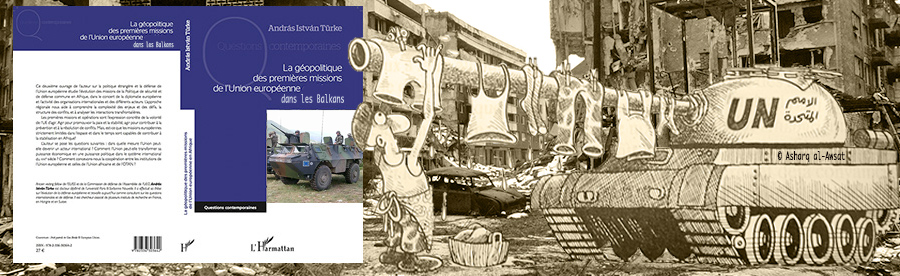
We are looking for sponsors for the English translation of these books, please contact turkeandras(at)gmail(dot)com