
You are here
Feed aggregator
250 milliards de biens saisis : coup de filet contre un réseau transfrontalier
Près de deux millions de capsules de prégabaline planquées dans des bouteilles d’oxygène médical, 636 motocyclettes alignées dans des dépôts et plus de six milliards […]
L’article 250 milliards de biens saisis : coup de filet contre un réseau transfrontalier est apparu en premier sur .
Categories: Afrique
Meilleurs pays pour le tourisme : l’Algérie grimpe dans le classement mondial en 2026
Le tourisme en Algérie reprend de plus belle. Selon le dernier rapport 2026 du Forum économique mondial, le secteur fait mieux qu’il y a deux […]
L’article Meilleurs pays pour le tourisme : l’Algérie grimpe dans le classement mondial en 2026 est apparu en premier sur .
Categories: Afrique
Extincteur obligatoire : la Gendarmerie nationale gèle officiellement les amendes
La Gendarmerie nationale a tranché. Dans un communiqué publié ce jeudi le 1er octobre, elle annonce que ses unités ne dresseront plus, pour l’instant, de […]
L’article Extincteur obligatoire : la Gendarmerie nationale gèle officiellement les amendes est apparu en premier sur .
Categories: Afrique
Il est trop tôt pour dire si l'Iran est impliqué dans l'attaque du vol Dubaï-Tel Aviv, a déclaré le Premier ministre israélien
Un pilote qui a poignardé un autre pilote à bord d'un avion à destination d'Israël fait l'objet d'une enquête en Arabie saoudite, a déclaré Benjamin Netanyahu.
Categories: Afrique, Swiss News
Afghanistan’s Drought Deepens, and Women Bear the Heaviest Burden
As wells and other water sources dry up, women and girls in Kabul must travel increasingly long distances to secure enough water for their families. Credit: Learning Together.
By External Source
KABUL, Oct 1 2026 (IPS)
Drought has depleted wells, withered fruit trees, and reduced crop yields across Afghanistan. The heaviest burden of the water shortage falls on women in their daily lives, as they must fetch water from increasingly distant sources and use every single drop with extreme care.
More than half of Afghanistan is suffering from a prolonged drought and water shortage. The situation is critical in 19 provinces. Authorities predict the crisis will worsen. For instance, the capital, Kabul, is projected to lose the majority of its groundwater by 2030. In the northern province of Faryab, 90 percent of the area is already affected by drought.
Drought affects every aspect of her life. She struggles daily to secure enough water for her family’s needs. As an orchardist, she watches helplessly as the trees she has tended for years slowly wither and die while still standing
Water scarcity and poor harvests are further exacerbating Afghanistan’s food crisis. According to the UN World Food Programme, as many as 17.4 million people are in urgent need of food assistance.
Wells, springs, and groundwater sources are drying up. In some households, the water level in wells has dropped from 20 meters to 40 meters. On farmlands, water must now be drawn from depths of up to 120 meters, whereas previously it was accessible at 20 meters. Water is being rationed, and in some areas, farmers receive water for only 20 minutes a day.
When Afghanistan’s wells run dry, women’s workload increasesIn Logar province, near Kabul, drought and water shortages have damaged crops and caused fruit trees to wither. Women must walk increasingly long distances to fetch water for their families.
“When our well ran dry, my immediate concern was whether there would be enough drinking water for our children. I only wash clothes if there is drinking water left over. Sometimes I go several days without doing laundry. I also gather the dishes from three meals and wash them all at once to save water,” says 35-year-old Simin Gul (name changed).
The well belonging to her family of nine ran dry four years ago. The nearest water source is less than a half an hour’s walk away.
At times, Simin Gul and her neighbors are forced to buy water. The local piped water network supplies water only two days a week, and even then, only for a few hours at a time.
Families help one another and take turns collecting water in large containers, but even that is not enough for large families.
The wells around Simin Gul’s home have dried up one by one. Women suffer from back pain and other ailments from carrying heavy water containers from distant sources.
Fetching water is particularly difficult during menstruation. Women must fetch water even when they need rest. At times, children have to miss school to help their mothers carry water.
Water scarcity and poor water quality also cause hygiene and health problems for families.
“The tanker trucks have plastic tanks, and the trucks travel from street to street under the scorching sun. Our children have fallen ill from this water several times,” says Simin Gul.
Drought-damaged crops in Logar province, near Kabul, where water shortages have reduced harvests and caused fruit trees to wither. Credit: Learning Together.
Drought deepens water inequality: “The wealthy can dig deeper wells”Water scarcity has also changed the daily life of 50-year-old Zarmina (name changed). She has lived and worked on her orchard for about 20 years. Her husband is also a farmer.
“This year, about 50 of my apple and apricot trees dried up. I’ve managed to keep the remaining hundred trees barely alive thanks to a spring. But both the yields and the fruit are smaller and of poorer quality.”
“Some farmers pay for irrigation, but we can’t afford it. My husband lost his tomato crop this year because tomatoes need a lot of water,” Zarmina laments.
Zarmina’s husband farms an area of about 60 acres. This year, he planted only half of it because of the water shortage.
“The wealthy can have deep wells dug. The fields of the poor remain dry,” Zarmina notes.
However, according to her, the problem is not just a lack of water but also inadequate infrastructure.
“Some areas have a piped water system. We should have one too, and the government ought to repair the irrigation canals as well. The problem is that Afghanistan has water, but it isn’t distributed efficiently,” she continues.
Zarmina is sometimes forced to buy drinking water, as her own well has very little water, and what remains is salty. Unless the authorities do something about the water shortage, the result will be a disaster, Zarmina believes.
Drought affects every aspect of her life. She struggles daily to secure enough water for her family’s needs. As an orchardist, she watches helplessly as the trees she has tended for years slowly wither and die while still standing. Together with her husband, she mourns the loss of productivity in their fields, where crop yields have dwindled because of the drought.
For Zarmina, water scarcity means more than just the drying up of springs; it means jeopardizing an entire livelihood and way of life, as well as constant worry about her children’s access to water.
As drought worsens, life in Kabul revolves around waterWater scarcity affects the capital, Kabul, too, even just a stone’s throw from the former presidential palace.
Sixty-year-old Shazia (name changed) lives in western Kabul. A large part of her week is spent securing water for her family of five.
To meet their daily needs, families either buy water or wait for the local communal tap to start running. Water used to flow every few days, but now the wait can be much longer.
When the water finally arrives, large containers and buckets are filled, and as much as possible is stored.
“Our lives revolve around water. We buy different types of water for different needs: bottled water for tea, filtered water for cooking, and tap water for washing and the toilet,” Shazia says.
Sheila lives on one of the hills in western Kabul. Together with her young daughter, she tries to find enough drinking water for her six children.
In Sheila’s neighborhood, some homes are connected to a private water supply system that delivers water every two days. Those who cannot afford it buy their water. Another option is to carry water uphill to their homes in heavy containers.
Before water flows properly from the taps of households connected to the private system, it must be allowed to run from the main street pipe for a few minutes. When nearby residents see the water flowing, they rush to the spot with their jerry cans.
“If we’re lucky, we manage to fill a few containers. Here, next to the presidential palace, we aren’t looking for a gushing water source anymore. A few drops for our children are enough for us,” Sheila laments.
“Aid organizations used to install water pipes, but no one comes to help anymore. We’ve been left here with empty jerry cans and thirsty children.”
Excerpt:
The author is an Afghanistan-based female journalist, trained with Finnish support before the Taliban take-over. Her identity is withheld for security reasons
Categories: Africa, Balkan News
5 pays signent la « Déclaration d’Alger » sur l’hydrogène vert : que prévoit cet accord ?
Les ministres de l’Énergie de l’Algérie, de la Tunisie, de l’Italie, de l’Autriche et de l’Allemagne ont signé, ce jeudi à Alger, la Déclaration ministérielle […]
L’article 5 pays signent la « Déclaration d’Alger » sur l’hydrogène vert : que prévoit cet accord ? est apparu en premier sur .
Categories: Afrique
Le Secrétaire exécutif de la mairie de Cotonou démissionne
Ange-Paterne Amoussouga, le Secrétaire exécutif de la mairie de Cotonou a déposé sa démission, mercredi 30 septembre 2026.
Dans une correspondance adressée au maire de Cotonou, le Secrétaire exécutif (S.E.) de la mairie annonce sa démission.
Ange-Paterne Amoussouga évoque des « raisons de convenance personnelle » ainsi que la nécessité de préserver sa santé et son équilibre personnel.
Le S.E. souligne être disponible pour assurer la continuité du service et faciliter la transmission des dossiers en cours.
Ange-Paterne Amoussouga avait pris les commandes de l'administration municipale de Cotonou en mai 2023, en remplacement de Nestor Bossou. Il avait été officiellement installé le 8 mai 2023, après avoir été désigné à l'issue du tirage au sort organisé dans le cadre de la réforme de la décentralisation.
La suite de la procédure dépend désormais de la décision de l'autorité municipale. La législation prévoit qu'en cas de démission du Secrétaire exécutif, un remplacement provisoire doit intervenir en attendant la désignation d'un nouveau titulaire.
Le départ d'Ange Paterne Amoussouga constitue ainsi la deuxième démission enregistrée au sein de l'administration municipale en l'espace de deux semaines. Avant lui, le Directeur des Services techniques (DST), Sabi Gourgui Orou-Gani, avait quitté ses fonctions.
M. M.
Categories: Afrique, Defense`s Feeds
Les 10 numéros de la Double Chance
LES RÉSULTATS DOUBLE CHANCE SONT LÀ !
LOTO FORTUNE Tirage N°157
Jeudi 01 octobre 2026 (14H)
– Zone A (5 premiers numéros) :
37 • 20 • 02 • 44 • 33
– Zone B (5 derniers numéros) :
87 • 73 • 64 • 84 • 88
Félicitations aux heureux gagnants.
Pas encore cette fois ? Gardez le sourire !
Rendez-vous à 18H pour le prochain tirage.
Jouez avecmodération et responsabilité. Le jeu doit rester un plaisir.
A TOI DE JOUER #Akaxòa
#LNBSA #XòGbɔnAlɔkpaVo #JeuResponsable #LaChanceAvecModération
Categories: Afrique, Határon túli magyar portálok összesített hírei
GenZ Movements and CSOs in Kenya and Madagascar: Friends or Foes?
Amid democratic backsliding, Generation Z (GenZ1) protests have emerged as major regime challengers. Yet, social movements do not mobilize in isolation. They draw from and collaborate with a larger ecosystem of civil society organizations (CSOs). This policy brief looks at the cases of Kenya and Madagascar, where GenZ movements and CSOs initially played complementary roles. Yet, in Madagascar, the movement parted ways with CSOs quickly after the protests ended. In Kenya, collaboration prevailed, even though frictions appeared in GenZ groups. The brief concludes that social movements draw their legitimacy from acting autonomously from CSOs, the state and donors. Donor support should focus on pro-democratic CSOs who work complementarily and can translate demands into concrete reform proposals.
Categories: Diplomacy & Defense Think Tank News, Union européenne
GenZ Movements and CSOs in Kenya and Madagascar: Friends or Foes?
Amid democratic backsliding, Generation Z (GenZ1) protests have emerged as major regime challengers. Yet, social movements do not mobilize in isolation. They draw from and collaborate with a larger ecosystem of civil society organizations (CSOs). This policy brief looks at the cases of Kenya and Madagascar, where GenZ movements and CSOs initially played complementary roles. Yet, in Madagascar, the movement parted ways with CSOs quickly after the protests ended. In Kenya, collaboration prevailed, even though frictions appeared in GenZ groups. The brief concludes that social movements draw their legitimacy from acting autonomously from CSOs, the state and donors. Donor support should focus on pro-democratic CSOs who work complementarily and can translate demands into concrete reform proposals.
Categories: Diplomacy & Defense Think Tank News, European Union
GenZ Movements and CSOs in Kenya and Madagascar: Friends or Foes?
Amid democratic backsliding, Generation Z (GenZ1) protests have emerged as major regime challengers. Yet, social movements do not mobilize in isolation. They draw from and collaborate with a larger ecosystem of civil society organizations (CSOs). This policy brief looks at the cases of Kenya and Madagascar, where GenZ movements and CSOs initially played complementary roles. Yet, in Madagascar, the movement parted ways with CSOs quickly after the protests ended. In Kenya, collaboration prevailed, even though frictions appeared in GenZ groups. The brief concludes that social movements draw their legitimacy from acting autonomously from CSOs, the state and donors. Donor support should focus on pro-democratic CSOs who work complementarily and can translate demands into concrete reform proposals.
Meurtre d’une septuagénaire à Mulhouse : un Algérien condamné à 30 ans de réclusion
Un drame glaçant au mobile purement « crapuleux ». Mercredi 30 septembre, la cour d’assises du Haut-Rhin a tranché en condamnant un sans-abri algérien à […]
L’article Meurtre d’une septuagénaire à Mulhouse : un Algérien condamné à 30 ans de réclusion est apparu en premier sur .
Categories: Afrique
How to Protect Coastal Communities From Tide-Related Loss and Damage in Bangladesh
Nurunnahar, 45, is always afraid of the tide. Early warning of the tide helps her prepare. Photographed at Jhapali village in Shyamnagar upazila (sub-district) of Satkhira district, Bangladesh. Credit: Rafiqul Islam Montu/IPS
By Rafiqul Islam Montu
SHYAMNAGAR (Satkhira), Bangladesh, Oct 1 2026 (IPS)
Villagers rush to the vulnerable spot of the embankment—early warning of the rising tide has alerted them. Together, they save the village from tidal flooding by repairing the vulnerable embankment, which is at risk from the impact of low pressure in July this year. The message is clear: early warnings of the rising tide save lives and property.
This wasn’t always the case. Cyclone Amphan in 2020 and Cyclone Yaas in 2021 destroyed the embankment in question, which is located in Datinakhali village, Burigoalini Union, Shyamnagar sub-district, Satkhira district, southwestern Bangladesh. But there was no early warning of the rising tide at that time, and the cyclone caused extensive damage.
Every year during the monsoon, the pressure of tidal water in various parts of the Bangladeshi coast breaks or overflows the embankment. This causes extensive damage to homes, resources, and crops. Many displaced families have been forced to move elsewhere after facing severe losses.
“Real-time area-based tidal surge warnings are helping us in disaster preparedness, saving resources and lives. We can take necessary measures to protect ourselves before the tidal surge. But we have faced losses again and again because we did not have this opportunity before,” explained Meherun Nesa, 45, a resident of Kalbari village in the Shyamnagar sub-district of Satkhira district. Rokeya Begum, 40, Sakina Begum, 39, and many others shared the same opinion.
The United Nations has set the goal of Early Warning for All by 2027 to save people from disasters. On the other hand, a new UN report published on August 31, 2026, says that more than 14 million people in the South Asian delta region are at risk of losing their shelter due to rising sea levels.
Their homes will be permanently submerged. Bangladesh is one of the countries at risk. It is crucial that updated disaster warnings reach people like Meherun Nesha, who live in disaster-prone areas of the country.
This house in Anuliya village in Asashuni upazila (sub-district) of the Satkhira district, Bangladesh, was swept away by tidal water pressure in April 2025, before there was a cyclone warning system. Credit: Rafiqul Islam Montu/IPS
Early Warnings Protect Against Tides
Early warnings were given in 25 places during low sea levels in July, August, and September this year about the risk of breaking embankments or overflowing embankments. After receiving the warnings, villagers repaired the embankments in the two most vulnerable places.
In other places, villagers have also carried out additional preparatory work. Now, people living on the coast can know in advance whether the tide will rise or whether the embankments will collapse under the pressure of the tide. By getting warnings, they are able to prepare themselves and save resources.
Artificial Intelligence (AI)-based scientific early warnings are also protecting the coastal people of Bangladesh from major disasters like tidal waves and embankment collapses. This technology is capable of providing accurate forecasts three days in advance of the cyclone.
The technology provides advance information about the location of potential tidal waves, water height, flooded areas, and vulnerable embankments. Through these capabilities, meteorologists and disaster management professionals can make quick decisions. Disaster management professionals hope that the technology will further enhance Bangladesh’s capacity to deal with disasters and will play an effective role in reducing losses.
The country currently provides cyclone forecasts, but being port-based or large area-based, these forecasts do not cover specific areas. These forecasts can’t accurately identify the specific location of tidal waves, potential water height, or flooded areas. To overcome this limitation, a scientific model has been developed with international cooperation, which is known as ‘Surf IT.’
The international organization Action Against Hunger and North South University are working jointly under the leadership of Bangladeshi non-governmental organization Uttaran to combat the disaster. Technical assistance is provided by the Bangladesh Meteorological Department (BMD), Flood Forecasting and Warning Center (FFWC), Water Development Board (BWDB), and Department of Disaster Management (DDM). The International Development Research Center (IDRC) provides financial support for the project.
How Does ‘Surf IT’ Work?
The model works by combining tides, temperature, and wind speed. It is combined with local knowledge. It involves marginalized communities in the project area. The model has been developed following the experience of weather forecasting systems in the European Union and the United States.
It not only measures the height of the tidal wave but also analyzes the condition of coastal embankments, their load-bearing capacity, and where the embankments are at risk of failure, and creates a map of flooded areas. Water sensors are constantly monitoring the river system and quickly detect any changes in water levels. Dams have been mapped to identify vulnerable areas and potential breach sites.
A digital dashboard has been created to convert complex data into simple and effective warnings. These help in providing forecasts. The information is sent to marginalized communities in local languages. It is sometimes sent via voice calls and sometimes via text messages. It is sent in such a simple language that anybody can access the message from any mobile phone.
According to the researchers, the latest test has shown that the model’s predictions are about 98 percent accurate. Work is underway to make it 100 percent accurate. Therefore, the model was tested at the field level in June, July, August, and September this year.
The project plans to transfer the technology to the government for use in the national disaster forecasting system. Currently, the project covers about 500,000 people in 20 unions across 3 sub-districts in 2 districts in southwest Bangladesh. The sub-districts are Shyamnagar, Asashuni in Satkhira district, and Koyra in Khulna district.
Will Reduce Loss and Damage
Md Jakariya, head of the ‘Surf IT’ technical team and professor in the Department of Environmental Science & Management at North South University, said, “One of the goals of the project is to reduce damage not only from major cyclones but also from regular very high tides and small tidal waves. Usually, even in the absence of major government assistance, people in coastal villages suffer a lot. The project has been initiated to reduce that damage.”
Discussions with the government are ongoing.
“This modern model is now final. Regular policy-making meetings are being held with high-level government officials to increase its effectiveness. The model is capable of predicting disasters three days in advance,” Zahid Amin Shaswat, Head of Program at the NGO Uttaran, which implements ‘Surf IT,’ said.
The advantage of this technology is that it goes beyond forecasting.
“Cyclone forecasting alone is not enough in coastal risk management; accurate information about the location, height, and potential flood areas is the most important thing in protecting human lives and property. Therefore, if such a technology based on scientific information can be effectively implemented, early evacuation of people to safe places, dam protection, and decision-making by local administration will be more realistic,” Environmentalist Sharif Jamil said.
Bangladesh in the Face of Disasters
Disasters like cyclones, floods, and heat waves are increasing in Bangladesh. Recently, coastal marginalized communities are facing loss and damage due to the impact of high tides.
In the latest long-term Global Climate Risk Index (CRI) published by Germanwatch, Bangladesh ranks 13th among the most vulnerable countries in the world. The World Bank has expressed concern that 216 million people will be internally displaced in six regions of the world by 2050 if necessary measures are not taken to prevent climate change. Of these, 40 million people will be displaced in South Asia. In South Asia alone, 19.9 million people are expected to be displaced in Bangladesh.
A recent joint study by the Internal Displacement Monitoring Centre (IDMC) and the Refugee and Migratory Movements Research Unit (RMMRU) says that more than 21 million people were displaced due to cyclones, floods, and tidal waves in Bangladesh between 2008 and 2025.
Meanwhile, in July this year, Disaster Management and Relief Minister Asadul Habib Dulu informed the National Parliament that floods and cyclones have caused Tk 41,200 crore (about US$ 3.3 million) in damage in the country over the five years from 2021 to 2025.
“In addition to major disasters, disasters like sudden high tides cause extensive damage to rural villages. Here, technology is being combined with the long-standing experience and folk knowledge of local people. Through this approach, it is possible to predict more accurately which dams are weak, where the risk of collapse is high, and where water can overflow,” added Md Jakariya.
Experts involved in the project hope that accurate early warning will ensure the safety of coastal people and reduce the risk of cyclones and tidal waves due to climate change. At the same time, the project will further strengthen Bangladesh’s capacity in disaster management.
On the ground people from marginalized communities, like Meherun Nesa, find hope in this message from experts.
IPS UN Bureau Report
Related Articles
Categories: Africa, Europäische Union
SOEP-Core-Daten 1984–2025 (v42) ab jetzt erhältlich
Alle registrierten Datennutzer*innen können die neueste Datenedition v42 (DOI: 10.5684/soep.core.v42eu) ab sofort über unser Online-Bestellformular bestellen.
Auf Deutsch: http://www.diw.de/SOEPbestellungAuf Englisch: http://www.diw.de/SOEPorder
Die wichtigsten Neuigkeiten für die v42:
...
Categories: Diplomacy & Defense Think Tank News, Union européenne
SOEP-Core-Daten 1984–2025 (v42) ab jetzt erhältlich
Alle registrierten Datennutzer*innen können die neueste Datenedition v42 (DOI: 10.5684/soep.core.v42eu) ab sofort über unser Online-Bestellformular bestellen.
Auf Deutsch: http://www.diw.de/SOEPbestellungAuf Englisch: http://www.diw.de/SOEPorder
Die wichtigsten Neuigkeiten für die v42:
...
Categories: Diplomacy & Defense Think Tank News, Europäische Union
Que s'est-il passé lors de l'exécution ratée de Christa Pike, et quelles seront les prochaines étapes ?
La meurtrière condamnée est hospitalisée dans le Tennessee après avoir survécu à deux injections létales, dans une affaire qui a soulevé de nombreuses questions.
Categories: Afrique, Swiss News
Press release - Press briefing on next week’s plenary session
Spokespersons for Parliament and for the political groups will hold a briefing on the 5 – 8 October plenary session, on Friday at 11.00 in Parliament’s Anna Politkovskaya press room.
Source : © European Union, 2026 - EP
Source : © European Union, 2026 - EP
Categories: European Union, Swiss News
Press release - Press briefing on next week’s plenary session
Spokespersons for Parliament and for the political groups will hold a briefing on the 5 – 8 October plenary session, on Friday at 11.00 in Parliament’s Anna Politkovskaya press room.
Source : © European Union, 2026 - EP
Source : © European Union, 2026 - EP
Categories: Európai Unió : hírek magyarul, Europäische Union
Press release - Press briefing on next week’s plenary session
Spokespersons for Parliament and for the political groups will hold a briefing on the 5 – 8 October plenary session, on Friday at 11.00 in Parliament’s Anna Politkovskaya press room.
Source : © European Union, 2026 - EP
Source : © European Union, 2026 - EP
Categories: Afrique, European Union
Pages
the old site is here


© 2012-2015 Europa Varietas Foundation © 2015-2020 Europa Varietas Association
www.europavarietas.org | info(@)europavarietas(dot)org | Switzerland
This is a GDPR ready site


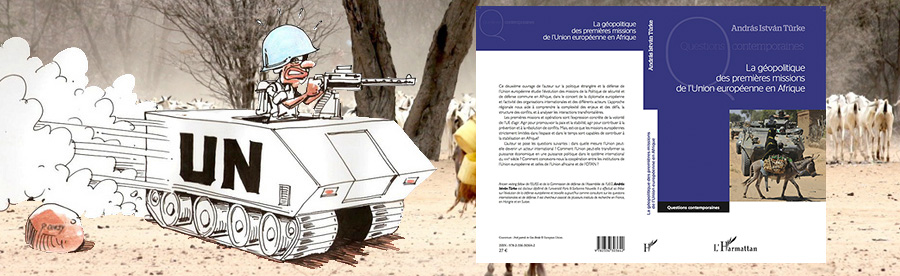
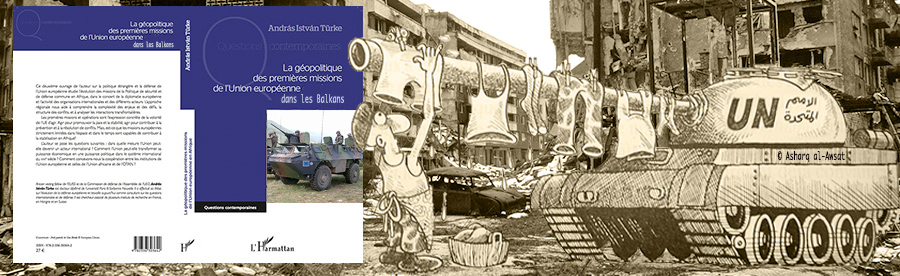
We are looking for sponsors for the English translation of these books, please contact turkeandras(at)gmail(dot)com