
You are here
Feed aggregator
Das sind die 6 schönsten Dörfer in Kalabrien
Kalabrien liegt abseits der Touristenmassen. Hier ist der Charme etwas rauer, und die Schönheit zeigt sich ab und an erst auf den zweiten Blick. Unser Reiseredaktor Christian Bauer liebt solche Regionen und stellt die schönsten Dörfer von «Bella Calabria» vor.
Categories: Swiss News
Fragmented Policies Hold Back Agroecology Adoption in Africa’s Congo Basin
Mohamed Abakar, Head of Agriculture, Food and Nutrition at the Economic Community of Central African States (ECCAS) during the convening in Yaounde. Credit: Isaiah Esipisu/IPS
By Isaiah Esipisu
YAOUNDE, Cameroon, Sep 29 2026 (IPS)
Agricultural, land, forestry, environmental and trade policies in the Congo Basin remain compartmentalised at country levels, leaving proven agroecological models trapped at pilot stages due to a lack of advisory services, organic inputs, market outlets and sustainable financing.
In a declaration made following the Second Congo Basin Convening on Agroecology held in Yaounde, Cameroon, in August 2026, experts and activists, as well as government representatives, observed that the Congo Basin does not end at the borders of its six countries.
“The trade corridors, timber and charcoal markets, mining, energy and infrastructure investment, transhumance and pastoral movement, displacement and refugee flows, and shared river systems mean that the decisions of neighbouring states and regional bodies can protect the basin or degrade it, and that coherence between them is a condition of success,” reads part of the Yaounde Declaration 2026.
“In several countries as well, agricultural, land, trade, environmental, and fiscal policies are not sufficiently aligned,” noted Mohamed Abakar, Head of Agriculture, Food and Nutrition at the Economic Community of Central African States (ECCAS).
“Some policies for example, continue to favour use and sometimes offer subsidies on conventional inputs without offering comparable support for bio-fertilisers, bio-pesticides, indigenous seeds, or ecosystem services,” he observed.
He called on countries within the basin to adopt a regional framework for agroecology and organic farming and integrate it into the Common Agricultural Policy (CAP) and the Regional Agricultural Investment Plan (RAIP).
“Our ambition is not merely to change the way we produce; it is to build sustainable agrifood systems in the Central Africa region, capable of sustainably feeding populations, boosting rural incomes, creating decent jobs, and preserving the Congo Basin,” said Abakar.
The region, in particular the Congo Basin, hosts the largest continuous tract of forest in Africa that regulates the global climate. But according to the UN Food and Agriculture Organisation (FAO), industrial agriculture in different states has been cited as one of major threats to these forests, apart from extractive industries and infrastructure development.
According to the recent World Bank report titled the Congo Basin Forest Ecosystem Accounts report and Policy Recommendations, forests in the region store over 90.9 billion tonnes of carbon, ten times the annual global carbon dioxide emissions from the energy sector, making the basin one of the planet’s most critical natural carbon sinks.
Yet, the entire ecosystem is under direct threat. Forest loss nearly doubled between 2010 and 2020 compared to the previous decade, driven by shifting agriculture, infrastructure, and mounting land pressures.
During the convening in Yaounde, the delegates affirmed that adopting ecological farming models can sustain farmer incomes, protect biodiversity, and lead to food sovereignty while conserving the forests and the entire ecosystem.
Through the Yaounde Declaration, the delegates called upon Member States and the African Union Commission to write ‘agroecology’ by name in the domestication of CAADP so that National and Regional Agriculture and Food Systems Investment Plans carry explicit agroecology objectives, indicators and budget lines, with at least 30 per cent of allocations across the sectors that shape food systems dedicated to agroecology.
The Kampala Declaration of the Comprehensive African Agricultural Development Programme (CAADP) speaks to achieving sustainable agrifood systems transformation but fails to explicitly recognise agroecology.
“We urge technical and funding partners, including the Green Climate Fund, the Global Environment Facility, Central African Forest Initiative, the Blue Fund for the Congo Basin and the African Development Bank, to open simplified direct-access windows so that at least 20 per cent of climate, biodiversity and conservation finance flowing into the basin reaches farmer organisations, women, youth, Indigenous Peoples and local communities, and to fund multi-year core support rather than short projects,” said Dr Million Belay, General Coordinator at the Alliance for Food Sovereignty in Africa (AFSA).
“We are also asking Regional Economic Communities to adopt a regional agroecology framework within the Common Agricultural Policy of Central Africa and the COMIFAC Convergence Plan, and to establish a standing channel with the EAC, SADC and COMESA on the trans-boundary drivers of deforestation, including timber and charcoal trade, mining and infrastructure corridors, transhumance and displacement,” he said.
Abakar told IPS that ECCAS is progressively integrating agroecology into a broader vision for the sustainable, resilient, and competitive transformation of agrifood systems, both across Central Africa in general and within the Congo Basin in particular.
“This approach is grounded, first and foremost, in the revised ECCAS Treaty,” he said. “Article 63 of the revised Treaty commits member states to harmonising their agricultural policies, improving food production in terms of both quantity and quality, sharing research findings, developing joint training programs, and enhancing the ability of rural populations to master the technical and economic environment.”
At country levels, Ghada Kames Kill, a a Member of Parliament from South Sudan, told IPS that the country is in the process of enacting a law that will safeguard indigenous seeds, among other agroecological practices.
“Most of the seeds grown in South Sudan are imported, and in many times the quality is compromised.
With the right policies, our communities should be able to produce their own seeds that are adopted to their environment,” she said. In Cameroon, Law No. 2025/013, promulgated by President Paul Biya on December 17, 2025, establishes a national legal framework to regulate, promote, and develop sustainable agriculture that respects the environment, human health, and biodiversity.
The Central African Republic has developed the National Multi-Stakeholder Food Systems Platform that promotes local production of biofertilisers and soil restoration models, while the Democratic Republic of Congo has a dedicated agroecology service and national strategy.
For the Congo Basin, the solution lies in harmonised regional policies rather than in isolated, short-lived national projects.
IPS UN Bureau Report
Les familles saluent le verdict de culpabilité prononcé dans l'accident d'avion au Mali qui a fait 116 morts
Les proches des victimes ont confié à la BBC être soulagés d'avoir enfin un verdict, douze ans après l'accident.
Categories: Afrique, European Union
Les familles saluent le verdict de culpabilité prononcé dans l'accident d'avion au Mali qui a fait 116 morts
Les proches des victimes ont confié à la BBC être soulagés d'avoir enfin un verdict, douze ans après l'accident.
Categories: Afrique, Swiss News
Météo Algérie : nouveau BMS pour de fortes pluies, plusieurs wilayas en alerte ce mardi
La météo en Algérie restera perturbée dans plusieurs régions du pays ce mardi 29 septembre 2026. L’Office national de la météorologie (ONM) a reconduit ses […]
L’article Météo Algérie : nouveau BMS pour de fortes pluies, plusieurs wilayas en alerte ce mardi est apparu en premier sur .
Categories: Afrique, Határon túli magyar portálok összesített hírei
African–European Relations (Vol. 22)
After two years of limited high-level exchanges during which Europe and Africa found themselves on different sides of principal geopolitical fault-lines, 2025 brought about a partial reset in EU–Africa relations, centred on pragmatism and investment rather than political convergence. The year carried symbolic weight: it marked a quarter-century since the inaugural Africa–EU summit in Cairo in April 2000. This anniversary added impetus to the convening of the seventh summit between the AU and the EU in Luanda, Angola, on 24 and 25 November. This is not to say that this year strengthened political convergence between the two groupings on the divisive issues of Gaza and Ukraine, or a clear course of action on the ongoing civil war and ethnic cleansing in Sudan. Nor did it see a breakthrough in ongoing disputes on EU policy frameworks such as its Carbon Border Adjustment Mechanism. Yet at the summit, continuing the pattern started at the previous Brussels summit of 2022, signs were visible of a more pragmatic approach to partnering. The preceding AU–EU Business Forum underlined that even though a rights-based agenda and commitments to peace and security still mattered to the partnership, the primary focus was now on promoting investment and economic development. This was in line with the global trend of further aid cuts and an increased focus on business relations. The same dynamics could be seen in the latest Africa strategies and guidelines adopted in Germany and Spain, which, just like the prominent Mattei Plan of Italy, stressed the promotion of mutual (economic) benefits and investment. The abrupt cutting of the USAID budget was in part justified by similar logics, referring to a corrupt and inefficient aid sector and the strength of business partnerships in fostering economic development. Another important highlight concerned the European Commission’s publication of its legislative proposals for the next EU budget covering the period 2028–34. As part of this package, the Commission proposed a budget of € 200 bn for an overarching Global Europe Instrument. The Commission proposed that out of this total budget for the Instrument, there should be € 60.5 bn for cooperation with sub-Saharan Africa, as well as € 42.9 bn for the Middle East and North Africa region, which includes the North African states. However, unlike in the current budget, the funding reserved for Africa is listed as indicative, without legal text guaranteeing them as minimum spend, leaving it more vulnerable to changes in priorities and unforeseen challenges.
Categories: Afrique, Diplomacy & Defense Think Tank News
FCB-Boss Degen nutzt Trainer-PK für Klartext
David Degen stellt sich den kritischen Fragen: Der FCB-Boss spricht über die Entlassung von Stephan Lichtsteiner, die Wahl von Slavisa Jokanovic, seine Transferpolitik und die Ziele für die laufende Saison.
Categories: Swiss News
Un instituteur et son fils périssent dans les eaux
Les recherches engagées depuis lundi 28 septembre 2026 à Djidja ont pris fin avec la découverte des corps d'un instituteur et de son fils, emportés par les eaux après la pluie.
Wilfried Houngbadji, enseignant à l'Ecole primaire publique d'Agonhohoun à Djidja, regagnait son domicile à moto après les cours, lundi 28 septembre 2026, avec son fils en classe de CM1, lorsque le pire est survenu.
Les eaux ont emporté les deux occupants de la moto lorsqu'ils ont tenté de franchir un passage submergé sur le bras du fleuve Mono appelé Akpalo, après de fortes pluies.
Les sapeurs-pompiers, les forces de sécurité et des habitants se sont mobilisés pour les retrouver.
La moto avait été récupérée dans les eaux, tandis que les recherches se poursuivaient pour localiser le père et l'enfant. Elles ont finalement abouti ce mardi 29 septembre avec le repêchage des deux corps.
L'information a été confirmée à La Nouvelle Tribune par Dah Atômin Houmbadji, chef de la collectivité Houmbadji et premier adjoint au maire d'Abomey.
Le drame intervient alors que plusieurs localités connaissent une montée des eaux consécutive aux fortes pluies. Il rappelle la dangerosité des traversées de passages submergés par les eaux.
M. M.
Categories: Afrique
Procès FAF : sixième report pour Zetchi, Charaf-Eddine et Zefizef
Ce mardi, le pôle pénal économique et financier près le tribunal de Sidi M’hamed a renvoyé au 13 octobre l’examen de l’affaire relative à la […]
L’article Procès FAF : sixième report pour Zetchi, Charaf-Eddine et Zefizef est apparu en premier sur .
Categories: Afrique, Határon túli magyar portálok összesített hírei
Protokoll - Dienstag, 14. Juli 2026 - PE791.927v01-00 - Ausschuss für auswärtige Angelegenheiten
Quelle : © Europäische Union, 2026 - EP
Categories: Africa, Europäische Union
Hollywoodstar in Zürich kaum wiederzuerkennen
Auf dem Green Carpet beim Zurich Film Festival war die britische Schauspielerin Olivia Colman kaum wiederzuerkennen. Erstmals präsentierte sie sich mit langer grauer Mähne in der Öffentlichkeit.
Categories: Afrique, Swiss News
Hollywoodstar in Zürich kaum wiederzuerkennen
Auf dem Green Carpet beim Zurich Film Festival war die britische Schauspielerin Olivia Colman kaum wiederzuerkennen. Erstmals präsentierte sie sich mit langer grauer Mähne in der Öffentlichkeit.
Categories: Swiss News
Bundesrätin Baume-Schneider erklärt den Kosten-Hammer
Gesundheitsministerin Elisabeth Baume-Schneider verkündet um 14 Uhr, wie viel die Prämien 2027 steigen werden. Es wird ein happiger Sprung erwartet! Blick berichtet live.
Categories: Swiss News
Olivia Colman überrascht mit neuer Frisur
Auf dem Green Carpet beim Zurich Film Festival war die britische Schauspielerin Olivia Colman kaum wiederzuerkennen. Erstmals präsentierte sie sich mit langer grauer Mähne in der Öffentlichkeit.
Categories: Swiss News
Pilgrim fehlt der Nati bei Playoff-Start gegen Israel
Die Schweizer Frauen-Nati muss in den WM-Playoffs gegen Israel ohne die angeschlagene Alayah Pilgrim auskommen. Dafür kehrt Alisha Lehmann zurück. Trainer Navarro erklärt, warum er nur wenige Verteidigerinnen mitnimmt, und hat sich bei der Goalie-Frage entschieden.
Categories: Swiss News
Fermeture du parking de Tafourah dès le 1er octobre : Quelles alternatives pour stationner à Alger ?
Les habitués d’Alger-Centre vont devoir revoir leurs habitudes. Le parking de Tafourah cessera d’accueillir des véhicules dès le 1er octobre prochain, selon une annonce faite […]
L’article Fermeture du parking de Tafourah dès le 1er octobre : Quelles alternatives pour stationner à Alger ? est apparu en premier sur .
40 sacs de soja saisis sur le fleuve Niger
Une opération conjointe de la Police républicaine et de la Marine nationale a permis de récupérer 40 sacs de soja dans une embarcation à Malanville. La cargaison, destinée à franchir la frontière sur le fleuve Niger, était dissimulée sous des sacs de maïs.
A la suite d'information faisant état de mouvements suspects sur le fleuve Niger, dans la zone de Kotchi, à Malanville, lundi 28 septembre 2026, des agents du commissariat frontalier de Malanville, appuyés par des militaires marins de la base de Malanville-Karimama, ont mis en place un dispositif de surveillance.
Vers 5h40, une embarcation suspecte a été repérée dans la zone.
A l'arrivée des agents, les occupants ont abandonné la barque avant de disparaître. La fouille de l'embarcation a permis de découvrir le contenu de la cargaison. Quarante sacs de soja étaient dissimulés sous des sacs de maïs.
La marchandise était destinée à être acheminée vers le territoire nigérien. Cette interception intervient dans un contexte de contrôle renforcé des sorties de soja grain du Bénin. Si l'exportation de ce produit n'est pas totalement interdite, elle reste soumise à des conditions et à un circuit douanier déterminé.
Après la saisie, les sacs de soja ont été mis à la disposition des services des Douanes à Malanville pour la suite de la procédure. L'embarcation a été placée sous la garde de la base marine de la localité.
M. M.
Categories: Afrique
3 suspects arrêtés pour vol de 35 filtres de bulldozer sur un chantier
Une affaire de vol de matériel secoue la base-vie de la société QGMI à Kpomassè. Une patrouille de police a d'abord intercepté un suspect avec une partie des objets recherchés avant que les investigations ne conduisent à deux autres personnes.
Au petit matin du vendredi 25 septembre 2026, une patrouille du commissariat d'arrondissement central de Kpomassè a contrôlé un homme transportant un colis. Le suspect « a soutenu qu'il était en service au Port autonme de Cotonou, d'où il aurait récupéré le colis pour Bohicon comme destination finale ».
Les vérifications ont finalement orienté les enquêteurs vers la base-vie de QGMI, où l'intéressé travaillait comme agent de sécurité civile. La perquisition des lieux a alors révélé des traces d'effraction sur le magasin de l'entreprise.
Du matériel dissimulé dans un puisard
Les recherches effectuées sur le site ont également conduit les policiers vers un puisard. A l'intérieur, plusieurs cartons contenant des filtres semblables à ceux retrouvés sur le suspect avaient été immergés dans des matières fécales. Une découverte qui a renforcé les soupçons autour d'un vol commis dans le magasin et d'une tentative de faire disparaître les traces du matériel.
Confronté aux éléments recueillis, le suspect a finalement reconnu que les objets qu'il transportait provenaient du magasin de QGMI. Il s'agissait de 35 filtres destinés à des bulldozers et d'un pistolet de pompe à carburant.
La poursuite des investigations a permis aux policiers d'identifier deux autres personnes soupçonnées d'être impliquées dans l'opération.
Les trois suspects ont été interpelés dans le cadre l'enquête de flagrance ouverte après les faits. Selon la Police, ils seront présentés au procureur de la République près le tribunal de Ouidah dans les prochains jours.
M. M.
Categories: Afrique
Pages
the old site is here


© 2012-2015 Europa Varietas Foundation © 2015-2020 Europa Varietas Association
www.europavarietas.org | info(@)europavarietas(dot)org | Switzerland
This is a GDPR ready site
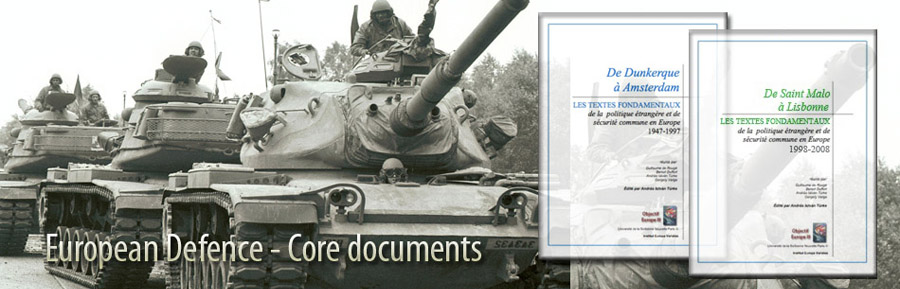
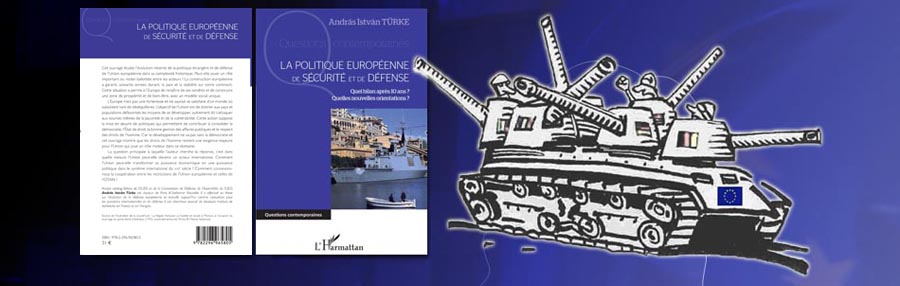
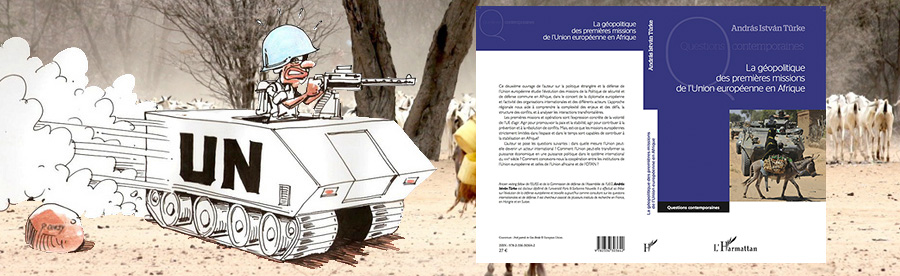
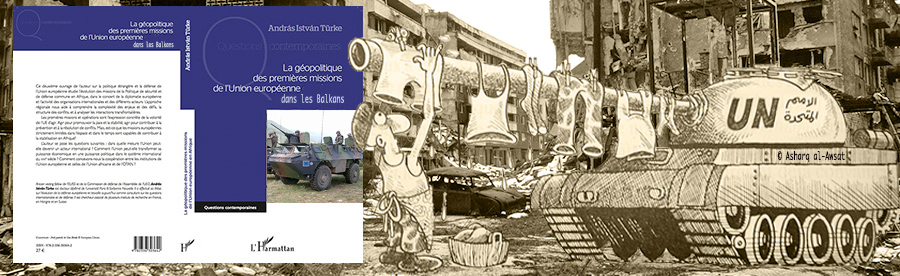
We are looking for sponsors for the English translation of these books, please contact turkeandras(at)gmail(dot)com