
You are here
Feed aggregator
Sovereign trust funds for planned climate relocations
Climate-induced planned relocation is becoming an unavoidable policy issue for some highly exposed communities. Although relocation should remain a last resort after other realistic options for adaptation in place have been assessed, ensuring that the money is available when needed to support relocation is critical. The challenge is that funding is insufficient, drawn from diverse sources and often arrives too late and in fragmented forms: for example, one project for housing, another for infrastructure, and little predictable support for consultation, land negotiations, safeguards, livelihoods, host communities or long-term maintenance. The financing problem is therefore not only the scale of the costs, but the difficulty of organising money over time and across institutions and safeguards. This can leave governments reacting after crises rather than planning before risks become unmanageable.
Sovereign trust funds offer one practical way to address this gap. They do not create finance by themselves, but they can provide a country-owned platform for receiving, sequencing and reporting domestic revenue, bilateral support, multilateral development bank (MDB) finance, climate funds, disaster risk finance, and loss and damage resources. They present an alternative to predominantly loan- and grant-based financing for planned relocation. Fiji’s Climate Relocation of
Communities Trust Fund shows both the promise and limits of this approach: It provides a legal and institutional basis for relocation finance within government and links international funding to procedures, but it still requires capitalisation, administrative capacity and long-term technical support. The model presents an opportunity to support sovereign, rights-based financing systems rather than relying solely on donor-funded, often piecemeal relocation projects. It can also make funding available at the appropriate time and without undue time pressure.
Key policy messages:
• Finance planned relocation before a crisis, especially assessment, consent, land, safeguards and project preparation.
• Treat relocation as a long-term investment in the collective good, rather than solely as a construction or emergency response measure.
• Support sovereign trust funds where they are legally mandated at the national level, budget-linked, transparent and capitalised.
• Use finance to uphold quality and rights, including community-led processes, support for host communities and support for long-term livelihoods.
Categories: Afrique, Diplomacy & Defense Think Tank News
Sovereign trust funds for planned climate relocations
Climate-induced planned relocation is becoming an unavoidable policy issue for some highly exposed communities. Although relocation should remain a last resort after other realistic options for adaptation in place have been assessed, ensuring that the money is available when needed to support relocation is critical. The challenge is that funding is insufficient, drawn from diverse sources and often arrives too late and in fragmented forms: for example, one project for housing, another for infrastructure, and little predictable support for consultation, land negotiations, safeguards, livelihoods, host communities or long-term maintenance. The financing problem is therefore not only the scale of the costs, but the difficulty of organising money over time and across institutions and safeguards. This can leave governments reacting after crises rather than planning before risks become unmanageable.
Sovereign trust funds offer one practical way to address this gap. They do not create finance by themselves, but they can provide a country-owned platform for receiving, sequencing and reporting domestic revenue, bilateral support, multilateral development bank (MDB) finance, climate funds, disaster risk finance, and loss and damage resources. They present an alternative to predominantly loan- and grant-based financing for planned relocation. Fiji’s Climate Relocation of
Communities Trust Fund shows both the promise and limits of this approach: It provides a legal and institutional basis for relocation finance within government and links international funding to procedures, but it still requires capitalisation, administrative capacity and long-term technical support. The model presents an opportunity to support sovereign, rights-based financing systems rather than relying solely on donor-funded, often piecemeal relocation projects. It can also make funding available at the appropriate time and without undue time pressure.
Key policy messages:
• Finance planned relocation before a crisis, especially assessment, consent, land, safeguards and project preparation.
• Treat relocation as a long-term investment in the collective good, rather than solely as a construction or emergency response measure.
• Support sovereign trust funds where they are legally mandated at the national level, budget-linked, transparent and capitalised.
• Use finance to uphold quality and rights, including community-led processes, support for host communities and support for long-term livelihoods.
Categories: Diplomacy & Defense Think Tank News, Swiss News
Liste définitive des 150 fonctionnaires de douanes retenus
La direction générale des douanes a publié, ce jeudi 10 septembre 2026, la liste des 150 candidats retenus au terme de la visite médicale organisée après la délibération des épreuves écrites par la Commission nationale d'organisation du recrutement par concours direct.
Les candidats aux postes des contrôleurs et préposés des douanes sont invités à se présenter au centre de formation militaire de Bembèrèkè, vendredi 11 septembre 2026 à 7h, pour la formation militaire commune de base.
Liste des 150 nouveaux fonctionnaires des douanes
Categories: Afrique
Agree to disagree: why the AU and the EU should engage in pragmatic partnerships
The AU–EU partnership should embrace the plurality within both unions, make interests transparent, and enable pragmatic cooperation between coalitions of willing countries, helping to bring proclaimed ambitions closer to actual practice, explain Benedikt Erforth and Lena Gutheil.
Categories: Diplomacy & Defense Think Tank News, Swiss News
Agree to disagree: why the AU and the EU should engage in pragmatic partnerships
The AU–EU partnership should embrace the plurality within both unions, make interests transparent, and enable pragmatic cooperation between coalitions of willing countries, helping to bring proclaimed ambitions closer to actual practice, explain Benedikt Erforth and Lena Gutheil.
Categories: Biztonságpolitika, Diplomacy & Defense Think Tank News
Press release - MEPs upgrade EU energy infrastructure rules to lower energy prices
The update of the TEN-E regulation aims to boost security of energy supply, help lower prices for households and businesses, and contribute to the EU’s climate neutrality goals.
Committee on Industry, Research and Energy
Source : © European Union, 2026 - EP
Committee on Industry, Research and Energy
Source : © European Union, 2026 - EP
Categories: Defense`s Feeds, European Union
Press release - MEPs upgrade EU energy infrastructure rules to lower energy prices
The update of the TEN-E regulation aims to boost security of energy supply, help lower prices for households and businesses, and contribute to the EU’s climate neutrality goals.
Committee on Industry, Research and Energy
Source : © European Union, 2026 - EP
Committee on Industry, Research and Energy
Source : © European Union, 2026 - EP
Categories: Afrique, European Union
Press release - MEPs upgrade EU energy infrastructure rules to lower energy prices
The update of the TEN-E regulation aims to boost security of energy supply, help lower prices for households and businesses, and contribute to the EU’s climate neutrality goals.
Committee on Industry, Research and Energy
Source : © European Union, 2026 - EP
Committee on Industry, Research and Energy
Source : © European Union, 2026 - EP
Categories: Balkans Occidentaux, Europäische Union
Press release - MEPs upgrade EU energy infrastructure rules to lower energy prices
The update of the TEN-E regulation aims to boost security of energy supply, help lower prices for households and businesses, and contribute to the EU’s climate neutrality goals.
Committee on Industry, Research and Energy
Source : © European Union, 2026 - EP
Committee on Industry, Research and Energy
Source : © European Union, 2026 - EP
Categories: Európai Unió : hírek magyarul, Swiss News
Le Bénin décroche l'or et l'argent en U18
Le triathlon béninois s'est une nouvelle fois distingué sur la scène internationale. À l'occasion du Mondial de Développement de Triathlon, organisé au Mozambique en 2026, les représentantes béninoises ont réalisé une performance remarquée dans la catégorie U18, avec deux médailles remportées ; l'une en or et l'autre en argent.
Un doublé béninois en U18
Engagée dans la catégorie U18, Conforte HOUNGA Mahounan a dominé la compétition pour s'adjuger la médaille d'or. Cette victoire lui permet de décrocher le titre dans sa catégorie et confirme les progrès réalisés par le triathlon béninois dans les compétitions internationales.
De son côté, Étoile Vignon AGBODJOGBE a également livré une prestation convaincante. Elle a terminé à la deuxième place et remporté la médaille d'argent. Les deux jeunes athlètes permettent ainsi au Bénin de réaliser un doublé sur le podium de la catégorie U18.
Ces résultats mettent en évidence le potentiel de la nouvelle génération de triathlètes béninois et contribuent à renforcer la visibilité du pays sur la scène internationale.
F. A. A.
Categories: Afrique
Newsletter - 14-17 September 2026 - Strasbourg plenary session
Categories: Defense`s Feeds, European Union
Le Bénin participe au Championnat du monde de gymnastique
L'Équipe nationale senior du Bénin sera au Championnat du monde de gymnastique aérobic, prévu pour se dérouler du 11 au 13 septembre 2026 à Pampelune (Pamplona), en Espagne. L'annonce a été faite par Fédération béninoise de gymnastique (FEBEGYM).
Le Bénin écrit une nouvelle page de l'histoire de sa gymnastique. Le pays participe pour la première fois au Championnat du monde de gymnastique aérobic, grand rendez-vous mondial de cette discipline qui aura lieu du 11 au 13 septembre 2026 à Pampelune (Pamplona), en Espagne.
Dans ce cadre, la délégation béninoise a quitté Cotonou le 6 septembre dernier. Cette présence sur la scène mondiale vient récompenser les efforts consentis par l'ensemble des acteurs engagés dans le développement de la gymnastique béninoise. Elle traduit également la volonté de la fédération de renforcer progressivement la présence du Bénin dans les grandes compétitions internationales.
Avant le Championnat du monde de gymnastique aérobic, le Bénin avait participé au Championnat du monde de Parkour à Hiroshima, au Japon, en avril 2018, puis à la Coupe du monde de Parkour à Montpellier, en France, en 2024.
La délégation béninoise était également présente au 2ᵉ Championnat du monde de Parkour, organisé à Kitakyushu, au Japon, du 15 au 17 novembre 2024. Plus récemment, le pays a marqué sa présence à la 16ᵉ Plovdiv Cup Aerobics Open, en Bulgarie, du 8 au 13 octobre 2025. Une expérience qui a contribué à préparer le terrain pour cette nouvelle aventure mondiale.
F. A. A.
Categories: Afrique
Les résultats du tirage DIGITAL 08 H
DIGITAL 08H : Avez-vous tenté votre chance ?
Le tirage DIGITAL 08H N°163 a livré son verdict !
Jeudi 10 Septembre 2026
Avez-vous joué ?
Avez-vous misé sur vos numéros porte-bonheur ?
RÉSULTAT : 73 • 58 • 90 • 74 • 47
Félicitations aux heureux gagnants !
Pas encore cette fois ? Gardez le sourire.
Rendez-vous à 11H pour le prochain tirage.
Jouez dans les points de vente ou : Tapez *590# ou rendez-vous sur lnbloto.bj
Jouez avec modération et responsabilité. Le jeu doit rester un plaisir.
La croix du jeudi 10 septembre 2026

Categories: Afrique
Video einer Ausschusssitzung - Donnerstag, 10. September 2026 - 09:00 - Ausschuss für auswärtige Angelegenheiten
Dauer des Videos : 30'
Haftungsausschluss : Die Verdolmetschung der Debatten soll die Kommunikation erleichtern, sie stellt jedoch keine authentische Aufzeichnung der Debatten dar. Authentisch sind nur die Originalfassungen der Reden bzw. ihre überprüften schriftlichen Übersetzungen.
Quelle : © Europäische Union, 2026 - EP
Categories: Europäische Union, Swiss News
Video einer Ausschusssitzung - Donnerstag, 10. September 2026 - 07:30 - Ausschuss für auswärtige Angelegenheiten
Dauer des Videos : 90'
Haftungsausschluss : Die Verdolmetschung der Debatten soll die Kommunikation erleichtern, sie stellt jedoch keine authentische Aufzeichnung der Debatten dar. Authentisch sind nur die Originalfassungen der Reden bzw. ihre überprüften schriftlichen Übersetzungen.
Quelle : © Europäische Union, 2026 - EP
Categories: Europäische Union, Swiss News
Video einer Ausschusssitzung - Donnerstag, 10. September 2026 - 07:00 - Ausschuss für auswärtige Angelegenheiten
Dauer des Videos : 30'
Haftungsausschluss : Die Verdolmetschung der Debatten soll die Kommunikation erleichtern, sie stellt jedoch keine authentische Aufzeichnung der Debatten dar. Authentisch sind nur die Originalfassungen der Reden bzw. ihre überprüften schriftlichen Übersetzungen.
Quelle : © Europäische Union, 2026 - EP
Haftungsausschluss : Die Verdolmetschung der Debatten soll die Kommunikation erleichtern, sie stellt jedoch keine authentische Aufzeichnung der Debatten dar. Authentisch sind nur die Originalfassungen der Reden bzw. ihre überprüften schriftlichen Übersetzungen.
Quelle : © Europäische Union, 2026 - EP
Categories: Europäische Union, Swiss News
A Spectre is Haunting Europe — the Spectre of Ultra-Nationalism
An AfD election poster with the message: “Youth come to us”, reminiscent of both Nazi and Communist propaganda.
By Jan Lundius
STOCKHOLM, Sweden, Sep 10 2026 (IPS)
During summer months there is a certain news drought. Nevertheless, this year social media has been crowded with news from wars in the Middle East and Ukraine, while customary tales about grisly murders have not been neglected. In Sweden it is election year and summer reporting has been supplemented by a debate about “hate speech against ethnic groups”. If individual tragedies connected with murders upset people, many seem to be indifferent to the fact that entire population groups are targeted by politicians. Swedish social media is overloaded with outcries about “Muslim” immigration and concerns about Sweden becoming “Islamized” and in danger of being transformed into a new Afghanistan.
Prominent in this hyped propaganda are the Sweden Democrats. A nationalist, social conservative, and populist political party finding its roots in neo-Nazism. In the 2010 elections, this party entered the Swedish parliament with 5.7 percent of the national votes and it now reigns the nation in coalition with other right-wing parties. With 22 percent of current approval, Sweden Democrats has become Sweden’s second largest party, after the Social Democrats, with 34 percent.
The Sweden Democrat’s chief ideologist is a former high school teacher, Richard Jomshof, who together with three comrades by the turn of the last century managed to steer away Sweden Democrats from the White Power Movement and neo-Nazism, while maintaining the party’s nationalist and anti-immigrant tenor. After the 2022 parliamentary elections the Sweden Democrat’s became part of the Government. Jomshof left his post as party secretary and became chairman of the Parliamentary Justice Committee, which prepares cases connected with the Swedish judicial system – courts, the prosecution service, the police and correctional services, as well as cases and laws related to the Criminal Code.
Jomshof used his position to propagate for a tougher stance against criminals with a “non-Swedish background” and to promote restrictions on immigration. One of Jomshof’s goals has been to warn Swedes about the “Islamization of our Homeland”. After publishing anti-Islamic cartoons on his website Jomshof was close to be removed from his position as chairman of the Justice Committee. However, committee members sided with him while one of them characterized the accusations of “discrediting an entire population group” as nothing more than a common “political yap”. Nevertheless, a year ago, Jomshof left the Justice Committee in protest after it had decided to forbid private acquisition and use of semi-automatic weapons.
After that Jomshof dedicated much of his time to write an “analysis” of Islam and recently published a book called Kafir, a Muslim word for “infidel”, which has become a bestseller. Jomshof’s political stance and career as an “expert” on Islam is one example of the polarization that currently characterizes much of European politics – a tendency to turn any individual into a representative of an entire ethnic and/or religious group and throw her/him into one big pot where s/he becomes part of a one single problem – immigration.
Jomshof is an extreme nationalist representing an anti-immigrant political party, but that does not mean that every supporter of Sweden Democrats is a reformed Nazi and stout believer in Jomshof’s generalisations, likewise not every Muslim is a supporter of the extremist Islam Jomshof depicts. It is dangerous to bundle together individuals and label them all as extremists. Recently a young man equipped with sword and helmet entered a Swedish school and killed one pupil while gravely wounding three. He had apparently been inspired by the Norwegian Behring Breivik, who in 2011 massacred 77 people as a gesture to “combat multiculturalism and Muslim immigration”. In 2015, the Swede Anton Lundin-Pettersson murdered three persons for the same reason.
Gaining political advantages through xenophobia is just one ingredient in a larger European political landscape. That a small, marginal political party with Neo-Nazi roots after less than fifteen years ended up in the Swedish government re-confirms a phenomenon present all over Europe. On 15 September, there are general elections in Sweden and next year in France, Spain, Greece, Poland and Italy. All these countries have powerful parties with a nationalistic/xenophobic agenda. In France, the predecessor of National Rally was in 1972 founded by Jean-Marie Le Pen, a former member of the Nazi Waffen-SS. The Spanish Vox was established in 2013, benefitting from donations by ultra-conservative lobbies, such as HazteOír and CitizenGo. The Greek Golden Dawn was in 2020 annulled by the nation’s Supreme Court after members of its top echelons had been convicted for serious crimes, though a plethora of smaller parties have taken up its agenda. The Polish Law and Justice Party is a conservative outbreak from the labor movement Solidarność, with a huge following and an agenda based on political Catholicism, strong conservatism, anti-liberalism, nationalism, and Euroscepticism. Brothers of Italy finds its roots in MSI, Movimento Sociale Italiano, a fascist party founded after the death of Mussolini. Through the general elections in 2013, Brothers of Italy gained nine seats in the Parliament, after obtaining two percent of the votes. It is currently Italy’s largest party (with 27 percent approval in the latest polls) and after the 2022 elections its leader, Giorgia Meloni, is Prime Minister of Italy. How could those originally small parties, some with a quite sordid background, in such a short time become so powerful?
One reason might be that by exposing outrageous and extreme opinions, which a political establishment would be ashamed of uttering, fringe parties might obtain attention from a generally liberal press. While warning the general public about such “fanatics”, liberal media spread their ideas and create an increasing interest. In a well calculated moment before the Swedish elections, Richard Jomshof published his untrustworthy and generalizing book about Islam. Although it was issued by a small and quiet unknown publisher it received extreme attention by Swedish media – TV, newspapers and the web – and thus became an immediate bestseller. As Oscar Wilde once stated: “The only thing worse than being talked about is not being talked about”.
A similar phenomenon is currently under way in Italy. In 2023, the general Roberto Vannacci self-published a book on Amazon, Il mondo al contrario, The Upside-Down World, sparking a furious backlash and drawing heavy criticism for its contents. The Italian Armed Forces quickly distanced themselves from General Vannacci’s ideas. The defence minister stated that he had “discredited the Army, the Defence and the Constitution.” Vannacci, grateful for all attention, continues to spread his homophobia and misogyny, attacking immigration policies and environmentalism, while defending Russia’s war on Ukraine. He is now a welcome guest on TV, participates in debates with reputed politicians and academicians, while he recently has founded a political party.
The recent landslide election victory of the AfD, Alternative for Germany, in the federal state of Saxony-Anhalt has sent shock waves through liberal Europe. While being part of the larger Federal Republic of Germany, Saxony-Anhalt hosts just three percent of the nation’s entire population and has its second lowest GDP per capita. Nevertheless, the victory of its Saxony branch now fuels AfD’s hope to conquer the reigns of the entire German Republic. AfD’s ultra-nationalistic agenda claims that Germany has had enough of guilt feelings about the repression and mass killings of the Nazi Regime. The past has to be reinterpreted and the party now asserts that Germany is in need of “less Hitler and more Bismarck”, i.e. the Chancellor who in the 19th century united Germany under the slogan “Blood and Iron”.
AfD has accordingly re-introduced the concept of Völkisch, folksy, used by the Nazis to denote a battle against “radicalism” in the form of modern art and foreign influences, while fomenting pride in everything the Party deemed as “German”. AfD’s Saxony-Anhalt party programme intends to purge ”slander” of Germany from school education. No funding will be granted to organisations maintaining sites of Nazi terror – AfD’s leadership has condemned Berlin’s Holocaust Monument as a “national disgrace” – and the party has also demanded that the world-famous Bauhaus school in Dessau has to be shut down. This learning centre was in the 1920s a highly influential focus of innovative approaches to art and architecture. The Saxony-Anhalt branch of AfD is furthermore a representative of what has been called eastalgia, i..e. nostalgia for the times when Saxony-Anhalt was part of the Communist, Soviet dominated East Germany. Consistent with this perception and displeasure with the central government’s spending on Ukraine’s defence, AfD is a stout supporter of Russia’s war on Ukraine.
Before the 1990 reunification of West and East Germany , Saxony-Anhalt was an important centre for a polluting heavy industry. One of East Germany’s most famous authors, Monika Maron, wrote a novel called Flugasche, Flying Ashes, in which she described the bleak, contaminated land of Saxony. Since then, the German Federal Republic has successfully cleaned up the traces of a ruthless industrialization and gradually transformed Saxony into an increasingly green state. However, this initiative came at the cost of the shutting down of several large industries, resulting in increased unemployment. Since 1990, Saxony-Anhalt has lost 750 000 inhabitants, mainly skilled young people, who has moved to the “West”, a fourth of the state’s population. Left is an aging population and unskilled, unemployed young people, while the state has been partly repopulated by immigrants coming from foreign countries. They now constitute a tenth of the population. This has left a fertile ground for a populist party attracting disappointed old people and depressed youngsters, presented with the chimera of a happy pre-war Germany and/or Communist East Germany, which in reality are now forgotten and probably never existed.
A general sense of insecurity, reduced GDP and increasing unemployment harass several Europeans, not least young people. An embellished nostalgia for an actually forgotten past, assumed to have been annihilated by hordes of immigrants and corrupt liberals, has made Europeans affected by ultra-conservative parties, promulgating hazardous and divisive ideas. Representatives of murky ideologies are by media provided an attention they do not deserve. Excessive media interest, especially when marginal fanatics begin to spread their poisonous seed, might strengthen their outreach. Critical analysis, research and education are despised by dark forces who deliberately divulge their message through easy-to-understand, diluted and digestible propaganda and fake news. An ominous development that demands urgent action.
IPS UN Bureau
Categories: Africa, European Union
Pages
the old site is here


© 2012-2015 Europa Varietas Foundation © 2015-2020 Europa Varietas Association
www.europavarietas.org | info(@)europavarietas(dot)org | Switzerland
This is a GDPR ready site
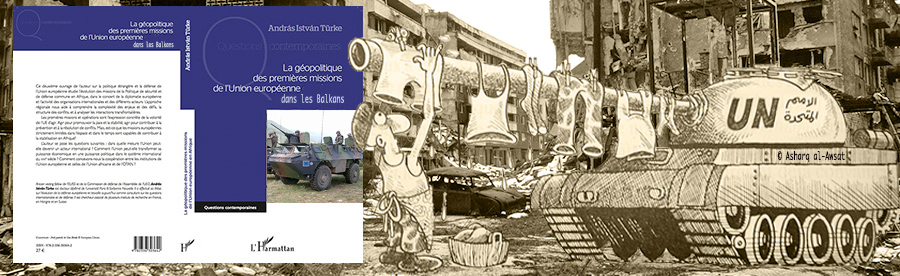
We are looking for sponsors for the English translation of these books, please contact turkeandras(at)gmail(dot)com