
You are here
Feed aggregator
Un camion fait des dégâts à Toffo
Un camion chargé de casiers de boissons a percuté une poissonnerie située en face de la mairie de Toffo, dans le département de l'Atlantique, le lundi 12 octobre 2026. L'accident s'est produit sous une forte pluie, alors que le véhicule circulait sur la RNIE 21, dans le sens Toffo-Lalo.
Des dégâts matériels après un accident à Toffo. Selon les informations de la Radio Sèdohoun, le conducteur aurait perdu le contrôle du camion dans une descente, avant de quitter la chaussée et de finir sa course dans une poissonnerie. Les trois occupants du véhicule ont survécu à l'accident. Le conducteur a subi des égratignures. Aucun autre blessé n'a été signalé.
La poissonnerie a été entièrement détruite. Trois congélateurs et leur contenu, une motocyclette ainsi que divers articles ont également été endommagés.
Categories: Afrique, Swiss News
«Russlands Vorstossfähigkeit ist gebrochen»
Der ehemalige ukrainische Top-General Oleksandr Syrskyi sieht Russland durch seine Angriffsstrategie im Ukraine-Krieg im Nachteil. Moskau habe hohe Verluste eingebüsst, während Kiew die Offensivkraft des Kremls gebrochen habe.
Categories: European Union, Swiss News
Las Vegas Strip überschwemmt
Rekordregen in Las Vegas: Tropensturm Rahel sorgt für Überschwemmungen in der Wüstenstadt. Ganze Strassen am Strip stehen unter Wasser, selbst das berühmte Riesenrad ist betroffen.
Categories: Határon túli magyar portálok összesített hírei, Swiss News
Kehrt Nati-Star Niederreiter aufs NHL-Eis zurück?
Nachdem Nino Niederreiter bei den Winnipeg Jets zuletzt überzählig war, winkt ihm nun die Rückkehr aufs Eis.
Categories: Határon túli magyar portálok összesített hírei, Swiss News
UN to Launch Survey to Track Down Racism at the Secretariat
A group of UN Staffers outside the Secretariat. Credit: United Nations
By Thalif Deen
UNITED NATIONS, Oct 13 2026 (IPS)
The United Nations has once again revived a longstanding problem that has been left lingering behind closed doors for decades – racism and racial discrimination at the UN Secretariat.
A message sent to UN staffers last week reads: “The United Nations is founded on the bedrock principle that all people are equal in rights and dignity. Racism has no place in our Organization, and we are committed to fighting it on every front”.
“But racism often hides within systems, becoming entrenched through policies and practices that may appear neutral, but in fact reinforce biases and deepen inequities. Bringing these patterns to light is crucial, and for that we need data.”
“That is why, on 17 October, we will be launching a voluntary race data collection initiative. This exercise invites all Secretariat staff to provide information about their race, to help the Organization better identify and address discrimination. It is optional. It is anonymous. And it is one of the best tools we have to discover where action is needed.”
Approximately 3,600 to 4,800 Secretariat staff members, including UN agencies, are based in New York.
Meanwhile, the UN Secretariat in New York, faltered ingloriously last year, as it withdrew its own online survey on racism, in which it asked staffers to identify themselves either as “black, brown, white, mixed/multi-racial, and any other”.
But the most offensive of the categories listed in the survey was “yellow” – a longstanding Western racist description of Asians, including Japanese, Chinese and Koreans.
Subsequently, a non-apologetic message emailed to staffers read: “The United Nations Survey on Racism has been taken offline and will be revised and reissued, taking into account the legitimate concerns expressed by staff.”
Dr Palitha Kohona, a former Chief of the UN Treaty Section in the Office of Legal Affairs (OLA) told Inter Press Service (IPS) racism today is not overly evident at the United Nations which was founded on ideals that were very much ahead of their times, but an undercurrent of racial superiority and racial bias exists among certain elements of the Organization. This is evident in certain appointments and deep-seated attitudes, even among some delegates.
“Racism in international bodies could be traced even to the founding of the League of Nations where President Woodrow Wilson strenuously opposed the Japanese proposal to incorporate the principle of racial equality in the constitution of the Organization. His vision of international order was hierarchical and implicitly based on a racial hierarchy that placed white, Western nations at the top”.
While the United Nations is staffed by many enlightened individuals, some bias based on race still prevails at the highest levels, he pointed out, despite the organization itself having been headed by two Asians and an African in recent times.
“Curiously certain positions have been held only by Europeans. For example, the position of the UN Legal Counsel has been held only by white Europeans. There are other positions apparently reserved for European countries”.
Some delegates are also still affected by racial prejudices of an unenlightened past.
In a well reported incident, the not-so-white chairman of the WEOGs ( a Western European group) from a Southern European country once told the recently-arrived Australian delegate (an Australian citizen of Asian ancestry) that the developing countries of the Group of 77 were meeting in an adjoining room—(implying he was an Asian at the wrong meeting).
In an Organization created on the high ideals of equality and merit there is no logical reason for reserving certain positions on the basis of race, even sub consciously.
“Having gone a long way in minimizing gender bias, it is time to ensure that all vestiges of racial bias are also eliminated. One way to ensure equality and equity in appointments might be to subject all appointments to an open application process with selections being made by racially and gender mixed panels,” declared Dr Kohona, a one-time Permanent Representative of Sri Lanka to the UN, and until recently, Ambassador to China.
Ian Richards, President of the UN Geneva Staff Union told IPS: “We are concerned this is being tackled very much from a North American perspective.”
“Race is only a useful indicator if it is combined with where you grew up, which indicates opportunities or disadvantages in formative years, and where you work now. Each region has its own history and attitudes. We don’t feel this has been taken on board,” he said.
Meanwhile, the circular to staffers also points out that by understanding how colleagues identify their race, we can:
- • Pinpoint areas where racial bias or disparities may exist;
• Examine institutional factors that may contribute to racist misconduct, underreporting of incidents, or barriers to racial justice; and
• Develop remedial measures to build a workplace free from racial discrimination.
Staff will be invited to participate by selecting a race category on Inspira. To ensure data protection and maintain privacy, your data will be anonymized and aggregated. It will not be used in connection with any individual human resources management processes, such as recruitment or promotions. It will not be visible to recruiters or hiring managers.
The collection of race data will be managed strictly in line with the parameters outlined in General Assembly resolutions A/RES/80/238 and A/RES/80/243 B, as well as the provisions set out in ST/SGB/2024/3.
The racial categories listed echo the language used in past United Nations staff engagement surveys. An additional question will ask staff if they consider themselves to be a member of a racialized community.
Speaking on condition of anonymity. a former UN staff member expressed concerns about the UN Secretariat Administration’s proposed race data collection initiative, particularly regarding its methodology, suitability for the UN’s diverse global workforce, and safeguards for sensitive personal information.
It was pointed out that a fundamental question remains unanswered: Is the lack of race-disaggregated data genuinely preventing the Organization from addressing racism, or does the real problem lie in the implementation of existing policies, the enforcement of accountability, and the failure to translate commitments into effective action?
This distinction must be established before sensitive personal data are collected on such a scale.
“Any approach to addressing racism and racial discrimination within the UN should also recognize the experiences of affinity groups and other minority and underrepresented communities, whose experiences of exclusion may not be adequately captured by standardized racial classifications”.
The absence of meaningful consultation with staff representatives, together with insufficient clarity regarding the conceptual or empirical basis for the selected racial categories, data protection measures, future use of the data, and independent oversight, further undermines confidence in the initiative.
The United Nations must demonstrate its commitment to equality through action, transparency, and accountability. Collecting sensitive racial data must not become a substitute for enforcing existing protections, addressing substantiated concerns, and correcting discriminatory institutional practices, the former staff member said.
“The ultimate measure of success is not how much data the Organization collects, but whether it can demonstrate that racism has been reduced, accountability strengthened, and the working environment made fairer for all staff”.
IPS UN Bureau Report
Categories: Africa, Határon túli magyar portálok összesített hírei
Private sector mobilisation: are we missing the bigger picture?
This week, the international development community will gather in Bangkok for the Annual Meetings of the International Monetary Fund (IMF) and the World Bank. Amid pressing development needs and empty public purses, the Governors of the World Bank will discuss (one time more) how to mobilise private capital at scale, a pledge the international community has made but failed to realise. Multilateral Development Banks (MDBs) have been the predominant mobilisers of financial resources, accounting for 71% of the total mobilised private finance, with current mobilisation figures standing at approximately $108 billion per annum. However, this is only a tiny fraction of the private investment needed to achieve development and climate goals, highlighting the urgent need for a change in mobilisation approaches.
Categories: Diplomacy & Defense Think Tank News, Swiss News
Private sector mobilisation: are we missing the bigger picture?
This week, the international development community will gather in Bangkok for the Annual Meetings of the International Monetary Fund (IMF) and the World Bank. Amid pressing development needs and empty public purses, the Governors of the World Bank will discuss (one time more) how to mobilise private capital at scale, a pledge the international community has made but failed to realise. Multilateral Development Banks (MDBs) have been the predominant mobilisers of financial resources, accounting for 71% of the total mobilised private finance, with current mobilisation figures standing at approximately $108 billion per annum. However, this is only a tiny fraction of the private investment needed to achieve development and climate goals, highlighting the urgent need for a change in mobilisation approaches.
Categories: Diplomacy & Defense Think Tank News, Swiss News
Private sector mobilisation: are we missing the bigger picture?
This week, the international development community will gather in Bangkok for the Annual Meetings of the International Monetary Fund (IMF) and the World Bank. Amid pressing development needs and empty public purses, the Governors of the World Bank will discuss (one time more) how to mobilise private capital at scale, a pledge the international community has made but failed to realise. Multilateral Development Banks (MDBs) have been the predominant mobilisers of financial resources, accounting for 71% of the total mobilised private finance, with current mobilisation figures standing at approximately $108 billion per annum. However, this is only a tiny fraction of the private investment needed to achieve development and climate goals, highlighting the urgent need for a change in mobilisation approaches.
Categories: Diplomacy & Defense Think Tank News, Swiss News
Neuer wird nicht im Bayern-Tor stehen
Manuel Neuer steht am Dienstag in der Champions League gegen Stavanger nicht im Bayern-Tor. Man wolle kein Risiko eingehen, heisst es.
Categories: Határon túli magyar portálok összesített hírei, Swiss News
Dollar System Eroding Slowly, but Still Dominant
By Jomo Kwame Sundaram
KUALA LUMPUR, Malaysia, Oct 13 2026 (IPS)
The protracted demise of dollar-gold convertibility and associated fixed exchange rates did not end dollar hegemony. With crucial and timely help from political allies, confidence in the dollar system has persisted, albeit much diminished.
Jomo Kwame Sundaram
Contingency planning?On August 15, 1971, President Richard Nixon announced that the US would no longer convert dollars into gold, as promised under the 1944 Bretton Woods (BW) agreement.
But the BW payments arrangements and the US promise of dollar convertibility to gold were not sustainable. As Robert Triffin noted in 1960, the system was ‘failing by design’ from the outset, which US authorities denied and refused to address.
Vietnam War spending, rising inflation, and a run on US gold reserves forced this decision after allied Western central banks quietly gave up defending the gold-dollar peg in 1968.
Decades later, then-US Undersecretary for Monetary Affairs Paul Volcker revealed he had initiated a Treasury working group in 1969.
As the US balance of payments was already proving unsustainable, suspending gold-dollar convertibility was no longer considered an option to be avoided at all costs.
Portraying the gold peg’s failure as due to arithmetic, not politics, Volcker argued that suspending it involved implementing contingency planning that the group had long considered.
Two days before, Nixon summoned 15 advisors to a secret retreat at Camp David to draft his announcement. He also imposed a 90-day wage-price ‘freeze’ and a 10% tariff on imports.
Thus, Nixon presented the suspension of dollar convertibility to gold as part of a larger economic policy reform package, rather than as the long-overdue default on earlier US pledges.
With his 1972 re-election campaign approaching, Nixon and his Treasury Secretary, John Connally, claimed to be ‘freeing’ US economic policy by ending dollar-gold convertibility and associated fixed exchange rate obligations.
Clearly, Nixon’s mid-August 1971 announcement was not an improvised response to an emergency or even the sudden break he implied, although the Volcker group preferred a more ‘controlled demolition’.
US dollar, others’ problem
When allied finance ministers were negotiating a replacement arrangement in Rome in November 1971, Connally bluntly told them that the dollar was America’s currency but their problem, belatedly confessing to BW’s true nature.
Nonetheless, their December 1971 Smithsonian Agreement still sought to patch things up rather than explicitly abandon the 1944 arrangement and the later efforts to defend it.
The dollar was devalued against gold for the first time since 1934, with its price rising from $35 to $38 an ounce. Trading bands around other currencies were widened to give central banks more flexibility.
Nixon pronounced the 1971 Smithsonian Agreement the most significant monetary arrangement in world history before the dollar was devalued again 14 months later, in February 1973.
National authorities politically aligned with the US had defended it, but eventually stopped paying to maintain the charade. Thus, a year and a half after August 1971, BW was finally buried.
Within weeks, the major currencies abandoned fixed exchange rates altogether, allowing them to float against one another. Although the transition to floating rates was not smooth, it has survived, with modifications, ever since.
But the ‘settlement gap’ time lag under floating exchange rates is so problematic that international banking regulators have long sought to reform the way cross-border currency trades are cleared.
Charade over?
Although BW is now long gone, the dollar system has proven durable. The end of gold convertibility was not fatal to the dollar’s role at the centre of world finance.
Instead, the end of the BW dollar-gold convertibility obligation removed one constraint on it. After the final break with gold in 1973, the dollar was only backed by US government promises.
Gold’s formal demonetisation was confirmed with the 1976 Jamaica Accords when IMF member governments quietly amended its charter to strip the precious metal of any official role.
Freed from its earlier BW obligation to redeem dollars with gold, the US has financed its trade, current account, and fiscal deficits, as well as foreign and domestic government spending, with ever more dollar debt.
The world has increasingly financed the growth of US debt as the dollar remains the main currency in which most international trade, especially in commodities, is priced and settled.
The IMF had policed fixed exchange rates and gold-dollar convertibility for over two decades after the war. It has since changed roles to oversee floating exchange rates, selectively serve as ‘lender of last resort’ and manage sovereign debt crises.
International oil transactions were mainly settled in ‘petrodollars’, due to an arrangement with Saudi and other Gulf producers to use oil sales revenue to buy US Treasury securities.
The status quo is now based on others’ willingness to hold dollars. But growing concerns about US willingness to honour its commitments have caused governments to consider alternatives. But dollar hegemony has weathered such recent storms so far.
IPS UN Bureau
Related Articles
- The Dollar-Gold Standard’s Lingering Demise
- Dollar Dominance Eroding Slowly but Surely
- Trump’s World Stagflation Also Undermines Dollar Hegemony
- New US Fed Policy Deepens World Stagflation
- Trump De-dollarisation Accelerant
- Central Bank Hedging Triggered Gold Fever
- Western Finance Ruining Economies of the Rest
- US Fed- Induced World Stagnation Deepens Debt Distress
- SWIFT Dollar Decline
- Trade, Currency War Weapons Double-Edged
Categories: Africa, Határon túli magyar portálok összesített hírei
Weshalb die City-Fans mit Bananen gefeiert haben
ManCity-Fans sorgten in Liverpool mit einer ungewöhnlichen Aktion für Aufsehen. Sie schwenkten aufblasbare Bananen – eine Anspielung auf dunkle Zeiten in der Vereinsgeschichte. Die Aktion kommt zu einem Zeitpunkt, an dem City wegen mutmasslicher Verstösse gegen Finanzregeln in der Kritik steht.
Categories: Határon túli magyar portálok összesített hírei, Swiss News
Schweizer Devils-Trio taucht gegen Ottawa
Die New Jersey Devils verlieren zu Hause gegen die Ottawa Senators mit 1:4 und bleiben weiterhin im Tabellenkeller stecken.
Lockerbie bombing suspect seized from Libya in 'cloak and dagger' operation
Abu Agila Mohammad Mas'ud Kheir Al-Marimi claims he was unlawfully taken from Libya to stand trial over the bombing.
Categories: Africa, Balkan News
«Einige Männer hätte ich auslassen können»
Ein bekifftes Pferd, schwierige Kindermädchen, Männer und der Gedanke ans Sterben. Darüber und über vieles mehr spricht «Der Bulle von Tölz»-Star Katerina Jacob (68) im grossen Blick-Interview.
Categories: Határon túli magyar portálok összesített hírei, Swiss News
Die französische Autorevolution
An ihrem Heimspiel am Pariser Autosalon übertreffen sich die französischen Hersteller mit coolen Conceptcars. Während der Star der Messe bereits dem Serienmodell entspricht, blicken andere Marken ferner in die Zukunft und lassen ihre Fans träumen.
Categories: Határon túli magyar portálok összesített hírei, Swiss News
Hier soll in zwei Wochen der Ski-Weltcup starten
Am 24. Oktober soll die Weltcup-Saison im Ski beginnen. Trotz wenig Schnee auf dem Rettenbachgletscher laufen die Vorbereitungen auf Hochtouren, dabei konnte man sogar auf Schneedepots zurückgreifen.
Categories: Afrique, Swiss News
Schüler überraschen ihren Lehrer am Geburtstag
Ein Lehrer aus Kentucky, USA, erlebte an seinem Geburtstag eine besonderen Moment. Seine Schüler überraschen ihn mit Geschenken für seine grosse Sammlung.
Categories: Afrique, Swiss News
Alarmstufe Rot beim FCB: Diese Probleme muss Jokanovic lösen
Das 0:3 in Vaduz hat dem neuen FCB-Trainer gnadenlos aufgezeigt, woran es seiner Mannschaft derzeit mangelt.
Categories: Afrique, Swiss News
Snapchat-Job endet für Schweizer in Thai-Gefängnis
Über Snapchat lockten Kriminelle zwei Schweizer Jugendliche nach Thailand. Am Flughafen Phuket klickten die Handschellen – wegen 32 Kilo Cannabis.
Categories: Afrique, Swiss News
Selma Blair dreht in Flugzeug durch
Was ist mit Selma Blair passiert? Die US-Schauspielerin benahm sich in einem Flugzeug total daneben. Nach der Landung in New York wurde sie verhaftet.
Categories: Afrique, Swiss News
Pages
the old site is here


© 2012-2015 Europa Varietas Foundation © 2015-2020 Europa Varietas Association
www.europavarietas.org | info(@)europavarietas(dot)org | Switzerland
This is a GDPR ready site
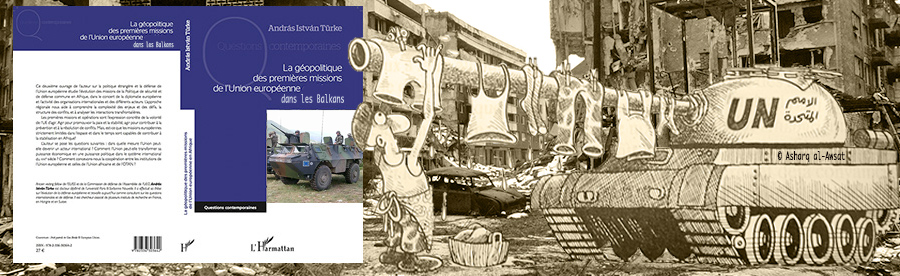
We are looking for sponsors for the English translation of these books, please contact turkeandras(at)gmail(dot)com