
You are here
Feed aggregator
L’UE fulmine alors que la Turquie empêche Chypre de participer à une réunion de l’ONU sur le climat
La Commission européenne a appelé la Turquie à revenir sur sa décision « inacceptable » de ne pas inviter la République de Chypre à une réunion préparatoire en amont d’une conférence des Nations unies sur le climat. La Conférence des Nations unies sur les changements climatiques de 2026 (COP31) se tiendra en novembre à Antalya, […]
The post L’UE fulmine alors que la Turquie empêche Chypre de participer à une réunion de l’ONU sur le climat appeared first on Euractiv FR.
Categories: Swiss News, Union européenne
The Grocery Bill Is Calm – The AgriFood System Is Not
If you are reading commodity price movements as evidence that the closure of the Strait of Hormuz has been absorbed without consequence, you are reading the right data for the wrong time horizon. Credit: Mauricio Ramos/IPS
By Máximo Torero
ROME, Apr 17 2026 (IPS)
The headlines are wrong about food prices — but right to be afraid, very afraid. Walk into a supermarket in Chicago, Berlin, or Mumbai today, and you will not find the shelves stripped bare or the prices dramatically higher than last month. Despite weeks of alarming headlines about commodity markets, food inflation in most major economies has risen only marginally — a tenth or two-tenths of a percentage point between February and March of this year. In the United States, food inflation moved from roughly 2.9 percent to 3.1 percent. In Germany, from 0.8 to 0.9. In India, from 7.8 to 8.0.
This is not a crisis at the checkout counter. Not yet.
But here is what the headlines are getting wrong, and what they are getting terrifyingly right at the same time: the stability you see today is real, and it is also beside the point. What is coming — if the world does not act quickly and the cease fire does not continue— is a food price shock of a different order, arriving not in March but in the harvests of late 2026 and the markets of 2027.
To understand why, you first have to understand what commodity price indexes actually measure, and what they do not. The FAO Food Price Index — which did rise slightly in March, driven largely by vegetable oils and sugar amid higher crude oil costs — tracks the international price of raw agricultural commodities: wheat, maize, rice, oilseeds, dairy.
It does not track what you pay for a baguette or a box of pasta. By the time wheat becomes bread, the grain itself represents only 10 to 15 percent of the final retail price. The rest is energy, labor, processing, packaging, logistics, and retail margins.
This cost structure is precisely why grocery bills do not lurch upward the moment commodity markets move. It is also why the current calm is not a reliable indicator of future stability specially because of the significant share of energy costs.
Short-term stability is not medium or long-term security. The time between a fertilizer shock and a harvest failure is measured in months. The time between a harvest failure and a food price surge is measured in months more. We are already inside that window
The markets for major cereals are, for now, sending reassuring signals. Wheat and maize prices have held steady. Rice prices actually declined. Global cereal stocks remain high, and the market is correctly reflecting sufficient near-term availability. If you are reading commodity price movements as evidence that the closure of the Strait of Hormuz has been absorbed without consequence, you are reading the right data for the wrong time horizon.
The Strait carries roughly 35% of crude oil exports — but its disruption reaches agrifood systems through a less obvious channel, logistics and energy costs for food processing. In addition, the Strait carries 20% of natural gas which can’t be replaced by any other source, and which is essential for nitrogen fertilizer ( specifically urea), 20-30% of fertilizers export depending on the specific type and about 50% of Sulfur exports a key input to produce phosphate fertilizer. All this is still not showing up in this month’s price indexes.
According to FAO analysis, the Strait of Hormuz closure has choked off 30 to 35 percent of global urea trade. Urea prices have already jumped between 40 and 60 percent. The feedstock that makes nitrogen fertilizer possible — natural gas — has risen 70 to 90 percent in price. Brent crude is up 60 percent just before the cease of fire.
These are not abstract figures. They are the inputs that farmers in the United States, Europe, South Asia, and across the Northern Hemisphere are confronting right now, as planting season either begins or approaches.
The decision they face is not a comfortable one: pay double for fertilizer when commodity prices are already low, and hope prices recover, or cut application rates and accept lower yields. Some will shift toward nitrogen-fixing crops like soybeans. Others will pivot toward crops destined for biofuel production, reducing the food supply further still.
The consequences of those decisions will not appear on store shelves until the harvest comes in, or the markets decides to incorporate them in future prices. When they do, the combination of constrained yields, elevated energy costs running through every link of the supply chain, and ongoing trade disruptions will drive commodity prices higher, and food prices even higher because of the additional energy cost increases — not by a tenth of a point per month, but meaningfully, in ways that will be felt most acutely by the households that can least afford it.
Short-term stability is not medium or long-term security. The time between a fertilizer shock and a harvest failure is measured in months. The time between a harvest failure and a food price surge is measured in months more. We are already inside that window.
The world’s response cannot wait for the price indexes to confirm what the agronomic and economic data already make clear.
Governments, development institutions, and the private sector must act now on three fronts: ensuring fertilizer access for smallholder farmers and input and food import-dependent nations before their planting decisions become irreversible; protecting and diversifying trade routes so that disruption in one chokepoint does not become a global supply crisis; avoid export restrictions of fertilizers and energy products and pursuing with urgency the diplomatic solutions that remain, for now, within reach.
The supermarket and retail store shelves are stocked. The silos are full. And the window to keep them that way is closing.
Keeping the Strait of Hormuz open is therefore not just about preventing food inflation — it is about averting a broader surge in overall inflation that would directly undermine economic growth, while also shielding every other sector dependent on the energy and input prices that flow through this strategic chokepoint.
Excerpt:
Máximo Torero Cullen is Chief Economist of the Food and Agriculture Organization of the United Nations
Categories: Africa, Határon túli magyar portálok összesített hírei
Romuald Wadagni prête serment le 24 mai prochain
Porté en triomphe au terme du scrutin présidentiel du 12 avril 2026, Romuald Wadagni sera investi dans ses fonctions de Président de la République, dimanche 24 mai 2026, jour de la fête de Pentecôte.
Romuald Wadagni va prêter serment le dimanche 24 mai 2026. Elu président de la République au terme du scrutin du 12 avril dernier, il sera officiellement investi dans ses fonctions conformément aux dispositions de la loi N° 2025-20 du 17 décembre 2025 modifiant et complétant la loi n° 90-32 du 11 décembre 1990 portant Constitution de la République du Bénin, telle que révisée par la loi n° 2019-40 du 07 novembre 2019 qui, en son article 153-3 alinéa 4 dit ce qui suit : « Dans tous les cas, le Président de la République élu entre en fonction et prête serment le quatrième dimanche du mois de mai ».
Le dimanche 24 mai 2026 retenu pour ce grand évènement, coïncide avec la fête de Pentecôte qui célèbre la venue de l'Esprit Saint, et marque la fin du temps pascal.
Devant Dieu, les mânes des ancêtres, Romuald Wadagni va jurer « de respecter la Constitution, de défendre les droits humains et de promouvoir le bien commun ».
F. A. A.
Categories: Afrique, European Union
Pourquoi la lumière de votre téléphone portable ne nuit pas à votre sommeil
Il y a plus de 10 ans, nous pensons que nous avons un tel préjudice ou notre son. Mais la lumière émise par le téléphone portable est loin d’être une véritable raison qui nous amène à mal dormir.
Categories: Afrique, Swiss News
Pourquoi la lumière de votre téléphone portable ne nuit pas à votre sommeil
Il y a plus de 10 ans, nous pensons que nous avons un tel préjudice ou notre son. Mais la lumière émise par le téléphone portable est loin d’être une véritable raison qui nous amène à mal dormir.
Categories: Afrique
Alger accueille le patron de la police allemande : le partenariat sécuritaire passe à un autre niveau
Le directeur général de la Sûreté nationale (DGSN), Ali Badaoui, a reçu jeudi à Alger son homologue allemand, Dieter Romann, afin de renforcer la coopération […]
L’article Alger accueille le patron de la police allemande : le partenariat sécuritaire passe à un autre niveau est apparu en premier sur .
Categories: Afrique
3 adolescents impliqués dans une tentative de vol dans une vidéo virale : que s’est-il vraiment passé ?
Une vidéo largement relayée sur les réseaux sociaux, montrant trois adolescents à l’arrière d’un véhicule en mouvement, a suscité une vive inquiétude en évoquant une […]
L’article 3 adolescents impliqués dans une tentative de vol dans une vidéo virale : que s’est-il vraiment passé ? est apparu en premier sur .
Categories: Afrique
Debate: Twilight of Trumpism?
Trump faced accusations of fickleness and a lack of tact right at the start of his second term in office. Now the US president is making headlines with his alarming rhetoric and AI-generated images. In its discussion of his foreign policy – from the Iran war to Nato, to the elections in Hungary and even the feud with Pope Leo XIV – the media sees indications that Trumpism is in decline.
Categories: Afrique, European Union
US president risking midterm election defeat | Newsweek Polska - Poland
Categories: Afrique, European Union
Debate: Hungary: challenges of system change
After their landslide victory in Sunday's parliamentary election, Hungary's future Prime Minister Péter Magyar and his Tisza Party aim to overhaul the system put in place by Viktor Orbán. Having won a two-thirds majority in parliament, they hope to restore the separation of powers, the rule of law and press freedom in Hungary. Magyar has also called on the country's president, Tamás Sulyok, to step down voluntarily.
Categories: Afrique, European Union
Debate: EU unveils online age verification app
The European Commission wants to introduce a new age verification app to enhance child protection online. Commission President Ursula von der Leyen announced in Brussels that the app is ready for launch and will soon be available to the public. Is this the breakthrough in the fight against smartphone addiction, cyberbullying and the harmful influence of social media on minors?
Categories: Afrique, European Union
Parents finally have a weapon against Big Tech | De Standaard - Belgium
Categories: Afrique, European Union
Addictive design is the problem | Frankfurter Rundschau - Germany
Categories: Afrique, European Union
Debate: Turkey shaken by school shootings
Turkey has seen two school shootings in as many days. At a school in Kahramanmaraş on Wednesday, a 14-year-old boy shot eight pupils and a teacher before he was shot dead at the scene. A day earlier, a former pupil at a school in Siverek in Sanliurfa Province shot and wounded 16 people, including ten pupils, before killing himself. Commentators search for reasons to explain the attacks.
Categories: Afrique, European Union
Pages
the old site is here


© 2012-2015 Europa Varietas Foundation © 2015-2020 Europa Varietas Association
www.europavarietas.org | info(@)europavarietas(dot)org | Switzerland
This is a GDPR ready site


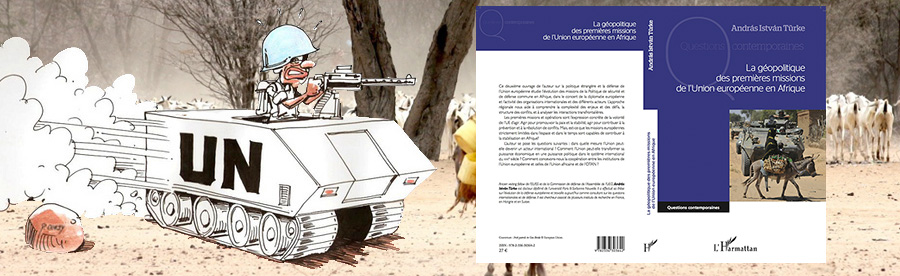
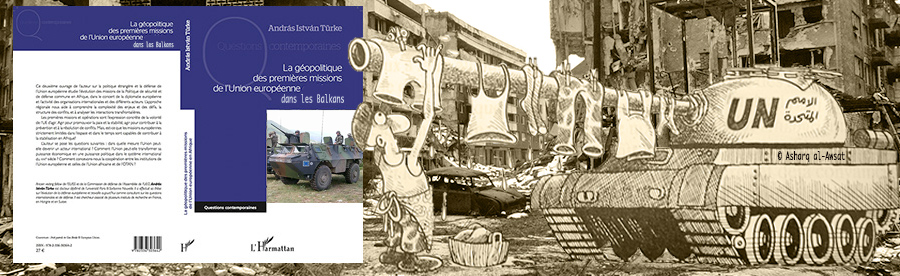
We are looking for sponsors for the English translation of these books, please contact turkeandras(at)gmail(dot)com