
You are here
Feed aggregator
A resentful generation | Karar - Turkey
Categories: Afrique, European Union
Debate: Bombshell in the French publishing sector
More than 100 authors have announced they will leave France's leading publisher Grasset in protest at the dismissal of its long-time CEO, Olivier Nora. Nora is to be replaced by Jean-Christophe Thiery, a close associate of ultra-conservative billionaire, media mogul and Grasset-owner Vincent Bolloré, who, the authors fear, will exert political interference. The press also voices consternation.
Categories: Afrique, European Union
We are not trophies | Le Monde - France
Categories: Afrique, European Union
The icy winds of reactionary populism | Le Temps - Switzerland
Categories: European Union, Swiss News
DRAFT REPORT on the proposal for a regulation of the European Parliament and of the Council establishing Global Europe - PE784.222v01-00
DRAFT REPORT on the proposal for a regulation of the European Parliament and of the Council establishing Global Europe
Committee on Foreign Affairs
Committee on Development
Robert Biedroń, Michael Gahler
Source : © European Union, 2026 - EP
Committee on Foreign Affairs
Committee on Development
Robert Biedroń, Michael Gahler
Source : © European Union, 2026 - EP
Categories: Europäische Union, European Union
L’Algérie met en vente le prestigieux hôtel « El Palace » de Barcelone
Un actif immobilier d’exception détenu par l’État algérien pourrait bientôt changer de mains. Selon des informations rapportées le 16 avril par le média espagnol El […]
L’article L’Algérie met en vente le prestigieux hôtel « El Palace » de Barcelone est apparu en premier sur .
Categories: Afrique
Les députés européens veulent accélérer la mobilité militaire de l’UE malgré les désaccords avec le Conseil
Les députés européens souhaitent que la plateforme dédiée aux autorisations de transit soit opérationnelle d'ici 2028, et non 2030
The post Les députés européens veulent accélérer la mobilité militaire de l’UE malgré les désaccords avec le Conseil appeared first on Euractiv FR.
Categories: Swiss News, Union européenne
Global Shocks Push Geoeconomics to the Center Stage at Foreign Policy Forum
Frank McCourt, founder of Project Liberty, speaking with Foreign Policy CEO Andrew Sollinger at the Geoeconomics Forum. Credit: IPS
By Umar Manzoor Shah
SRINAGAR, India, Apr 17 2026 (IPS)
As war in the Middle East ripples through global markets, policymakers, economists, and industry leaders gathered in Washington this week to agree that economics is no longer separate from geopolitics. It is now its core instrument.
At the Geoeconomics Forum hosted by Foreign Policy alongside the Spring Meetings of the International Monetary Fund and World Bank, speakers repeatedly pointed to a world shaped by shocks, where supply chains, energy flows, and technology have become tools of power.
“Geoeconomics is no longer a backdrop to global politics. It is the key and critical element,” said Foreign Policy CEO Andrew Sollinger in his opening remarks.
The urgency of that shift is tied closely to the ongoing conflict in the Gulf, which has disrupted energy markets and exposed vulnerabilities in global trade systems. The war has made the world understand how quickly regional crises can cascade into worldwide economic instability, affecting everything from fuel prices to industrial production.
Participants at the forum described a transformed global order where governments increasingly deploy economic tools once considered neutral or technical.
Trade policy, capital flows, and supply chains now serve strategic goals. Critical minerals, essential for semiconductors and artificial intelligence systems, have become geopolitical leverage points. Energy routes such as the Strait of Hormuz have turned into potential choke points with global consequences instead of just transit corridors.
“Geopolitics and economics have always been linked. We are going back to a school of thought that sees them as inextricable,” Jacob Helberg, U.S. Under Secretary for Economic Affairs, said in his address.
Helberg pointed to growing competition over rare earth minerals, where China dominates processing and has begun using export controls as a strategic tool. At the same time, logistics corridors and manufacturing hubs have emerged as additional pressure points in the global system.
“The stack is totally interlinked,” he said, referring to the chain from raw materials to finished technology. “There are choke points at every layer.”
The forum repeatedly returned to a central theme: fragmentation.
Countries are adapting to a “shock-prone” world marked by conflict, pandemics, and financial instability. This has led to a shift away from global integration toward more regional and strategic economic blocs.
Middle powers, in particular, face difficult choices. As competition intensifies between the United States and China, many nations are weighing how to align their economic and technological futures.
Dr Pedro Abramovay, Vice President, Programs, Open Society Foundations, argued that the moment offers both risk and opportunity for these countries.
“We need to make sure that middle powers act as middle powers and not just middlemen,” he said, stressing that democracy can shape their role in a changing order.
Abramovay said the current moment has exposed long-standing imbalances in the global system.
“It unveils the reality that existed before,” he said, referring to earlier global arrangements that often did not serve the interests of the Global South.
He noted that domestic political pressure is now reshaping how countries engage globally. Leaders can no longer align externally without responding to internal constituencies.
“That internal pressure can empower those middle powers to assert their sovereignty and negotiate effectively,” Abramovay said.
The forum highlighted growing calls for a reworked international order grounded in sovereignty and public interest rather than narrow economic gain.
“We need to have clear clarity of agenda. We need to have commitment of those leaders expressing that they are there, not representing big corporations or, again, interests and organisations that speak for themselves, but exactly speaking in the name and representing the majority of the world,” Abramovay added.
Frank McCourt, founder of Project Liberty, warned against framing the future as a binary choice between U.S. private-sector dominance and Chinese state-led models.
“This is a false dichotomy,” he said, arguing for a third path that aligns technology with democratic values.
He highlighted growing unease among countries that feel caught between competing systems, noting that many are exploring alternative frameworks for digital governance and economic cooperation.
Human Impact Behind the Strategy
While much of the discussion focused on high-level strategy, speakers acknowledged the human consequences of geoeconomic shifts.
Energy shocks translate into higher costs for households. Supply chain disruptions affect jobs and access to goods. Decisions made in boardrooms and ministries ripple outward to communities worldwide.
“The best-laid plans can be interrupted by unforeseen circumstances. You have to pivot, adapt, and build better,” Sollinger said.
That message echoed throughout the event.
IPS UN Bureau Report
Follow @IPSNewsUNBureau
!function(d,s,id){var js,fjs=d.getElementsByTagName(s)[0],p=/^http:/.test(d.location)?'http':'https';if(!d.getElementById(id)){js=d.createElement(s);js.id=id;js.src=p+'://platform.twitter.com/widgets.js';fjs.parentNode.insertBefore(js,fjs);}}(document, 'script', 'twitter-wjs');
Categories: Africa, Határon túli magyar portálok összesített hírei
Voici la Décision de la Cour sur le scrutin du 12 avril 2026
La Cour constitutionnelle du Bénin a proclamé les résultats de l'élection présidentielle du 12 avril 2026. Ces résultats donnent une large victoire au duo Wadagni-Talata de la majorité (94,27%) contre 5,73% pour le duo Hounkpè-Hounwanou de l'opposition. La Décision EP 26-001 du 16 avril 2026, portant proclamation des résultats provisoires de l'élection présidentielle du 12 avril 2026.
L'intégralité de la Décision de la Cour constitutionnelle
Categories: Afrique, European Union
Der geschlagene Orbán spricht von seinem „Schmerz und seiner Leere“
„Eine politische Ära ist zu Ende gegangen, auch emotional. Wir können unsere Politik nicht so fortsetzen, wie wir es bisher getan haben. Eine vollständige Erneuerung ist notwendig, und das gilt nicht nur für Fidesz, sondern für die gesamte nationale Seite“, sagte Orbán.
Categories: Európai Unió : hírek magyarul, Europäische Union
Serres royales de Bruxelles : grilles ouvertes mais un débat timide sur l’accès
Selon le parti écologiste belge Ecolo, le manque d'intérêt pour un accès élargi s'explique par le fait que le grand public n'est pas suffisamment sensibilisé aux avantages d'une plus grande ouverture du site
The post Serres royales de Bruxelles : grilles ouvertes mais un débat timide sur l’accès appeared first on Euractiv FR.
Categories: Swiss News, Union européenne
Orbán se confie sur sa « douleur » et son « sentiment de vide »
Le dirigeant hongrois, désormais écarté, est prêt à redevenir « capitaine de l'équipe » et à « mener les garçons jusqu'au centre du terrain » – si son parti, le Fidesz, l'accepte
The post Orbán se confie sur sa « douleur » et son « sentiment de vide » appeared first on Euractiv FR.
Categories: Swiss News, Union européenne
ÄNDERUNGSANTRÄGE 1 - 305 - Entwurf eines Berichts Bericht 2025 der Kommission über Georgien - PE786.711v01-00
ÄNDERUNGSANTRÄGE 1 - 305 - Entwurf eines Berichts Bericht 2025 der Kommission über Georgien
Ausschuss für auswärtige Angelegenheiten
Rasa Juknevičienė
Quelle : © Europäische Union, 2026 - EP
Ausschuss für auswärtige Angelegenheiten
Rasa Juknevičienė
Quelle : © Europäische Union, 2026 - EP
Categories: Europäische Union, European Union
Quatre scénarios possibles dans le cas de la guerre entre les États-Unis et l'Iran
Le cessez-le-feu tiendra-t-il et les efforts diplomatiques se poursuivront-ils, ou l'Iran et les États-Unis se dirigent-ils vers une escalade contrôlée, voire vers une guerre plus vaste ?
Categories: Afrique, Swiss News
Quatre scénarios possibles dans le cas de la guerre entre les États-Unis et l'Iran
Le cessez-le-feu tiendra-t-il et les efforts diplomatiques se poursuivront-ils, ou l'Iran et les États-Unis se dirigent-ils vers une escalade contrôlée, voire vers une guerre plus vaste ?
Categories: Afrique
Les « Patriotes » cherchent à redorer leur blason après plusieurs revers
« Sans crainte. En Europe, maîtres dans notre propre maison » : tel est le slogan
The post Les « Patriotes » cherchent à redorer leur blason après plusieurs revers appeared first on Euractiv FR.
Categories: Swiss News, Union européenne
Les Bâtisseurs se réjouissent du triomphe du duo Wadagni-Talata
A travers un communiqué publié jeudi 16 avril 2026, le mouvement politique, Les Bâtisseurs s'est dit satisfait du déroulement du scrutin présidentiel du 12 avril 2026, qui consacre la victoire du duo Wadagni-Talata pour lequel il a travaillé.
Joie et satisfaction chez Les Bâtisseurs, l'un des mouvements politiques ayant soutenu la candidature du duo Wadagni-Talata de la majorité. Après l'annonce des résultats de la Cour constitutionnelle, ce jeudi 16 avril 2026, le mouvement politique a publié un communiqué de presse. A travers ce message, Les Bâtisseurs expriment leurs remerciements et leurs félicitations au peuple béninois qui dans sa majorité, est sorti massivement pour donner « une victoire nette au duo Wadagni-Talata ».
Le mouvement politique a également félicité toute la classe politique béninoise, les personnalités et tous les autres acteurs qui ont œuvré pour ce « succès éclatant » de son candidat. Les Bâtisseurs appellent par ailleurs le Président élu Romuald Wadagni et sa colistière Mariam Chabi Talata, à travailler pour le renforcement du concensus national, la paix sociale et la démocratie, gage selon lui, de développement.
La Cour constitutionnelle, annonçant les résultats provisoires, ce jeudi 16 avril, a accordé une large victoire au duo Wadagni-Talata, arrivé largement en tête avec 94,27% des voix, contre 5,73% pour le duo Hounkpè-Hounwanou de l'opposition.
F. A. A.
Categories: Afrique, European Union
Pages
the old site is here


© 2012-2015 Europa Varietas Foundation © 2015-2020 Europa Varietas Association
www.europavarietas.org | info(@)europavarietas(dot)org | Switzerland
This is a GDPR ready site
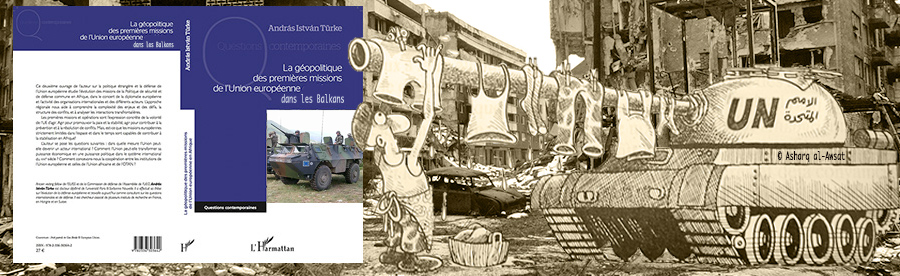
We are looking for sponsors for the English translation of these books, please contact turkeandras(at)gmail(dot)com