
You are here
Feed aggregator
Debate: ECB raises key interest rates - will prices come down?
The European Central Bank (ECB) has raised its key interest rate from 2.25 to 2.5 percent. Officials said the decision was prompted by inflationary pressure caused by the conflict in the Middle East. Prices are being driven up primarily by the oil price shock resulting from the war in Iran. Commentators see little hope of the situation improving with this measure.
Categories: European Union
This could backfire | IQ - Lithuania
Categories: European Union
Debate: Summit in Paris: where is Europe in the space race?
Around 2,000 representatives from politics, the military, business and research were invited to Paris to attend the International Space Summit on Wednesday and Thursday. The purpose was to explore ways in which Europe can catch up with the US and China, who are currently leading the space race. "Our European space programme is fragile and we must step up our efforts," French President Emmanuel Macron stressed at the opening event.
Les résultats du tirage de 11 H
LES RÉSULTATS LOTO FORTUNE SONT LÀ !
TIRAGE N°146/26
Vendredi 11 septembre 2026 (11H)
29 • 30 • 35 • 67 • 03

Félicitations aux heureux gagnants !
Pas encore gagné ? Gardez le sourire !
Rendez-vous au prochain tirage de 14h pour une nouvelle chance.
Jouez dans nos centres de jeux ou en ligne : Tapez 590# ou lnbloto.bj
Jouez avec modération et responsabilité. Le jeu doit rester un plaisir.
Categories: Afrique, Határon túli magyar portálok összesített hírei
Guinée : le déraillement de RUSAL ravive la peur d'une pollution chimique
Le déraillement d'un train minier de RUSAL, le 22 août près de Kagbélén, continue d'inquiéter en Guinée. L'accident, qui a fait quatre blessés légers, soulève surtout des questions sur les risques environnementaux liés aux produits transportés. Deux locomotives et quatre wagons ont quitté les rails sur l'axe reliant la raffinerie de Friguia au port de Conakry. Selon les premières constatations du ministère guinéen de l'Environnement, le convoi transportait notamment de l'alumine, de la soude caustique et de l'acide sulfurique. Deux produits chimiques utilisés dans le traitement de la bauxite et potentiellement dangereux en cas de fuite.
Des risques difficiles à mesurer
À Kagbélén, la proximité des habitations, des terres agricoles et des points d'eau nourrit les inquiétudes. La soude caustique peut provoquer de graves brûlures et contaminer les sols. L'acide sulfurique représente également un risque pour les eaux souterraines en cas d'infiltration.Les autorités indiquent qu'aucun déversement massif n'a été observé. Mais l'absence de pollution visible ne suffit pas à écarter tout danger. Des analyses des sols et des nappes phréatiques restent nécessaires pour mesurer l'impact réel de l'accident.
La sécurité du corridor en question
Le train appartient au géant russe de l'aluminium RUSAL, opérateur de la raffinerie de Friguia. Son corridor ferroviaire traverse plusieurs zones habitées avant de rejoindre Conakry.L'accident relance ainsi la question de la sécurité du transport de matières dangereuses dans un pays où l'activité minière occupe une place centrale. L'état des rails, leur entretien et les conditions de circulation des convois deviennent autant de sujets de préoccupation.La Guinée occupe une place stratégique dans l'approvisionnement mondial en bauxite et dans les activités de RUSAL. L'arrêt temporaire des exportations après l'accident montre aussi la vulnérabilité de cette chaîne logistique.À Kagbélén, les habitants et les organisations locales réclament désormais davantage de transparence : analyses des sols, surveillance des eaux et informations précises sur les matières transportées.
La Guinée doit exiger des garanties
Au-delà de ce déraillement, c'est désormais la responsabilité de RUSAL qui est posée. Car l'accident de Kagbélén n'est pas un épisode isolé : en mars dernier déjà, un train de RUSAL-Friguia transportant de la soude caustique avait déraillé à Sèguèma. Et depuis plusieurs années, les activités de la raffinerie de Fria font l'objet d'alertes et de contrôles pour leurs impacts environnementaux. La Guinée doit donc exiger de l'opérateur russe davantage que des assurances : des analyses indépendantes, la sécurisation des convois, la dépollution des zones affectées et des garanties concrètes pour les populations riveraines. Dans un partenariat minier aussi stratégique, la question n'est plus seulement de savoir ce que la Russie vient chercher dans le sous-sol guinéen, mais aussi quelles responsabilités elle est prête à assumer envers ceux qui vivent autour de ses installations.
Categories: Afrique, Határon túli magyar portálok összesített hírei
Plus de 20 enfants tués dans un incendie d'école en République démocratique du Congo
Selon les autorités, une bousculade s'est produite alors que des personnes tentaient de fuir l'incendie qui a ravagé deux écoles à Bukavu, une ville de l'est du pays contrôlée par les rebelles.
Categories: Afrique
ÉVFORDULÓS AJÁNLÓ - SASOK MANHATTAN FELETT
A Massachussetts Légi Nemzeti Gárda 102. vadászezredének F-15-ösei voltak az első katonai repülőgépek, amelyek a World Trade Centert 2001. szeptember 11-én ért támadás után New York fölé érkeztek. Az USA kontinentális területének légterét hagyományosan a Légi Nemzeti Gárda védte, egységei közül az Otis 102. vadászezrede repülte elsőként az F-15 Eagle típust.
Az esemény 25. évfordulója alkalmából egy korábbi írásomat ajánlom az olvasó figyelmébe.
***
Fotó: USAF / 102nd Fighter Wing
AMENDMENTS 103 - 404 - Draft report Shaping the EU's external action to address the human rights challenges posed by artificial intelligence - PE792.048v01-00
AMENDMENTS 103 - 404 - Draft report Shaping the EU's external action to address the human rights challenges posed by artificial intelligence
Committee on Foreign Affairs
Nacho Sánchez Amor
Source : © European Union, 2026 - EP
Committee on Foreign Affairs
Nacho Sánchez Amor
Source : © European Union, 2026 - EP
Categories: Europäische Union, Swiss News
La Police démantèle un réseau de vol et de recel de motos
Le commissariat central d'Abomey-Calavi ont procédé au démantèlement d'un réseau de vol et de recel de motocyclettes. La perquisition effectuée au domicile du présumé receleur a permis de découvrir et de saisir 25 motocyclettes d'origine douteuse.
Coup de filet de la Police républicaine à Sékou, localité de la commune d'Allada, dans le département de l'Atlantique. Un réseau de vol et de recel de motocyclettes a été démantelé.
Selon les faits rapportés par la Police, tout est parti du vol d'une motocyclette de marque Haojue d'une dame, volée le 12 janvier 2026. La victime était en panne sur l'axe Houédo-Calavi. Un individu se présente à elle comme un mécanicien, et lui propose ses services.
Après avoir réparé la moto, ce dernier lui propose de faire un "essai", et part laissant la dame à son triste sort. Une plainte sera déposée au commissariat de Police. Huit mois plus tard, le 26 août 2026, le mari de la victime reconnait la moto de son épouse en circulation, et saisit « immédiatement » le commissariat de Police. Une équipe de policiers se dépêche sur les lieux et interpelle le suspect.
A l'interrogatoire, le présumé voleur a déclaré avoir acheté l'engin à Sékou, auprès d'un individu reconnu comme revendeur de motos.
L'équipe d'intervention se rend « promptement » sur les lieux et découvre « un véritable magasin de recel » où plusieurs motos, la plupart sans papiers, y étaient entreposées. « La perquisition du domicile de ce revendeur a permis de saisir plus de 25 motos de différentes marques. Certaines sont complètes, d'autres ont déjà été démontées pour la vente en casse », informe la Police.
Elle souligne par la suite que le receleur achetait les motos volées auprès des malfrats pour les revendre. Interrogé sur l'origine des engins, il a affirmé qu'il " faisait confiance quand un vendeur se présente avec la carte grise". Mis aux arrêts, il a été présenté avec son acolyte au procureur de la République.
La Police républicaine, tout en saluant la collaboration de la population a lancé un appel exhortant les victimes présumées de vol de motocyclettes à se présenter au commissariat de d'Abomey-Calavi munies de leurs pièces d'identités à jour pour identifier éventuellement leurs engins.
F. A. A.
Categories: Afrique, Határon túli magyar portálok összesített hírei
No time for lamentation: a new agenda for cooperation (Chair's summary of the Hamburg Sustainability Conference 2026)
The Hamburg Sustainability Conference (HSC) 2026 convened around 1,600 participants from 112 countries at a moment of profound disruption and redistribution of power. The HSC confirmed sustainability as the organizing framework linking peace and stability, economic
resilience and competitiveness, planetary boundaries and international cooperation. The rules-based international order is under pressure, fiscal space is shrinking and conflicts are multiplying, while climate change, biodiversity loss and resource depletion are compounding
these pressures on economies and societies already stretched thin. Yet the world has never possessed greater technological capabilities, financial wealth and scientific knowledge. What matters now is how we use these resources to deliver shared prosperity and resilience.
The discussions at HSC 2026 can be summarized along three narrative arcs. The first asks why cooperation remains essential in a more multipolar world. Legitimacy depends on changing the terms of North–South relations, broadening representation and building a cooperative multipolar order in which a wider group of actors can shape and defend common rules. The launch of the South–North Commission on Development offers a structured process for rethinking international cooperation toward fairer partnerships and a sustainability Agenda beyond 2030. The second narrative arc examines what needs to change. Sustainability transformation pays
off economically, but only where investment can flow, risks are shared and governance is predictable. Nature and human capital are systematically undervalued. The bottleneck is the institutional and financing structures needed to unlock them at scale. The third narrative arc addresses how cooperation can deliver. It shows that partnerships accelerate sustainable development when they move from one-off initiatives to systems that mobilize finance, create markets and build local capabilities. Scaling Capital for Sustainable Development (SCALED), Innovative Capital Mobilization in Africa (ICAMA), critical-mineral and hydrogen partnerships, and urban examples from Mombasa and eThekwini show how tangible forms of cooperation can turn commitments into sustainable investment, deeper value chains and locally owned action. This shift is especially visible in Africa, where partnerships are increasingly framed around opportunity, value creation and agency. The road ahead runs through the Triple COP+ year, the G20 under UK chairmanship, and the SDG Summit in September 2027. HSC 2026 demonstrated that navigating the new - disruptive - normal is possible. The task now is to prove it at scale. […]
Categories: Afrique, Diplomacy & Defense Think Tank News
No time for lamentation: a new agenda for cooperation (Chair's summary of the Hamburg Sustainability Conference 2026)
The Hamburg Sustainability Conference (HSC) 2026 convened around 1,600 participants from 112 countries at a moment of profound disruption and redistribution of power. The HSC confirmed sustainability as the organizing framework linking peace and stability, economic
resilience and competitiveness, planetary boundaries and international cooperation. The rules-based international order is under pressure, fiscal space is shrinking and conflicts are multiplying, while climate change, biodiversity loss and resource depletion are compounding
these pressures on economies and societies already stretched thin. Yet the world has never possessed greater technological capabilities, financial wealth and scientific knowledge. What matters now is how we use these resources to deliver shared prosperity and resilience.
The discussions at HSC 2026 can be summarized along three narrative arcs. The first asks why cooperation remains essential in a more multipolar world. Legitimacy depends on changing the terms of North–South relations, broadening representation and building a cooperative multipolar order in which a wider group of actors can shape and defend common rules. The launch of the South–North Commission on Development offers a structured process for rethinking international cooperation toward fairer partnerships and a sustainability Agenda beyond 2030. The second narrative arc examines what needs to change. Sustainability transformation pays
off economically, but only where investment can flow, risks are shared and governance is predictable. Nature and human capital are systematically undervalued. The bottleneck is the institutional and financing structures needed to unlock them at scale. The third narrative arc addresses how cooperation can deliver. It shows that partnerships accelerate sustainable development when they move from one-off initiatives to systems that mobilize finance, create markets and build local capabilities. Scaling Capital for Sustainable Development (SCALED), Innovative Capital Mobilization in Africa (ICAMA), critical-mineral and hydrogen partnerships, and urban examples from Mombasa and eThekwini show how tangible forms of cooperation can turn commitments into sustainable investment, deeper value chains and locally owned action. This shift is especially visible in Africa, where partnerships are increasingly framed around opportunity, value creation and agency. The road ahead runs through the Triple COP+ year, the G20 under UK chairmanship, and the SDG Summit in September 2027. HSC 2026 demonstrated that navigating the new - disruptive - normal is possible. The task now is to prove it at scale. […]
Categories: Diplomacy & Defense Think Tank News, Union européenne
No time for lamentation: a new agenda for cooperation (Chair's summary of the Hamburg Sustainability Conference 2026)
The Hamburg Sustainability Conference (HSC) 2026 convened around 1,600 participants from 112 countries at a moment of profound disruption and redistribution of power. The HSC confirmed sustainability as the organizing framework linking peace and stability, economic
resilience and competitiveness, planetary boundaries and international cooperation. The rules-based international order is under pressure, fiscal space is shrinking and conflicts are multiplying, while climate change, biodiversity loss and resource depletion are compounding
these pressures on economies and societies already stretched thin. Yet the world has never possessed greater technological capabilities, financial wealth and scientific knowledge. What matters now is how we use these resources to deliver shared prosperity and resilience.
The discussions at HSC 2026 can be summarized along three narrative arcs. The first asks why cooperation remains essential in a more multipolar world. Legitimacy depends on changing the terms of North–South relations, broadening representation and building a cooperative multipolar order in which a wider group of actors can shape and defend common rules. The launch of the South–North Commission on Development offers a structured process for rethinking international cooperation toward fairer partnerships and a sustainability Agenda beyond 2030. The second narrative arc examines what needs to change. Sustainability transformation pays
off economically, but only where investment can flow, risks are shared and governance is predictable. Nature and human capital are systematically undervalued. The bottleneck is the institutional and financing structures needed to unlock them at scale. The third narrative arc addresses how cooperation can deliver. It shows that partnerships accelerate sustainable development when they move from one-off initiatives to systems that mobilize finance, create markets and build local capabilities. Scaling Capital for Sustainable Development (SCALED), Innovative Capital Mobilization in Africa (ICAMA), critical-mineral and hydrogen partnerships, and urban examples from Mombasa and eThekwini show how tangible forms of cooperation can turn commitments into sustainable investment, deeper value chains and locally owned action. This shift is especially visible in Africa, where partnerships are increasingly framed around opportunity, value creation and agency. The road ahead runs through the Triple COP+ year, the G20 under UK chairmanship, and the SDG Summit in September 2027. HSC 2026 demonstrated that navigating the new - disruptive - normal is possible. The task now is to prove it at scale. […]
Categories: Diplomacy & Defense Think Tank News, Swiss News
AMENDMENTS 1 - 102 - Draft report Shaping the EU's external action to address the human rights challenges posed by artificial intelligence - PE792.029v01-00
AMENDMENTS 1 - 102 - Draft report Shaping the EU's external action to address the human rights challenges posed by artificial intelligence
Committee on Foreign Affairs
Nacho Sánchez Amor
Source : © European Union, 2026 - EP
Committee on Foreign Affairs
Nacho Sánchez Amor
Source : © European Union, 2026 - EP
Categories: Europäische Union, Swiss News
OPINION on the general budget of the European Union for the financial year 2027 – all sections - PE790.817v02-00
OPINION on the general budget of the European Union for the financial year 2027 – all sections
Committee on Foreign Affairs
Matjaž Nemec
Source : © European Union, 2026 - EP
Committee on Foreign Affairs
Matjaž Nemec
Source : © European Union, 2026 - EP
Categories: Europäische Union, Swiss News
25 ans après le 11 septembre : l'agonie des proches des victimes des pires attentats de l'histoire des États-Unis.
Un quart de siècle plus tard, le procès contre le cerveau présumé des attentats n'a toujours pas commencé et les familles des victimes craignent que le temps ne vienne à manquer pour que justice soit faite.
Categories: Afrique, Union européenne
25 ans après le 11 septembre : l'agonie des proches des victimes des pires attentats de l'histoire des États-Unis.
Un quart de siècle plus tard, le procès contre le cerveau présumé des attentats n'a toujours pas commencé et les familles des victimes craignent que le temps ne vienne à manquer pour que justice soit faite.
Categories: Afrique
Pages
the old site is here


© 2012-2015 Europa Varietas Foundation © 2015-2020 Europa Varietas Association
www.europavarietas.org | info(@)europavarietas(dot)org | Switzerland
This is a GDPR ready site
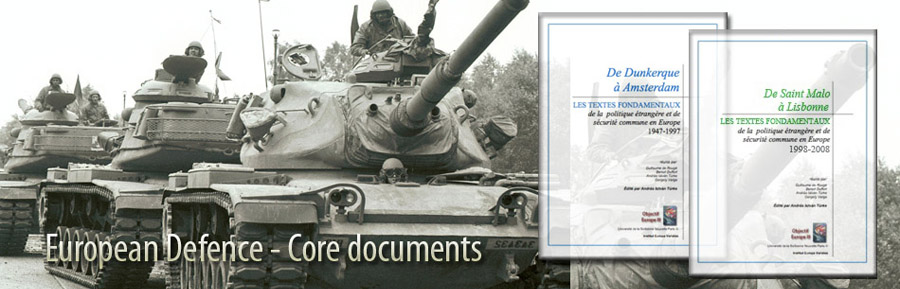
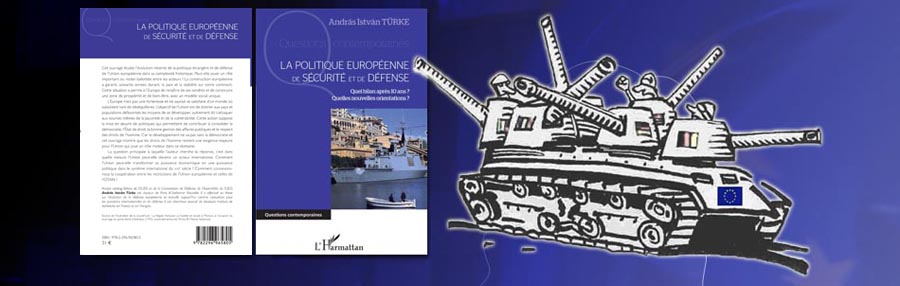
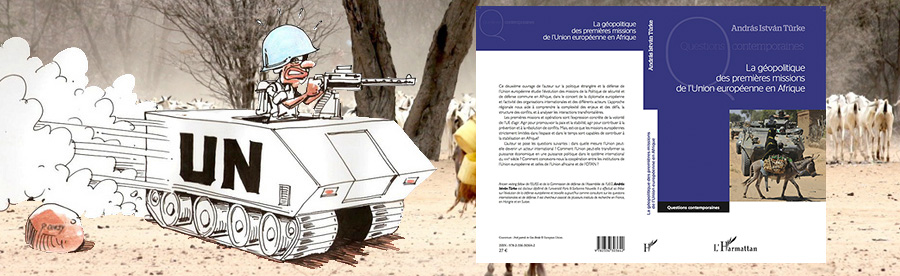
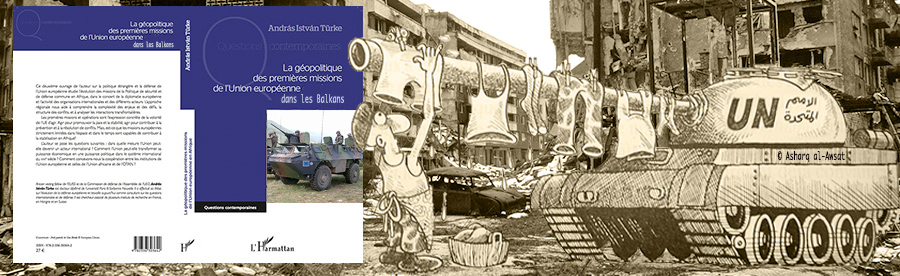
We are looking for sponsors for the English translation of these books, please contact turkeandras(at)gmail(dot)com