
You are here
Feed aggregator
Il a volé 250 millions du bureau de son patron : un employé lourdement condamné
Cinq années d’emprisonnement ferme : telle est la sanction retenue dimanche par la chambre pénale de la Cour d’Oran contre un homme désigné par les […]
L’article Il a volé 250 millions du bureau de son patron : un employé lourdement condamné est apparu en premier sur .
Categories: Afrique
Les Guépards du Bénin écrasent le Qatar (7-0)
Les Guépards scolaires U-18 du Bénin ont réussi leur entrée en lice à la 29ᵉ édition de la Coupe du monde scolaire de football. Le Bénin a dominé largement le Qatar sur le score sans appel de 7-0, ce lundi matin à Suzhou, en Chine.
Victoire écrasante des Guépards U-18 face au Qatar. Tôt ce lundi 19 octobre, ils ont livré leur première rencontre de la Coupe du monde scolaire de football. Face à la sélection qatarie, les jeunes représentants du Bénin ont frappé fort d'entrée. Dès les premières minutes, les Béninois ont imposé leur rythme, ne laissant que peu d'espace à leurs adversaires.
Le festival offensif a débuté dès la 4ᵉ minute grâce à Izoudine Boukary, auteur de l'ouverture du score. Lancés, les Guépards ont poursuivi leur domination avec Junior Fanou, qui s'est offert un doublé aux 11ᵉ et 17ᵉ minutes. Entre ces deux réalisations, John Ethan Hountinme a également trouvé le chemin des filets à deux reprises, aux 16ᵉ et 19ᵉ minutes.

Complètement dépassé par les offensives béninoises, le Qatar a concédé un sixième but à la 31ᵉ minute, œuvre de Silvanix Negui. À la pause, le sort de la rencontre semblait déjà scellé avec un avantage confortable de 6-0 pour le Bénin.
Au retour des vestiaires, les jeunes Guépards ont conservé leur détermination et poursuivi leurs efforts offensifs. Tahabou Ognandon a inscrit le septième but béninois à la 50ᵉ minute, mettant définitivement fin aux espoirs qataris.
Cette large victoire a été obtenue sous le regard du Directeur général de l'Office béninois du sport scolaire et universitaire, Victor Soumon Lawin, qui accompagne la délégation béninoise.
Avec cette démonstration offensive, le Bénin réussit une entrée majestueuse dans cette compétition mondiale scolaire.
Au-delà du score, cette performance constitue un signal fort envoyé aux autres équipes du groupe B.
Les Guépards U-18 devront confirmer cette belle dynamique lors de leurs prochaines sorties au cours desquelles ils seront opposés à la Chine et l'Inde.
F. A. A.
Categories: Afrique, Swiss News
Procès de la FAF : la date du verdict final pour Zetchi, Charaf-Eddine et Zefizef connue
Il aura fallu une ultime journée d’audience, longue de près de 12 heures, pour refermer le dossier le plus commenté du football algérien. Dimanche soir, […]
L’article Procès de la FAF : la date du verdict final pour Zetchi, Charaf-Eddine et Zefizef connue est apparu en premier sur .
Categories: Afrique, Balkans Occidentaux
Un buffle sauvage en divagation, les populations invitées à la vigilance
La Direction départementale des Eaux, Forêts et Chasse du département du Zou alerte les populations de la commune de Djidja sur la présence d'un buffle solitaire en divagation, notamment aux abords de la localité d'Agouna et dans les villages environnants.
Un buffle solitaire est en divagation à Agouna et environs. La directrice de l'administration forestière du département du Zou alerte les populations à travers un communiqué en date du 16 octobre 2026. Les habitants des localités sus indiquées sont appelés à faire preuve de vigilance et à respecter les consignes de sécurité afin de prévenir tout incident.
Un buffle sauvage en divagation selon Amandine Gnido Assogba Déléké, la directrice de l'administration forestière du département du Zou, peut constituer un danger pour l'homme lorsqu'il se sent menacé ou acculé. Pour limiter les risques, les populations sont invitées à éviter les déplacements solitaires dans les zones de brousse, les champs isolés et les pistes peu fréquentées. Il est également déconseillé de s'approcher de l'animal, de le photographier, de le traquer ou de tenter de le faire fuir.
Les parents sont, par ailleurs, appelés à maintenir les enfants à l'intérieur des concessions et à renforcer leur surveillance aux abords des habitations.
En cas de rencontre avec le buffle, les autorités recommandent de s'éloigner calmement, sans courir, afin de ne pas provoquer une réaction agressive de l'animal.
La Direction départementale des Eaux, Forêts et Chasse invite toute personne qui apercevrait le buffle à en informer immédiatement les autorités locales, la Police républicaine ou les services forestiers les plus proches.
F. A. A.
Categories: Afrique
Loto Fortune : les résultats du tirage 11 H
LES RÉSULTATS LOTO FORTUNE SONT LÀ !
TIRAGE N°167/26 Lundi 19 Octobre 2026 (11H)
20 • 21 • 70 • 64 • 80

Félicitations aux heureux gagnants !
Pas encore gagné ? Gardez le sourire !
Rendez-vous au prochain tirage de 14H pour une nouvelle chance.
Jouez dans les centres de jeux ou en ligne : Tapez 590# ou lnbloto.bj
Jouez avec modération et responsabilité. Le jeu doit rester un plaisir.
A TOI DE JOUER #a
#LaChanceAvecModération
Categories: Afrique
Naturalisation française : l’Algérie sur le podium des pays d’origine
Quels sont les chiffres clés de la naturalisation des Algériens en France ? Selon un rapport publié en octobre 2026 par Fondapol et l’OID, 323 […]
L’article Naturalisation française : l’Algérie sur le podium des pays d’origine est apparu en premier sur .
Categories: Afrique, Balkans Occidentaux
« La 1ʳᵉ du genre en Afrique » : Une méga-usine pharmaceutique de 6 000 m² s’implante dans cette wilaya
À l’occasion de la première édition du salon professionnel « Pharmanova Expo » dans la wilaya de Batna, les investissements et projets stratégiques du groupe […]
L’article « La 1ʳᵉ du genre en Afrique » : Une méga-usine pharmaceutique de 6 000 m² s’implante dans cette wilaya est apparu en premier sur .
Categories: Afrique, Balkans Occidentaux
Pourquoi l'Internet de Starlink joue un rôle clé dans la guerre des drones qui oppose l'Ukraine à la Russie
Starlink est considéré comme la « colonne vertébrale des communications militaires en Ukraine », fournissant un accès Internet haut débit indispensable aux forces armées dans tout le pays.
Categories: Afrique, Határon túli magyar portálok összesített hírei
Un camion se renverse, au moins 1 mort et 5 blessés à Zogbodomey
Un grave accident de la circulation s'est produit ce dimanche 18 octobre sur la route Inter Etat Cotonou-Niamey à hauteur de Hlagba-Massi, dans la commune de Zogbodomey. Un camion s'est renversé. Le bilan fait état de 1 mort et 5 blessés.
Grave accident de la circulation à Zogbodomey. Dans cette commune du département du Zou, un camion s'est renversé ce dimanche 18 octobre 2026 à Hlagba-Massi occasionnant la mort d'une personne et de cinq blessés.
Selon les témoignages recueillis sur place, le camion, après s'être renversé, a fortement perturbé la circulation. Face à la situation, la Police républicaine s'est déployée sur les lieux afin de sécuriser la zone et de faciliter les opérations d'urgence.
Plusieurs équipes ont été mobilisées pour dégager le véhicule accidenté et rétablir le trafic sur cet axe routier.
L'éclatement d'un pneu avant serait à l'origine de l'accident. Ce qui a provoqué la perte de contrôle du camion qui a terminé sa course contre le garde-corps d'un pont.
F. A. A.
Categories: Afrique
Afro-Brazilian Religious Communities Face Mounting Discrimination Amid the Climate Crisis
Iyá Patrícia d’Xangô (Mãe Patrícia) and her husband, Ogan Cézar d’Oxalá (Cézar Paulo Fogolari), cleaning their religious site three months after the mudslide in 2024.
By Carla Ruas
PORTO ALEGRE, Brazil, Oct 19 2026 (IPS)
In 2024, as floodwaters approached Lutalo Canti’s home in Porto Alegre, Brazil, he lifted some furniture off the floor and left in a hurry. Extreme rainfall in the country’s southern region had caused local rivers to overflow. The flooding would eventually reach more than 400 municipalities and impact over 2 million people.
When waters finally receded, Canti, 61, was shocked to see the damage to his house, which also served as a terreiro—a sacred space for the practice of Afro-Brazilian religions.
These beliefs, which date back to enslaved Africans and their descendants, have around 1.85 million followers in Brazil, per the latest national census. Terreiros are at the heart of these traditions, serving as spaces where religious leaders honor deities and spiritual entities.
Between water damage, sewage contamination, and mold, he estimates losses to the house around US$15,000 (R$80,000). About half the damage was to his home, and the rest to religious objects, including ceremonial clothing and sacred figures.
Lutalo Canti estimates flood losses of around US$15,000 to his home and terreiro, which is pictured here before the flood. Credit: Lutalo Canti
Two years later, Canti still hasn’t recovered everything lost and feels largely left out of donations and other recovery efforts. “We have received no help. Nothing,” he told IPS. He blames religious racism.
A new study shows that Canti is not alone. Since the floods, researchers from the Federal University of Rio Grande do Sul (UFRGS) and the region’s Council of Terreiro People have been surveying the regional terreiros. The findings, which are just now being published, document widespread reports of discrimination during and after the disaster.
“Terreiros experienced severe religious racism,” said Cláudia Pires, one of the researchers involved in the study. “That includes difficulties accessing food and water, lack of access to their own spaces, as well as delays or a complete lack of response from public authorities to their needs.”
Immediately after the disaster, out of 711 terreiros surveyed, almost all (94.1%) reported structural damage—with more than half of those completely destroyed.
In the months that followed, more in-depth interviews with 241 terreiro leaders indicated an ongoing crisis. Follow-up data shows that more than 80% of those leaders reported emotional harm and forced displacement.
As they struggled to recover, many of them suspended religious gatherings for months, while 3.5% closed permanently. “That was the saddest finding for us,” said Tanara Furtado, a co-author of the study. “It may seem like a small number, but it represents the disappearance of history, ancestry, and traditions. For Afro-Brazilian religions, that is profound.”
Lutalo Canti lost religious objects, including ceremonial clothing and sacred figures, in a severe flood. Credit: Lutalo Canti
Barriers to Receiving Aid
The study shows discrimination reports beginning in the early days of the disaster.
While many flood victims were evacuated to shelters, Afro-Brazilian religious practitioners often did not feel welcome in these spaces. “When people saw their guias (sacred necklaces), they were treated badly,” Furtado said. “Many ended up staying in friends’ and relatives’ homes, sometimes 25 people sharing a house with a single bathroom and no running water.”
And even as donations poured in from across Brazil, several reported much of that aid failed to reach them.
In a telephone interview, Pai Valdir de Oxalá, 55, recalled the challenges of accessing basic supplies. The babalorixá, or Afro-Brazilian religious leader, is the president of the Council of Terreiro Peoples of the State of Rio Grande do Sul (CPTERGS).
After his own terreiro was flooded in the municipality of Guaíba, he arranged for an out-of-state organization to send food, water, and other supplies to around 400 followers of nearby terreiros.
“When the truck arrived, they noticed our religion and refused to leave the donations unless I said a Christian prayer,” he recalled. “This goes against my beliefs and is an aggressive form of religious racism. But I had no choice. People didn’t have what to eat, drink, or wear. So I prayed.”
Iyá Paty de Xangô, also known as Mãe Patrícia, says she continued to face discrimination long after the disaster. The floods triggered a landslide that buried her religious site in the municipality of Feliz. The property includes several residences, ritual spaces, and a library.
“We submitted more than 40 official requests to city hall asking for help,” she said. “Even though we are a public-utility institution, it took them two months to come over with machinery, while other private properties were being cleared.”
In 2024, a technical report by Brazil’s Federal Public Defender’s Office (DPU) concluded that the local government showed “resistance to providing emergency assistance and repairing the damage” at her site. The document also found that public authorities had been “selective in providing assistance to religious entities.”
At the time, the municipality of Feliz attributed the delay in assistance to the scale of the disaster. In a letter, officials stated that they did “not have sufficient personnel and machinery to respond to all requests immediately.”
Patrícia eventually turned to the courts. In July 2025, she sued the municipality, the state government, and the owners of a neighboring property, seeking measures to protect her site from future landslides.
Religious Racism in a Changing Climate
Baba Hendrix, a theologian and babalorixá spiritual leader, argues that the climate crisis is amplifying vulnerabilities that have long existed in these communities. “This is simply the continuation of a historical process,” he said. “Since at least the 19th century, Afro-Brazilian religious traditions have faced persecution.”
He believes the root of this racism lies in Brazilian society’s extreme “Christian-centrism,” which he says has led to intolerance toward other religions. He also points to longstanding anti-Black racism. “When Christian-centrism and racism converge, they produce this religious racism that we are seeing.”
Hendrix says this discrimination now spans across many parts of society. “We have faced persecution from the police to the medical establishment,” he said. “Laws against quackery and charlatanism were even created specifically to persecute Afro-Brazilian religious traditions.”
The UFRGS study suggests these experiences remain widespread. Of the 241 religious leaders interviewed, 70.8% said they had suffered religious racism from neighbors, public authorities, police, Evangelicals, Catholics, and others. Of those, 47% said they experienced it frequently.
Researchers argue that this discrimination has in turn made these communities more vulnerable to climate disasters. Pires said many terreiros have been pushed to peripheral areas that are overlooked in city planning. “When it rains, these peripheral areas end up being sacrificed,” she said. “I think sacrifice is a very important word here.”
Super El Niño
As a powerful El Niño brings more extreme weather to southern Brazil, the researchers continue monitoring terreiros across the region. Since August, almost 100 have reported damage related to extreme weather.
“This is our new normal,” said Furtado. “We have terreiros that were affected by the 2024 floods and are already being affected again by winds, rains, and floods.”
In the municipality of Canoas, babalorixá Júlio César Santos, 47, has been watching the weather closely. In 2024, his terreiro, where he practices Umbanda among other Afro-Brazilian traditions, was completely submerged. Nearly two years later, the space remains unfinished, despite more than US$15,000 (R$80,000) spent on repairs.
“When it rains, I get very nervous,” he said. “It’s a fear that stays with us.”
Santos has thought about leaving his house due to the risk of future flooding but says he does not have the funds to buy a new home. He was found ineligible for a housing assistance program for flood victims. “It’s not as simple as finding another house,” he said. “I need land and access to nature to practice my religion.”
He also needs the approval of orixás—spiritual deities—to move his terreiro to another location. “It is the orixá who will choose,” he said. “It is not me, Júlio, who decides.”
IPS UN Bureau Report
Related Articles
Categories: Africa, Swiss News
« Un crime contre le peuple » : Tebboune ordonne 7 mesures immédiates face à la hausse des prix
Le gouvernement algérien entend s’attaquer aux hausses injustifiées des prix à plusieurs niveaux, de la production jusqu’à la vente au consommateur. Réuni dimanche, le Conseil […]
L’article « Un crime contre le peuple » : Tebboune ordonne 7 mesures immédiates face à la hausse des prix est apparu en premier sur .
Categories: Afrique, Határon túli magyar portálok összesített hírei
Le Bénin table sur une croissance de 7% en 2026 (FMI)
Le Bénin devrait maintenir une trajectoire de croissance soutenue en 2026. Selon les prévisions d'octobre 2026 du Fonds monétaire international (FMI), l'économie béninoise devrait progresser de 7%, confirmant le dynamisme de plusieurs secteurs stratégiques, notamment les infrastructures portuaires, l'agriculture et l'industrie.
Le Bénin poursuit son expansion économique dans un contexte régional marqué par des perspectives de croissance contrastées. Avec un taux de croissance projeté à 7% pour l'année 2026, le pays figure parmi les économies les plus dynamiques d'Afrique subsaharienne, dont la croissance moyenne est estimée à 4,5%, selon les données attribuées au Fonds monétaire international (FMI).
Cette performance attendue s'inscrit dans la continuité d'une période de progression économique soutenue. Après une croissance estimée à environ 8,1% en 2025 par la Banque mondiale, le pays devrait conserver un rythme d'expansion supérieur à la moyenne régionale, malgré les incertitudes qui pèsent sur l'environnement économique international.
Selon un communiqué du ministère de l'économie et des finances, l'accélération actuelle repose sur plusieurs chantiers stratégiques et secteurs clés. Il s'agit des travaux d'envergure pour la modernisation du port de Cotonou qui, selon le communiqué, jouent « un rôle central dans la facilitation des échanges commerciaux avec les pays partenaires ».
« Parallèlement, le secteur agricole affiche des résultats solides, notamment grâce à la filière cotonnière qui a enregistré une production de 647 290 tonnes au cours de la campagne 2025-2026. L'essor industriel du pays est également soutenu par le développement de la zone industrielle de Glo-Djigbé, qui attire de nouveaux investissements et renforce les capacités de transformation locale », lit-on dans le communiqué du ministère de l'économie et des finances.
Une position favorable dans le paysage économique régional
Avec une croissance attendue de 7%, le Bénin se situerait parmi les économies affichant les progressions les plus élevées d'Afrique subsaharienne en 2026. Les prévisions citées placent notamment le Soudan du Sud à 10,5%, l'Éthiopie à 9,2%, le Rwanda à 7,4% et la Guinée à 7,2%.
Au-delà de ces comparaisons, les perspectives béninoises mettent en évidence l'importance des investissements dans les infrastructures, du développement industriel et des réformes économiques engagées ces dernières années.
Toutefois, le maintien d'une croissance élevée dépendra également de la capacité du pays à faire face aux risques extérieurs, à préserver la stabilité macroéconomique et à renforcer la compétitivité de son économie.
Discipline budgétaire et inclusion sociale : les défis à relever
La progression de l'activité économique s'accompagne d'efforts visant à maîtriser les finances publiques et à préserver les équilibres budgétaires. Dans ce cadre, le programme de réformes soutenu par le FMI constitue un instrument important du dialogue entre les autorités béninoises et leurs partenaires financiers.
La validation de la septième revue de ce programme, annoncée en février 2026 dans les informations de référence, s'inscrit dans cette démarche de suivi des engagements économiques et budgétaires.
Selon le ministère des finances, le principal défi pour le gouvernement béninois consiste désormais à « transformer ces indicateurs macroéconomiques favorables en progrès concrets et mesurables pour le quotidien de la population, en veillant à ce que les fruits de cette croissance soient redistribués de manière globale et inclusive ».
Cependant, les performances macroéconomiques ne suffisent pas, à elles seules, à mesurer l'amélioration des conditions de vie. Le niveau de l'emploi, le pouvoir d'achat des ménages, l'accès aux services sociaux de base et la réduction des inégalités restent des indicateurs essentiels pour apprécier les retombées de la croissance.
La création d'emplois formels, notamment pour les jeunes, la consolidation des petites et moyennes entreprises et l'amélioration de la productivité agricole figurent ainsi parmi les enjeux susceptibles de renforcer les effets de l'expansion économique sur les populations.
F. A. A.

Categories: Afrique
Ja, Migranten zahlen Ihre Rente
Eine ehrliche Bilanz zeigt: Zugewanderte sind keine Last für die Sozialsysteme, sondern eine ihrer wichtigsten Stützen. Lesen Sie hier die Live-Debatte nach., Wer zahlt eigentlich die Rente der Babyboomer? Wer pflegt unsere Eltern, wenn sie Hilfe brauchen? Und wer verhindert, dass die Beiträge für Rente, Gesundheit und Pflege noch schneller steigen? Die ehrliche Antwort auf alle drei Fragen lautet: zunehmend Menschen, die nicht in Deutschland geboren ...
Categories: Diplomacy & Defense Think Tank News, Swiss News
Meurtre de Mehdi Kessaci, d’origine algérienne : un nouveau suspect écroué en France
Nouveau rebondissement au cœur de l’actualité judiciaire en France. L’enquête sur l’assassinat de Mehdi Kessaci, d’origine algérienne, progresse nettement avec la mise en examen et […]
L’article Meurtre de Mehdi Kessaci, d’origine algérienne : un nouveau suspect écroué en France est apparu en premier sur .
Categories: Afrique, Határon túli magyar portálok összesített hírei
Press release - Press briefing on this week’s plenary session
The European Parliament spokesperson will hold a last-minute briefing on the 19 – 22 October plenary session today at 16.30.
Source : © European Union, 2026 - EP
Source : © European Union, 2026 - EP
Categories: Afrique, European Union
Press release - Press briefing on this week’s plenary session
The European Parliament spokesperson will hold a last-minute briefing on the 19 – 22 October plenary session today at 16.30.
Source : © European Union, 2026 - EP
Source : © European Union, 2026 - EP
Categories: Afrique, Europäische Union
Press release - Press briefing on this week’s plenary session
The European Parliament spokesperson will hold a last-minute briefing on the 19 – 22 October plenary session today at 16.30.
Source : © European Union, 2026 - EP
Source : © European Union, 2026 - EP
Categories: Biztonságpolitika, European Union
Press release - Press briefing on this week’s plenary session
The European Parliament spokesperson will hold a last-minute briefing on the 19 – 22 October plenary session today at 16.30.
Source : © European Union, 2026 - EP
Source : © European Union, 2026 - EP
Le gouvernement français sous pression après un week-end de violences généralisées
La France est en proie à de fortes tensions politiques après des émeutes qui ont émaillé les manifestations contre le coût de la vie et les difficultés des services publics, écrit Katya Adler.
Categories: Afrique, Swiss News
Le gouvernement français sous pression après un week-end de violences généralisées
La France est en proie à de fortes tensions politiques après des émeutes qui ont émaillé les manifestations contre le coût de la vie et les difficultés des services publics, écrit Katya Adler.
Categories: Afrique, Balkans Occidentaux
Pages
the old site is here


© 2012-2015 Europa Varietas Foundation © 2015-2020 Europa Varietas Association
www.europavarietas.org | info(@)europavarietas(dot)org | Switzerland
This is a GDPR ready site


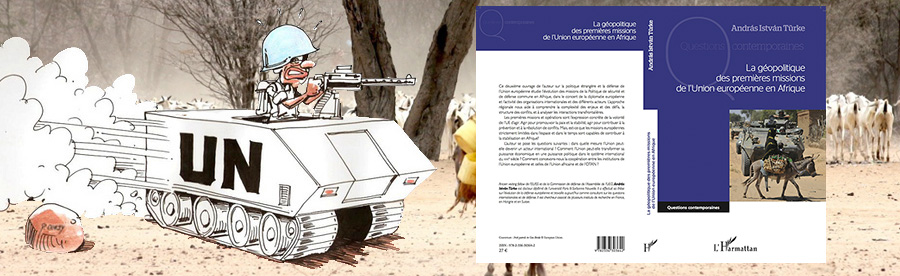
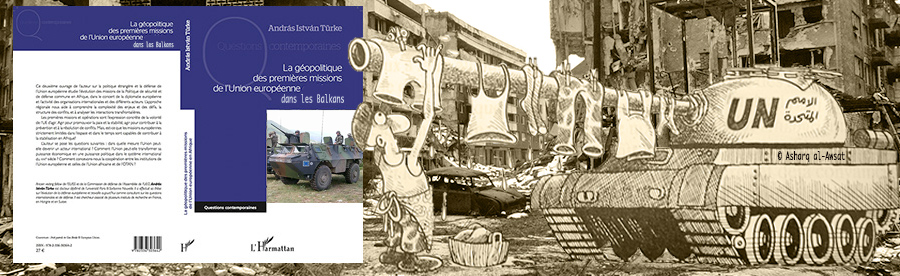
We are looking for sponsors for the English translation of these books, please contact turkeandras(at)gmail(dot)com