
You are here
Diplomacy & Defense Think Tank News
Beyond markets: how to achieve just and transformative biodiversity conservation
Conservation needs reform as current approaches have failed to halt biodiversity loss. Increasingly, environ¬mentalists are questioning whether market-based approaches and conventional policy instruments, particu¬larly protected areas, can make a substantial contribution towards mitigating the bio¬diversity crisis. Moreover, serious concerns about their equity and justice implications have been voiced by indigenous rights organisations, peasant movements and scholars.
In light of these concerns, this policy brief provides a number of suggestions on how to make biodiversity conservation more just, equitable and effective. It builds on discussions held during the sixth Enjust Conference “Offsetting Justice? Environmental justice in the age of market and militarized con¬servation”, which took place in Bonn from 3 to 5 December 2025. The conference brought together environmental justice scholars, political ecologists, activists as well as development and conservation practitioners from around the globe.
Our reflections and proposals support policymakers, members of parliament, conservation practitioners, and Indigenous Peoples and Local Communities (IP&LCs) at the local and regional levels in initiating reforms of the protected area system and other conservation mechanisms for more effective, trans¬parent and fair protection.
Key messages:
• Just conservation: Conservation policies that contribute to environmental justice have the greatest potential to achieve long-term, sustainable and legitimate conservation outcomes for people and the planet.
• Land rights-based conservation: Land rights reconfigure power relations and are a key pre¬requisite for environmental justice. Collective land titles such as Colombia’s Peasant Reserve Zones (ZRCs) are a promising instrument.
• Towards distributive justice by reforming conservation finance: IP&LCs should benefit more directly from forest, climate and biodiversity funding and should have a say in how money is spent in their communities. IP&LC-led funds and designated funding windows for IP&LCs are promising options.
• Basic Income for Nature and Climate (BINC): We suggest BINC as a promising measure to improve the livelihoods of IP&LCs and to overcome the transactional logic of market-based instruments. BINC compensates for past environmental injustices and enables recipients to make land-use decisions that are less influenced by precarity and market forces.
Professor Dr Fernanda Figueroa currently works at the Facultad de Ciencias, Departamento de Ecología y Recursos Naturales, Universidad Nacional Autónoma de México.
Dr Lasse Loft is a senior scientist at the Leibniz Centre for Agricultural Landscape Research (ZALF) in Müncheberg, Germany.
Professor Dr Maano Ramutsindela is Professor of Human Geography at the University of Cape Town and the UP-UCT Future Africa Research Chair in Sustainability Transformations at the University of Pretoria and the University of Cape Town, South Africa.
Georg Buchholz is team leader of the International Forest Policy sectoral project at GIZ, Germany.
Dr Juan Sebastián Vélez Triana is a postdoctoral researcher with the Fonds de la Recherche Scientifique – FNRS / UCLouvain, Belgium, and a research associate at the Centre for Alternatives to Development (CEALDES), Colombia.
Professor Dr Florian Dünckmann heads the Cultural Geography Research Group in the Department of Geography at Kiel University, Germany.
Dr Ina Lehmann is assistant professor of Governance of Global Biodiversity at the Environmental Policy Analysis section at the Institute for Environmental Studies (IVM), Vrije Universiteit Amsterdam, The Netherlands.
Professor Dr Silja Klepp is professor of Human Geography at Kiel University, Germany.
Dennis Schüpf is a PhD student in the Department of Geography, University of Bonn, Germany.
Anne Rose Atkins is a doctoral candidate in the Social Geography of Coastal and Marine Areas working group at the Geography Department of Kiel University, Germany.
Dumisani Chirambo is the founder of Seeds of Opportunity in Malawi.
Felice Diekel is a PhD candidate at the Department of Civil Engineering & Management at the University of Twente, Enschede, The Netherlands.
Salome Gikonyo is part of the coordination team of the EnJust Network for Environmental Justice, Germany.
Dr Rina Mardiana is a lecturer in the Human Geography Study Program, Faculty of Social Sciences and Human Ecology, at IPB University in Bogor, Indonesia.
Dr Adnan Mirhanoğlu is an F.R.S.-FNRS postdoctoral researcher at the Centre d’Études de la Coopération Internationale et du Développement (CECID), Université libre de Bruxelles, Belgium.
Kim Nierobisch is part of the coordination team of the EnJust Network for Environmental Justice, Germany.
Kelly Peña is a PhD student at the Institute of Geography, Friedrich-Alexander-Universität Erlangen-Nürnberg, Germany.
Professor Dr Prakash C. Tiwari works at the Centre for Ecology Development and Research in Dehradun, India.
Categories: Africa, Diplomacy & Defense Think Tank News
Beyond markets: how to achieve just and transformative biodiversity conservation
Conservation needs reform as current approaches have failed to halt biodiversity loss. Increasingly, environ¬mentalists are questioning whether market-based approaches and conventional policy instruments, particu¬larly protected areas, can make a substantial contribution towards mitigating the bio¬diversity crisis. Moreover, serious concerns about their equity and justice implications have been voiced by indigenous rights organisations, peasant movements and scholars.
In light of these concerns, this policy brief provides a number of suggestions on how to make biodiversity conservation more just, equitable and effective. It builds on discussions held during the sixth Enjust Conference “Offsetting Justice? Environmental justice in the age of market and militarized con¬servation”, which took place in Bonn from 3 to 5 December 2025. The conference brought together environmental justice scholars, political ecologists, activists as well as development and conservation practitioners from around the globe.
Our reflections and proposals support policymakers, members of parliament, conservation practitioners, and Indigenous Peoples and Local Communities (IP&LCs) at the local and regional levels in initiating reforms of the protected area system and other conservation mechanisms for more effective, trans¬parent and fair protection.
Key messages:
• Just conservation: Conservation policies that contribute to environmental justice have the greatest potential to achieve long-term, sustainable and legitimate conservation outcomes for people and the planet.
• Land rights-based conservation: Land rights reconfigure power relations and are a key pre¬requisite for environmental justice. Collective land titles such as Colombia’s Peasant Reserve Zones (ZRCs) are a promising instrument.
• Towards distributive justice by reforming conservation finance: IP&LCs should benefit more directly from forest, climate and biodiversity funding and should have a say in how money is spent in their communities. IP&LC-led funds and designated funding windows for IP&LCs are promising options.
• Basic Income for Nature and Climate (BINC): We suggest BINC as a promising measure to improve the livelihoods of IP&LCs and to overcome the transactional logic of market-based instruments. BINC compensates for past environmental injustices and enables recipients to make land-use decisions that are less influenced by precarity and market forces.
Professor Dr Fernanda Figueroa currently works at the Facultad de Ciencias, Departamento de Ecología y Recursos Naturales, Universidad Nacional Autónoma de México.
Dr Lasse Loft is a senior scientist at the Leibniz Centre for Agricultural Landscape Research (ZALF) in Müncheberg, Germany.
Professor Dr Maano Ramutsindela is Professor of Human Geography at the University of Cape Town and the UP-UCT Future Africa Research Chair in Sustainability Transformations at the University of Pretoria and the University of Cape Town, South Africa.
Georg Buchholz is team leader of the International Forest Policy sectoral project at GIZ, Germany.
Dr Juan Sebastián Vélez Triana is a postdoctoral researcher with the Fonds de la Recherche Scientifique – FNRS / UCLouvain, Belgium, and a research associate at the Centre for Alternatives to Development (CEALDES), Colombia.
Professor Dr Florian Dünckmann heads the Cultural Geography Research Group in the Department of Geography at Kiel University, Germany.
Dr Ina Lehmann is assistant professor of Governance of Global Biodiversity at the Environmental Policy Analysis section at the Institute for Environmental Studies (IVM), Vrije Universiteit Amsterdam, The Netherlands.
Professor Dr Silja Klepp is professor of Human Geography at Kiel University, Germany.
Dennis Schüpf is a PhD student in the Department of Geography, University of Bonn, Germany.
Anne Rose Atkins is a doctoral candidate in the Social Geography of Coastal and Marine Areas working group at the Geography Department of Kiel University, Germany.
Dumisani Chirambo is the founder of Seeds of Opportunity in Malawi.
Felice Diekel is a PhD candidate at the Department of Civil Engineering & Management at the University of Twente, Enschede, The Netherlands.
Salome Gikonyo is part of the coordination team of the EnJust Network for Environmental Justice, Germany.
Dr Rina Mardiana is a lecturer in the Human Geography Study Program, Faculty of Social Sciences and Human Ecology, at IPB University in Bogor, Indonesia.
Dr Adnan Mirhanoğlu is an F.R.S.-FNRS postdoctoral researcher at the Centre d’Études de la Coopération Internationale et du Développement (CECID), Université libre de Bruxelles, Belgium.
Kim Nierobisch is part of the coordination team of the EnJust Network for Environmental Justice, Germany.
Kelly Peña is a PhD student at the Institute of Geography, Friedrich-Alexander-Universität Erlangen-Nürnberg, Germany.
Professor Dr Prakash C. Tiwari works at the Centre for Ecology Development and Research in Dehradun, India.
Categories: Diplomacy & Defense Think Tank News, Union européenne
Beyond markets: how to achieve just and transformative biodiversity conservation
Conservation needs reform as current approaches have failed to halt biodiversity loss. Increasingly, environ¬mentalists are questioning whether market-based approaches and conventional policy instruments, particu¬larly protected areas, can make a substantial contribution towards mitigating the bio¬diversity crisis. Moreover, serious concerns about their equity and justice implications have been voiced by indigenous rights organisations, peasant movements and scholars.
In light of these concerns, this policy brief provides a number of suggestions on how to make biodiversity conservation more just, equitable and effective. It builds on discussions held during the sixth Enjust Conference “Offsetting Justice? Environmental justice in the age of market and militarized con¬servation”, which took place in Bonn from 3 to 5 December 2025. The conference brought together environmental justice scholars, political ecologists, activists as well as development and conservation practitioners from around the globe.
Our reflections and proposals support policymakers, members of parliament, conservation practitioners, and Indigenous Peoples and Local Communities (IP&LCs) at the local and regional levels in initiating reforms of the protected area system and other conservation mechanisms for more effective, trans¬parent and fair protection.
Key messages:
• Just conservation: Conservation policies that contribute to environmental justice have the greatest potential to achieve long-term, sustainable and legitimate conservation outcomes for people and the planet.
• Land rights-based conservation: Land rights reconfigure power relations and are a key pre¬requisite for environmental justice. Collective land titles such as Colombia’s Peasant Reserve Zones (ZRCs) are a promising instrument.
• Towards distributive justice by reforming conservation finance: IP&LCs should benefit more directly from forest, climate and biodiversity funding and should have a say in how money is spent in their communities. IP&LC-led funds and designated funding windows for IP&LCs are promising options.
• Basic Income for Nature and Climate (BINC): We suggest BINC as a promising measure to improve the livelihoods of IP&LCs and to overcome the transactional logic of market-based instruments. BINC compensates for past environmental injustices and enables recipients to make land-use decisions that are less influenced by precarity and market forces.
Professor Dr Fernanda Figueroa currently works at the Facultad de Ciencias, Departamento de Ecología y Recursos Naturales, Universidad Nacional Autónoma de México.
Dr Lasse Loft is a senior scientist at the Leibniz Centre for Agricultural Landscape Research (ZALF) in Müncheberg, Germany.
Professor Dr Maano Ramutsindela is Professor of Human Geography at the University of Cape Town and the UP-UCT Future Africa Research Chair in Sustainability Transformations at the University of Pretoria and the University of Cape Town, South Africa.
Georg Buchholz is team leader of the International Forest Policy sectoral project at GIZ, Germany.
Dr Juan Sebastián Vélez Triana is a postdoctoral researcher with the Fonds de la Recherche Scientifique – FNRS / UCLouvain, Belgium, and a research associate at the Centre for Alternatives to Development (CEALDES), Colombia.
Professor Dr Florian Dünckmann heads the Cultural Geography Research Group in the Department of Geography at Kiel University, Germany.
Dr Ina Lehmann is assistant professor of Governance of Global Biodiversity at the Environmental Policy Analysis section at the Institute for Environmental Studies (IVM), Vrije Universiteit Amsterdam, The Netherlands.
Professor Dr Silja Klepp is professor of Human Geography at Kiel University, Germany.
Dennis Schüpf is a PhD student in the Department of Geography, University of Bonn, Germany.
Anne Rose Atkins is a doctoral candidate in the Social Geography of Coastal and Marine Areas working group at the Geography Department of Kiel University, Germany.
Dumisani Chirambo is the founder of Seeds of Opportunity in Malawi.
Felice Diekel is a PhD candidate at the Department of Civil Engineering & Management at the University of Twente, Enschede, The Netherlands.
Salome Gikonyo is part of the coordination team of the EnJust Network for Environmental Justice, Germany.
Dr Rina Mardiana is a lecturer in the Human Geography Study Program, Faculty of Social Sciences and Human Ecology, at IPB University in Bogor, Indonesia.
Dr Adnan Mirhanoğlu is an F.R.S.-FNRS postdoctoral researcher at the Centre d’Études de la Coopération Internationale et du Développement (CECID), Université libre de Bruxelles, Belgium.
Kim Nierobisch is part of the coordination team of the EnJust Network for Environmental Justice, Germany.
Kelly Peña is a PhD student at the Institute of Geography, Friedrich-Alexander-Universität Erlangen-Nürnberg, Germany.
Professor Dr Prakash C. Tiwari works at the Centre for Ecology Development and Research in Dehradun, India.
Categories: Diplomacy & Defense Think Tank News, Swiss News
From negotiations to implementation: the EU’s strategic repositioning ahead of COP31
This blog draws on discussions at a closed-door roundtable titled “EU Climate Diplomacy: Promoting EU and Global Climate Goals in the Evolving Climate Regime,” held in Brussels on 3 September 2026 and co-organised by ETTG, IDDRI and IDOS. The session convened senior officials from DG CLIMA, EU member states and experts. Views expressed reflect the range of positions raised in the discussion and are not attributed to individual participants or institutions; they do not necessarily represent the position of ETTG or its member institutes.
Categories: Afrique, Diplomacy & Defense Think Tank News
From negotiations to implementation: the EU’s strategic repositioning ahead of COP31
This blog draws on discussions at a closed-door roundtable titled “EU Climate Diplomacy: Promoting EU and Global Climate Goals in the Evolving Climate Regime,” held in Brussels on 3 September 2026 and co-organised by ETTG, IDDRI and IDOS. The session convened senior officials from DG CLIMA, EU member states and experts. Views expressed reflect the range of positions raised in the discussion and are not attributed to individual participants or institutions; they do not necessarily represent the position of ETTG or its member institutes.
Categories: Diplomacy & Defense Think Tank News, Pályázatok
From negotiations to implementation: the EU’s strategic repositioning ahead of COP31
This blog draws on discussions at a closed-door roundtable titled “EU Climate Diplomacy: Promoting EU and Global Climate Goals in the Evolving Climate Regime,” held in Brussels on 3 September 2026 and co-organised by ETTG, IDDRI and IDOS. The session convened senior officials from DG CLIMA, EU member states and experts. Views expressed reflect the range of positions raised in the discussion and are not attributed to individual participants or institutions; they do not necessarily represent the position of ETTG or its member institutes.
Categories: Diplomacy & Defense Think Tank News, Swiss News
Ja, Migranten zahlen Ihre Rente
Eine ehrliche Bilanz zeigt: Zugewanderte sind keine Last für die Sozialsysteme, sondern eine ihrer wichtigsten Stützen. Lesen Sie hier die Live-Debatte nach., Wer zahlt eigentlich die Rente der Babyboomer? Wer pflegt unsere Eltern, wenn sie Hilfe brauchen? Und wer verhindert, dass die Beiträge für Rente, Gesundheit und Pflege noch schneller steigen? Die ehrliche Antwort auf alle drei Fragen lautet: zunehmend Menschen, die nicht in Deutschland geboren ...
Categories: Diplomacy & Defense Think Tank News, Swiss News
Social and environmental trade-offs and safeguards in Hydrogen production in the Middle East and North Africa region: insights from Morocco and Oman
Several countries in the Middle East and North Africa (MENA) have launched initiatives to produce green hydrogen for their own use and for export, raising the question of what environmental and social effects such initiatives may generate, and how these can be anticipated and mitigated. Oman and Morocco are among the region’s frontrunners. Because all projects in these countries are still in the preparatory phase and no large-scale facility is yet in commercial operation, they offer the unusual opportunity to observe how safeguards, stakeholder participation and risk management are being configured before build-out, that is, before conditions are created that may not be easily reversed, thereby creating path dependencies.
Drawing on desk-based analysis, a comparative media review, and stakeholder interviews conducted in both countries, this study examines the environmental and social impacts of hydrogen projects in the two countries through the lens of four inter-related dimensions: (i) resource endowments, (ii) environmental risks, (iii) decision-making and governance arrangements, and (iv) social equity dynamics. It finds that the two states have developed different institutional settlements.
While environmental and social safeguards are increasingly integrated into hydrogen development, often drawing on international standards, their practical implementation often remains shaped by complex and fragmented institutional arrangements. This raises questions about the allocation of mandates, the distribution of responsibilities, the consistency of procedures and the capacity for long-term monitoring and traceability. The study therefore argues that institutional design is central to sustainable hydrogen development, as environmental and social risks may otherwise evolve faster than regulatory capacities, highlighting the need for robust impact assessment, monitoring frameworks and transparent reporting mechanisms.
Dr Tobias Zumbraegel is a senior researcher at the University of Heidelberg and sustainability consultant at Momentum Novum GmbH.
Categories: Afrique, Diplomacy & Defense Think Tank News
Social and environmental trade-offs and safeguards in Hydrogen production in the Middle East and North Africa region: insights from Morocco and Oman
Several countries in the Middle East and North Africa (MENA) have launched initiatives to produce green hydrogen for their own use and for export, raising the question of what environmental and social effects such initiatives may generate, and how these can be anticipated and mitigated. Oman and Morocco are among the region’s frontrunners. Because all projects in these countries are still in the preparatory phase and no large-scale facility is yet in commercial operation, they offer the unusual opportunity to observe how safeguards, stakeholder participation and risk management are being configured before build-out, that is, before conditions are created that may not be easily reversed, thereby creating path dependencies.
Drawing on desk-based analysis, a comparative media review, and stakeholder interviews conducted in both countries, this study examines the environmental and social impacts of hydrogen projects in the two countries through the lens of four inter-related dimensions: (i) resource endowments, (ii) environmental risks, (iii) decision-making and governance arrangements, and (iv) social equity dynamics. It finds that the two states have developed different institutional settlements.
While environmental and social safeguards are increasingly integrated into hydrogen development, often drawing on international standards, their practical implementation often remains shaped by complex and fragmented institutional arrangements. This raises questions about the allocation of mandates, the distribution of responsibilities, the consistency of procedures and the capacity for long-term monitoring and traceability. The study therefore argues that institutional design is central to sustainable hydrogen development, as environmental and social risks may otherwise evolve faster than regulatory capacities, highlighting the need for robust impact assessment, monitoring frameworks and transparent reporting mechanisms.
Dr Tobias Zumbraegel is a senior researcher at the University of Heidelberg and sustainability consultant at Momentum Novum GmbH.
Categories: Diplomacy & Defense Think Tank News, Swiss News
Social and environmental trade-offs and safeguards in Hydrogen production in the Middle East and North Africa region: insights from Morocco and Oman
Several countries in the Middle East and North Africa (MENA) have launched initiatives to produce green hydrogen for their own use and for export, raising the question of what environmental and social effects such initiatives may generate, and how these can be anticipated and mitigated. Oman and Morocco are among the region’s frontrunners. Because all projects in these countries are still in the preparatory phase and no large-scale facility is yet in commercial operation, they offer the unusual opportunity to observe how safeguards, stakeholder participation and risk management are being configured before build-out, that is, before conditions are created that may not be easily reversed, thereby creating path dependencies.
Drawing on desk-based analysis, a comparative media review, and stakeholder interviews conducted in both countries, this study examines the environmental and social impacts of hydrogen projects in the two countries through the lens of four inter-related dimensions: (i) resource endowments, (ii) environmental risks, (iii) decision-making and governance arrangements, and (iv) social equity dynamics. It finds that the two states have developed different institutional settlements.
While environmental and social safeguards are increasingly integrated into hydrogen development, often drawing on international standards, their practical implementation often remains shaped by complex and fragmented institutional arrangements. This raises questions about the allocation of mandates, the distribution of responsibilities, the consistency of procedures and the capacity for long-term monitoring and traceability. The study therefore argues that institutional design is central to sustainable hydrogen development, as environmental and social risks may otherwise evolve faster than regulatory capacities, highlighting the need for robust impact assessment, monitoring frameworks and transparent reporting mechanisms.
Dr Tobias Zumbraegel is a senior researcher at the University of Heidelberg and sustainability consultant at Momentum Novum GmbH.
Categories: Diplomacy & Defense Think Tank News, Swiss News
Staying Competitive, Being Vigilant: Digital Cooperation as a New Momentum in EU–Turkey Relations
The following paper has received a distinction in the policy paper competition organized by ELIAMEP’s Turkey Programme, focusing on Turkey’s domestic developments, foreign relations, and socio-political dynamics.
Amidst intensifying global technological rivalry, this paper examines digital cooperation as a vital functional anchor for EU– Turkey relations. It argues that engaging through frameworks like the Digital Europe Program (DEP) allows both actors to navigate the “technosphere trap” by balancing economic competitiveness with strategic vigilance. While acknowledging structural fault lines regarding digital sovereignty and trust, the analysis outlines three pragmatic pathways—market, innovation, and technical-driven cooperation—for fostering a resilient, future-proof partnership despite broader political stagnation.
Read here in pdf the Policy paper by Jacopo Franceschini, Fellow at Centre of Applied Turkish Studies (CATS); Ayhan Gücüyener Evren, Postdoctoral Researcher, TRSIDIPLOM Project and Erman Ermihan, Assistant Professor, Istanbul Nişantaşı University.
IntroductionFrom platform regulation to chip exports, technological domains now lie at the heart of global geopolitical contestation. The “innovation imperative”[1] pushes rising powers to see technology not only as a driver of economic growth, but also as a prerequisite for sustaining their international ascent, generating pressures and spillover effects for the established international order.[2] Furthermore, this rivalry is not dyadic between China and the United States; it is increasingly forcing other countries to position themselves and navigate growing uncertainty under the threat of technological decoupling.[3]
Competitiveness requires greater control over technology use, vibrant industrial ecosystems, and the ability to shape digital standards, while vigilance demands secure infrastructure and the diversification of technological dependencies.
Confronted by the “technosphere trap” dilemma, a condition in which the governance of the digital ecosystem (through standards, infrastructures, platforms, and norms) is dominated by a few actors, regional powers can mitigate the risk of overdependence on a single pole by cooperating in different functional digital domains. In such a context, competitiveness and vigilance become complementary rather than competing imperatives. Competitiveness requires greater control over technology use, vibrant industrial ecosystems, and the ability to shape digital standards, while vigilance demands secure infrastructure and the diversification of technological dependencies. Digital cooperation, in turn, paves the way for regulatory convergence that minimizes compliance costs and prevents market fragmentation, while resilient data governance and infrastructures are sustained through joint innovation frameworks.[4]
In this context, examining the potential promises and pitfalls of a Turkey–EU digital partnership becomes essential for understanding how both actors might escape the technosphere trap shaped by the competition between major technopoles. Therefore, in this article, we argue that alignment between their digital visions through initiatives like the Digital Europe Program (DEP) acts as a potential form of functional integration, particularly at a time when Turkey’s EU accession process remains stalled. In a period of growing instability, the EU and Turkey have already demonstrated the capacity to strengthen their political and economic alignments, as recently seen in the defense sector. Similarly, a closer partnership in the digital field would allow joint efforts to stay competitive and preserve both their strategic digital autonomy in the global tech race. In this way, we argue that the EU and Turkey could forge a more resilient position in the future global digital landscape.
We further assert that, against the backdrop of increasing technological rivalry between the US and China, initiatives like the DEP serve not only as frameworks for technical cooperation but also as strategic (geo)economic tools, providing opportunities for concrete alignments in key sectors such as artificial intelligence (AI), cybersecurity, high-performance computing, and advanced digital skills. In essence, this paper explores how digital cooperation allows Turkey and the EU to pursue both competitiveness and vigilance imperatives simultaneously, advancing common interests through a forward-looking and strategically balanced framework.
The timing of this agenda is particularly critical. As the EU accelerates its comprehensive digital agenda and pursues greater digital autonomy, and as Turkey seeks to enhance its strategic autonomy and diversify technological partnerships, digital cooperation emerges as one of the few policy fields where both sides share an objective sense of urgency. The rollout of the EU’s AI Act and Digital Services Package, and Europe’s broader drive for digital sovereignty, coincides with Turkey’s efforts to modernize its data governance, expand its cybersecurity capacities, and strengthen its digital economy.[5] These parallel trajectories create a unique window for pragmatic and mutually reinforcing engagement.
Digital cooperation can serve as a foundation for high-impact “low politics” capable of rebuilding mutual trust even when political channels remain strained.
This paper first outlines the strategic drivers that make digital cooperation increasingly necessary. Digital cooperation can serve as a foundation for high-impact “low politics” capable of rebuilding mutual trust even when political channels remain strained. Such cooperation has the potential to standardize digital regulations, bolster an innovative ecosystem, and integrate Turkey into the emerging European digital governance framework. The EU is already influencing Turkey’s digital policies, as evidenced by Ankara’s recent legislative processes aligning with the EU Digital Markets and AI Act. Overall, this section examines the cooperation mechanisms already in place and explains how shared economic, societal and political interests make such cooperation sustainable.
The paper then evaluates the principal fault lines. These challenges do not necessarily undermine the possibility of cooperation, but they may shape its depth[6]. As elaborated in the following sections, while the EU and Turkey’s differentiated narratives and strategies on digital sovereignty and strategic autonomy may constitute sources of friction, challenges in establishing trust across domains such as cybersecurity warrant further consideration. Finally, the paper outlines three pathways for EU–Turkey digital cooperation based on approaches driven by markets, innovation, and technical factors. The market-driven pathway prioritises joint efforts on securing digital supply chains, particularly in the AI domain. The innovation-driven pathway focuses on joint innovation initiatives, especially within the framework of the DEP. And t he technically driven pathway emphasizes regulatory rapprochement to sustain resilient and vigilant infrastructures, as both actors become increasingly digitally interconnected.
The Strategic Logic of Digital CooperationThe history of EU–Turkey relations demonstrates that functional, technically driven cooperation often endures, even when political channels falter. The Customs Union, migration management mechanisms, and joint research initiatives such as Horizon Europe have shown that rule-based, depoliticized coordination can sustain and even advance bilateral ties. Digital governance—at once strategic, technocratic, and innovation-oriented—has the potential to replicate this pattern, offering a contemporary functional anchor at a time when broader accession-related dynamics remain uncertain.
By accelerating EU–Turkey joint efforts on innovation and supply chain security, digital cooperation can gradually help both actors reduce their dependencies without requiring intensive engagement in high diplomacy.
From this perspective, digital cooperation fits into a more effective tradition of “functional integration” in EU–Turkey relations. Instead of reopening the politically sensitive debate on accession, cooperation on concrete digital tools—from defining digital standards to adopting similar frameworks for data and digital infrastructure or emerging technologies—allows both actors to deepen their interdependence in a targeted manner. By accelerating EU–Turkey joint efforts on innovation and supply chain security, digital cooperation can gradually help both actors reduce their dependencies without requiring intensive engagement in high diplomacy. Over time, this could help reduce the political, economic and social costs of misalignment and increase the attractiveness of greater integration—not just digital, but also in other EU– Turkey dossiers.
The DEP is emblematic of this logic. Designed to bridge the gap between research and large-scale deployment, the DEP prioritizes investments in high-performance computing, AI, cybersecurity, advanced digital skills, and the dissemination of innovative digital technologies. For Turkey, participation in the DEP offers a structured channel to access European know-how, infrastructure, and project portfolios, while also aligning domestic policy choices with emerging EU priorities. For the EU, engaging with Turkey means extending the reach of its regulatory and technological ecosystem to a key neighboring economy whose digital market is already deeply intertwined with the Single Market.
…the rationale for digital cooperation rests on three core strategic tenets: that cooperation can boost each party’s competitiveness when it follows a win-win and symmetrical logic; that cooperation through convergence on standards can accelerate interoperability and reduce transaction costs; and that cooperation through pooling expertise and resources can sustain and expand innovation capacity.
EU–Turkey cooperation on innovation is already well established, as Turkey has participated in EU research and innovation programmes since 2003, with Turkish entities receiving €362 million in net EU contributions to date.[7] Beyond this, the rationale for digital cooperation rests on three core strategic tenets: that cooperation can boost each party’s competitiveness when it follows a win-win and symmetrical logic; that cooperation through convergence on standards can accelerate interoperability and reduce transaction costs; and that cooperation through pooling expertise and resources can sustain and expand innovation capacity.
First, this cooperation responds to the shared imperative of competitiveness. Both Turkey and the EU risk falling behind the United States and China in key enabling technologies. Against this backdrop, while the EU seeks to address fragmentation within its research and innovation system, Turkey is mobilising its resources around the National Technology Initiative (Milli Teknoloji Hamlesi) and launching programmes such as HIT-30[8] to attract investment in high-technology sectors. Meanwhile, cultivating digital skills has become a priority for both actors: while the EU finances initiatives under the DEP to attract young talent to the ICT field, Turkey is seeking to ease bureaucratic barriers to work permits for international digital talent through programmes such as Talent Transfer (Yetenek Transferi).
Turkish businesses and research institutions have already been given the opportunity to integrate into European value chains in areas such as trustworthy AI, industrial data spaces, or secure cloud services.[9] At the same time, European partners benefit from the rapidly expanding Turkish technology ecosystem. In 2023, Turkey was one of the EU’s leading markets for high-technology exports, accounting for €14 billion.[10] In this landscape, pooling resources through joint projects, within the frameworks like DEP can mitigate structural disadvantages such as a lack of venture capital, market fragmentation, or skills shortages.
By promoting interoperable standards and secure cross-border digital infrastructure, EU– Turkey cooperation can reduce both sides’ vulnerability to value chain disruptions, cyber threats, and extraterritorial pressures exerted by third countries.
Beyond the economic benefits, the aforementioned “technosphere trap” directly links to the quest for resilience. By promoting interoperable standards and secure cross-border digital infrastructure, EU– Turkey cooperation can reduce both sides’ vulnerability to value chain disruptions, cyber threats, and extraterritorial pressures exerted by third countries. Joint investments in cybersecurity centers, threat intelligence sharing mechanisms, and regional early warning systems can help manage cyber risks that do not stop at territorial borders. Similarly, collaboration on data governance and cloud infrastructure can support diversification strategies that mitigate excessive dependence on a single technological hub.
Another driver of digital cooperation lies in the dissemination of regulatory standards and convergence on models. European digital governance, ranging from the General Data Protection Regulation (GDPR) and Cyber Resilience Act (CRA) to the Digital Services and Digital Markets Acts, is more than just a set of technical instruments; it also acts as a technopolitical force, defining what is “trustworthy”, “reliable”, and “secure”[11]. These instruments also exert a real influence on the Turkish regulatory framework. In the field of AI, the Grand National Assembly of Turkey is demonstrating its intention to adopt a European-style regulatory framework, drawing inspiration from the EU AI Act rather than deregulatory models of the American sort, or the centralized control models preferred in China. This alignment in the digital sphere is neither linear nor automatic, but it is certainly a facilitator in the dialogue between the EU and Turkey in areas ranging from trade to data protection where having a common legal approach already makes dialogue easier. Overall, fragmented regulation tends to lock countries into external technospheres; in contrast, regulatory convergence-driven digital cooperation can create strategic leverage, particularly in areas such as AI governance that are still taking shape.
Digital cooperation also has a clear social and political dimension. Collaboration on digital skills, e-government services, and smart city solutions addresses the tangible needs of citizens and local administrations. Joint projects that improve connectivity in underserved regions, digital literacy, or public-sector innovation can yield visible benefits and be less susceptible to the fluctuations of daily political tensions. This “low politics with a high impact” can help revitalize pro-cooperation constituencies in both Turkey and the EU, particularly among younger generations, tech entrepreneurs, and public officials directly involved in implementation.
Finally, the strategic logic of digital cooperation is based on a dense network of existing sectoral and institutional connections. Turkish universities, research centers, municipalities, and business associations have gained experience managing EU-funded digital projects and collaborating with European counterparts through Horizon Europe, Erasmus+, and IPA-supported initiatives. The DEP builds upon these networks and amplifies them, offering a more targeted framework focused on deployment and capacity- building, rather than solely on research. If effectively utilized, this cumulative experience can reduce administrative and political transaction costs, making digital cooperation one of the most realistic and scalable areas for future engagement between the EU and Turkey.
At the same time, the strategic importance of digital technologies implies that cooperation is not without risks. Issues such as the adequacy of the data protection regime, trust in cyber threat intelligence sharing, dependence on critical infrastructure, and differing interpretations of digital sovereignty can quickly politicize what initially appears to be a technocratic agenda.
Fault Lines in the Digital PartnershipDespite a solid strategic rationale, EU– Turkey digital cooperation is developing amid structural barriers and diverging political priorities. These fault lines do not negate the partnership’s potential, but they do define its terms and depth. Understanding them is essential, if the digital agenda is not to be burdened with expectations it cannot meet, as well as making it easier to identify where well-designed tools like the DEP can or cannot contribute to collaborations and alignment between the EU and Turkey.
A first source of friction concerns the differing narratives about digital sovereignty and strategic autonomy.[12] For the EU, digital sovereignty increasingly means the ability to regulate global platforms, protect fundamental rights online, and reduce critical technological dependencies in areas such as cloud computing, semiconductors, and cybersecurity services. A dense EU legal and institutional framework anchors this agenda, presenting it as compatible with an open and rules-based international order. In Turkey, debates about digital sovereignty are closely intertwined with national security concerns, industrial upgrading goals, and a multi-vector foreign policy that keeps channels open to diverse, and often competing, technology providers and partners. This can lead to divergent risk assessments across areas such as 5G, surveillance technologies, data localization, and digital supply chain security, making it more difficult to build compatible, digitally integrated environments in fields such as cross-border data flows and cybersecurity cooperation.
Secondly, regulatory commitments in the digital sphere, from data protection to freedom of expression, are tightly bound up with the EU’s acquis. In Turkey, ongoing debates about internet and social media legislation such as platform liability have raised questions in Brussels about how digital regulatory tools intersect with broader governance priorities. Furthermore, while Turkey has increasingly consolidated its institutional framework, particularly through the establishment of the Cybersecurity Directorate, the European Commission’s 2025 Enlargement Report calls for further alignment with EU initiatives, notably the NIS2 Directive and the 5G Cybersecurity Toolbox. These concerns do not necessarily block technical projects under the DEP or other instruments, but they may limit Turkey’s engagement with more advanced agreements in the long run.
A further fault line concerns differences in digital governance and their implications for regulatory trust. The European digital acquis is not solely a technical rulebook, as instruments such as the GDPR, the Digital Services Act, and the AI Act combine regulatory requirements with safeguards concerning fundamental rights, oversight, transparency, and proportionality. Meaningful convergence therefore requires not only the formal approximation of legislation but also compatible administrative practices.
In the case of Turkey, cooperation is complicated by differences in content moderation, data governance, and institutional oversight. Requirements concerning local representation, platform compliance, content removal, and restrictions on access have generated recurring debates. These debates do not preclude cooperation, but they increase the importance of confidence-building, regulatory dialogue, and clearer procedural safeguards. This is particularly relevant in areas such as platform governance and AI oversight, where legal alignment alone may be insufficient without mutual confidence in how rules are interpreted and applied.
At the same time, Turkey has taken part in the DEP as an associated country since 2023, and a draft AI law reflecting the principles of the EU AI Act is currently under parliamentary consideration.[13] These signals of openness coexist, however, with a strong official emphasis on digital and data sovereignty. The willingness to converge on European norms has thus been articulated more clearly at the level of principle than demonstrated in the governance of the cyber and data domains, where the practical divergence remains greatest, and it is precisely there that declared intent will need to be matched by verifiable practice.
A persistent lack of mutual trust in the most security-sensitive domains constitutes a third point of contention.[14] Cybersecurity cooperation requires sharing information on vulnerabilities, incidents, and potential threats—areas that overlap with intelligence practices and military planning. Past crises in EU–Turkey relations have reinforced the perception that sensitive data can be instrumentalized within the framework of a broader geopolitical standoff. In this context, initiating joint cybersecurity exercises or shared situational awareness platforms can be challenging, especially in the absence of clear governance structures. The result is a tendency to confine cooperation to relatively low-sensitivity areas, limiting the transformative potential of the partnership. It remains indicative that, within the six DEP Clusters, the only one that was never formally activated by the EU, and from which Turkey officially withdrew, is the Cybersecurity and Trust Cluster (Table 1).
Table 1. DEP Clusters & Turkish Participation
DEP Cluster Turkish Participation Notes HPC ✓ Strong alignment AI ✓ Sandbox possibilities Cybersecurity ✗ (withdrawn) Political sensitivityInstitutional fragmentation and variation due to the rapid pace of the technological change and emerging security challenges pose an additional challenge. For instance, in Turkey, agencies designated to coordinate national cybersecurity efforts have changed rapidly in recent years. The frequent reorganizations, overlapping competencies, and high staff turnover in some institutions make a coherent national position difficult for external actors to discern. Meanwhile, European cyber policy is also complex, with various institutional bodies tasked with coordination. While a vibrant cooperation necessitates predictability and sustainable efforts on both sides, this challenge can be mitigated; indeed, Turkey has consolidated its cybersecurity policymaking under the recently established Cybersecurity Directorate, while the EU is increasingly shifting toward a more robust and integrated cyber policy landscape.
Similarly, both sides tend to approach digital cooperation in a short-term manner rather than as part of a long-term strategic framework. Geopolitical pressures from the outside further complicate the situation, forcing both actors to prioritize short-term arrangements over longer-term strategic planning. On the EU side, engagement with Turkey is often channeled through temporary funding windows and ad hoc calls for proposals, which can incentivize competition among Turkish stakeholders without providing a stable vision for the future of the digital partnership. On the Turkish side, political attention dedicated to the European digital agenda oscillates between intensifying digital cooperation with the EU and benefiting from regulatory know-how. This combination of short-term pragmatism and a lack of binding long-term commitments can create a cycle of inflated expectations followed by disappointments, progressively eroding the sustainability of the digital partnership.
Finally, there are significant asymmetries in the EU–Turkey digital interdependence. The EU sets the rules for the Single Market, which Turkish digital operators largely have to comply with to remain competitive, while Turkey has a more limited scope to influence these rules from the outside. This structural imbalance can reinforce the perception in Turkey that digital cooperation simply extends the scope of European regulation without adequately reflecting Turkish perspectives. While countries such as China have introduced specialised visa schemes for science and technology talent, visa-related constraints continue to feature as a persistent issue in the EU–Turkey context. On the other hand, Turkey’s recent commitment to digital sovereignty, combined with its increasingly centralized digital governance structure, enables rapid policy action that may outpace the EU’s comparatively slower regulatory processes. Managing these asymmetries requires carefully designed governance mechanisms capable of balancing flexibility and predictability and integrating political dialogue on contentious issues. Indeed, while the perception of digital cooperation as a solely technical environment has fostered genuine dialogue and rapid understanding between Brussels and Ankara, the lack of a political entente to accompany it risks undermining a necessary and lasting collaboration, despite the promising starting points.
Overall, the path toward a meaningful digital partnership between the EU and Turkey is constrained by a complex interplay of regulatory, political, institutional, and geopolitical fault lines. Digital cooperation between the EU and Turkey should therefore transcend specific sectors or international crisis moments, and be accompanied by a political mechanism and mutual understanding framework to secure the continuity and resilience of the partnership, leaving no room for ambiguity. Acknowledging this does not mean questioning the cooperation; on the contrary, it is a prerequisite for identifying realistic entry points and for designing tools capable of withstanding political turbulence. Below, we outline three policy visions, exploring concrete pathways through which programs like the DEP, along with complementary policy initiatives, can contribute to translating strategic intent into a future-proof digital cooperation framework.
Pathways towards a Future-Proof Digital PartnershipA future EU–Turkey digital partnership must rest on a set of pragmatic frameworks for cooperation visions that balance strategic ambition with political and institutional realism. We therefore propose three pathways, each of which relies on a different strategic focus; the pathways are not necessarily mutually exclusive.
The first pathway is market- and, more specifically, supply-chain- driven cooperation. As both sides seek to secure their position in increasingly fragile digital value chains, joint efforts in areas such as the development of trusted cloud infrastructure, secure data flows, semiconductor-adjacent manufacturing, and digital services certification can strengthen mutual resilience. In recent years, Turkish stakeholders have shown a strong interest in attracting European companies seeking to relocate their activities and supply chains to Turkey through nearshoring,[15] particularly in response to emerging geopolitical fault lines. In this context, digital nearshoring would enable both sides to collaborate in critical digital industries, delivering scale and speed advantages without necessarily undermining strategic autonomy considerations. Turkey’s large digital market, entrepreneurial ecosystem, and emerging regulatory alignment provide a natural complement to the EU’s need for diversified, proximate, and standards-compatible partners. Strengthening digital supply-chain security can thus create tangible interdependence without requiring deeper political alignment.
A second pathway follows innovation-driven and human- skills-centric collaboration. The EU’s structural innovation gap and severe digital skills shortage contrast with Turkey’s young talent pool, dynamic start-up environment, and growing interest in AI, cybersecurity, and advanced computing. Joint testbeds for trustworthy AI, high-performance computing access schemes, cross-border digital skills academies, and sandbox environments for SMEs represent low-cost, high-impact cooperation mechanisms. Human-centric cooperation has the added advantage of generating visible social returns, digital inclusion, enhanced employability, and local innovation capacity, which makes it less vulnerable to political turbulence and more likely to mobilize constituencies that favor stable relations.
The third pathway, accelerated technical cooperation, offers a realistic foundation for long-term convergence, particularly from the regulatory point of view. Turkey’s ongoing efforts to reform data protection, align its AI governance with the EU’s risk-based approach and AI Act, and in tention to align with the CRA provide fertile ground for deeper regulatory and technical synchronization. Furthermore, alignment with CRA-like instruments has generated positive spillover effects within Turkey’s domestic digital ecosystem, as the Ministry of Industry and Technology is currently introducing mandatory cybersecurity standards for the design, development, production, and market placement of digital and industrial products. Beyond these practices, cooperation between municipalities, research and innovation institutions, and public administrations, particularly through DEP clusters, can further incrementally internalize European practices. Overall, horizontal standards on data governance, interoperability, and secure digital services constitute areas where alignment is both feasible and mutually beneficial.
These three frameworks for cooperation operate within clear boundaries, however. Political volatility, normative divergence, and potential mistrust in sensitive domains such as cybersecurity limit how far and how fast this functional cooperation can advance. Furthermore, the predominance of short-term pragmatism on both sides further constrains strategic depth. A future-proof digital partnership therefore requires not only technical tools but also a governance framework capable of managing asymmetries, buffering political shocks, and sustaining long-term commitment. Within such a calibrated architecture, programs like the DEP or regulatory rapprochement can serve as both catalyst and stabilizer, allowing EU–Turkey digital cooperation to progress incrementally while preserving strategic flexibility for both parties.
Finally, the cooperation frameworks outlined in this article should also address the institutional and rights-related dimensions. In practice, cooperation instruments and any structured cyber dialogue could provide space for discussion on data-protection oversight, proportionality, transparency, and relevant legal safeguards. The purpose would not be to introduce additional political conditionality, but rather to bolster mutual confidence to the level required for cooperation in sensitive areas. Greater clarity regarding how security objectives, regulatory powers, and fundamental rights are balanced would support the development of trusted infrastructures and closer coordination on AI and platform governance. Framed in this way, the political dimension of digital cooperation becomes a building block for a more predictable, resilient, and mutually credible EU–Turkey digital partnership.
ConclusionIn the current geopolitical landscape of increasingly polarized technological competition between the United States and China, EU–Turkey digital cooperation should be understood as a form of functional integration. Thus, while it does not replace structural political nodes, it can produce measurable benefits even when “high-level” channels remain constrained. The resumption and multiplication of sectoral dialogues in 2024–2025 confirms that there is mutual interest in maintaining spaces for collaboration on innovative and high-impact dossiers, even while the relationship between the EU and Turkey remains selective and being restrictive to certain areas.[16]
Table 2. Drivers – Fault Lines – Pathways
Drivers Fault Lines Pathways Digital sovereignty Normative clashes Market-driven cooperation Data governance convergence Lack of trust Innovation-driven Shared competitiveness Institutional fragmentation Technical-driven
Ultimately, EU–Turkey digital cooperation should be seen not as a political shortcut, but as a practical framework for strengthening digital capabilities, reducing critical technological dependencies, and advancing regulatory interoperability through three complementary pathways: market-driven, innovation-driven, and technical cooperation. From this perspective, the goal is not a “total” and immediate convergence, but rather a modular path that builds interoperability and capacity through incentives, standards, and verifiable policy outcomes.
The first driver, digital sovereignty, is pushing both sides to reduce critical dependencies and maintain options in supply chains and standards. The main disagreement lies in normative clashes: while the EU tends to connect digital trust and predictability with accountability and guarantees, Turkey links digital sovereignty with security concerns and industrial development. To prevent this divergence from disrupting the agenda, the most effective short-term approach lies in market-driven cooperation: shared standards, reliability requirements for services and infrastructure, and risk management across supply chains. This need is made more urgent by the decision cycle on networks: Turkey held a 5G tender for mid-October 2025, and commercial services were launched on 1 April 2026. Additionally, the presence of both European and Chinese vendors in the network market shows that, without a more unified interoperability and assurance framework, industrial choices could lead to hard-to-reverse technological lock-in.
The second driver, the convergence of data governance, is vital for reducing compliance costs and enabling cooperation on AI and digital services. The main obstacle is the lack of trust, which limits the most ambitious efforts where high level guarantees and regulatory stability are needed. The most practical approach in this area is innovation-driven cooperation that builds trust through results: testbeds, sandboxes, and programs focused on skills and deployment. EU initiatives like the DEP are key because they provide a structured and relatively “depoliticized” channel for collaboration on capabilities and implementation. At the same time, the way participation is structured highlights the selectivity of trust: Turkey is involved in the DEP with regard to objectives 1, 2, 4, and 5; it is not involved with regard to objective 3, which focuses on Cybersecurity & Trust. However, the expansion of the European Digital Innovation Hubs network to include enlargement countries, including hubs in Turkey starting January 1, 2025, has enhanced technology transfer and deployment capacity—a necessary step for turning regulatory convergence into real-world administrative and industrial practices.
The third driver, shared competitiveness, reflects a structural fact: neither the EU nor Turkey can replicate the scale of large tech hubs on their own, but they can both gain resilience and negotiating power if they converge on standards, interoperability, and skills. The main fault line is institutional fragmentation, which tends to produce misalignments between strategic objectives and implementation. Hence the importance of the third pathway: technical- driven cooperation between administrations, regulators, innovation ecosystems, and deployment actors to reduce coordination costs and make convergence “executable” over time.
All of this remains constrained by the macroeconomic context, which necessitates pragmatic instrument selection. In the EU, forecasts indicate moderate growth in 2025–2026 and a policy framework where the selectivity of public investment becomes stricter. In parallel, increasing spending needs (particularly on defense) continue to exacerbate budget trade-offs, making scalable interventions in skills, standards, and deployment more credible than in highly capital-intensive infrastructure. In Turkey, the disinflation and macro adjustment path is underway but remains exposed to financial constraints and a high cost of capital—factors that make capacity building and applied innovation-oriented instruments more politically and economically sustainable.
Ultimately, EU–Turkey digital cooperation should be seen not as a political shortcut, but as a governance framework capable of supporting a “third way” of standards, rules, and capabilities between dominant models via three related pathways focused respectively on the market (supply chain and interoperability), innovation (DEP and deployment), and technical expertise (regulations, education, training, and implementation consistency). The key to the partnership’s long-term viability lies in mutual benefits: for the EU, expanding digital trust toward an interconnected partner; for Turkey, translating European engagement into tangible strategic advantages (access to capabilities, development of local industry, lower compliance costs, and integration into more diverse supply chains). It is this mutuality, more than mere declarative convergence, that can turn digital cooperation into a stable, innovative channel that is less vulnerable to the ups and downs of daily politics.
ReferencesAyhan Gücüyener Evren and Jacopo Franceschini, “Between Sovereignty and Solidarity: EU–Türkiye Cybersecurity Relations in Turbulent Times,” in Türkiye, the EU, and the Double-Edged Sword of Security Discourses and Populism: Turbulence and Ties, ed. Veli Özdemir and Fatmanur Kaçar Aşcı (Routledge, forthcoming 2026).
Bradford, Anu. 2020. The Brussels Effect: How the European Union Rules the World. Oxford: Oxford University Press.
Delegation of the European Union to Türkiye. “EU and Türkiye Deepen Cooperation in Industrial Decarbonisation and Innovation Policy.” European External Action Service, November 27, 2025. https://www.eeas.europa.eu/delegations/turkiye/eu-and-turkiye-deepen-cooperation-industrial-decarbonisation-and-innovation-policy_en?s=230.
Dunn Cavelty, Myriam. 2008. Cyber-Security and Threat Politics: US Efforts to Secure the Information Age. London: Routledge.
European Commission. 2020. Shaping Europe’s Digital Future. Brussels: European Commission.
Eurostat. “EU High-Tech Trade: Exports Up in 2023.” European Commission. October 4, 2024. https://ec.europa.eu/eurostat/web/products-eurostat-news/w/ddn-20241004-1.
Farrell, Henry, and Abraham L. Newman. 2019. “Weaponized Interdependence: How Global Economic Networks Shape State Coercion.” International Security 44 (1): 42–79. https://doi.org/10.1162/isec_a_00351
Floridi, Luciano, Josh Cowls, Monica Beltrametti, Raja Chatila, Patrice Chazerand, Virginia Dignum, Christoph Luetge, et al. 2018. “AI4People—An Ethical Framework for a Good AI Society.” Minds and Machines 28 (4): 689–707. https://doi.org/10.1007/s11023-018-9482-5
Kennedy, Andrew B., and Darren J. Lim. “The Innovation Imperative: Technology and US–China Rivalry in the Twenty-First Century.” International Affairs 94, no. 3 (May 2018): 553–572. https://doi.org/10.1093/ia/iiy044
Pohle, Julia, and Thorsten Thiel. “Digital sovereignty.” Internet Policy Review 9, no. 4 (2020). https://doi.org/10.14763/2020.4.1532
Republic of Türkiye Ministry of Industry and Technology. “HIT-30 High Tech Türkiye.” Accessed January 16, 2026. https://hit30.sanayi.gov.tr.
Yaşar Aydın, “Turkey’s Industrial and Supply Chain Policy Goals and Prospects for German-Turkish Economic Cooperation and Bilateral Relations”, SWP. (2025). Turkey’s Industrial and Supply Chain Policy – Stiftung Wissenschaft und Politik
[1] Andrew B. Kennedy and Darren J. Lim, “The Innovation Imperative: Technology and US–China Rivalry in the Twenty-First Century,” International Affairs 94, no. 3 (May 2018): 553–572.
[2] Andrew B. Kennedy and Darren J. Lim, “The Innovation Imperative: Technology and US–China Rivalry in the Twenty-First Century,” International Affairs 94, no. 3 (May 2018): 553–572.
[3] Henry Farrell and Abraham L. Newman, “Weaponized Interdependence: How Global Economic Networks Shape State Coercion,” International Security 44, no. 1 (2019): 42–79.launching programmes such as HIT-30
[4] Henry Farrell and Abraham L. Newman, “Weaponized Interdependence: How Global Economic Networks Shape State Coercion,” International Security 44, no. 1 (2019): 42–79.
[5] European Commission, Shaping Europe’s Digital Future (Brussels: European Commission, 2020).
[6] Ayhan Gücüyener Evren and Jacopo Franceschini, “Between Sovereignty and Solidarity: EU–Türkiye Cybersecurity Relations in Turbulent Times,” in Türkiye, the EU, and the Double-Edged Sword of Security Discourses and Populism: Turbulence and Ties, ed. Veli Özdemir and Fatmanur Kaçar Aşcı (Routledge, forthcoming 2026).
[7] Delegation of the European Union to Türkiye, “EU and Türkiye Deepen Cooperation in Industrial Decarbonisation and Innovation Policy,” European External Action Service, November 27, 2025, https://www.eeas.europa.eu/delegations/turkiye/eu-and-turkiye-deepen-cooperation-industrial-decarbonisation-and-innovation-policy_en?s=230.
[8] Republic of Türkiye Ministry of Industry and Technology, “HIT-30 High Tech Türkiye,” accessed January 16, 2026, https://hit30.sanayi.gov.tr.
[9] Luciano Floridi et al., “AI4People—An Ethical Framework for a Good AI Society,” Minds and Machines 28, no. 4 (2018): 689–707.
[10] Eurostat, “EU High-Tech Trade: Exports Up in 2023,” European Commission, October 4, 2024, https://ec.europa.eu/eurostat/web/products-eurostat-news/w/ddn-20241004-1.
[11] Claudia Emilie Aanonsen., “The power of standards in European Union digital governance”. Norwegian Institute of International Affairs (NUPI). (2025), https://www.jstor.org/stable/resrep76862.
[12] Julia Pohle and Thorsten Thiel, “Digital sovereignty,” Internet Policy Review 9, no. 4 (2020), https://doi.org/10.14763/2020.4.1532.
[13] Republic of Türkiye, Directorate for EU Affairs, “Digital Europe Programme,” https://www.ab.gov.tr/dijital-avrupa-programi-digital-europe-_53088.html. Turkey has participated in the programme as an associated country since 2023, but does not take part in its cybersecurity component owing to security restrictions. On the draft artificial intelligence law reflecting the principles of the EU AI Act, see the Law of Tomorrow policy tracker (status as of mid-2026); its legislative status should be re-confirmed at publication.
[14] Myriam Dunn Cavelty, Cyber-Security and Threat Politics: US Efforts to Secure the Information Age (London: Routledge, 2008).
[15] Yaşar Aydın, “Turkey’s Industrial and Supply Chain Policy Goals and Prospects for German-Turkish Economic Cooperation and Bilateral Relations”, SWP. (2025). https://www.swp-berlin.org/en/publication/turkeys-industrial-and-supply-chain-policy#:~:text=Turkey%E2%80%99s%20geopolitically%20motivated%20industrial%20and%20supply%20chain%20policy,and%20establish%20a%20green%20high-tech%20and%20services%20economy.
[16] Delegation of the European Union to Türkiye, “EU and Türkiye Deepen Cooperation in Industrial Decarbonisation and Innovation Policy,” European External Action Service, November 27, 2025, https://www.eeas.europa.eu/delegations/turkiye/eu-and-turkiye-deepen-cooperation-industrial-decarbonisation-and-innovation-policy_en?s=230.
Categories: Afrique, Diplomacy & Defense Think Tank News
Preparing the EU for Enlargement Means Investing in Strategic Autonomy. And integrating the Western Balkans is key
Following the publication of the long-awaited pre-enlargement policy reviews by the European Commission and just in time for the October Council Summit, Dr. Frauke Seebass (Research Fellow, Wider Europe Programme – ELIAMEP & think nea – New Narratives of EU Integration) and Ioannis Alexandris (Research Fellow, Wider Europe Programme – ELIAMEP & think nea – New Narratives of EU Integration) co-authored the policy brief “Preparing the EU for Enlargement Means Investing in Strategic Autonomy. And integrating the Western Balkans is key” in the framework of ELIAMEP’s initiative think nea – New Narratives of EU Integration which is supported by OSF-WB.
Originally hailed as a possible “Helsinki Moment” for enlargement, this week’s Council Summit is unlikely to focus much on the issue. Work will continue in the Council and capitals in the coming months based on the long-awaited pre-enlargement policy reviews presented by the EU Commission on 6 October 2026 acknowledge the inherent connection between a bigger and a stronger Union. It will not be up to the Council to translate into practice suggestions for closer integration before accession and to prepare the EU itself.
European strategic autonomy risks remaining a buzzword if European leaders fail to understand it as a continent-wide strategic vision and not merely another EU-level policy and the Western Balkans as a key asset to include in their deliberations beyond the accession process. Locking the region into the EU is neither luxury nor charity – it is essential to the Union’s geopolitical actorness.
As can be seen in the current practice, candidates – with the possible exception of Ukraine in EU deliberations on common defence – are included in new initiatives most often as an afterthought rather than seeing their inclusion as a (geo-)strategic imperative. This is true for the Critical Raw Materials Act (CRMA), the Security Action for Europe (SAFE) instrument, as well as for the Democracy Shield. In the meantime, geopolitical competitors and adversaries are securing mining and defence contracts in countries like Serbia, Bosnia- Herzegovina, and North Macedonia while deepening strategic dependencies contrary to EU interests. This is a geopolitical lose-lose situation for the EU as it continues to miss opportunities to strengthen its strategic autonomy while its competitors increase their footprint on the continent. The more these trends persist and the longer Western Balkan countries remain outside the EU’s vision and policy debates, the more entrenched strategic dependencies will become and more difficult to reverse course. Evidently, anticipating enlargement strategically requires consultations beyond the EU to accomplish its purpose of European strategic autonomy.
You can read the policy brief here.
Categories: Afrique, Diplomacy & Defense Think Tank News
Nur 67 Prozent des Tankrabatts werden an die Verbraucher*innen weitergegeben
Zwei Wochen nach Einführung des Tankrabatts zieht Wettbewerbsexperte Tomaso Duso, Leiter der Abteilung Unternehmen und Märkte im Deutschen Institut für Wirtschaftsforschung (DIW Berlin), Zwischenbilanz. Täglich verfolgt der Tankrabatt-Monitor des DIW Berlin die Preisentwicklung für Benzin und Diesel ...
Categories: Africa, Diplomacy & Defense Think Tank News
„Nur 67 Prozent des Tankrabatts werden an die Verbraucher*innen weitergegeben“
Zwei Wochen nach Einführung des Tankrabatts zieht Wettbewerbsexperte Tomaso Duso, Leiter der Abteilung Unternehmen und Märkte im Deutschen Institut für Wirtschaftsforschung (DIW Berlin), Zwischenbilanz. Täglich verfolgt der Tankrabatt-Monitor des DIW Berlin die Preisentwicklung für Benzin und Diesel an den Tankstellen.
Nach zwei Wochen Tankrabatt zeigt sich in unserem Tankrabatt-Monitor, dass nur rund zwei Drittel der Preissenkung von 16,7 Cent bei den Verbraucher*innen ankommen. Seit dem 1. Oktober sind die Preise in Deutschland im Durchschnitt um 10 bis 11 Cent je Liter stärker gesunken als in Frankreich, wo es keinen Rabatt gibt.
Noch deutlicher ist die Entwicklung über die Zeit. In den ersten Tagen sind die Preise um rund 12 Cent stärker gefallen als in Frankreich, beim Diesel um bis zu 13,6 Cent. Die Weitergabe ist über die Zeit kleiner geworden und liegt seit dem 8. Oktober bei durchschnittlich nur noch 9 Cent. Auch beim Tankrabatt im Frühjahr hat die sie mit der Zeit nachgelassen, damals allerdings erst gegen Ende.
Wie viel genau ankommt, hängt auch davon ab, welchen Tag vor dem Rabatt man als Referenzpunkt nimmt. Vergleicht man die Entwicklung mit dem 27. September statt mit dem 30. September, liegt die Weitergabe bei über 80 Prozent, da die Preise in Deutschland schon im September stärker gefallen sind als in Frankreich. An der Entwicklung seit dem 1. Oktober ändert der Vergleichstag aber nichts: Die Weitergabe nimmt ab.
Die Steuersenkung kommt zuerst bei Raffinerien und Großhändlern an. Ob sie weitergegeben wird, hängt vom Wettbewerb auf dieser Stufe ab. Und dort gibt es deutliche Hinweise, dass der Wettbewerb schwach ist. Das Bundeskartellamt sollte seine Untersuchungen auf der Raffinerie- und Großhandelsstufe konsequent fortführen, denn der dortige mangelnde Wettbewerb ist nicht nur in Zeiten des Tankrabatts ein Problem.
Categories: Africa, Diplomacy & Defense Think Tank News
Wer sagt im Krimi um den Fall Fischer die Wahrheit?
Ein teurer Bericht, ein kurzes Telefonat und zwei Aussagen, die sich ausschliessen. In der Affäre Fischer gerät SIHF-CEO Martin Baumann in den Fokus.
Categories: Diplomacy & Defense Think Tank News, Swiss News
Artificial intelligence and inequality
This study examines the relationship between artificial intelligence and income and wealth inequality, combining theoretical analysis with empirical investigation. It focuses on skill demand, wage polarization, capital and market concentration, the digital divide and financial applications. The findings show that AI accelerates existing inequality when its adoption combines with unequal distributions of skills and economic power. This relationship depends on the institutional framework. Digital inclusion, social protection, skill development and economic policy interventions can help distribute the benefits of technological change more broadly and fairly.
Read here (in Greek) the Working paper by Manthos Delis, Professor; Audencia Business School; Sofia Anyfantaki, Senior Economist, European Central Bank; Maria Iosifidi, Associate Professor, Montpellier Business School and Nikolaos Mylonidis, Professor, University of Ioannina.
Categories: Diplomacy & Defense Think Tank News, Swiss News
Rente an Inflation zu koppeln hätte erhebliche Nachteile
Würden Renten künftig mit der Inflation statt mit den Löhnen steigen, fielen Rentenerhöhungen insgesamt deutlich niedriger aus – Rentner*innen mit niedrigen Einkommen und kürzerer Lebenserwartung könnten aber profitieren, wenn die Einstiegsrente deutlich erhöht und danach nur noch mit der Inflation ...
Categories: Défense, Diplomacy & Defense Think Tank News
Wie gut kennst du dich mit den Finnen aus?
Wie gut kennst du die Finnen in der National League? Beweise es im Quiz.
Categories: Diplomacy & Defense Think Tank News, Swiss News
Pages
the old site is here


© 2012-2015 Europa Varietas Foundation © 2015-2020 Europa Varietas Association
www.europavarietas.org | info(@)europavarietas(dot)org | Switzerland
This is a GDPR ready site
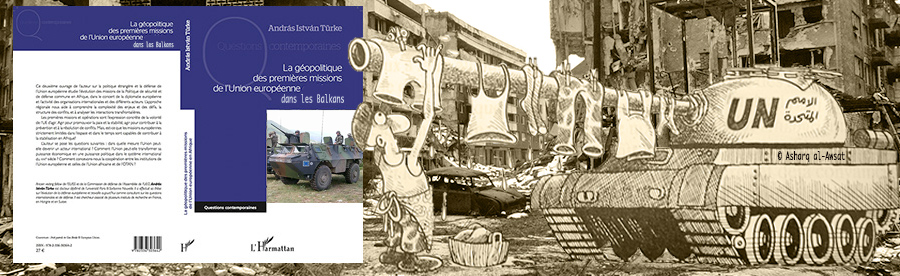
We are looking for sponsors for the English translation of these books, please contact turkeandras(at)gmail(dot)com